Jules Olitski
Jules Olitski and the Poetry of Pure Color
Artist Spotlight · The Collection Editorial
“What I want is for the painting to be a presence, not just a surface.”
Jules Olitski
Stand in front of a large Jules Olitski canvas from the late 1960s and something unusual happens. The painting does not simply hang on the wall. It breathes. It radiates.
Jules Olitski
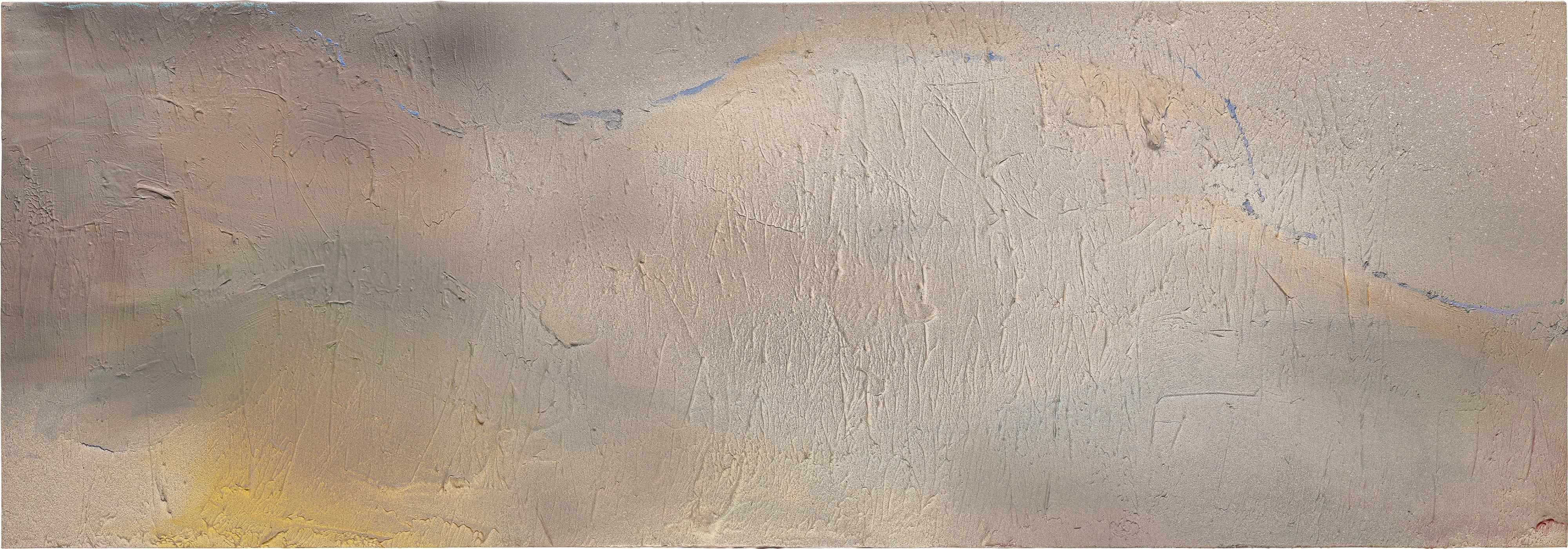
The Kristina Passion, 1977
It seems to exist somewhere between object and atmosphere, between pigment and pure sensation. This quality, so difficult to describe yet so immediate to experience, is what has kept Olitski at the center of serious critical and collector attention for more than half a century, and what continues to draw new admirers to his work with the kind of quiet, devoted loyalty that the art world reserves for its most genuine visionaries. Jules Olitski was born Jevel Demikovsky in 1922 in Snovsk, Ukraine, just weeks after his father was executed by Soviet authorities. His mother eventually brought him to America, settling in Brooklyn, New York, where he was raised by his grandmother and step grandfather, whose surname Olitski he later adopted.
This origin story, marked by displacement, loss, and resilience, adds a particular resonance to a body of work defined by its search for transcendence. Olitski studied at the National Academy of Design in New York and later at the Beaux Arts in Paris, where he was deeply influenced by the existentialist atmosphere of postwar European thought. He even spent a period working blindfolded, attempting to access a more primal, intuitive mode of making. The seriousness of that impulse never left him.

Jules Olitski
7th Move
His early paintings from around 1960 show a restless intelligence at work. Works from this period, including those executed in Magna, the acrylic resin paint favored by many Color Field painters, reveal Olitski experimenting with staining techniques, working directly on unprimed canvas to allow color to sink into and become the surface rather than sitting on top of it. The influential critic Clement Greenberg, who championed the Color Field movement with extraordinary conviction, recognized Olitski early as one of its essential voices. Greenberg's support brought Olitski into conversation with artists such as Helen Frankenthaler, Morris Louis, and Kenneth Noland, a generation of painters who shared a belief that abstract painting could achieve its most powerful effects through the direct and uninflected presence of color itself.
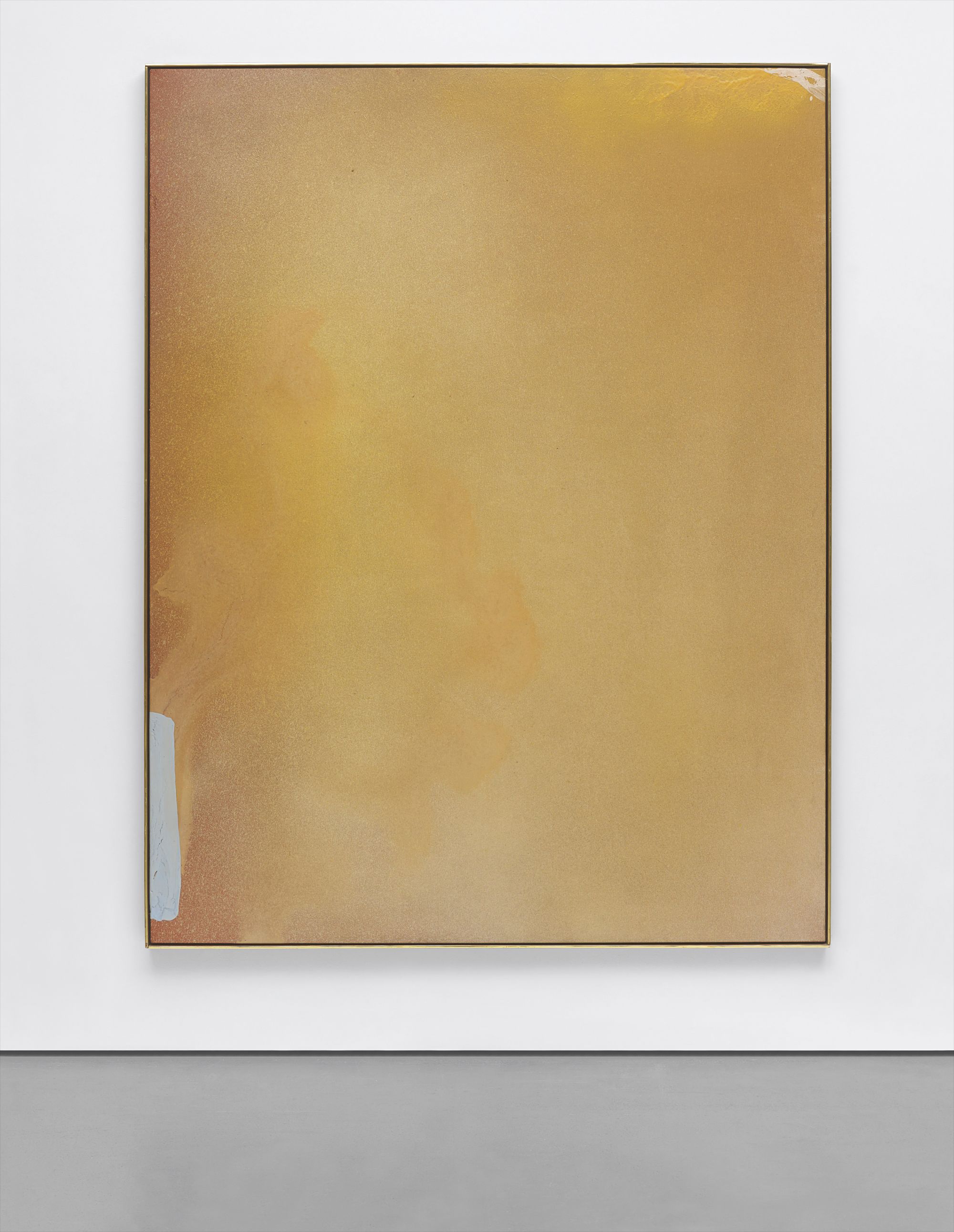
The breakthrough that secured Olitski's reputation arrived in the mid 1960s, when he began using industrial spray equipment to apply paint in dense, hovering mists across large canvases. These spray paintings are among the most original contributions to American abstraction. Color appears to float free of any visible gesture or mark, creating fields of extraordinary subtlety, surfaces that shift with the light and reward sustained looking. The edges of these canvases often carry a contrasting stroke or band, a decision that activates the rest of the surface and gives the hovering color somewhere to exist in relation to.
Jules Olitski
Her Walk
The 1965 Venice Biennale, where Olitski represented the United States, brought these works to an international audience and confirmed his status as one of the defining painters of his generation. By the 1970s, Olitski had moved decisively in a new direction. Rejecting the ethereal quality of the spray works, he began building surfaces of extraordinary physical density, layering acrylic paint into thick, sculptural impasto that could take on an almost geological presence. Works such as The Kristina Passion from 1977 exemplify this phase, their surfaces built up with a kind of passionate, accumulative intensity that feels almost antithetical to the earlier atmospheric canvases.
This willingness to reinvent himself so radically, and to do so without apology, speaks to the depth of his commitment to painting as a living practice rather than a signature style to be refined and repeated. Later works such as Zeno's Half from 1971 and Bathsheba Reverie Violet from 2001 show the sustained richness of his investigations across decades. His output on paper, including pastel drawings and works combining watercolor, gouache, and acrylic, reveals the same searching quality in a more intimate register. For collectors, Olitski presents a compelling and still deeply rewarding proposition.
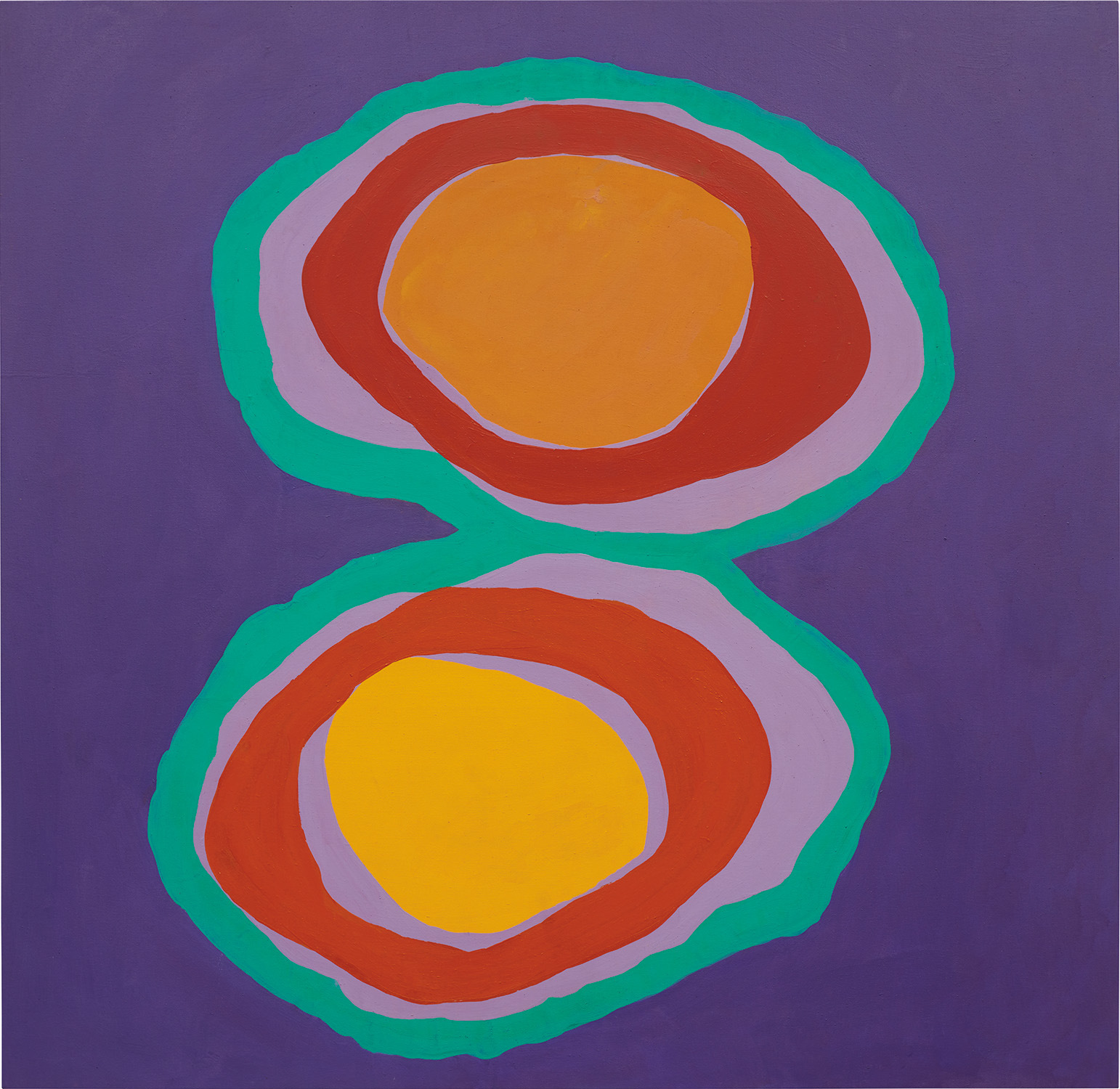
Jules Olitski
Magna on canvas
His auction record has grown steadily as Color Field painting has undergone a significant critical rehabilitation over the past two decades. Institutions including the Metropolitan Museum of Art, the Tate in London, and the Museum of Fine Arts in Boston hold major examples of his work, a fact that underpins the seriousness with which the market regards his legacy. Collectors drawn to the spray paintings of the 1960s will find works of exceptional optical refinement, canvases that hold their own in any company and reward years of living with. The later impasto works attract collectors who respond to physicality and to the sense of a painter throwing himself into the surface with undiminished energy.
Works on paper offer a more accessible entry point into his world without any sacrifice of quality or ambition. To understand Olitski fully is to understand the broader conversation he was part of and the ways he both embodied and challenged it. Alongside Noland and Frankenthaler, he helped define what the critic Michael Fried, writing at his most rigorous in the 1960s, identified as the central achievement of Post Painterly Abstraction: a painting that achieved its effects through the fullest possible acknowledgment of its own nature as a flat, colored surface. Yet Olitski always brought something warmer, more bodily, and more romantically inclined to this project than the cool geometry of some of his peers.
His work feels, even at its most abstract, like it was made by someone who cared enormously about beauty and was not embarrassed to pursue it. Jules Olitski died in New York in 2007, leaving behind a body of work of remarkable range and consistent ambition. His legacy is not simply that of a significant figure in a movement, though he was certainly that. It is the legacy of a painter who believed, across more than five decades, that color could carry genuine emotional and even spiritual weight, and who pursued that belief with extraordinary skill and conviction.
In an art world that has sometimes been unkind to pleasure and to beauty, Olitski stands as a generous and enduring reminder of what painting, at its most fully realized, can do.
Explore books about Jules Olitski