Jordan Casteel
Jordan Casteel Sees Us All Whole
Artist Spotlight · The Collection Editorial
“I want to see people. I want people to feel seen.”
Jordan Casteel, New Museum interview, 2019
When Jordan Casteel's solo exhibition "Within Reach" opened at the New Museum in New York in 2019, it felt like a genuine cultural reckoning. The show brought together large scale oil paintings depicting the residents, street vendors, and everyday figures of Harlem with such warmth and psychological precision that critics and visitors alike found themselves stopping, leaning in, and staying longer than planned. Casteel was just thirty years old, and yet the work carried the assurance of a painter who had already found her subject, her scale, and her moral purpose. The New Museum show announced not merely the arrival of a significant talent, but the full flowering of one.
Jordan Casteel
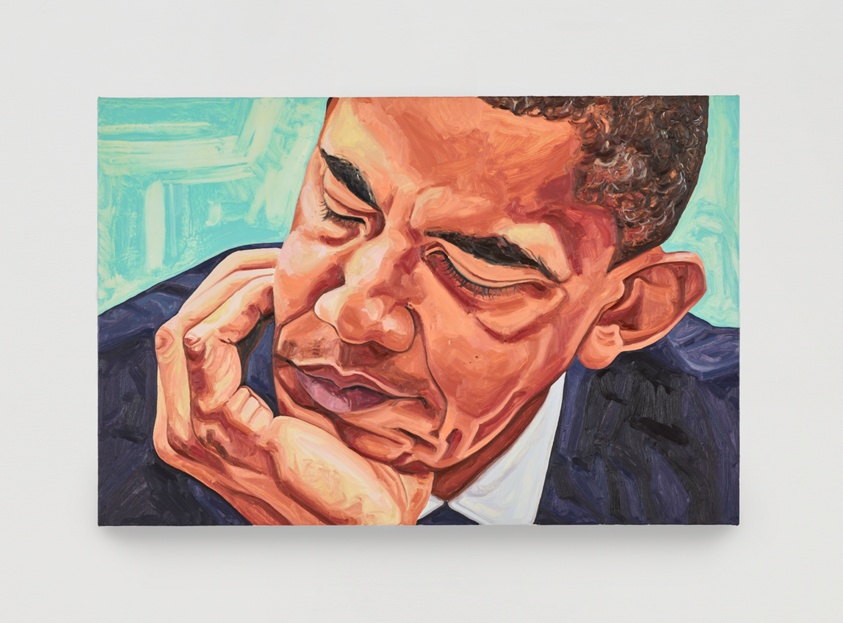
Barack, 2020
Casteel was born in Denver, Colorado in 1989 and grew up in a city not typically associated with the centers of American art. That distance from New York and Los Angeles may have quietly shaped her practice in productive ways, cultivating an observer's eye and a deep appreciation for the particular textures of community and belonging. She went on to study at Agnes Scott College in Georgia before pursuing her MFA at the Yale School of Art, where she graduated in 2014. Yale placed her in conversation with some of the most rigorous critical and technical thinking in contemporary painting, and Casteel absorbed those lessons while steadily developing a vision that was entirely her own.
At Yale, Casteel began the portrait practice that would define her career. Her earliest serious bodies of work focused on the men in her family and later on the men she encountered in her daily life, particularly in Harlem, where she settled after graduate school. This choice of neighborhood was not incidental. Harlem carries an almost mythological weight in the history of Black American culture and art, and Casteel engaged with that history consciously and generously, walking its streets and building relationships with its residents before asking them to sit for her.
Jordan Casteel
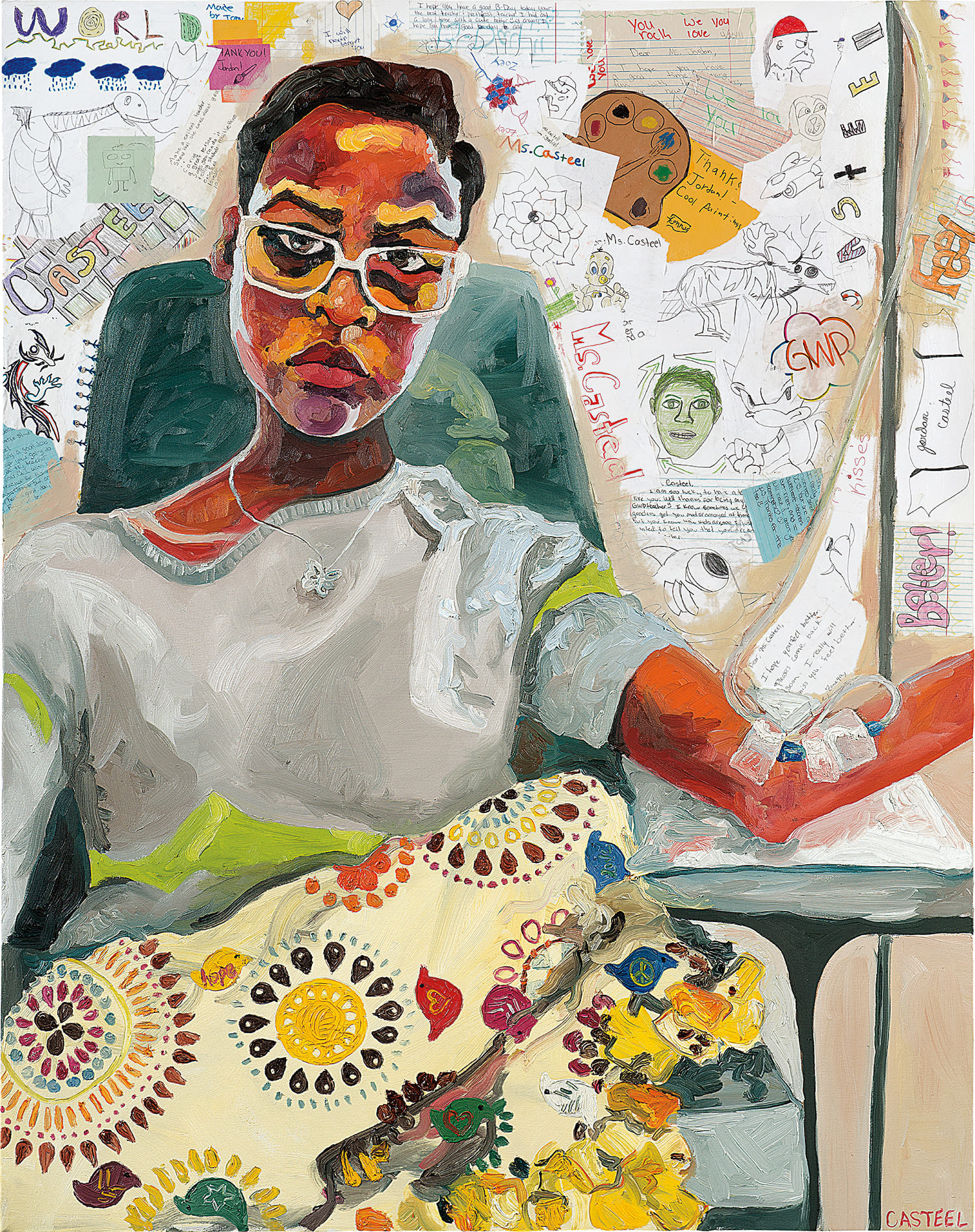
Self Portrait, 2012
The intimacy in her paintings is earned through that genuine exchange. Her technical approach is immediately recognizable. Casteel works in oil on large canvases, often depicting her subjects from above at a slight bird's eye angle that flattens the picture plane and creates a tenderness of proximity rather than a sense of surveillance. Her color palette is bold and declarative, with rich greens, warm ochres, saturated blues, and deep skin tones rendered with a luminosity that insists on their beauty and specificity.
“Painting is a way of being with someone, of sitting with them and really looking.”
Jordan Casteel, Artforum
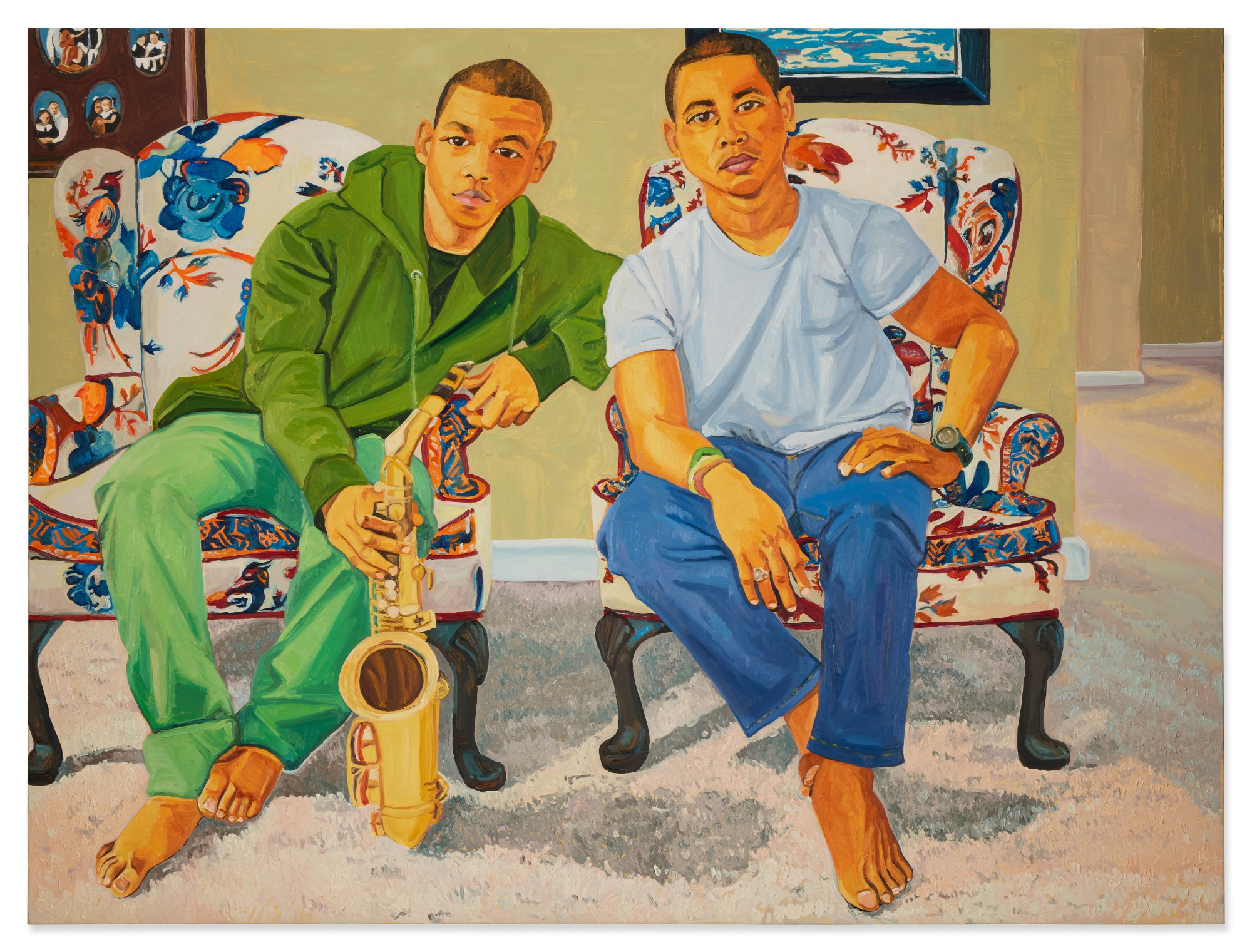
She paints her subjects in ordinary moments: sitting on stoops, minding market stalls, resting after work, sharing space with children and dogs and shopping bags. The cumulative effect is a portrait of Black life as it is actually lived, in its fullness and complexity, rather than through the lens of trauma or struggle. Among her most celebrated individual works, "Crockett Brothers" from 2015 demonstrates her mastery of composition and her gift for capturing the warmth between people. The two figures occupy the canvas with an ease and affection that feels genuinely observed rather than staged.
Jordan Casteel
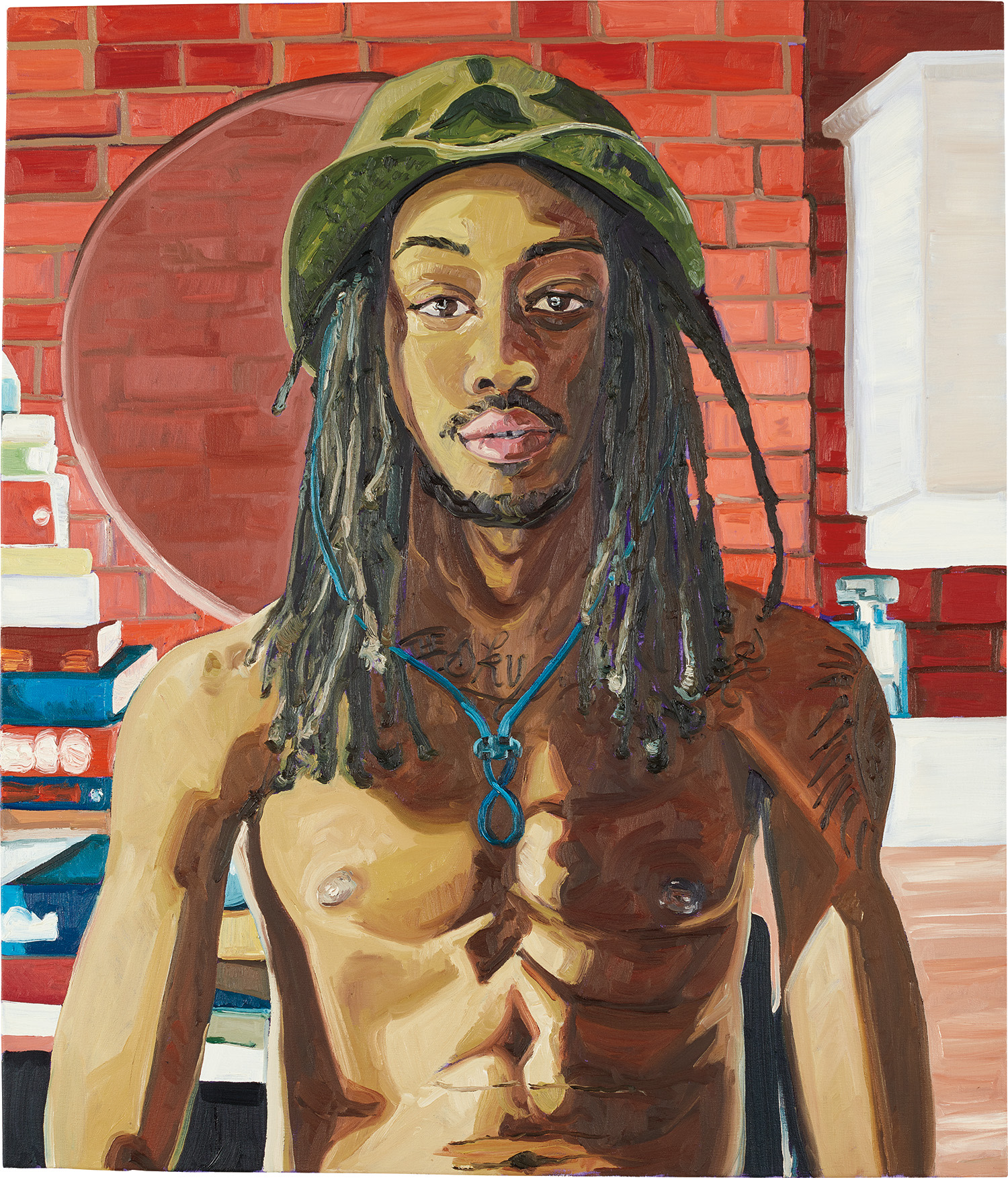
Quinn, 2015
"Quinn" from the same year shows her sensitivity to individual interiority, the painted figure rendered with a specificity of gaze and posture that makes the subject feel entirely present. Her 2020 painting "Barack," named after and depicting a figure rather than a political figure, exemplifies her democratic impulse: the name carries a weight of cultural association that she redirects toward an individual human being deserving of his own full representation. These works operate on multiple registers simultaneously, functioning as intimate portraits, as social documents, and as art historical arguments. Casteel's work sits in conversation with a rich lineage of figurative painters who have used portraiture to make claims about who deserves to be seen.
One thinks of Alice Neel, whose unflinching portrayals of ordinary New Yorkers similarly expanded the definition of who constituted a worthy subject for serious painting. Neel's influence on Casteel has been noted and acknowledged. One also thinks of Kerry James Marshall, whose monumental celebrations of Black American life demonstrated that figurative painting could carry both political weight and genuine beauty. Lynette Yiadom Boakye's imagined Black figures and Henry Taylor's observational tenderness are also natural points of comparison.
Jordan Casteel
Crockett Brothers, 2015
Casteel belongs in this conversation not as a follower of these precedents but as someone who has extended and deepened the tradition. From a collecting perspective, Casteel represents one of the most compelling cases in contemporary figurative painting. Her institutional footprint has grown steadily and deliberately, with exhibitions at the Denver Art Museum and the Cantor Arts Center at Stanford among those that have broadened her audience beyond New York. Her work is held in significant private and institutional collections, and the demand for her paintings consistently outpaces supply, a reflection both of her reputation and of the genuine emotional power the works exert on those who encounter them.
For collectors entering or deepening a commitment to contemporary figurative painting, Casteel's work offers both aesthetic rewards and the confidence of lasting art historical significance. Her early works on canvas from her Yale years and her first Harlem portraits from around 2014 and 2015 represent particularly important documents of a practice finding its fullest voice. What Casteel has achieved in a relatively short career is a recalibration of how we understand portraiture and its social function. By centering Black subjects in moments of joy, rest, community, and dignity, she has made an argument that is simple and radical in equal measure: that these lives are beautiful, that they are worthy of the sustained attention that great painting demands, and that the act of seeing someone fully is itself a form of love.
Her canvases do not ask for sympathy or political agreement. They ask for presence and attention, and in doing so they quietly transform both the viewer and the tradition they enter. Casteel is still in the early middle of what promises to be a long and significant career, and the work she has already made is reason enough to consider her one of the essential painters of her generation.