John Thomson
John Thomson Saw the World First
Artist Spotlight · The Collection Editorial
“I have endeavoured to represent the scenes and people of China as they actually exist.”
Illustrations of China and Its People, 1873
Imagine Edinburgh in the 1860s, a city crackling with scientific ambition and imperial curiosity, and a young man named John Thomson packing a cumbersome wet plate camera and preparing to sail east toward a world that most of his contemporaries would never see. What Thomson accomplished over the following decades places him among the most important image makers of the nineteenth century, a figure whose work sits at the precise intersection of art, anthropology, journalism, and social conscience. His photographs of China, Southeast Asia, Cyprus, and the streets of London did not merely document the world. They transformed how the world understood itself through the lens.
John Thomson
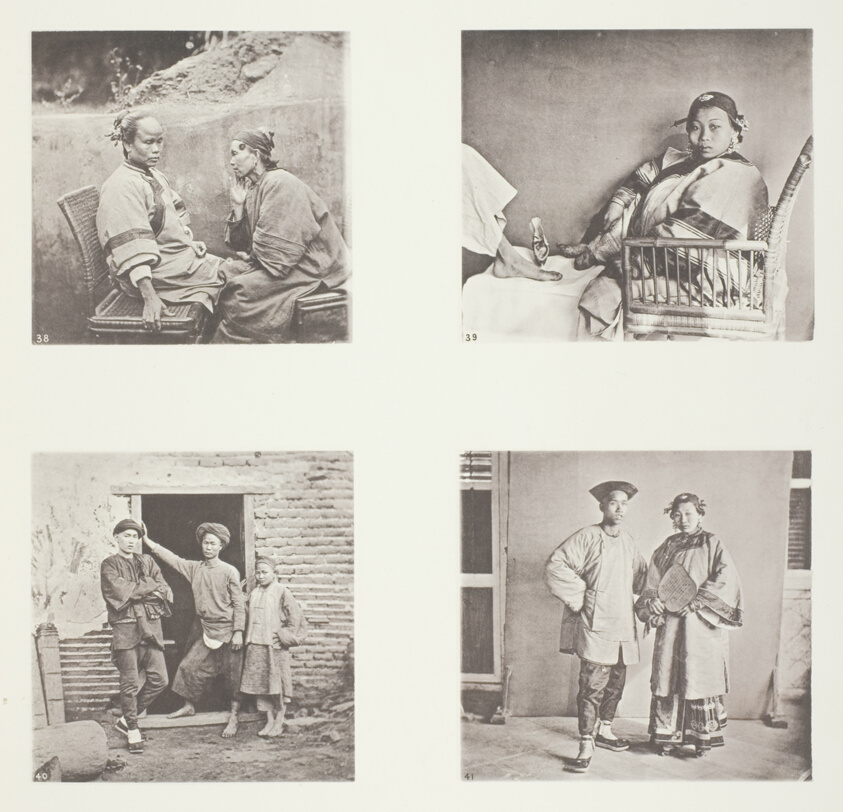
Amoy Women; The Small Foot of a Chinese Lady; Amoy Men; Male and Female Costume, Amoy, 1868
Thomson was born in Edinburgh in 1837, the son of a tobacco spinner, and came of age during a period of extraordinary intellectual ferment in Scotland. The city's tradition of empirical inquiry, its medical schools, its philosophical societies, and its passion for natural history all left their mark on the young Thomson, who trained as an optician and instrument maker before turning decisively toward photography. He was drawn to the new medium not simply as a technical curiosity but as a means of serious inquiry, a way of bearing witness with precision and with feeling. By 1862 he had sailed to Singapore, beginning a decade of travel through Southeast Asia and China that would define his legacy.
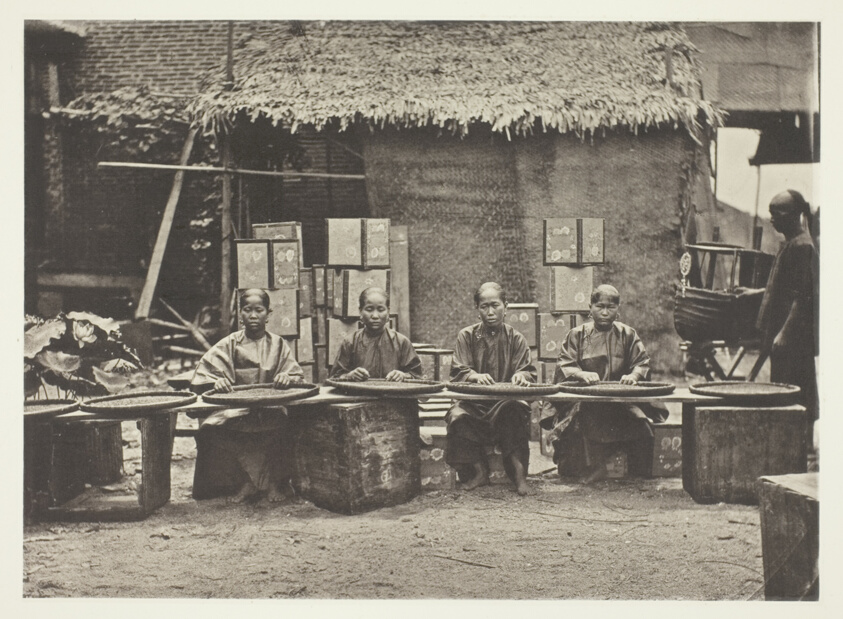
The years Thomson spent in China between 1868 and 1872 were the crucible of his artistic and intellectual identity. Based largely in Hong Kong, he traveled extensively through the mainland, reaching the island of Hainan, the port city of Swatow, the ancient streets of Canton, and the rural interiors that few Westerners had ever penetrated. He photographed with remarkable sensitivity, capturing the textures of daily life alongside grand landscapes and architectural monuments. His images of Amoy, now Xiamen, show women in traditional dress with extraordinary compositional care, the camera neither condescending nor romanticizing but simply attending.
John Thomson
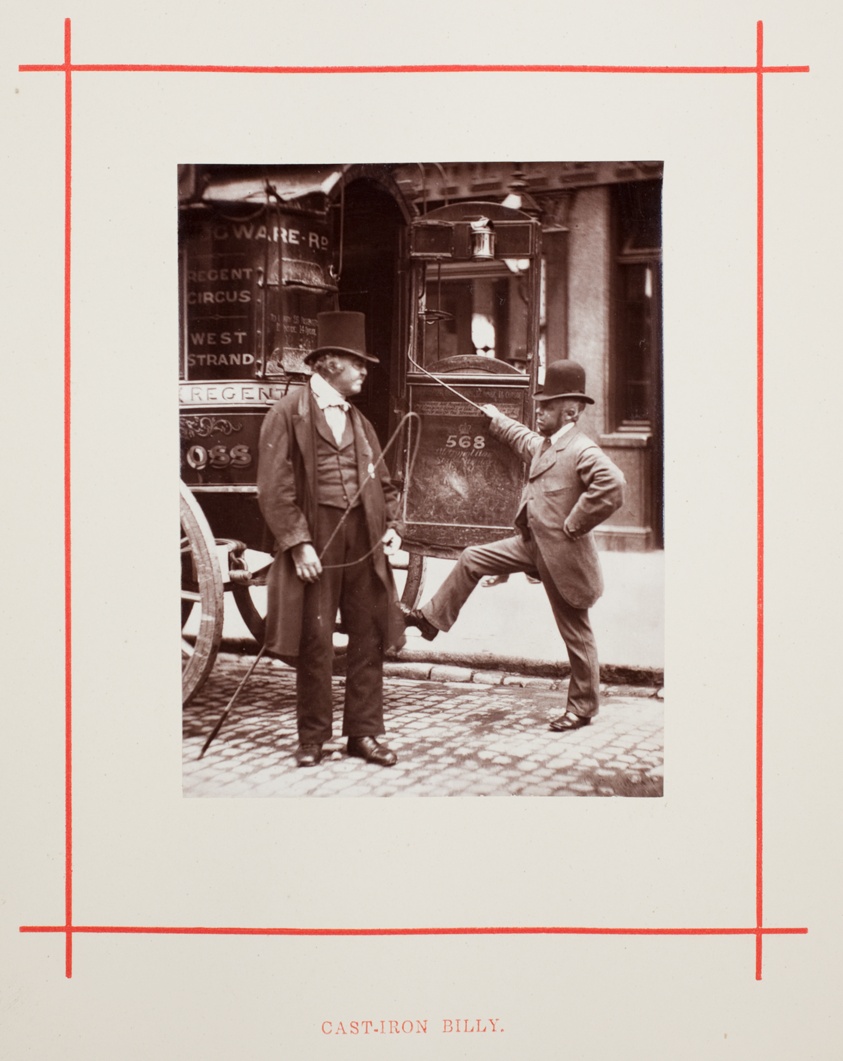
Cast-Iron Billy, 1877
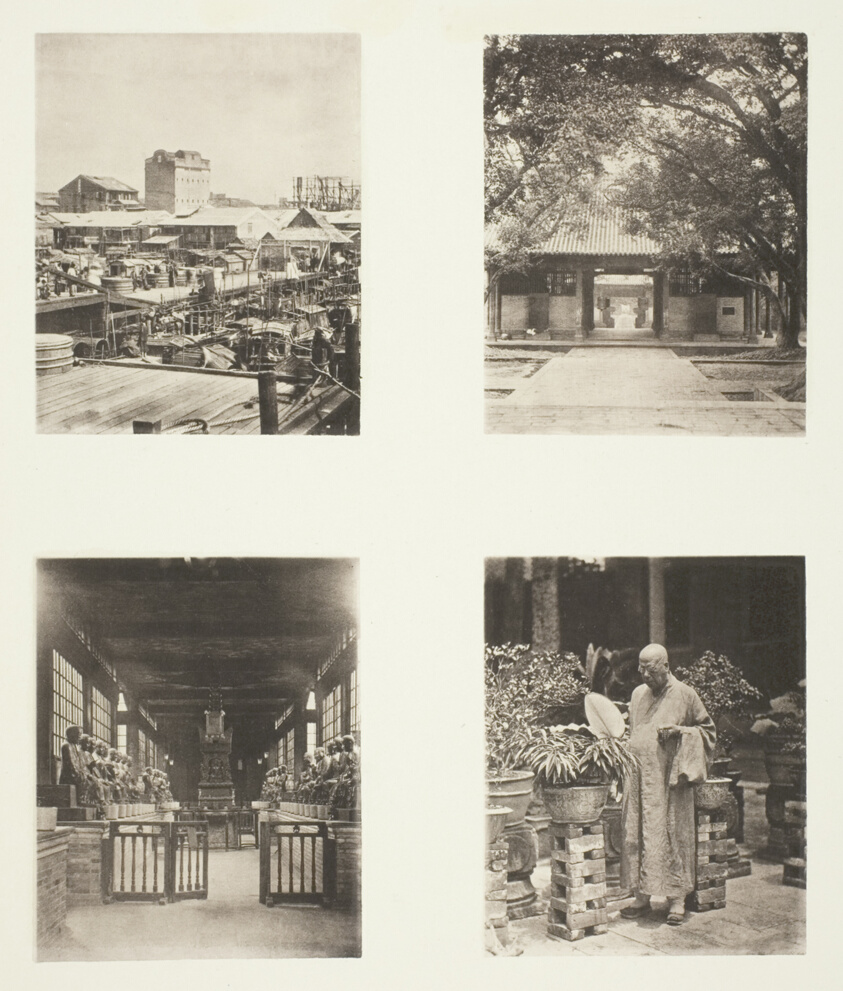
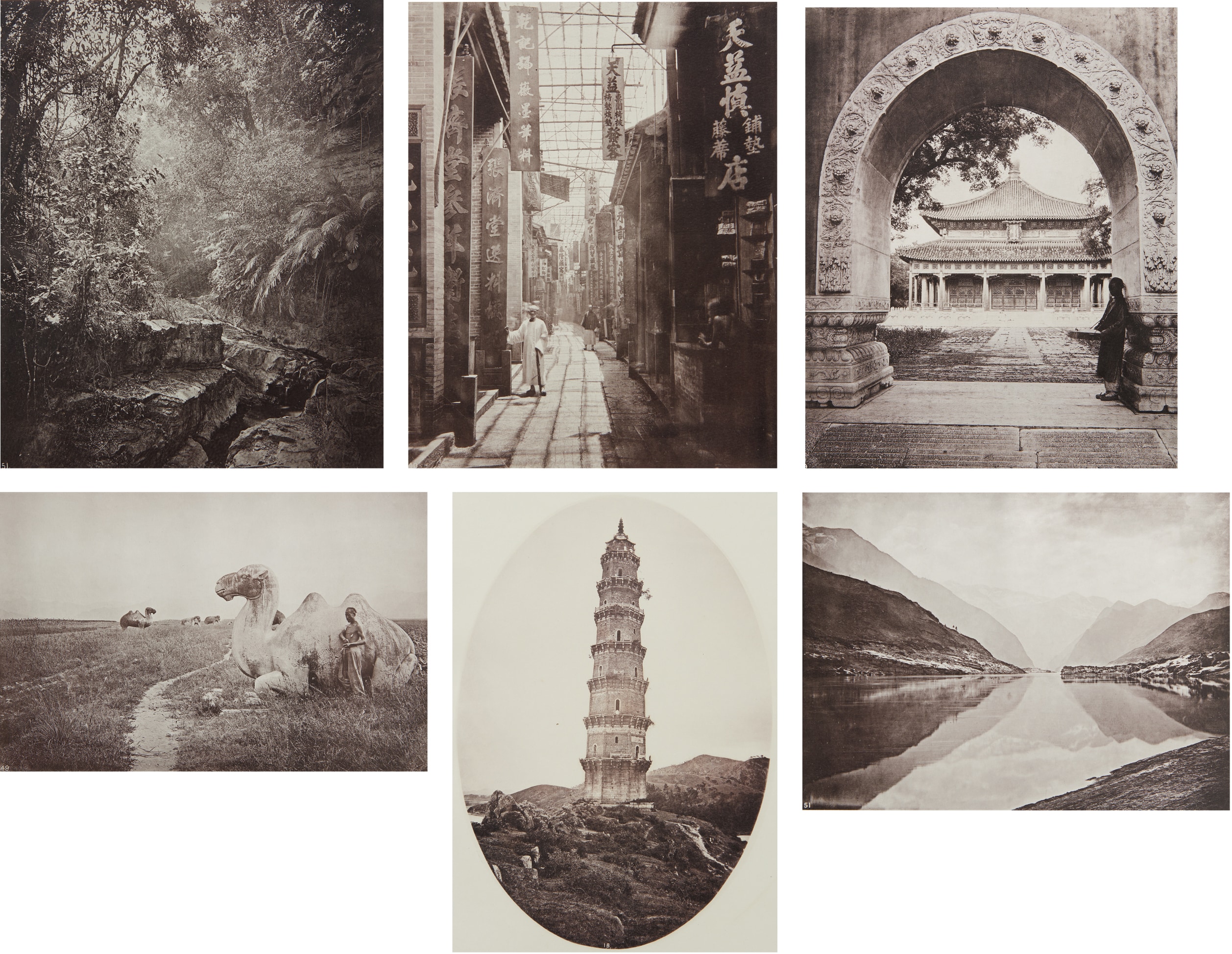
The photographs of Canton's Honam Temple and the Temple of Five Hundred Gods reveal a photographer alert to spiritual atmosphere and spatial grandeur. The publication of Illustrations of China and Its People between 1873 and 1874 marked a watershed moment in the history of photography and publishing. Issued in four volumes and containing two hundred photographs reproduced as collotypes, the work was among the most ambitious photographic publishing projects of its era. Thomson wrote the accompanying letterpress text himself, combining scientific observation with vivid personal narrative, and the result was something unprecedented: a sustained, serious, and visually magnificent account of a civilization on its own terms.
The collotype process allowed for a fidelity of tone and detail that earlier reproductive methods could not match, and Thomson's compositional intelligence ensured that every plate rewarded sustained looking. The work was immediately recognized as significant and remains a foundational document of both photographic history and Sinological study. Returning to Britain, Thomson turned his lens on a subject equally rich and equally underrepresented in serious visual culture: the working poor of London. Collaborating with journalist Adolphe Smith, he produced Street Life in London, published in monthly instalments during 1877 and then as a complete volume.
John Thomson
A Canton Pawn Shop; Honam Temple, Canton; Temple of Five Hundred Gods, Canton; The Abbot of the Temple, 1868
The project used the Woodburytype process to achieve remarkable tonal richness, and its subjects, the flower sellers of Covent Garden, the street musicians from Italy, the old cabman known as Cast Iron Billy, the vendors and laborers and wanderers of the city's margins, were photographed with the same unflinching respect Thomson had brought to his subjects in China. Street Life in London stands as one of the earliest and most artistically distinguished works of social documentary photography, predating the better known work of Jacob Riis by more than a decade. For collectors, Thomson's work presents a rare and genuinely exciting opportunity. His photographs exist in several forms, including original albumen prints from his travels, the collotype plates from Illustrations of China and Its People, and the Woodburytype prints from Street Life in London.
The Woodburytype in particular is a medium of extraordinary quality, producing rich continuous tone images of great archival stability, and Thomson's examples are among the finest ever made. Works from Street Life in London appear at major auction houses periodically and have attracted serious institutional and private interest, while the China photographs are prized both for their historical significance and their sheer visual power. Collectors drawn to the history of photography, to Victorian social history, or to the rich tradition of documentary image making will find in Thomson a figure of central importance. Thomson's place in art history is secure but still, in certain respects, underappreciated outside specialist circles.
John Thomson
Illustrations of China and Its People. A Series of Two Hundred Photographs, with Letterpress Description of the Places and People Represented
His work bears comparison to that of Felice Beato, the Italian born photographer who documented East Asia and the aftermath of conflict with comparable ambition, and to Francis Frith, whose large format views of Egypt and the Middle East similarly used photography as a vehicle of serious geographical inquiry. Thomson is also a clear precursor to the great social documentary photographers of the twentieth century, a lineage that runs through Lewis Hine and Dorothea Lange to photographers working today. What distinguishes Thomson within this company is the sustained quality of his vision across radically different subjects and contexts, and his consistent commitment to treating his subjects as people rather than specimens. The continuing relevance of John Thomson's work is not difficult to explain.
At a moment when questions of representation, of who photographs whom and with what assumptions, sit at the center of cultural conversation, Thomson's practice offers a genuinely instructive example. He was a man of his time, shaped by empire and by Victorian categories of knowledge, but his photographs consistently exceed those frameworks, insisting on the humanity and particularity of the individuals before his lens. To spend time with his images is to be reminded of what documentary photography at its finest can achieve: a form of attentiveness that honors both the world and the people who inhabit it. The Collection is proud to present a significant body of his work for discovery and for collecting.
Explore books about John Thomson