John McCracken
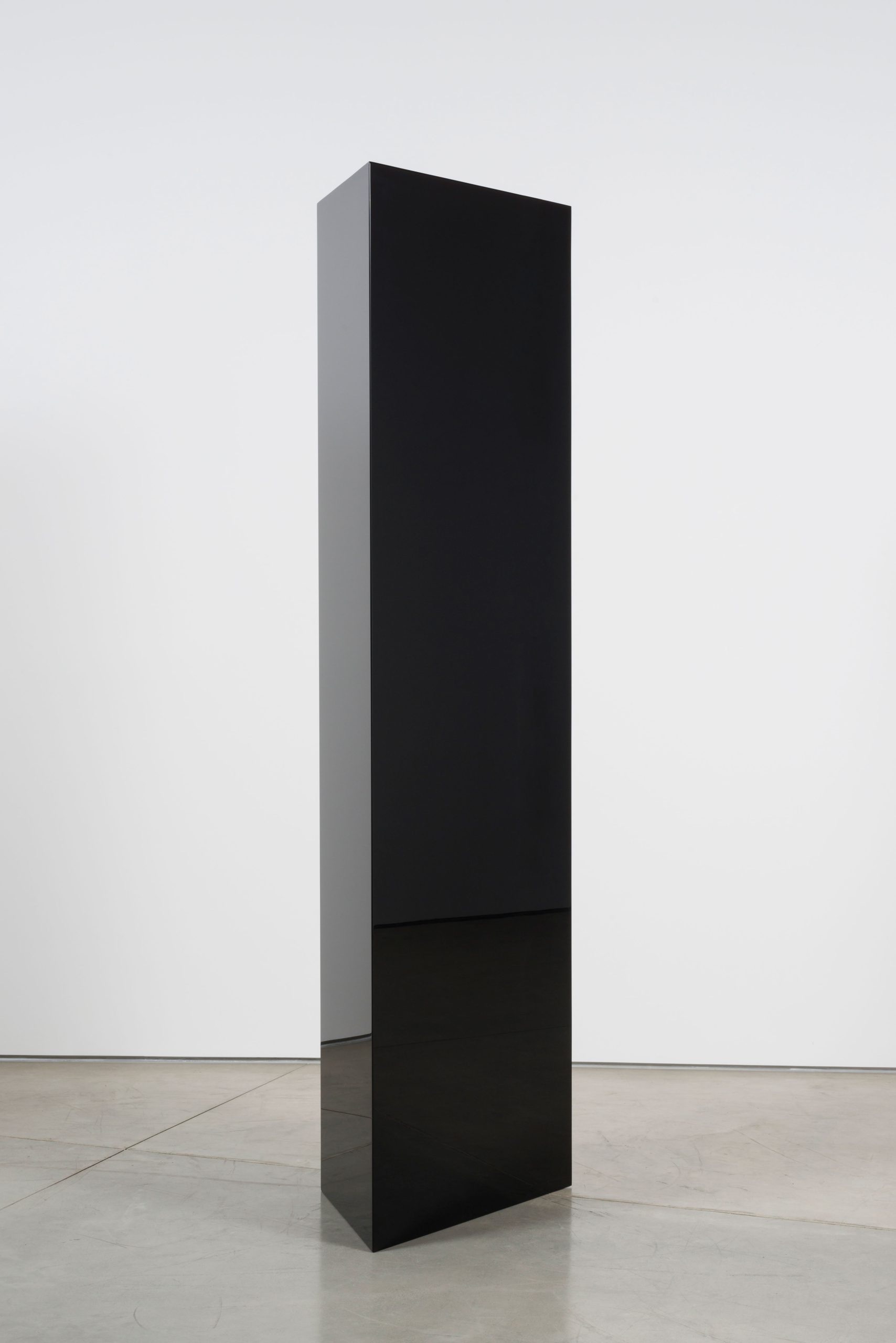
John McCracken, Where Color Meets the Cosmos
Artist Spotlight · The Collection Editorial
“A successfully abstract sculpture will tend to make the space surrounding it abstract too.”
John McCracken
In the spring of 2019, David Zwirner Gallery mounted a survey of John McCracken's work that drew long lines of visitors who stood quietly in the presence of his luminous planks, transfixed by surfaces so perfectly polished they seemed to pulse with interior light. The show reminded a new generation what devotees had long understood: that McCracken's objects occupy a category entirely their own, neither painting nor sculpture in any conventional sense, but something closer to concentrated energy given physical form. It was the kind of exhibition that lingers in the memory not as an aesthetic experience but as an almost physical one, the way a long meditation might. John McCracken was born in 1934 in Berkeley, California, and grew up on the West Coast at a moment when California was beginning to assert itself as a genuine center of artistic ambition.
John McCracken
Neptune, 1988
He studied at the California College of Arts and Crafts in Oakland during the late 1950s and early 1960s, a period of tremendous ferment in American art when Abstract Expressionism's emotional turbulence was giving way to cooler, more deliberate modes of making. McCracken absorbed those lessons while quietly moving in his own direction, drawn not toward the gestural or the confessional but toward something more still, more absolute. What shaped McCracken as profoundly as any formal training was his lifelong interest in mysticism, science fiction, and the possibility that art could function as a kind of spiritual technology. He spoke openly throughout his career about a belief in extraterrestrial intelligence and the idea that certain objects could serve as conduits between different states of consciousness.
This was not affectation. It was the genuine organizing principle of a practice that sought to make things that felt timeless, things that seemed as though they might have arrived from somewhere beyond the ordinary coordinates of human experience. His work was ambitious in the most serious and sincere sense of that word. McCracken's breakthrough came in the mid 1960s when he began developing the form for which he would become celebrated: the plank.
John McCracken
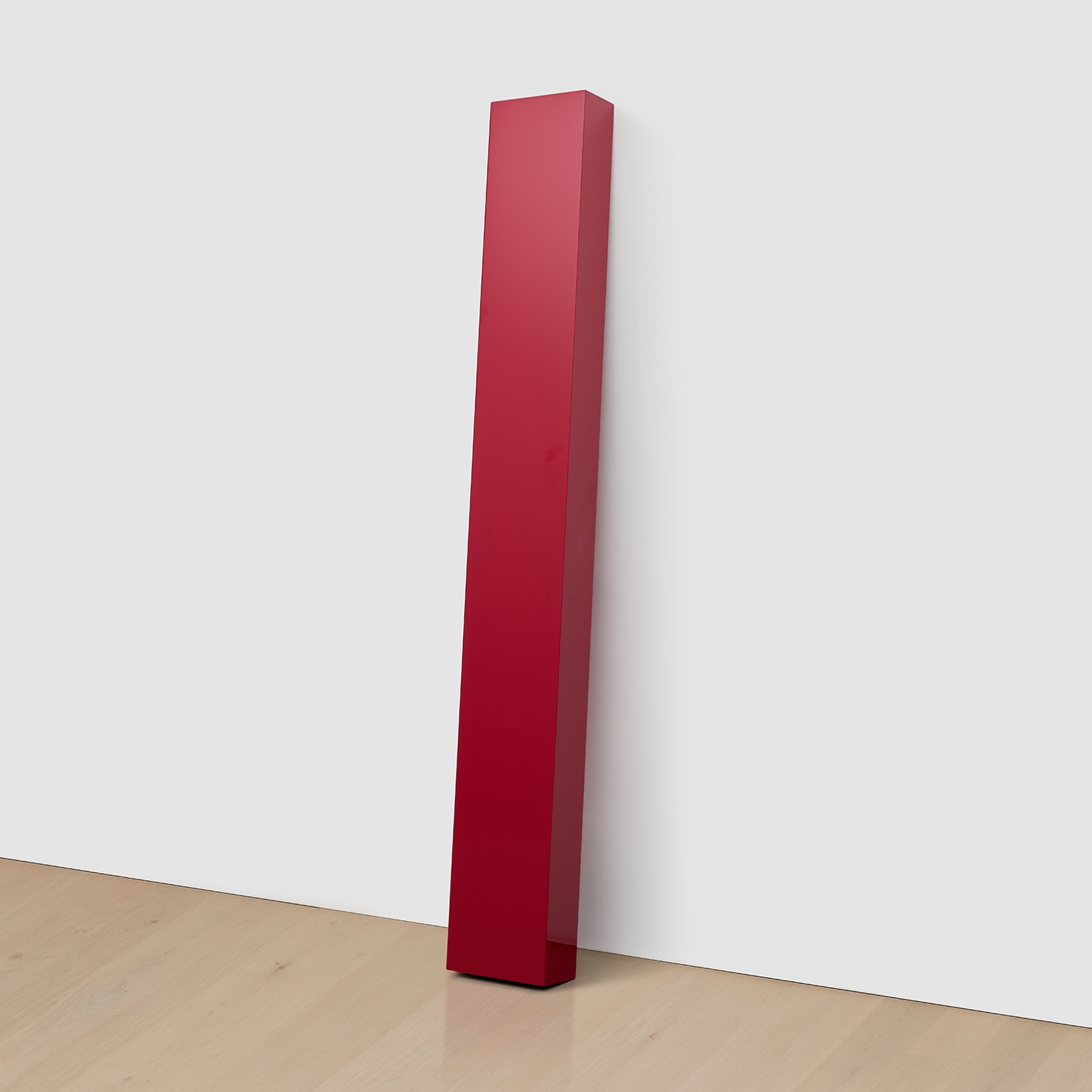
Fling, 2002
These rectangular slabs of fiberglass and polyester resin, coated in layer upon layer of lacquer and hand polished to an almost hallucinatory sheen, were leaned against the wall at a precise angle, touching both the floor and the vertical surface behind them. The gesture was deceptively simple and conceptually rich. The plank belonged to the wall the way a painting does, but it also claimed the floor, the realm of sculpture. It refused to be contained by either category, insisting instead on a dialogue between the two.
“I want to make work that is simply totally itself, that exists as a kind of being.”
John McCracken, interview with Gunnar Kvaran, 2006
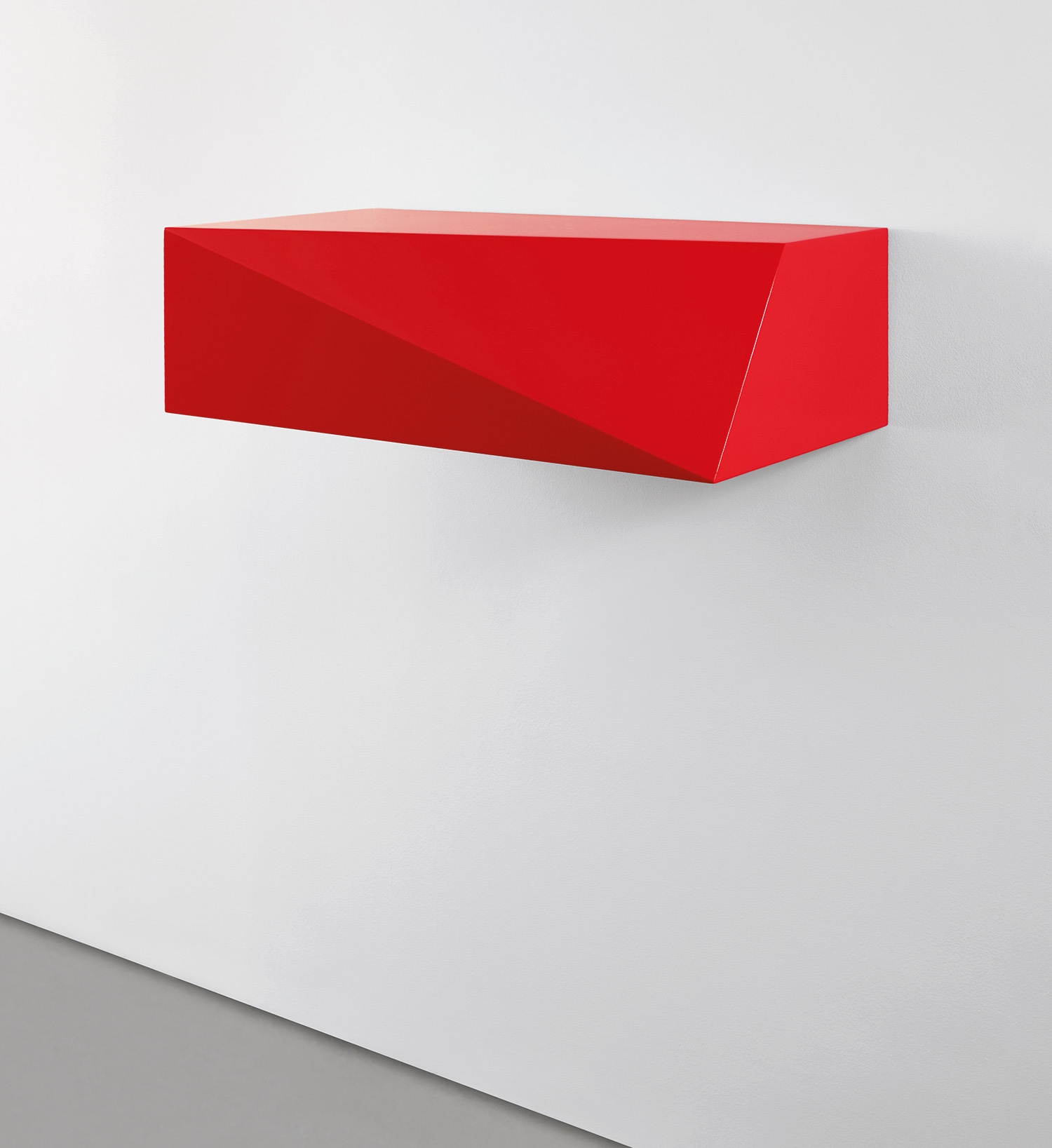
McCracken understood, as few artists have so completely, that the space around an object is itself a material, something to be shaped and activated. The monochromaticism of the planks was essential to their power. McCracken worked in a wide range of colors over the decades, from deep cobalt blues and forest greens to vivid reds and, in some of his most austere pieces, pure black or white. Works such as Neptune from 1988 and Amara from 1992 demonstrate his command of color as something felt rather than merely seen, each hue carrying its own temperature, weight, and psychological resonance.
John McCracken
“A successfully abstract sculpture will tend to make the space surrounding it abstract too.”
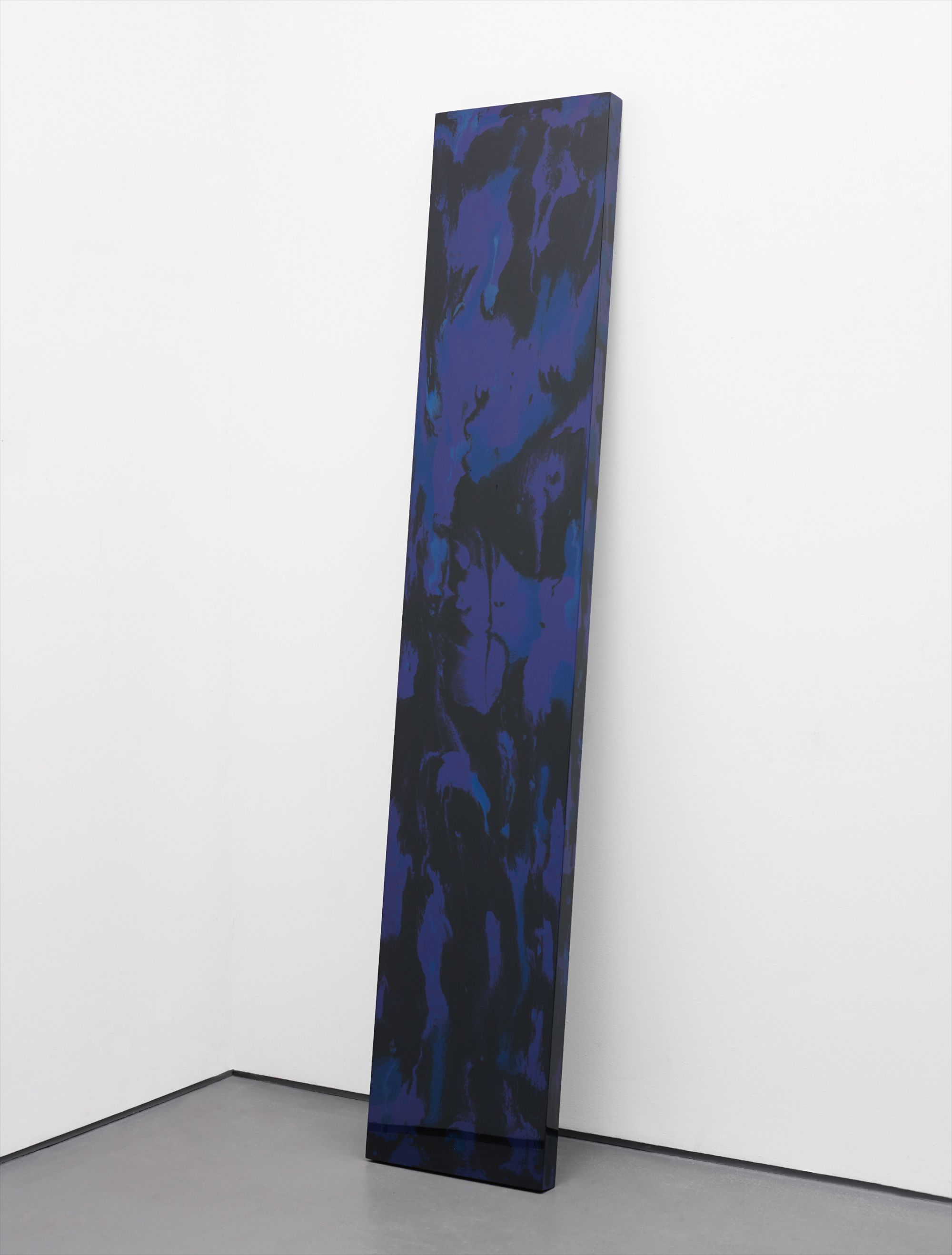
His 2002 pieces Fling and Flare, made with polyester resin, fiberglass and plywood, show how his late practice retained all the formal rigor of his earlier work while acquiring a new freedom of surface and scale. Feel, made in 2000 with lacquer, resin, glass fibers and wood, is among the most quietly compelling objects in his catalog, a work that rewards extended looking with something close to serenity. McCracken's place within the broader constellation of Minimalist art is secure, but it is also specific and not entirely comfortable. He was a West Coast figure at a moment when the conversation was dominated by New York voices such as Donald Judd, Carl Andre, and Dan Flavin.
Like them, he was committed to industrial materials and the elimination of expressive gesture. But where Judd's stacks declared a kind of philosophical severity and Andre's floor pieces proposed a radical democracy of surface, McCracken's planks were always reaching for something more openly spiritual. He was closer in temperament to James Turrell or Larry Bell, fellow travelers in the California Light and Space movement who believed that perception itself could be a subject worthy of an entire career. McCracken's practice sits productively at the intersection of Minimalism and that more mystically inclined California tradition.
John McCracken
Amara, 1992
For collectors, McCracken's work represents one of the more compelling propositions in postwar American art. His objects are immediately recognizable and visually commanding, capable of transforming any space they inhabit. The market for his work has grown steadily since his death in 2011, with major auction houses regularly achieving strong results for his planks and monolithic forms. His estate is managed thoughtfully, and works in excellent condition with clear provenance command particular attention.
Collectors are drawn not only to the formal beauty of the objects but to the consistency and integrity of a practice maintained over nearly five decades without compromise. When acquiring a McCracken, one is advised to consider the color and scale carefully in relation to the intended setting, as his objects are extraordinarily sensitive to their environment and will read quite differently depending on the light and the wall they meet. McCracken taught for many years at the University of Nevada, Las Vegas and at UCLA, and his influence on younger generations of artists working with material, surface, and color has been substantial. He continued making work until the very end of his life with undiminished energy, exploring new forms including monolithic columns and bronze objects alongside his signature planks.
He died in New York in 2011, leaving behind a body of work that feels not dated but genuinely permanent, objects that belong to no particular decade and seem unconcerned with fashion or trend. What endures most powerfully about John McCracken is the sincerity of his ambition. At a moment when sincerity can seem unfashionable and ambition is often disguised as irony, his planks stand in rooms and ask to be taken seriously on their own extraordinary terms. They are among the most quietly confident objects in American art history, and they reward the kind of sustained attention that great art has always demanded and always deserved.
Explore books about John McCracken