John Frederick Herring Sr.
The Master Who Painted Horses Alive
Artist Spotlight · The Collection Editorial
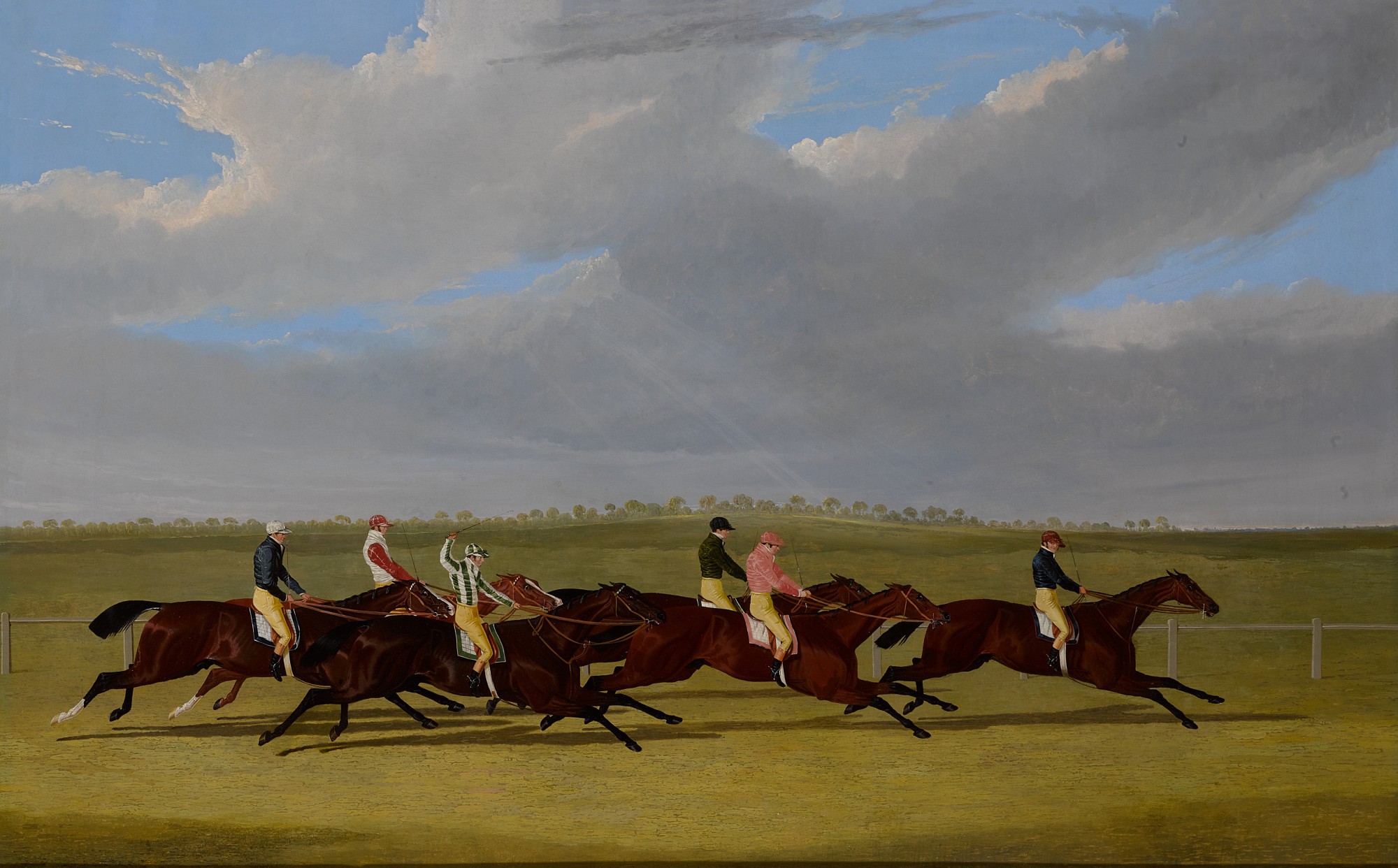
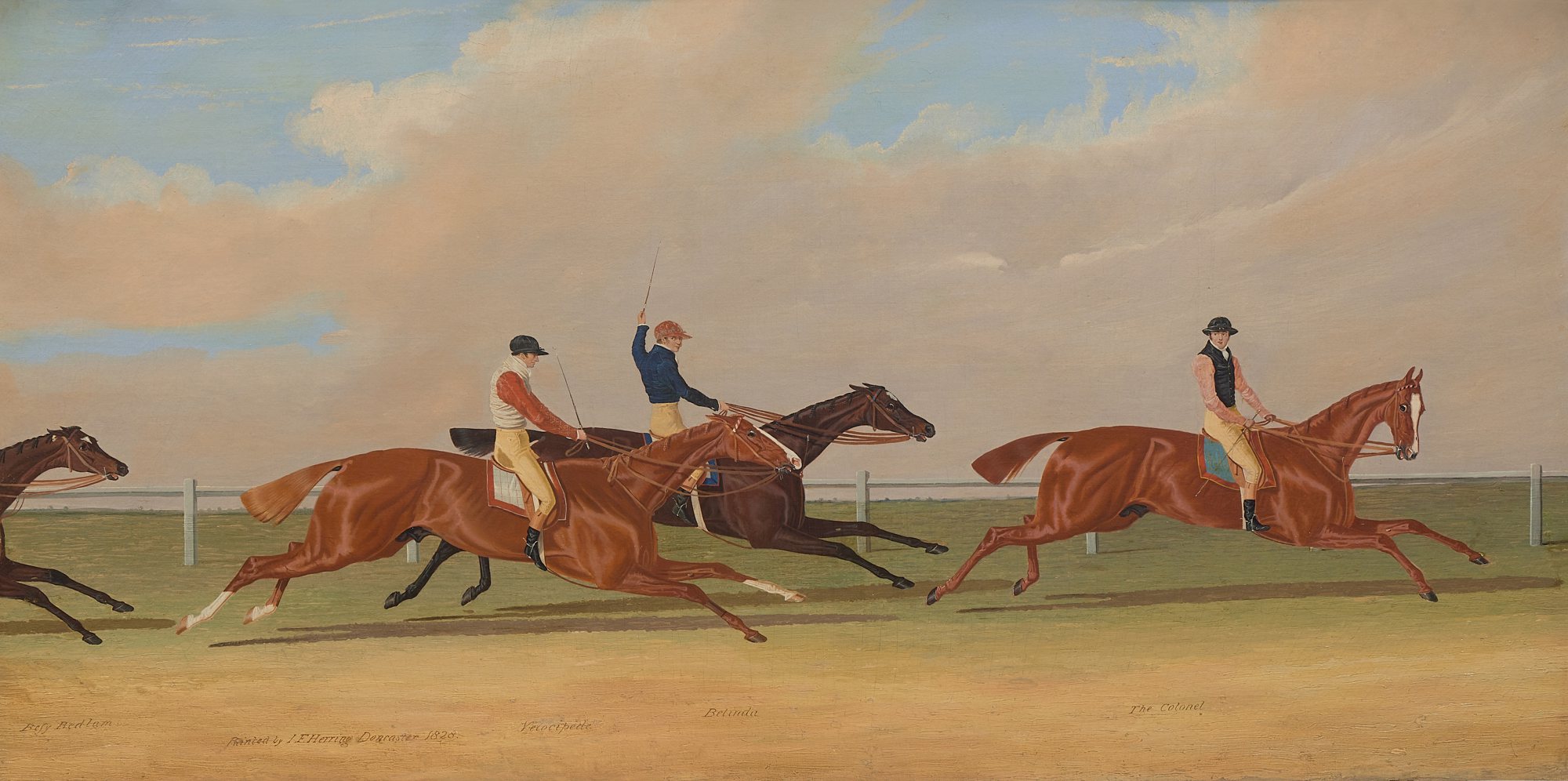
There is a moment in John Frederick Herring Sr.'s 1828 canvas depicting the Doncaster St. Leger when time seems genuinely suspended. The Colonel, victorious and gleaming, stands with the particular stillness of an animal that knows it has done something extraordinary.
John Frederick Herring Sr.
The 1828 Doncaster Gold Cup
The dust of the track has not yet settled. The crowd exists only as atmosphere, a warm peripheral haze, and the horse commands every atom of attention. It is a painting that reminds us why Herring was not merely a sporting artist of his era but one of the most instinctively gifted animal painters in the history of British art. Herring was born in Blackfriars, London, in 1795, into circumstances that gave little obvious signal of the aristocratic commissions and royal patronage that would define his later life.
His early years were shaped not by the academy but by the road. He worked as a coachman and stage coach driver, piloting the York to London route and later the Doncaster to London coach. This was not incidental background color. It was a profound education.
John Frederick Herring Sr.
The 1828 Doncaster St. Leger Won by The Colonel
He spent years in daily, intimate relationship with horses, learning the architecture of their bodies, the logic of their movement, the way light moves across a flank at speed, the language of muscle and sinew under exertion. Very few painters who would go on to depict horses with such authority ever understood them so physically and so completely. His transition from coachman to professional artist was gradual and deeply self directed. He taught himself to draw and paint, reportedly working in the hours before and after his driving duties, using whatever materials he could access.
He began exhibiting at the Royal Academy in 1818 and quickly drew notice for the accuracy and warmth of his equestrian subjects. By the 1820s he had established himself around Doncaster, one of the great centers of English horse racing and the home of the St. Leger Stakes, one of the five Classic races in British flat racing. This location was not coincidental.
John Frederick Herring Sr.
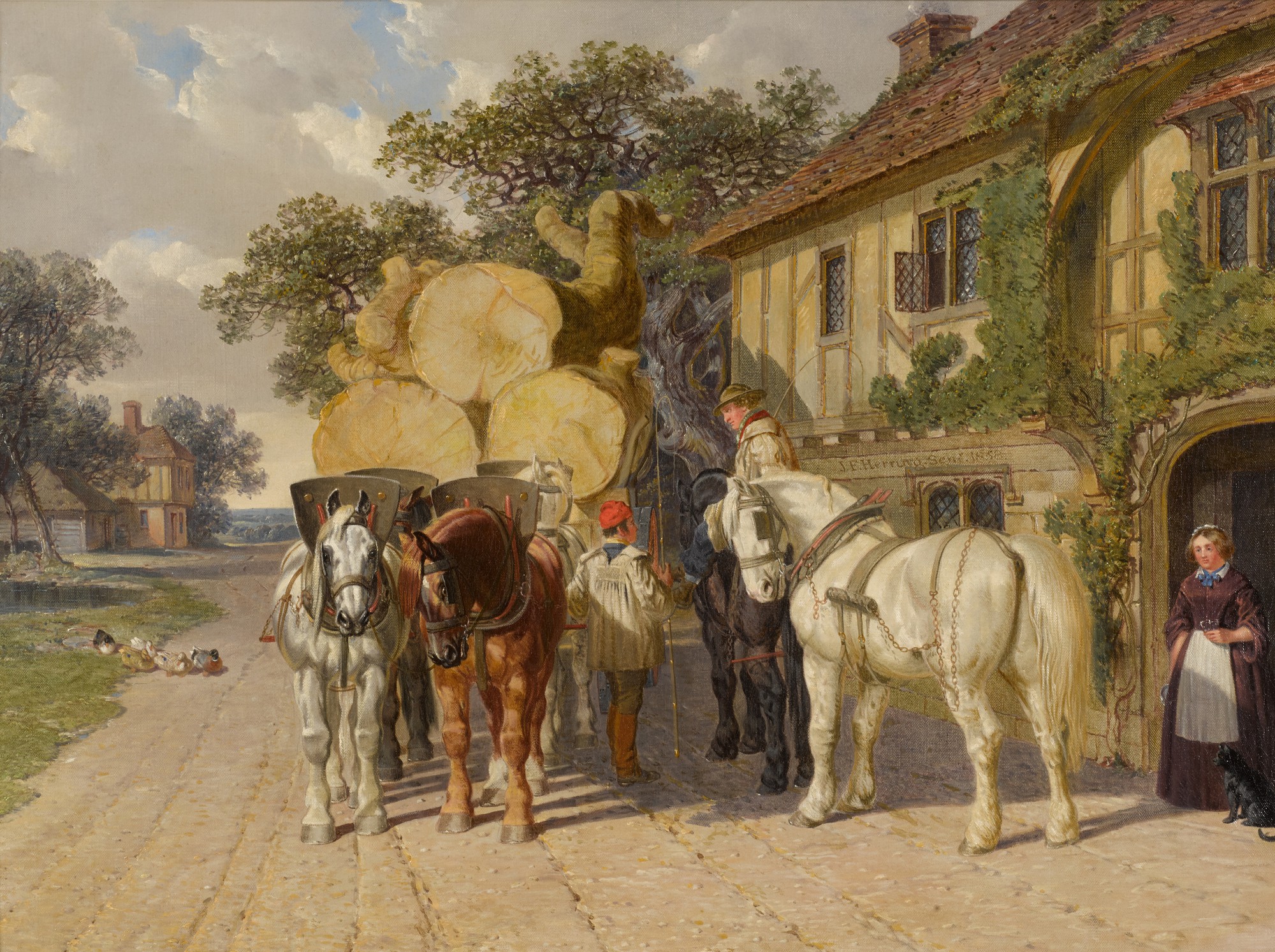
The Timber Wain
It placed him at the heart of the sporting and aristocratic world that would become both his subject and his patron. Herring's artistic development followed a clear and confident trajectory. His early racing works are records as much as paintings, precise and vivid accounts of specific horses at specific moments. Works like The 1828 Doncaster Gold Cup demonstrate a painter in full command of his materials, deploying a warm, clear palette to capture both the animal and the occasion with equal care.
As his career advanced and his reputation grew, he broadened his range without ever losing the qualities that made his name. His farmyard scenes, pastoral compositions populated by cattle, pigs, ducks, and working horses in the gentle light of the English countryside, revealed a painter of genuine tenderness. Works such as The Timber Wain move away from the drama of the racetrack entirely and settle into a quieter, more contemplative register. These pastoral paintings show Herring's debt to the Dutch Golden Age tradition, to artists like Paulus Potter and Albert Cuyp, whose influence on British animal painting ran deep through the eighteenth and nineteenth centuries.
John Frederick Herring Sr.
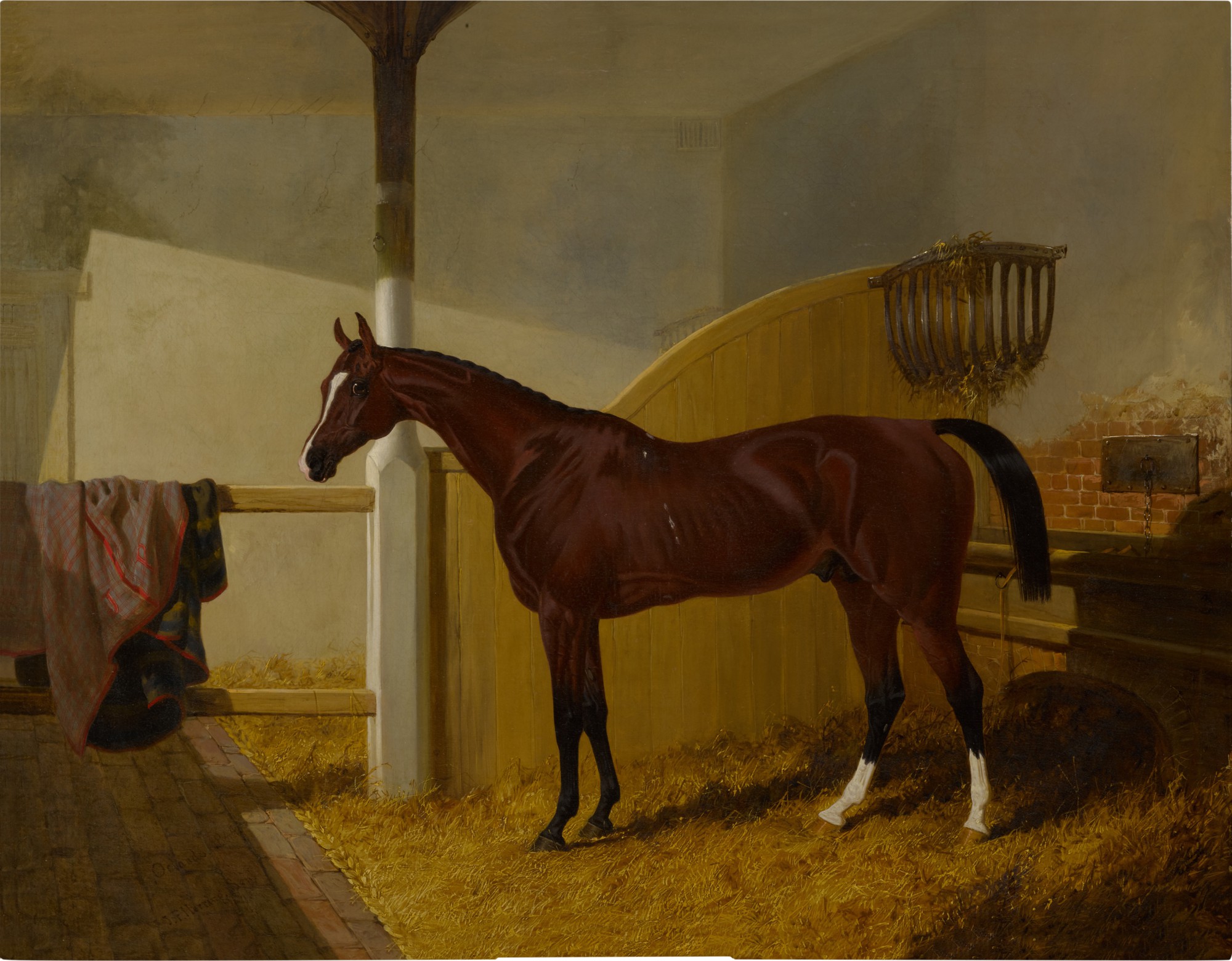
Colonel Peel's Orlando in a Stable
Among his most celebrated individual works is Colonel Peel's Orlando in a Stable, a portrait of a thoroughbred that encapsulates everything Herring did best. Orlando, who won the Derby in 1844, is shown in the particular intimacy of a stable interior, the light falling softly, the horse at rest but alert. Herring's ability to convey the intelligence and personality of an individual animal is fully on display here. These were not generic horses.
Each was a specific creature with a specific presence, and Herring's patrons, who knew their horses the way others know their families, recognized and valued this completely. He painted over thirty winners of the St. Leger Stakes, a record of sustained engagement with the sporting world that remains remarkable. His patrons included King George IV and Queen Victoria, a fact that speaks not only to his commercial success but to the genuine esteem in which he was held by those with the highest expectations.
For collectors today, Herring occupies a position of considerable interest and enduring appeal. His work sits at a productive intersection of sporting art, animal painting, and English rural life, three areas that attract serious collectors with consistent passion. His racing compositions, especially those documenting specific races and named horses from the golden age of British flat racing, carry strong historical significance alongside their visual beauty. When exceptional examples appear at auction, particularly works documenting major Classic races or featuring celebrated thoroughbreds, they draw competitive attention.
Collectors approaching the market should note the range within his output. The sporting works tend to be the most sought after, but the farmyard and pastoral compositions reward careful attention and can offer remarkable quality at a range of price points. Condition and provenance matter considerably, as with any artist of this period, and documented connections to original patrons or significant collections add measurable value. In the broader sweep of British art history, Herring stands in distinguished company.
George Stubbs, whose Whistlejacket of 1762 remains perhaps the supreme achievement of British equestrian painting, cast a long shadow over every horse painter who followed. Herring's relationship to that tradition is one of genuine artistic kinship rather than imitation. Where Stubbs brought a near scientific severity to his compositions, Herring brought warmth, narrative energy, and a coachman's instinctive feel for the living animal. His contemporaries include James Ward, whose dramatic animal paintings were shaped by Romanticism, and Edwin Landseer, whose anthropomorphic approach to animals moved in a very different direction.
Herring's work occupies its own space within that constellation, grounded, expert, and emotionally generous. Herring died in 1865 at Meopham in Kent, having spent his final decades at Meopham Park where the surrounding farmland fed his pastoral work. He left behind a body of work that documents a vanished England with extraordinary fidelity and feeling. The racehorses he painted are long gone, but through his canvases they remain entirely present, caught in the specific light of a specific afternoon at Doncaster or Newmarket, permanent and alive.
That is the gift of a painter who truly understood his subjects, and it is the reason Herring's work continues to reward attention, admiration, and the devoted interest of collectors who understand that great animal painting is great painting, full stop.