John Currin
.jpg/400px-121011-N-OA833-002_(24401310884).jpg)
John Currin: Painting Life With Brilliant Nerve
Artist Spotlight · The Collection Editorial
“I want to be a good painter. That's the most radical thing I can think of.”
John Currin, Interview Magazine
Few painters working today command the kind of sustained critical and collector attention that John Currin has earned over three decades of uncompromising, deeply personal work. His 2003 retrospective at the Whitney Museum of American Art in New York, which subsequently traveled to the Museum of Contemporary Art in Chicago and the Serpentine Gallery in London, announced to a global audience what those paying close attention already knew: Currin was one of the most technically gifted and intellectually audacious figurative painters of his generation. More recently, his continued presence at Gagosian Gallery, with major presentations in New York and London, has kept him at the center of conversations about what painting can and should do in the twenty first century. Currin was born in Boulder, Colorado in 1962, and his early life in the American West gave him a vantage point slightly outside the coastal art establishment, a position that would later inform the wry, observational quality of his gaze.
John Currin
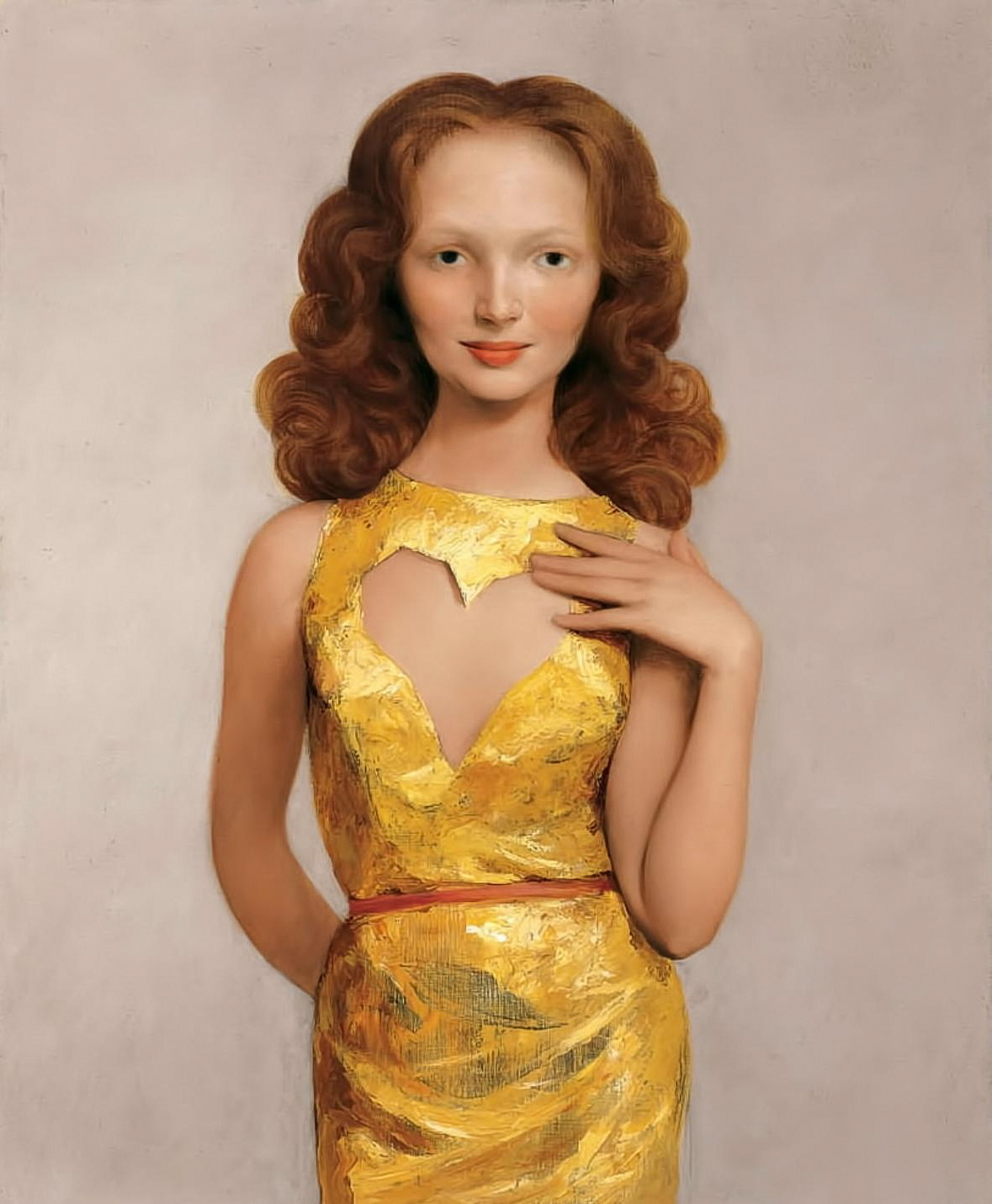
Heartless, 1997
He pursued his undergraduate studies at Carnegie Mellon University before earning his MFA from Yale University School of Art in 1986, placing him within one of the most formative cohorts of painters to pass through New Haven during that era. Yale in the mid 1980s was a place of intense debate about figuration, abstraction, and the legitimacy of traditional craft, and Currin absorbed those arguments with an intellectual hunger that would fuel his entire career. His early work attracted immediate notice precisely because it arrived at a moment when painting itself was being interrogated and questioned. Currin never flinched from the figure, and he never pretended that his interest in the great traditions of Western European painting was anything other than genuine and deeply felt.
His engagement with Old Master techniques, including the luminous, layered glazing methods associated with Flemish and Dutch painting, was not ironic pastiche. It was sincere scholarship applied to radically contemporary and often unsettling subject matter, a combination that produced a friction that critics found impossible to ignore. The works from the 1990s represent one of the richest veins of his output. Paintings such as "Girl in Bed" from 1993 and "Sentimental Woman" from 1996 introduced the slightly distorted, romantically charged female figures that became his signature, rendered with a technique so controlled and lustrous that it demanded comparison with Cranach, Boucher, and Courbet in the same breath.
John Currin
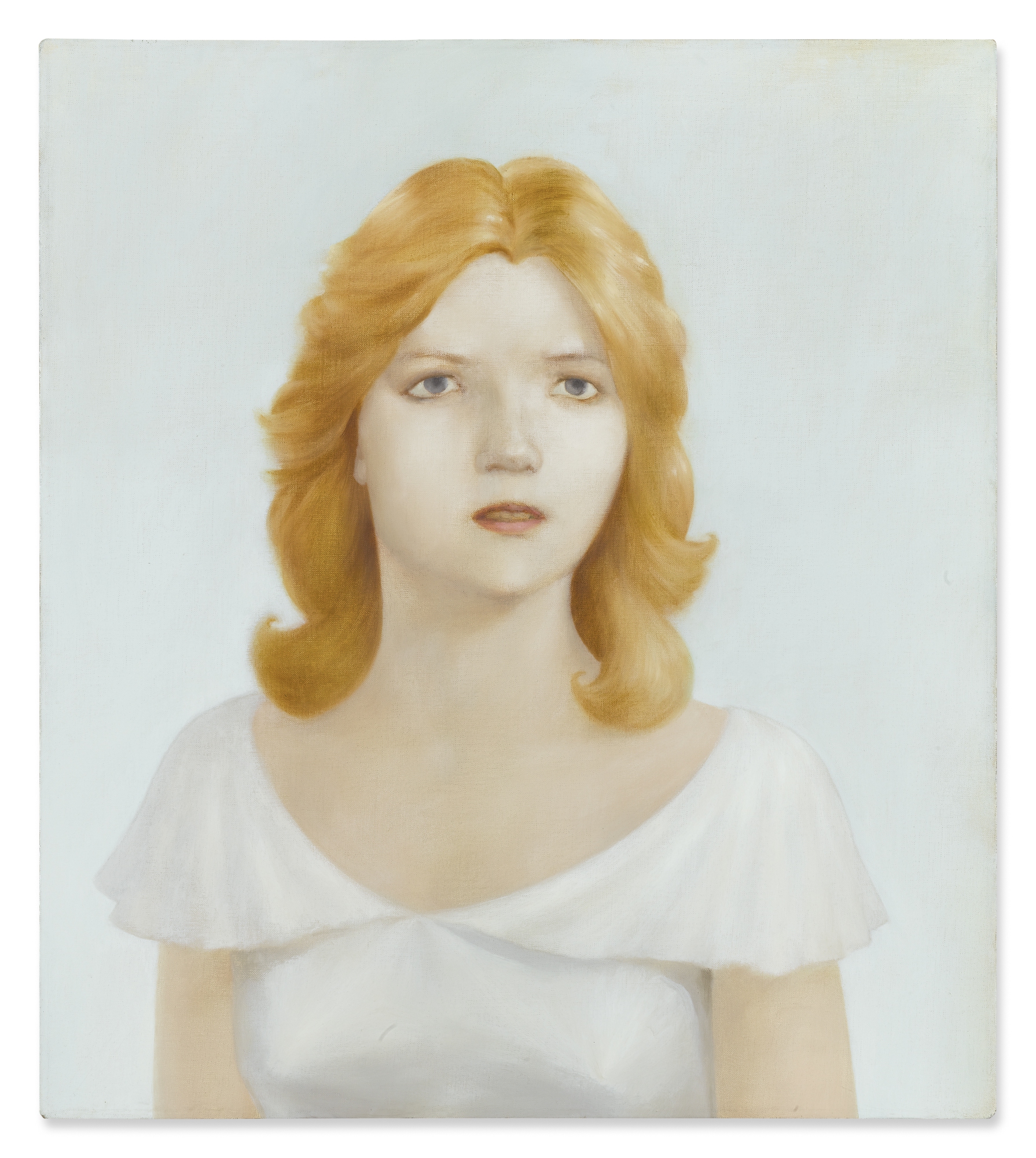
Sherrie Sellers, 1989
"Heartless" from 1997 extended this vocabulary with an emotional ambiguity that lingered long after leaving the canvas, the title functioning as both a literal description and a psychological provocation. These works established Currin as an artist capable of holding contradictions simultaneously, sincerity and irony, reverence and subversion, beauty and unease, without resolving them. Among the most rewarding aspects of studying Currin's practice is the breadth of his working methods. Alongside the major oil paintings, his works on paper reveal a draughtsman of rare precision and wit.
“Painting is the most archaic of the art forms, and that's why it's so interesting to me.”
John Currin, The Guardian
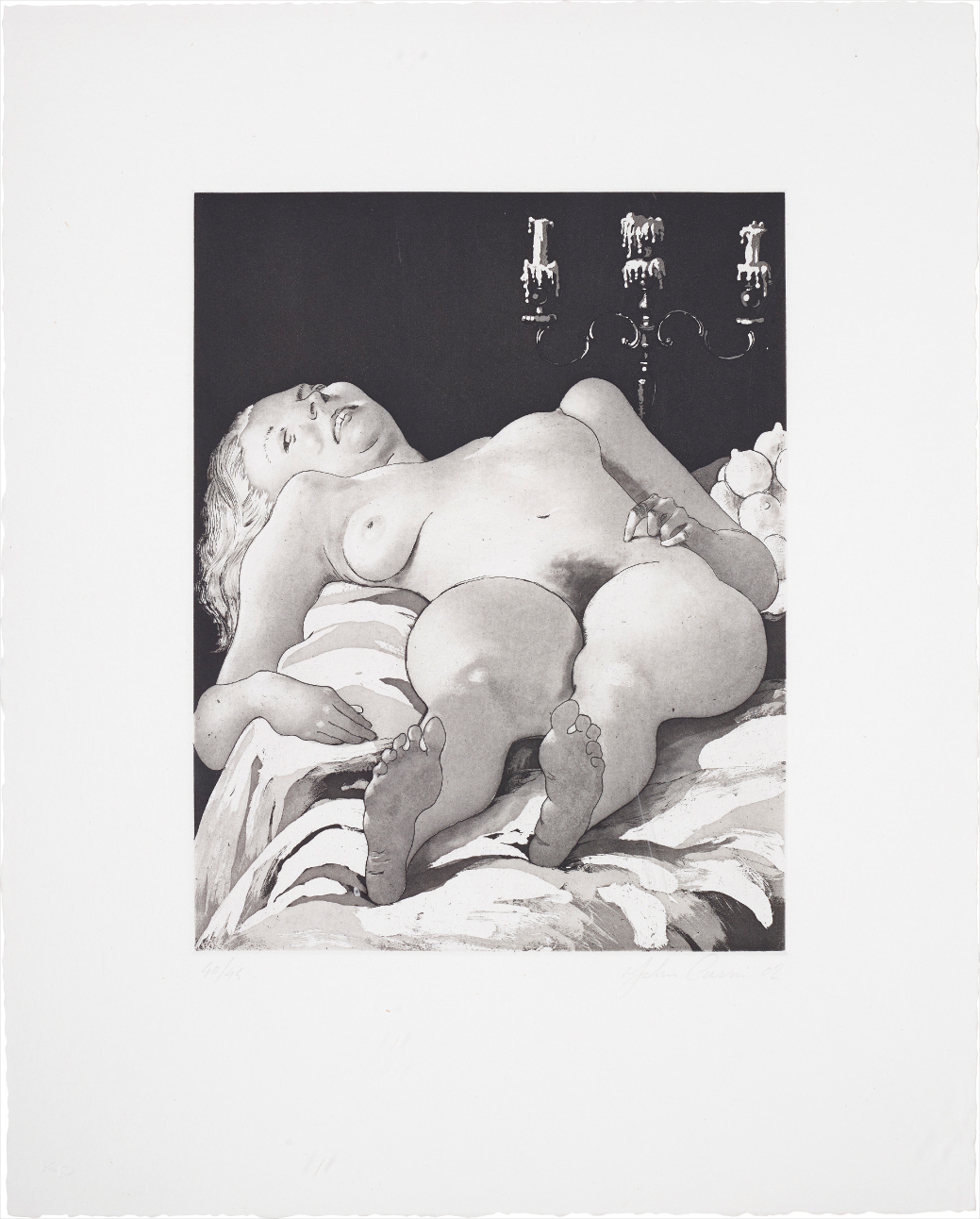
Studies such as his preparatory drawings in ink and graphite demonstrate the rigorous underpinning of every major composition, while his printmaking ventures, including etchings and lithographs produced with the kind of care usually reserved for painting, show an artist who refuses to treat any medium as secondary or subordinate. Works like his etching and aquatint on handmade Kochi NB paper speak to a collector who values the intimacy of the artist's hand at its most exposed and essential. For collectors, the market for Currin's work reflects both his art historical seriousness and his cultural currency. His paintings regularly appear at Christie's, Sotheby's, and Phillips in New York and London, where they achieve prices consistent with the top tier of living American painters.
John Currin
John Currin
The works from the 1990s, particularly those featuring his iconic female figures, are considered especially significant, not only because they established the visual language for which he is best known, but because they were made when the stakes felt highest and the terms of his ambition were being defined in real time. Works on paper and prints offer a compelling entry point for collectors drawn to the immediacy of his line and the accessibility of works outside the major painting format. Currin's position in art history becomes clearer when considered alongside a constellation of artists navigating similar tensions between tradition and contemporaneity. His relationship to the figurative legacy of Lucian Freud and Eric Fischl is evident, though Currin tilts more decisively toward the decorative and the idealized even as he complicates both.
He shares with Lisa Yuskavage a willingness to court controversy through female representation, and with Neo Rauch a fascination with painting's capacity to hold psychological strangeness within technically masterful surfaces. Internationally, his reverence for Northern European painting places him in dialogue with painters far older than himself, a conversation he conducts with full awareness of its implications. What makes Currin's work endure, and what makes it feel urgently relevant at this particular moment, is his insistence on painting as a site of genuine feeling. In an era saturated with conceptual frameworks and post medium theory, his canvases assert with calm conviction that how something is painted is inseparable from what it means to paint it at all.
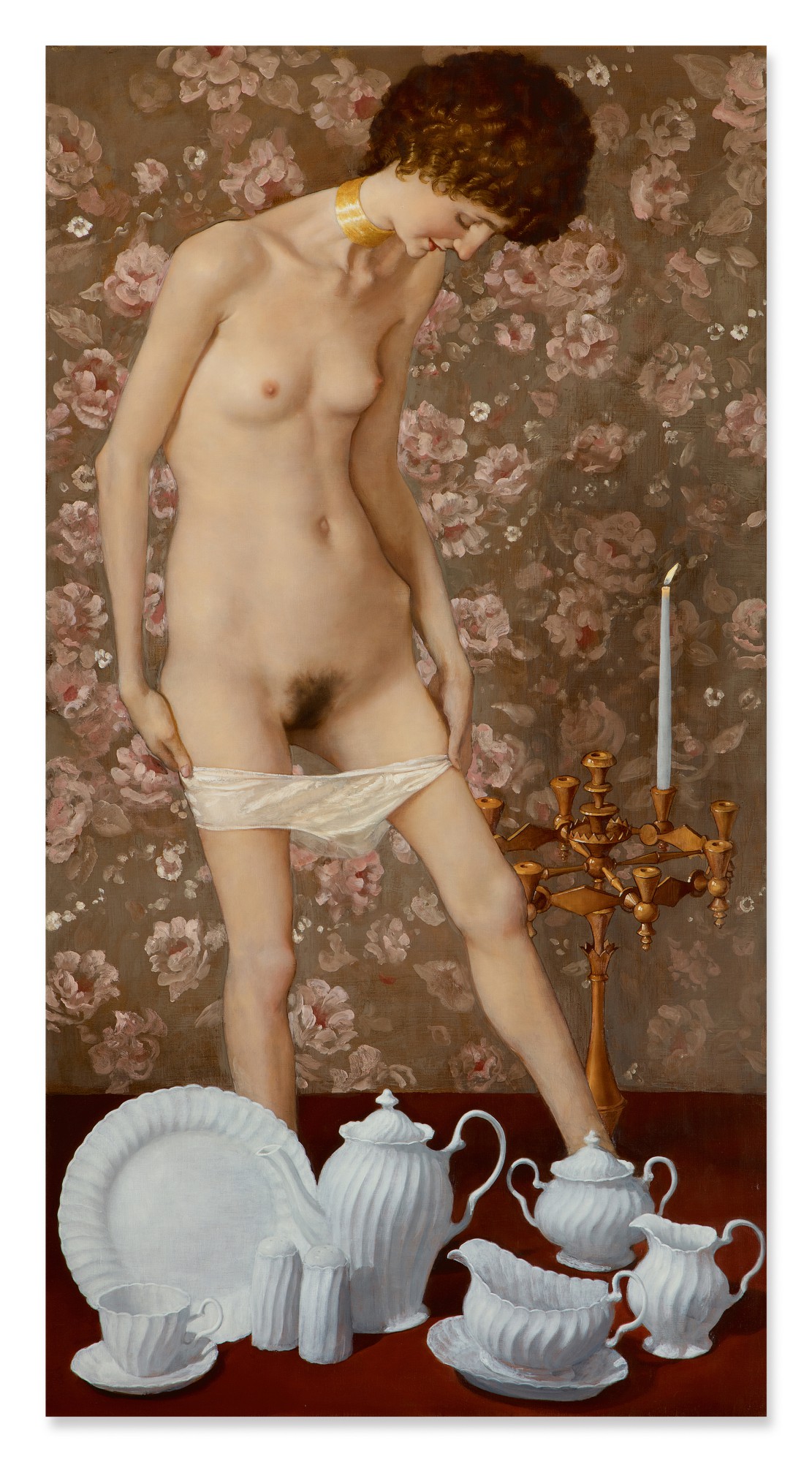
John Currin
Tolbrook, 2006
His subjects, whether glamorous women of a certain American type, domestic interiors charged with longing, or figures drawn from art historical memory, are never merely illustrations of ideas. They are propositions about desire, perception, and the strange tenderness of looking closely at another person. To collect Currin is to invest in one of the most searching and pleasurable bodies of work produced by any American artist of the last four decades.
Explore books about John Currin