Joel Sternfeld
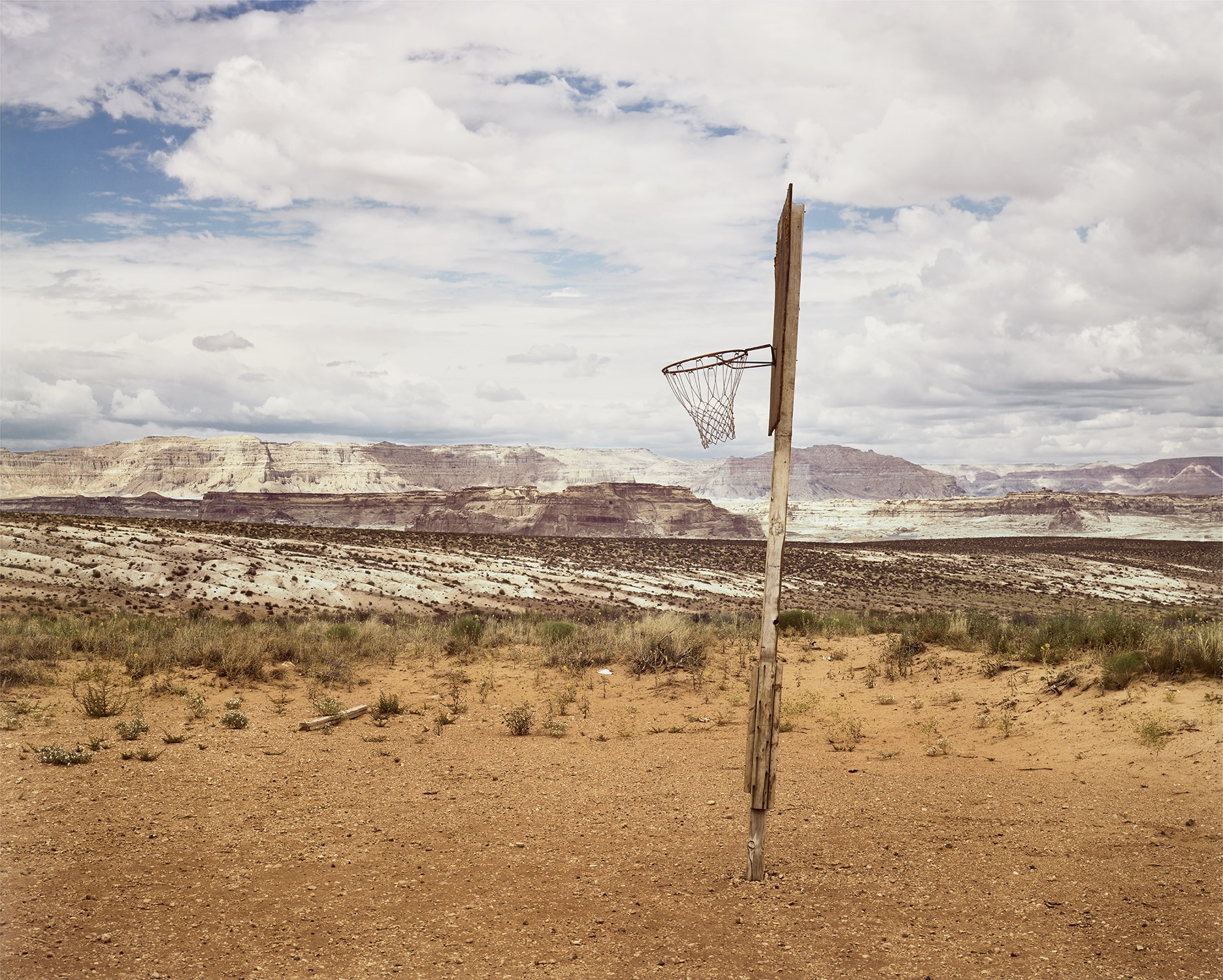
Joel Sternfeld Sees America Whole
Artist Spotlight · The Collection Editorial
“Every photograph is a certificate of presence. I am interested in the presence of America.”
Joel Sternfeld, American Prospects
There is a moment in the history of American photography when color stopped being decoration and became argument. Joel Sternfeld was one of the artists who made that happen. His large format chromogenic prints, produced across decades of tireless road travel and patient observation, redefined what documentary photography could do and say. Today, with works held in the permanent collections of MoMA, the Whitney Museum of American Art, and the San Francisco Museum of Modern Art, Sternfeld stands as one of the great chroniclers of the American condition, an artist whose work rewards returning visitors and first time viewers in equal measure.
Joel Sternfeld
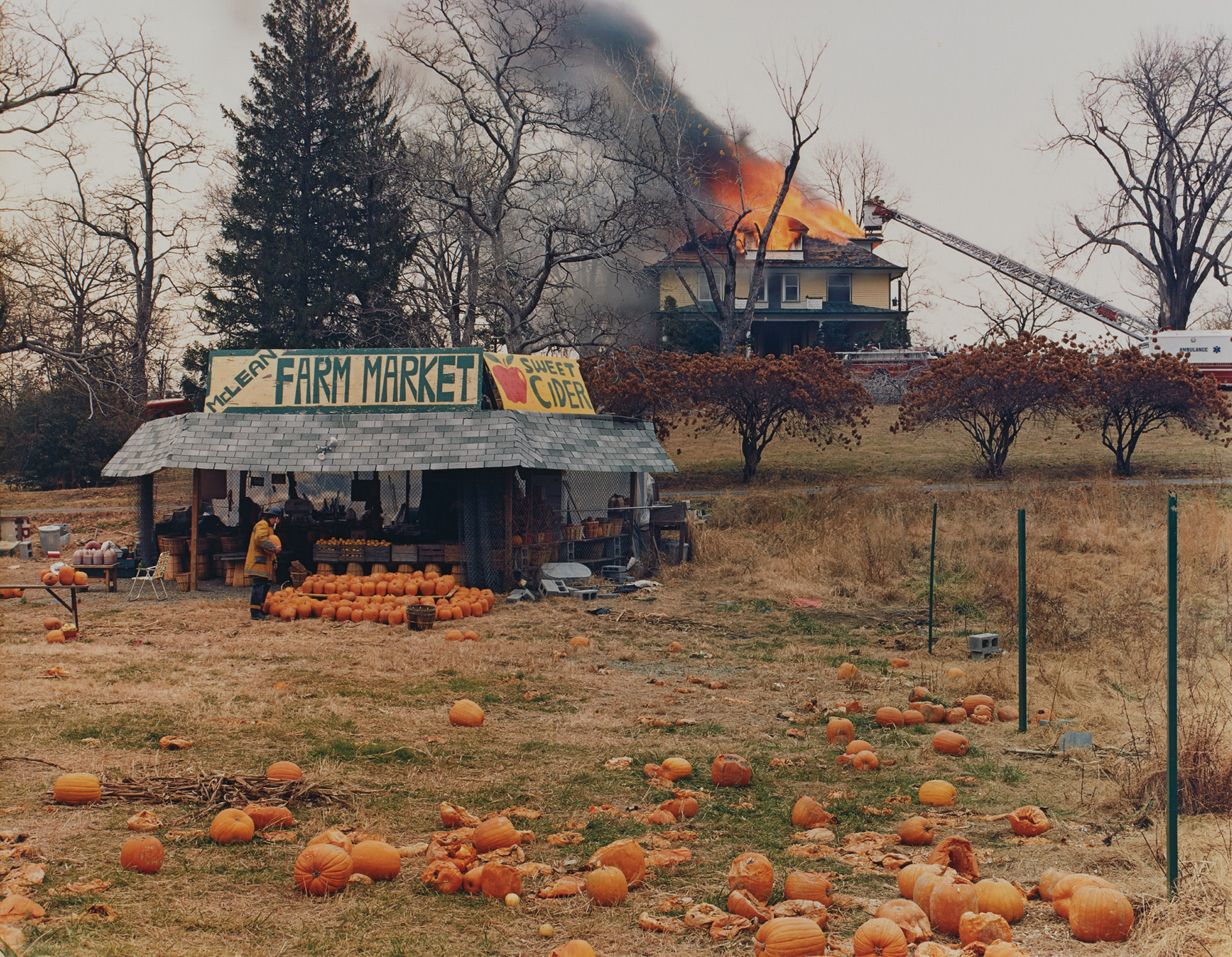
McLean, Virginia
Sternfeld was born in New York City in 1944, and came of age during the postwar decades that transformed American culture, landscape, and self image in rapid and often contradictory ways. He studied at Dartmouth College, graduating in 1965, and began his photographic career at a time when the medium was still largely understood in black and white terms. The dominant models for serious photography in America leaned heavily on the austere tradition of Cartier Bresson and the social documentary urgency of the Farm Security Administration photographers. Color was the province of commercial work and advertising, not of art.
Sternfeld's early commitment to color was therefore already a statement, a deliberate departure from accepted hierarchies of taste. The turning point in Sternfeld's development came with the long cross country journeys he undertook throughout the late 1970s, traveling the United States in a Volkswagen camper and making pictures with an 8x10 large format camera. The slowness of that process, the deliberate preparation required to set up and expose a large plate, was entirely in keeping with his sensibility. He was not hunting decisive moments in the Cartier Bresson sense.
Joel Sternfeld
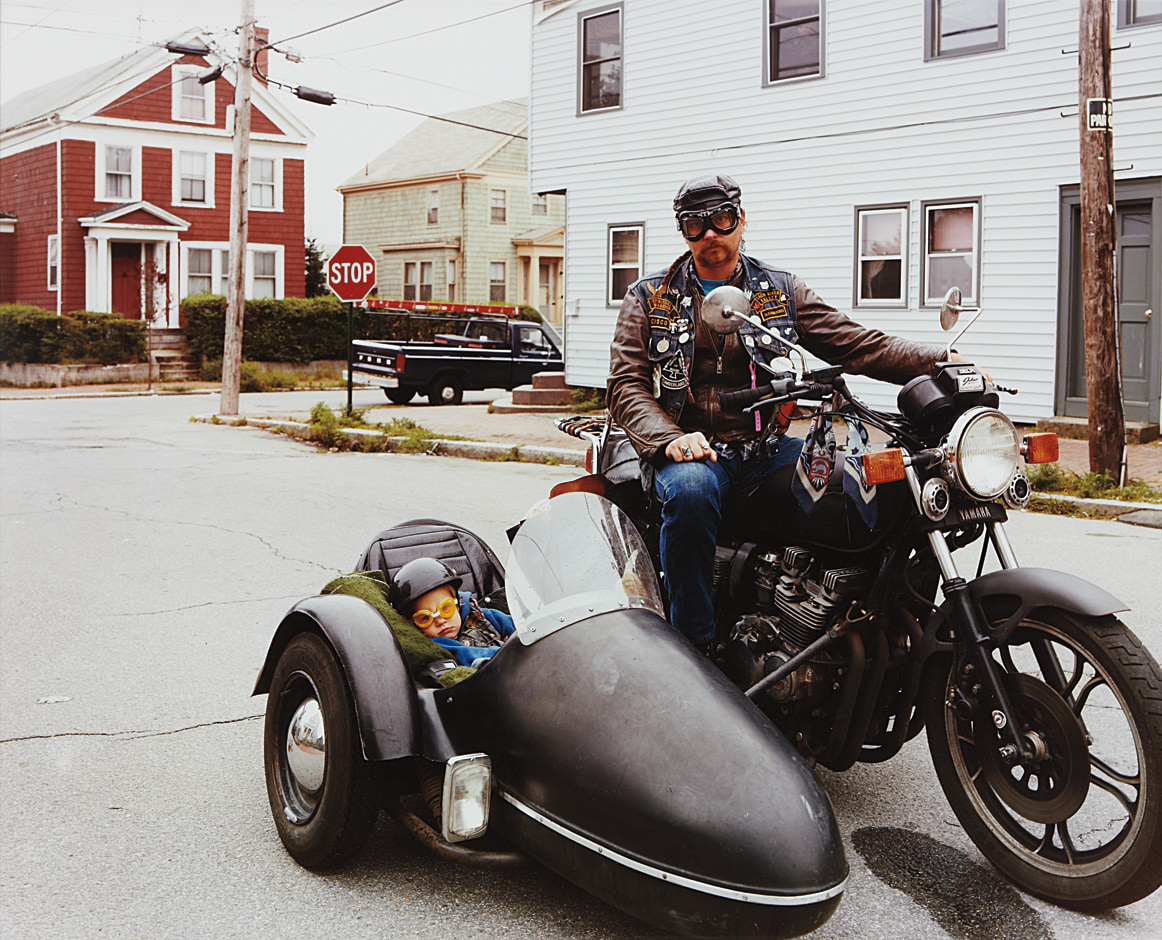
Motorcyclists, Portland, Maine, August
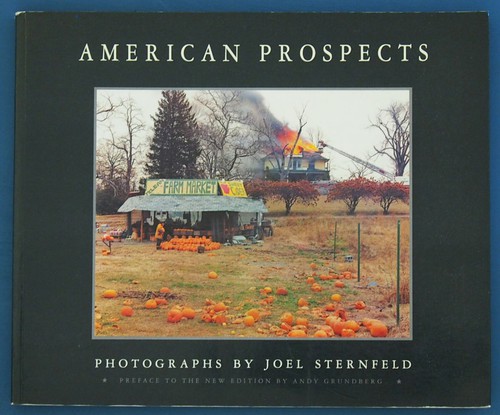
He was waiting for the world to compose itself into something that looked ordinary and then, on closer inspection, revealed itself to be extraordinary, strange, or quietly devastating. These journeys produced the body of work eventually published as American Prospects in 1987, a landmark book that placed Sternfeld in the company of Robert Frank and Walker Evans as a defining documentarian of the national landscape. American Prospects is structured around a central irony that Sternfeld pursues with remarkable consistency and wit. The photographs show America as a place of abundance, color, and visual stimulation, and then let the details of each scene accumulate until something unsettling emerges.
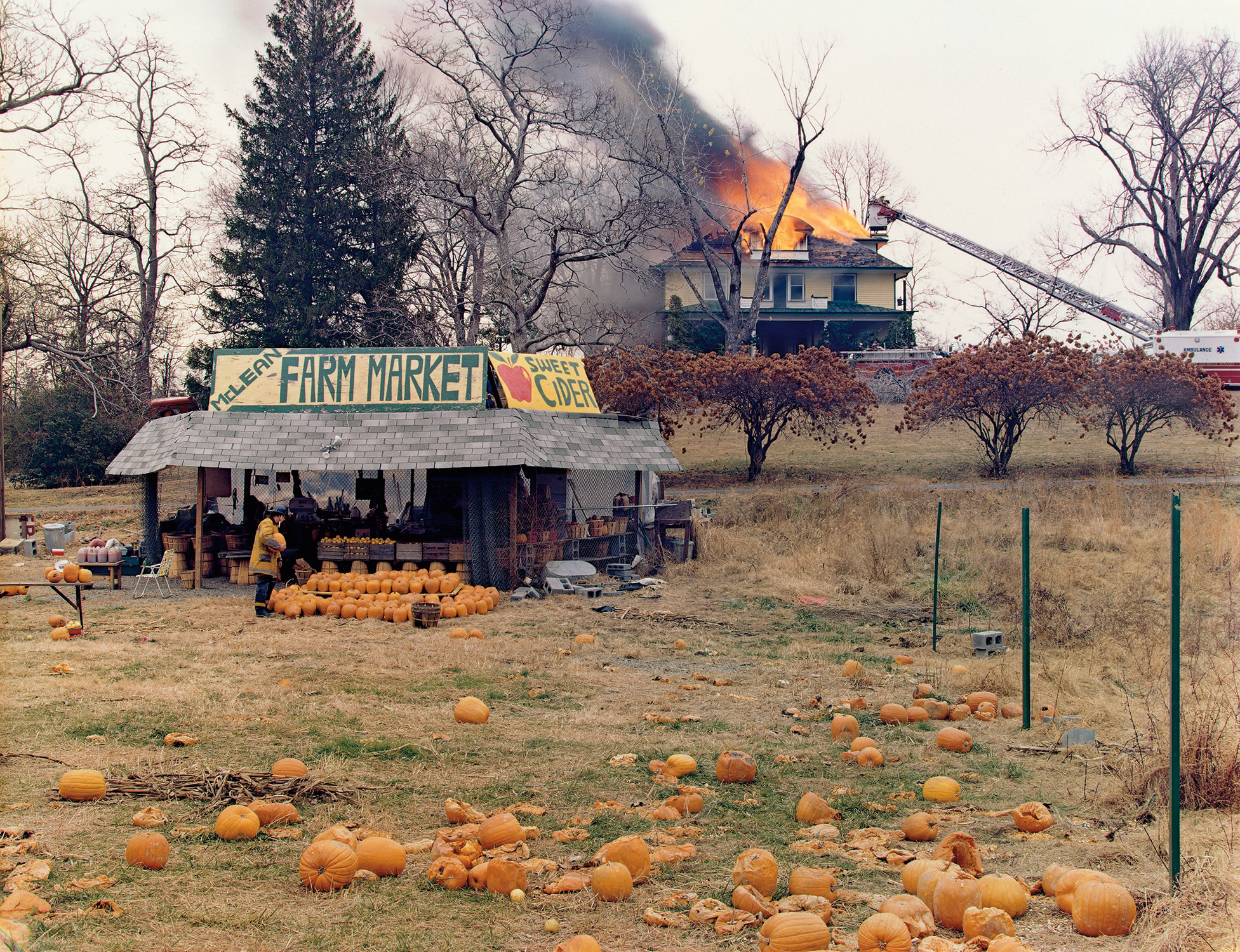
The most celebrated single image, McLean, Virginia, from 1978, shows a firefighter calmly selecting a pumpkin at a roadside produce stand while a house burns in the background behind him. The image was produced as a dye transfer print, a technically demanding and luminous process that heightens the orange of the pumpkin and the orange of the flames into an almost cheerful visual rhyme. It is an image about distraction, about the way American consumer pleasure coexists with crisis, and it has lost none of its resonance. Multiple editions of this work appear in major collections, and it remains among the most instructive examples of what large format color photography can achieve in terms of layered meaning.
Joel Sternfeld
McLean, Virginia, December 4
After a Flash Flood, Rancho Mirage, California, July from 1979 shows a luxury home half submerged in muddy water, its manicured setting overwhelmed by nature with perfect indifference to the aspirations of its owner. Near Vail, Colorado, October 1980 places a lone shopper in a parking lot against mountains of implausible beauty. These images share a formal strategy: the picture looks, at first, like a benign record of everyday American life, and then the relationship between foreground and background, between human activity and landscape context, tips the whole scene into something that feels simultaneously comic and melancholy. A Woman Working at the Supreme Bean, Port Orchard, Washington, August, flush mounted and richly detailed, belongs to this tradition of apparently mundane scenes that accumulate into a portrait of a culture in negotiation with its own promises.
Exhausted Renegade Elephant, Woodland, Washington, June is among the most remarkable single images in the series: an elephant lying in a roadside ditch, perfectly still, while a state trooper and onlookers stand nearby. It is absurd, tender, and very strange, a quintessential Sternfeld. Sternfeld's later projects expanded his range significantly. On This Site, published in 1996, documented locations across America where acts of violence had occurred, presenting placid and unremarkable landscapes haunted entirely by what the captions revealed.
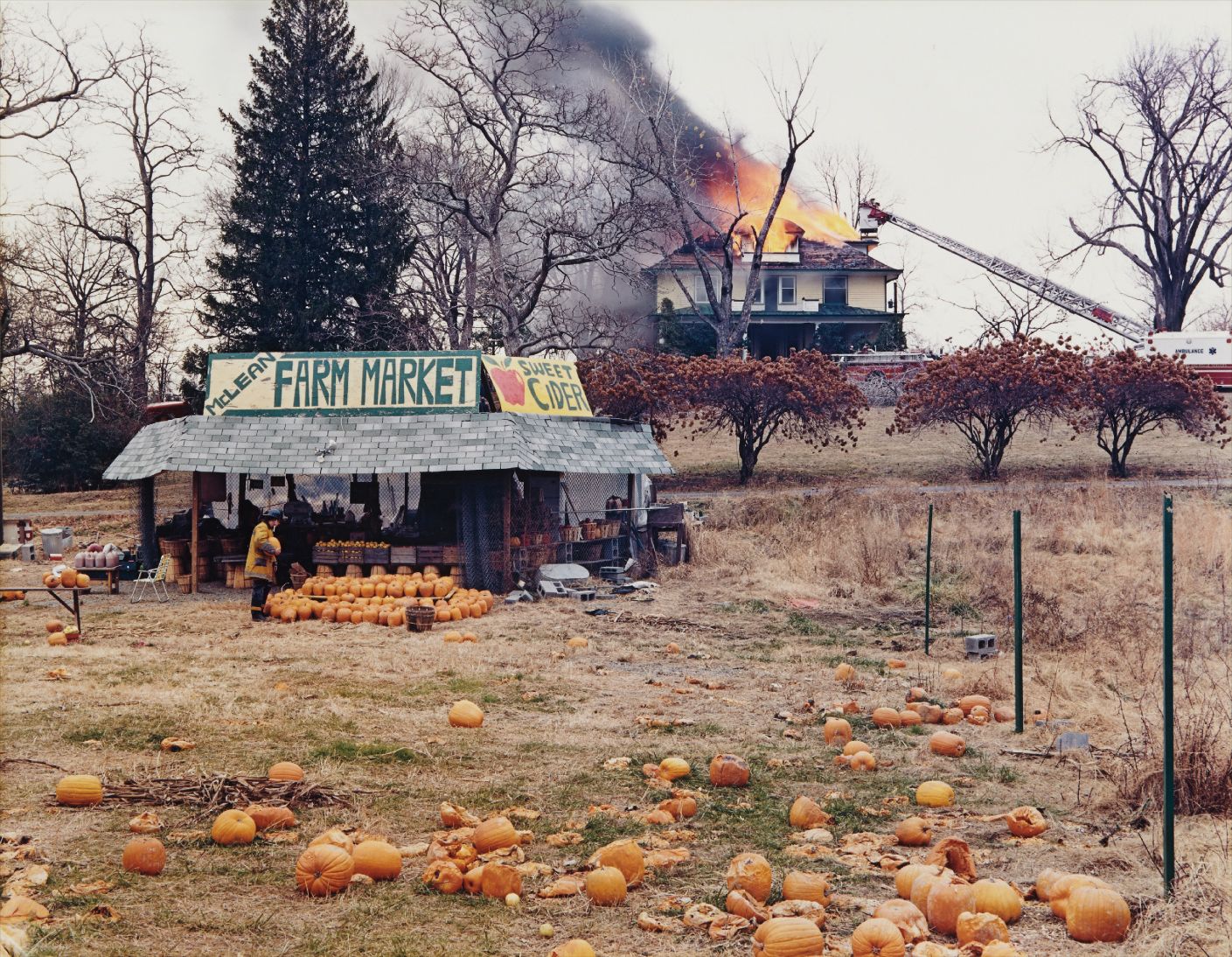
Joel Sternfeld
McLean Virginia, December 4
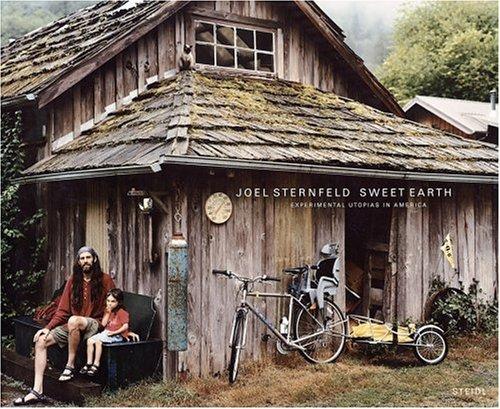
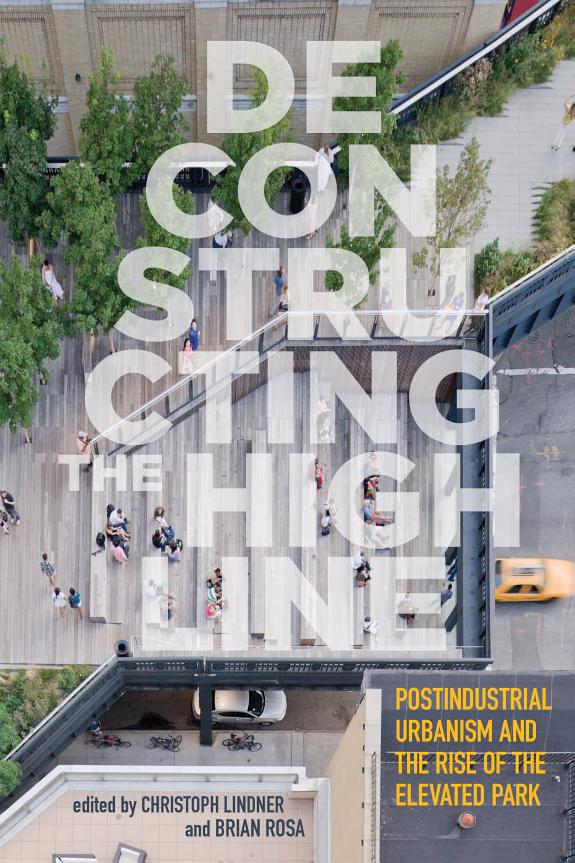
Walking the High Line, from 2001, turned a disused elevated railway in Manhattan into a meditation on urban memory and the persistence of the natural world in built environments. The project became part of the cultural conversation that eventually led to the High Line's transformation into one of New York's most beloved public spaces. Sweet Earth, Encountering the American Utopia, published in 2006, surveyed intentional communities across the United States with characteristic generosity and curiosity. Each of these series demonstrates Sternfeld's remarkable ability to reinvent his practice while remaining true to a core set of values: patience, formal rigor, humane attention, and a deep affection for the complexity of American life.
From a collecting perspective, Sternfeld's work represents a compelling combination of art historical significance and continued market strength. His prints appear regularly in major auction houses and in the programs of leading photography galleries internationally. The dye transfer prints from American Prospects are particularly prized for their technical beauty and historical importance. Chromogenic prints from the same series and from later projects offer collectors access to his vision at a range of price points, and flush mounted examples from series like Walking the High Line carry a distinct presence on the wall.
Collectors drawn to the work of William Eggleston, Stephen Shore, and Mitch Epstein will find Sternfeld's practice in close and productive conversation with all three. Like those artists, he transformed color photography from a medium of record into a medium of interpretation. Like Shore in particular, he understood that the American vernacular landscape, the strip mall, the parking lot, the roadside stop, was a subject worthy of the most serious formal attention. Sternfeld's place in art history is secure, but his work continues to feel urgently contemporary.
The questions he has been asking since the late 1970s, about the relationship between American prosperity and American forgetting, about the comedy and pathos built into the national landscape, about what it means to look carefully at ordinary things, are if anything more pressing now than when he first set out across the country with his large format camera and his extraordinary eye. To own a Sternfeld print is to own a piece of that ongoing conversation, and to be reminded, every time you look at it, that the world is stranger, funnier, and more poignant than it first appears.
Explore books about Joel Sternfeld