Joel Meyerowitz
Joel Meyerowitz, Where Light Becomes Memory
Artist Spotlight · The Collection Editorial
“Color is information. It tells you the time of day, the season, the mood of a place.”
Joel Meyerowitz, interview
There are photographers who document the world, and there are photographers who transform it. Joel Meyerowitz belongs unmistakably to the second category. In recent years, major retrospective attention has returned to his practice with renewed urgency, as institutions and collectors alike reckon with the full arc of a career that stretches from the sidewalks of 1960s New York to the luminous coastline of Cape Cod and beyond. His 2023 retrospective at the Tate Modern in London drew extraordinary audiences and confirmed what serious collectors have long understood: Meyerowitz is not simply a photographer of the twentieth century but one of its indispensable visual poets.
Joel Meyerowitz
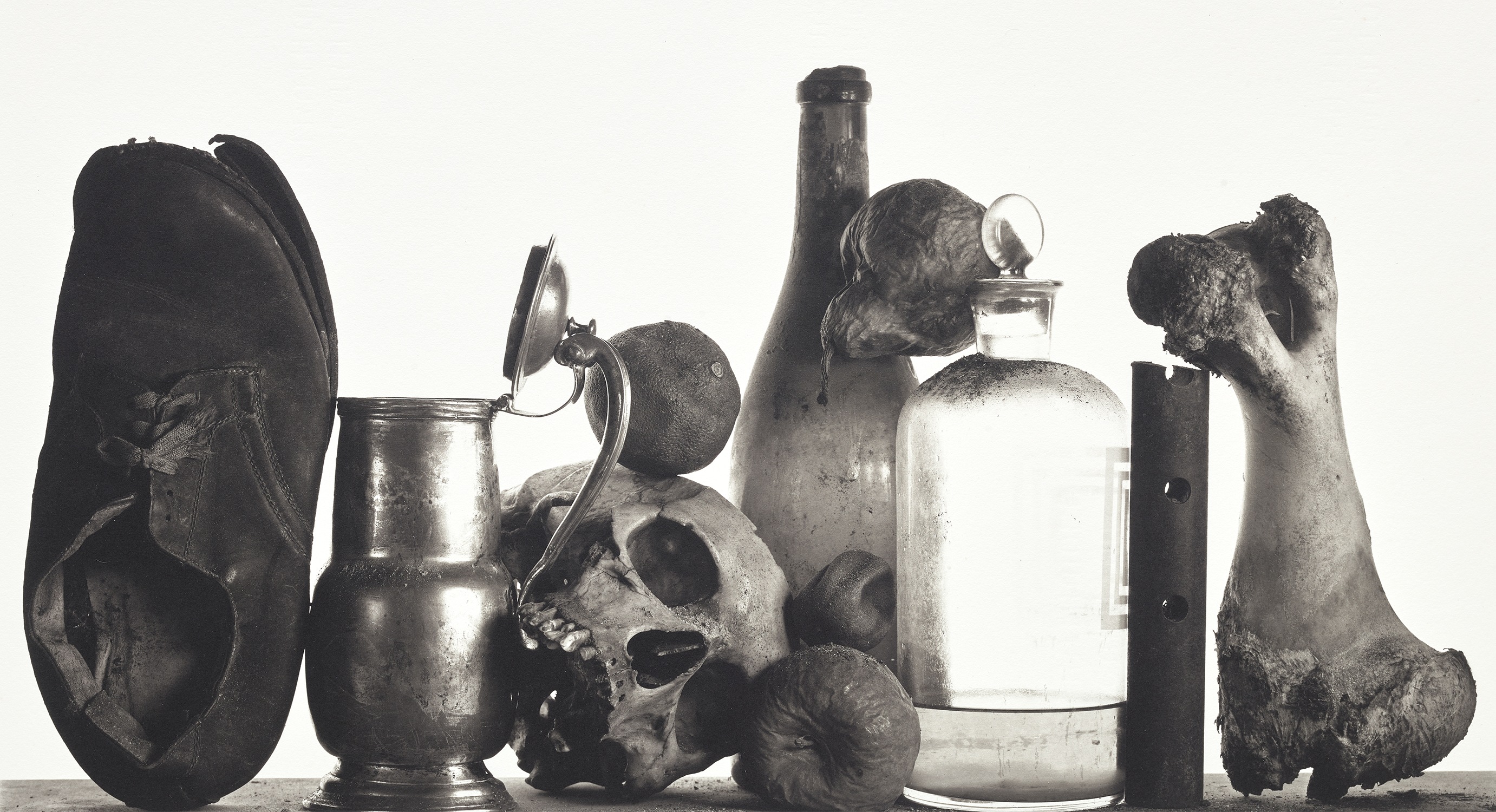
Camel Coats, New York City
Born in New York City in 1938, Meyerowitz grew up in the Bronx and came to photography almost by accident. Working as an art director at an advertising agency in the early 1960s, he accompanied the photographer Robert Frank on a shoot and was so transfixed by Frank's quiet authority and way of seeing that he picked up a camera and never truly put it down. This origin story matters because it speaks to something essential in Meyerowitz's sensibility: he came to the medium not through academic instruction but through pure, instinctive recognition. The streets of New York were his first classroom, and they gave him everything.
Through the 1960s and into the 1970s, Meyerowitz worked alongside and in dialogue with some of the great street photographers of his generation. He befriended Garry Winogrand and Tony Ray Jones, and the three of them brought a restless, joyful energy to the practice of photographing urban life. But where Winogrand's work often crackled with tension and irony, Meyerowitz's eye was drawn toward something warmer, more openly affectionate. He loved people.
Joel Meyerowitz
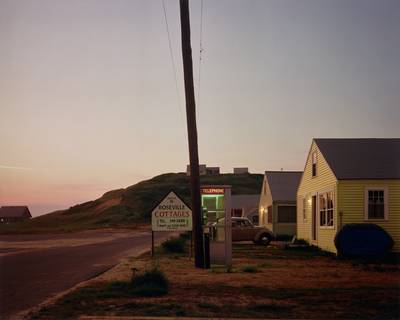
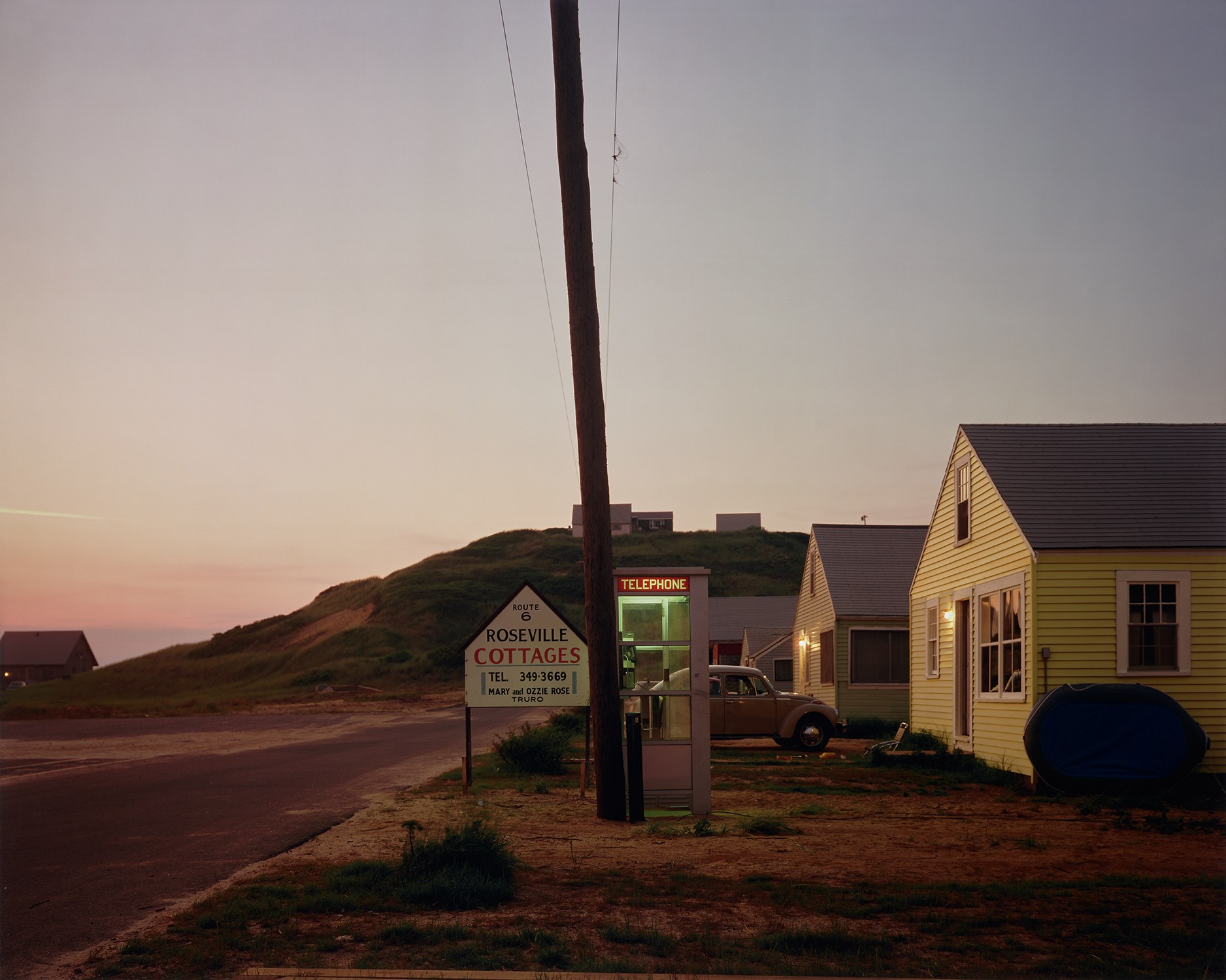
Roseville Cottages, Truro
He loved the way they moved through light. And crucially, he loved color at a time when the critical establishment considered black and white the only legitimate language for serious photographic art. Meyerowitz's insistence on color was not merely a stylistic preference but a principled artistic stance. Through the 1970s, as he transitioned from a 35mm camera to the slow, deliberate process of a large format 8x10 view camera, he began to explore what color photography could truly do when approached with the patience and intentionality of a painter.
“I wanted to show that color photography was a serious medium, that it could be art.”
Joel Meyerowitz
His Cape Cod series, culminating in the landmark 1979 publication Cape Light, became a watershed moment not just in his career but in the entire history of photography. The book demonstrated with quiet conclusiveness that color was not a compromise or a concession to commercial taste but a medium of profound expressive depth. Cape Light changed how a generation of photographers thought about their practice. The works from his Cape Cod period that appear across significant collections today reveal the full range of his gift.
Joel Meyerowitz
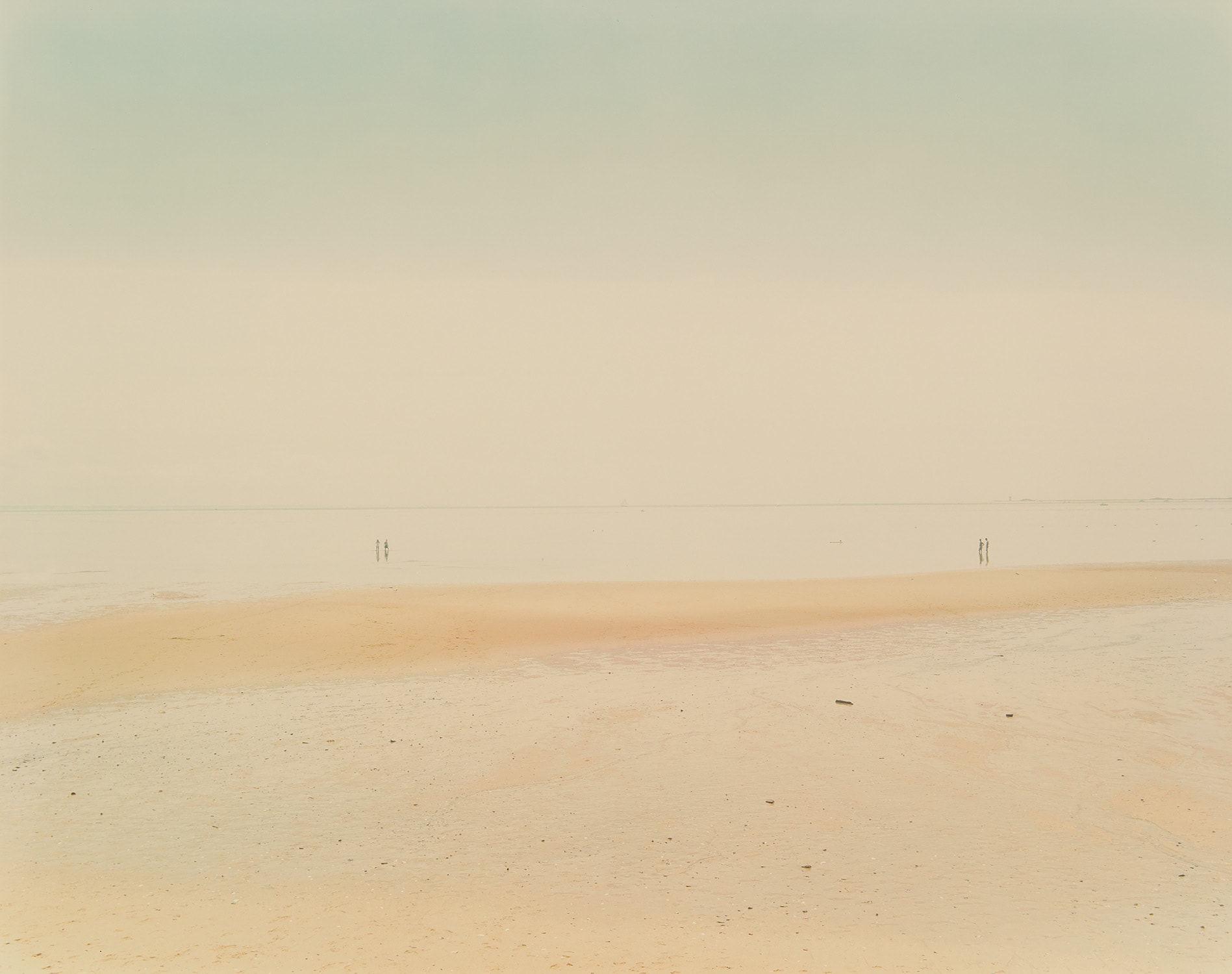
Bay/Sky, Provincetown
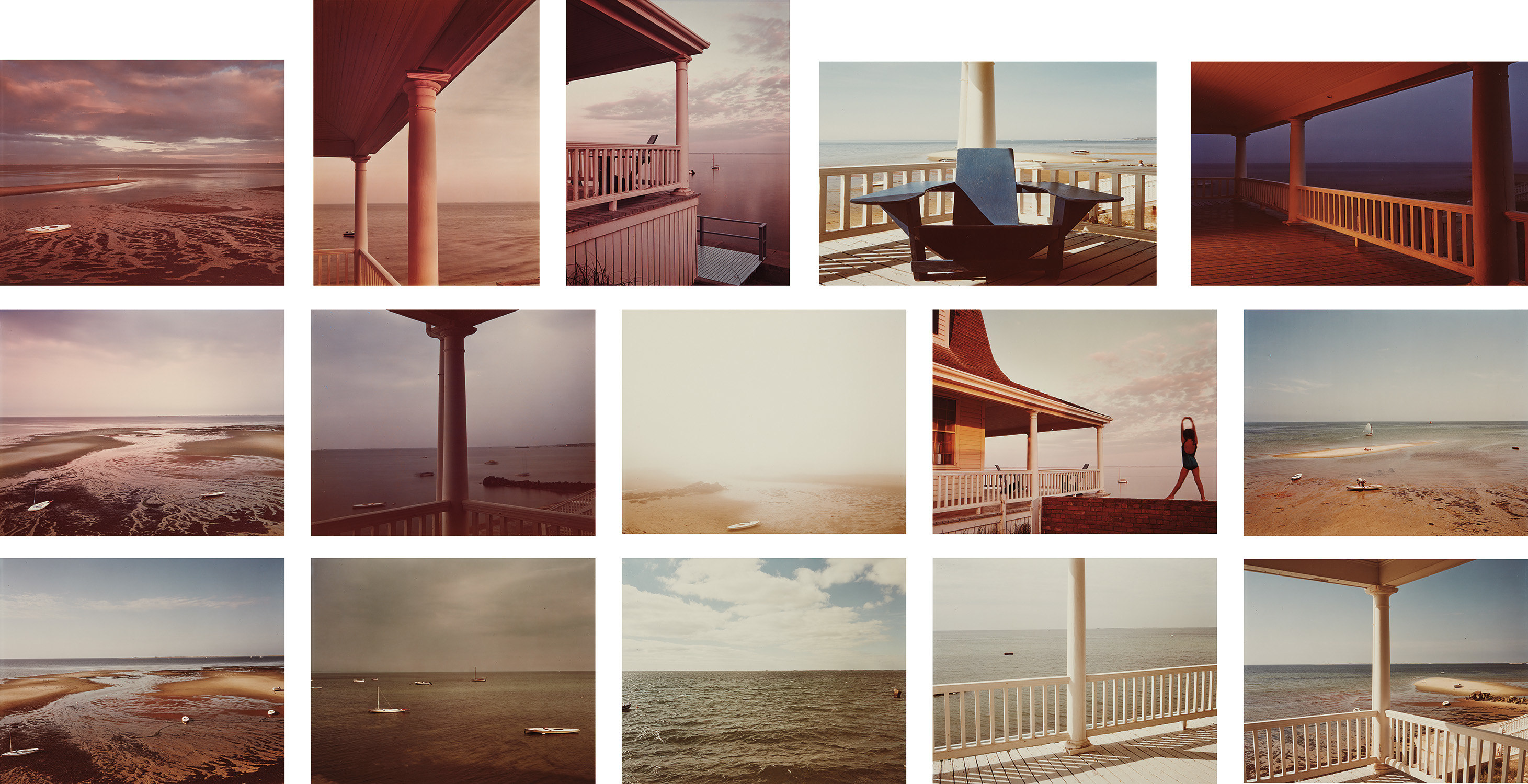
Images such as Roseville Cottages, Truro and the celebrated Bay/Sky series capture the particular quality of light on the outer Cape, that extraordinary combination of ocean atmosphere and wide New England sky, with a tenderness that feels almost impossible to achieve through a mechanical lens. His Provincetown pictures, including Woman in Blue and Sunlight and Dairyland, glow with an interior warmth that recalls the great colorists of European painting. Meanwhile, works like Bay/Sky/Porch, a suite of fifteen chromogenic prints published in 1979, demonstrate his understanding of seriality and rhythm, the way a sequence of images can build meaning the way a piece of music builds through its movements. His New York street work is equally essential to understanding his importance.
Camel Coats, New York City is one of those photographs that announces itself immediately as a classic: the figures, the steam, the coats themselves catching light in that particular way that only New York winter manages. Similarly, New York City, 42nd St. and Fifth Ave., printed as a dye transfer in 1976, captures the city at a moment of extraordinary visual complexity with a compositional ease that disguises enormous skill.
Joel Meyerowitz
Bay/Sky/Porch
These are not snapshots. They are pictures that reward long looking, that give more of themselves the more time you spend inside them. For collectors, Meyerowitz presents a remarkably rich opportunity. His work spans multiple formats and periods, from the early dye transfer prints that carry the warmth of an analog process at its most refined, to the chromogenic prints of the Cape Cod period, to later archival pigment prints that bring his images into crisp contemporary dialogue with digital presentation.
Dye transfer prints in particular are highly sought after for their extraordinary tonal range and luminosity, and examples from the mid 1970s New York period represent some of the most desirable works in his output. Collectors acquiring chromogenic prints from the Cape Cod series are securing pieces from one of photography's genuinely canonical bodies of work, work that hangs in the permanent collections of the Museum of Modern Art, the Metropolitan Museum of Art, and the Art Institute of Chicago, among many others. To place Meyerowitz within art history is to understand him in relation to a specific American tradition of lyrical documentary photography that includes Walker Evans, Stephen Shore, and William Eggleston. Shore and Eggleston are natural comparisons because all three were central to the legitimization of color photography as fine art, but Meyerowitz brings a particular humanistic warmth that distinguishes him.
Where Shore is architectural and cool, and Eggleston surreal and slightly unnerving, Meyerowitz is irresistibly generous. His pictures feel like an invitation. His relationship to light also invites comparison with painters: Fairfield Porter and Edward Hopper both understood the peculiar quality of New England coastal light that Meyerowitz would later spend decades trying to capture in photographs. What endures most powerfully in Meyerowitz's legacy is his insistence on presence.
He has spoken often about the importance of being in the world, of standing on a street corner or a porch and letting the moment reveal itself rather than forcing it. This philosophy has made him not only a great artist but an extraordinary teacher, and his influence runs through the work of countless photographers who came after him. At a cultural moment when images are produced and consumed at a speed that makes individual pictures almost invisible, Meyerowitz's work asks us to slow down, to look carefully, and to trust that the world, seen clearly and with love, is endlessly beautiful. That is not a modest claim.
It is a very great one, and he earns it completely.
Explore books about Joel Meyerowitz