Joe Bradley
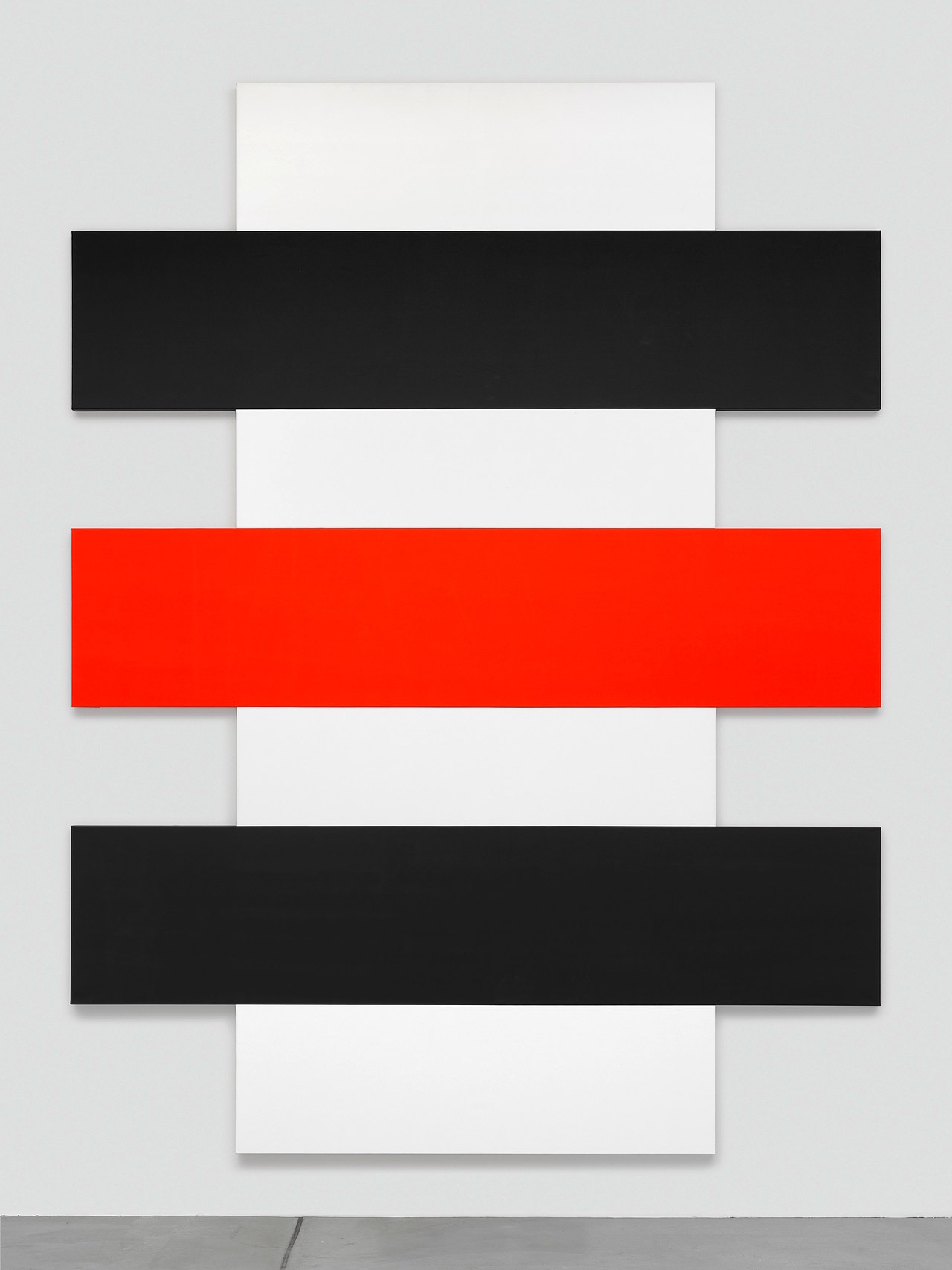
Joe Bradley Makes Painting Feel Alive Again
Artist Spotlight · The Collection Editorial
“I don't go into painting with any kind of plan. The ones I am happiest with I have no idea how I arrived at.”
Joe Bradley
There are moments in the contemporary art world when a painter arrives who seems to channel something genuinely untamed, something that resists the tidiness of theory and the polish of market expectation. Joe Bradley is that painter. In recent years, his work has commanded serious attention across institutions on both sides of the Atlantic, with landmark showings at the Stedelijk Museum in Amsterdam, the Albright Knox Art Gallery in Buffalo, and the Institute of Contemporary Arts in London cementing his reputation as one of the most vital and original painters working today. Collectors who encountered his work a decade ago speak about it with the particular reverence reserved for early recognitions that turned out to be completely right.
Joe Bradley
Untitled
Bradley was born in 1975 and grew up in New England, a background that carries with it a certain self reliance and an instinct toward directness that runs through everything he makes. He came of age during a period when painting was perpetually being declared dead, which perhaps gave him the freedom to approach it without the burden of needing to rescue or justify it. Instead, he simply made work that interested him, drawing on sources that felt alive rather than sanctioned: the raw expressiveness of Art Brut, the visual language of street tags and graffiti, the lurching formal experiments of early modernism, and the kind of drawing that untrained hands produce when they are simply trying to communicate something true. His artistic development unfolded through a series of distinct but interlocking periods, each one demonstrating a willingness to abandon what was working in favor of what felt more urgent.
His early Schmagoo paintings, spare and almost diagrammatic, announced an artist deeply interested in reduction and in the possibilities of the nearly empty canvas. These works owed something to the flatness of commercial illustration and something to the economy of outsider art, but they were unmistakably the product of a sophisticated painterly intelligence. They found admirers quickly, and for a moment it might have seemed that Bradley would consolidate this approach into a recognizable signature. Instead, he moved on.
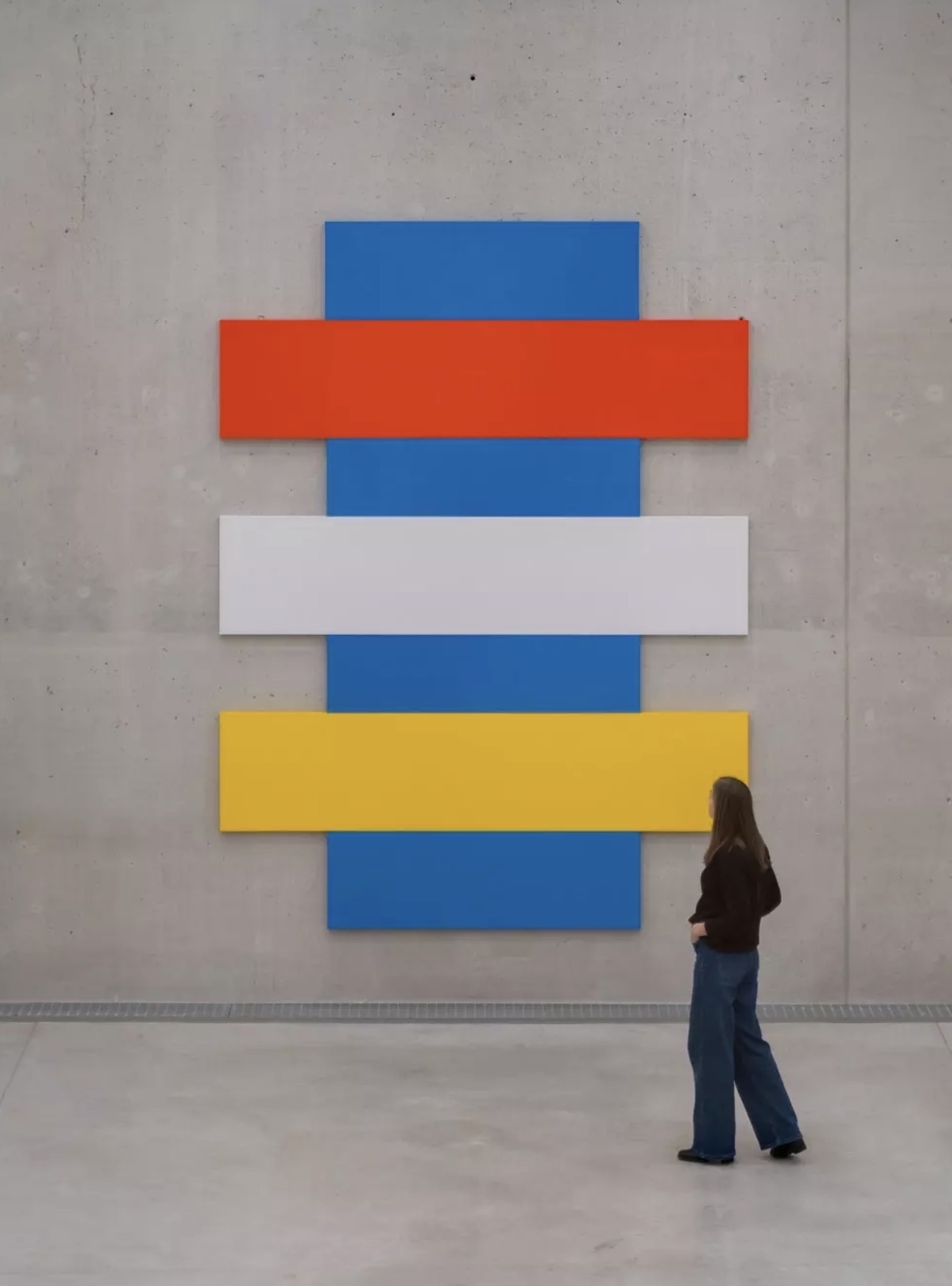
Joe Bradley
Untitled
The figurative work that followed pushed into far messier territory. Bradley began introducing crude, archetypal figures onto his canvases, beings that looked simultaneously ancient and contemporary, drawn from some shared visual unconscious rather than from any specific cultural tradition. Works like Walker from 2007, an acrylic on canvas executed in four parts, and the remarkable Big Boy from 2010, made with oil, oilstick, grease, and actual studio detritus on joined canvas, showed an artist deliberately contaminating the picture plane, bringing the physical residue of making into the finished object. These are paintings that do not pretend the studio is a clean or theoretical place.
“It's just visual background noise until you start to engage with it, and then you just realize that it's everywhere.”
Joe Bradley, on graffiti
They smell of process, of real time spent with real materials. Perhaps nowhere is Bradley's sensibility more fully realized than in works like Mushmouth from 2010, where soft foam, oil, and glue arrive on canvas in configurations that hover between sculpture and painting, between intention and accident. The mixed media canvases from this period, including works incorporating spray paint alongside oil and traditional pigment, reflect his sustained engagement with graffiti not as aesthetic style to be borrowed but as a genuine mode of visual thinking. He has spoken openly about the way tags and street marks ceased to be background noise for him once he began to pay real attention, and that attention transformed how he thought about the relationship between image and surface.
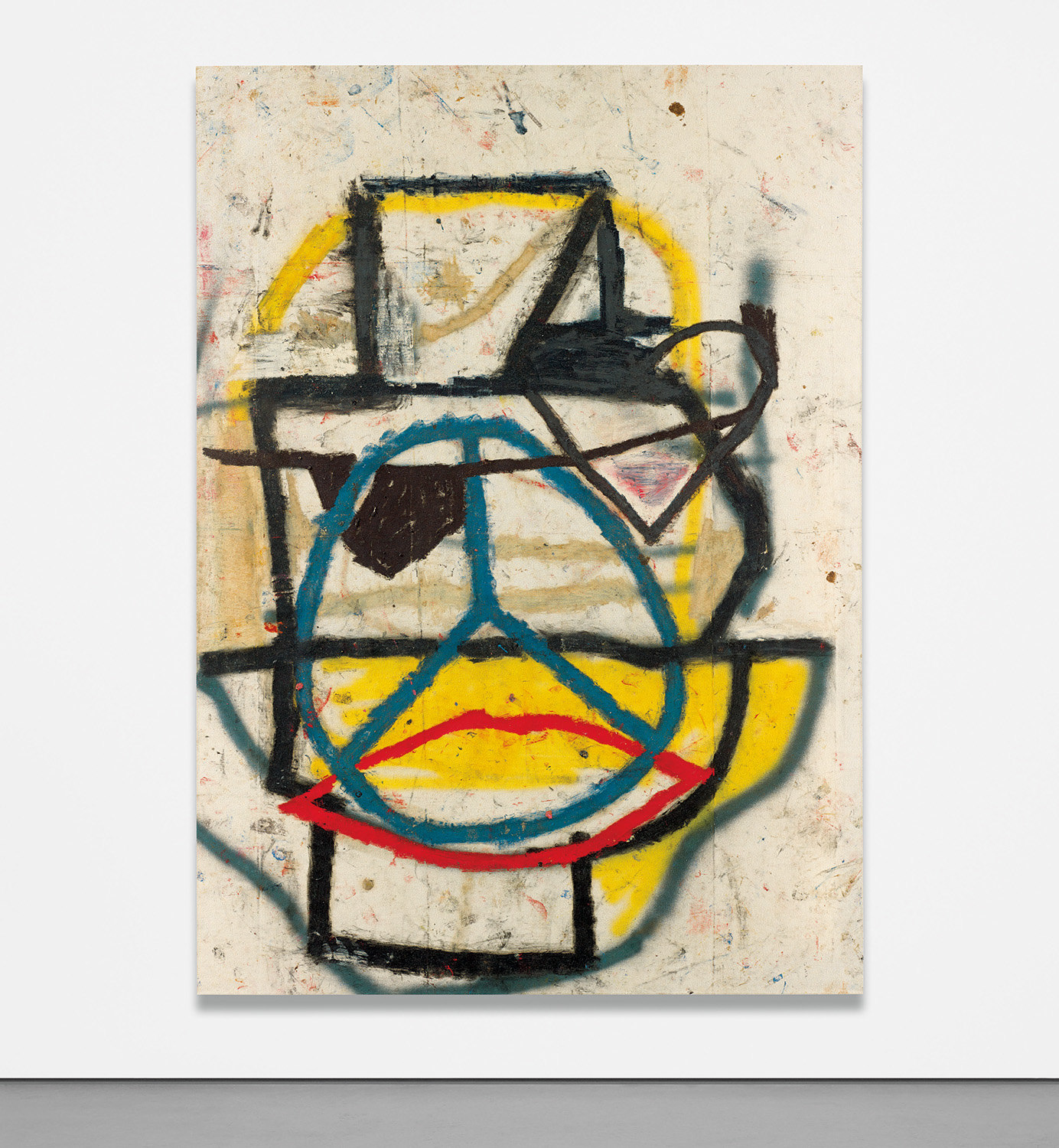
Joe Bradley
“I like to see what someone who doesn’t draw does draw when they draw. It’s always the same stuff...I’ve been paying attention to graffiti too, tags and that sort of thing. It’s funny. It’s just visual background noise until you start to engage with it, and then you just realize that it’s everywhere.” - Joe Bradley, 2010
Untitled from 2013, made with oil on sewn canvases, shows this thinking at its most refined, the joined supports themselves becoming part of the composition's argument. For collectors, Bradley's work presents an unusual and genuinely exciting proposition. His paintings operate across a wide range of scale and material, from intimate studies on paper such as Study for Running Twins to monumental multi panel canvases, which means there are meaningful entry points at various collecting levels. What remains consistent across this range is the quality of attention embedded in each work: the sense that every mark was a decision, even when, especially when, that decision was to allow chance or accident to stand.
Works on paper by Bradley have drawn sustained collector interest, and the multi panel canvases, with their architectural scale and physical presence, have become genuinely important acquisitions for serious collections. SS Blackheart from 2014, an acrylic on canvas in three parts, exemplifies the ambition of these larger works, their ability to organize a room around themselves and to reward extended looking. Within the broader arc of contemporary painting, Bradley occupies a position that connects him to a distinguished lineage without simply repeating it. His debt to Jean Dubuffet and the Art Brut tradition is evident in his embrace of the unschooled and the visceral, while his awareness of Philip Guston's late turn toward figuration gives his own figurative work historical resonance.
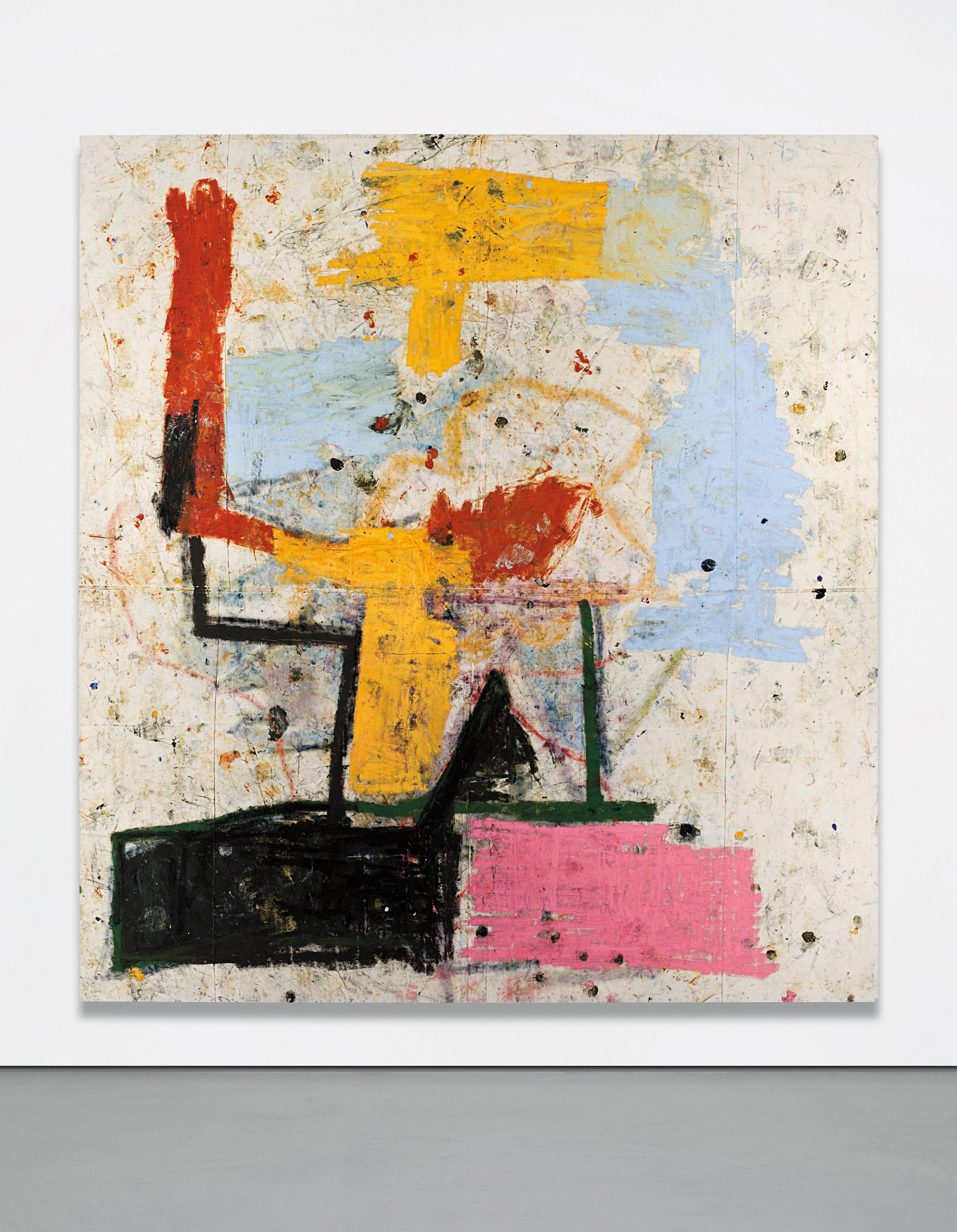
Joe Bradley
Big Boy, 2010
There is something in his mark making that also rhymes with the radical informality of Christopher Wool and the material directness of Albert Oehlen, artists who similarly refused to treat painting as a site of refinement. Bradley is in genuine dialogue with these figures, and that conversation enriches his work considerably. What Bradley ultimately offers, and what makes him so important to follow right now, is a model of painterly practice that keeps faith with curiosity above all else. He has repeatedly resisted the temptation to mine a successful vein until it is exhausted, choosing instead to follow his attention wherever it leads.
The canvases that result feel genuinely discovered rather than manufactured, which is an increasingly rare quality in a market that rewards repeatability. For collectors who prize work that will continue to open up over years of living with it, Bradley's paintings offer exactly that. They are generous objects, full of the energy of someone who paints because he cannot imagine doing anything else.