Jochen Mühlenbrink
Jochen Mühlenbrink Makes the Invisible Utterly Visible
Artist Spotlight · The Collection Editorial
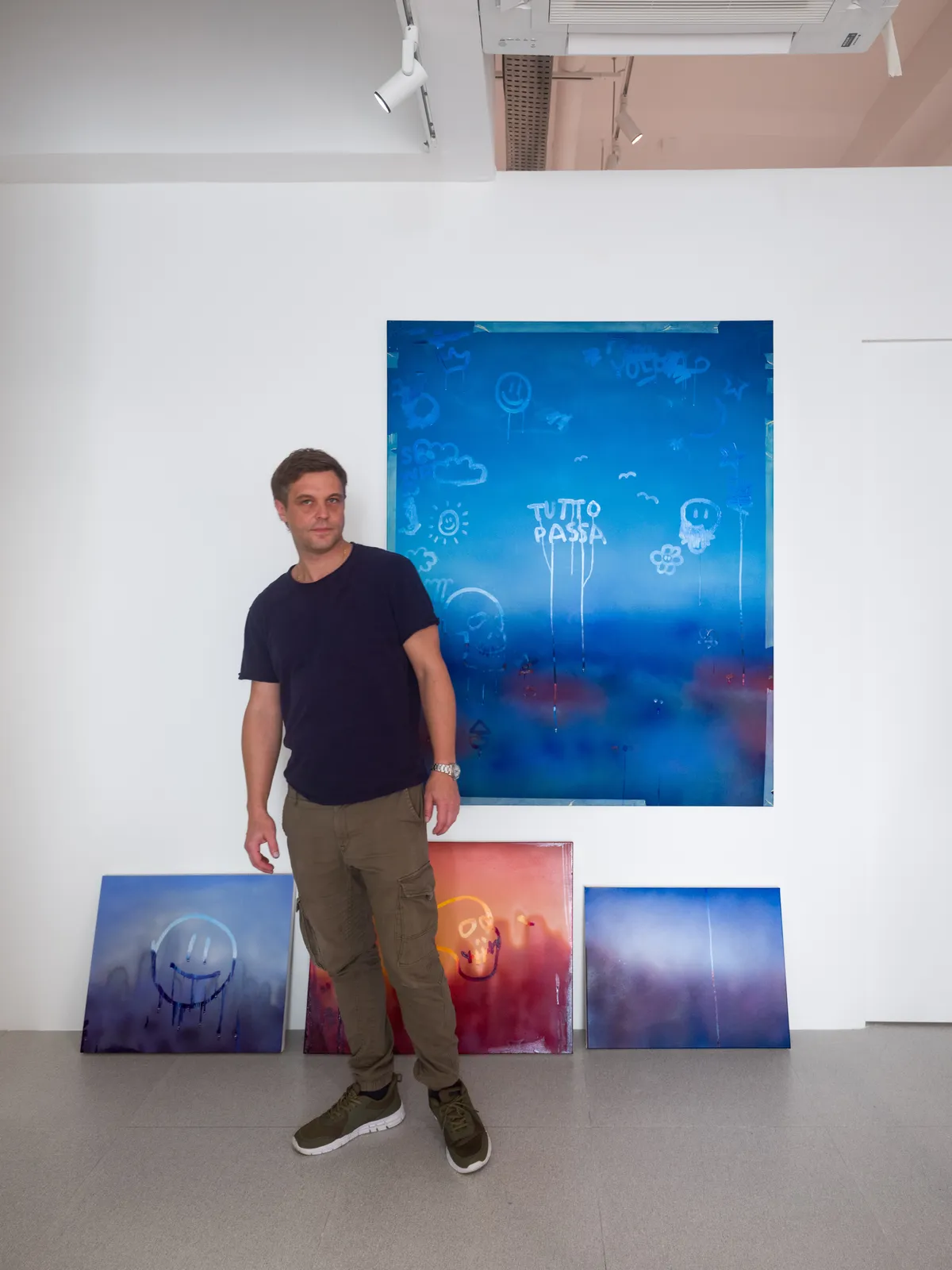
There is a particular kind of double take that happens in front of a Jochen Mühlenbrink painting. You lean in, certain you are about to peel away a strip of masking tape or wipe a smear of condensation from the surface, and then the full weight of what you are seeing settles over you. Nothing is there. Everything is there.
Jochen Mühlenbrink
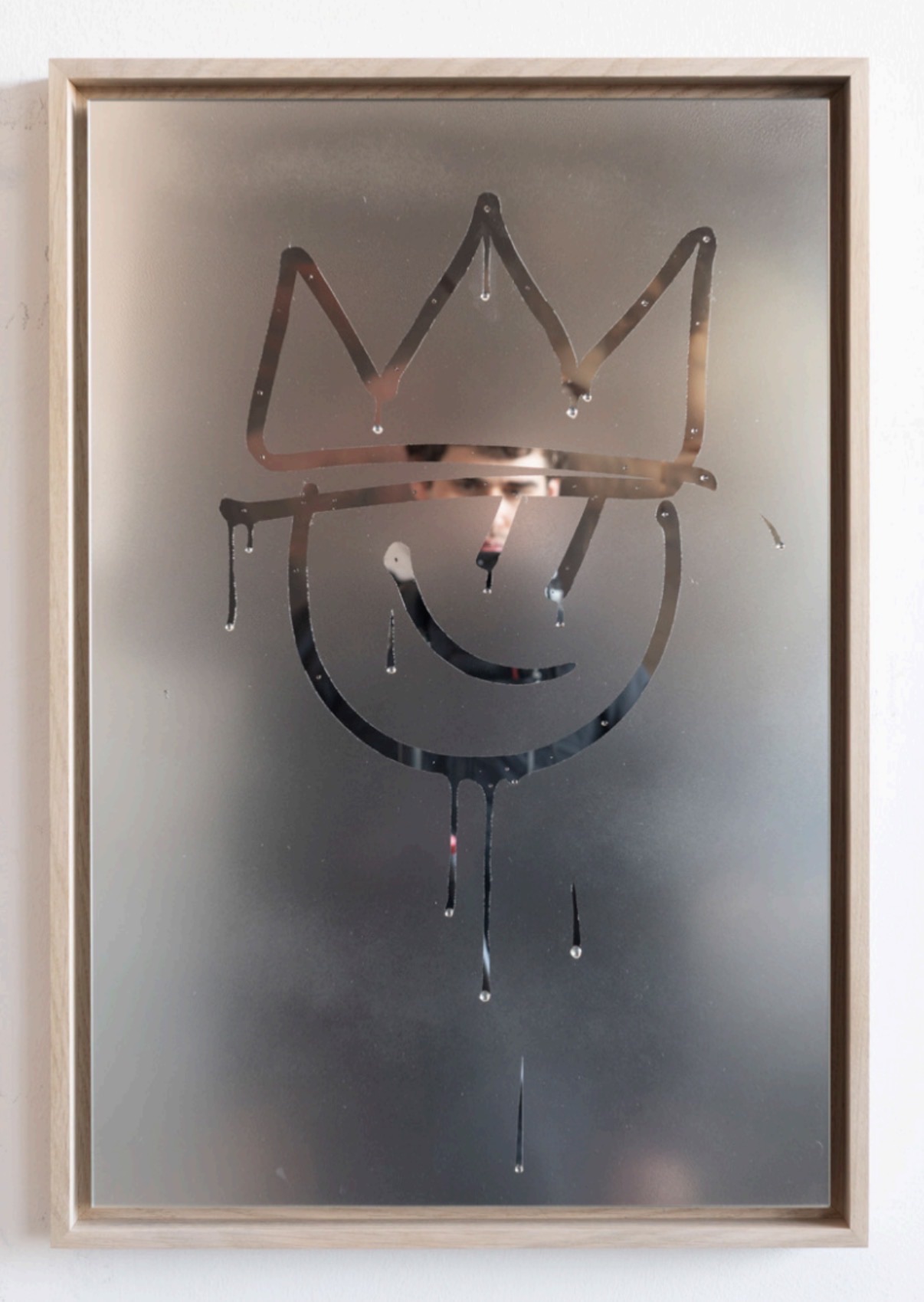
MP King, 2026
It is paint, flawlessly rendered, and it is also a philosophical proposition delivered with the quiet confidence of an artist operating at the very peak of his powers. With new works on mirror glass appearing in 2025 and 2026, Mühlenbrink is not slowing down. He is deepening his inquiry, and the art world is paying close attention. Born in 1980, Mühlenbrink grew up in Germany during a period of profound cultural transition.
The reunification of the country in 1990 reshaped not only the political landscape but the psychological terrain of an entire generation, instilling in many young Germans a heightened sensitivity to questions of surface and substance, appearance and reality. It would be too neat to draw a straight line between those formative years and Mühlenbrink's eventual obsession with things that appear to be one thing while being entirely another. But the context is not irrelevant. He came of age in a culture reckoning with the gap between what was shown and what was true, and that gap became the creative space he would spend his career exploring.
Jochen Mühlenbrink
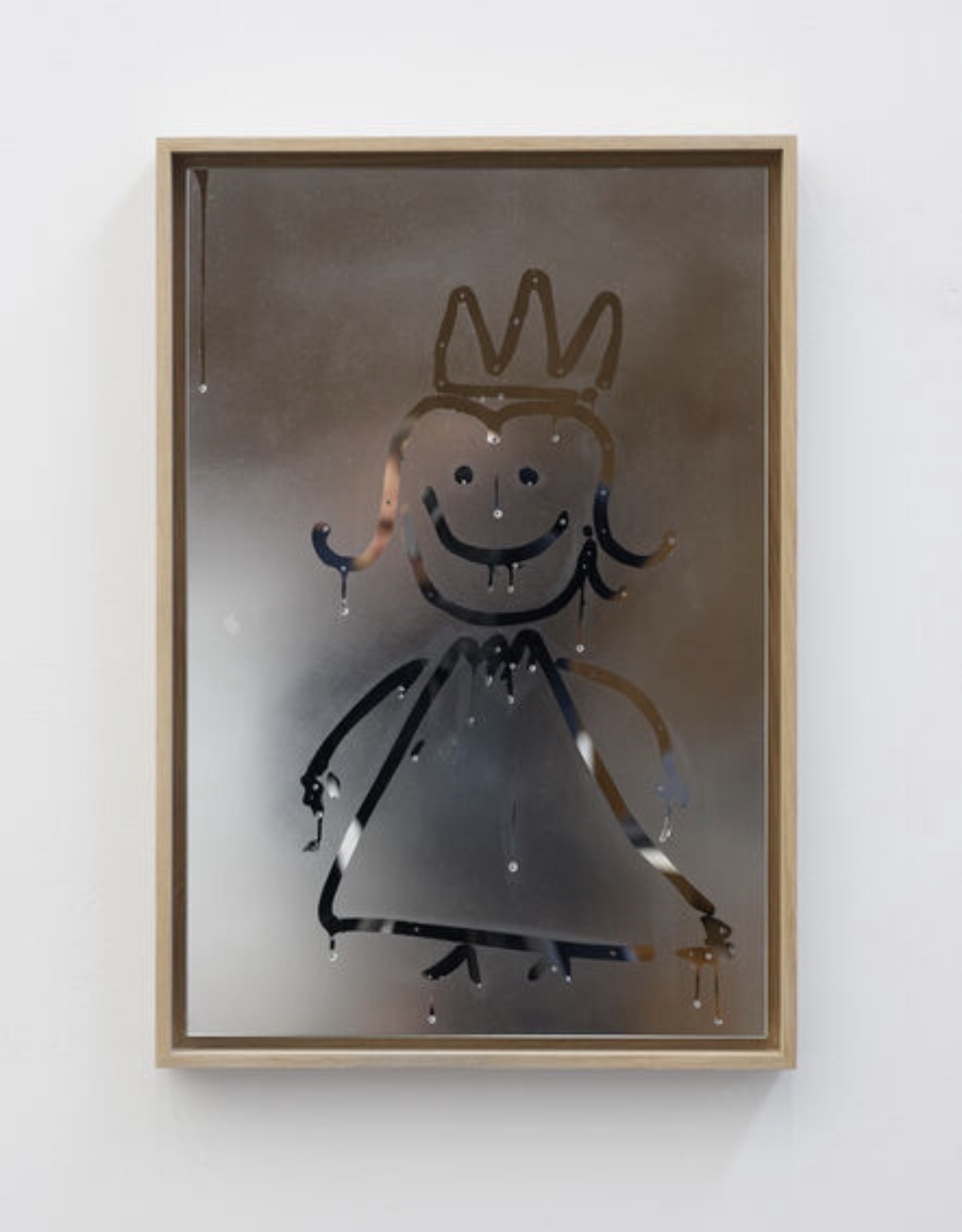
MP Princess, 2025
Mühlenbrink pursued his artistic education in Germany before establishing the dual practice that now defines his working life, moving fluidly between Germany and the Netherlands. The Netherlands, of course, carries enormous weight as a location for any painter drawn to the art of illusion. It is the home of the Golden Age tradition, of Vermeer's breathtaking command of light and surface, of a culture that has long celebrated painting's capacity to deceive and to reveal simultaneously. Living and working within that lineage, even partially, is not something Mühlenbrink wears lightly.
His practice engages seriously with that history, treating it not as a constraint but as a living conversation. The development of his signature vocabulary was gradual and deliberate. Mühlenbrink became increasingly focused on objects and phenomena that exist at the threshold of attention: the strip of masking tape left on a studio wall, the droplet of water trailing down a pane of glass, the absent minded doodle traced in condensation, the adhesive residue of something already removed. These are things we look past rather than at.
Jochen Mühlenbrink
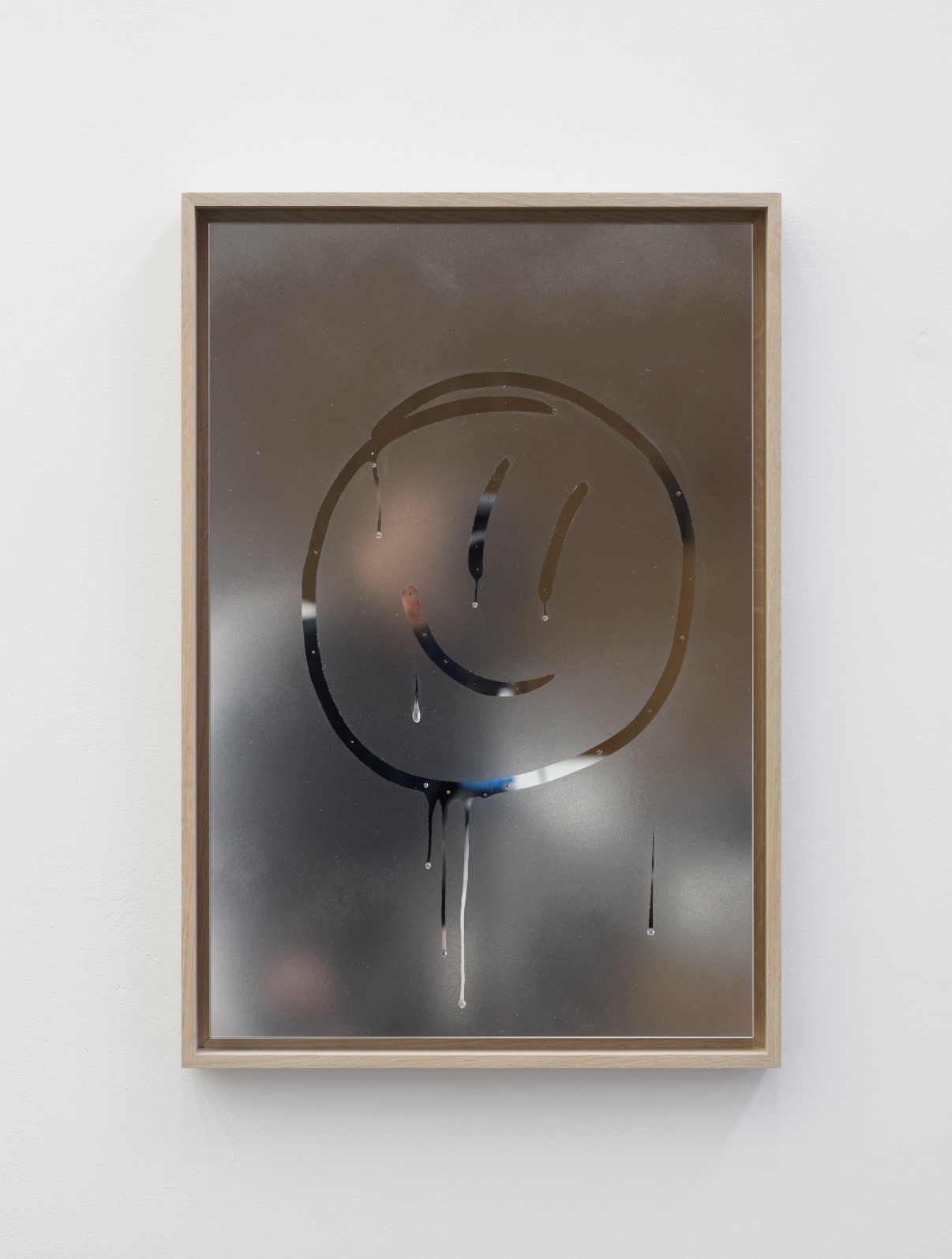
MP Smile, 2026
They are the visual equivalent of background noise, present but unregistered. Mühlenbrink's radical intervention is to make them the subject, to elevate them with the full technical arsenal of classical realist painting and force the viewer to confront their own habits of seeing. The result is work that is simultaneously intimate and conceptually rigorous. His trompe l'oeil technique places him within a tradition that stretches from ancient Greek accounts of Zeuxis painting grapes so convincing that birds flew down to peck at them, through the illusionistic ceiling frescoes of the Baroque, through the American Precisionist still lifes of William Harnett and John Frederick Peto in the nineteenth century, and into the contemporary moment.
But Mühlenbrink is no mere technician paying homage to the past. His choice of subjects carries a distinctly modern and even postmodern charge. Masking tape is not a timeless object. It is a product of modernity, associated with the studio, with process, with the temporary and the provisional.
By rendering it with the care traditionally reserved for the most elevated subjects in art, he collapses hierarchies and asks pointed questions about value, attention, and what we decide deserves to be seen. The recent works on mirror glass represent a compelling new chapter. Titles such as MP King, MP Princess, and MP Smile, executed in acrylics, varnish, and resin on mirror glass in 2025 and 2026, introduce a further layer of perceptual complexity. The mirror does not simply receive the painted illusion.
It actively involves the viewer, reflecting their own face back at them and implicating them in the work. You do not just observe these paintings. You appear inside them. The resin and varnish treatments add depth and luminosity, making the painted surfaces hover in ways that feel almost supernatural.
These are works that reward sustained looking and reveal new dimensions with each encounter. For collectors, Mühlenbrink represents a particularly compelling proposition. He occupies a distinctive position in the contemporary market, combining a craft based mastery that appeals to collectors drawn to technical excellence with a conceptual seriousness that satisfies those who want their acquisitions to carry intellectual weight. The works are visually arresting in any context, able to hold their own on a wall alongside almost any tradition, while also generating the kind of conversation and enquiry that makes a collection feel alive.
His practice has attracted serious institutional and private attention across Europe, and the trajectory of his career suggests that the works available now will come to be seen as representative examples from a formative period. Contextually, Mühlenbrink belongs to a rich tradition of painters who have used illusionism as a vehicle for philosophical inquiry. Connections can be drawn to the Belgian Surrealist René Magritte, whose paintings interrogate the relationship between representation and reality with similarly cool precision. The hyper realist strand of his work aligns him with figures such as Chuck Close and the broader Photo Realist movement of the late twentieth century, while his conceptual underpinning echoes artists like Gerhard Richter, his great German predecessor, who used the mechanics of painting to examine the limits of perception and memory.
Mühlenbrink synthesises these threads into something that feels entirely his own. What makes Mühlenbrink matter today, beyond the considerable pleasure of his technical achievement, is the urgency of the questions he is asking. In an era defined by digitally manipulated images, by deep fakes and filters and the wholesale industrialisation of visual deception, his hand painted illusions carry a particular charge. He is reminding us, through the oldest and most intimate of mediums, that seeing has never been a neutral act.
Every surface we look at involves interpretation, projection, and a degree of wilful belief. To stand before a Mühlenbrink and experience that moment of misrecognition is not just a delightful trick. It is a small, exhilarating lesson in how we construct the world.