Jenny Saville
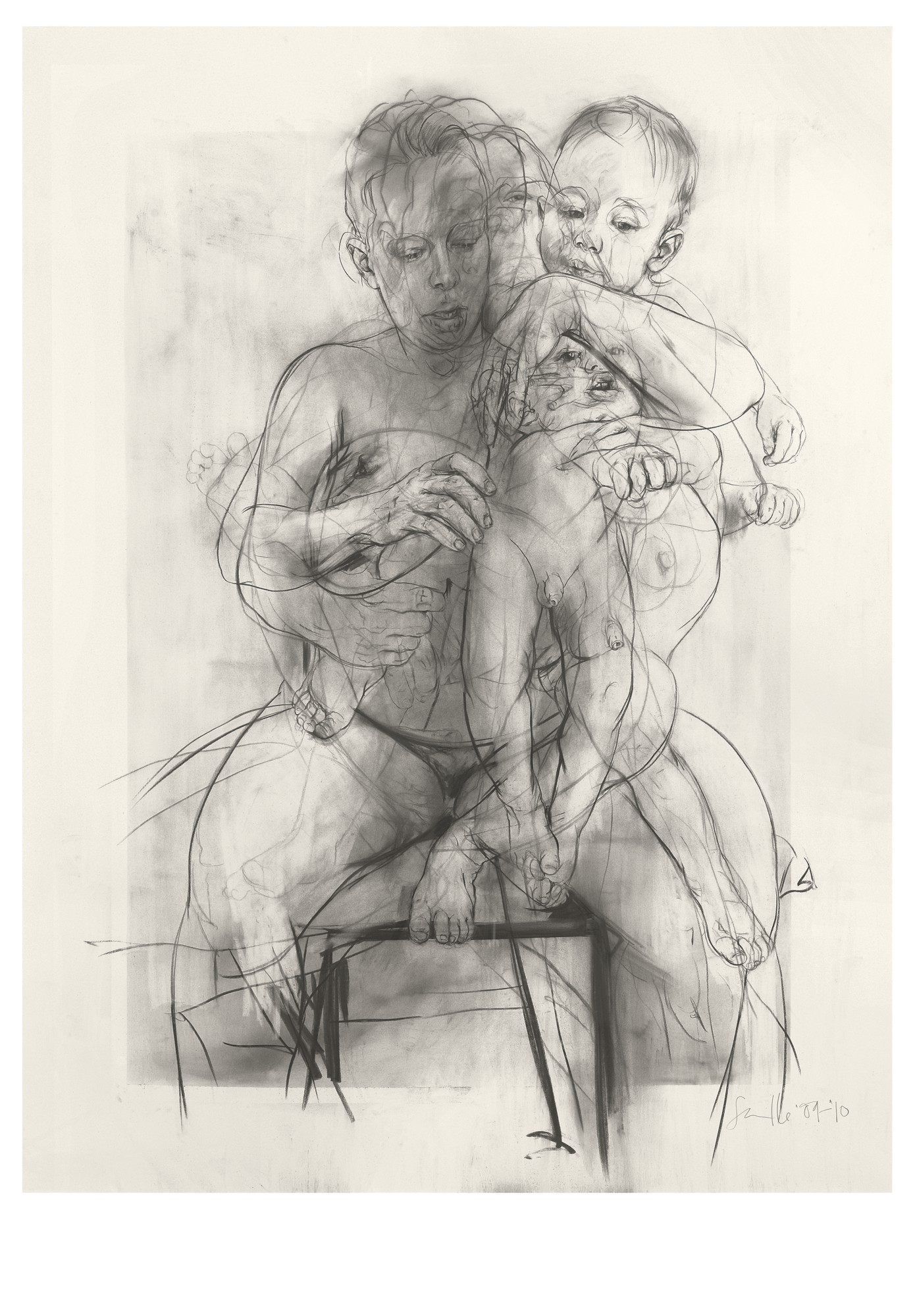
Jenny Saville: The Body as Living Truth
Artist Spotlight · The Collection Editorial
“I want to be a painter of modern life, and modern bodies. I find the body endlessly fascinating.”
Jenny Saville, Interview Magazine
In 2024, a renewed wave of critical attention swept around Jenny Saville as institutions across Europe reaffirmed her place at the very summit of contemporary painting. Her work commands auction results that rival the greatest living painters of any generation, and her presence in major museum collections from the Museum of Modern Art in New York to the Astrup Fearnley Museet in Oslo confirms what many collectors have known for decades: Saville is not merely a significant figure in British art history, she is one of the essential painters of our time. At a moment when figurative painting has reclaimed its position at the center of critical conversation, Saville stands as its most uncompromising and visionary practitioner. Born in Cambridge in 1970, Jenny Saville grew up with a curiosity about bodies that was intellectual before it was artistic.
Jenny Saville

Ashes 灰
She studied at the Glasgow School of Art, an institution with a proud tradition of rigorous, technically demanding painting, and it was there that her ambitions began to take their mature shape. A formative period at the University of Cincinnati proved pivotal: studying in the United States exposed her to a different scale of thinking about the canvas, to the monumental ambitions of American Abstract Expressionism, and to a culture that discussed the body in openly political and feminist terms. She returned to Britain transformed, carrying with her an understanding that the painted body could be a site of profound philosophical inquiry. Saville rose to prominence in the 1990s as part of the Young British Artists generation, that extraordinarily fertile cohort that included Damien Hirst, Tracey Emin, and Chris Ofili, among others.
Her early champion was collector Charles Saatchi, who purchased her degree show work and provided her with the financial support to work on the large scale her vision demanded. Unlike many of her YBA peers, however, Saville was never interested in provocation for its own sake. Her paintings were and remain grounded in rigorous art historical study, in a deep engagement with Rubens and Velázquez, with Lucian Freud and Francis Bacon, with the entire tradition of Western figurative painting refracted through a fiercely contemporary and feminist consciousness. The signature quality of Saville's work is her capacity to render the human body with an intimacy so intense it becomes almost philosophical.
Jenny Saville
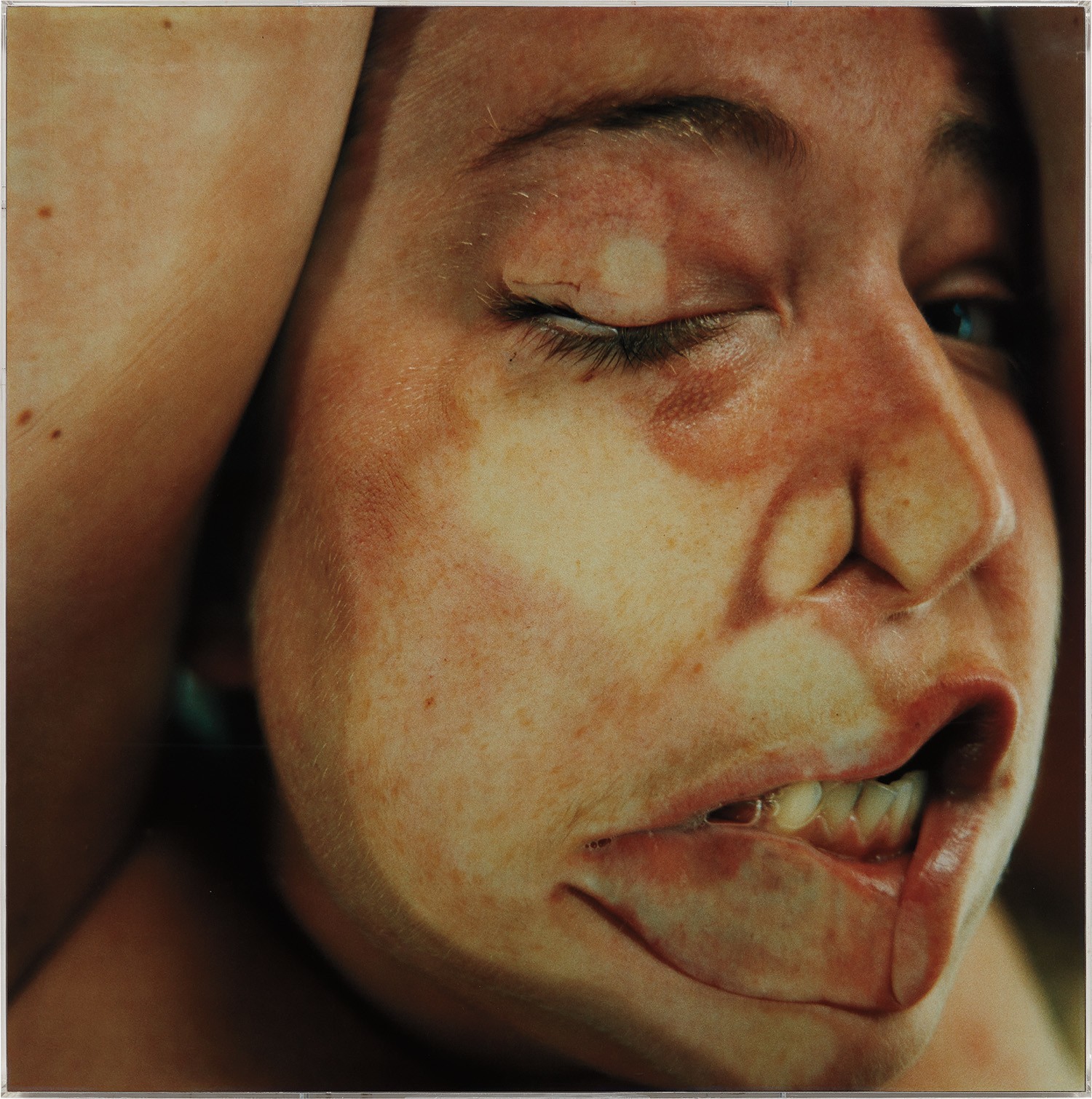
Closed Contact #15, 1995
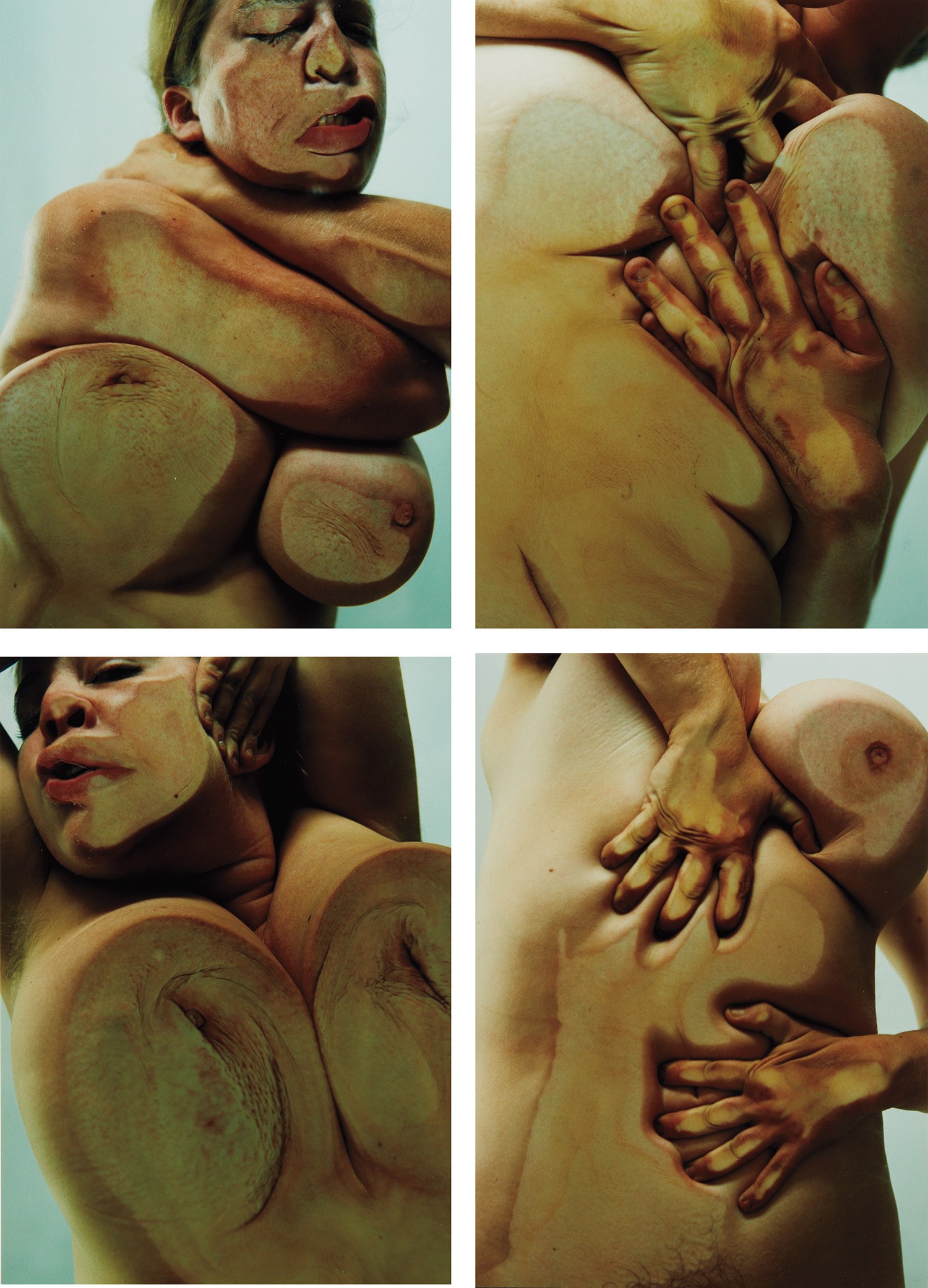
Her paintings are typically monumental in scale, the figures pressing against and often exceeding the edges of enormous canvases, creating a sensation of overwhelming physical presence. She works with oil paint in a manner that is simultaneously visceral and controlled, building surfaces that feel like flesh, like breath, like thought made visible. Works such as Propped from 1992, which features a nude woman viewed from below with text by feminist theorist Luce Irigaray etched across her skin, announced a painter who was engaging with the body not as object but as subject, not as spectacle but as experience. The Closed Contact series, made in collaboration with photographer Glen Luchford, extended her investigations into the body's relationship to surface and pressure, producing images of extraordinary intimacy and formal power.
“I'm interested in the transition between life and death, the moment when a living body becomes an object.”
Jenny Saville, The Guardian
The works available through The Collection offer collectors a remarkable cross section of Saville's practice across three decades. The early Self Portrait from 1992 is a document from the very beginning of her career, painted while she was still a student, and it already displays the unflinching directness that would define everything to follow. The Closed Contact prints, including editions from 1995, bring her collaborative photographic work into focus, demonstrating that her investigation of embodied experience was never limited to paint alone. Shadow Study from 2006 reveals her sustained engagement with drawing and works on paper, a side of her practice that is sometimes undervalued and that offers collectors a more intimate point of entry into her world.
Jenny Saville
Closed Contact A-D
And the Ashes work, with its haunting use of charcoal from the Mackintosh Library fire at the Glasgow School of Art, connects her most personal formation with an act of collective mourning and cultural memory. From a collecting perspective, Saville occupies a position that is both exceptionally desirable and increasingly difficult to access. Her primary market relationship is with Gagosian Gallery, one of the most powerful galleries in the world, and her output is relatively limited given the scale and ambition of her practice. Works at auction have achieved prices well into the millions, with her paintings consistently attracting serious institutional and private competition.
Editions and works on paper represent a more accessible entry point without any compromise on artistic significance. The Red Stare edition, gifted personally by the artist to Modern Art Oxford staff and not released publicly, exemplifies the kind of deeply contextual object that serious collectors prize: a work that carries not just visual power but a specific human story. Collectors are drawn to Saville because she is genuinely irreplaceable: there is no substitute for what she does, no other painter working in quite her register of emotional and physical honesty. Within the broader landscape of art history, Saville belongs to a lineage that runs from the great Baroque painters of flesh and mortality through Gustave Courbet's radical insistence on the unidealized body, through the psychological intensity of Chaim Soutine, and into the charged figuration of Lucian Freud, who admired her work.
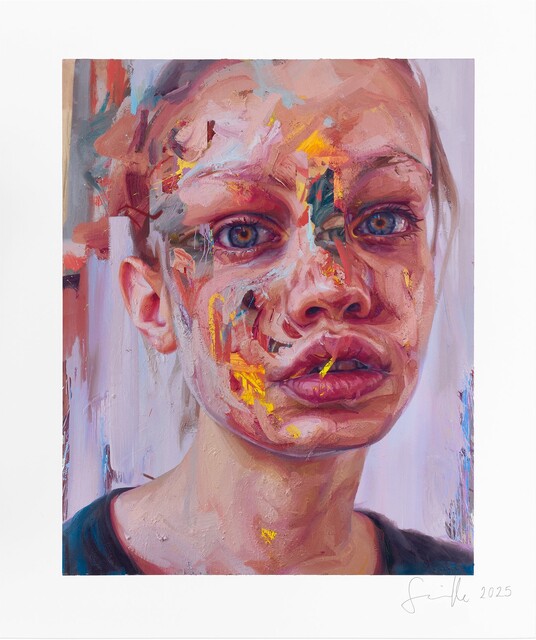
Jenny Saville
Gaze, 2025
She is frequently discussed alongside contemporaries such as Cecily Brown, whose painterly exuberance shares something of Saville's physical energy, and Lisa Yuskavage, whose engagement with the female body as cultural construction resonates with Saville's feminist underpinning. But the more one looks, the more Saville appears singular: her particular combination of scale, anatomical knowledge, psychological depth, and political awareness has no precise parallel. What makes Jenny Saville matter so profoundly today is the honesty at the heart of her project. In an era saturated with images, filtered and optimized and flattened, her paintings insist on the irreducible complexity of bodily experience.
They hold space for pain and beauty simultaneously, for vulnerability and power, for the self as both observer and observed. They remind us that the body is where we actually live, and that painting, at its greatest, can make us feel that truth with a force that no other medium can quite match. To collect Saville is to commit to that vision, to bring into your life a sustained encounter with what it means to be human in all its fullness.
Explore books about Jenny Saville