Jean-Michel Frank
Jean-Michel Frank, Master of Sumptuous Restraint
Artist Spotlight · The Collection Editorial
In the grand salons of Paris during the 1930s, a particular kind of silence reigned. Walls were sheathed in pale straw marquetry, surfaces glowed with the iridescent shimmer of mica, and every object sat with a purposeful stillness that seemed almost meditative. This was the world that Jean Michel Frank conjured into being, and it remains one of the most distinctive and deeply influential interior visions of the twentieth century. Today, with a renewed appetite among collectors for the rigorously crafted and the materially extraordinary, Frank's legacy feels not merely historical but urgently relevant.
Jean-Michel Frank
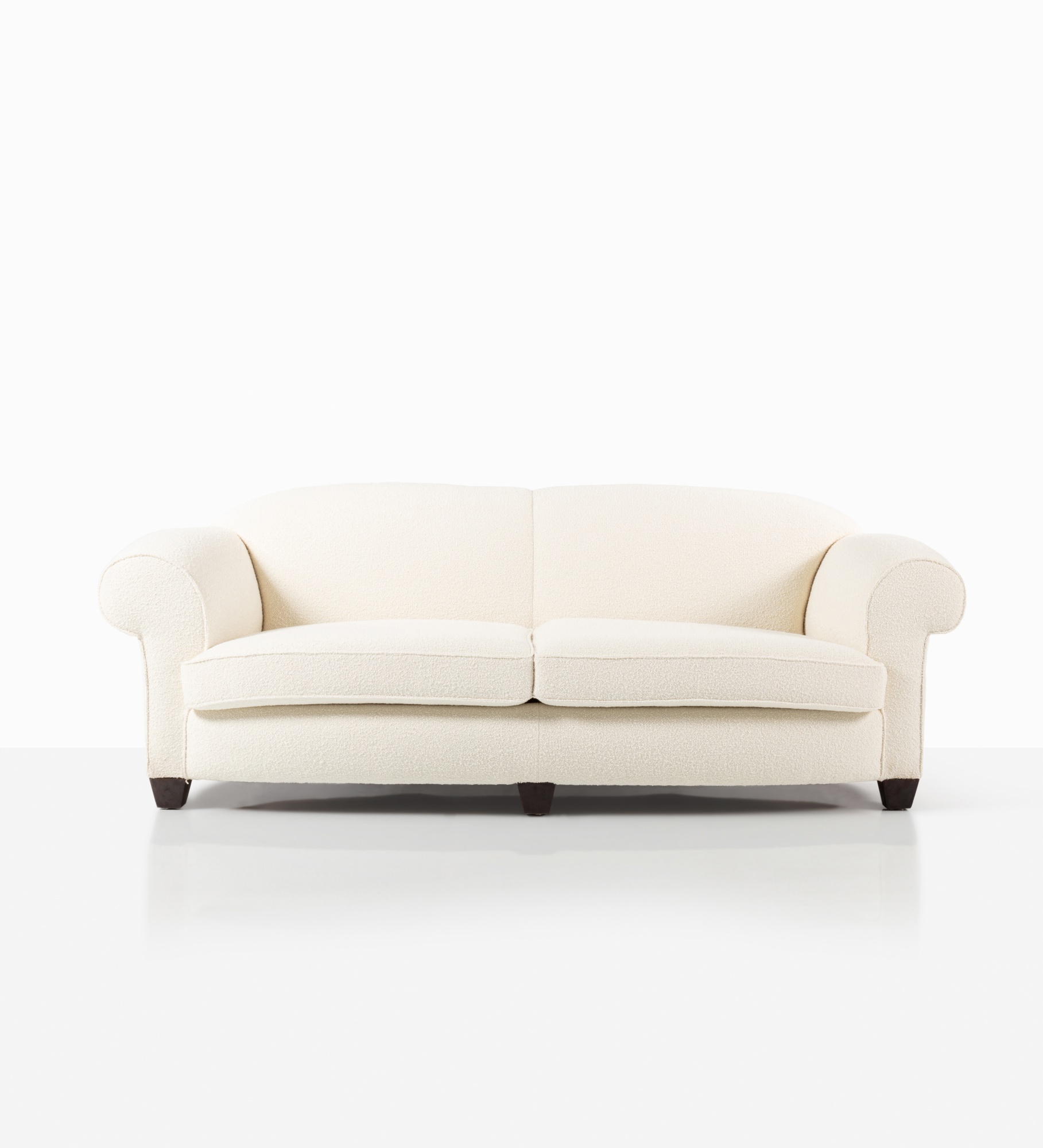
Canapé confortable
Frank was born in Paris in 1895 into a prosperous Jewish family. His early life was shadowed by profound loss: two brothers died in the First World War, and the grief that settled over his family shaped in him a sensitivity to atmosphere and to the quiet eloquence of space. He had no formal training as a designer or architect, which may well account for the radical freshness of his approach. He came to interiors the way a poet might come to a subject, through feeling and intuition rather than through academic convention, and the results were unlike anything Paris had seen.
Frank's formation as a designer owed much to the remarkable social and intellectual world he inhabited. His friendship with Eugenia Errazuriz, the Chilean aesthete and tastemaker who famously declared that elegance means elimination, proved foundational. From Errazuriz he absorbed a philosophy of reduction that would define everything he made. He also moved freely among the Surrealists and counted figures such as Salvador Dalí and Alberto Giacometti among his close collaborators and friends.
Jean-Michel Frank
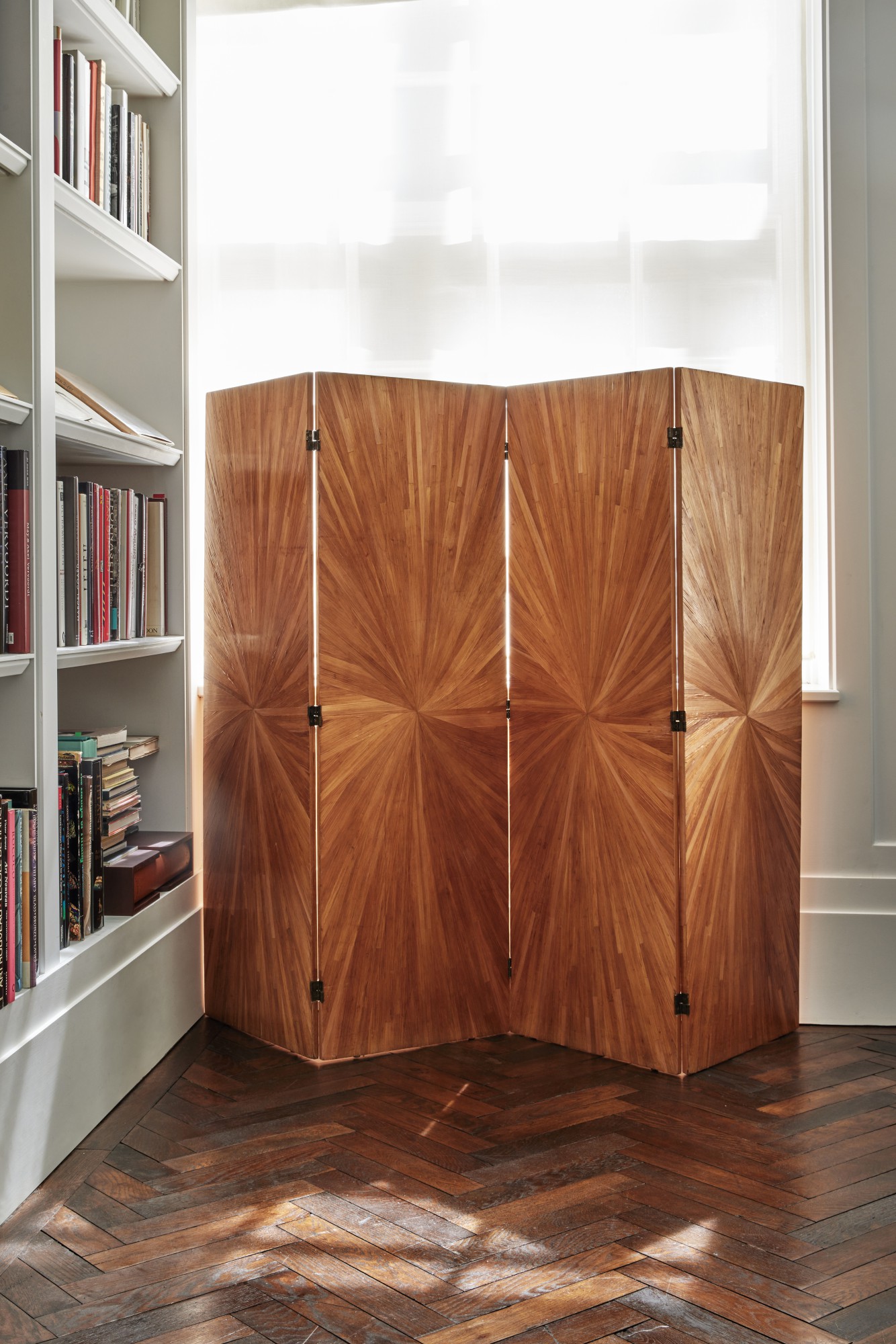
Folding Screen
This proximity to the avant garde gave his stripped interiors an edge of psychological depth that mere minimalism could never achieve on its own. His career reached its fullest flowering through commissions for some of the most prominent private clients in Europe and the Americas. He worked for members of the Vicomte and Vicomtesse de Noailles, for the Rockefeller family in New York, and for a constellation of European aristocrats and cultural figures who trusted him to transform their homes into something both austere and profoundly sensual. His Paris shop on the rue du Faubourg Saint Honoré became a destination, drawing clients who understood that what Frank offered was not decoration in any conventional sense but a total re imagining of how space and material could speak to one another.
Giacometti designed plaster lamps and andirons for his interiors, while Christian Bérard contributed painted folding screens, making Frank's projects collaborative works of art in the deepest sense. What distinguished Frank above all was his treatment of surface and material. He covered walls and furniture alike in straw marquetry of extraordinary delicacy, achieving tones ranging from warm gold to cool ivory depending on the angle of light. He used shagreen, the grainy leather derived from ray and shark skin, to wrap tables and boxes with a tactile richness that rewarded close inspection.
Jean-Michel Frank
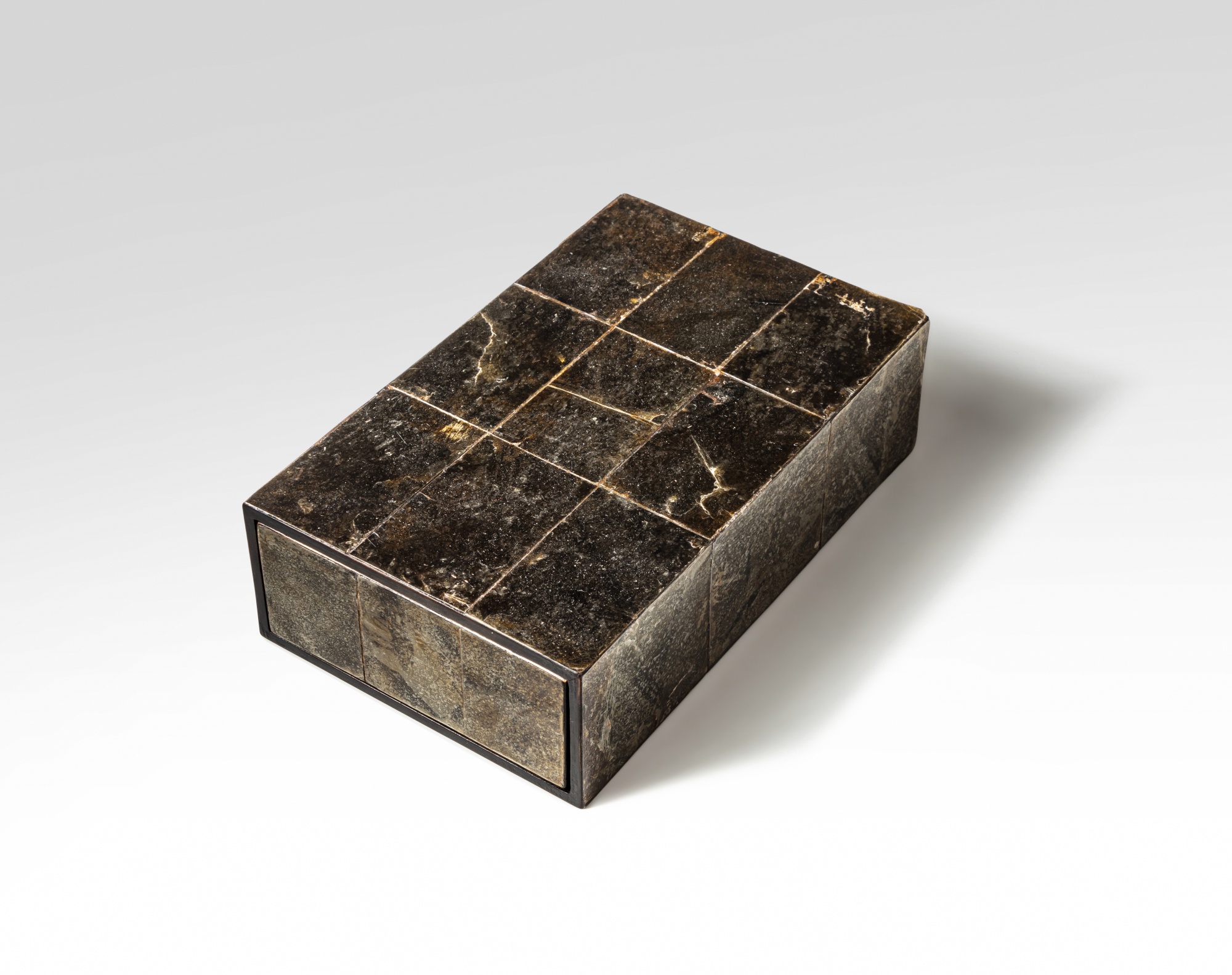
Boîte
Mica, applied in thin translucent sheets, gave flat surfaces a depth and luminosity that seemed almost to breathe. The works available on The Collection speak directly to these obsessions: the Boîte in mica and blackened pear wood is a perfect study in contrast and refinement, while the Side Table in straw marquetry over wood demonstrates how Frank could elevate a functional object into something approaching sculpture. The Canapé confortable, upholstered in wool and linen on a tinted wood frame, carries the ease and quiet authority that defined his approach to seating, where comfort and beauty were never treated as competing values. For collectors today, Frank's work occupies a position of considerable prestige in the market for twentieth century decorative arts.
His pieces appear regularly at the major auction houses, with strong results at Christie's, Sotheby's, and Galerie Calmels Cohen in Paris, reflecting both the scarcity of documented examples and the enduring desire for objects that combine conceptual rigour with extraordinary craft. What collectors prize most is not simply the rarity of the materials but the coherence of the vision: every Frank piece feels like a fragment of a larger, fully realised world. Pairs and sets, such as the Pair of Stools and the Pair of Folding Screens represented on The Collection, carry particular value because they preserve the compositional thinking that was so central to Frank's method. Provenance matters enormously in this market, and pieces with clear connections to his documented commissions attract the most serious attention.
Jean-Michel Frank
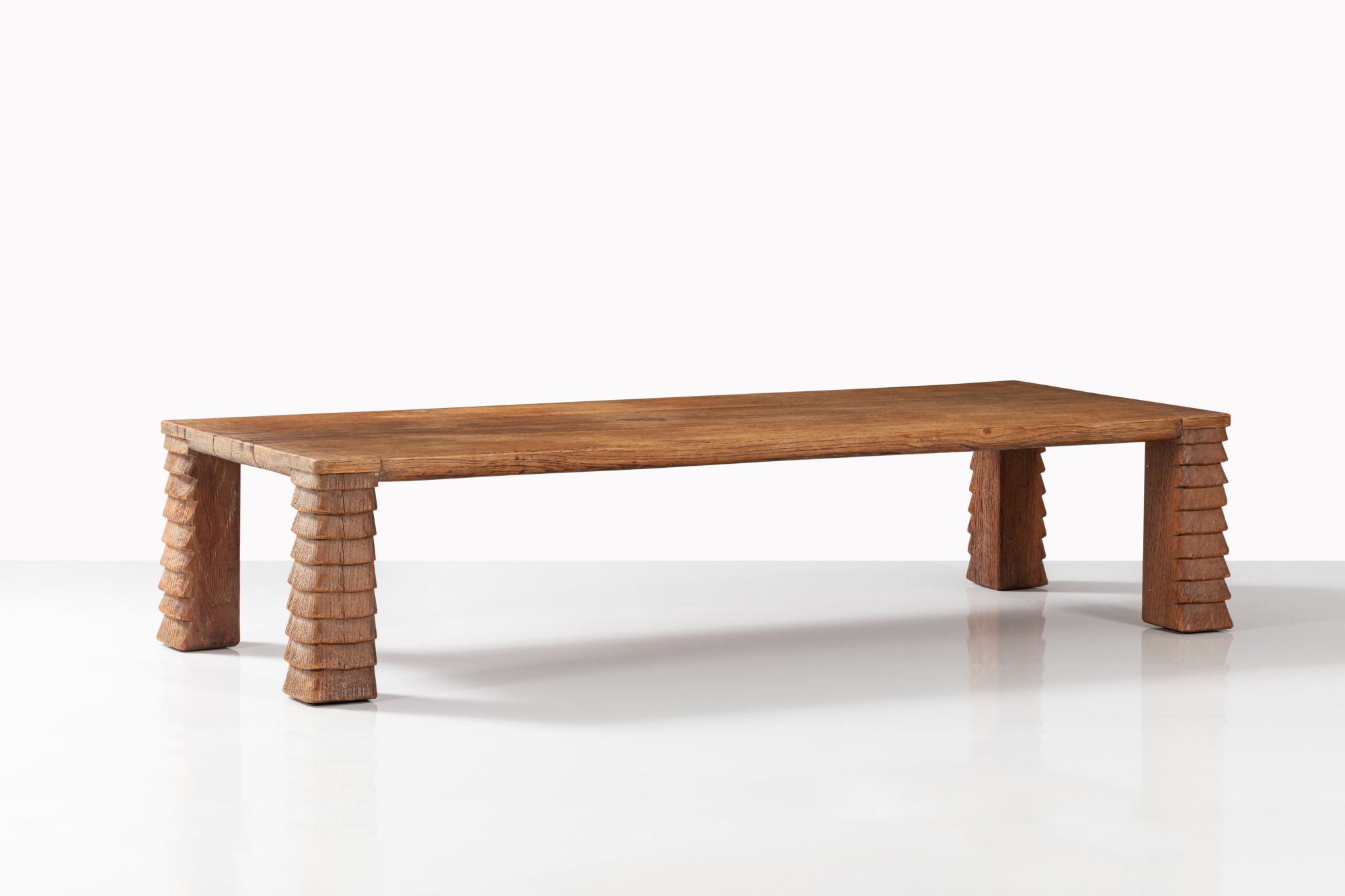
Table basse Aragon
Frank's place within the broader story of modernist design is best understood in relation to contemporaries who shared his commitment to the integration of fine and decorative arts. Armand Albert Rateau worked with similarly exotic materials and a comparable sense of formal gravity. Jules Leleu and Jacques Émile Ruhlmann pursued the luxurious possibilities of Art Deco craftsmanship with related intensity, though their idioms were more overtly ornamental than Frank's rigorous purity. In the realm of interiors, his closest spiritual heir is perhaps Axel Vervoordt, the Belgian collector and designer who has carried a similar philosophy of elemental beauty well into the contemporary period.
The line from Frank to the current fascination with wabi sabi aesthetics, with raw plaster and natural linen and the beauty of restraint, is direct and traceable. Frank left Paris in 1940 as the German occupation began, eventually reaching New York, where he worked briefly before his death in 1941 at the age of forty five. His life was short and in many ways marked by sorrow, but the body of work he left behind possesses a serenity that transcends biography. There is something in a Frank interior, or in a single Frank object sitting on a collector's table, that insists quietly on the importance of beauty made with full attention and deep material knowledge.
In a collecting landscape increasingly drawn to works that hold both intellectual weight and sensory pleasure, Jean Michel Frank stands as an exemplary figure, someone who understood that the most radical thing a designer could do was to take away everything that was not essential, and then make what remained impossibly beautiful.
Explore books about Jean-Michel Frank

Jean-Michel Frank
Alastair Duncan
Jean-Michel Frank: Architect-Designer
Guillaume Janneau
Jean-Michel Frank and His Interiors
Dominique Chevalier

Jean-Michel Frank: The Complete Works
Pierre Cabanne
Jean-Michel Frank: A Connoisseur's Collection
Yves Plantin