James Turrell
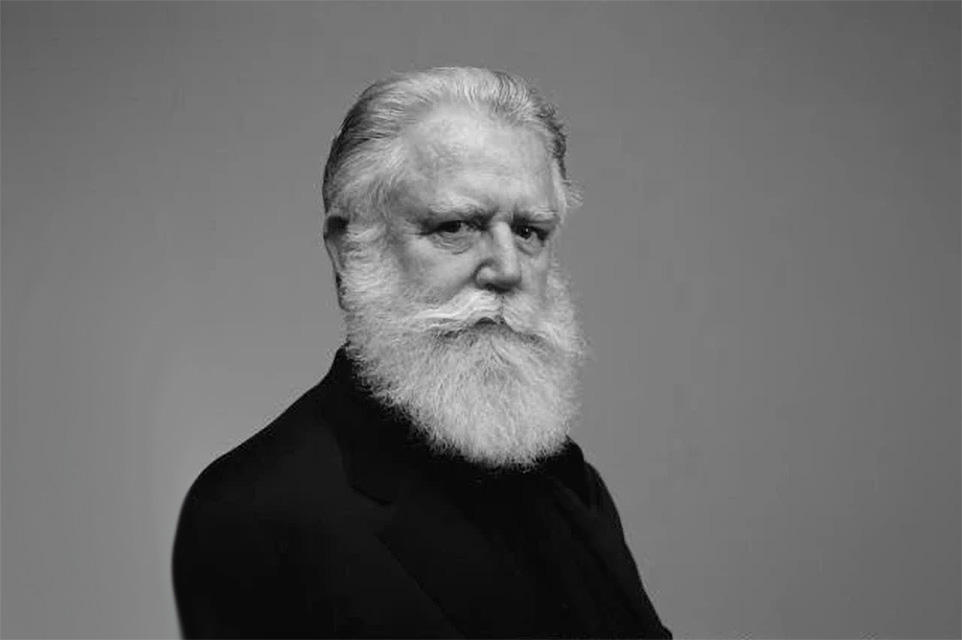
James Turrell: Master of Light and Wonder
Artist Spotlight · The Collection Editorial
“I want to create an experience of wordless thought, to make the quality and sensation of light itself something really quite tactile.”
James Turrell, interview with Richard Andrews
Few living artists command the kind of reverence that greets James Turrell wherever his work appears. In 2023, the Hayward Gallery in London mounted a major survey of his Skyspace works, drawing audiences who queued for hours simply to sit beneath an aperture in a ceiling and watch the sky change color. That same year, his permanent Roden Crater project in Arizona's Painted Desert continued to generate international pilgrimage, a decades long earthwork that transforms an extinct volcanic cinder cone into a naked eye observatory of breathtaking ambition. At eighty years old, Turrell remains one of the most vital and consequential artists alive, a figure whose work does not merely decorate space but fundamentally rewires how we experience it.
James Turrell
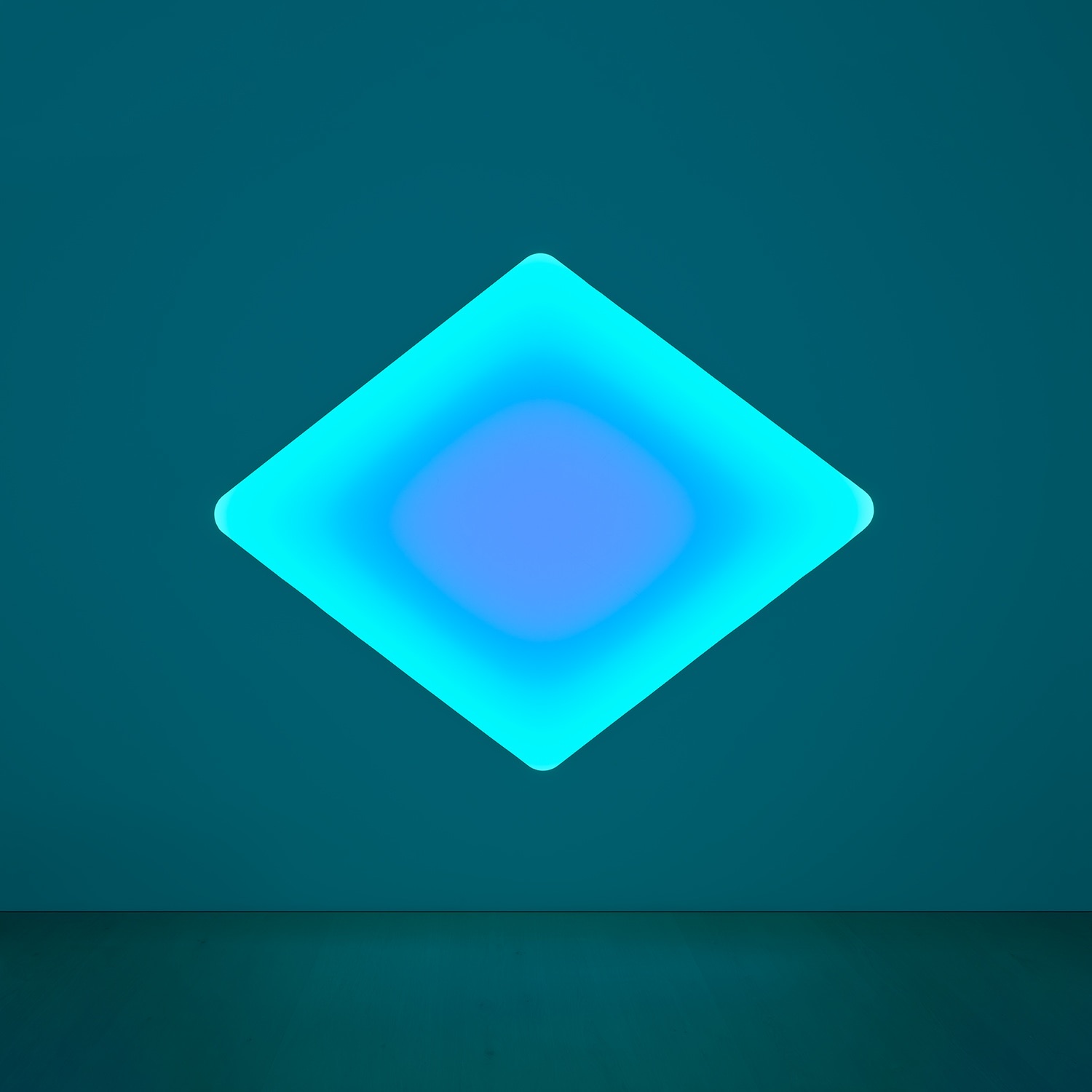
Ariel
Turrell was born in Los Angeles in 1943 into a Quaker family, a background that would prove formative in ways both spiritual and perceptual. Quaker meeting practice, with its emphasis on inner light and contemplative stillness, planted the seeds of an artistic vision oriented toward presence, silence, and the ineffable. He studied perceptual psychology and mathematics at Pomona College in Claremont, California, bringing a rigorous scientific framework to questions of vision and consciousness that most artists approach intuitively. His graduate studies in art at the University of California, Irvine placed him at the center of a remarkable Southern California scene in the late 1960s, one that would become known as the Light and Space movement.
That movement, anchored in Los Angeles and its particular quality of coastal light, produced a generation of artists fascinated by perception, materiality, and the phenomenology of seeing. Turrell worked alongside figures such as Robert Irwin and Doug Wheeler, all of whom were pushing against the object based logic of mainstream contemporary art. In 1966, Turrell began his Projection Pieces series in a studio on Main Street in Santa Monica, projecting colored light through precisely cut apertures to create forms that appeared solid and three dimensional despite having no physical substance whatsoever. These early works announced his central preoccupation: light not as illumination of something else, but as the primary subject, the thing itself.
James Turrell
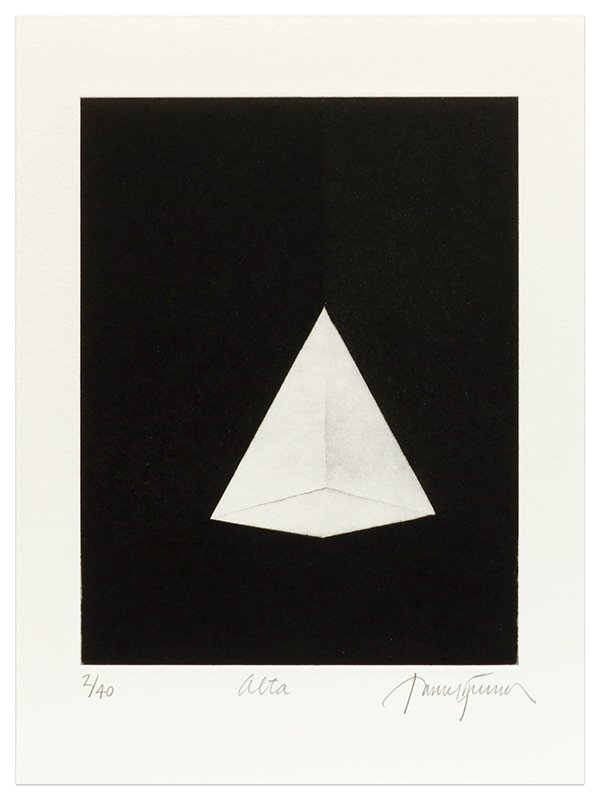
Juke, 1990
The arc of his development from those projection works to the monumental Roden Crater is one of the great stories in postwar art. Throughout the 1970s and 1980s, he refined his Skyspace concept, creating architectural chambers in which a precise aperture opens to the sky above and the surrounding walls are washed with graduated light, causing the sky to appear as a flat, almost painted plane of color. His Ganzfeld works, beginning in the 1970s and continuing to the present, immerse viewers in rooms so saturated with undifferentiated light that the eye loses its ability to perceive depth or edge, inducing a state of visual suspension that many visitors describe as transcendent. These are not passive experiences.
“My work is more about your seeing than it is about my seeing.”
James Turrell
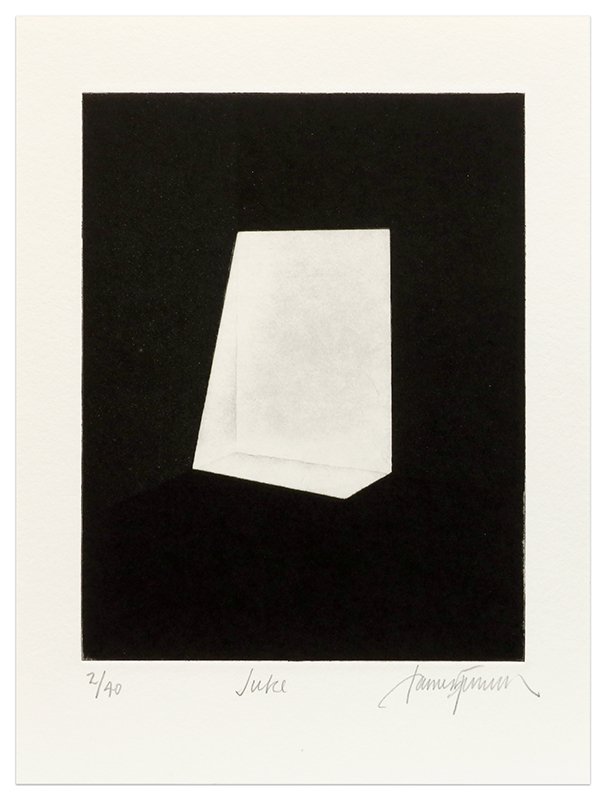
They require the body to surrender its habitual ways of seeing. Among the works available to collectors, Turrell's print editions occupy a particularly important place. His etchings with aquatint, including works such as Juke from 1990 and Alta from the same year, demonstrate how completely his concerns translate into the graphic medium. These are not reproductions of larger ideas but fully realized works in their own right, using the tonal depth of aquatint to evoke gradients of light and atmosphere with extraordinary subtlety.
James Turrell
Alta, 1990
The First Light series, which includes B2: Alta, is widely regarded as one of the finest print suites produced by any artist in the late twentieth century, combining technical mastery with genuine conceptual weight. For collectors entering the Turrell universe, these works offer an accessible and historically significant point of entry. On the secondary market, Turrell's work has performed with consistent strength. His large scale light installations command prices that reflect their complexity and rarity, while his works on paper and editions provide a broader range of entry points for serious collectors.
Auction houses including Christie's and Sotheby's have handled his editions with regularity, and demand from both institutional and private collectors remains robust. The appeal is intuitive: Turrell's work is among the very few in contemporary art that generates a genuinely transformative physical experience, and collectors who live with his prints and smaller works consistently report that they deepen over time rather than exhaust themselves. There is always more to see, because what Turrell is really illuminating is the act of seeing itself. Placing Turrell within art history requires acknowledging several lineages at once.
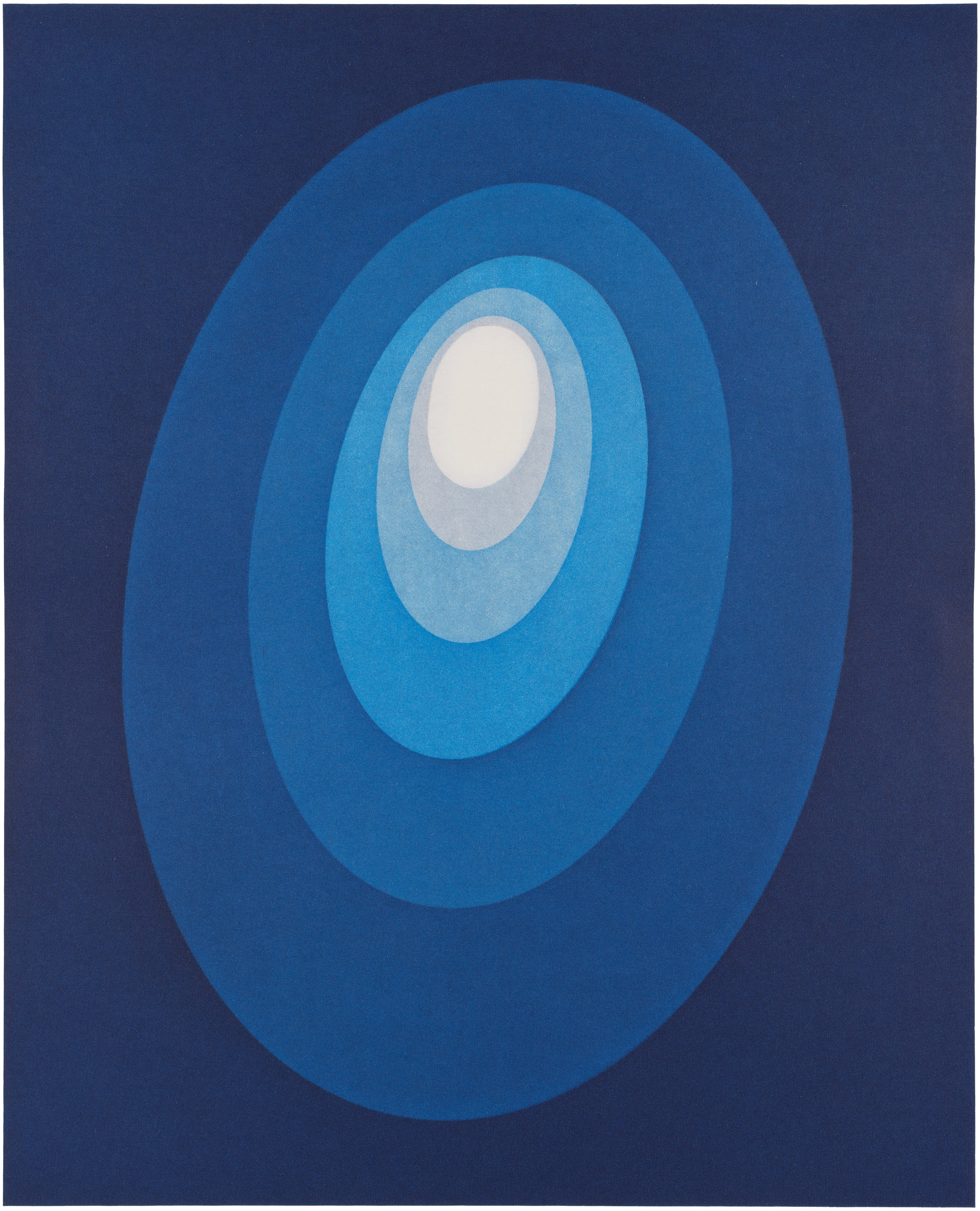
James Turrell
Untitled
He belongs to the Minimalist generation in his commitment to direct perceptual experience and his refusal of representational content, yet his work is warmer and more spiritually inflected than the cool geometries of Donald Judd or Dan Flavin. His kinship with Robert Irwin is profound and well documented, and collectors drawn to Irwin's scrim installations or Larry Bell's glass works will find in Turrell a natural complement. Looking further back, one can trace connections to the atmospheric luminism of J.M.
W. Turner and to the color field painting of Mark Rothko, whose late chapel murals share with Turrell a desire to create spaces of concentrated inner attention. Turrell has acknowledged Rothko's influence openly, and the dialogue between their practices remains one of the more rewarding threads in recent art history. What makes Turrell essential to any serious reckoning with contemporary art is the integrity and consistency of a vision pursued across more than five decades without compromise or repetition.
Roden Crater, begun in 1977 and still evolving, is perhaps the most ambitious single artwork undertaken by any living artist, a project that will outlast its maker and continue to interact with celestial cycles for centuries. His Skyspaces, now installed on every inhabited continent, have become sites of quiet pilgrimage for people who may not identify as art enthusiasts but who recognize, when they sit inside one, that something important is happening. Turrell has spent his career asking us to slow down, to look carefully, and to trust what the eye can discover when it is given the right conditions. In a culture of relentless distraction, that invitation has never felt more necessary or more generous.
Explore books about James Turrell

James Turrell: A Retrospective
Michael Govan, Christine Y. Kim
James Turrell
Craig E. Adcock

The Art of Light and Space
Peter Plagens
James Turrell: Sensing Space
Michael Govan
James Turrell: The Other Horizon
Florian Ebner
James Turrell: Roden Crater
Michael Govan, Paul Schimmel