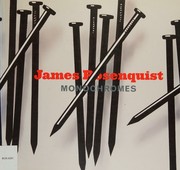
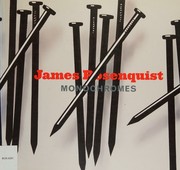
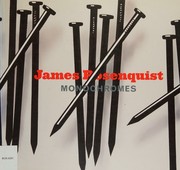
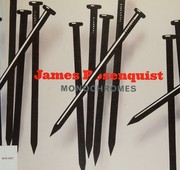
James Rosenquist
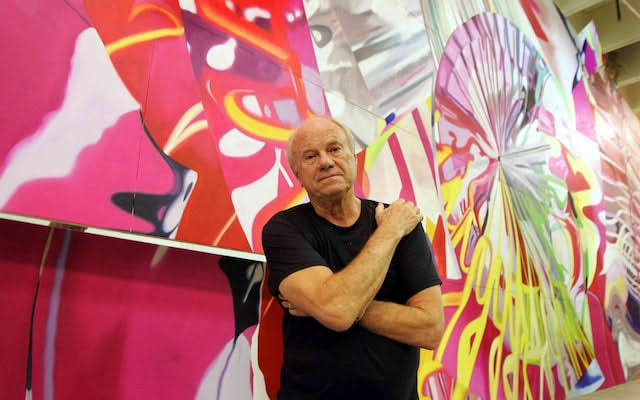
James Rosenquist: America's Most Spectacular Visual Voice
Artist Spotlight · The Collection Editorial
“I think of myself as a historical painter, painting history using the available imagery of our time.”
James Rosenquist, interview with the Smithsonian Archives of American Art
In the spring of 2022, the Smithsonian American Art Museum mounted a sweeping survey that brought renewed attention to one of the most visually arresting careers in postwar American art. James Rosenquist, who passed away in 2017, had spent more than five decades building a body of work so confident and so distinctly American that it continues to feel urgent, surprising, and deeply alive. Collectors who encounter his prints and paintings for the first time often describe the same sensation: the sense of being caught inside a dream assembled from the fragments of everyday life, where a chrome bumper, a strand of spaghetti, and a woman's smile coexist with the logic of a billboard glimpsed at sixty miles per hour. Rosenquist was born in Grand Forks, North Dakota, in 1933, into a family that moved frequently across the American Midwest.
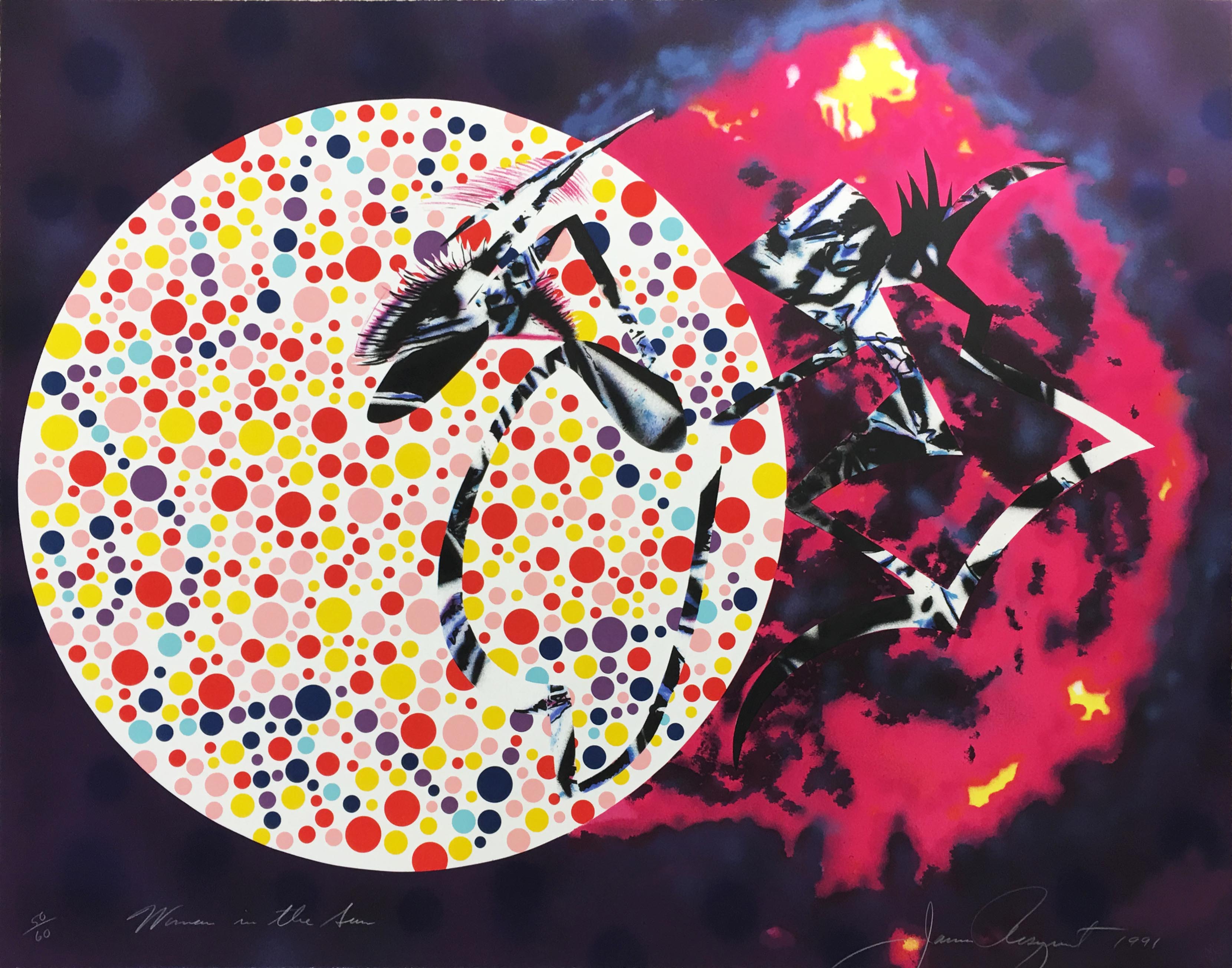
James Rosenquist
Woman in the Sun, 1991
From an early age he showed a natural aptitude for drawing and spatial thinking, qualities that would eventually carry him to the University of Minnesota and then, on a scholarship, to the Art Students League in New York City. It was New York in the late 1950s that truly formed him, not in the studios of the Abstract Expressionists he admired from a distance, but on the scaffolding above Times Square, where he spent years painting enormous commercial billboards for products that millions of Americans consumed without a second thought. That experience of working at a scale so vast that the image became abstract, of rendering a face so large that a single eyelash stretched several feet, fundamentally rewired the way Rosenquist understood representation. What Rosenquist brought back down from those scaffolds was something no art school could have taught him: an intimate knowledge of how images fragment under pressure of scale and proximity.
When he began exhibiting his own paintings in the early 1960s at the Green Gallery in New York, the art world recognized immediately that something new had arrived. His canvases placed recognizable commercial imagery in jarring, discontinuous relationships with one another, strips of consumer culture colliding like frames from different films spliced together on a single reel. He became associated quickly with the Pop Art movement alongside Andy Warhol, Roy Lichtenstein, and Claes Oldenburg, though his approach always carried a more overtly political charge and a more cinematic sense of composition than many of his peers. The work that secured his place in art history arrived in 1965.
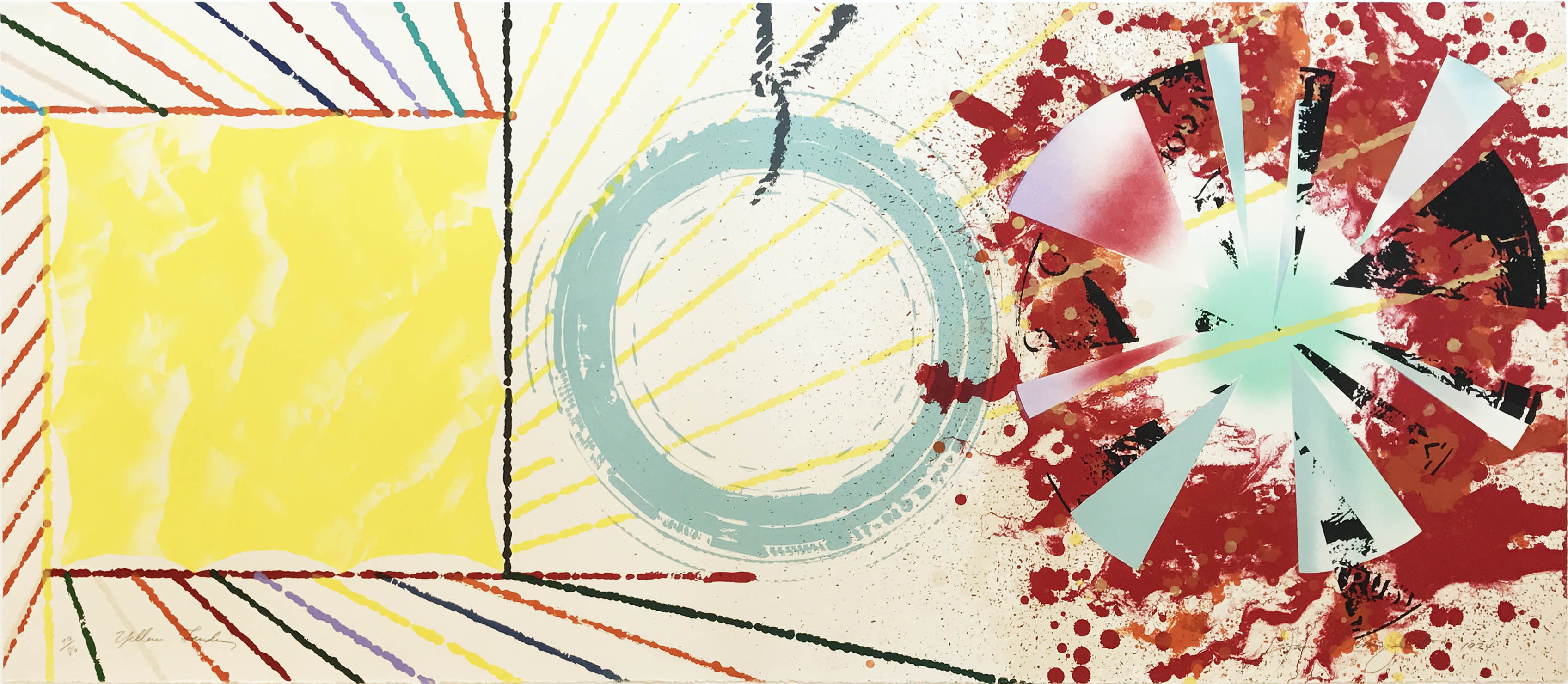
James Rosenquist
Yellow Landing, 1974
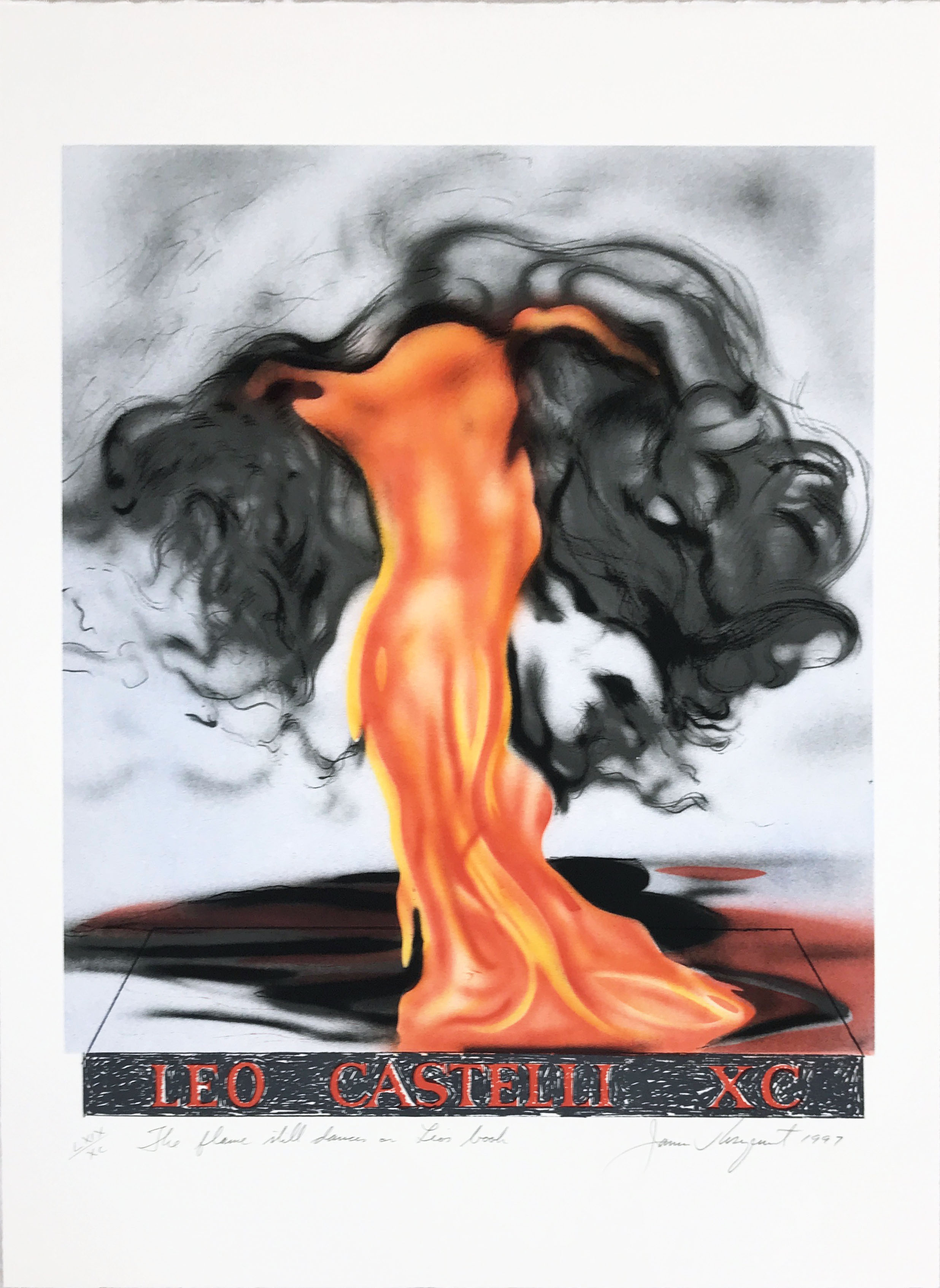
F 111, a painting that stretches over eighty feet in length, wrapped around all four walls of the Leo Castelli Gallery and depicted a United States Air Force jet fighter interwoven with images of a young girl under a hair dryer, canned spaghetti, an atomic mushroom cloud rendered in cheerful pastels, and fields of bright flowers. The painting was both a celebration and an indictment of American consumer prosperity during the Vietnam era, and it demonstrated that Rosenquist could work at a scale and with a political intelligence that placed him in a category of his own. The Castelli relationship was central to his career; Leo Castelli remained his dealer for decades, and the portfolio print made in honor of Castelli's ninetieth birthday, to which Rosenquist contributed, stands as a touching emblem of that enduring professional and personal bond. For collectors, Rosenquist's prints and works on paper represent one of the most rewarding entry points into his practice.
“When I was painting billboards, I was painting things much bigger than life. A four foot meatball was normal.”
James Rosenquist
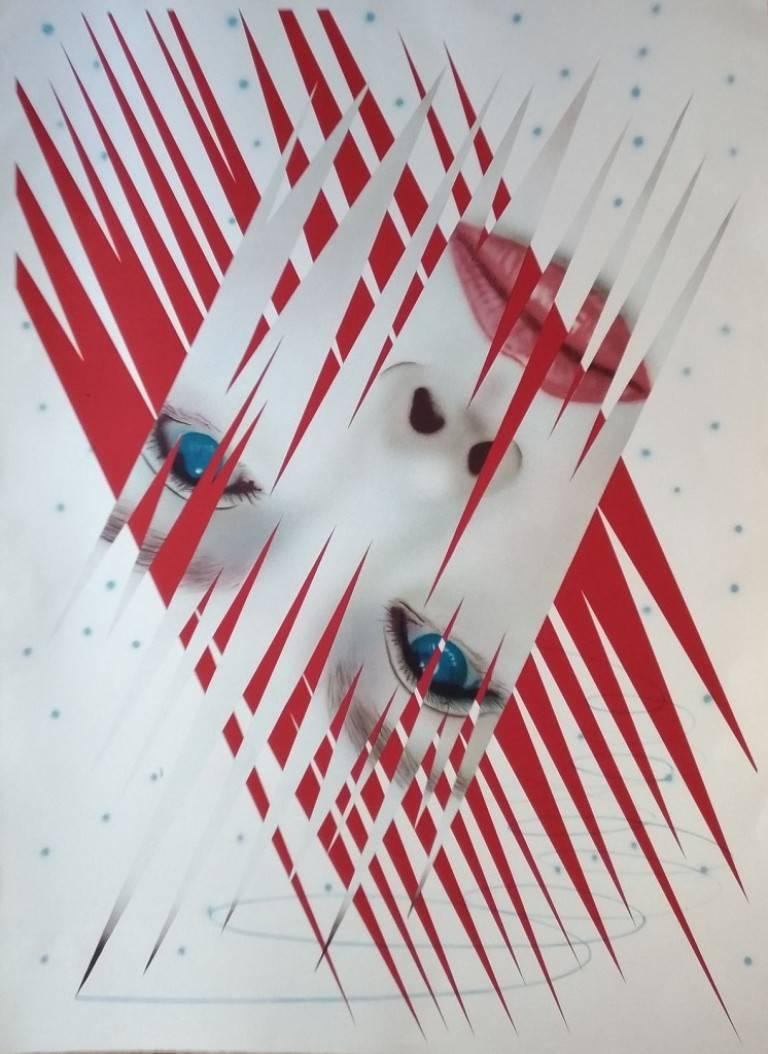
Working extensively in lithography, etching, and experimental printing techniques throughout the 1970s, 1980s, and beyond, he brought the same compositional intelligence of his large scale paintings to intimate formats without ever losing their visual energy. Works such as Star Leg, with its debossed surfaces, collaged string and stone elements on Copperplate Deluxe paper, and Skull Snap, pressed from paper pulp with lithographic collage on handmade sheets, reveal how deeply he understood the material possibilities of printmaking. These are not reproductions of paintings reduced to paper; they are fully realized works in their own right, rich with texture and conceptual weight. His Cold Light Suite lithographs and the hand colored etchings from 1977, including Nuclear Neighborhood and Towel, Star, Sunglasses, demonstrate the range of his palette and his continuing preoccupation with the tension between domestic comfort and geopolitical anxiety.
James Rosenquist
Ice Point from Art and Sport, 1983
At auction, Rosenquist's paintings have achieved prices in the millions, with his large scale canvases drawing serious institutional and private competition. His print market is equally robust and perhaps more accessible, offering collectors a genuine connection to a historically significant practice at a range of price points. What distinguishes the most sought after works is the quality of their impression, the condition of their often elaborate paper supports, and the degree to which they capture his signature juxtapositional energy. Collectors with an eye for postwar American art who have built collections around Warhol, Lichtenstein, or Jasper Johns frequently find that Rosenquist sits beside those names with complete authority while offering a perspective that is distinctly his own.
The art historical context that surrounds Rosenquist rewards careful attention. He was a colleague and sometime neighbor of Robert Rauschenberg, whose own explorations of found imagery and collage logic share a spiritual kinship with Rosenquist's work. The influence of Stuart Davis, with his bold flattened planes of American commercial color, runs quietly through Rosenquist's chromatic choices. And in the generation that followed, artists from Barbara Kruger to Richard Prince owe something to the visual argument Rosenquist made in the early 1960s: that the language of advertising was not beneath the attention of serious art but was in fact the most powerful visual dialect of modern American life.
James Rosenquist
The Flame Still Dances on Leo's Book (not in Glenn) from the portfolio of Leo Castelli's 90th Birthday, 1997
Rosenquist's legacy today feels remarkably current. In an era saturated with images, when the average person encounters thousands of visual messages each day across screens and feeds and surfaces of every kind, his central insight that fragmented imagery carries a unique emotional and political power seems not historical but prophetic. His work asks viewers to slow down inside the flood, to notice what is being offered and what is being taken, to feel the pleasure and the unease of living inside a culture that packages everything for consumption. For collectors, for institutions, and for anyone who loves painting as both pleasure and argument, James Rosenquist remains one of the essential artists of the twentieth century and a continuing presence in the twenty first.
Explore books about James Rosenquist