Isidore-Jules Bonheur
Isidore Bonheur, Sculptor of Living Bronze
Artist Spotlight · The Collection Editorial
There is a moment, standing before a Bonheur bronze, when the animal seems to breathe. The muscles of a horse's shoulder ripple beneath the surface. A bull's neck strains forward with latent power. The hooves press into the base as though the ground beneath them is real earth.
Isidore-Jules Bonheur
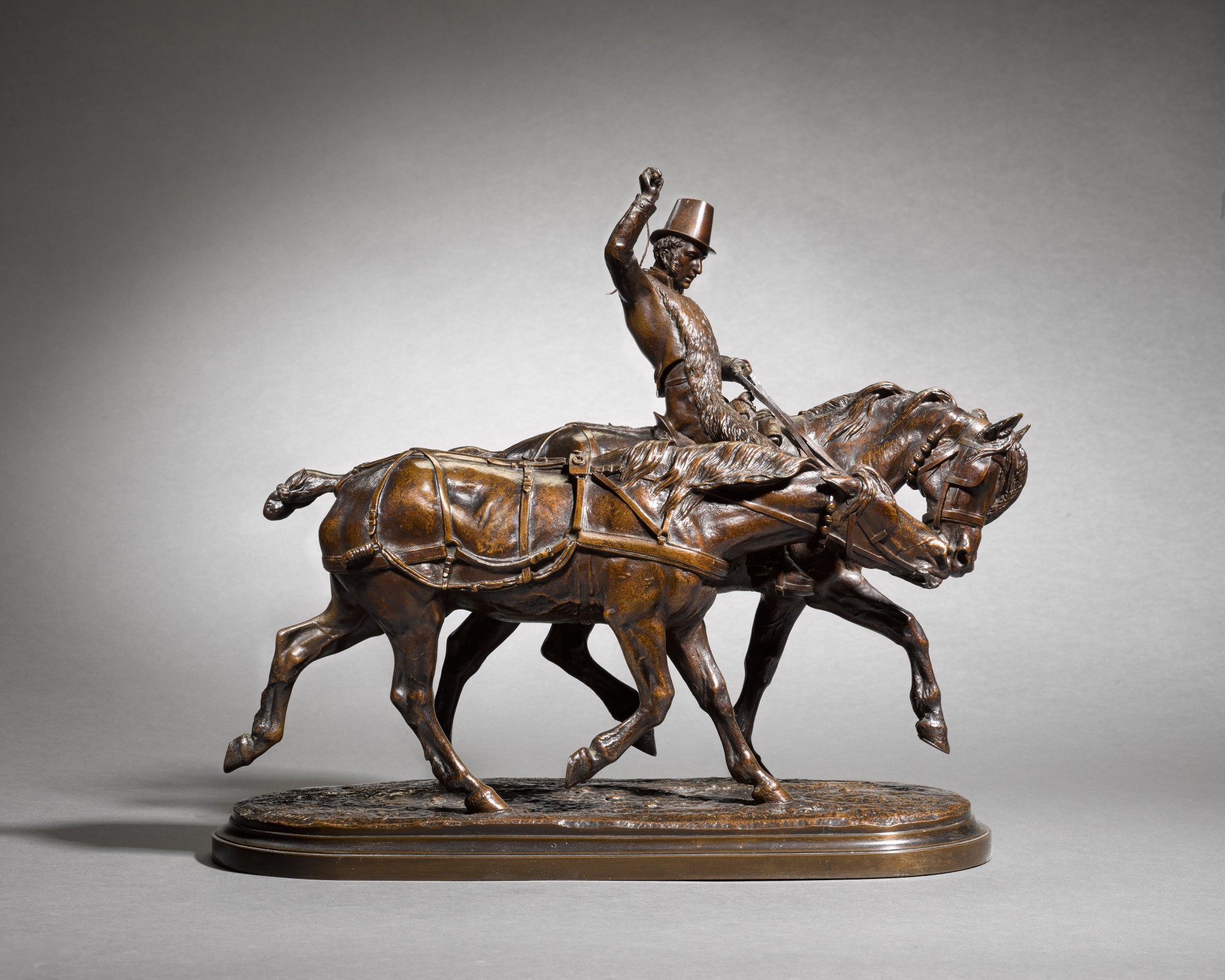
Two Carriage Horses with Rider
This is the genius of Isidore Jules Bonheur, a sculptor who devoted his entire creative life to the pursuit of animal truth, and whose works continue to command serious attention at auction houses from Christie's and Sotheby's to Bonhams and beyond. In recent years, the market for nineteenth century French animalier bronzes has strengthened considerably, with collectors rediscovering the technical and emotional depth of this tradition, and Bonheur stands at its very center. Isidore Jules Bonheur was born in Bordeaux in 1827, the son of Raymond Bonheur, a painter and drawing teacher of modest but genuine talent who held progressive views on artistic education and believed that close observation of the natural world was the foundation of all serious art. Raymond instilled in his children not merely technical discipline but a genuine reverence for animals, taking them repeatedly to the countryside, to farms, and to the livestock markets of Paris, where the chaos and vitality of working animals could be studied at close quarters.
Isidore grew up alongside his elder sister Rosa Bonheur, who would become one of the most celebrated animal painters of the nineteenth century, and the two shared not only a studio environment but a deep philosophical alignment in their approach to depicting the animal world. The family's immersion in the natural world was not romantic posturing but methodical practice, and it shaped Isidore's eye with a precision that would define his career. Where Rosa channeled her observations into vast, luminous canvases, Isidore found his medium in three dimensions. He trained formally as a sculptor, and his early works already demonstrated an understanding of anatomy that went far beyond surface appearance.
Isidore-Jules Bonheur
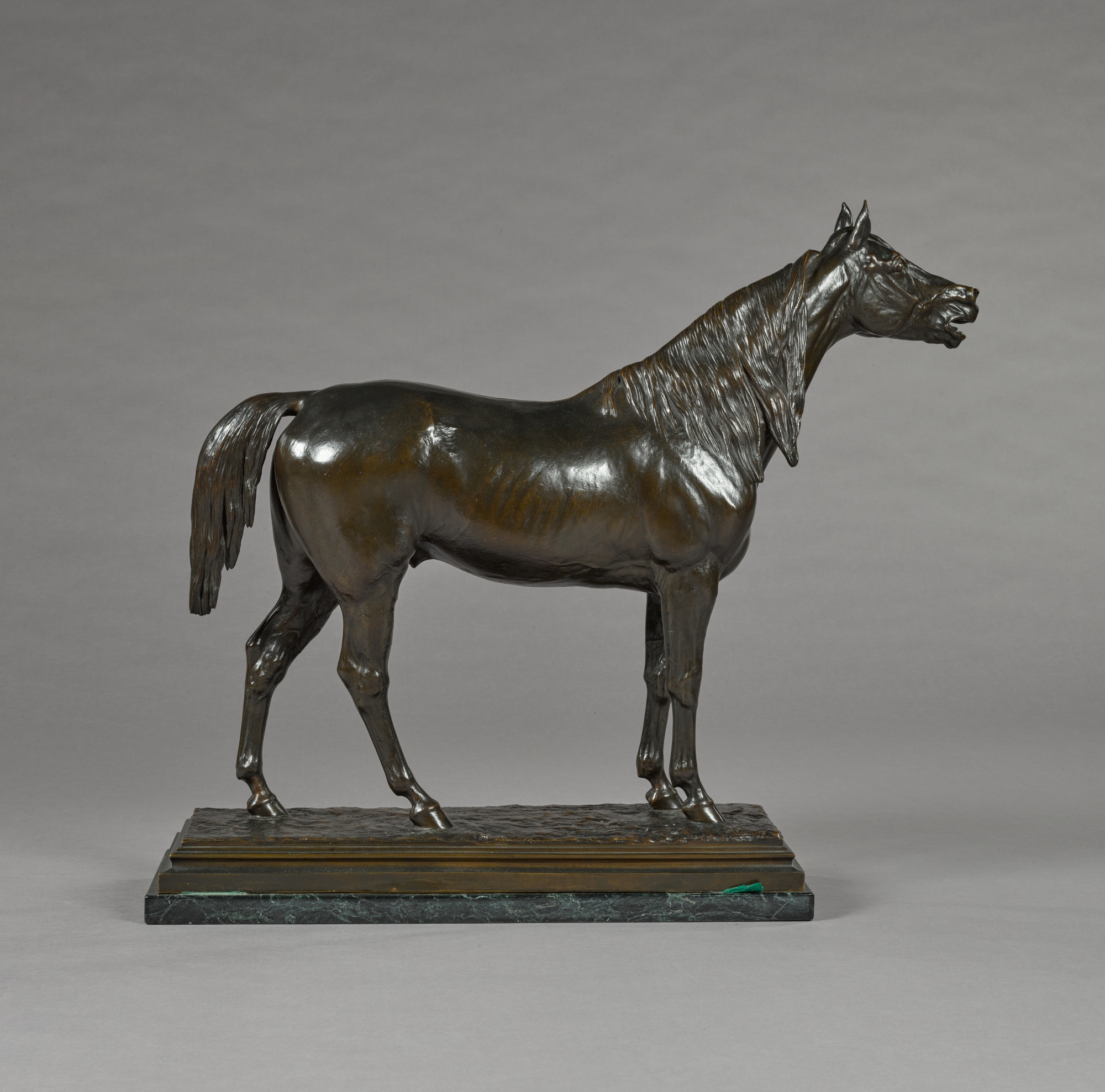
Cheval henissant (Neighing horse)
He studied the way weight shifts through a horse's body when it moves from a walk to a trot, the way a dog's spine curves when it is alert, the exact geometry of a bull's massive skull. This was not an artist content to approximate. He sought a kind of sculptural fidelity that required him to understand his subjects from the inside out, and the discipline he brought to that pursuit elevated his bronzes above mere decorative objects into something genuinely scientific in their accuracy and genuinely moving in their feeling. By the time he began exhibiting at the Paris Salon, he was recognized as a significant voice in the animalier tradition, a movement that had been established earlier in the century by figures such as Antoine Louis Barye, whose dramatic and often violent animal subjects had opened up the genre to serious critical consideration.
Bonheur's mature works show a sculptor at complete command of his medium. His bronzes were cast with exceptional care, and the quality of his patination, ranging from the warm mid browns of works like Two Carriage Horses with Rider to the deep, almost luxurious dark tones of Cheval Henissant, reflects both the foundry skill of his era and his own exacting standards. Cheval Henissant, the Neighing Horse, is among his most iconic compositions, capturing the animal mid vocalization, neck arched, every tendon engaged, mounted on a base of veined green marble that situates the work firmly within the tradition of presentation bronzes intended for serious collections. Two Carriage Horses with Rider demonstrates his gift for compositional complexity, balancing multiple figures with a sense of narrative momentum that is rare in sculpture of this period.
Isidore-Jules Bonheur
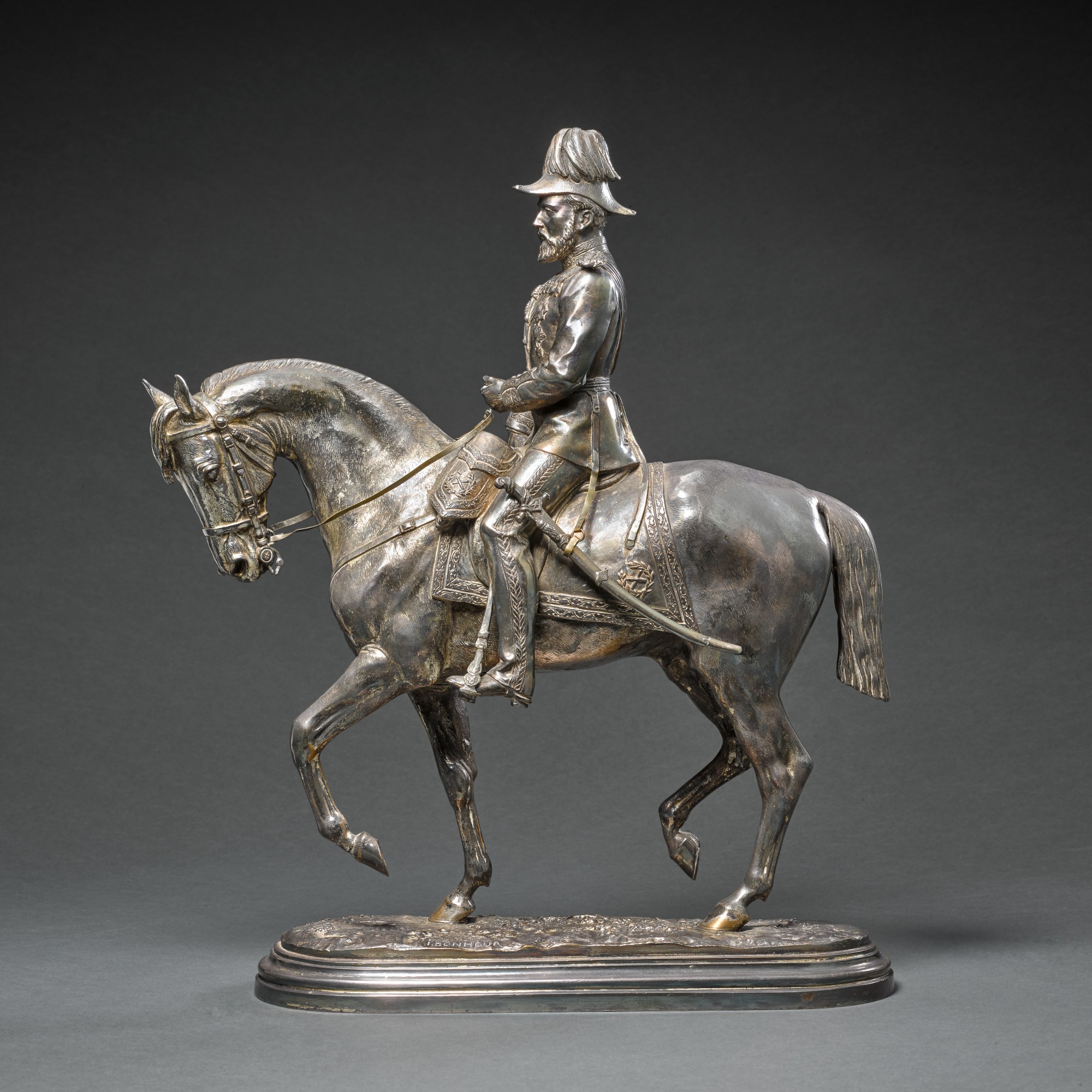
Edward VII as Prince of Wales
These are not static trophies. They are arguments about the dignity and beauty of animal life. Perhaps most intriguing among his known works is the silvered bronze portrait of Edward VII as Prince of Wales, a commission that speaks to Bonheur's standing not merely as an artist for the salon circuit but as a sculptor trusted with subjects of considerable social consequence. The use of silvered bronze rather than the more common gilt or standard brown patina gives the work a distinctive, cooler presence, and it demonstrates the range of his technical repertoire.
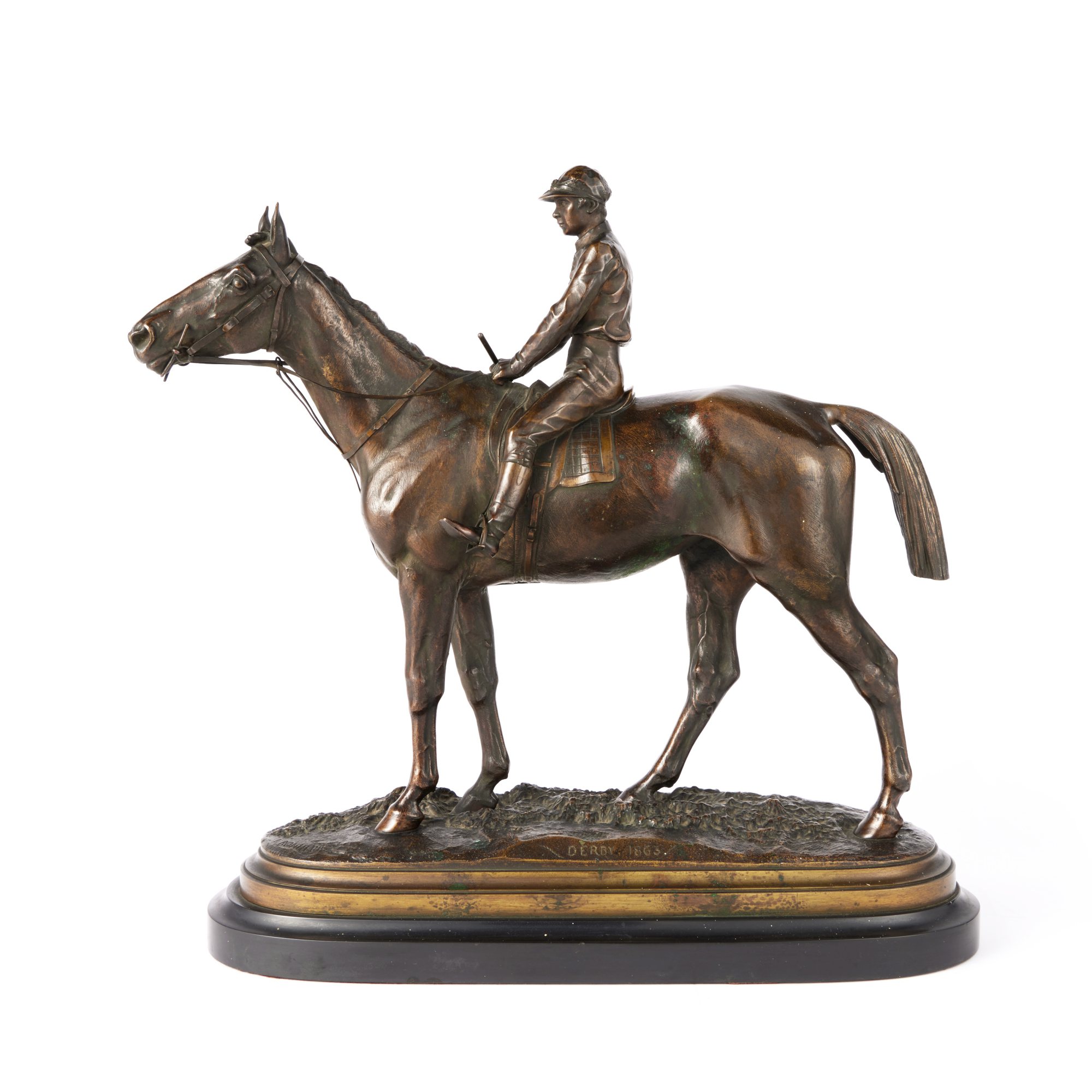
Derby Winner, his bronze tribute to thoroughbred racing, connects his animal subjects to the great cultural passions of the Anglo French world of the late nineteenth century, a period when horse racing was among the most socially significant of all public spectacles and when a truly great racing portrait carried real cultural weight. That Bonheur could move fluidly between agricultural animals, aristocratic commissions, and sporting subjects speaks to the breadth of his vision. For collectors, Isidore Jules Bonheur represents one of the most compelling opportunities within the French animalier tradition. His works appear regularly at major auction houses, where strong examples in good condition with clear patination and solid provenance consistently attract competitive bidding.
Isidore-Jules Bonheur
Derby Winner
The guidance for any serious collector is to prioritize the quality of the casting and the integrity of the patina, as his bronzes were produced in varying editions and the finest examples reward close examination. Works mounted on marble bases, as with Cheval Henissant, tend to carry additional presence and desirability. His name is naturally associated with those of Barye, Pierre Jules Mene, and Alfred Dubucand, all of whom worked within the animalier tradition and whose bronzes represent the peak of French sculptural naturalism in the nineteenth century. Among these peers, Bonheur holds a secure and distinguished position, his works balancing technical mastery with an emotional generosity that continues to resonate.
The legacy of Isidore Jules Bonheur is inseparable from the larger story of the Bonheur family's contribution to French art, a contribution that combined rigorous observation with deep affection for the living world. He died in 1901, having spent more than half a century in devoted pursuit of a singular goal: to make bronze breathe. In an art historical moment when collectors and institutions are reassessing the full breadth of nineteenth century achievement, looking beyond the canonical Impressionists to the sculptors and salon painters who shaped how the era understood beauty and nature, Bonheur's moment of rediscovery feels both overdue and entirely deserved. His animals still live.
They will for a long time yet.