Hurvin Anderson
Hurvin Anderson Paints the World Beautifully
Artist Spotlight · The Collection Editorial
When Hurvin Anderson received his Turner Prize nomination in 2017, the art world took a moment to catch up with what many collectors and curators had long understood: here was a painter of extraordinary quiet power, one whose canvases demand a stillness from the viewer that is increasingly rare in contemporary art. The nomination brought Anderson to a wider public, yet the work itself remained characteristically unhurried, rooted in the textures of memory and the architecture of belonging. His paintings of swimming pools, barbershops, and Caribbean landscapes had been building toward this recognition for decades, each canvas a meditation on what it means to move between worlds and to find, in familiar spaces, the deepest questions of identity. Anderson was born in Birmingham in 1965 to Jamaican parents, and that dual inheritance has never been a background detail in his life or his art.
Hurvin Anderson
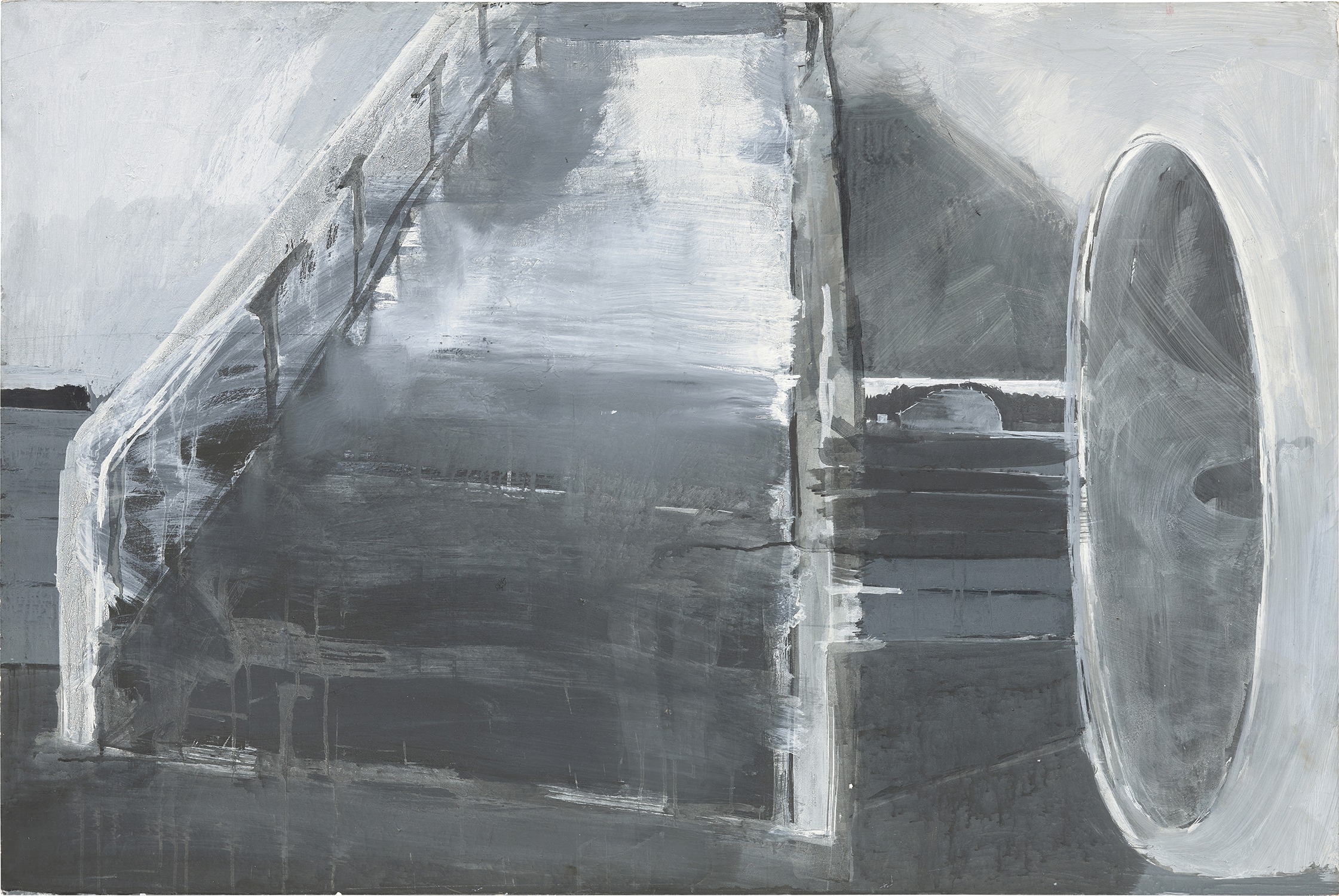
Landing, 1998
It is the very structure of his vision. Growing up in England while carrying the landscapes, sounds, and social rituals of the Caribbean as a kind of internal country, he developed an unusually refined sensitivity to the in between, to the spaces where cultures overlap and individuals quietly negotiate their sense of self. Birmingham in the 1960s and 1970s was a city of arrivals and adjustments, and Anderson absorbed both its particular light and its social textures from an early age. He went on to study at Wimbledon School of Art and later the Royal College of Art, where he honed a technical fluency that would come to serve his deeply personal subject matter.
Anderson's artistic development has followed a patient, exploratory arc rather than the dramatic pivots that mark some careers. His early works, including the evocative oil on paper piece Landing from 1998, already demonstrated his ability to load a seemingly simple image with psychological weight. The title alone suggests arrival, transition, and the ambiguity of threshold moments, and the work rewards close looking in precisely that spirit. Through the late 1990s and into the 2000s he began developing the series of barbershop interiors that would become among his most celebrated contributions to contemporary painting.
Hurvin Anderson
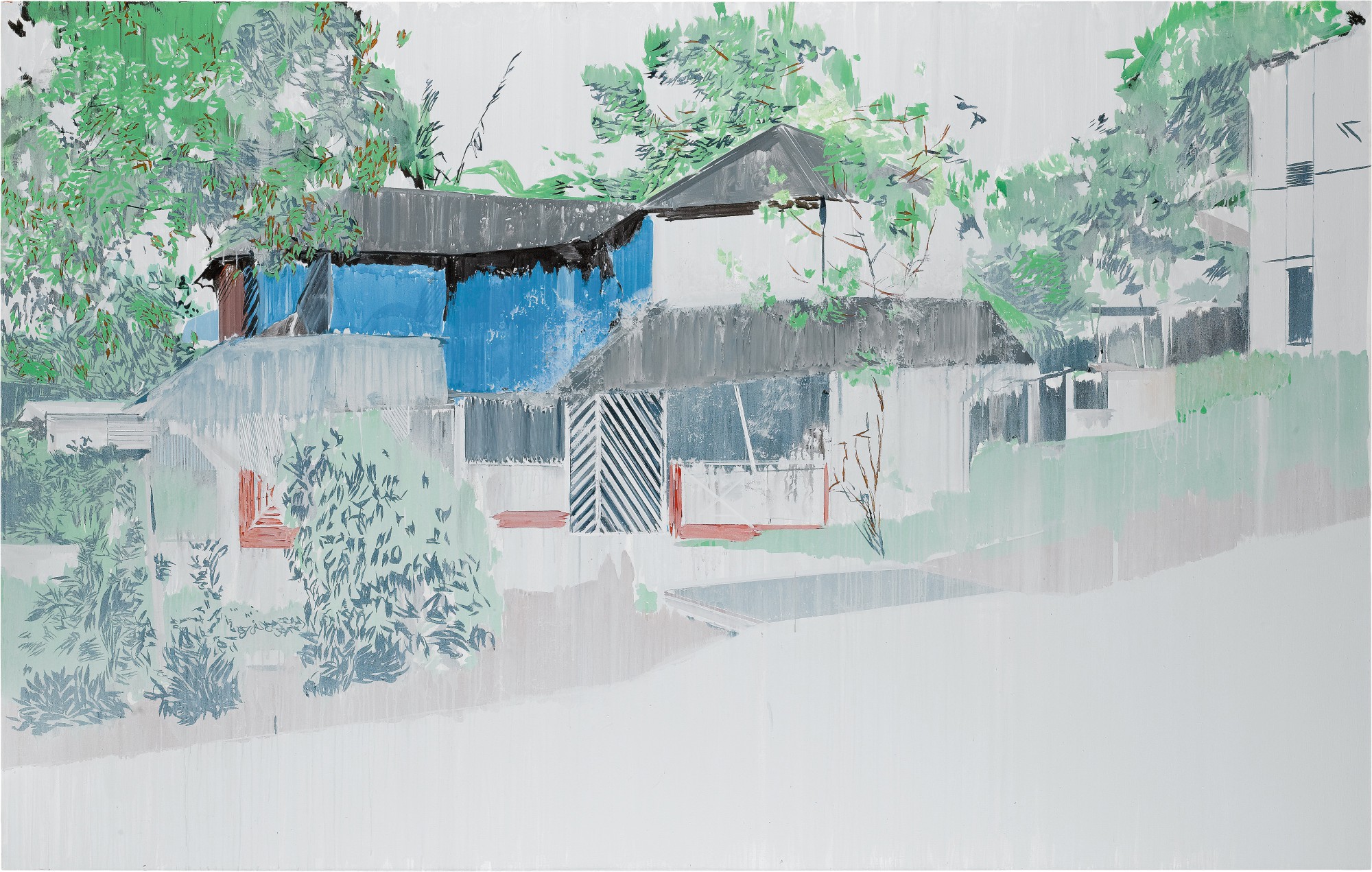
House 屋子, 2005
These spaces, familiar gathering points for Black British and Caribbean communities, became sites of enormous cultural complexity in his hands. They are places of sociality and grooming, yes, but also of performance, of masculine ritual, and of the transmission of cultural memory across generations. The swimming pool paintings represent another of Anderson's defining bodies of work, and they remain some of the most quietly unsettling images in recent British painting. Drawing on photographs taken at pools in the Caribbean and in Britain, Anderson renders these spaces with a luminosity and precision that is almost photographic, yet the canvases carry a mood that photography alone could never achieve.
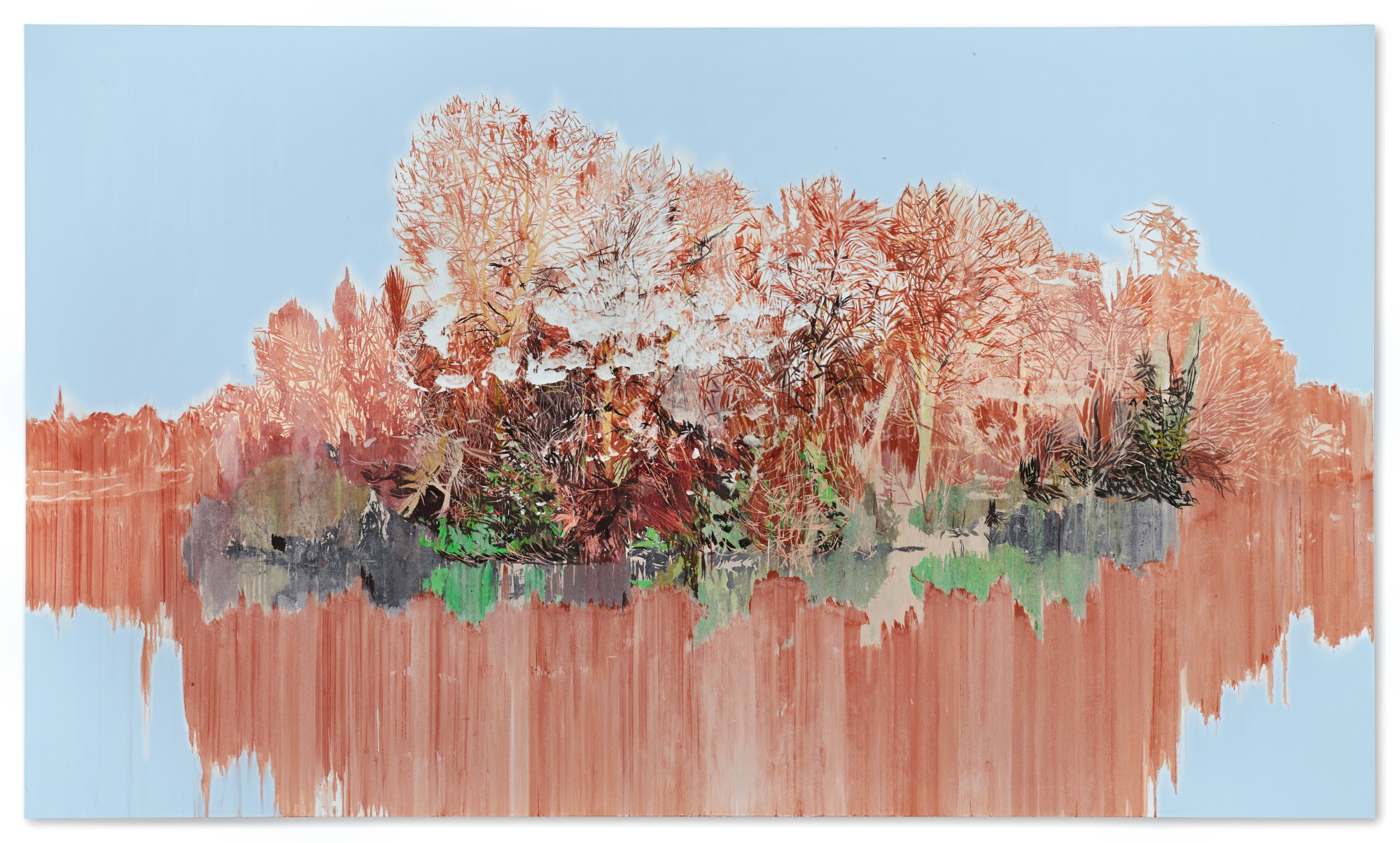
The pools are often empty of people, or the human presence is suggested rather than declared, and this absence becomes a form of eloquence. What the pools hold is not just water but history, the history of segregation, of leisure divided by race and class, of bodies welcomed and excluded. Works such as Lower Lake III demonstrate how Anderson uses colour, reflection, and the shimmer of light on water to make a painting that is at once beautiful and loaded with implication. House from 2005, rendered in oil on canvas, extends this enquiry into domestic and architectural space.
Hurvin Anderson
Lower Lake III
The house of the title is never simply a building but a repository of aspiration, inheritance, and the complicated emotions that surround ideas of home for a diaspora community. Works on paper such as Green Umbrella from 1994 and the more recent Welcome: Revisited, with its layering of ink, graphite, paper collage, and masking tape, show Anderson at his most exploratory, willing to let process and material accumulation stand for the layering of time and experience. His printmaking practice, represented by works including the luminous Margaritas from the Welcome Series, a woodcut and screenprint on Saunders Waterford paper, and the richly coloured Mum's lithograph, reveals an artist who understands how different media carry different kinds of intimacy and how a print can circulate a vision of the world in ways that a unique painting cannot. For collectors, Anderson's work offers something that is genuinely rare: a practice of great formal sophistication that is also deeply humane and culturally specific without being in any way narrow.
His paintings and works on paper are held by the Tate in London, the Studio Museum in Harlem, and the Government Art Collection, a roster that speaks to the breadth of his institutional recognition across the Atlantic. Collectors who have followed his career over the long term speak of the way his works reward living with, revealing new layers of meaning and feeling as the light changes or as one's own frame of reference shifts. Works on paper and prints, including pieces such as Maracas (double) and the unique hand coloured giclée on Hahnemühle etching paper, offer points of entry into his vision that sit alongside the major canvases as important documents of his thinking. The secondary market for Anderson's work has shown consistent strength, reflecting not only institutional endorsement but genuine collector loyalty.
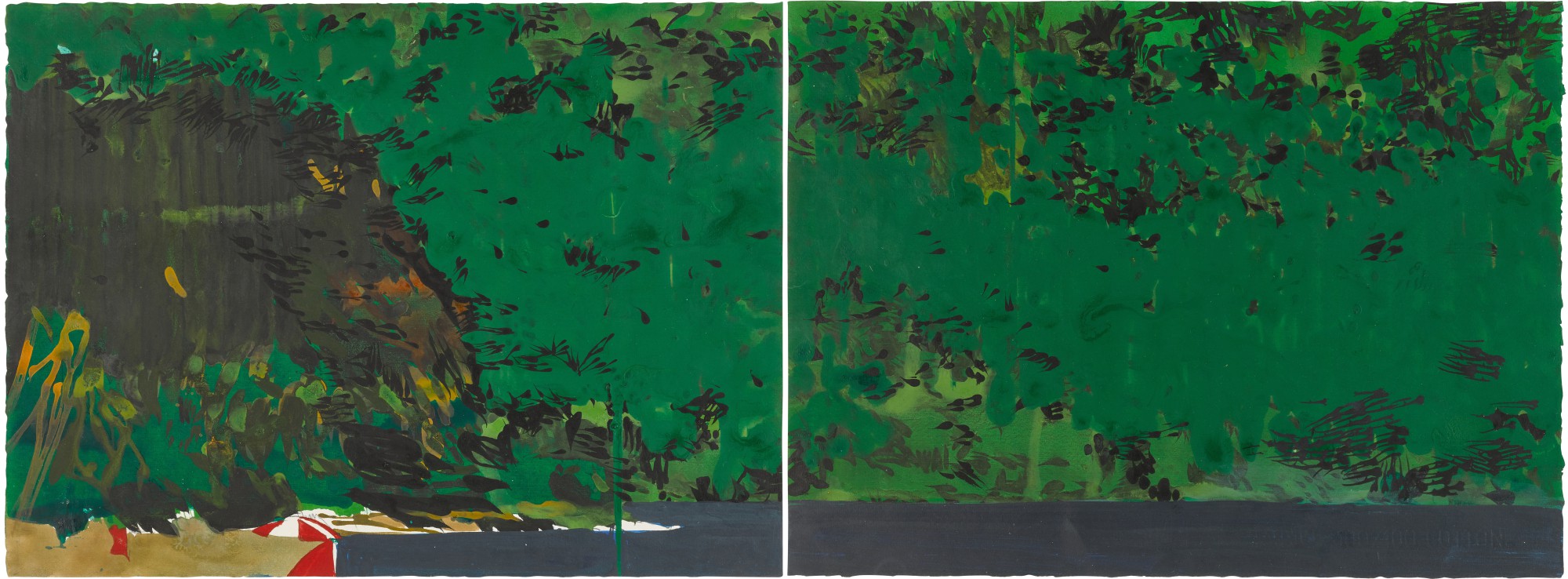
Hurvin Anderson
Maracas (double)
Anderson occupies a distinctive position in the landscape of contemporary painting, one that connects him to a lineage of artists who have used the domestic and the everyday as a lens for examining larger structures of race, belonging, and memory. His work invites comparison with that of Kerry James Marshall in its commitment to painting as a vehicle for historical reckoning, and with Lynette Yiadom Boakye in its deployment of atmosphere and implication over statement. Yet Anderson's voice is entirely his own, rooted in a very specific geography of imagination that moves between Birmingham, Jamaica, and the broader Caribbean. Artists such as Peter Doig, whose tropical landscapes carry a similarly layered relationship to place and memory, offer another point of context, though Anderson's social attentiveness sets him apart.
What makes Anderson matter today, and what will ensure his work continues to grow in significance, is precisely this quality of attention. In an art world that often rewards the spectacular gesture, he has built a body of work around the patient observation of ordinary spaces and their extraordinary freight of meaning. His paintings ask us to look carefully at the places where people gather, rest, and recognize themselves, and to understand that these places are never neutral, that they are always shaped by history, by politics, and by the invisible architectures of belonging. To collect Anderson is to invest in a vision of painting that is both supremely refined and urgently relevant, a vision that trusts the viewer to meet the work in the silence it creates.
Explore books about Hurvin Anderson