Hu Yongkai
Hu Yongkai: Where Tradition Meets Luminous Grace
Artist Spotlight · The Collection Editorial
In the auction rooms of Beijing and Hong Kong, a Hu Yongkai figure painting commands a particular kind of attention. Collectors lean in. The brushwork is at once confident and tender, the coloring warm as afternoon light through silk. Over the past decade, works by this quietly celebrated painter have moved with increasing conviction through the major Chinese auction houses, with his ink and color figure paintings finding homes among serious collectors both within China and far beyond its borders.
Hu Yongkai
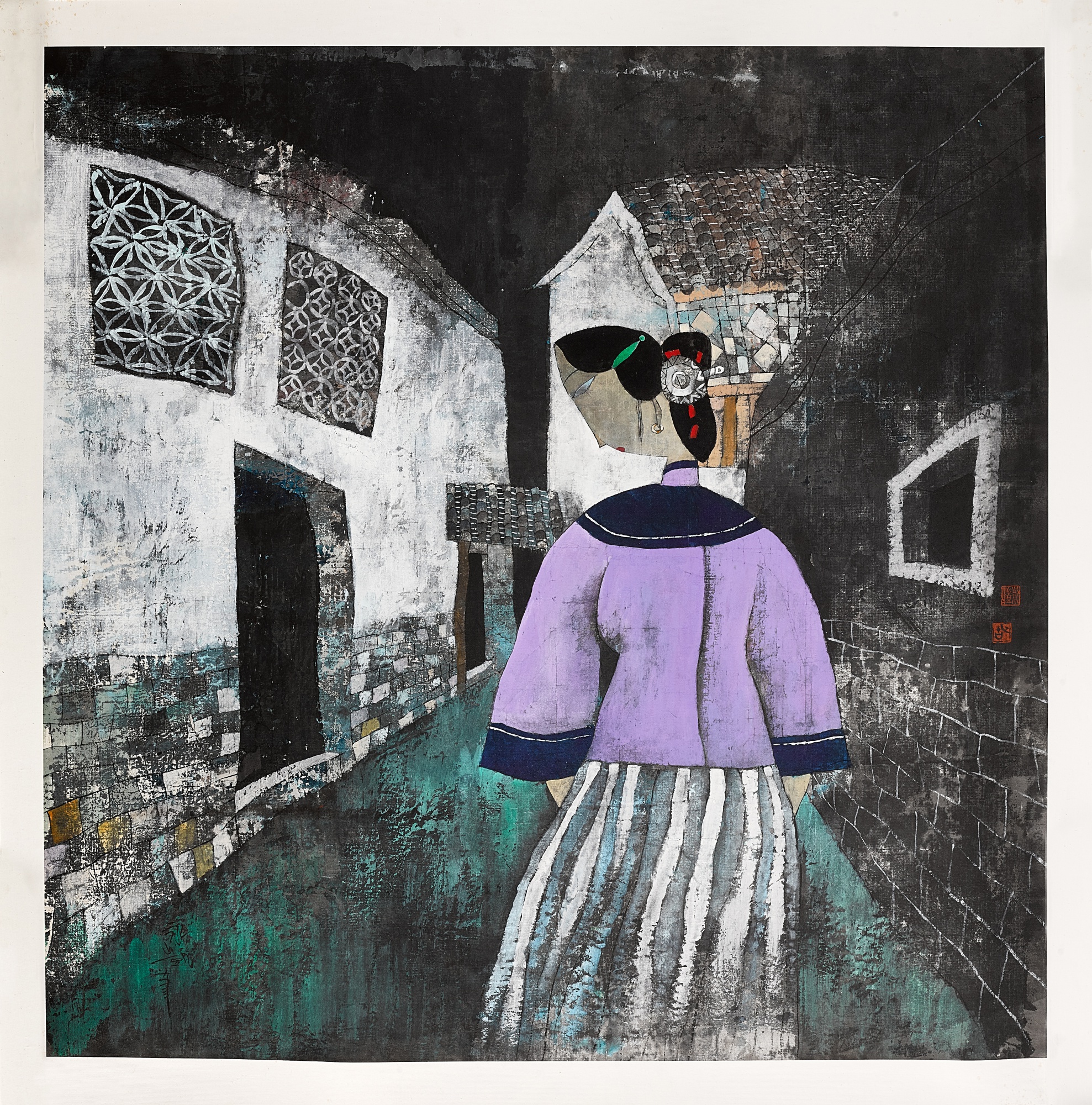
Untitled 無題
That steady market momentum reflects something real: a growing recognition that Hu Yongkai occupies a singular position in the landscape of contemporary Chinese painting, one that bridges centuries of tradition without ever feeling burdened by them. Born in 1945, Hu Yongkai came of age during one of the most turbulent and transformative periods in modern Chinese history. The postwar decades that shaped his early sensibility were ones of profound cultural negotiation, as Chinese artists of his generation grappled with the weight of classical inheritance on one side and the pressures of ideological and Western influence on the other. His formation as a painter took place within the rigorous academic system of Chinese art education, where he developed a command of both traditional Chinese brushwork and the principles of figurative realism that had entered Chinese art institutions through Soviet and European academic models.
That dual foundation would prove to be the engine of everything that followed. Hu Yongkai studied and later taught at the Guangzhou Academy of Fine Arts, one of the most distinguished institutions in southern China and a place with a long tradition of synthesizing classical Chinese technique with broader pictorial concerns. It was within this environment that he refined his approach to the human figure, developing a practice rooted in close observation, deep technical discipline, and an evident love for the subject itself. His time at the academy shaped not only his method but his ethos: a belief that painting from life, with genuine attention and feeling, could produce work of lasting resonance regardless of the prevailing winds of fashion or ideology.
Hu Yongkai
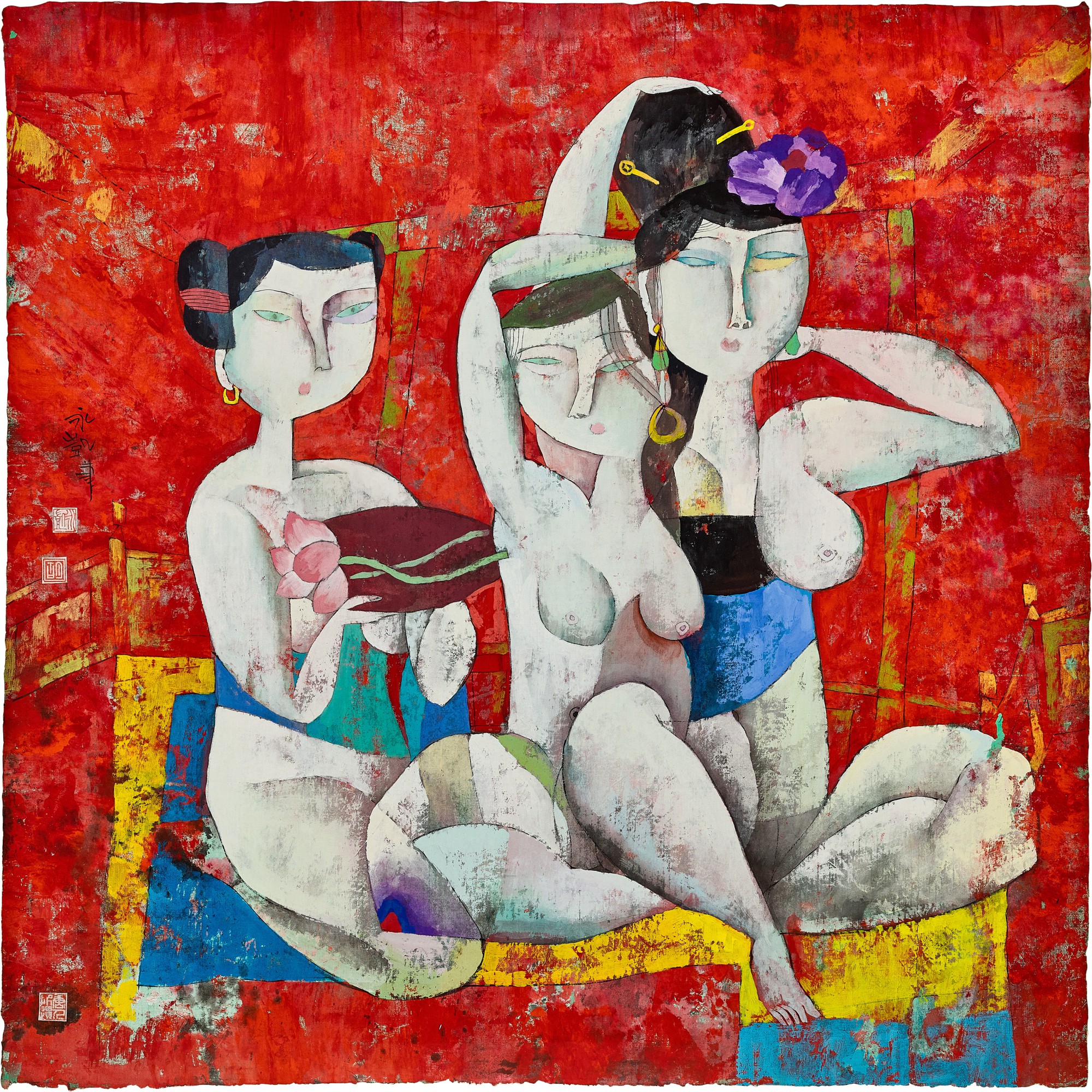
Three nudes 三美圖
The subject that would bring Hu Yongkai his widest recognition is the female figure, and more specifically, women from the ethnic minority communities of China rendered in traditional costume and setting. These paintings are not ethnographic documents, though they carry real cultural specificity. They are, above all, acts of sustained admiration. The women in his canvases and on his paper are present in a way that feels earned rather than decorative.
The traditional dress, the ornamental detail, the particular tilt of a head or curl of a hand, all of these are rendered with a brushwork that is simultaneously scholarly and spontaneous. He draws on the long lineage of Chinese figure painting, from the Tang dynasty court painters through to the masters of the late Qing, while inflecting his work with the sense of volume and light that academic realism provides. The result is something genuinely his own. Among his most celebrated works are his paintings of nudes, which demonstrate how completely he has internalized both traditions.
Hu Yongkai
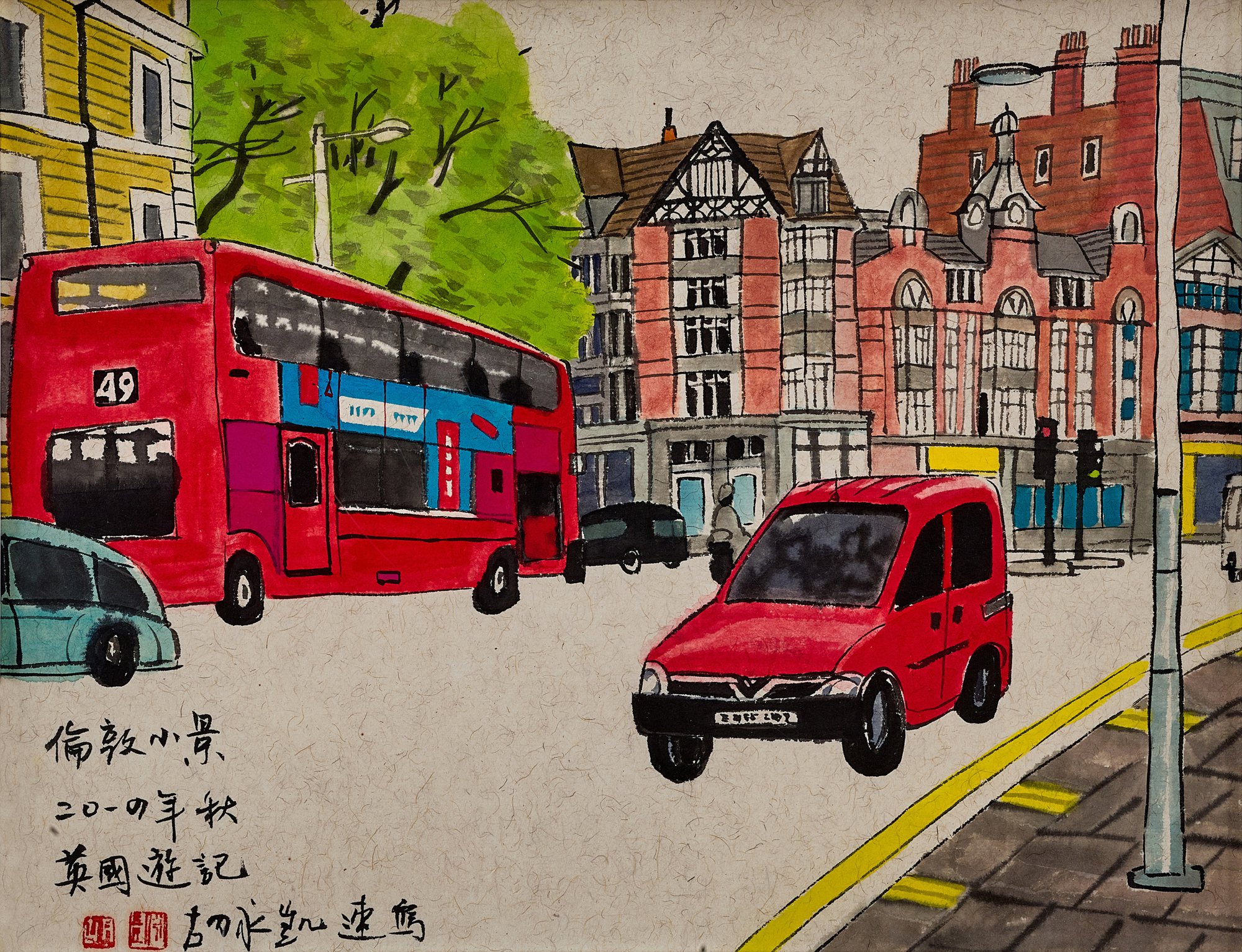
Picture of London 倫敦小景, 2017
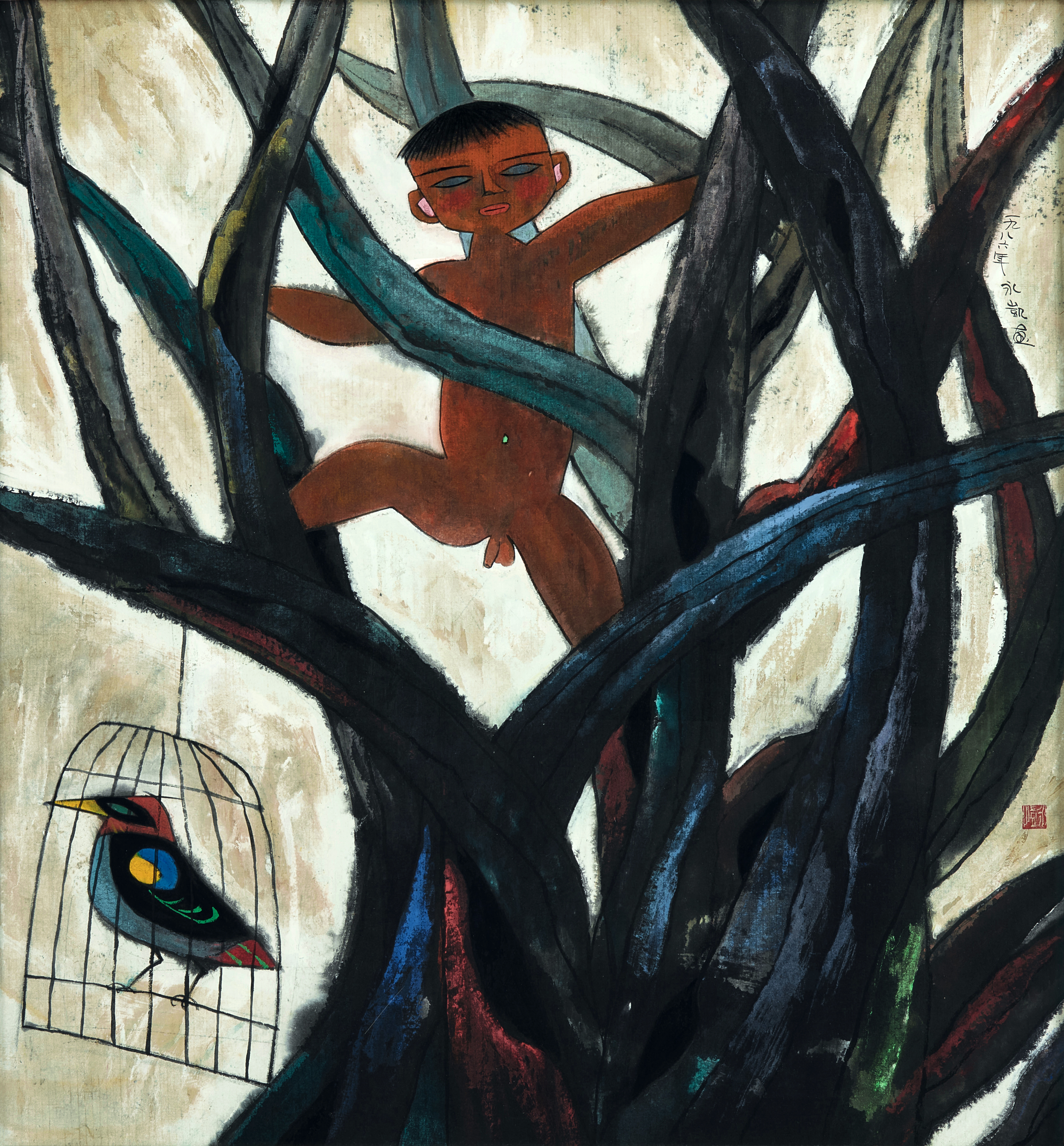
A work like Three Nudes, rendered in ink and color on paper, shows the classical Chinese painter's sensitivity to the expressive potential of line and wash alongside a Western academic understanding of the body in space. The figures breathe. There is no coldness in the draftsmanship, no distance between the artist and his subject. Similarly, his quieter domestic works, such as the tender Child and Bird from 1986 and the warm, observational Child and Cat, reveal the full emotional range of his practice.
These are not showpieces but intimate paintings, and their intimacy is their strength. His still life work, including the paired Pears and Chrysanthemum, shows the same economy of means and richness of feeling applied to the world of objects. For collectors, Hu Yongkai represents a compelling proposition. He is an artist whose technical credentials are unimpeachable, whose work sits comfortably within the long arc of Chinese painting history, and whose subject matter carries genuine cultural depth.
Hu Yongkai
Hu Yongkai, Child and Bird
His ink and color works on paper are particularly sought after, combining the portability and intimacy of works on paper with the full expression of his painterly gifts. Collectors who have followed his career will know that the earlier figure paintings from the 1980s and 1990s carry a particular directness of observation, while later works such as the 2017 Picture of London show an artist still curious and engaged, willing to bring his distinctive eye to new subjects and new corners of the world. That kind of sustained vitality in a long career is something collectors rightly value. In the broader context of contemporary Chinese painting, Hu Yongkai belongs to a distinguished generation that includes artists such as He Jiaying and Wang Meifang, painters who similarly devoted themselves to revitalizing the Chinese figure painting tradition through rigorous technical practice and genuine emotional investment.
Like those peers, he has resisted both the temptations of avant garde novelty and the dangers of mere pastiche, finding instead a personal voice that is unmistakably grounded in tradition while remaining fully alive to the present. His influence on younger generations of Chinese painters has been considerable, particularly in the south of China where his reputation as a teacher has been as significant as his reputation as a practitioner. What finally makes Hu Yongkai matter, in 2024 as much as in any earlier decade of his long career, is the quality of attention his paintings embody and demand. In an art world often drawn to the spectacular and the conceptually elaborate, his work is a reminder that painting from close looking, from real care for one's subject, from mastery of a demanding tradition, can produce something that endures.
The women in their festival dress, the children with their birds and cats, the pears and chrysanthemums arranged with quiet thoughtfulness: these are paintings that reward sustained looking. They were made by someone who has spent a lifetime perfecting the art of seeing, and that lifetime of dedication is visible in every brushstroke.