Hélio Oiticica
Hélio Oiticica, The Artist Who Freed Art
Artist Spotlight · The Collection Editorial
“I am not interested in art as a product but in art as an experiment, as an experience.”
Hélio Oiticica
Imagine Rio de Janeiro in the early 1960s, a city alive with samba rhythms, political tension, and radical creative energy. In the hillside favelas, a young artist named Hélio Oiticica was dancing at the Mangueira samba school, not as an observer but as a fully initiated member of the community. He was also quietly dismantling everything the art world thought it knew about painting, sculpture, and the relationship between a body and a work of art. More than four decades after his death in 1980, Oiticica remains one of the most visionary and genuinely transformative figures in twentieth century art, an artist whose ideas feel not merely ahead of their time but somehow still ahead of ours.
Hélio Oiticica
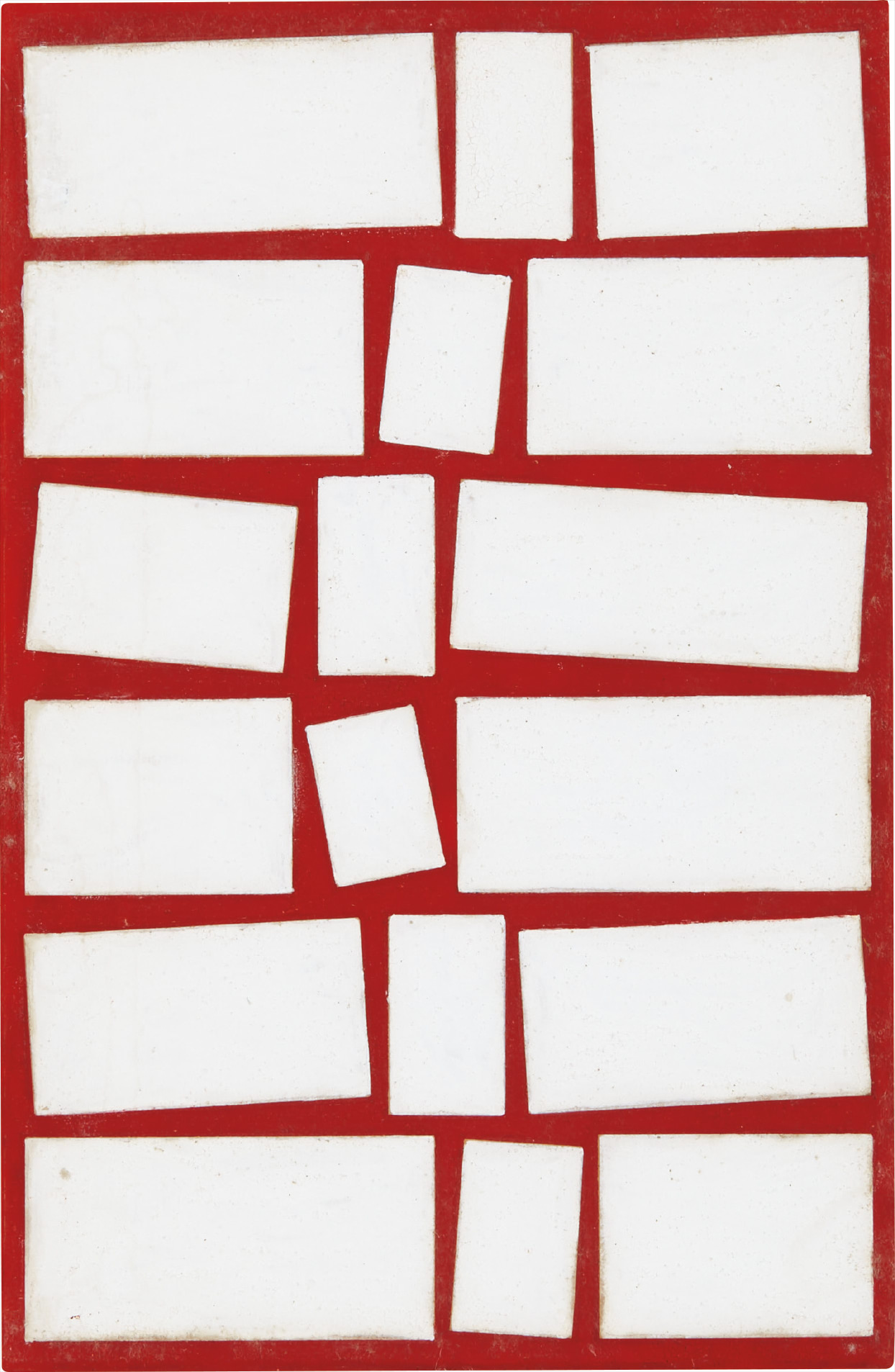
Metaesquema, 1957
Oiticica was born in Rio de Janeiro in 1937 into an intellectually distinguished family. His grandfather was an anarchist and pioneering linguist, and his father, José Oiticica Filho, was an accomplished photographer and entomologist. The household valued science, poetry, and dissent in equal measure, and young Hélio absorbed all of it. He began his formal art education at the Museum of Modern Art in Rio, studying under the concrete art pioneer Ivan Serpa in the early 1950s.
That foundation in rigorous geometric abstraction would prove essential, giving Oiticica a discipline from which he could later explode outward in every direction. His earliest mature works, the Metaesquemas of the mid to late 1950s, are among the most beautiful and underappreciated bodies of work in postwar art. Created in gouache on cardboard, these compositions push geometric forms to the very edges of their pictorial boundaries, as though the shapes are straining to break free of the surface that contains them. The Metaesquema of 1957, one of the works available through The Collection, exemplifies this quality perfectly.
Hélio Oiticica
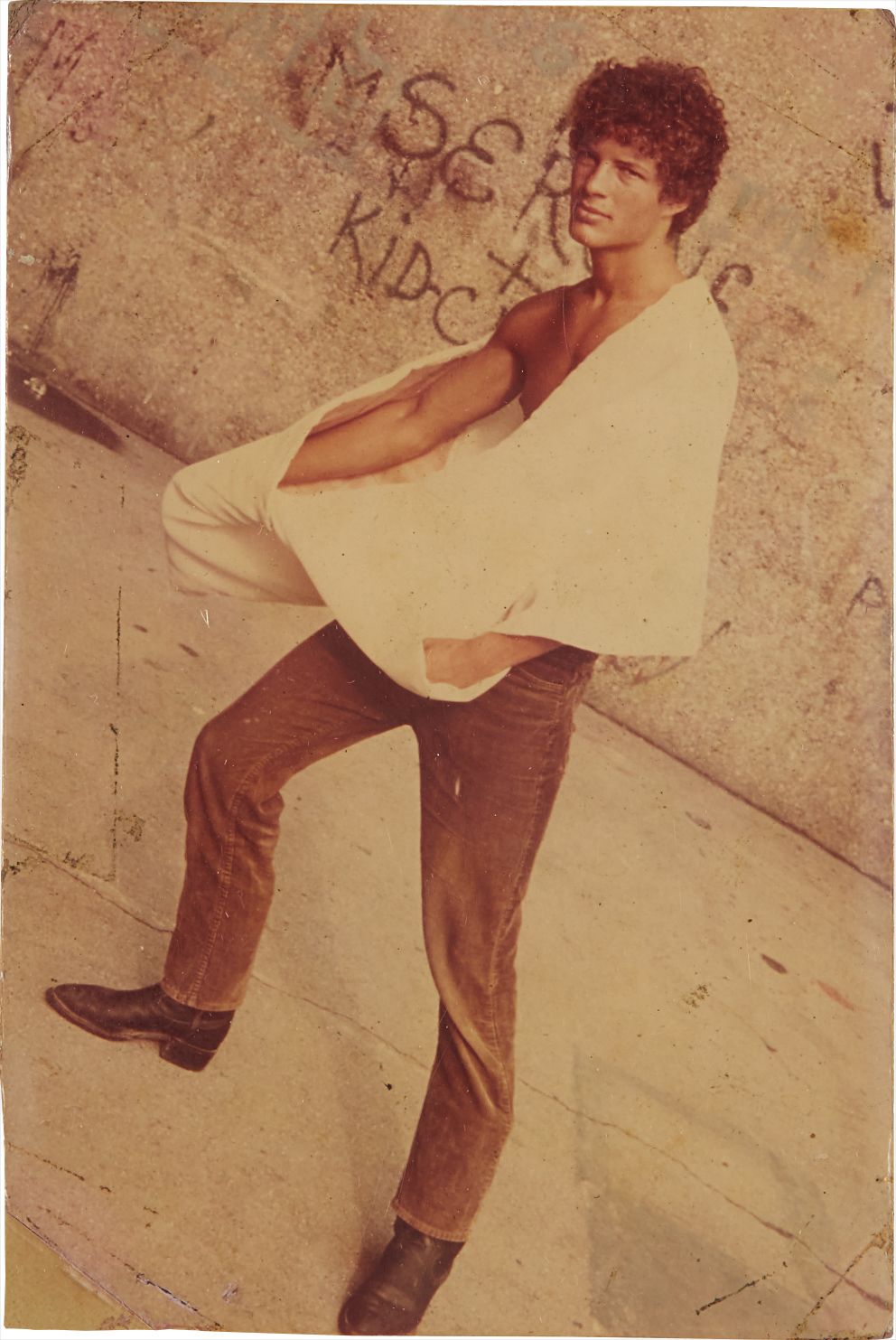
Jeff wearing p31 parangolé cape 24, New York
The forms feel restless, kinetic, alive with an urgency that looks forward rather than back. These works positioned Oiticica within the Brazilian Neoconcrete movement, alongside artists like Lygia Clark and Lygia Pape, a generation who believed geometric abstraction could become something embodied and phenomenological rather than purely optical or intellectual. The pivotal break came around 1959 and 1960, when Oiticica began removing color from the wall entirely. His Spatial Reliefs and Nuclei were three dimensional structures that invited viewers to walk among them, experiencing color as an environment rather than a representation.
“Color is the main element, the structural one, and it does not serve to decorate or illustrate.”
Hélio Oiticica, writings, circa 1960
Then came the Bólides, box structures containing raw pigment, earth, and found materials, objects that asked to be touched, opened, handled. Each step drew the spectator deeper into the work, eroding the boundary between art and life. By 1964, when he was presented with the National Opinion Prize in Rio, it was clear that Brazilian art had produced someone genuinely singular. The Parangolés, begun in 1964 and continued throughout his life, represent perhaps his most radical and joyful contribution.
Hélio Oiticica
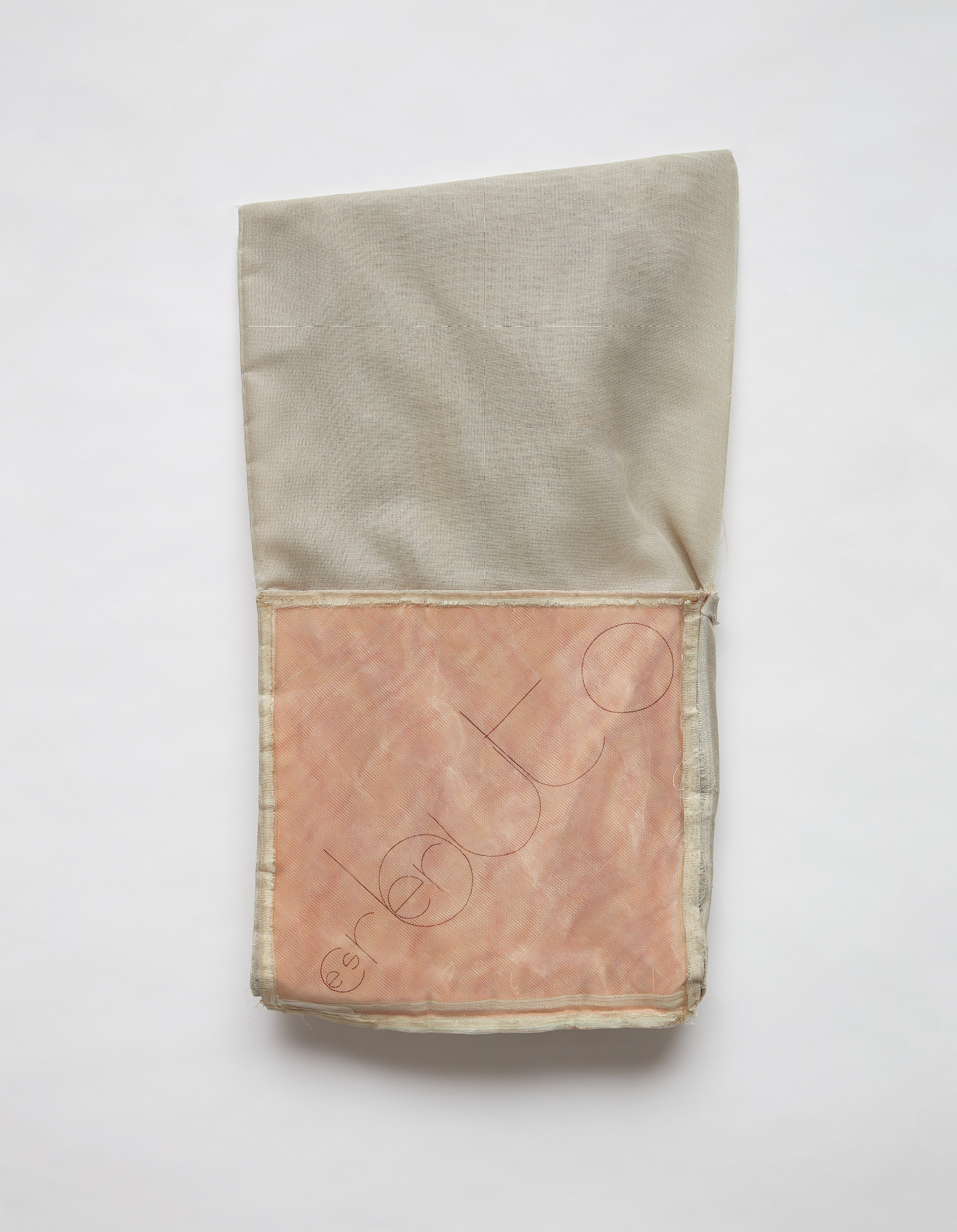
P31 Parangolé, capa 24, Escrerbuto, 1972
These were capes, banners, and tents made from layered fabrics, often incorporating found materials, burlap, plastic, and netting, sometimes bearing painted words or photographic imagery. They were designed to be worn and activated through movement, ideally the movement of samba. The work titled P31 Parangolé, Capa 24, Escreburto from 1972, alongside the documentation of Jeff wearing that same cape in New York, captures something essential about the project: the art exists only in the wearing, only in the body's motion. When Oiticica brought samba dancers from Mangueira to present the Parangolés at a 1965 exhibition at the Museum of Modern Art in Rio, the institution asked the dancers to leave.
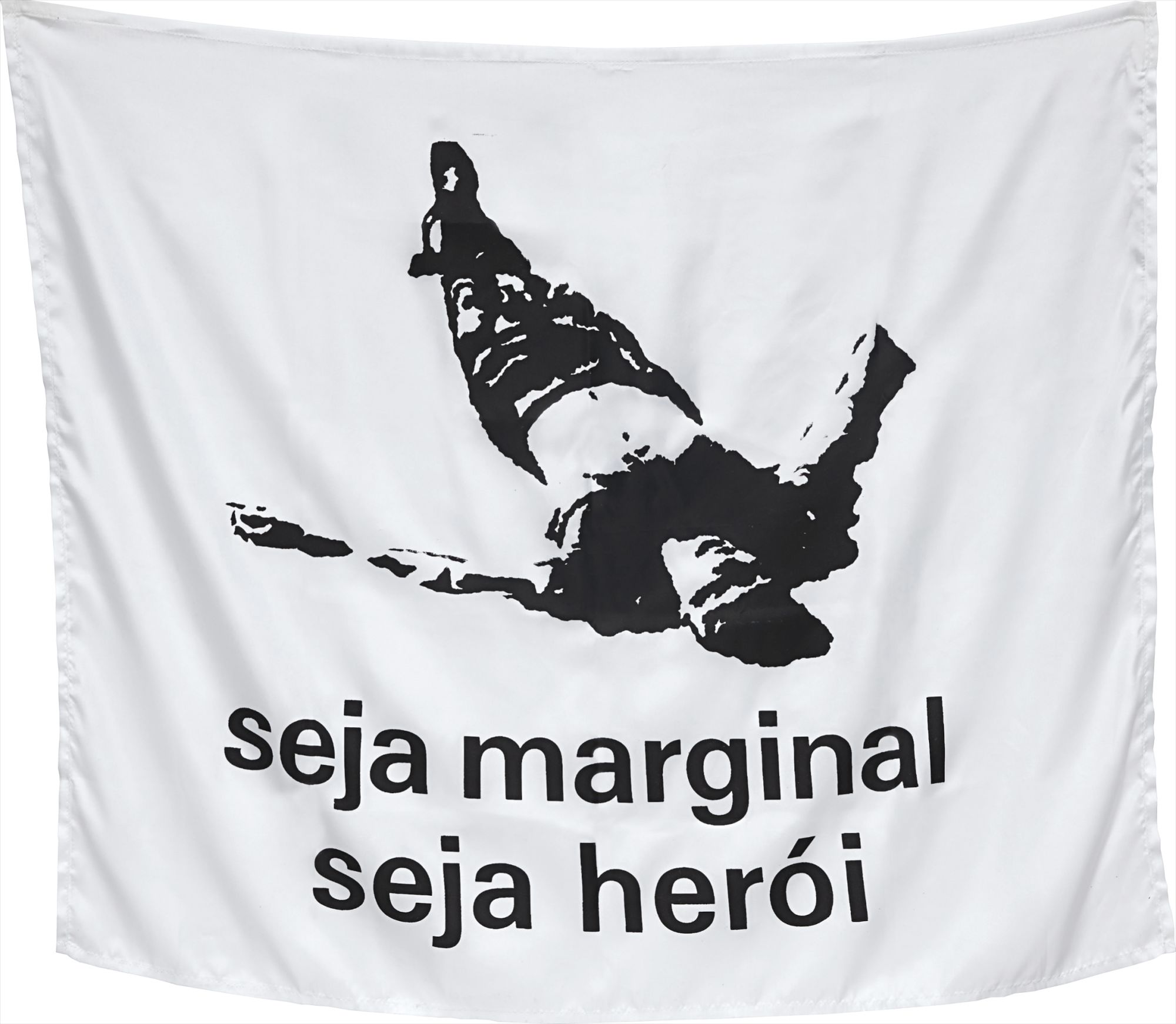
He walked out with them. That act of solidarity tells you everything about what the work meant and who it was for. The screenprint Seja Marginal Seja Herói, which translates as Be an Outlaw Be a Hero, created using screenprint inks on cloth, became one of the iconic images of countercultural Brazil. Featuring the image of a slain outlaw alongside that rallying text, it confronted a society increasingly under the grip of military dictatorship with an unapologetic aesthetics of resistance.
Hélio Oiticica
Seja marginal seja herói (Be an Outlaw Be a Hero)
Oiticica spent the years 1970 to 1978 largely in New York, where he lived in the East Village, participated in avant garde networks, and developed his concept of the Quasi Cinema, immersive environments of projected slides and sounds that anticipated installation art as we now know it. He also encountered and absorbed the energy of underground cinema, music, and street culture, finding in New York a parallel to what he had discovered in Mangueira. For collectors, Oiticica presents one of the most compelling propositions in the field of postwar and contemporary Latin American art. His market has grown substantially in the past two decades, with major auction results and institutional acquisitions reflecting a long overdue global reassessment.
Works on paper and the gouache Metaesquemas, when they appear, represent an accessible entry point into his practice and carry significant art historical weight. Documentation related to the Parangolés, including photographs and textile works, carries deep conceptual importance. Collectors drawn to Arte Povera, to Fluxus, or to the participatory traditions of artists like Lygia Clark will find in Oiticica a figure who shares a philosophical universe while being utterly himself. His work belongs not to a regional story but to the central narrative of how twentieth century art became about experience, body, and community.
The legacy of Oiticica has been shaped and stewarded in part by the Projeto Hélio Oiticica in Rio de Janeiro, which maintains his archive and has collaborated with institutions worldwide to ensure his work reaches successive generations. Major retrospectives at the Witte de With in Rotterdam in 1992, at the Walker Art Center in Minneapolis, and at Tate Modern in London have each introduced his practice to new audiences. Museums including the Museum of Modern Art in New York and the Art Institute of Chicago hold works in their permanent collections. He is studied in art schools across the world and cited by artists working in everything from relational aesthetics to socially engaged practice.
What makes Oiticica permanently relevant is something that resists easy summary. He believed, with absolute conviction, that art should dissolve the separation between the making and the living, between the artist's gesture and the community's breath. He found that dissolution not in theory alone but in samba, in favela architecture, in the colors of a cape spinning under open sky. To encounter his work is to feel the generosity of that vision, its refusal to be contained, its insistence that beauty is not a possession but a practice.
For any collector serious about understanding where art has been and where it continues to go, Hélio Oiticica is not optional. He is essential.
Explore books about Hélio Oiticica
Hélio Oiticica: The Body of Color
Peggy Phelan
Hélio Oiticica: Quasi-Cinemas
Okwui Enwezor
Hélio Oiticica: Museu é o Mundo
Luciano Figueiredo

Hélio Oiticica: In Search of the Suprasensory
Daniela Ferretti
Hélio Oiticica: Aspiro ao grande labirinto
Hélio Oiticica
Hélio Oiticica: The Complete Spectator
César Oiticica Filho, Luciano Figueiredo