Hiroshi Sugimoto
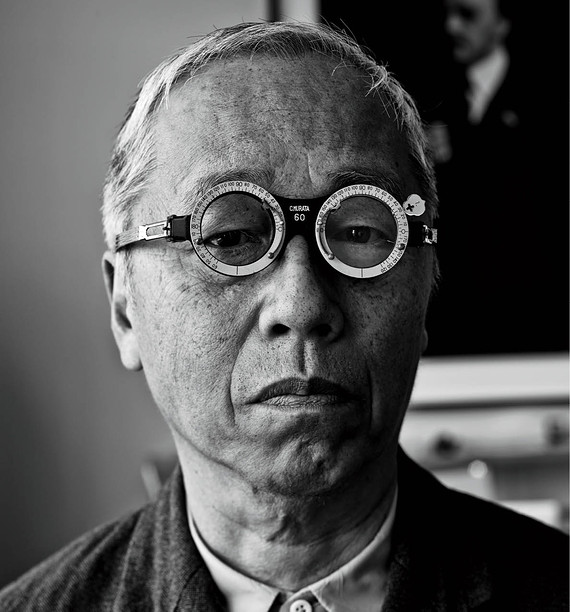
Hiroshi Sugimoto Captures Time Itself Beautifully
Artist Spotlight · The Collection Editorial
“Every time I view the sea, I feel a calming sense of security, as if visiting my ancestral home.”
Hiroshi Sugimoto
In the spring of 2023, the Hayward Gallery in London presented a landmark survey of Hiroshi Sugimoto's work, drawing audiences who stood before his monumental gelatin silver prints in something close to reverent silence. It was a reminder, if one were needed, that Sugimoto occupies a singular place in the history of photography and contemporary art more broadly. Now in his mid seventies and still actively making work, he remains as philosophically urgent and visually commanding as ever, an artist whose images feel less like photographs and more like acts of meditation made tangible. Sugimoto was born in Tokyo in 1948, coming of age in postwar Japan during a period of profound cultural reconstruction and rapid modernization.
Hiroshi Sugimoto
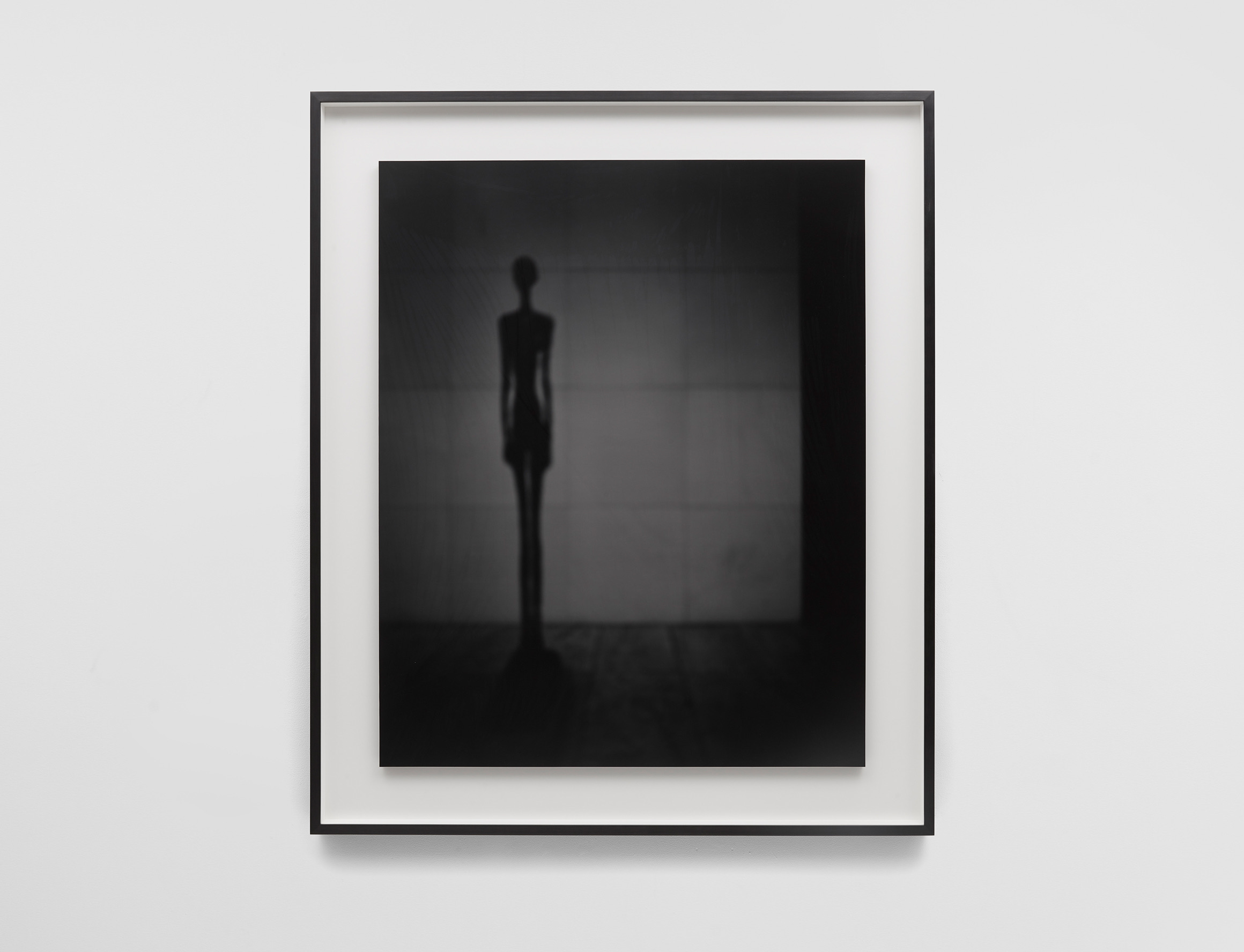
Past Presence 001, Tall Figure, III, Alberto Giacometti, 2013
He studied politics and sociology at Rikkyo University in Tokyo before making the decisive move to Los Angeles in the early 1970s to attend the Art Center College of Design. It was there, surrounded by California's particular light and the expansive influence of American conceptual art, that he began to understand photography not as documentation but as philosophy. He relocated to New York in 1974, and the city became his permanent base and creative crucible, its museums, theaters, and natural history institutions feeding directly into the work that would define his career. Sugimoto's earliest major breakthrough came with the Dioramas series, begun in the mid 1970s, in which he photographed the habitat displays at the American Museum of Natural History using long exposures and an exacting large format camera.
The resulting images are disarming in their ambiguity. The stuffed animals and painted backdrops, rendered with extraordinary tonal precision, look utterly alive. Sugimoto was already asking the question that would animate his entire practice: what is the relationship between a representation and the real thing it stands in for? If a photograph of a diorama can convince the eye, what does that tell us about the nature of seeing itself?
Hiroshi Sugimoto
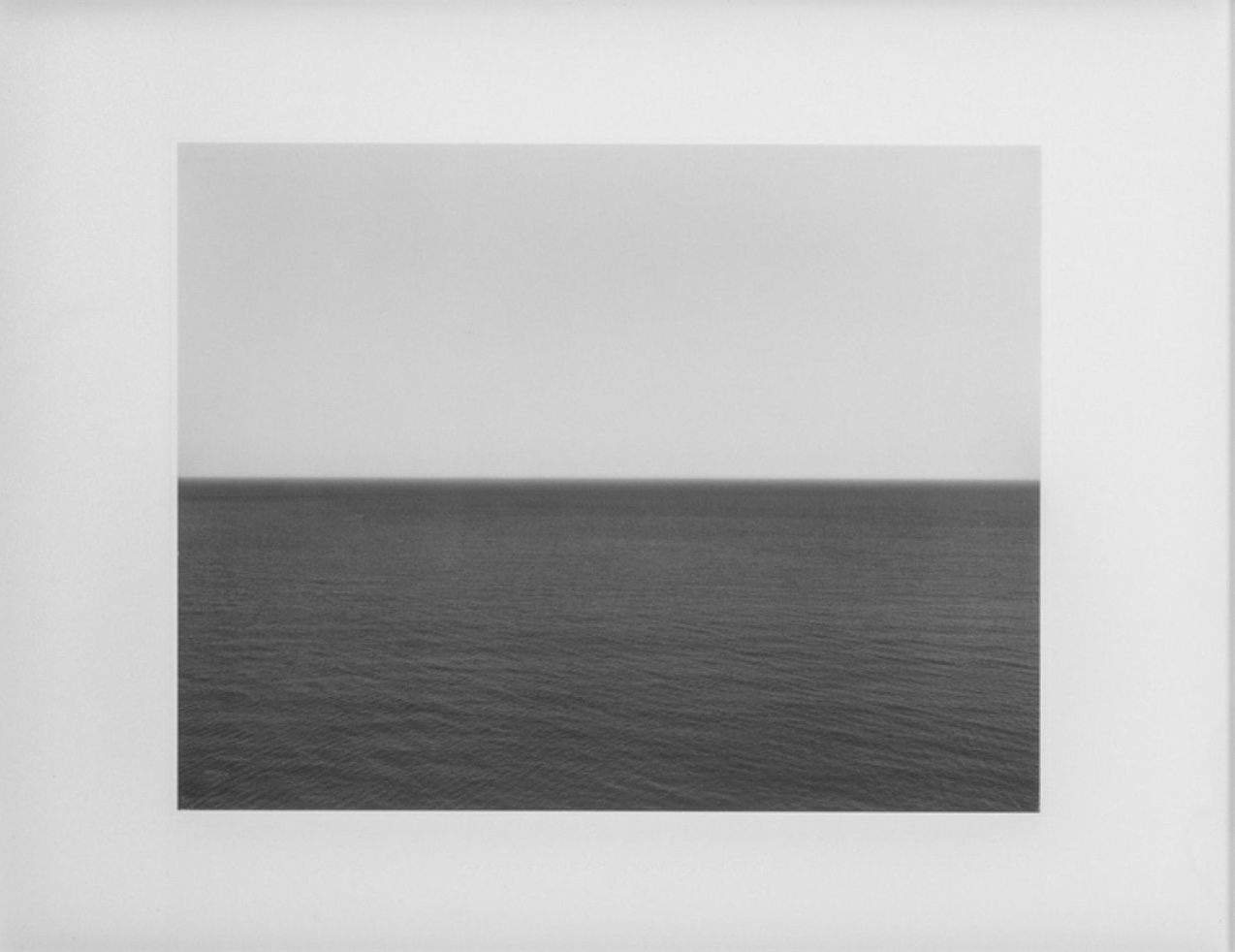
Time Exposed, 1990
These were not merely technical provocations. They were deeply philosophical ones. The Theaters series, launched in 1978 and continued across decades, brought Sugimoto international recognition and remains among the most formally inventive bodies of work in postwar photography. He would set up his camera in a movie theater or drive in cinema, open the shutter at the beginning of a film, and close it at the end.
“I think photography is an art of observation. It has little to do with the things you see and everything to do with the way you see them.”
Hiroshi Sugimoto
The entire duration of the movie collapses into a single blazing rectangle of white light at the center of the frame, the architecture of the theater surrounding it in ghostly detail. Works like Prospect Park Theater, New York are simultaneously about cinema, memory, architecture, and the strangeness of time as a photographic subject. The Seascapes series, begun in 1980, pursued the same temporal obsession through a radically different visual vocabulary, presenting the horizon line between sea and sky with such stillness and precision that individual prints, including the celebrated North Atlantic, Cliffs of Moher from 1989 and North Pacific Ocean, Oregon from 1985, feel like windows onto eternity rather than captured moments. Sugimoto's Past Presence series, developed in the 2010s, extended his dialogue with representation into the history of sculpture itself.
Hiroshi Sugimoto
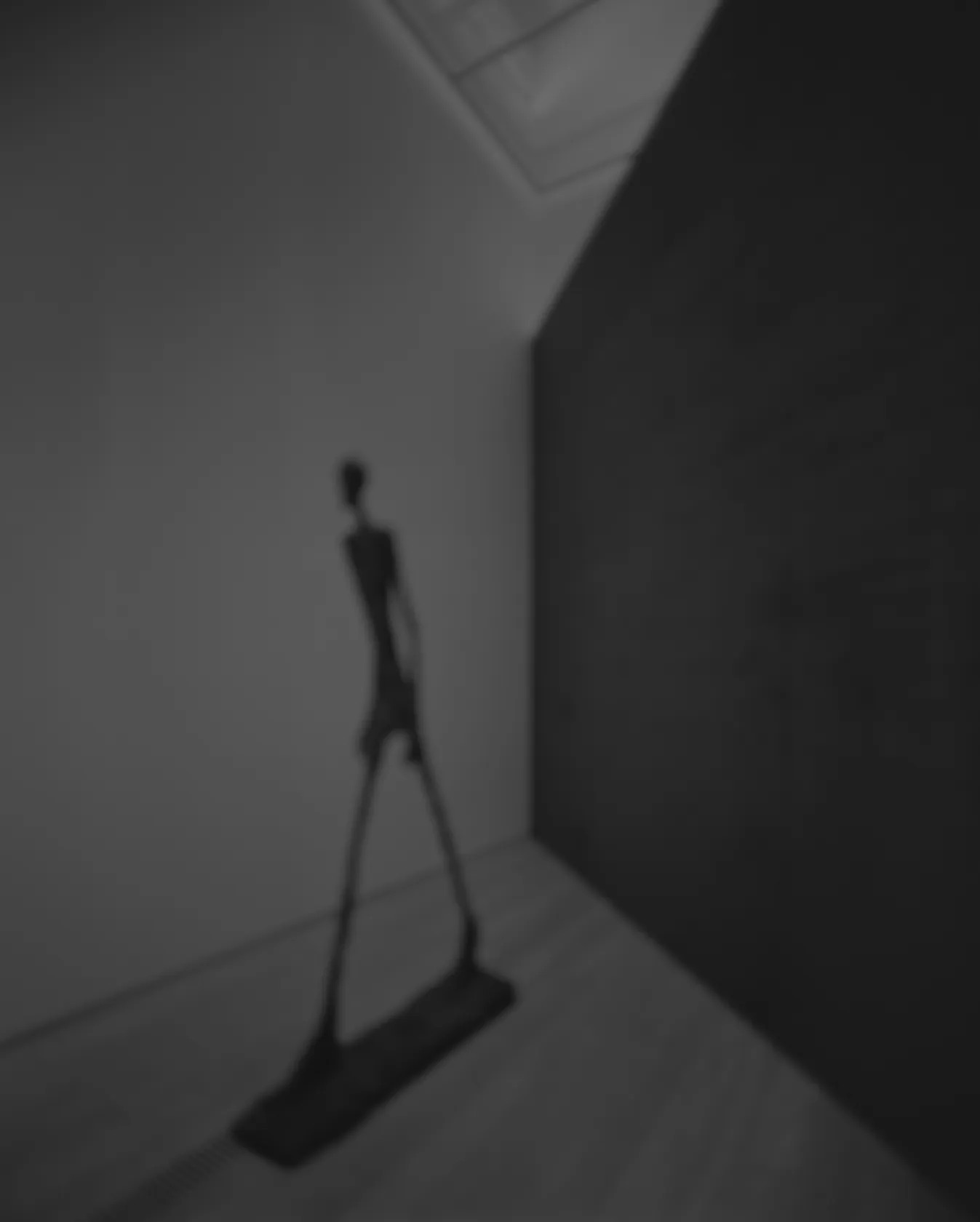
Past Presence 071, L'Homme Qui Marche II, 2013
Works such as Past Presence 001, Tall Figure, III, Alberto Giacometti from 2013 and Past Presence 071, L'Homme Qui Marche II from the same year, both rendered as gelatin silver prints of extraordinary sensitivity, involve Sugimoto photographing iconic sculptures with the same care and philosophical intent he brings to seascapes and theaters. By treating Giacometti's bronze figures as photographic subjects, he raises questions about the mediation of masterpieces and the layering of artistic translation across time. The images feel like conversations between two great sensibilities across the decades. His botanical work, too, as seen in pieces like Asplenium Halleri, Grande Chartreuse, 1821, toned gelatin silver prints that recall the earliest days of the photographic medium, demonstrates his enduring fascination with the origins and outer limits of what photography can be.
For collectors, Sugimoto represents one of the most compelling propositions in contemporary photography. His blue chip status is well established, with works held in the permanent collections of the Metropolitan Museum of Art, the Museum of Modern Art in New York, and the National Gallery of Art in Washington DC, among many other major institutions worldwide. His prints command serious attention at auction, and the market for his work is distinguished by its depth and consistency. Collectors are drawn not only to the visual beauty of the work but to its intellectual substance.
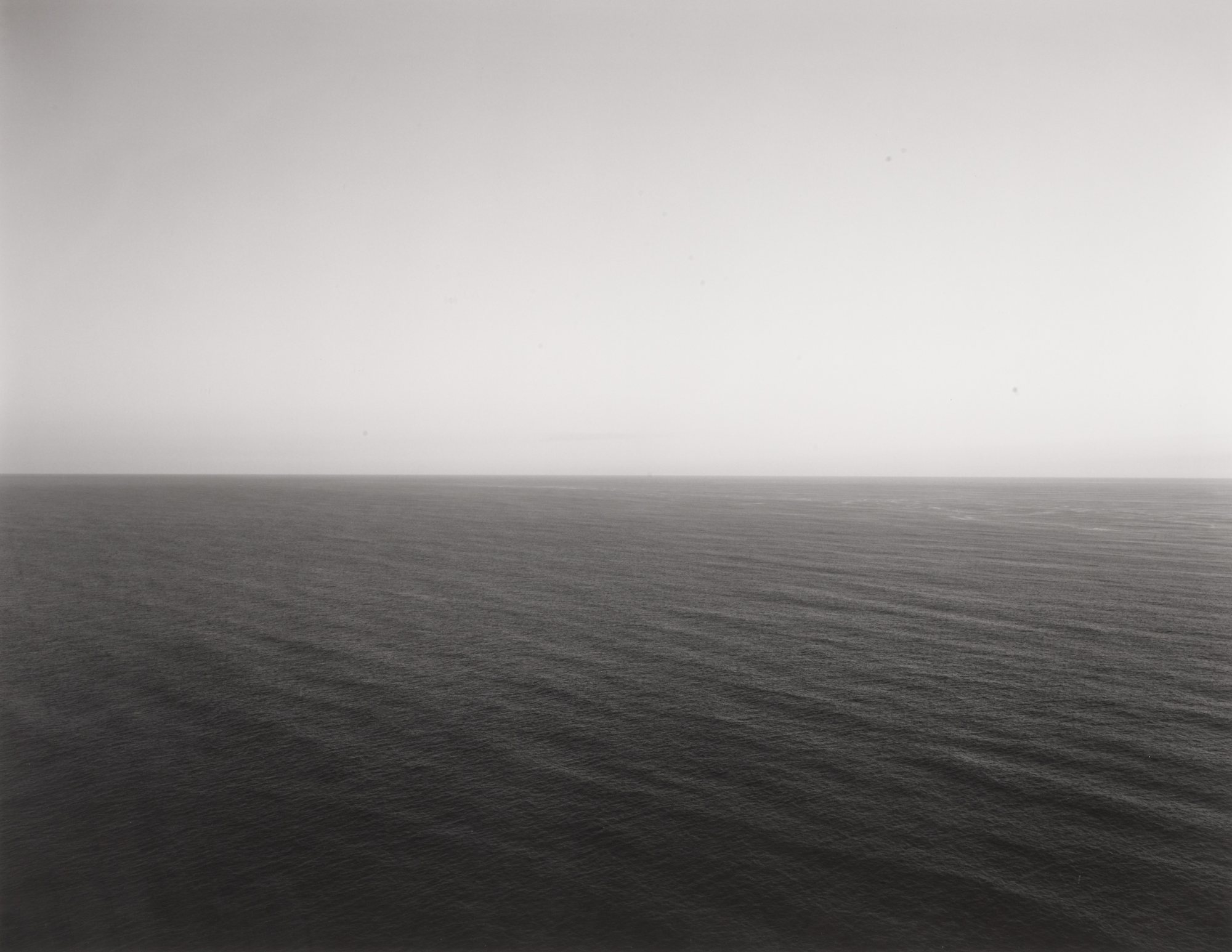
Hiroshi Sugimoto
North Pacific Ocean, Oregon, 1985
A Sugimoto print rewards sustained attention in a way that very few photographs do. The Seascapes in particular have become touchstones for serious collectors of photography, and works from the Theaters series hold a special place for those who appreciate the intersection of conceptual rigor and aesthetic perfection. His artist framed works, such as the stunning Joe 2083 from 2005, are especially prized for the way the framing becomes part of the total object. Within the broader arc of art history, Sugimoto's position is usefully understood alongside other artists who have used photography to interrogate perception and time.
He shares intellectual territory with Bernd and Hilla Becher, whose typological approach to documentary photography influenced a generation of conceptualists, and with Cindy Sherman in his interest in the theatricality of representation. His work resonates too with the traditions of Japanese mono no aware, the bittersweet awareness of impermanence, as well as with the rigorous minimalism of Donald Judd and Dan Flavin, artists he has long admired. His Odawara Art Foundation, established in Japan, further reflects his commitment to building meaningful cultural context around art making and preservation. What makes Sugimoto essential today is precisely what made him essential at the beginning: he asks us to slow down.
In an era of instant images and overwhelming visual noise, his large format prints demand a different quality of attention. They ask us to sit with duration, with uncertainty, with the beautiful strangeness of a world that refuses to be fully captured. To collect Sugimoto is to bring into one's home a work that will continue to unfold over years of looking, revealing new dimensions with each encounter. That is a rare and remarkable gift from any artist, and it is one that Sugimoto delivers with extraordinary consistency and grace.
Explore books about Hiroshi Sugimoto
Hiroshi Sugimoto
Hiroshi Sugimoto
Architecture of Time
Hiroshi Sugimoto
Theaters
Hiroshi Sugimoto
Lightning Fields
Hiroshi Sugimoto
Seascapes
Hiroshi Sugimoto
Hiroshi Sugimoto: Conceptual Forms
Various contributors
In Praise of Shadows: Hiroshi Sugimoto Photographs
Various contributors
Dioramas
Hiroshi Sugimoto