Helmut Newton

Helmut Newton: The Master Who Redefined Beauty
Artist Spotlight · The Collection Editorial
“I never think about art when I'm working. I think about how to make a great picture.”
Helmut Newton
Few photographers have so completely reshaped the visual language of their era as Helmut Newton. The Foundation Helmut Newton in Berlin, which has stewarded his legacy since 2004, continues to draw tens of thousands of visitors each year, testament to the enduring power of an artist whose images feel as charged and alive today as the moment they were made. Major retrospectives across Europe and sustained auction records at Christie's and Sotheby's confirm what collectors have long understood: Newton's work occupies a singular position in the history of twentieth century photography, one that deepens rather than diminishes with time. Newton was born Helmut Neustädter in Berlin in 1920, into a prosperous Jewish family whose comfortable world was shattered by the rise of National Socialism.
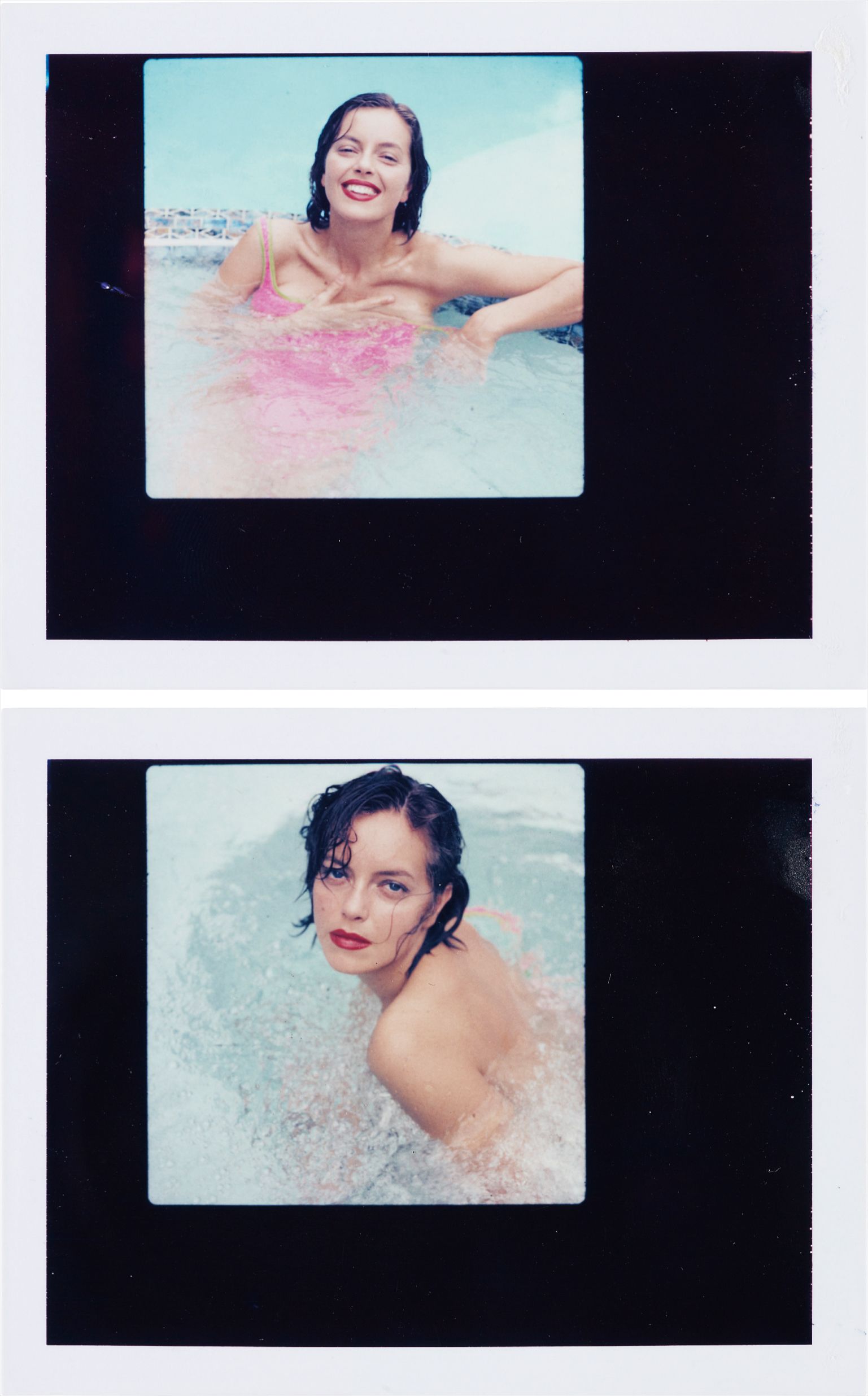
Helmut Newton
Greta Scacchi
As a teenager he apprenticed under the celebrated German photographer Yva, absorbing the rigorous technical discipline and the glamorous sensibility of Weimar era portraiture. He fled Nazi Germany in 1938, eventually making his way through Singapore and Australia, where he settled in Melbourne, took the name Newton, and built a commercial photography practice of genuine distinction. This improbable journey through displacement and reinvention gave Newton something that can never be taught: an outsider's hunger, a survivor's clarity of vision, and a deep appreciation for beauty as an act of defiance. His move to Paris in the 1950s proved transformative.
Working for French Vogue, Elle, and a constellation of the great fashion houses, Newton began developing the aesthetic that would make him one of the most recognizable photographers alive. He brought to fashion photography an unapologetic eroticism and a psychological complexity that had never quite been seen in the genre before. His women were not passive objects arranged for the male gaze; they were protagonists, cool and self possessed, inhabiting their bodies and their power with complete authority. Newton himself frequently described his models as warriors, and that spirit of sovereign femininity pulses through everything he made.
Helmut Newton
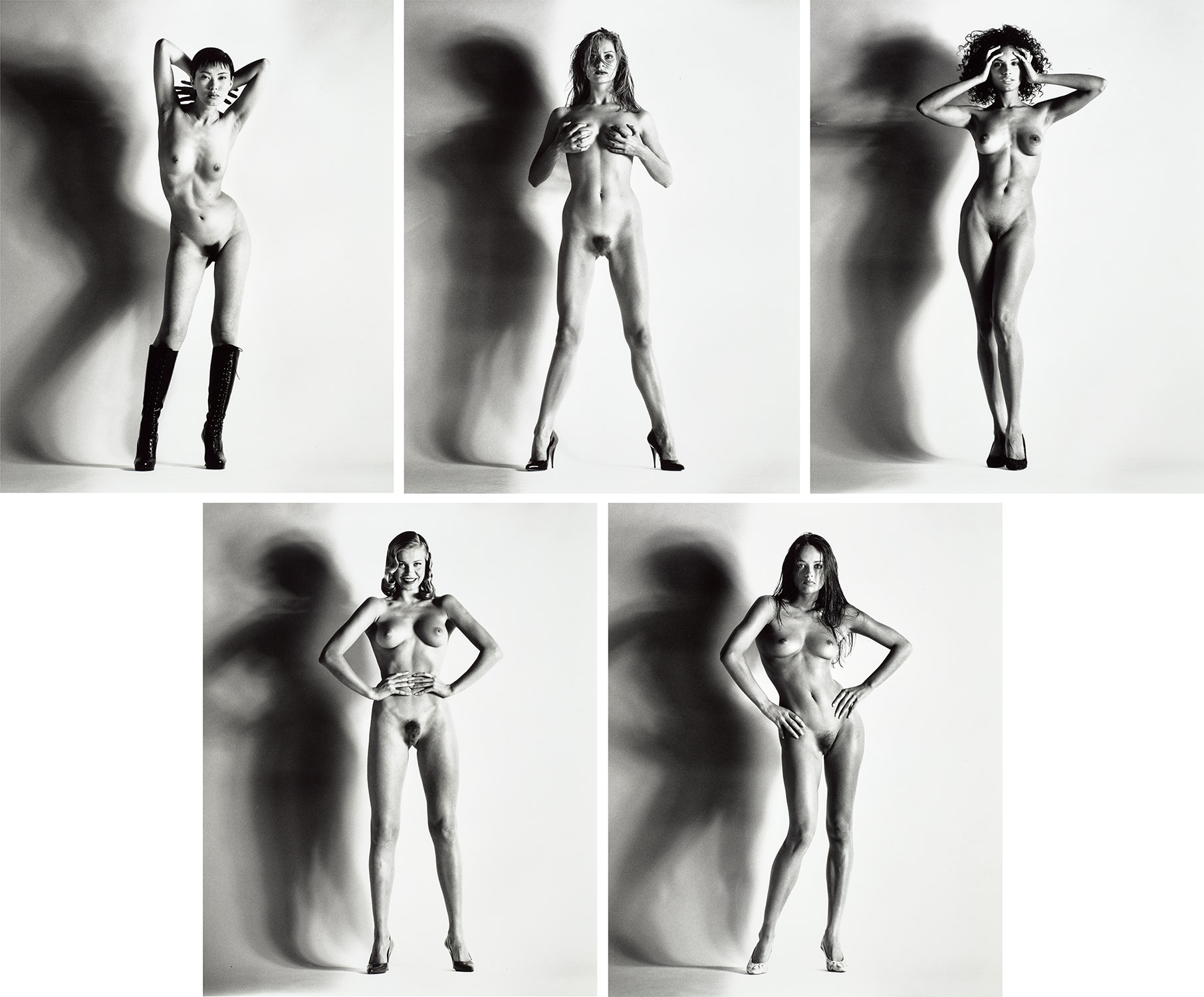
Big Nude: Yuko, Camilla, Raquel, Una and Verina
The 1970s represent perhaps the apex of Newton's formal ambitions. His legendary Big Nudes series, begun in 1980 and extended through subsequent decades, presented women at monumental scale, standing nude or clothed in high heels against stark architectural backdrops. The series challenged every received idea about how the female form should be presented, merging the traditions of the classical nude with the cool geometry of modernist photography. Works from this series, including the celebrated suite featuring Yuko, Camilla, Raquel, Una and Verina, printed in 1994 as a complete set of five gelatin silver prints, represent some of the most sought after photographs on the primary and secondary markets today.
“My job as a portrait photographer is to seduce, amuse, and entertain.”
Helmut Newton
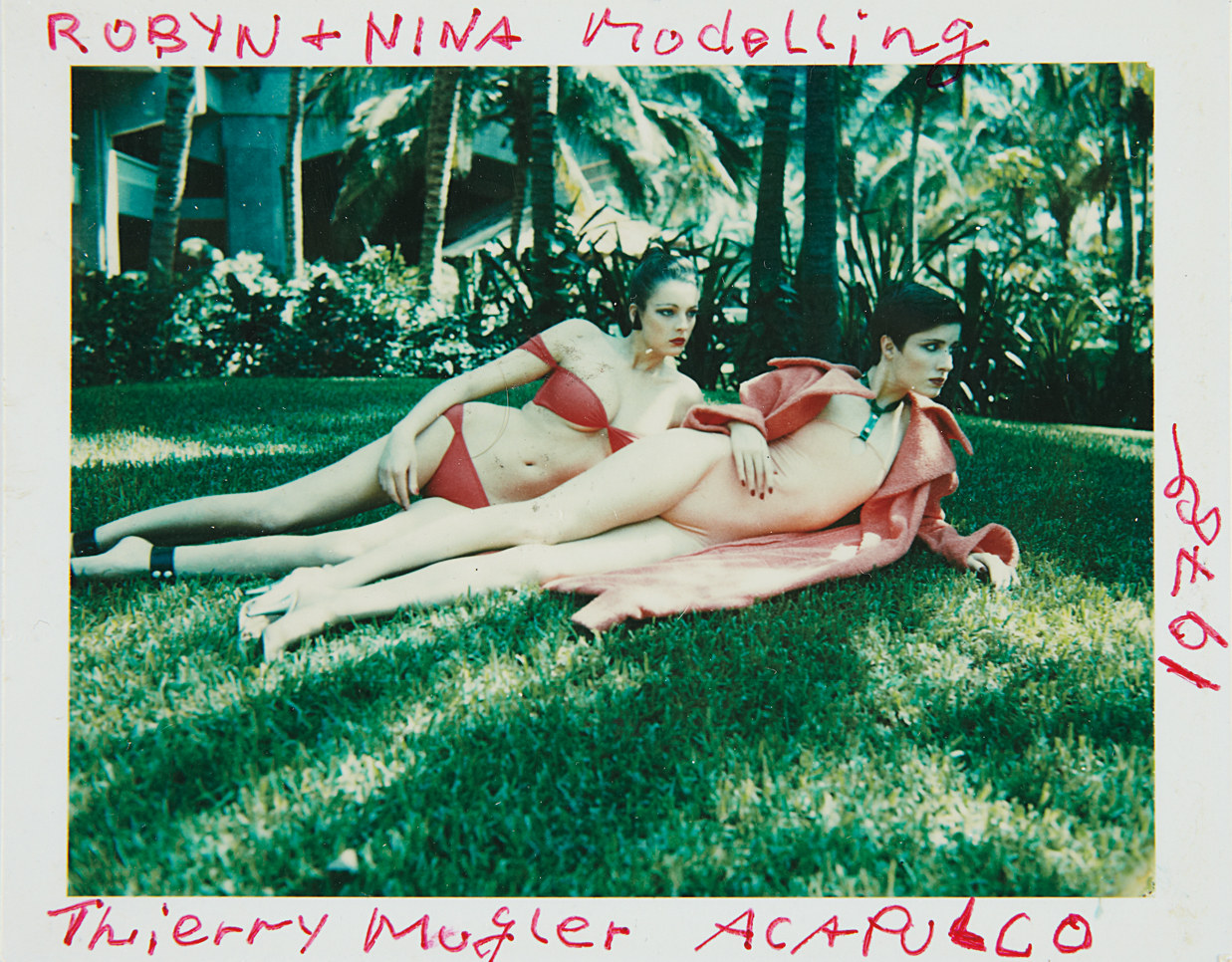
Similarly, his portraits of luminaries such as Charlotte Rampling, photographed at the Hotel Nord Pinus in Arles, and the radiant Paloma Picasso in Saint Tropez, show Newton at his most psychologically penetrating: the celebrity stripped of performance and revealed in their full human complexity. Newton's fashion work and his fine art photography were never truly separate enterprises. Images like Robyn and Nina Modeling Thierry Mugler Maillots in Acapulco fuse the commercial commission with a genuine aesthetic vision, the swimsuits becoming almost incidental to the larger drama of bodies, light, and attitude that Newton was orchestrating. His Paris apartment served as a frequent backdrop, lending an intimate domesticity to images that might otherwise feel purely theatrical.
Helmut Newton
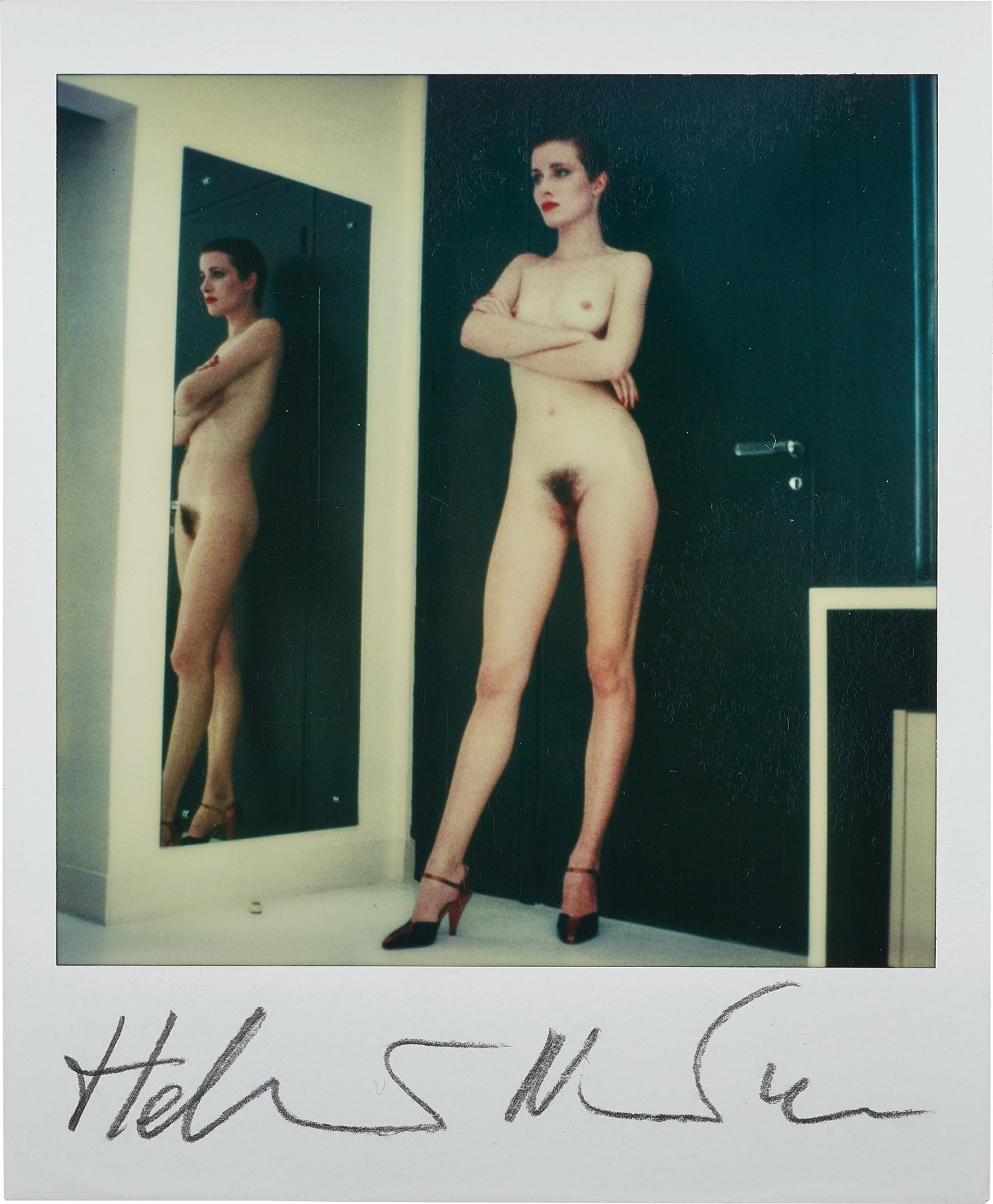
Nude in mirror
Works such as Jenny in My Apartment, Paris carry a warmth and specificity that remind us Newton was not simply a technician of desire but a deeply curious portraitist who genuinely loved the people he photographed. For collectors, Newton's gelatin silver prints offer an extraordinary range of entry points. His signed and initialled prints, including pencil signatures on the verso that appear across many of his most important works, are among the most reliable markers of authenticity and provenance in the photography market. Collectors should pay close attention to the printing date, as Newton oversaw printing throughout his lifetime and later authorized prints carry his meticulous quality standards.
“I like to photograph women who are very strong, who look like they are in command.”
Helmut Newton
Works from named portfolios, such as the Classic Portfolio of 1998, which includes the intimate Arielle After Haircut, are particularly prized for their consistent quality and the care with which they were produced. At auction, Newton's most significant prints have achieved prices well into six figures, while his broader catalogue still presents opportunities for collectors at multiple levels of the market. Newton belongs to a generation of photographers who elevated the medium irrevocably: his contemporaries and aesthetic interlocutors include Richard Avedon, whose cool American formalism offers an instructive contrast to Newton's European theatricality; Guy Bourdin, whose more surrealist and disturbing vision of fashion imagery shares Newton's willingness to court transgression; and Irving Penn, whose austere studio mastery defines another pole of mid century photographic ambition. Within the broader art historical conversation, Newton's work also resonates with the painted traditions of Ingres and Manet, whose Olympia he explicitly invoked in several series.
Helmut Newton
Robyn & Nina modeling Thierry Mugler Maillots, Acapulco
He understood himself as part of a long continuum of artists who have grappled with the power and vulnerability of the human body. Newton died in Los Angeles in January 2004, following a car accident, but the Foundation he established with his wife June in Berlin has ensured that his archive remains a living resource for scholarship and appreciation. His autobiography, published in 2003, and the numerous monographs produced during his lifetime remain essential reading for anyone seeking to understand not just the photographs but the singular intelligence behind them. What Newton gave us, finally, is a body of work that refuses to be comfortable, that insists on the full complexity of desire, identity, and beauty, and that rewards sustained attention with ever greater depth.
For the collector who encounters a Newton print for the first time, there is often a startling recognition: this is an image that knows exactly what it is doing, made by an artist who always did too.
Explore books about Helmut Newton
Helmut Newton: SUMO
Helmut Newton
Helmut Newton: A Life
Helmut Newton
Helmut Newton: Work
Helmut Newton
Helmut Newton: The Bad and the Beautiful
Helmut Newton
Helmut Newton: Polaroids
Helmut Newton
Helmut Newton: Masters of Photography
Philippe Garner
Helmut Newton: Exhibitions and Publications 1973-1995
Helmut Newton, Manfred Heiting
Newton
June Newton, Manfred Heiting