Helen Frankenthaler
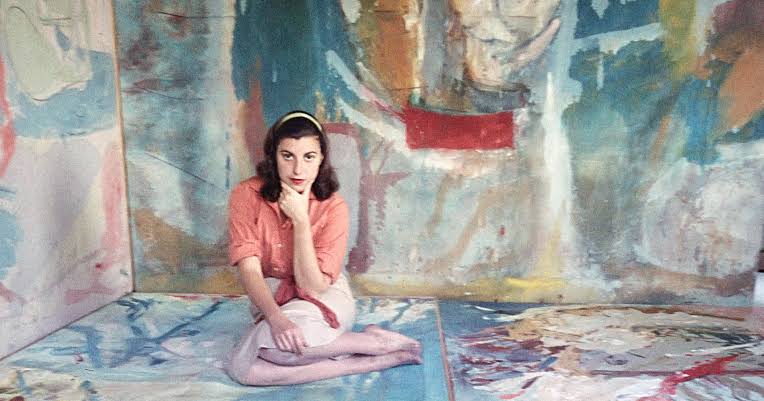
Helen Frankenthaler, Where Color Becomes Pure Feeling
Artist Spotlight · The Collection Editorial
“A really good picture looks as if it happened at once. It's an immediate image.”
Helen Frankenthaler, interview with Henry Geldzahler, 1965
In the spring of 2023, the Morgan Library and Museum in New York mounted a landmark exhibition devoted to Helen Frankenthaler's prints, drawing thousands of visitors into rooms that seemed to hum with chromatic energy. That same year, her works appeared prominently at Christie's and Sotheby's, where collectors competed fiercely for access to a body of work that feels, if anything, more necessary and alive than ever. The world, it seems, keeps returning to Frankenthaler, drawn back by canvases and prints that offer something increasingly rare in contemporary life: pure, unmediated sensation. Hers is a legacy that does not gather dust.
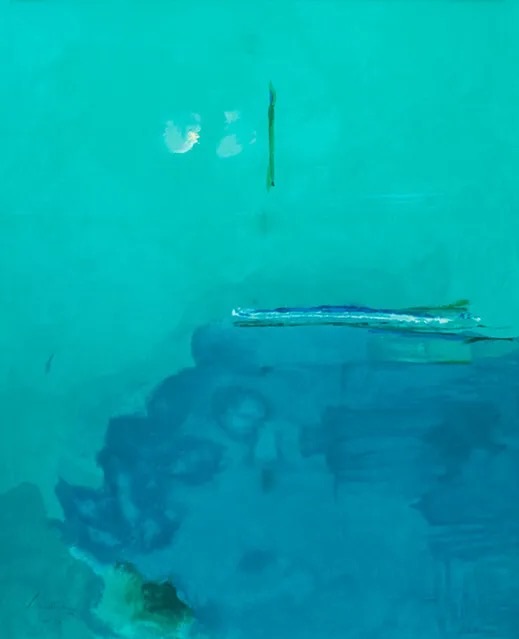
Helen Frankenthaler
Contentment Island, 2004
It radiates. Helen Frankenthaler was born in New York City in 1928, the daughter of Alfred Frankenthaler, a respected New York State Supreme Court judge, and Martha Lowenstein. She grew up in a household that valued intellect and culture, attending the Dalton School on the Upper East Side before enrolling at Bennington College in Vermont, where she studied under the influential painter and teacher Paul Feeley. Bennington in the late 1940s was a crucible of ideas, and Frankenthaler absorbed its progressive atmosphere completely, arriving in the New York art world already equipped with a sharp critical intelligence and an instinct for bold formal decisions.
Her formation accelerated dramatically when she entered the orbit of the critic Clement Greenberg, whom she met in 1950 and with whom she had a significant relationship for several years. Greenberg introduced her to the painters who would define the New York School, including Jackson Pollock, whose drip paintings she encountered firsthand at his studio in Springs, Long Island. Pollock's radical liberation of paint from the brush was a revelation, but Frankenthaler's response to that revelation was entirely her own. Where Pollock built dense, gestural webs of enamel, Frankenthaler moved toward transparency, openness, and a quality of light that felt almost atmospheric.
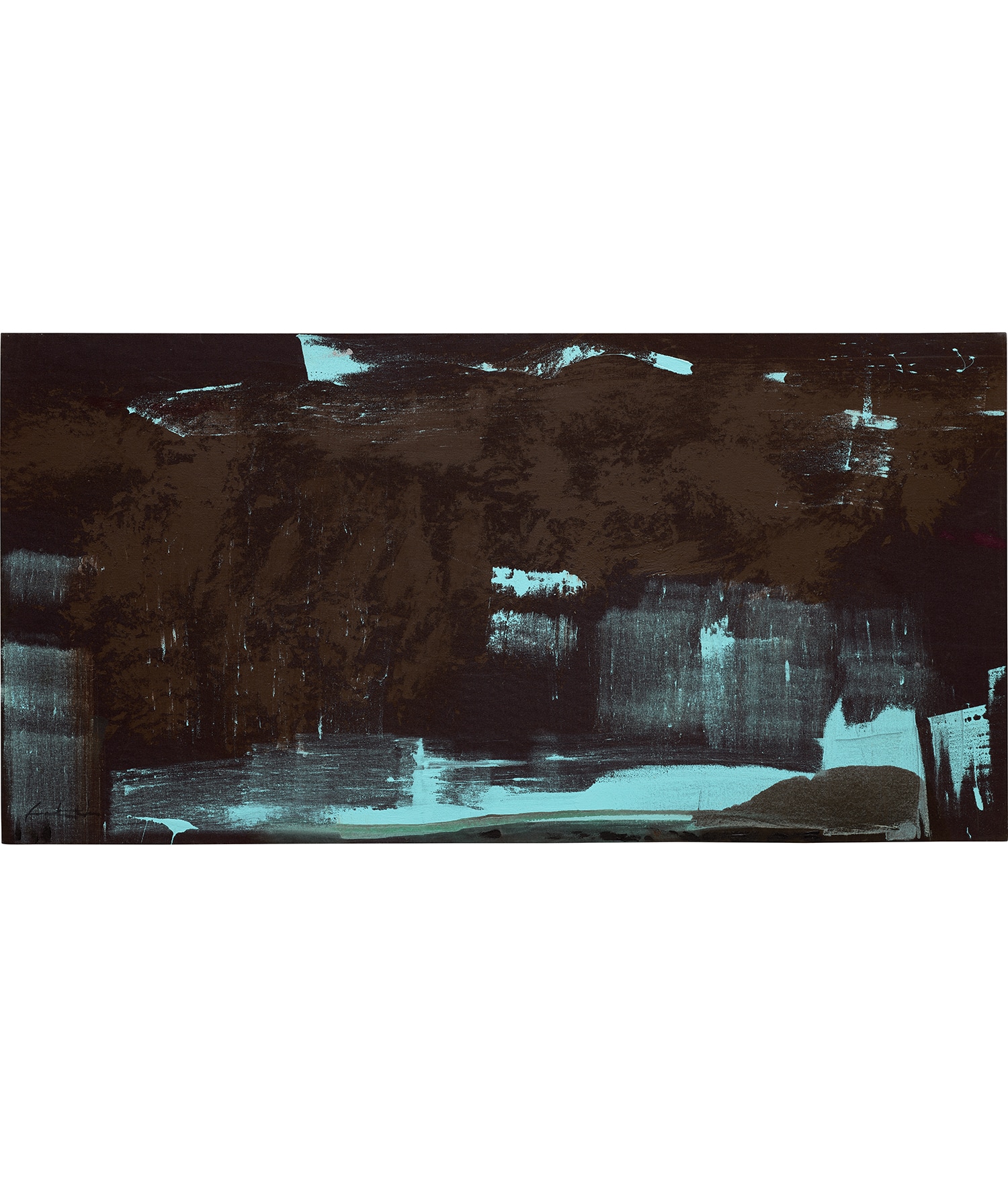
Helen Frankenthaler
Watch, 1979
The breakthrough came in 1952, when Frankenthaler painted Mountains and Sea in a single concentrated session on the floor of her New York studio. Working on unprimed canvas laid flat, she poured turpentine thinned oil paint across the surface, letting the pigment soak directly into the raw fabric rather than resting on top of it. The result was a painting that seemed to breathe, its edges soft and bleeding, its passages of rose, green, and blue unfolding like a landscape glimpsed through a gauze curtain. Mountains and Sea, now in the collection of the National Gallery of Art in Washington, is one of the genuinely pivotal works in postwar American art, a painting that changed the direction of painting itself.
“There are no rules. That is how art is born, how breakthroughs happen.”
Helen Frankenthaler
When Morris Louis and Kenneth Noland visited Frankenthaler's studio and saw it in 1953, they were so transformed by the experience that they returned to Washington and rebuilt their entire practices around what she had shown them. What followed was a career of remarkable sustained invention. Through the 1950s and 1960s Frankenthaler refined and expanded the soak stain method, moving from oils to acrylics in the mid 1960s, a shift that gave her palette a new intensity and clarity. Works like Before the Caves from 1958 and Interior Landscape from 1964 show an artist who was never content to repeat a successful formula, always pushing toward greater formal complexity and emotional range.
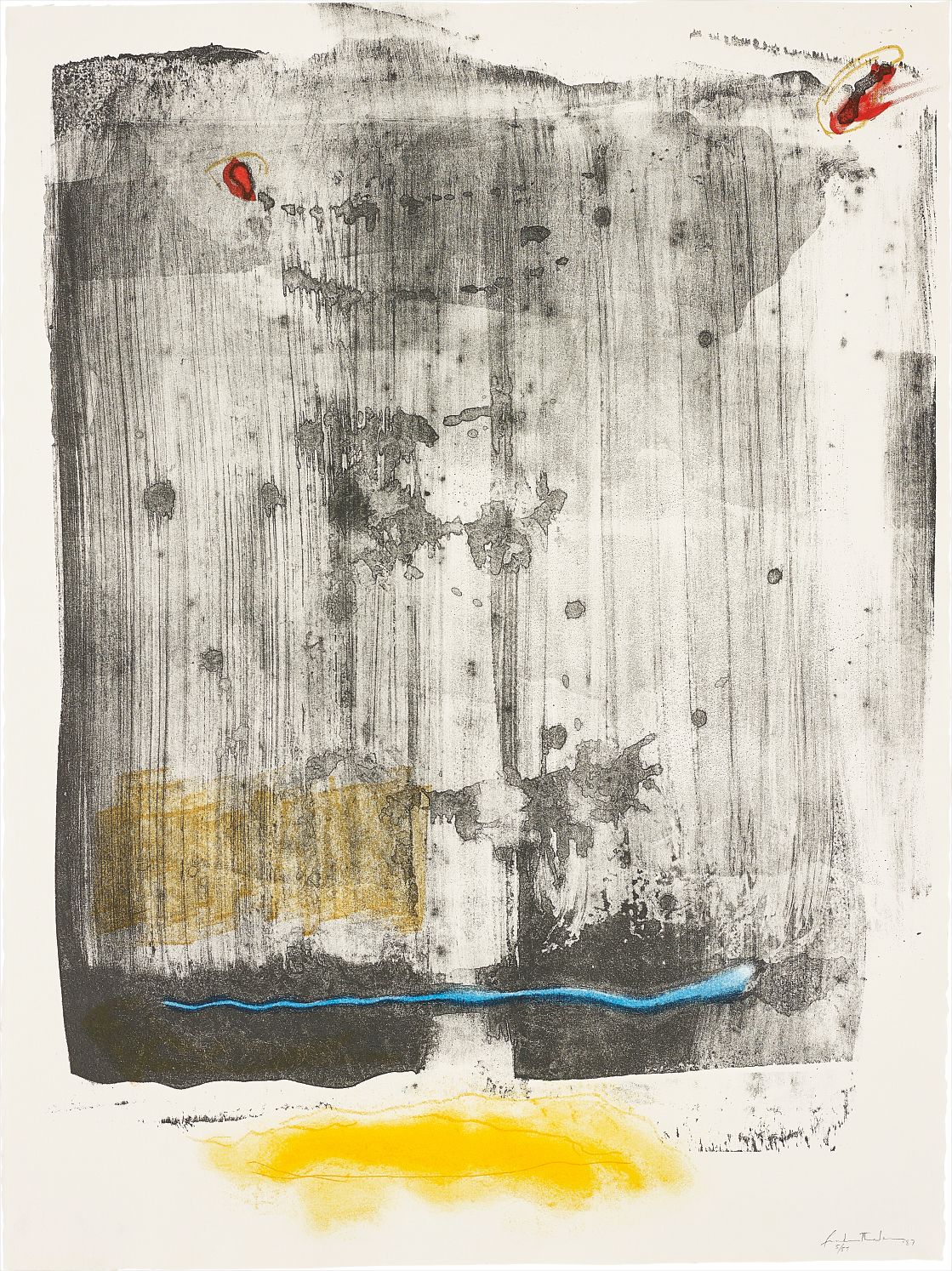
Helen Frankenthaler
Walking Rain
Her work in this period placed her at the center of what critics would come to call Color Field painting, alongside Louis, Noland, and Jules Olitski, though Frankenthaler's painting always retained a lyrical, almost handwritten quality that set it apart from the more geometric or systemic work of her peers. Her engagement with printmaking, which deepened significantly from the 1960s onward, opened another dimension of her practice and produced some of the most sought after works in her catalogue today. She approached printmaking with the same intuitive freedom she brought to painting, working closely with master printers to push the medium toward effects that had never been achieved before. Works like Walking Rain, a lithograph, etching and aquatint of breathtaking tonal richness, and Gateway, a monumental three panel etching and aquatint that commands a room with the authority of a large scale painting, demonstrate that for Frankenthaler, printmaking was never a secondary pursuit.
“I wanted things that I couldn't see in any other painter's work. I wanted a surface that breathed.”
Helen Frankenthaler
It was a full and independent expression of her vision. Screenprints such as Contentment Island from 2004 and the warmly playful Flirt show the range of her engagement with the medium across decades. For collectors, Frankenthaler's work presents an extraordinary combination of art historical significance and sheer visual pleasure. Her paintings command serious attention at auction, with major canvases regularly achieving seven figure results at the leading international houses.
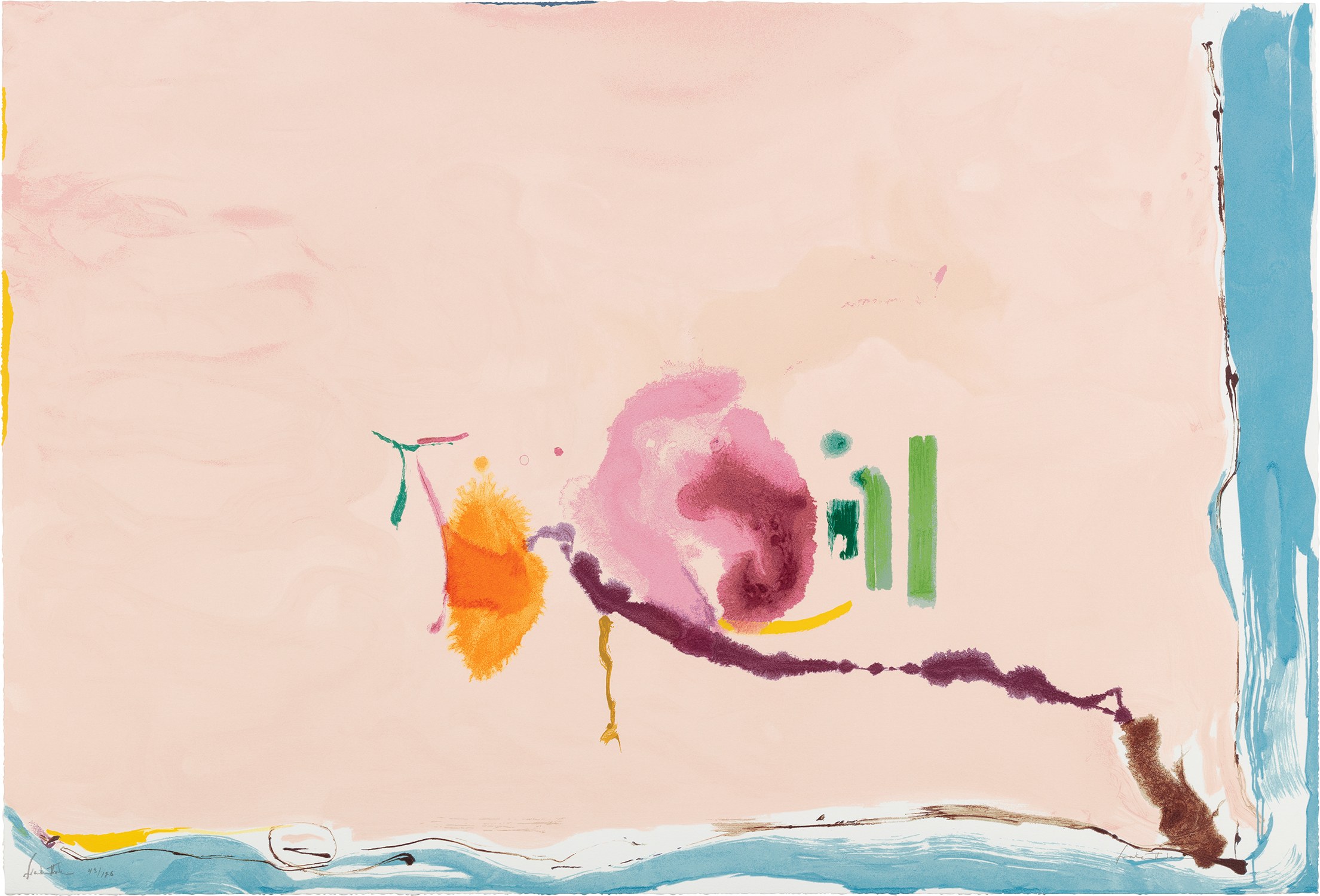
Helen Frankenthaler
Flirt (R. p. 195)
Works on paper and prints offer points of entry across a wider range of price levels, making her practice accessible to collectors at various stages of their journey. Among the most compelling works to consider are her acrylic canvases from the late 1970s and early 1980s, a period when her command of color and scale reached a particular peak, as seen in Watch from 1979 and White Rose of Sharon from 1978. Both works demonstrate the full authority of her mature voice: generous, luminous, and deeply felt. Her ceramic works, including the remarkable Thanksgiving Day Series from 1973, reveal yet another facet of an artist whose curiosity never narrowed.
Frankenthaler occupies a unique position in the narrative of postwar American art. She was a peer and an influence to artists who are themselves considered giants, and she worked for six decades with a consistency of vision that is genuinely rare. Her relationship to the landscape tradition, filtered through abstraction, connects her to a deeply American lineage while her emphasis on color as pure feeling anticipates concerns that would animate artists for generations. Collectors who respond to the work of Mark Rothko, Cy Twombly, or Morris Louis will find in Frankenthaler a complementary and in many ways foundational voice.
She died in Darien, Connecticut in December 2011, leaving behind a body of work that the Helen Frankenthaler Foundation continues to steward with remarkable care and scholarship. But the truest measure of her legacy is not institutional. It is the experience of standing before one of her canvases and feeling, quite suddenly, that color is not something you see but something you are inside of. That sensation, which she invented and refined and gave freely to the world, is her gift to everyone who has ever looked at a painting and wanted it to go on forever.
Explore books about Helen Frankenthaler
Helen Frankenthaler: A Paintings Retrospective
Barbara Rose
Helen Frankenthaler: Works on Paper (1949-1984)
E.A. Carmean Jr.
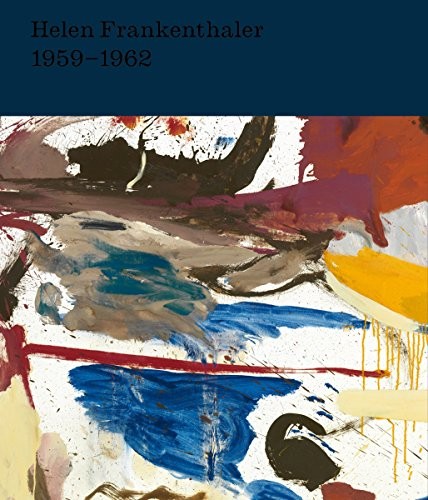
Helen Frankenthaler
John Elderfield
Helen Frankenthaler: A Catalogue Raisonné
Barbara Rose
Helen Frankenthaler: Paintings, Works on Paper, Prints
Connie Wolf
Helen Frankenthaler: The Energy of Creation
Hilton Als
Helen Frankenthaler: Into Color
Laurie Olin