Hans Hofmann

Hans Hofmann: The Master Who Invented Color
Artist Spotlight · The Collection Editorial
“The ability to simplify means to eliminate the unnecessary so that the necessary may speak.”
Hans Hofmann, Search for the Real, 1948
There is a moment, standing before a late Hans Hofmann canvas, when color stops being decorative and becomes architectural. The sensation is specific and unforgettable: blocks of pure cadmium red and cobalt blue appear to breathe, to advance and recede simultaneously, as though the painting itself is alive with spatial tension. That experience, reproduced across museum galleries from the Whitney to the Tate, explains why Hofmann's reputation has only grown in the decades since his death in 1966. He remains one of the most vital and instructive figures in the entire arc of American modernism, and the sustained interest from institutions, scholars, and serious collectors confirms that his moment is very much still now.
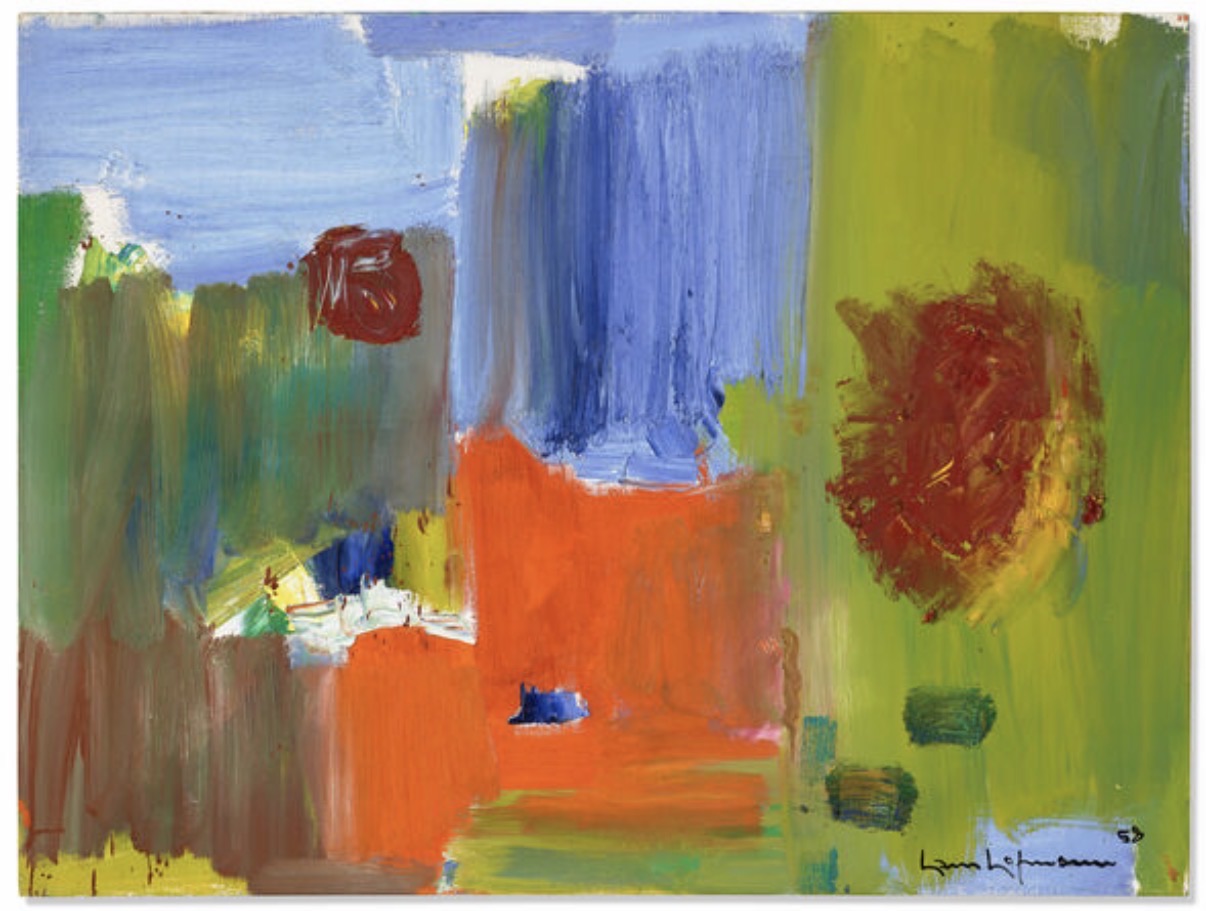
Hans Hofmann
Evening Blue, 1958
Hofmann was born in 1880 in Weißenburg, Bavaria, and showed early aptitude for both science and art, a combination that would later inform his almost systematic approach to the theory of painting. His family moved to Munich when he was a teenager, and it was there that he began formal studies and developed the methodical, intellectually rigorous sensibility that would define him. The real transformation came when a Munich patron, Phillip Freudenberg, sponsored a decade of study in Paris beginning in 1904. Those years proved decisive.
Paris in the early twentieth century was the center of gravity for every serious artistic mind, and Hofmann positioned himself at the very heart of it, befriending Henri Matisse and Robert Delaunay, absorbing the chromatic liberation of Fauvism and the structural logic of Cubism at the very moment those movements were being invented. He returned to Munich in 1914 and opened his first school, which quickly became a destination for students seeking rigorous, modern instruction. When he arrived in the United States in 1932, fleeing the deteriorating political climate in Germany, he brought with him not just a formed artistic practice but an entire pedagogical philosophy. His schools in New York and Provincetown, Massachusetts became the most influential teaching laboratories in American art history.
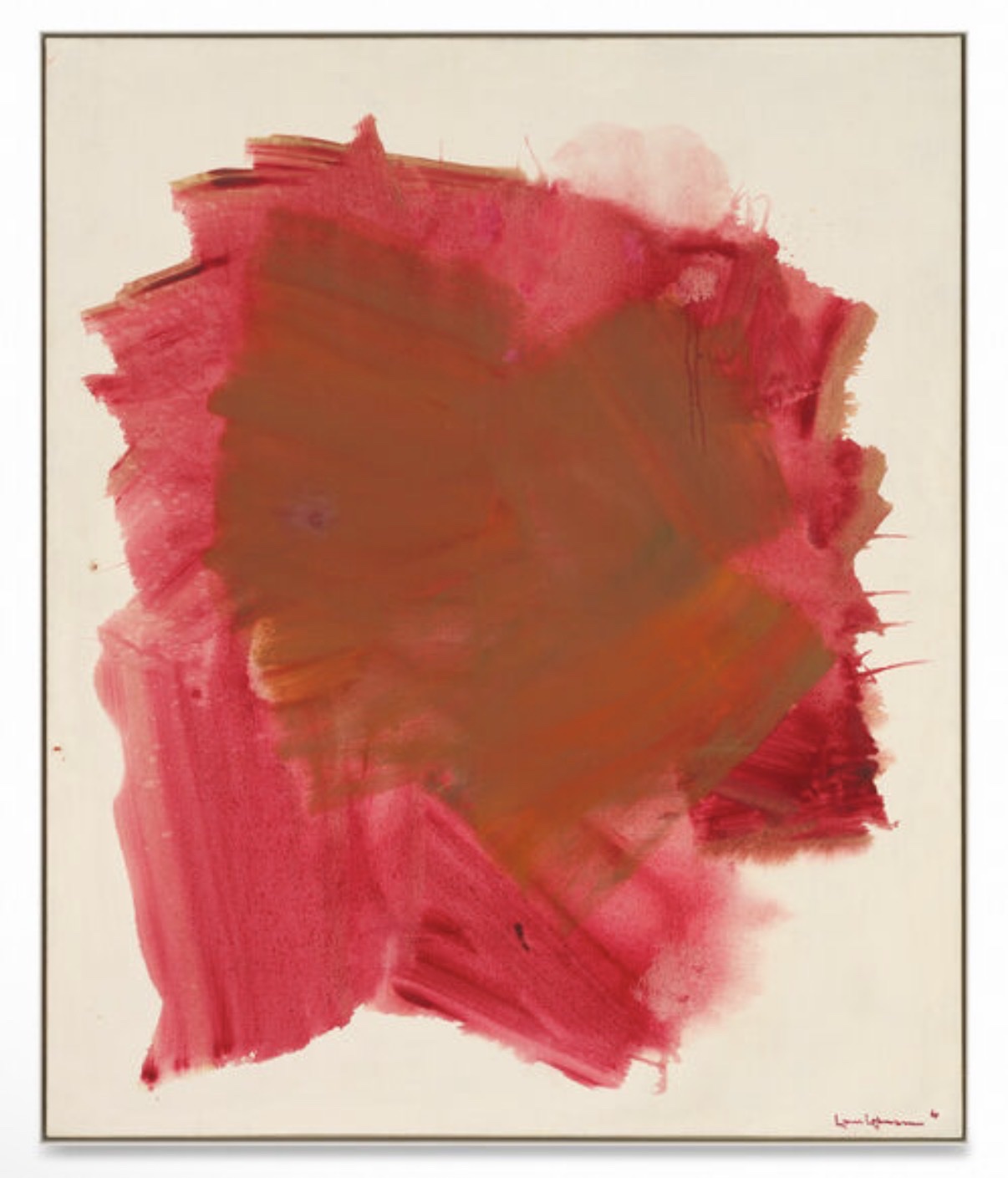
Hans Hofmann
Grief, 1961
Students who passed through his classes included Lee Krasner, Helen Frankenthaler, and Red Grooms. It would be difficult to overstate the degree to which Hofmann shaped the next generation of American painters simply by insisting, year after year, that color and form were inseparable and that space in painting was something to be created rather than depicted. Hofmann's own painting underwent a remarkable transformation across several decades. His early American works, including the ink drawings and landscapes of the mid 1930s, show an artist synthesizing European modernism with a new directness of observation.
“In nature, light creates the color. In the picture, color creates the light.”
Hans Hofmann
Works like the ink on paper "Untitled (Landscape)" from 1935 reveal the draftsmanship and spatial confidence he had cultivated over decades. By the 1940s he was exploring increasingly gestural and expressionistic modes, working with a physical immediacy that aligned him with the emerging Abstract Expressionist circle in New York, though he was never reducible to any single tendency. His "Wicker Chair No. II" from 1942 demonstrates how effortlessly he moved between representation and abstraction, using observed reality as a springboard into pure pictorial invention.
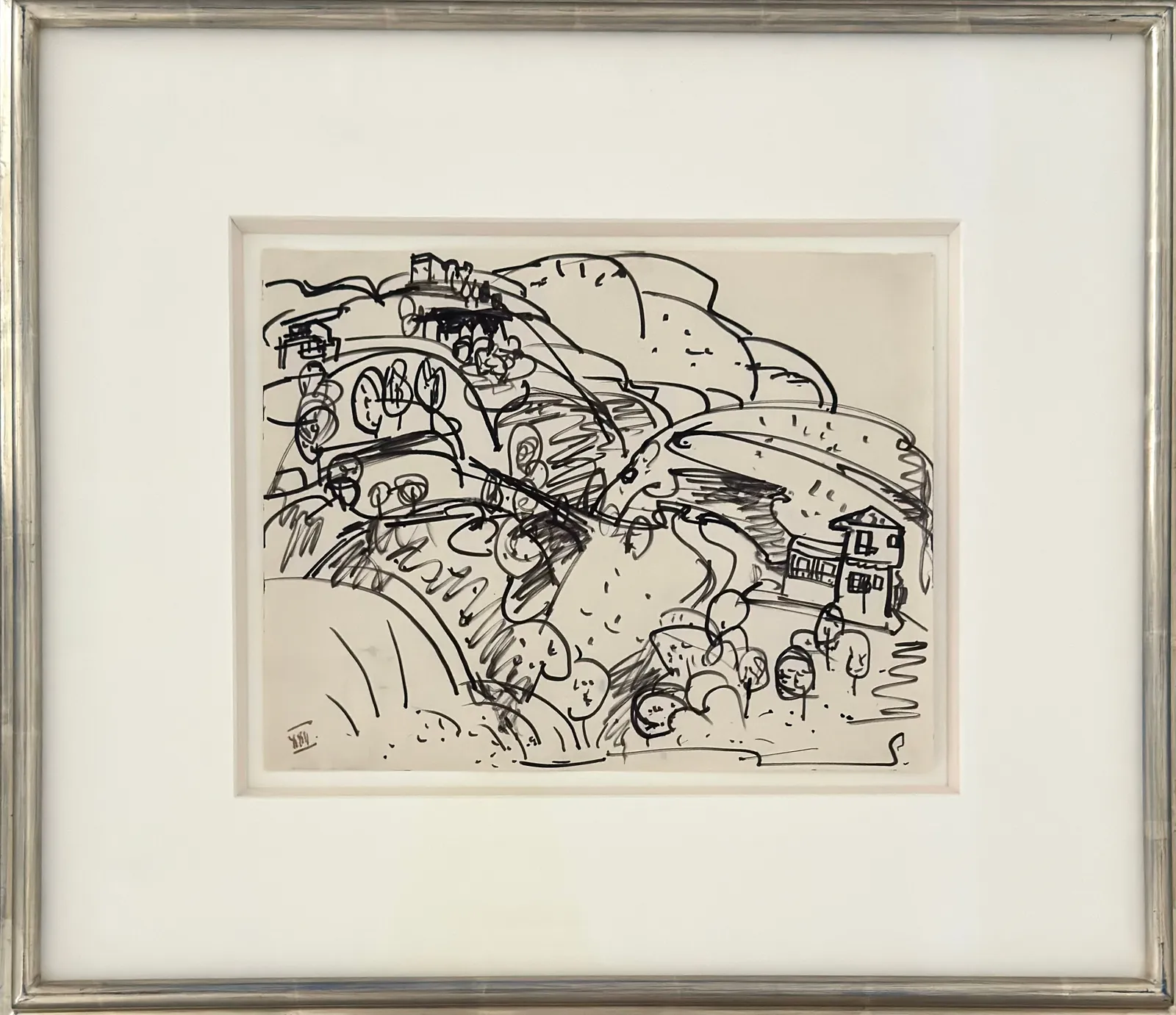
Hans Hofmann
Untitled (Landscape), 1935
Then, in the late 1950s and through the 1960s, came the defining late work: the so called slab paintings, in which large rectangular blocks of high keyed color are placed against richly worked grounds. Canvases like "Evening Blue" from 1958, "Yellow Glow" from 1960, and "Fragrance" from 1962 stand among the most resolved achievements in postwar American painting. "In Upper Regions" from 1963 and "Frolicking" from 1965, completed just a year before his death, show an artist at the absolute peak of his powers. The theoretical framework behind these paintings was not accidental.
“Every truly creative person works in a state of spiritual intoxication.”
Hans Hofmann
Hofmann developed the concept of push and pull, a phrase he used to describe the way warm and cool colors, and advancing and receding forms, create a dynamic spatial energy within a flat picture plane. This idea, which sounds simple in summary, was in practice a sophisticated and generative principle that gave his late canvases their extraordinary sense of life. Unlike painters who sought to eliminate tension, Hofmann cultivated it deliberately, believing that resolved tension was the very definition of a successful work of art. His 1948 essay collection "Search for the Real" remains a foundational text for anyone seeking to understand not just his work but the philosophical underpinnings of American abstraction more broadly.
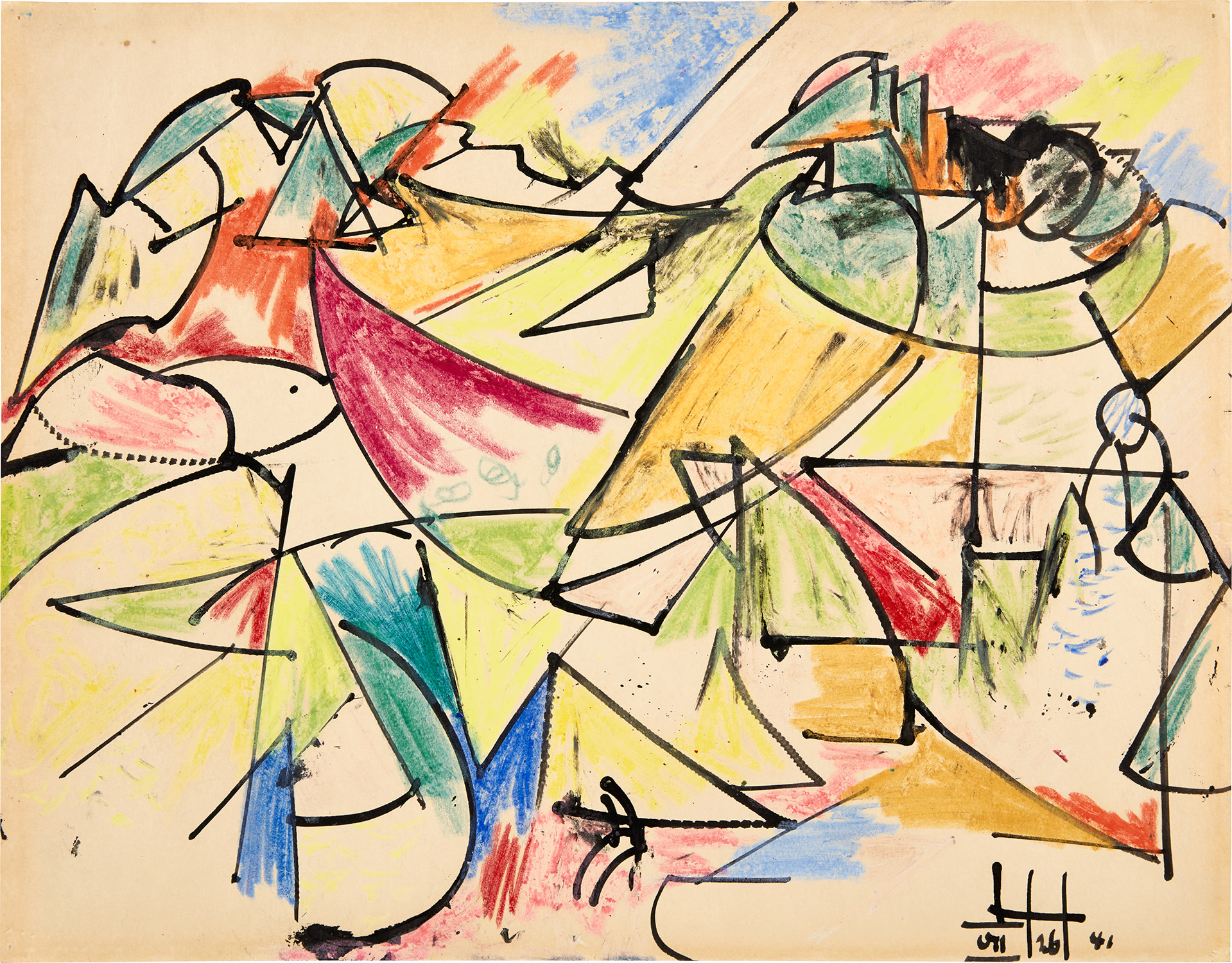
Hans Hofmann
Provincetown Landscape
From a collecting perspective, Hofmann occupies a rare position: genuinely blue chip, historically indispensable, and yet still capable of offering value relative to some of his contemporaries. Works on paper, including the ink drawings and oil on paper compositions, represent an accessible entry point into a practice of the highest quality. The late oil on canvas paintings command serious attention at auction, with major works achieving significant results at Christie's, Sotheby's, and Phillips over the past two decades. Collectors are drawn to the fact that Hofmann's work rewards sustained looking.
These are not paintings that exhaust themselves on first encounter. They are, in the deepest sense, paintings about the act of looking itself, which means they remain active and engaging across years of ownership. Provenance often traces through key galleries of the postwar era, including Kootz Gallery in New York, which gave Hofmann crucial early institutional support in America. To understand Hofmann fully is to understand a broad swath of twentieth century painting.
He sits at the intersection of European modernism and American abstraction in a way that very few figures do. His connections to Matisse link him directly to the Fauvist tradition of color as emotion. His engagement with Cubist structure places him alongside Picasso and Braque in the project of remaking pictorial space. In the American context, his influence touches Abstract Expressionism through his students and peers, and his slab paintings anticipate the concerns of Color Field painters like Mark Rothko and Morris Louis without ever being reducible to that movement.
Artists as varied as Willem de Kooning and Frank Stella acknowledged the weight of his presence in the discourse. What Hofmann leaves behind is not simply a body of beautiful paintings, though the paintings are genuinely beautiful. He leaves behind a way of thinking about art that remains useful, even urgent. His insistence that painting is a discipline of relationships, that color only means something in relation to other color, that form is inseparable from the space it creates, these ideas belong to anyone who looks seriously at pictures.
Museums continue to exhibit his work with fresh contextual frames, scholarship continues to deepen, and collectors who have lived with his canvases consistently report that the paintings give more over time rather than less. That is perhaps the simplest and most truthful measure of a great artist, and by that measure, Hans Hofmann stands very tall indeed.
Explore books about Hans Hofmann
Hans Hofmann
William C. Seitz
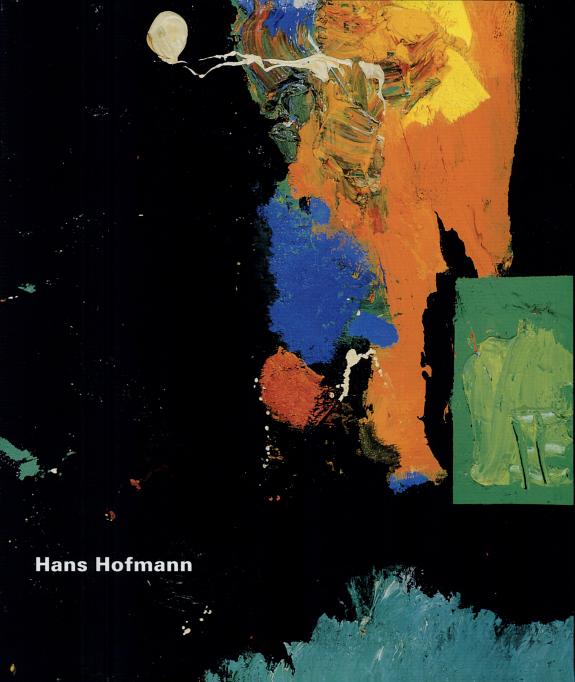
Hans Hofmann: Life and Work
Cynthia Goodman
Hans Hofmann: Catalogue Raisonné of His Art
William C. Seitz
Hans Hofmann: A Retrospective
Michael Auping
Hans Hofmann: Paintings Since 1945
Sam Hunter

Search for the Real: An Exhibition of Paintings by Hans Hofmann
Clement Greenberg