Gio Ponti
Gio Ponti, Italy's Most Generous Design Visionary
Artist Spotlight · The Collection Editorial
“An object is not beautiful only because it is finished well, but because it expresses an idea.”
Gio Ponti, Domus
There is a particular quality of afternoon light in Milan that seems made for Gio Ponti's furniture. It catches the brass fittings of a 1950s writing desk just so, illuminates the lacquered surfaces of a sculptural armchair, and reminds you that beauty, for Ponti, was never decorative in the dismissive sense of the word. It was structural, moral, and deeply Italian. In recent years, the market and the museum world have both arrived at the same conclusion simultaneously: Ponti is not a footnote to twentieth century modernism.
Gio Ponti
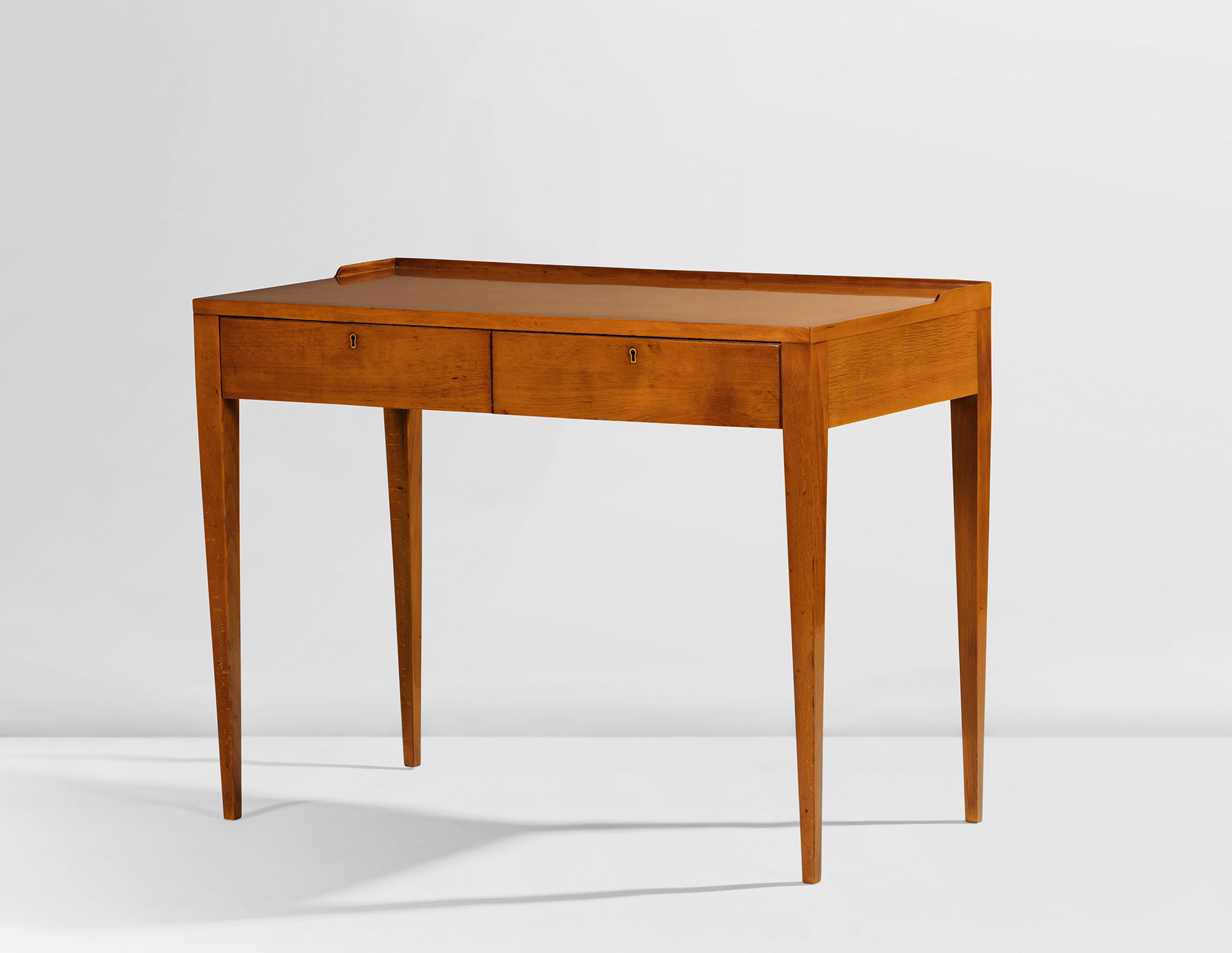
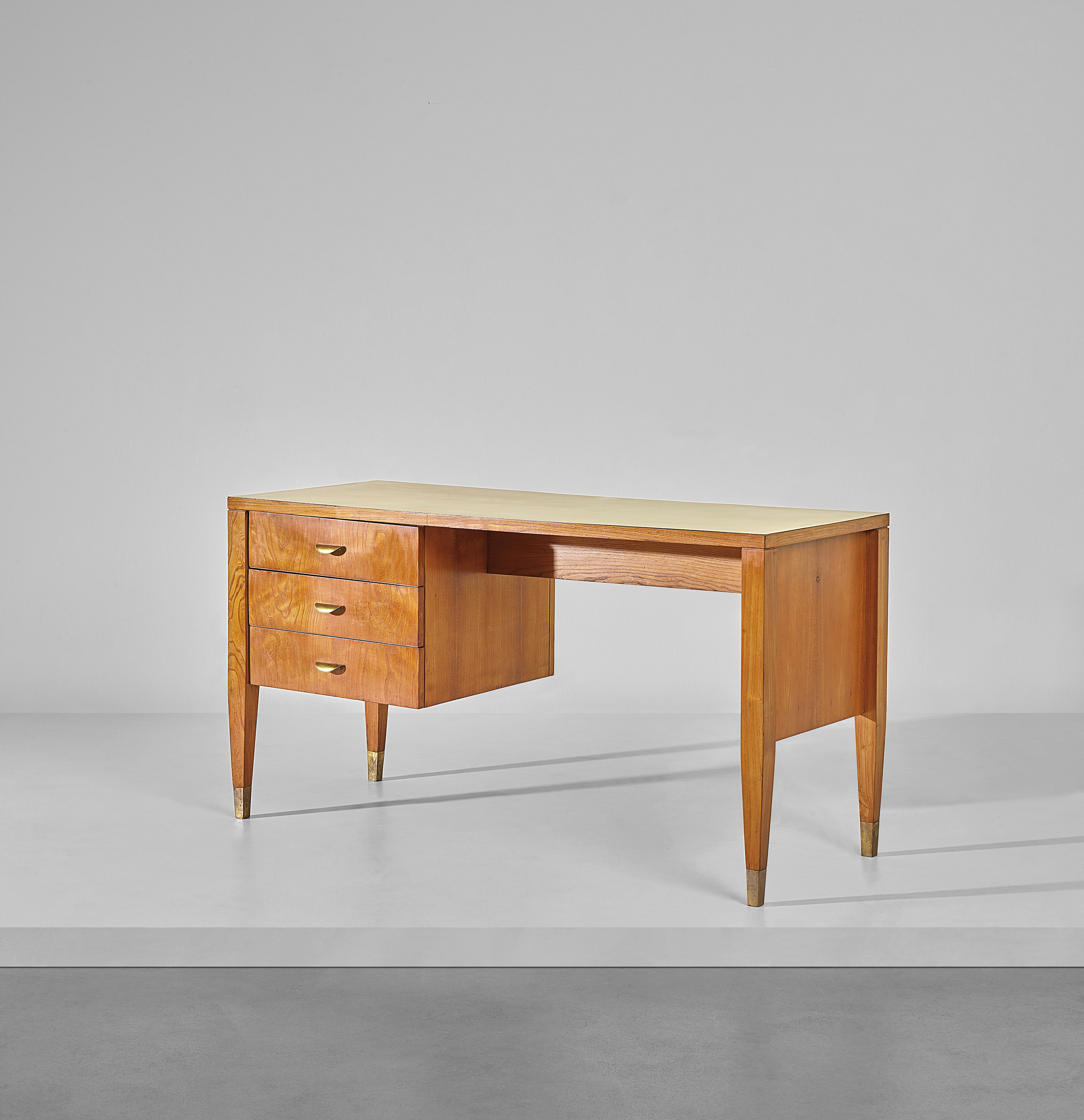
Writing desk, 1950
He is one of its central authors. Giovanni Ponti was born in Milan in 1891, into a city that was already crackling with the ambitions of a new industrial age. He studied architecture at the Politecnico di Milano, graduating in 1921 after an interruption for military service during the First World War. His formation was shaped by a tension that would define his entire career: a profound love for the classical traditions of Italian craft and ornament on one side, and a restless appetite for the modern, the functional, and the radically simplified on the other.
Unlike many of his European contemporaries who sought to erase history, Ponti wanted to metabolize it, to find within the deep reserves of Italian making a language that could speak to the present. His early professional life moved quickly across multiple disciplines, which was less a sign of indecision than of an almost overwhelming creative energy. He worked as a ceramic designer for Richard Ginori beginning in 1923, producing pieces that drew on neoclassical imagery while introducing a lightness and wit entirely his own. The Coupe Domitilla, one of the celebrated works now held in private collections, exemplifies this sensibility: a vessel that feels simultaneously ancient and invented, rooted in the history of Italian decorative arts but free from archaeological pastiche.
Gio Ponti
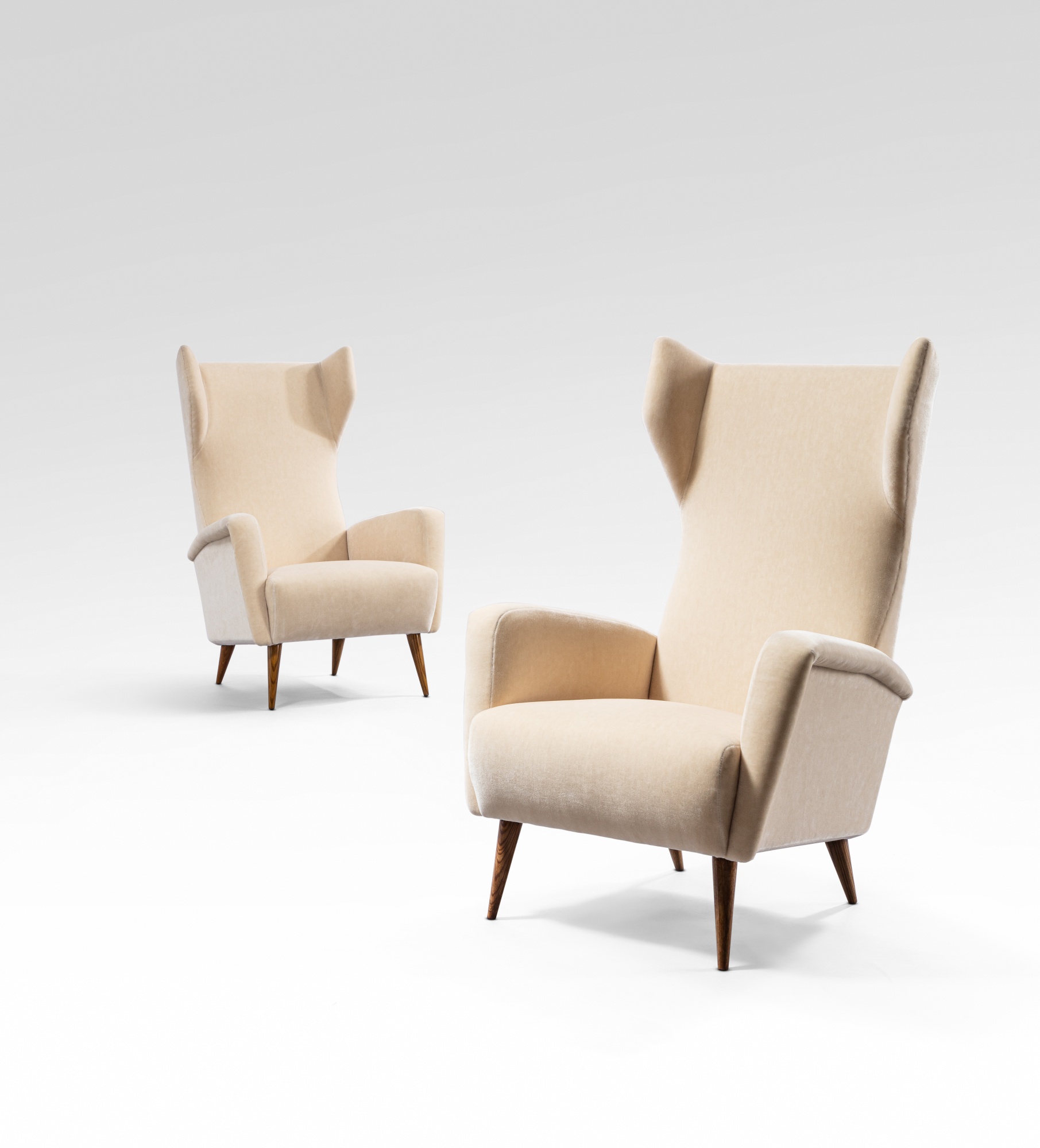
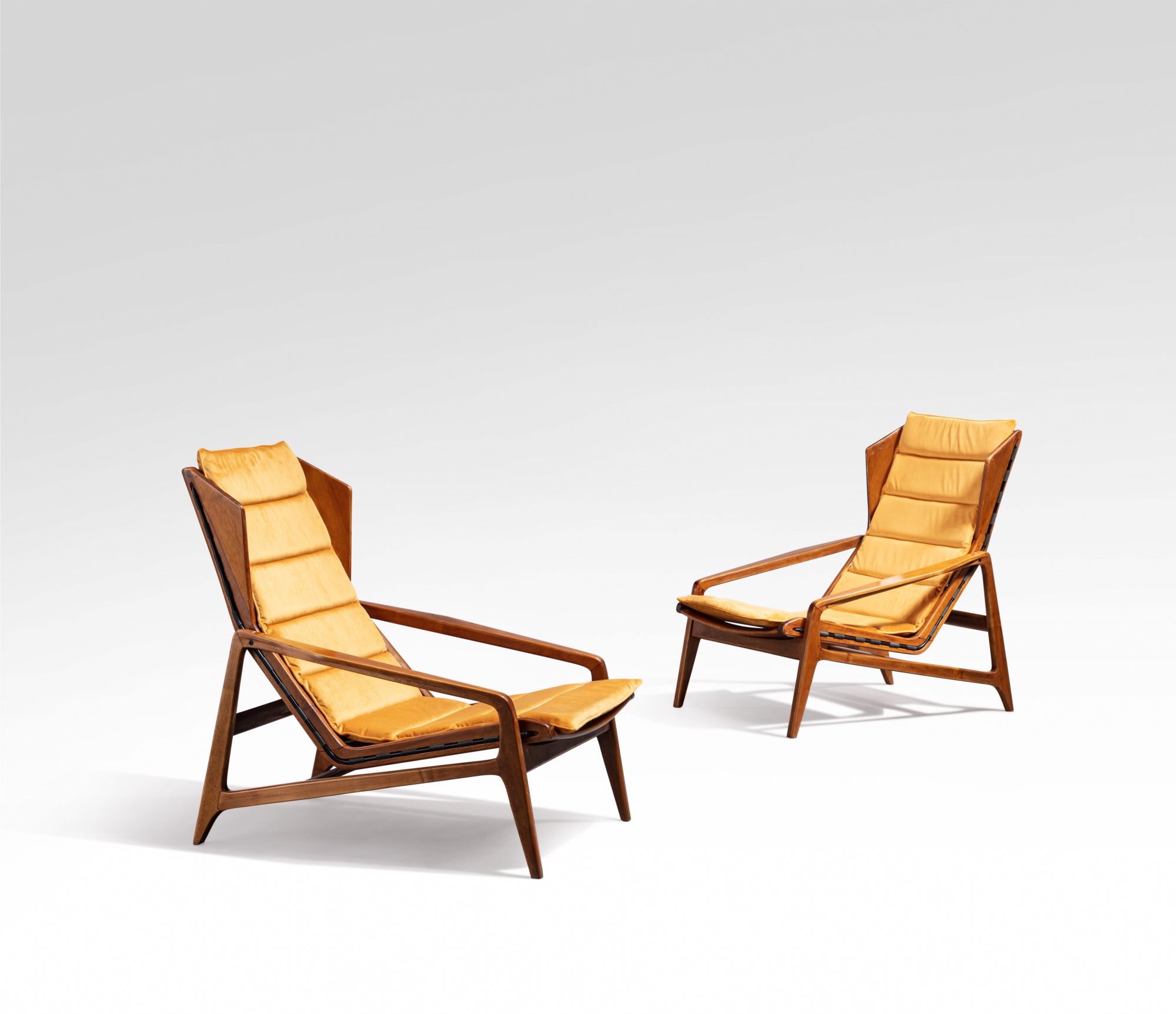
Pair of armchairs, model n°811
His ceramics from this period won the Grand Prize at the Paris Exposition Internationale des Arts Décoratifs et Industriels Modernes in 1925, placing him immediately on an international stage. The founding of Domus magazine in 1928 was perhaps the single act that most expanded Ponti's influence beyond what any individual object or building could achieve. As editor and creative director, he turned Domus into a platform for a vision of Italian life in which architecture, furniture, painting, and everyday objects existed in a unified cultural conversation. The magazine became required reading not just in Italy but across Europe and the Americas, and it gave Ponti a pulpit from which he could advocate, provoke, and celebrate for decades.
“I love architecture as a whole, as a total expression of life.”
Gio Ponti
His relationship with Domus was interrupted during the war years when he briefly stepped away, but he returned and continued shaping its editorial identity well into the postwar period. The postwar decades represent the fullest flowering of Ponti's furniture design, and it is from this era that many of the most sought after works come. The writing desk of 1950, with its refined proportions and careful attention to the relationship between structural necessity and visual elegance, captures something essential about his mature approach. The Superleggera chair, model number 699, designed in 1957 and produced by Cassina, became one of the defining objects of twentieth century Italian design.
Gio Ponti
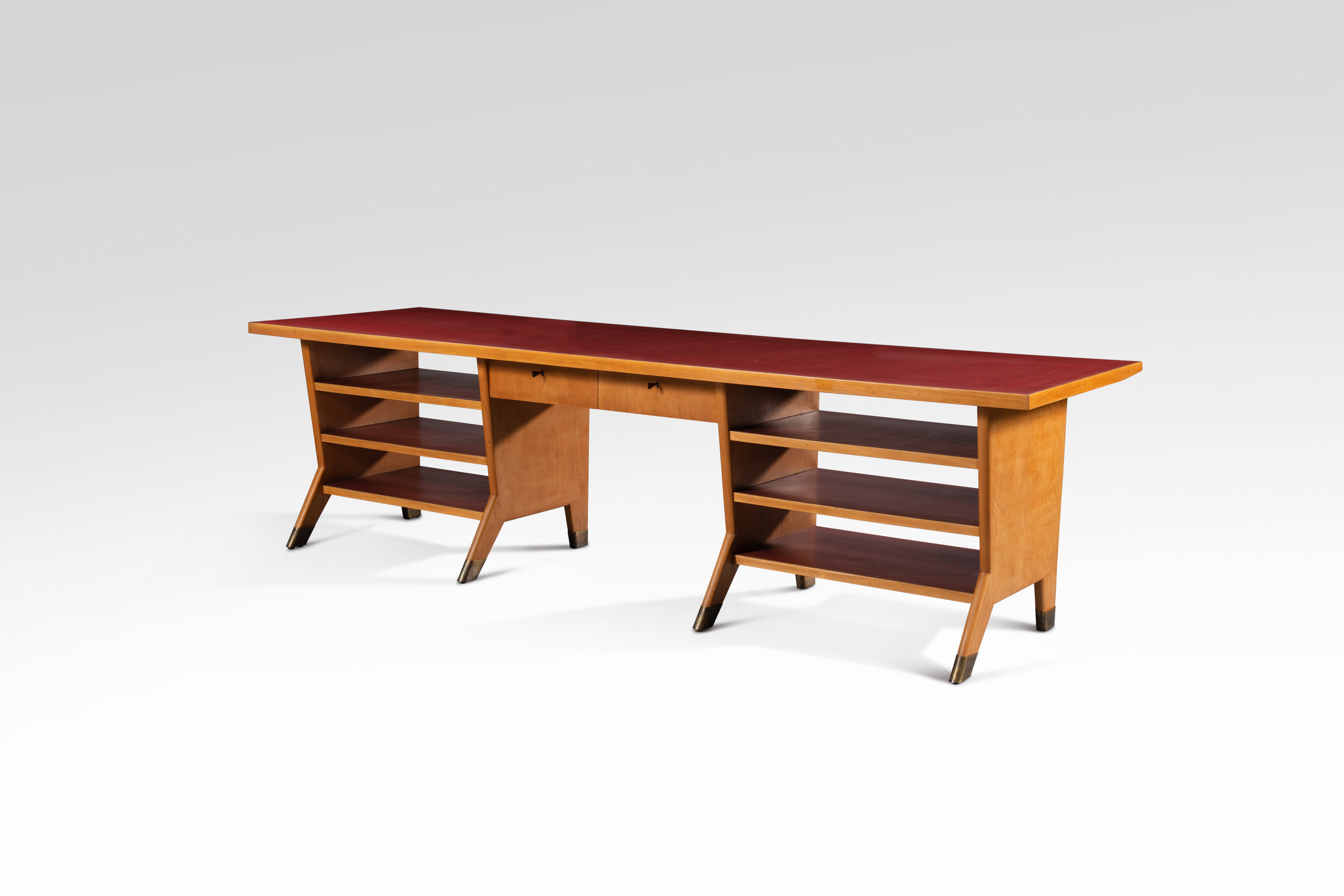
Bureau
Its name means super light, and Ponti achieved that lightness not through technological novelty but through a radical distillation of traditional rush seated chairs from the Ligurian fishing village of Chiavari. He looked at an old form and asked what was truly necessary, then removed everything else. The result weighed less than 1.7 kilograms and has never gone out of production.
The armchairs and sofas from the 1950s, including models 811, 803, and the elegant settee 516, reveal Ponti working across a range of moods and registers. Some pieces carry the formality of a Milanese salon, with upholstered surfaces and brass details that recall the refined interiors he was simultaneously designing for private clients and grand hotels. Others are leaner, more geometric, interested in the plane and the angle as expressive tools. What unifies them is a quality of considered pleasure: these are objects made by someone who believed that the people who used them deserved to be surrounded by beauty, and who had the skill to deliver it without self importance or excess.
Gio Ponti
laminated plywood, stained beech-veneered wood, stained beech, brass, 1953
For collectors, Ponti's work occupies a particularly attractive position in the market. His furniture bridges the worlds of fine art and design collecting in a way that relatively few designers achieve. Major auction houses including Christie's, Sotheby's, and Phillips have all seen strong results for authenticated Ponti pieces, with rare or documented examples commanding significant premiums. The breadth of his output means that collecting Ponti can begin at different points of entry: a pair of armchairs, a single ceramic work, or a desk from his most celebrated period each offers a different relationship to his vision.
Provenance and original condition matter enormously, as does the presence of maker's marks or documentation connecting a piece to its production context. Works produced in collaboration with Cassina, or from his ceramic period with Richard Ginori, carry particular historical weight. Ponti's peers and near contemporaries provide useful context for understanding his place in design history. Carlo Mollino, his fellow Italian, shared Ponti's willingness to treat furniture as sculpture, though Mollino's sensibility ran toward the surreal and the erotic where Ponti remained more classical.
Franco Albini worked in a spare rationalist register that complements Ponti's warmer approach. Internationally, figures like Jean Prouvé in France and Hans Wegner in Denmark were working through similar questions about the relationship between craft, industry, and everyday life, each arriving at their own national inflection of a shared modernist project. The enduring power of Gio Ponti's work lies in its generosity. He was not a designer who made you feel excluded from the intelligence of his decisions.
His objects explain themselves through use and through looking. The Superleggera invites you to pick it up. The desk invites you to sit down and write. The armchairs invite conversation.
There is in all of it an implicit argument that beauty is not a luxury reserved for the initiated but a birthright of daily life, and that the designer's task is to make that birthright available through skill, imagination, and love of the craft. That argument has not aged. If anything, it sounds more necessary now than it did in 1957.
Explore books about Gio Ponti
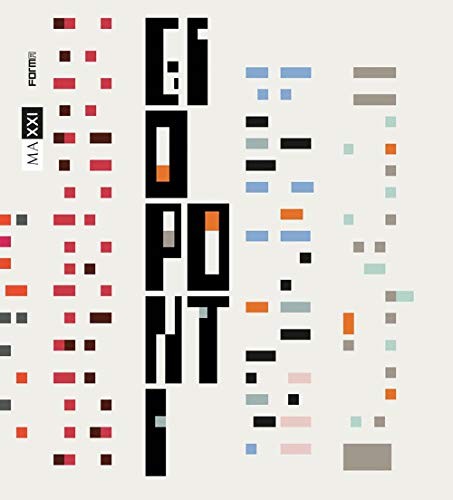
Gio Ponti: An Architecture for All
Fulvio Irace

Gio Ponti 1891-1979
Paolo Portoghesi

Gio Ponti: The Complete Works 1923-1978
Lara-Vinca Masini
Ponti: Progetti e Disegni
Valerio Paolo Mosco

Gio Ponti: Amare L'Architettura
Giampiero Bosoni
Gio Ponti: Master Architect
Christopher Wilk
The Decoration of Houses
Gio Ponti
Gio Ponti: Ceramics and Glass
Alastair Duncan