Gertrude Käsebier
Gertrude Käsebier Saw the Soul First
Artist Spotlight · The Collection Editorial
“I have been aiming to make photographs that look like photographs, not like etchings, oil paintings, or prints.”
Gertrude Käsebier, Camera Notes, 1898
In the galleries of the Museum of Modern Art in New York, a platinum print stops visitors in their tracks. It is 1899, and a woman cradles an infant in a luminous stable interior, light falling with the softness of a Renaissance altarpiece. The work is called The Manger, and it announced to the world that photography was not merely a mechanical trade but a fully realized art form. More than a century later, Gertrude Käsebier remains one of the most quietly thrilling discoveries available to a collector of early photography, a figure whose mastery of light, surface, and human feeling has only grown more apparent with time.
Gertrude Käsebier
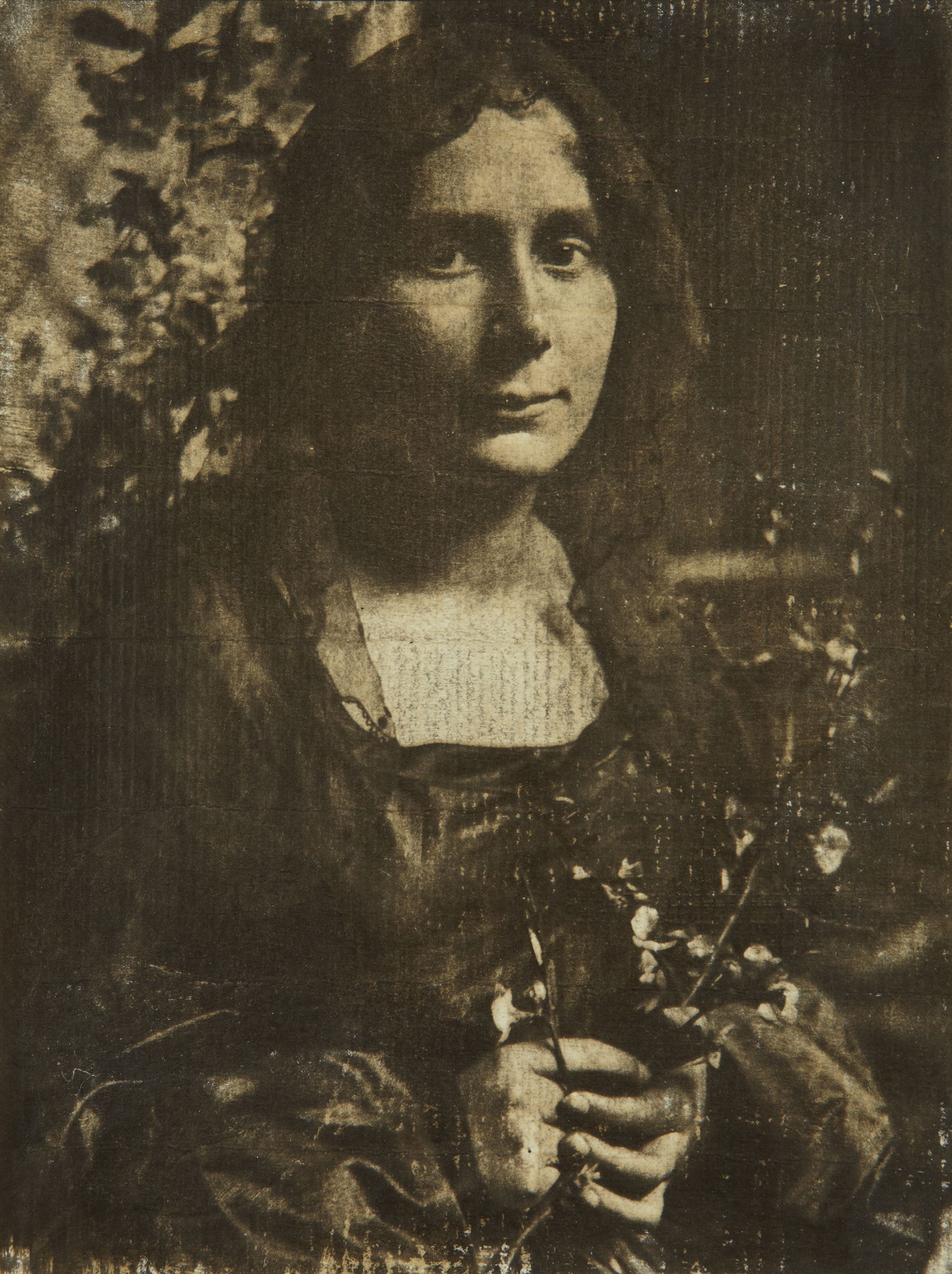
Cornelia Montgomery, full face, holding flowers, square-necked gown
Käsebier was born Gertrude Stanton in Des Moines, Iowa, in 1852, and her early life was defined by the open landscapes of the American frontier. Her family moved to Colorado during her childhood, and the expansive light of the West left an impression on her visual imagination that would resurface decades later in her approach to tonal photography. She married Eduard Käsebier in 1874 and devoted the following years to raising three children in Brooklyn, New York. It was not until her late thirties, with her family established, that she turned seriously toward a creative life.
This late start was not a limitation. It gave her work a quality of earned conviction that set it apart from the beginning. In the early 1890s, Käsebier enrolled at the Pratt Institute in Brooklyn, studying painting and the principles of visual composition. The training sharpened her eye for form and prepared her for a rapid mastery of the photographic medium.
Gertrude Käsebier
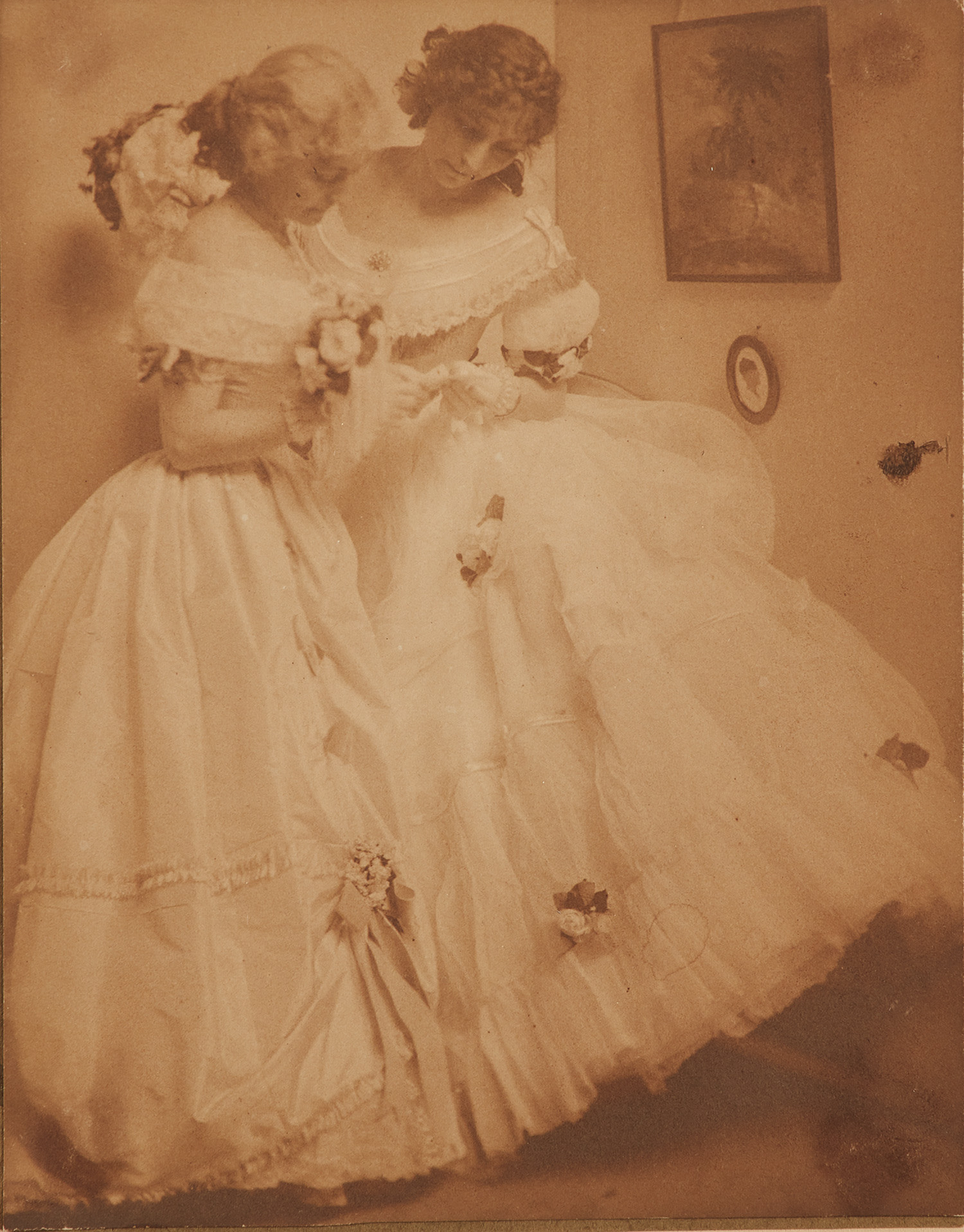
The Letter (Gerson sisters)
She apprenticed with chemist and photographer Samuel Lifshey to understand the technical foundations of the craft, and by the mid 1890s she had opened her own portrait studio on Fifth Avenue in New York. The studio became something of a cultural destination, attracting artists, writers, and prominent New Yorkers who sought a photographer capable of making an image that felt like a painted portrait rather than a document. Her reputation grew swiftly and decisively. Käsebier became a central figure in the Pictorialist movement, a international effort among photographers who sought to elevate the medium to the status of fine art by embracing painterly techniques, atmospheric printing processes, and carefully composed scenes.
“I have longed to make a picture of a mother, just a simple, human mother.”
Gertrude Käsebier, Camera Notes, 1898
She was a founding member of the Photo Secession, the influential group established by Alfred Stieglitz in 1902 that also included Edward Steichen and Clarence White. Stieglitz featured her work in the very first issue of Camera Notes and later in Camera Work, the exquisite quarterly journal that served as the movement's defining publication. Her relationship with Stieglitz was productive but not without creative tension, and Käsebier ultimately parted ways with the Photo Secession in 1912, choosing independence over affiliation. She joined the rival Pictorial Photographers of America and continued producing work of the highest order on her own terms.
Gertrude Käsebier
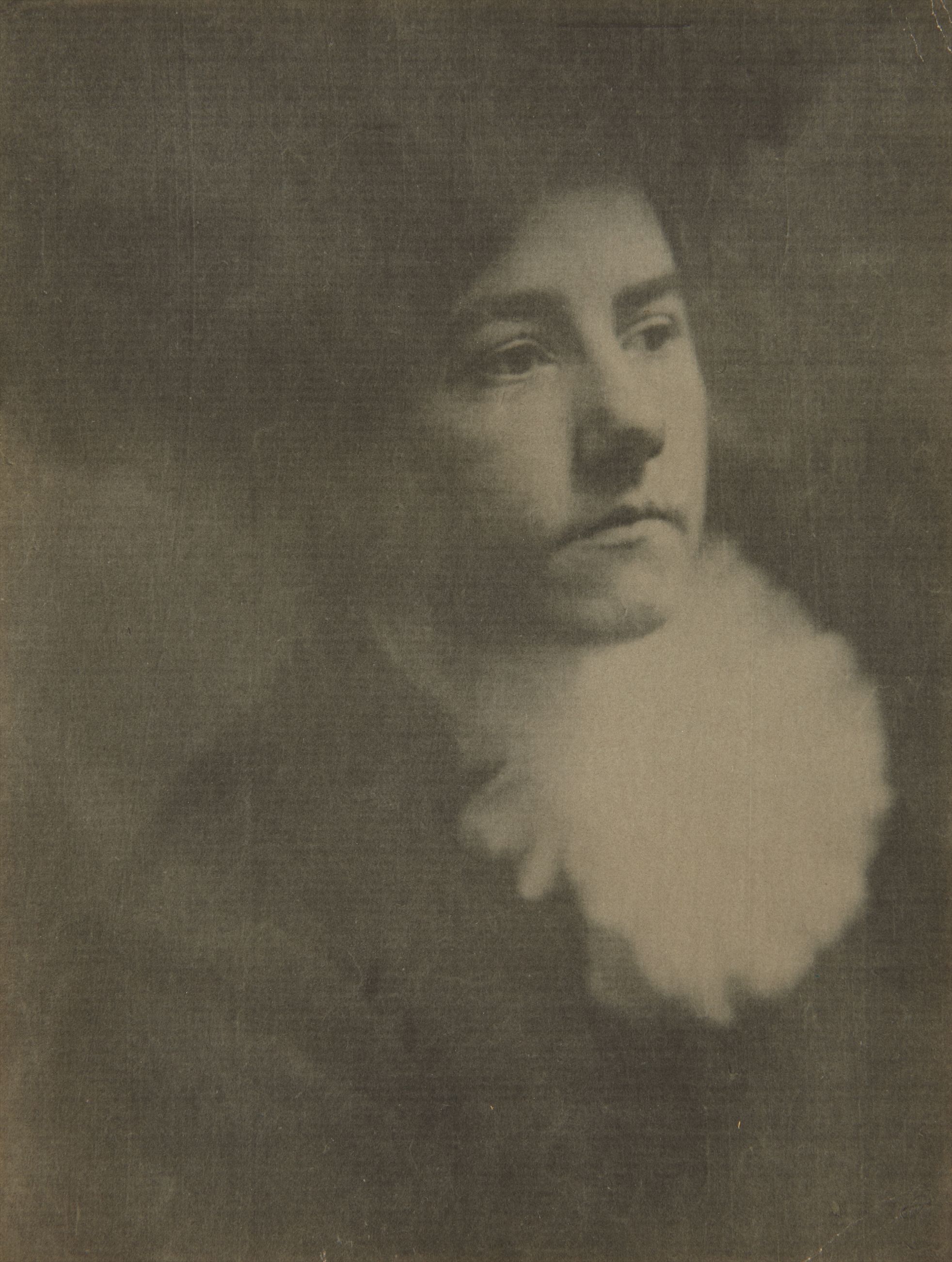
Portrait of the Artist's Daughter (Hermine Käsebier)
The works for which Käsebier is best remembered reveal a photographer of extraordinary sensitivity to surface, atmosphere, and psychological depth. The Manger, made in 1899, is a platinum print that transforms a simple domestic scene into something approaching the sacred, drawing on the visual language of Old Master painting without ever feeling derivative. Blessed Art Thou Among Women, also from 1899 and among her most celebrated images, layers a mother and daughter against a doorway in a composition of stunning formal intelligence, the white dress of the child glowing against the dark interior like a figure stepping from shadow into grace. Her portraits of Auguste Rodin during her time in Europe brought the same intimate authority to bear on one of the most celebrated artistic presences of the era.
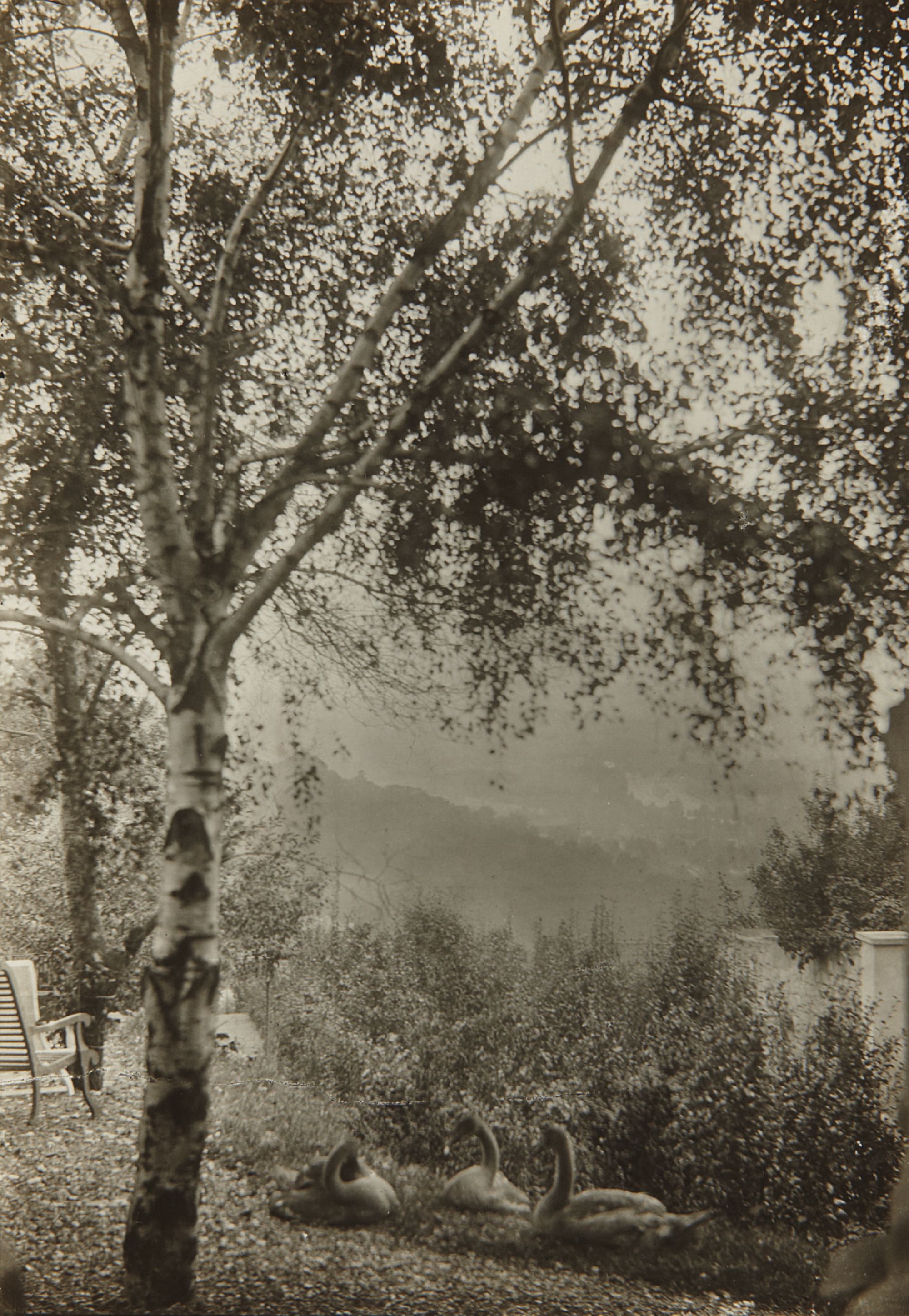
The work known as Rodin's Garden captures the sculptor in his environment with a naturalness that few portraitists of any medium achieved. Her image Yoked and Muzzled: Marriage, a gelatin silver print on tissue, demonstrates her willingness to bring psychological complexity and even social commentary into her practice, a boldness that feels remarkably contemporary. For collectors, Käsebier's work presents a compelling and still accessible opportunity within the canon of American modernism. Her prints span a range of processes including platinum, gum bichromate, and gelatin silver, each offering distinct aesthetic qualities and varying degrees of rarity.
Gertrude Käsebier
Rodin's Garden
Platinum prints such as her Italy from 1889 and The Manger carry the warm, velvety permanence of the process she favored in her most serious work. Her gum bichromate prints, including Mother and Child from 1899, have a painterly softness that continues to draw collectors who appreciate the visible hand of the artist in the image's surface. Works annotated with personal inscriptions, as seen in The Letter featuring the Gerson sisters with a handwritten note identifying the subjects and placing them in New York in 1910, carry additional documentary and biographical interest. Auction results for significant Käsebier prints at institutions including Sotheby's and Christie's have reflected growing institutional and private demand, and signed works in particular represent a meaningful point of distinction.
Käsebier's place within the broader history of photography is confirmed by the company she kept and the institutions that recognized her early. Her work appeared alongside that of Alvin Langdon Coburn, Frank Eugene, and Heinrich Kühn in the great Pictorialist exhibitions of the early twentieth century. Like her contemporary Clarence White, with whom she eventually co founded the Pictorial Photographers of America, she was deeply committed to photography as a teaching art as well as a personal practice. She taught and influenced a generation of photographers who carried her ideas about light and composition forward into the modern era.
Her portraits of Native American performers from Buffalo Bill's Wild West show, undertaken in 1901, demonstrate an unusual ethnographic empathy for her time and have attracted significant scholarly attention in recent years. Gertrude Käsebier died in 1934, leaving behind a body of work that now resides in major collections including the Library of Congress, the George Eastman Museum in Rochester, and the Metropolitan Museum of Art in New York. What draws people to her work today is something that resists easy categorization: a quality of presence, a sense that the person or place in front of her lens has been genuinely seen and genuinely honored. In an era of images without end, her photographs ask us to slow down and attend to the light.
For those who collect with both the eye and the heart, there are few figures in the history of photography more worthy of that attention.
Explore books about Gertrude Käsebier
Gertrude Käsebier: The Complete Photographs
Barbara L. Michaels
Gertrude Käsebier: An American Life
Barbara L. Michaels
Pictorialism into Modernism: The Clarence H. White School of Photography
Bonnie Yochelson
Women in Photography: An Historical Survey
Margery Mann and Anne Noggle

Photography in America 1900-1950
Barbara L. Michaels