Gerhard Richter
Gerhard Richter: A Master Reinventing Himself Always
Artist Spotlight · The Collection Editorial
“Painting is the making of an analogy for something non-visual and unknown.”
Gerhard Richter, Notes, 1973
In the autumn of 2022, when Gerhard Richter marked his ninetieth birthday, the art world paused in collective admiration. Institutions from London to Tokyo reflected on a career spanning more than six decades, one that had fundamentally reshaped how we think about painting, photography, and the very nature of representation. The Fondation Louis Vuitton in Paris had mounted a landmark retrospective the previous year, drawing tens of thousands of visitors eager to stand before works that feel at once intimately personal and historically vast. At ninety, Richter was still working, still restless, still asking the questions that have animated his entire life in art.
Gerhard Richter
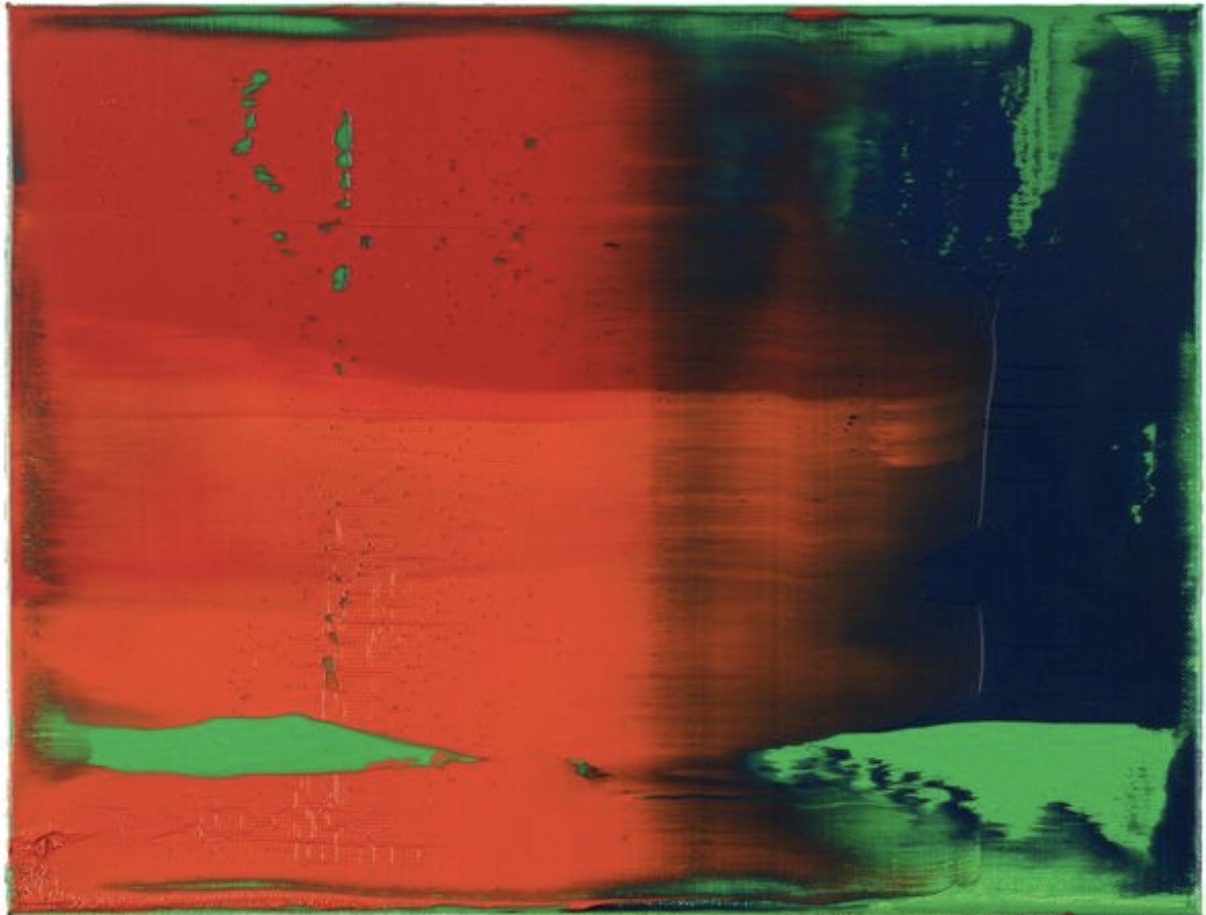
Grün - Blau - Rot Zu 789 (D.H.), 1993
Richter was born in Dresden in 1932, a city whose baroque grandeur and subsequent wartime devastation would leave a permanent impression on his imagination. He came of age under National Socialism and then under the surveillance culture of the German Democratic Republic, both experiences instilling in him a profound skepticism toward certainty, ideology, and the seductive authority of images. He studied at the Dresden Academy of Fine Arts, training in the socialist realist tradition that was the only officially sanctioned mode of expression. It was a formation that paradoxically gave him a rigorous technical foundation while simultaneously building the critical distance he would spend a lifetime exercising.
In 1961, just months before the Berlin Wall sealed the border, Richter moved west to Düsseldorf, a decision that changed the course of his life and, ultimately, of Western art. In Düsseldorf, Richter studied under Karl Otto Götz at the Kunstakademie and encountered for the first time the full scope of postwar art movements arriving from America and Western Europe. Fluxus, Pop Art, and the legacy of Abstract Expressionism were all in the air. Richter absorbed these currents with the curiosity of someone who had been deliberately kept from them, and his response was not to join any camp but to question all of them simultaneously.
Gerhard Richter
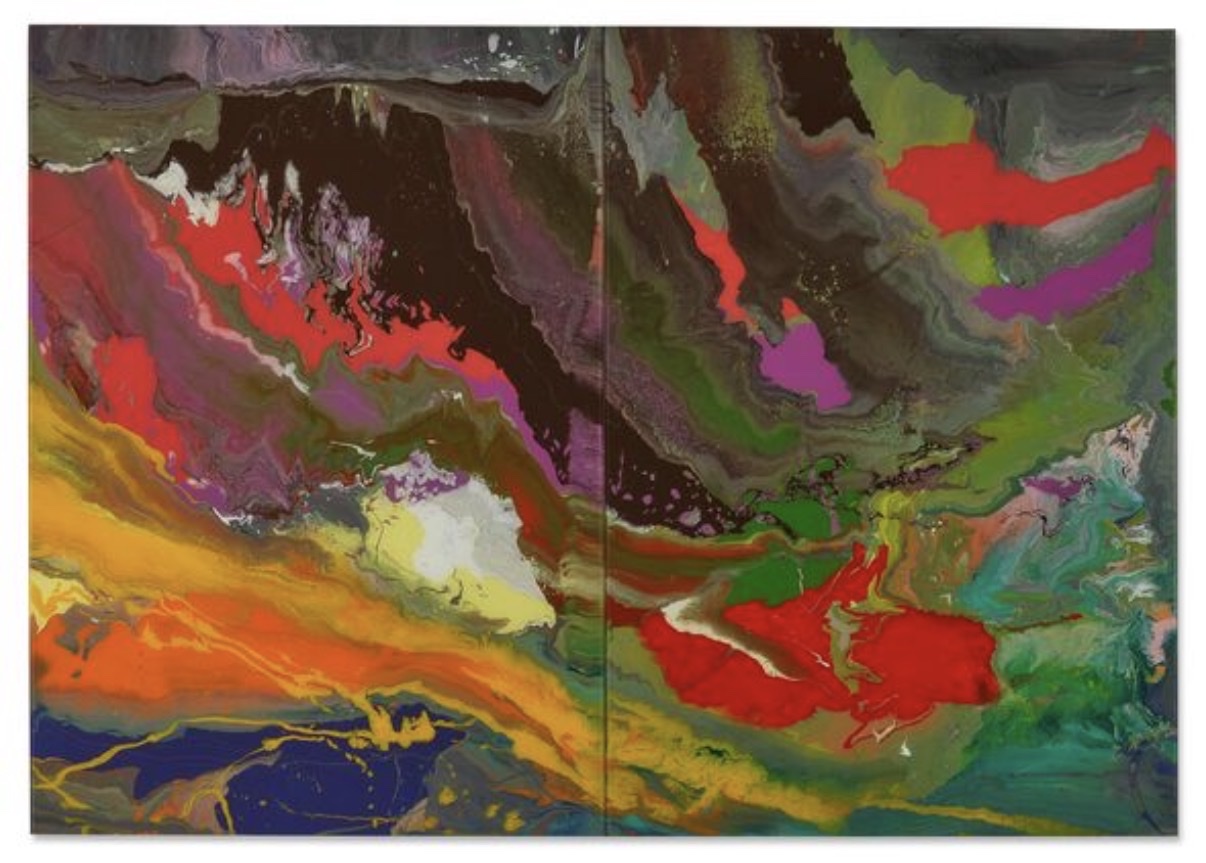
Flow, 2013
By the mid 1960s he had developed his extraordinary photo paintings, works in which he reproduced found photographs onto canvas with meticulous care before deliberately blurring them, as though caught in a moment of forgetting. These works announced immediately that Richter was not interested in easy answers. He wanted to explore the gap between what an image promises and what it can actually deliver. The arc of Richter's development is unlike almost any other artist of his generation.
“I pursue no objectives, no system, no tendency; I have no programme, no style, no direction.”
Gerhard Richter, Notes, 1973
Where others staked out territory and defended it, he kept moving. Through the 1970s and 1980s he pursued both his photorealist work and a radically different practice of pure abstraction, most famously through the squeegee paintings for which he became internationally celebrated. In these works, oil paint is dragged, smeared, and layered across large canvases using a wide squeegee, creating fields of extraordinary chromatic complexity and physical drama. The Cage series, begun in 2006 and named in homage to composer John Cage, represents perhaps the apex of this abstractwork, six monumental paintings whose layered translucence seems to contain entire atmospheres within them.
Gerhard Richter
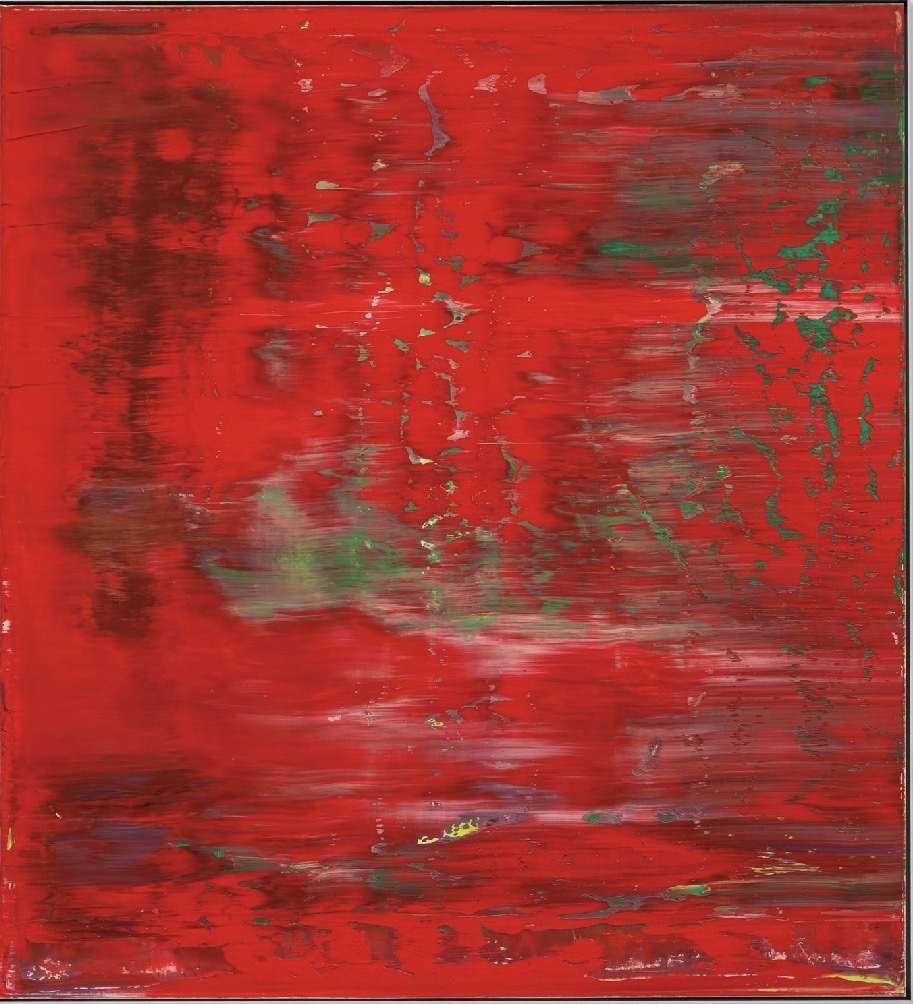
Abstraktes Bild, 1994
Simultaneously, Richter pursued his glass and mirror works, his photographic pieces, and his quietly devastating Grey Paintings, reminding viewers at every turn that his practice could not be reduced to any single signature. Among the works most cherished by collectors and institutions alike, the Abstraktes Bild paintings occupy a special place. Works such as Abstraktes Bild from 1994 demonstrate the full force of Richter's visual intelligence: color relationships that feel both accidental and perfectly resolved, surfaces that reward sustained looking with new layers of depth and incident. His Vermalung (Braun) from 1972 offers an earlier and rawer glimpse of this same impulse, a smeared and overpainted canvas that hovers between destruction and creation.
“Photos are the best pictures. They are perfect pictures.”
Gerhard Richter, Interview with Rolf Schön, 1972
More recently, works such as Flow from 2013, rendered in lacquer behind glass and mounted on aluminium, and the contemplative Schädel (Skull) from 2017 demonstrate that Richter's formal curiosity has never diminished. The 2022 ink and pencil works on paper show an artist still committed to daily mark making, to the quiet discipline of staying in conversation with the world through his hands. On the primary and secondary market, Richter occupies a position held by very few living artists. His auction records are among the highest ever achieved for a living painter, with major Abstraktes Bild canvases regularly surpassing eight figures at Sotheby's and Christie's.
Gerhard Richter
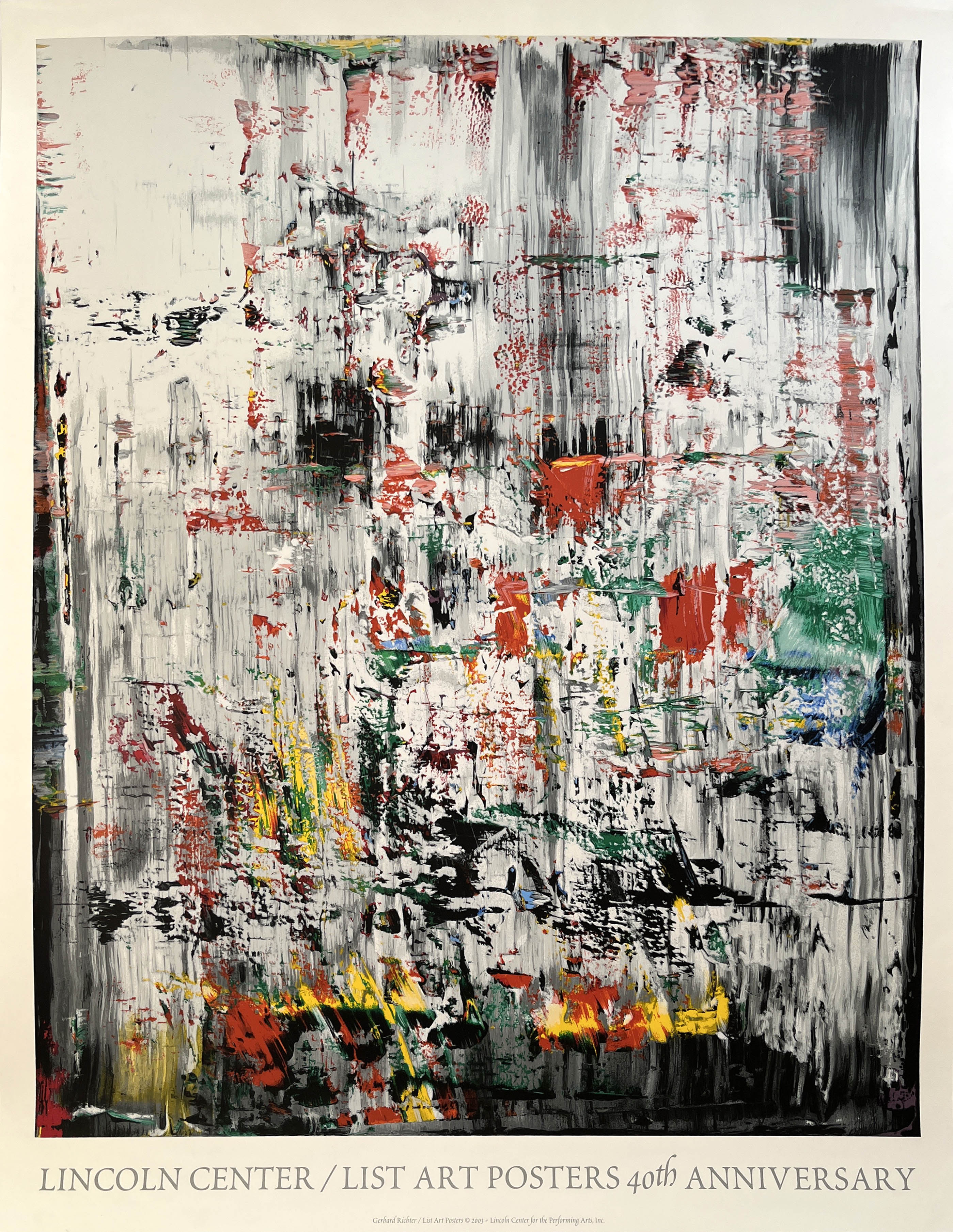
Eis 2, 2003
The 2015 sale of Abstraktes Bild (809 4) at Sotheby's London, which achieved over 44 million dollars, underscored the depth and durability of collector demand across geography and market cycles. Collectors are drawn not only to the prestige but to the genuine intellectual richness of owning a Richter: these are works that change as you live with them, that generate conversation, that hold their meaning across decades. For those approaching the market thoughtfully, works on paper, prints, and photographs offer a compelling point of entry, combining Richter's conceptual rigor with relative accessibility. The Eis series of screenprints and the Diasec mounted photographic works represent the artist's ideas in editions that have proved both critically respected and consistently sought after.
To understand Richter fully is to understand the broader postwar German artistic conversation. His contemporaries and near contemporaries include Sigmar Polke, with whom he shared an early interest in capitalist realism and photographic source material, and Joseph Beuys, whose provocative conceptualism shaped the atmosphere of the Düsseldorf years. The influence of American painters such as Robert Rauschenberg and Jasper Johns, who similarly interrogated the relationship between image and object, is also legible in his work. More recently, artists including Christopher Wool and Wade Guyton have acknowledged debts to his formal innovations, while painters across Europe and America continue to wrestle with questions about photography and painting that Richter first posed publicly in the 1960s.
He belongs to that rare category of artists who do not merely reflect their moment but actively constitute it. What makes Richter so enduringly relevant is precisely his refusal to be comfortable. At ninety, having achieved every conceivable honor including the Golden Lion at the Venice Biennale and retrospectives at the Museum of Modern Art in New York and Tate Modern in London, he remained a figure of productive uncertainty. His work insists that painting is not a solved problem, that every canvas is a fresh negotiation between intention and accident, between memory and forgetting, between the world as it is and the world as we wish to represent it.
For collectors who believe that art should challenge and sustain in equal measure, who want works that will outlast fashion and reward lifetimes of attention, Gerhard Richter is not simply a sound investment. He is one of the essential voices of our time.
Explore books about Gerhard Richter
Gerhard Richter: Atlas
Gerhard Richter
Gerhard Richter: A Life
Irmeline Lebeer
Gerhard Richter: Paintings
Robert Storr
Gerhard Richter: Retrospective
Ulrich Wilmes
Gerhard Richter: Catalogue Raisonné, Volumes 1-4
Dietmar Elger
Richter: Writings, 1961-2007
Gerhard Richter
Gerhard Richter and the Abstract Painting
Peter Galassi