George Nakashima
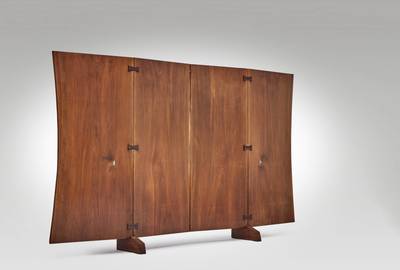
George Nakashima, Where Wood Becomes Wisdom
Artist Spotlight · The Collection Editorial
“A tree is a living thing. When it is felled, it has a spirit. We must honor that spirit.”
George Nakashima
In the spring of 2023, a Nakashima Conoid dining table sold at Wright auction in Chicago for well above its high estimate, a moment that crystallized what collectors and curators have long understood: the furniture of George Nakashima is not simply design. It is art that breathes. Museums from the Philadelphia Museum of Art to the Museum of Arts and Design in New York hold his pieces in their permanent collections, treating them with the same reverence accorded to painting or sculpture. At a time when the boundaries between fine art and craft continue to dissolve, Nakashima's legacy feels less like history and more like a living argument about what objects can mean.
George Nakashima
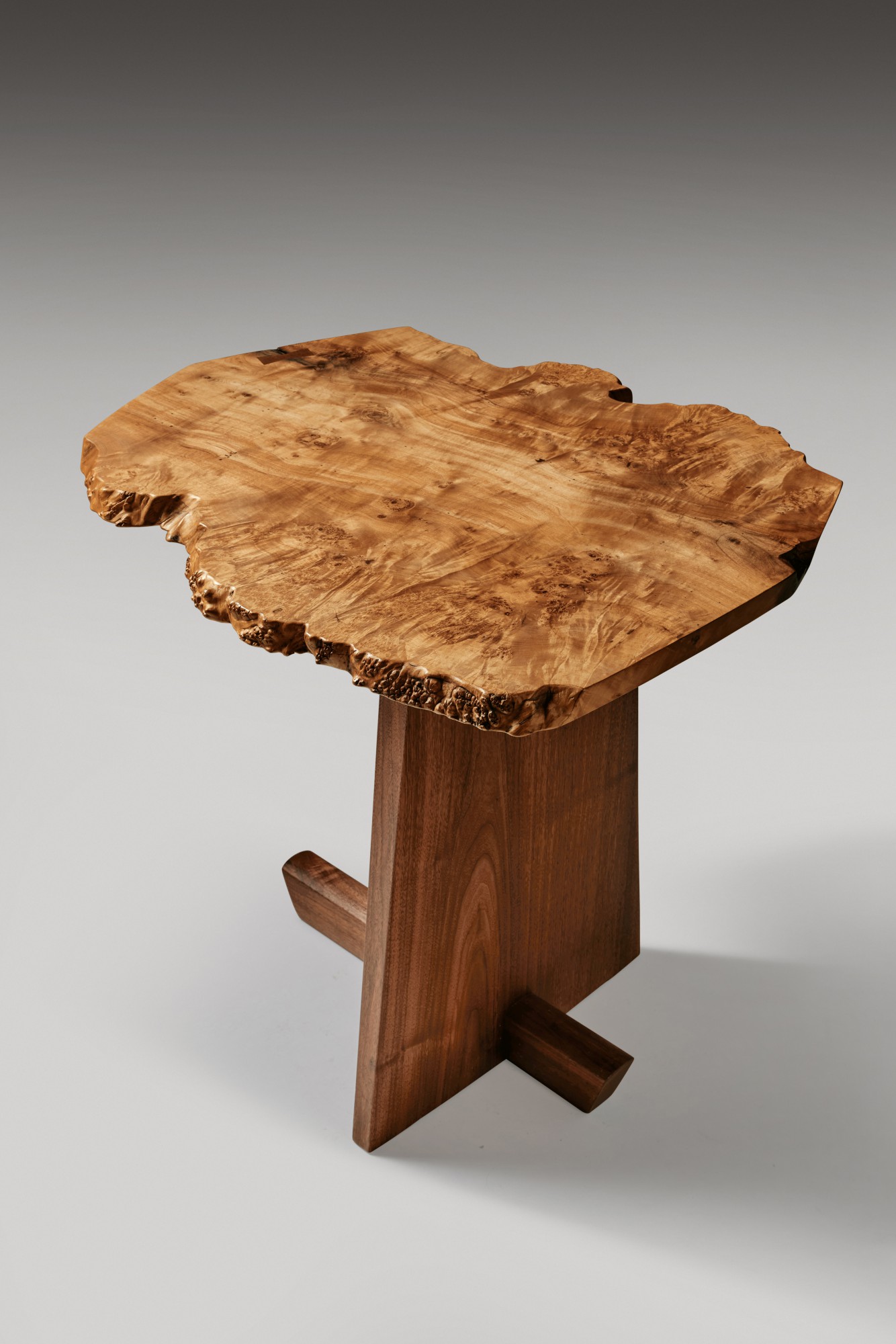
"Minguren I" Occasional Table
George Nakashima was born in 1905 in Spokane, Washington, to Japanese immigrant parents who carried with them a deep cultural inheritance even as they built a new life in the American Pacific Northwest. He pursued architecture at the University of Washington and later at MIT, where he earned his degree in 1930. His formative years took him far beyond American borders. He worked in Paris, and then spent time in Japan, where he encountered traditional Japanese joinery and the philosophy of mono no aware, the bittersweet awareness of impermanence that runs through so much of Japanese aesthetic life.
A period in India, where he worked with the Sri Aurobindo Ashram in Pondicherry, deepened his sense of spiritual purpose and introduced him to the guru Antonin Raymond, whose influence would prove decisive in his later architectural thinking. The defining crucible of Nakashima's life came during World War Two, when he and his family were incarcerated at the Minidoka War Relocation Center in Idaho. It was there, under circumstances of profound injustice, that a fellow internee named Gentaro Hikogawa taught him traditional Japanese woodworking by hand. The experience was transformative.
George Nakashima
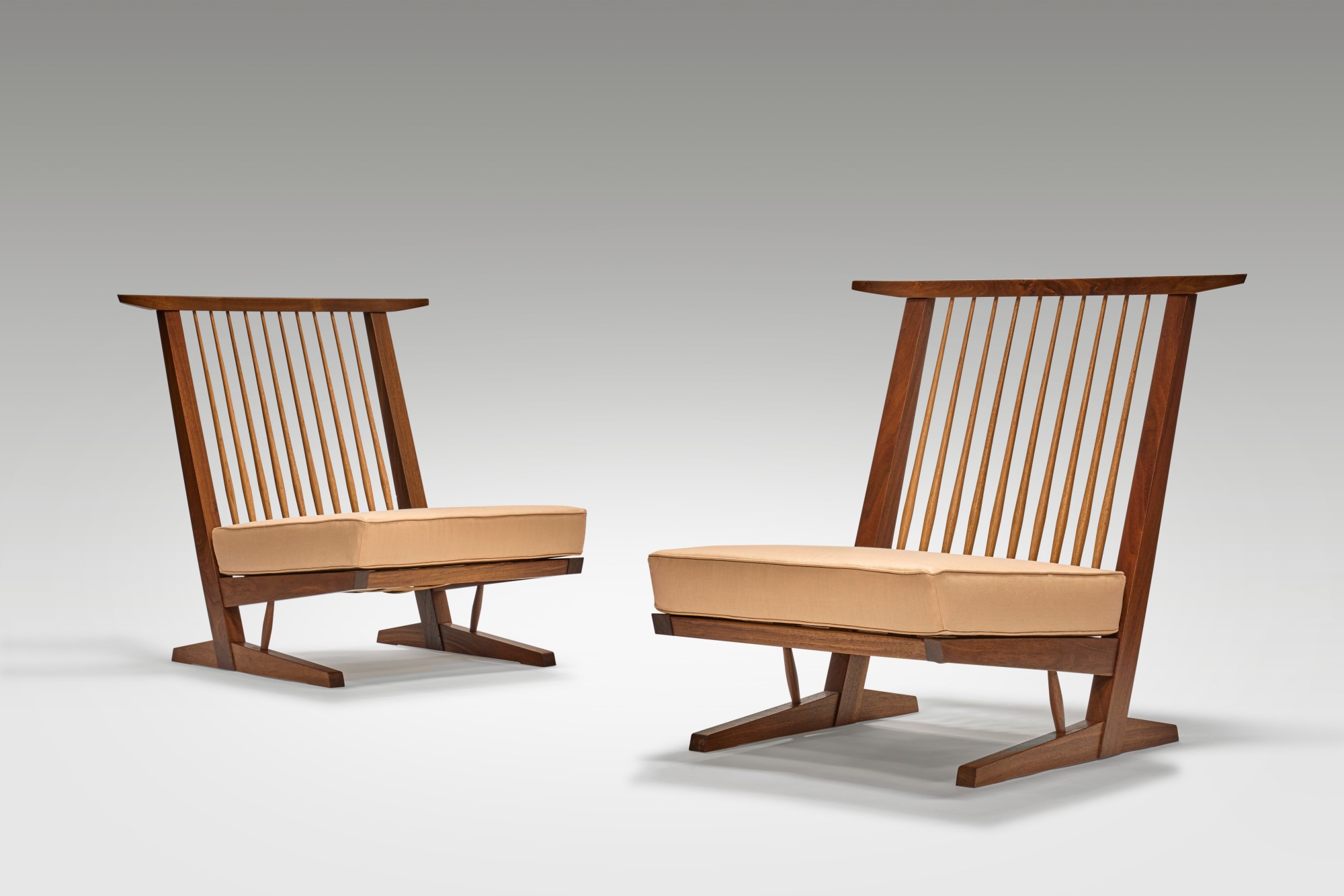
Pair of "Conoid Cushion" Chairs
Nakashima emerged from incarceration not with bitterness as his compass, but with craft as his calling. He settled in New Hope, Pennsylvania in 1943, building a studio and home that would remain the center of his practice for the rest of his life. That compound, with its cluster of hand built structures set among trees, was itself a statement of philosophy made tangible. Nakashima's artistic development unfolded as a patient and deeply personal conversation with timber.
“Each plank has only one ideal use. The woodworker must find it.”
George Nakashima, The Soul of a Tree, 1981
He sourced extraordinary slabs of American black walnut, English walnut, burled woods, and Indian rosewood from around the world, treating each piece as an individual entity with its own voice. His great innovation was not to disguise or correct the natural character of wood but to celebrate it. Voids and knots, the so called defects that conventional furniture makers would cut away, became focal points. His signature butterfly joints, those elegant bow tie shaped inlays that span cracks in a slab, function both structurally and aesthetically.
George Nakashima
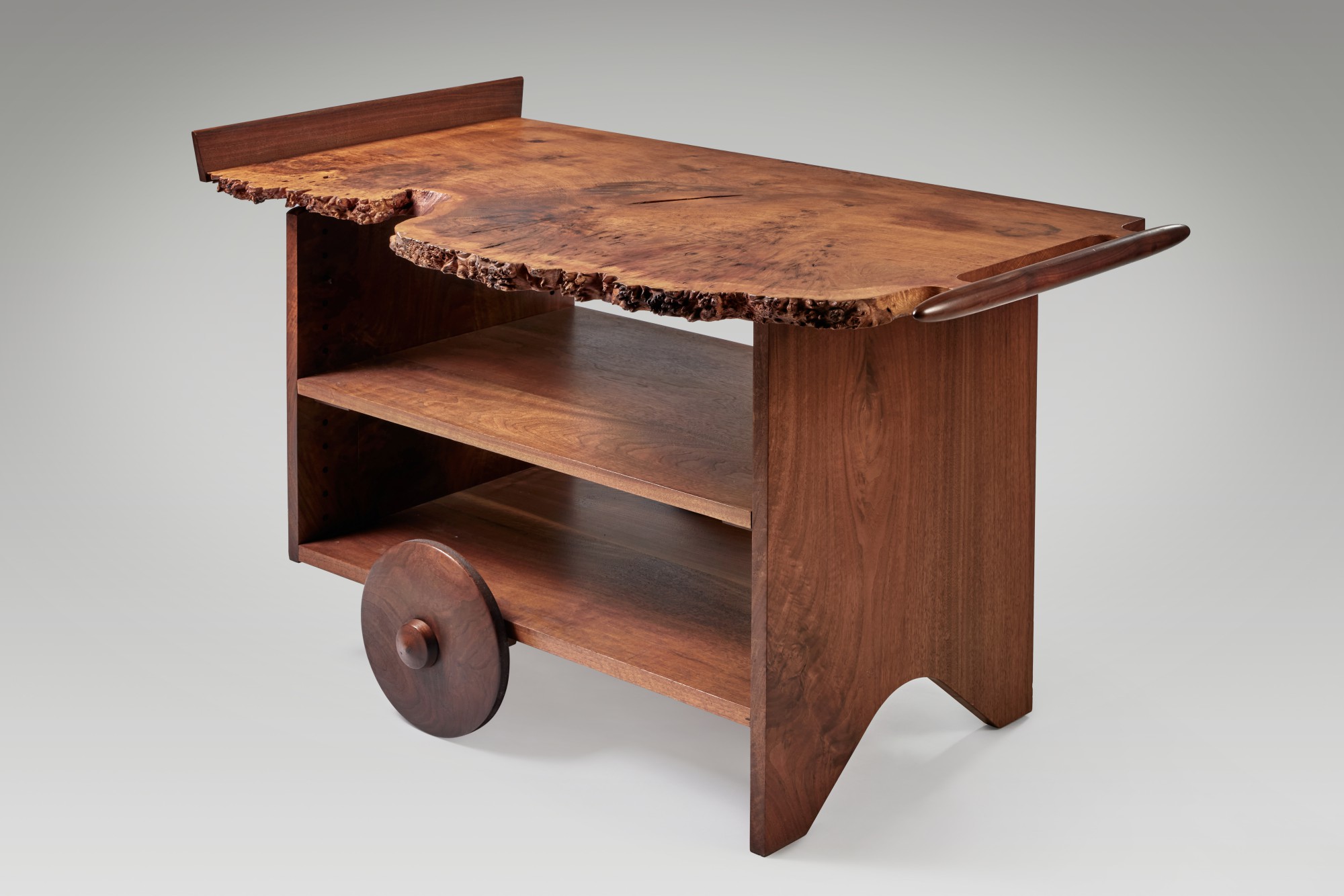
Rolling Cart
They are honest repairs, visible evidence of care, and they became one of the most recognized motifs in twentieth century American design. Among the works that define his contribution, the Minguren tables stand as perhaps the most eloquent. Named after a Japanese term for the free edge left on a slab, the Minguren series honors the organic outline of the wood rather than imposing a geometric form upon it. His Conoid chairs, with their cantilevered backs and tensioned rush or rope seats, represent a structural feat that doubles as sculpture.
The Conoid dining tables, engineered around a single concrete or wooden pedestal supporting a sweeping slab, feel simultaneously ancient and rigorously modern. Each of these works exists in a space between furniture and fine art, between utility and meditation. From a collecting perspective, Nakashima's work rewards close looking and patient acquisition. Pieces from his own studio, bearing his signature or studio marks and documentation, carry the strongest provenance.
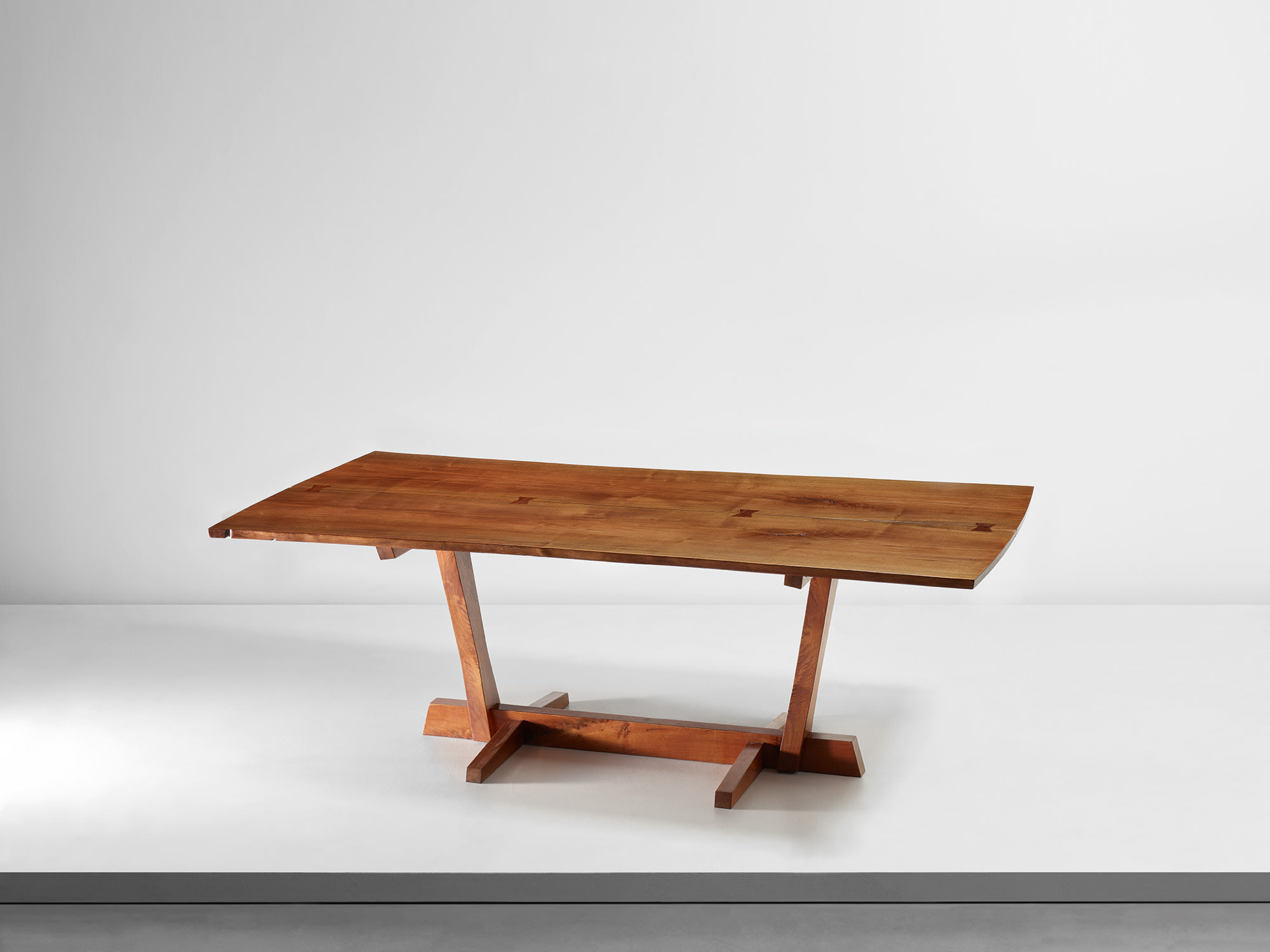
George Nakashima
'Conoid' dining table
Collectors should seek works in American black walnut and English walnut, as these represent the materials closest to his heart and most consistently present in his finest output. Rosewood accents, often used for butterfly joints or legs, add warmth and visual contrast that speaks to his cross cultural sensibility. Works that retain original documentation, receipts, or correspondence with the studio are especially valued, as Nakashima maintained meticulous records. Auction houses including Wright, Rago, and Christie's have each seen strong results for his furniture over the past decade, with top pieces regularly exceeding six figures.
To place Nakashima within art history is to situate him at a remarkable crossroads. He shares territory with the Arts and Crafts movement's reverence for the handmade, but his spare aesthetic owes just as much to Japanese Mingei folk art traditions and the teachings of Soetsu Yanagi. He is a contemporary in spirit of Sam Maloof, Wharton Esherick, and James Krenov, the constellation of artist craftsmen who together established furniture making as a serious discipline in postwar America. Like Esherick, who worked just miles away in Paoli, Pennsylvania, Nakashima insisted that the hand of the maker and the character of the material were both worthy of the same attention a painter gives to brushwork and pigment.
George Nakashima died in 1990, leaving behind a studio that continues to operate under the stewardship of his daughter Mira Nakashima, herself a skilled designer and architect. The New Hope property remains a place of pilgrimage for designers, collectors, and anyone who has ever stood in front of a great slab of walnut and felt something they could not quite name. His legacy is one of radical humility, a recognition that the most profound human made things often come from listening rather than imposing. In an era saturated with machine production and digital fabrication, that lesson carries a quiet urgency that only grows with time.
Explore books about George Nakashima

George Nakashima: Full Circle
Kevin Nakashima and Mira Nakashima
George Nakashima: Woodworker
Mira Nakashima

The Soul of a Tree: A Woodworker's Reflections
George Nakashima
George Nakashima: Nature, Form and Spirit
Mira Nakashima-Yarnall
Nakashima: Full Circle
Cara Greenberg
George Nakashima: Furniture
Witold Rybczynski