George Condo
George Condo: Painting the Glorious Human Condition
Artist Spotlight · The Collection Editorial
“I want to create a new kind of figure, one that doesn't exist in reality but feels completely real when you see it.”
George Condo, Interview Magazine
Few painters working today command the kind of sustained critical and cultural attention that George Condo has earned over four decades. His 2021 exhibition at Hauser and Wirth in London, "Worshippers of the Apocalypse," drew devoted audiences eager to stand before his monumental canvases and reckon with faces that seemed simultaneously ancient and urgently contemporary. That same year, works at auction continued to set records, with major paintings achieving prices well into the millions, confirming what collectors had understood for years: Condo is among the most important figurative painters of his generation. Born in Concord, New Hampshire in 1957, Condo grew up immersed in the cultural ferment of postwar America.
George Condo
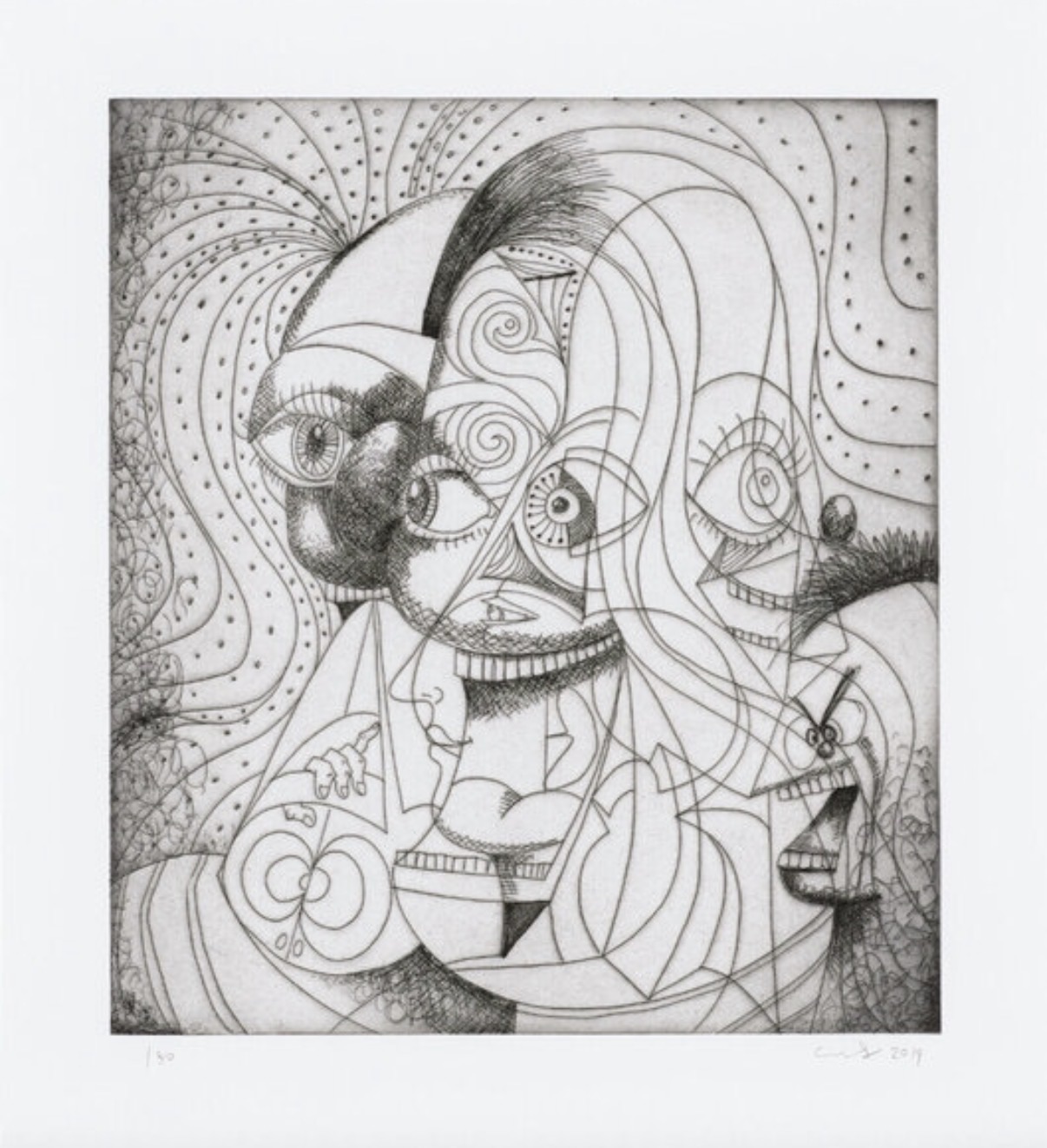
The Insane Clown, 2019
He studied at the University of Massachusetts Lowell, where an encounter with the history of Western painting began to shape his ambitions in ways that would eventually prove transformative. In the early 1980s, he moved to New York City, arriving at exactly the right moment, when the downtown art scene was crackling with energy and the possibilities for painting felt genuinely open. He worked briefly as an assistant to Jean Michel Basquiat and found himself embedded in a community that included Andy Warhol, an experience that instilled in him both a respect for art history and a healthy irreverence toward it. Condo spent a formative period living and working in Europe, particularly in Spain, where his absorption of the Old Masters deepened considerably.
He studied the techniques of Velázquez, El Greco, and Goya with the seriousness of an apprentice, learning how to build surfaces and model light with the patience those traditions demanded. But Condo was never content to simply revere what had come before. Instead, he began developing what he would come to call Artificial Realism, a practice that fused the technical rigor of pre modern European painting with a cast of distorted, psychologically unmoored figures drawn from his own invented universe. The result was something entirely his own: paintings that looked like they had been conjured from a tradition that never actually existed but felt compellingly familiar.
George Condo
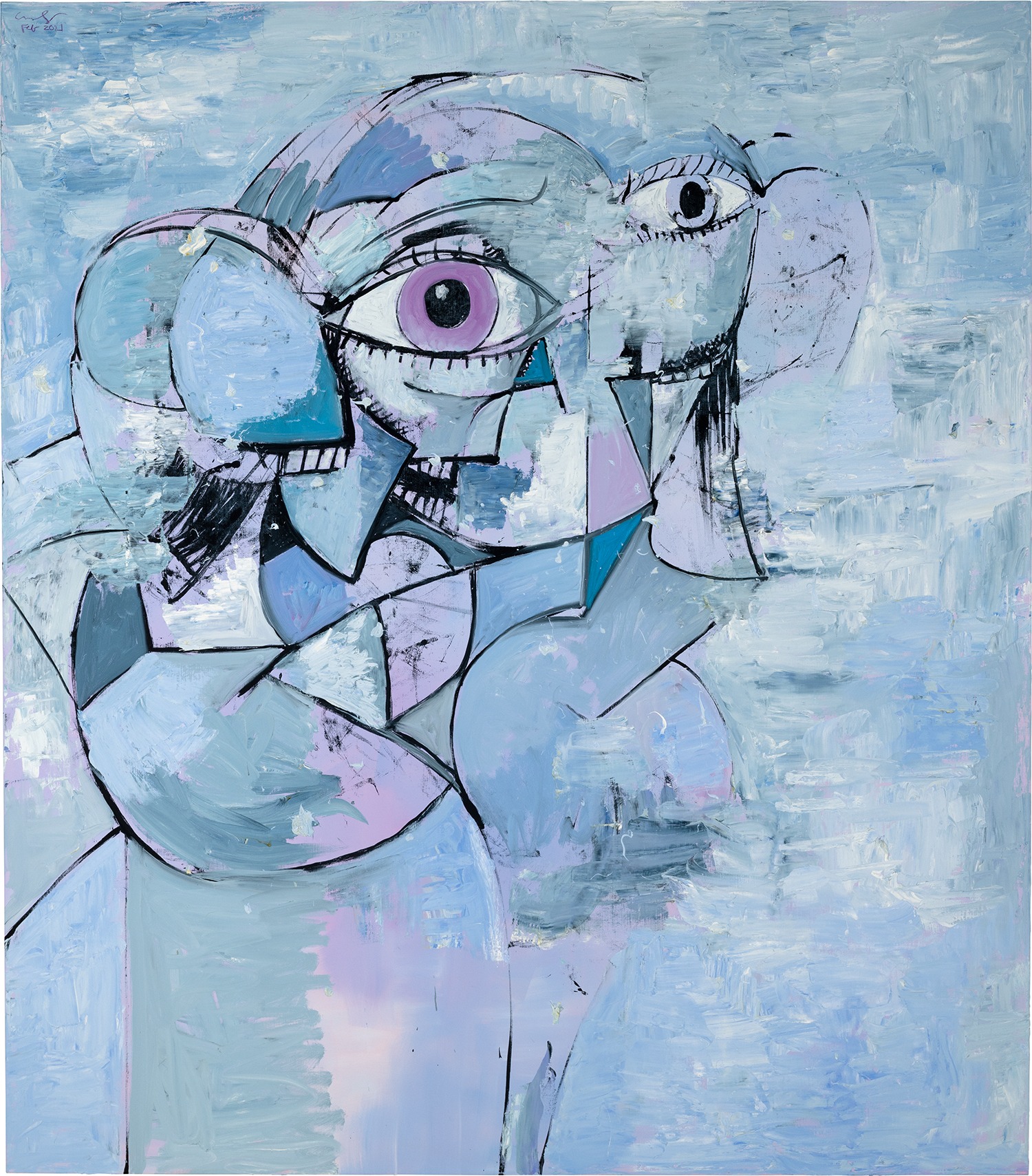
Blues In F
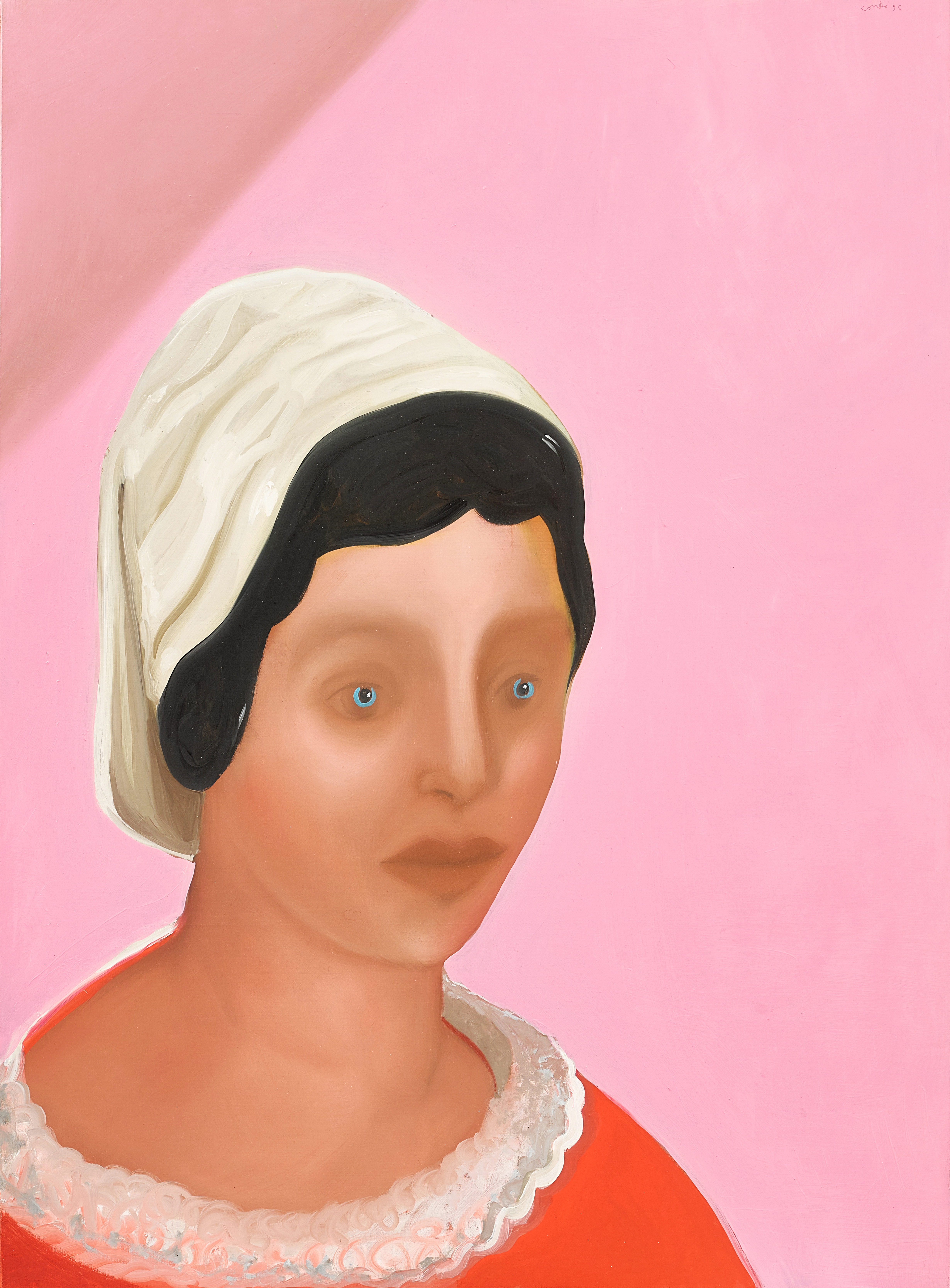
The figures that populate Condo's canvases are among the most recognizable presences in contemporary art. His portraits fracture the conventions of likeness, merging multiple perspectives within a single face, fragmenting expression into something that reads as joyful and terrifying at once. Works like "The Stockbroker" demonstrate his ability to locate the psychological interior of a social archetype, rendering ambition and anxiety as visible as brushstroke. Earlier paintings such as "The Queen" from 1984, executed in acrylic on canvas and displayed in the artist's own frame, show how fully formed his sensibility was even at the outset of his career.
“Artificial Realism is the realistic presentation of an artificial concept.”
George Condo
Works on paper, including delicate watercolours and fluid ink compositions, reveal a draughtsman of remarkable precision and wit, a side of his practice that collectors who focus on works on paper have been particularly rewarded by pursuing. Condo's cultural footprint extends well beyond the gallery world. In 2010, he created the artwork for Kanye West's album "My Beautiful Dark Twisted Fantasy," a collaboration that introduced his vision to a massive global audience and sparked genuine conversation about the relationship between fine art and popular culture. The album cover became one of the most discussed images of that year, and it brought a new generation of admirers to his paintings.
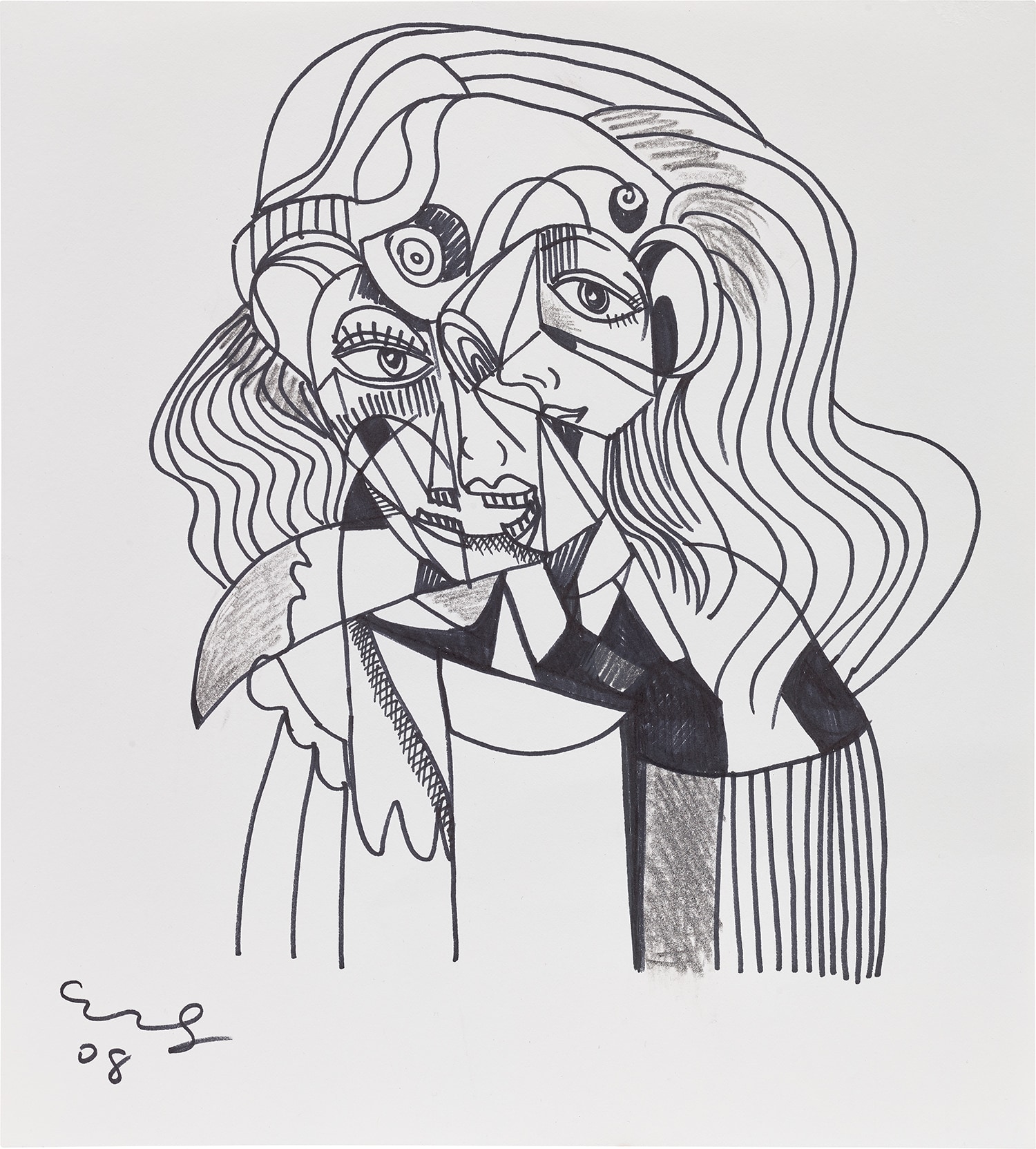
George Condo
felt tip pen and graphite on paper, 2008
Far from diluting his art world standing, the collaboration seemed to reinforce it, demonstrating the breadth and confidence of a vision that could operate fluidly across contexts without losing its essential character. For collectors, Condo's work offers an unusually rich range of entry points. His output spans large scale oils on canvas and linen, intimate works on paper in graphite, watercolour, and ink, as well as prints including etchings with drypoint that translate his imagery into a different register entirely. A work like "The Insane Clown" from 2019, an etching with drypoint on wove paper, rewards close attention as a demonstration of how completely his pictorial logic translates across media.
"Lion Man" from 2012, executed in acrylic, charcoal, and pastel on linen, exemplifies the layered surfaces and the tension between control and expressive freedom that characterize his mature work. Collectors who have built holdings across multiple media and periods have found that his works speak to one another with exceptional coherence, forming a world rather than simply a sequence of objects. Condo's place in the broader history of figurative painting is best understood in relation to artists who similarly wrestled with the legacy of portraiture and the question of what it means to render the human face honestly. His practice invites comparison with the psychological intensity of Francis Bacon, the raw emotional presence of Philip Guston in his late career, and the cartoon inflected figuration of Carroll Dunham.
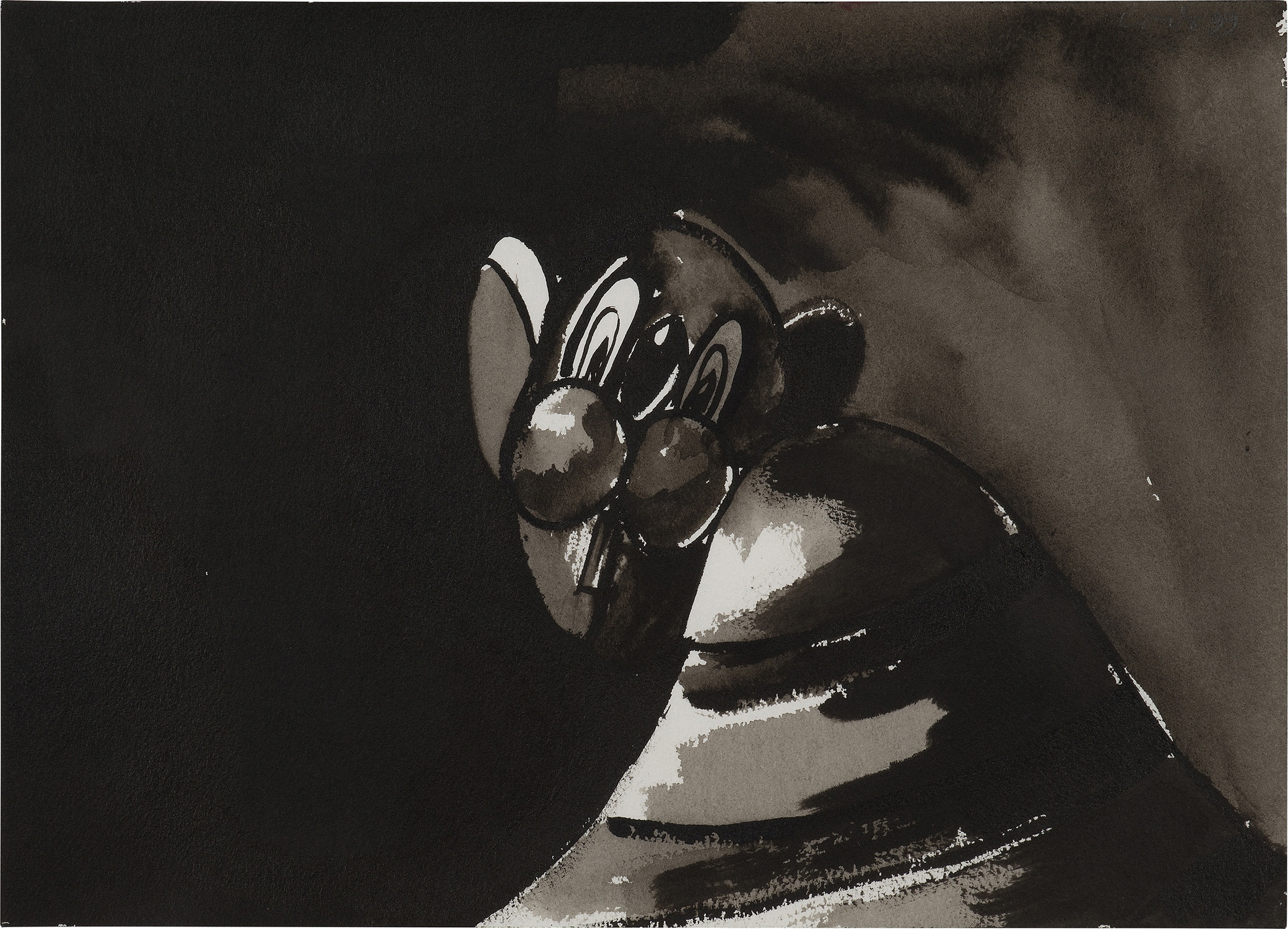
George Condo
Head, 1999
Yet Condo remains distinctly his own category, his Artificial Realism refusing easy categorization within any single lineage. His works are held by the Whitney Museum of American Art, the Museum of Modern Art, and the Solomon R. Guggenheim Museum in New York, an institutional endorsement that speaks to the seriousness with which the art historical establishment regards his contribution. What makes Condo so vital today, and so compelling as a collecting proposition, is the sense that his work addresses something permanent about what it means to be human in a fragmented, image saturated world.
His figures are distorted not because they are grotesque but because they are honest, showing the multiplicity of emotional states that any person carries at any given moment. There is genuine warmth in his vision even at its most unsettling, a humor and tenderness that prevents his paintings from ever becoming purely cold exercises in technique. As his reputation continues to grow and his institutional presence deepens, the opportunity to live closely with his work feels less like an act of speculation and more like an act of genuine cultural participation.
Explore books about George Condo