Genieve Figgis
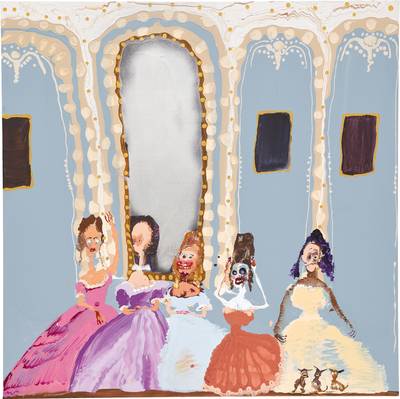
Genieve Figgis Transforms History Into Pure Joy
Artist Spotlight · The Collection Editorial
“I paint from a place of pure feeling. I am not trying to illustrate anything. I just want the painting to feel alive.”
Genieve Figgis
In recent years, few painters have captured the imagination of the contemporary art world quite like Genieve Figgis. Her work has moved steadily from cult fascination to institutional recognition, with solo exhibitions at galleries including Almine Rech in Paris, New York, and Brussels, and a growing presence in the permanent collections of serious institutions on both sides of the Atlantic. The Irish Museum of Modern Art in Dublin has championed her work with particular conviction, publishing a limited edition print of her Adam and Eve composition that stands as a testament to the esteem in which her home country holds her. To encounter a Figgis painting in person is to understand immediately why collectors and curators cannot stop talking about her.
Genieve Figgis
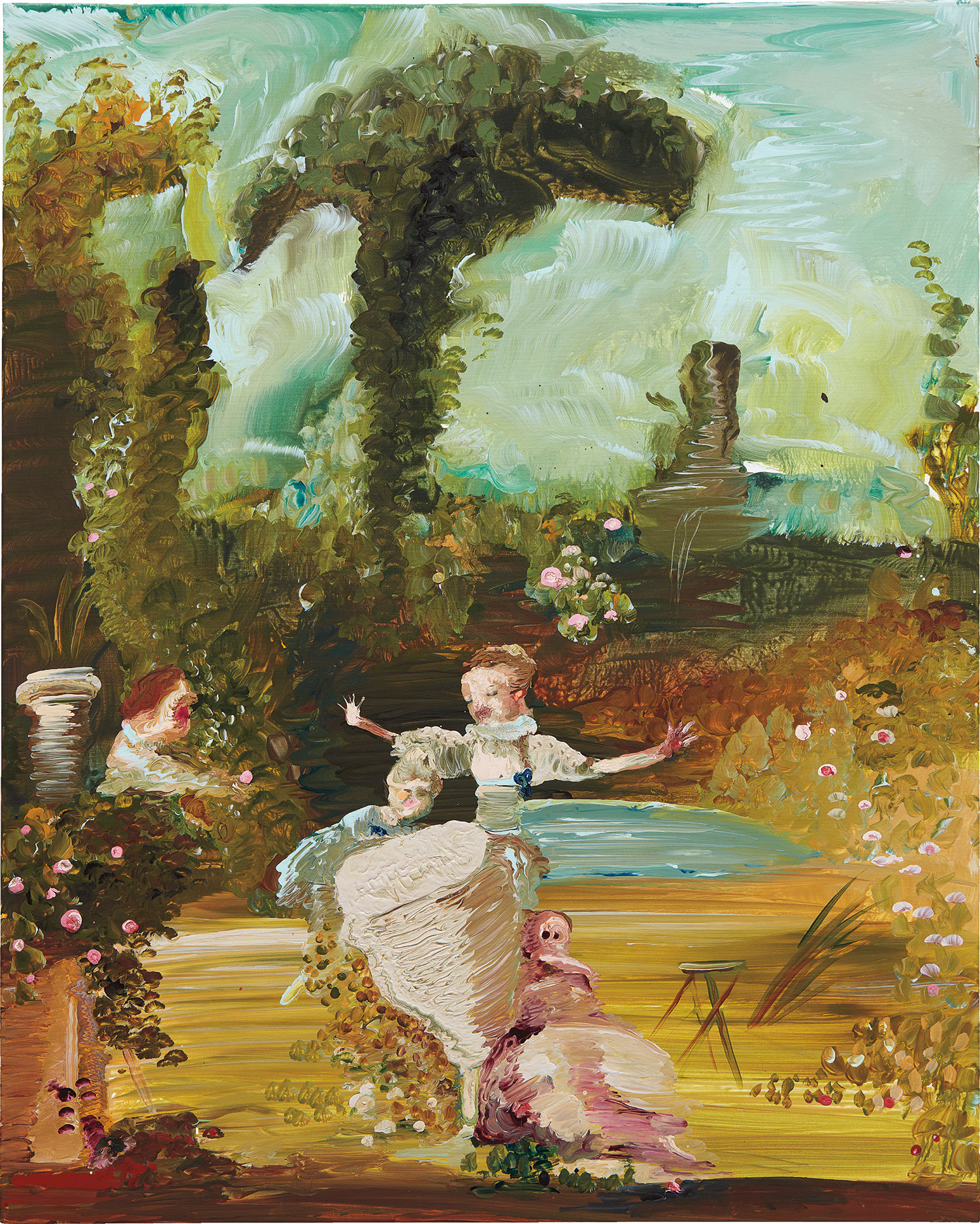
The pursuit (after Fragonard), 2018
Figgis was born in Dublin in 1972, and her path to painting was neither conventional nor straightforward. She came to her practice later in life, raising children and living in County Wicklow before committing fully to her art. This sense of arriving on her own terms, outside the usual art school pipeline, gives her work an urgency and a freedom that feels entirely self generated. Ireland itself, with its layered history of folklore, Catholic iconography, and ruined grandeur, seems to live somewhere in the marrow of her compositions, even when she is ostensibly painting after Fragonard or Watteau.
The breakthrough moment that the art world most often cites came in 2014, when the American painter Alex Katz encountered her work on Instagram and reached out directly to her. Katz connected her with Almine Rech Gallery, and from that point her career accelerated with remarkable speed. It is a story that has become something of a legend in contemporary art circles, not only because of what it says about Figgis but also because of what it says about this particular moment in art history, when social media collapsed the distance between a painter working quietly in rural Ireland and one of the most respected figures in American painting. The story feels right for her work, which has always been about finding something luminous in unexpected places.
Genieve Figgis
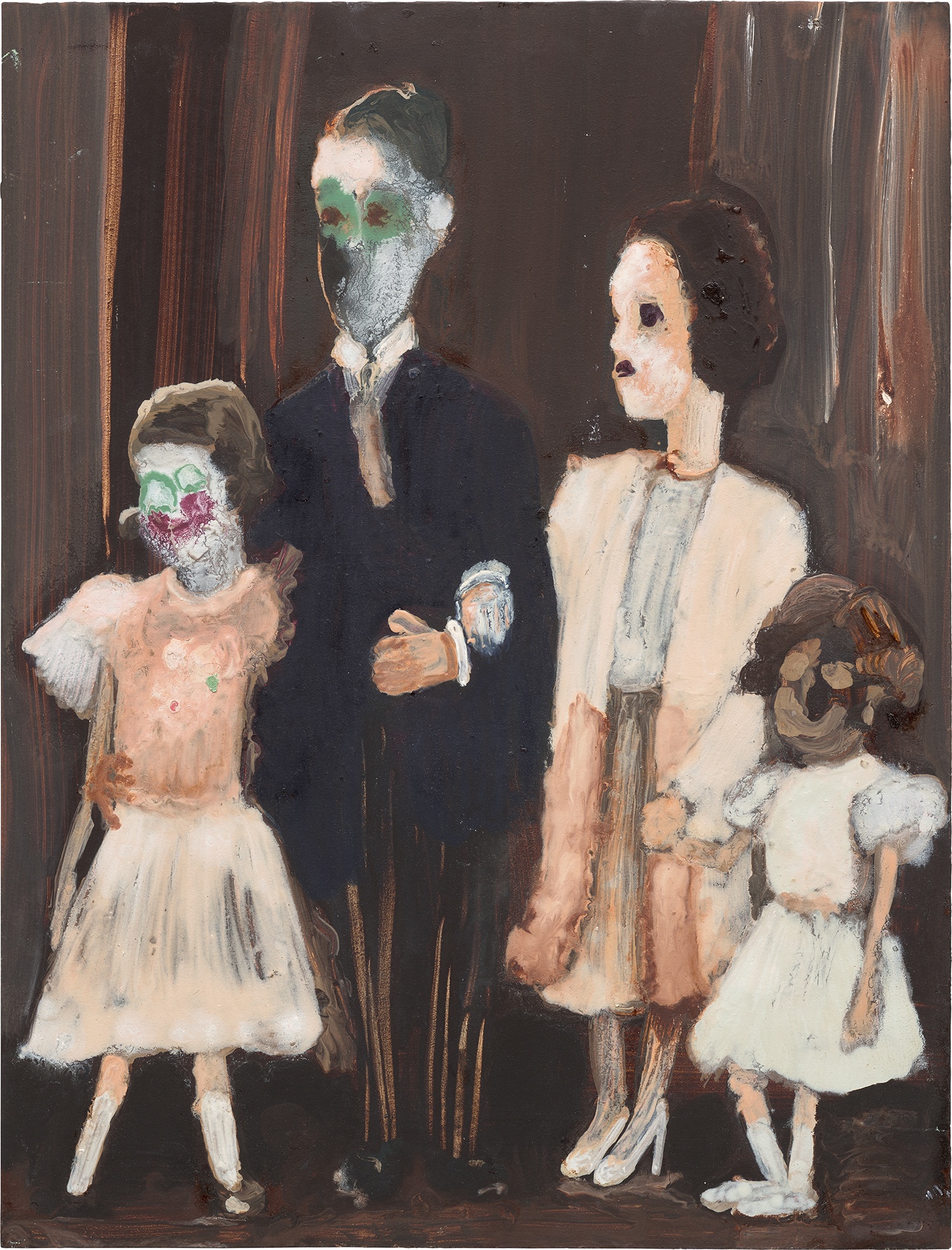
Family Portrait, 2013
Figgis works primarily in acrylic and oil, and her technique is deceptively complex. She layers paint with a looseness that reads at first as spontaneous, almost reckless, but rewards sustained looking with evidence of profound compositional control. Her figures dissolve at their edges, their features smeared into something between a smile and a grimace, their bodies melting into landscapes of dripping pigment. She gravitates toward the Rococo and the Gothic, those two great European traditions of excess and artifice, and she treats them not as subjects to be satirized but as genuinely beloved material to be reimagined.
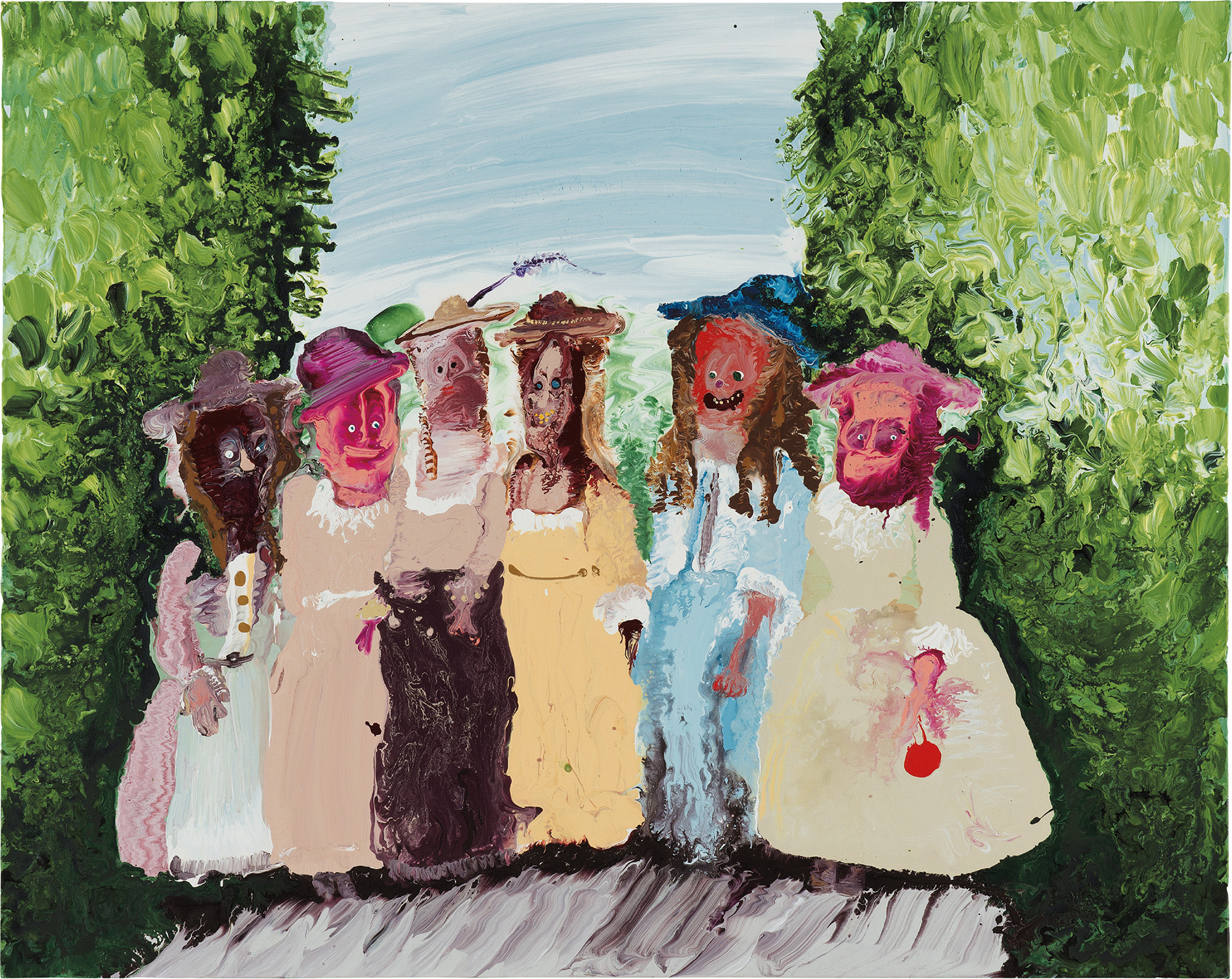
Works like The Pursuit, painted in 2018 after Fragonard's famous swing series, and Ladies Picnic from 2014, a reworking of Manet's Le Déjeuner sur l'herbe, show her in full command of this dialogue between art history and her own unmistakable vision. Among the works that collectors return to most consistently, Family Portrait from 2013 holds a special place. Painted on panel in acrylic, it distills everything that makes Figgis so distinctive: the grand domestic setting, the figures arranged in the manner of an eighteenth century conversation piece, and then the paint itself pulling everything toward dissolution and dream. Sunday Ladies from 2016 and Friends from 2015 operate in a similar register, gathering figures in social arrangements that feel simultaneously festive and uncanny.
Genieve Figgis
Sunday ladies, 2016
Bath Time from 2014, painted in oil on board, demonstrates her range, bringing an intimacy to the subject that echoes Degas while remaining entirely her own. Library and Arty Party, both from her extraordinarily productive mid decade period, show the consistency of her vision across different settings and moods. From a collecting perspective, Figgis represents a genuinely rare proposition: an artist whose work is both critically serious and deeply pleasurable to live with. Her paintings carry genuine art historical weight while also filling a room with color, energy, and a kind of warm strangeness that draws the eye back repeatedly.
Prices for her works at auction have risen steadily and reflect the growing recognition of her importance. Works on canvas and panel in her signature figurative mode are particularly sought after, and early works from 2013 and 2014 carry historical significance as documents of an emerging voice finding its full strength. Collectors who came to her early, drawn in by those first Almine Rech exhibitions, have seen their faith handsomely rewarded. In the broader context of contemporary painting, Figgis belongs to a generation of figurative artists who have reclaimed the pleasures of art historical reference without irony or apology.
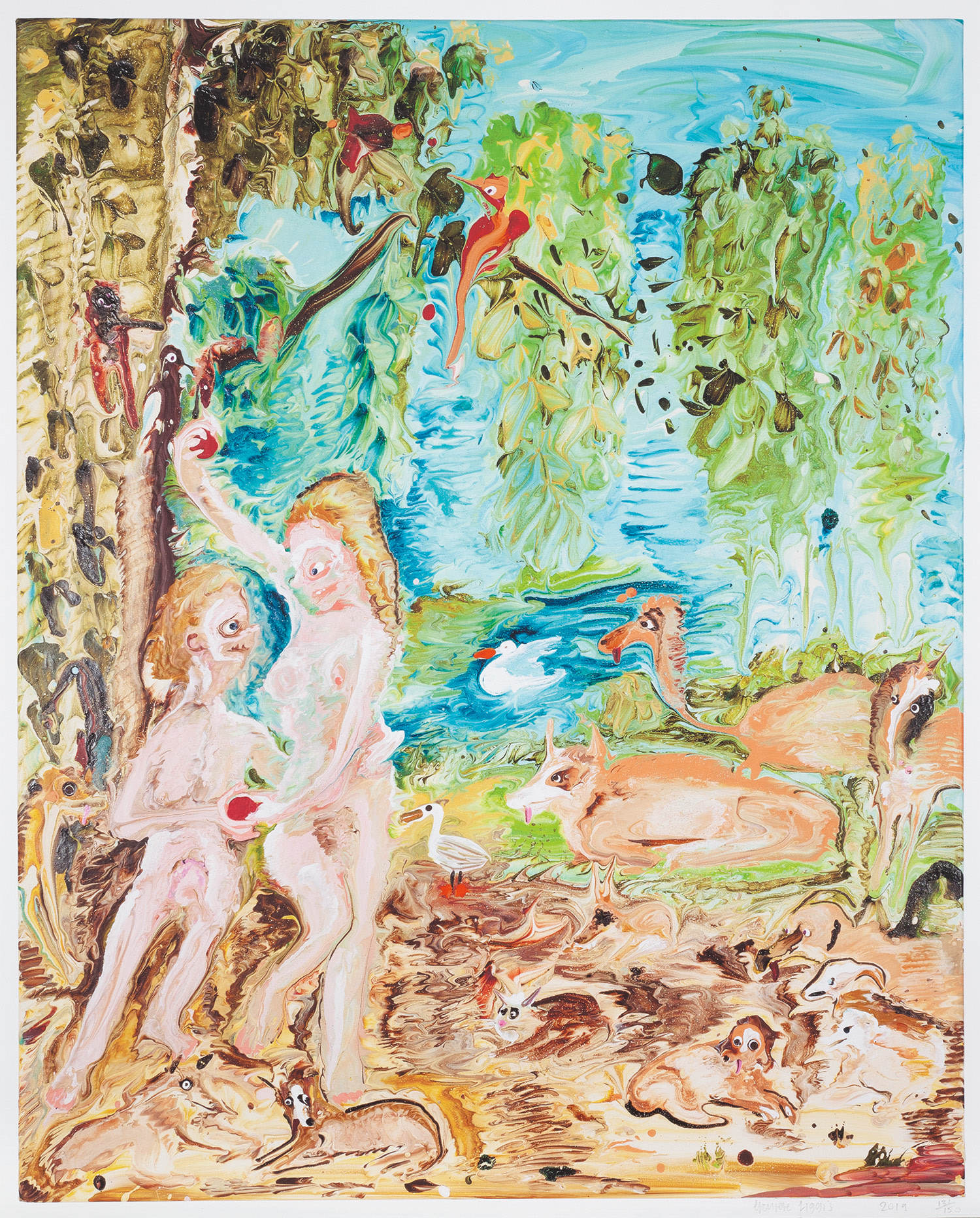
Genieve Figgis
Adam & Eve
She stands in productive conversation with painters like Cecily Brown, whose similarly loose handling of old master sources brought figuration back into serious critical conversation, and with Neo Rauch, whose dreamlike narrative spaces share something of Figgis's interest in figures caught between worlds. Closer to home, she connects to a tradition of Irish painters who have always maintained a particular relationship with myth, memory, and the uncanny. But her work ultimately resists easy categorization, which is precisely what makes it endure. The legacy of Genieve Figgis is still being written, and that is part of what makes collecting her work so compelling right now.
She has already secured her place in the story of contemporary painting, yet her practice continues to evolve with each new body of work. Her ability to make something genuinely new from the most studied material in Western art history, to find in Fragonard and Gainsborough and the Gothic novel a living, breathing relevance for the present moment, speaks to an imagination that operates at a rare frequency. For collectors who want to engage with painting at its most vital and most joyful, Genieve Figgis is essential.