Gaetano Pesce

Gaetano Pesce, the Poet of Purposeful Form
Artist Spotlight · The Collection Editorial
“I wanted to give each piece a soul, because I believe that objects should have a personality, like people do.”
Gaetano Pesce, Interview with Domus
In the months following his passing in April 2024, the design and art world paused to take full measure of what Gaetano Pesce had given it. Memorial tributes appeared in institutions from the Centre Pompidou in Paris to the Museum of Modern Art in New York, where his work has long held a permanent place in the collection. Retrospective attention flooded auction houses and galleries alike, as collectors and curators scrambled to articulate what had always been quietly understood: Pesce was not merely a designer. He was one of the most original and humanistic creative minds of the twentieth and twenty first centuries, and his objects, charged with personality and political feeling, feel more urgent now than ever.
Gaetano Pesce
Come Stai? Chair (grouping of three), 2022
Born in La Spezia on the Ligurian coast in 1939, Gaetano Pesce came of age in a postwar Italy still reimagining itself. He grew up between Padua and Florence, two cities whose artistic and intellectual traditions could not be more different in temperament, and this dual formation left a permanent mark on his sensibility. Florence gave him the weight of history, the seriousness of craft, and an understanding of the body in space. Padua, with its university culture and northern practicality, gave him rigor and curiosity.
He studied architecture at the University of Venice in the 1950s and early 1960s, where he encountered the radical ideas that were reshaping Italian design from the inside out. The 1960s were a crucible for Pesce. He became associated with the Italian radical design movement, a loose constellation of architects and designers who rejected the sleek functionalism of mainstream modernism in favor of work that was personal, political, and often provocative. He was a founding member of Gruppo N, an early collective interested in perception, kinetics, and the psychological dimensions of form.
Gaetano Pesce
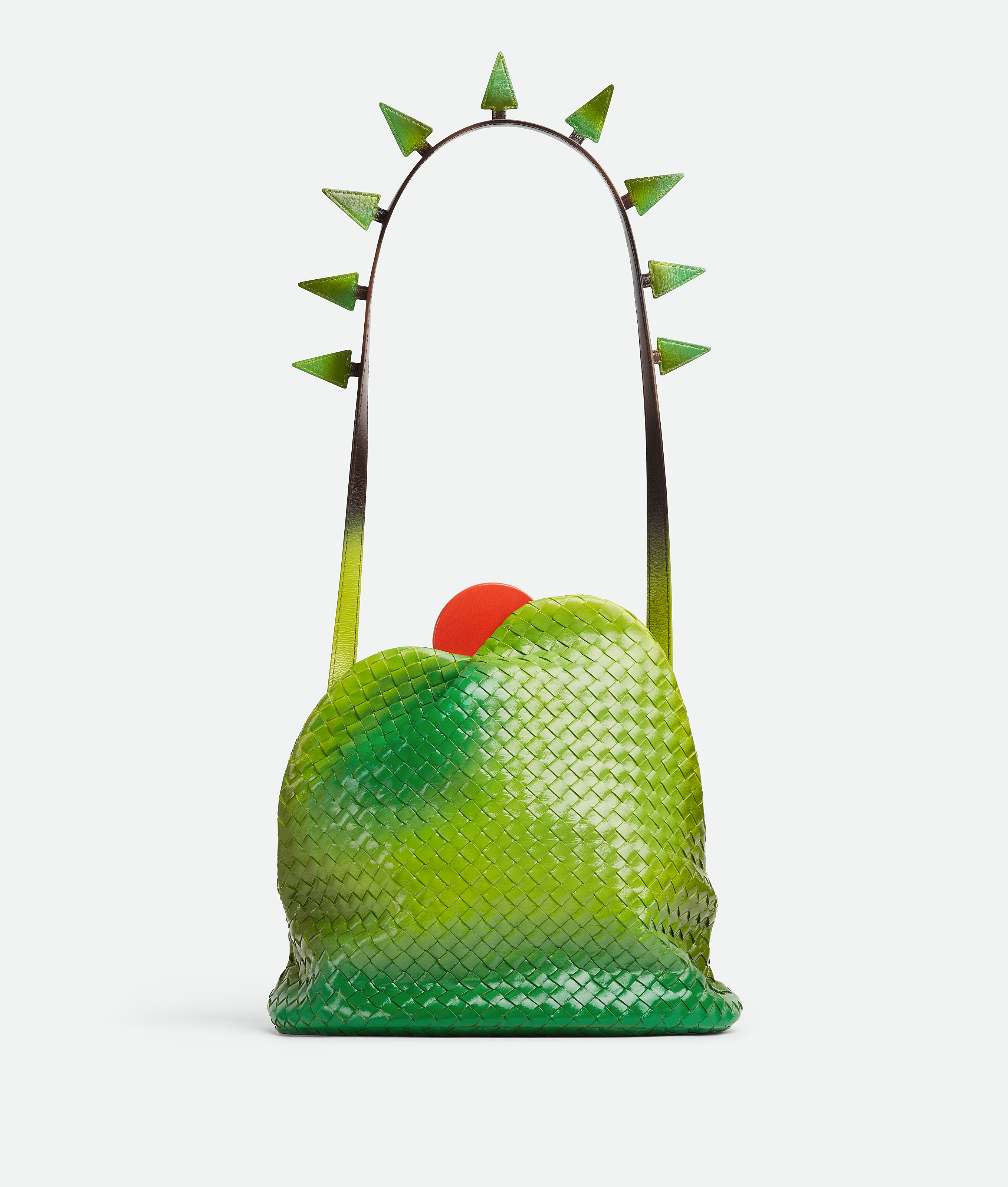
My Dear Mountains Bag, 2023
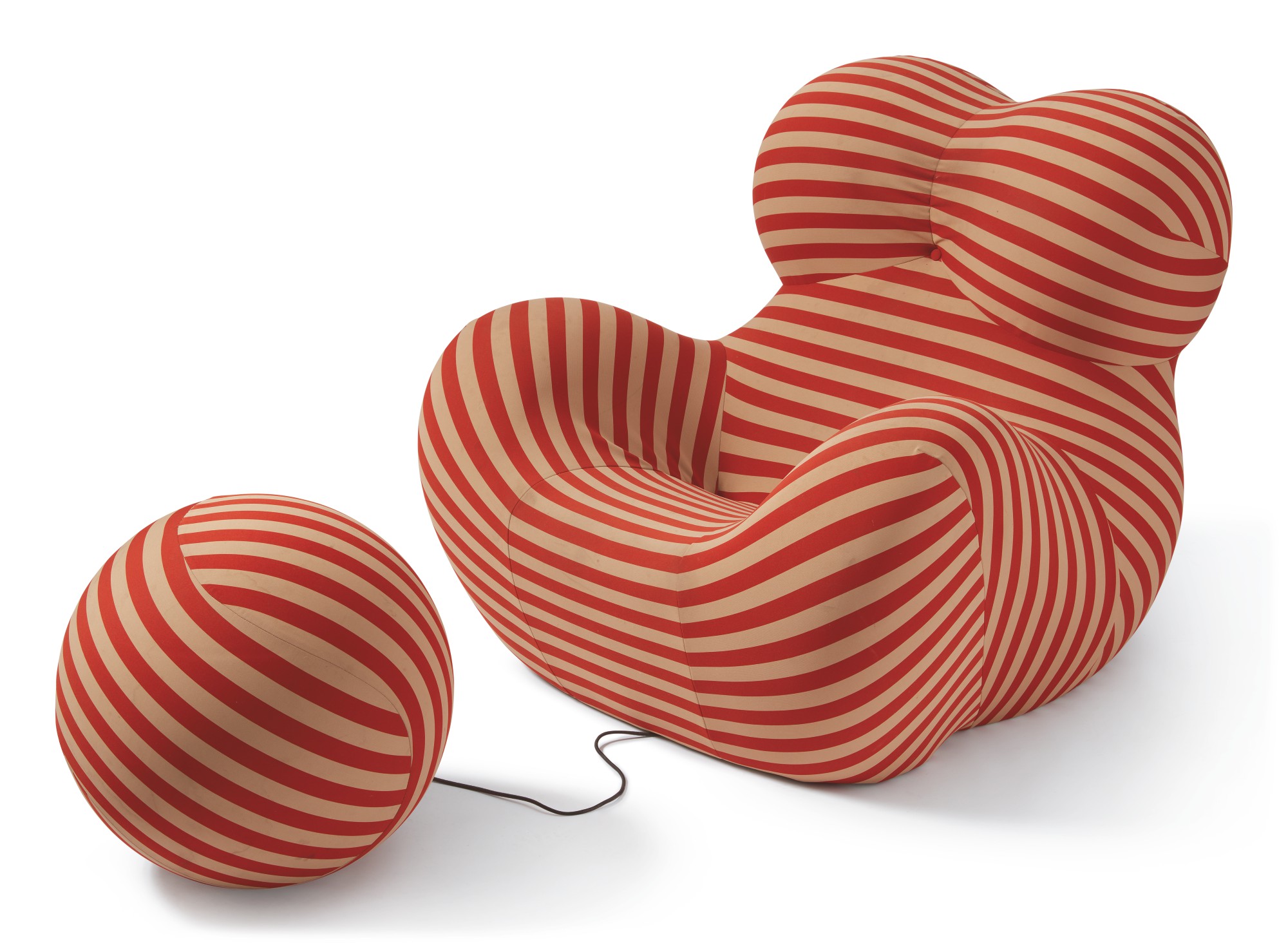
This background in visual research and conceptual inquiry shaped everything that followed, giving his practice a philosophical depth that set it apart from the decorative ambitions of many contemporaries. While others were refining surfaces, Pesce was asking what objects could mean and who they could speak for. The work that announced him to the world arrived in 1969, when B&B Italia produced his UP Series, a group of chairs and ottomans that would become among the most celebrated furniture designs of the twentieth century. The UP5 Donna chair, shaped like a generous, rounded female form, was paired with the UP6 ottoman, a ball tethered to the seat by a cord.
“Imperfection is a form of freedom.”
Gaetano Pesce
Pesce intended the piece as a statement about the confinement of women, about the ways in which society kept them bound. The chairs were vacuum packed and sold compressed in flat boxes, expanding dramatically when opened, which Pesce described as a kind of liberation. The conceptual layers were as rich as the visual ones, and the design world took notice. The UP Series was reissued by B&B Italia in 1973 and again later, each edition finding new collectors and new relevance in a changing cultural moment.
Gaetano Pesce
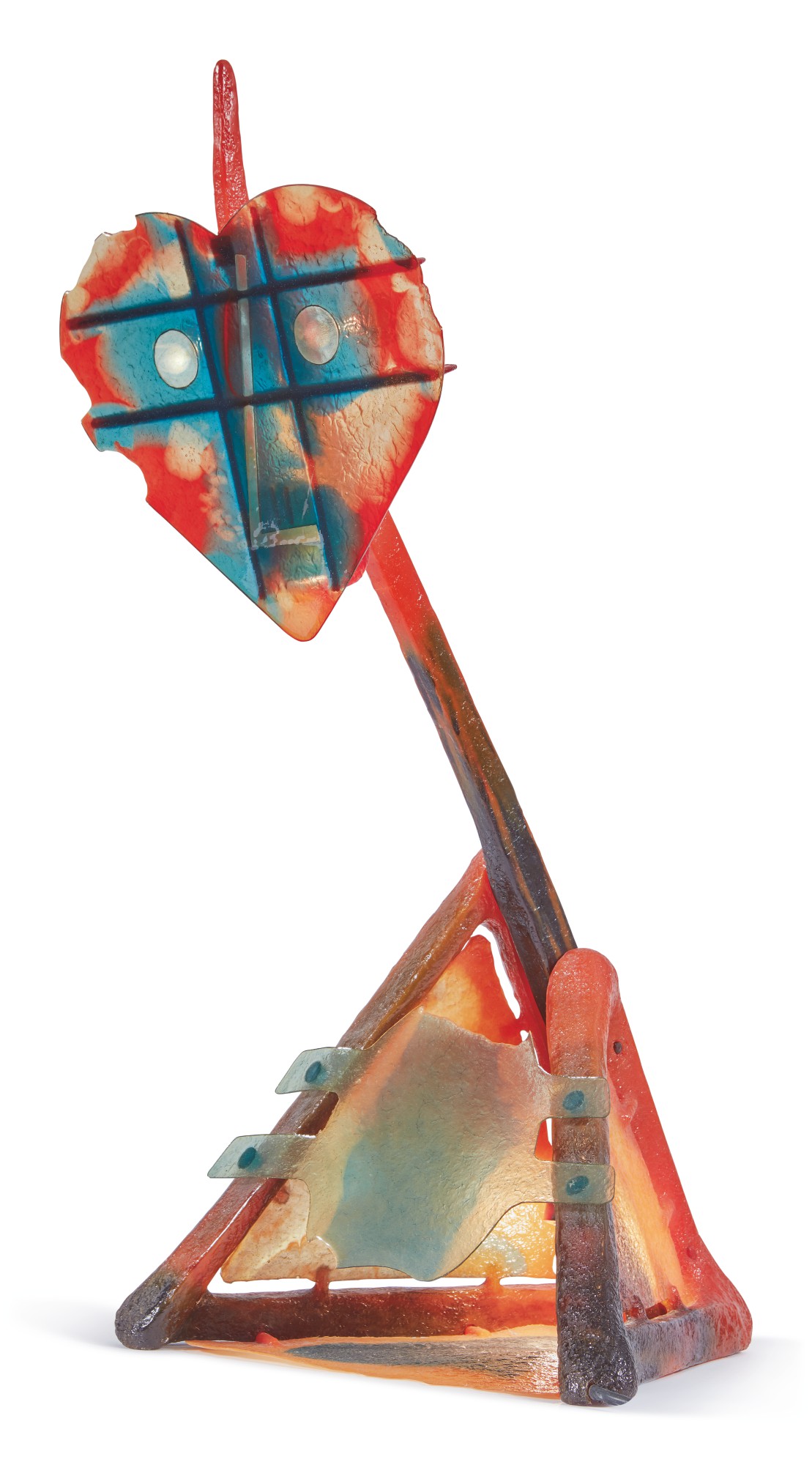
"olo" Table Lamp
Over the following decades, Pesce developed an unmistakable material language centered on resin, polyurethane foam, and experimental casting techniques. He embraced irregularity as an aesthetic and ethical position, arguing that industrial production need not mean uniformity, that machines could serve individual expression rather than suppress it. His use of color was exuberant and deliberate, layering hues within translucent resin forms so that light itself became part of the composition. The Olo Table Lamp, with its glowing polyresin body, exemplifies this approach: it is simultaneously a functional object, a sculptural presence, and a meditation on light and material.
The Nobody's Perfect Side Table pushes further, its poured resin surface deliberately uneven, a manifesto against the tyranny of the flawless finish. His later works, produced well into his eighties, showed no diminishment of invention. The Come Stai Chair from 2022, presented as a grouping of three resin pieces in a tricolor arrangement, reads as both a greeting and a gesture of collective warmth. The title, which translates simply as how are you, is characteristic of Pesce at his most tender: furniture as social ritual, as human acknowledgment.
Gaetano Pesce
"up-5 Donna" Chair And "up-6" Ottoman
The My Dear Mountains Bag from 2023 arrived among his final works, a supple and sculptural object that blurred the line between accessory and artwork with the ease of someone who had long since stopped recognizing that boundary as meaningful. For collectors, the appeal of Pesce's work operates on several levels simultaneously. There is the intellectual pleasure of objects that reward close reading, that contain arguments and histories within their forms. There is the sensory pleasure of his materials, the warmth of resin in afternoon light, the surprising softness of his upholstered pieces, the chromatic confidence of his palettes.
And there is the rarity factor: because Pesce insisted on variation and imperfection as features rather than flaws, no two pieces from his resin editions are identical, which means that every collector owns something genuinely singular. His work appears regularly at Phillips, Christie's, and Wright auction house in Chicago, where the UP Series pieces in particular have achieved strong results, with early production examples from B&B Italia commanding significant premiums. The market for his later resin works continues to develop, and informed advisors are watching carefully. Pesce belongs to a generation of Italian visionaries that includes Ettore Sottsass, Alessandro Mendini, and Andrea Branzi, all of whom used design as a vehicle for cultural criticism and personal expression.
Like Sottsass, he understood decoration as meaning rather than ornament. Like Mendini, he was drawn to the emotional and symbolic dimensions of everyday objects. But Pesce's voice was always his own, warmer and more bodily than Sottsass, more structurally rigorous than Mendini, and more explicitly political than either. He spent significant years in New York, where he taught at Columbia University and Parsons School of Design, and his engagement with American urbanism and counterculture added yet another layer to an already complex creative biography.
What remains, and what collectors and institutions are now working to fully document, is a body of work that insists on the humanity of the designed object. Pesce believed that chairs and lamps and tables could carry memory, express solidarity, and speak to the condition of living in a body in a society at a particular moment in history. He made furniture that asked how are you and meant it. He made lamps that glowed like living things.
He made bags that looked like landscapes and chairs that looked like embraces. The best of his work does what only the rarest art manages: it makes the person in its presence feel recognized. That is a legacy worth collecting, worth studying, and worth celebrating for a very long time to come.
Explore books about Gaetano Pesce
Gaetano Pesce
Germano Celant
Gaetano Pesce: A Retrospective
Paul Goldberger

Gaetano Pesce: A Life Manifesto
Gaetano Pesce, with essays by various authors
Pesce: Visions and Revisions
Cynthia Davidson

Gaetano Pesce: Works and Projects
Alessandro Mendini
The Poetics of Gaetano Pesce
Vittorio Magnago Lampugnani