Gabriel Kuri
Gabriel Kuri Finds Poetry in the Everyday
Artist Spotlight · The Collection Editorial
When Gabriel Kuri placed a supermarket receipt alongside a finely hewn stone, he was doing something quietly radical. He was insisting that the language of value, the kind printed in smudged thermal ink and discarded without thought, deserved the same contemplative attention we bring to sculpture, to painting, to the monuments we build in bronze. That instinct has guided one of the most consistently compelling practices to emerge from Mexico and Europe over the past three decades, and today Kuri stands as a pivotal figure in the conversation about what objects mean, what exchange costs us, and how beauty survives in the margins of commerce. Kuri was born in Mexico City in 1970, and the layered, contradictory energy of that city, its baroque extravagance alongside brutal economic disparity, left a permanent mark on his sensibility.
Gabriel Kuri
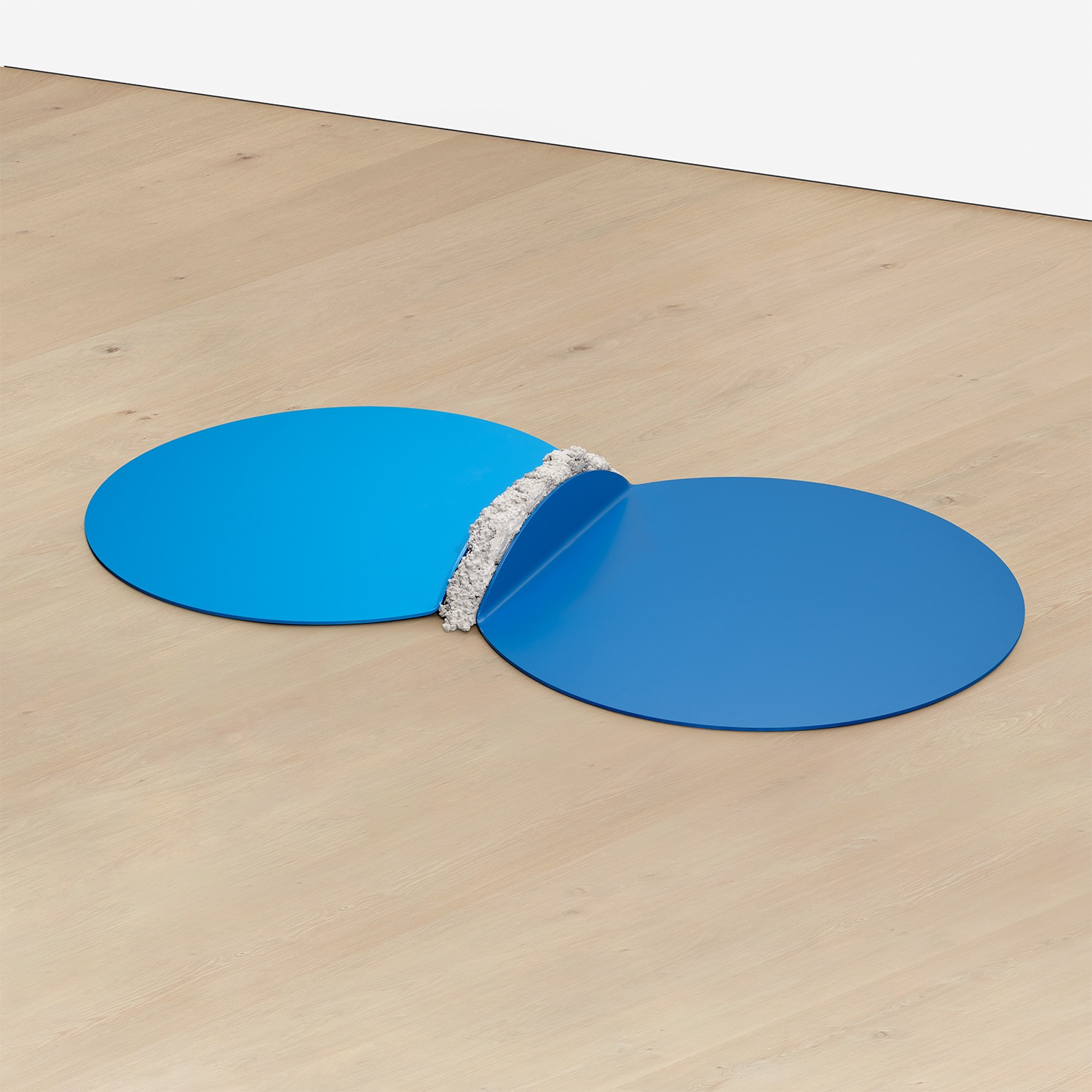
rr, 2012
He studied at the Escuela Nacional de Artes Plásticas in Mexico City before moving to London to attend Goldsmiths College, where he earned his MA in the early 1990s. Goldsmiths at that moment was arguably the most charged art school environment in the world, producing the generation of British artists who would reshape contemporary art through the decade. Kuri absorbed the conceptual rigor and institutional critique that filled those studios, but he filtered it through a distinctly Mexican attunement to material culture, folk craft traditions, and the poetics of the everyday object. His development as an artist took shape across two continents, spending formative years between Mexico City and Belgium, where he eventually settled in Brussels.
That transatlantic position gave his practice a particular kind of double vision. He could see consumer culture as both a native speaker and a skeptical outsider, someone who understood the seductions of retail environments and the ideological weight carried by something as mundane as a price tag or a loyalty coupon. This is not work that lectures or moralizes. Instead it observes, with patience and even affection, the rituals by which modern life assigns and reassigns worth.
Gabriel Kuri
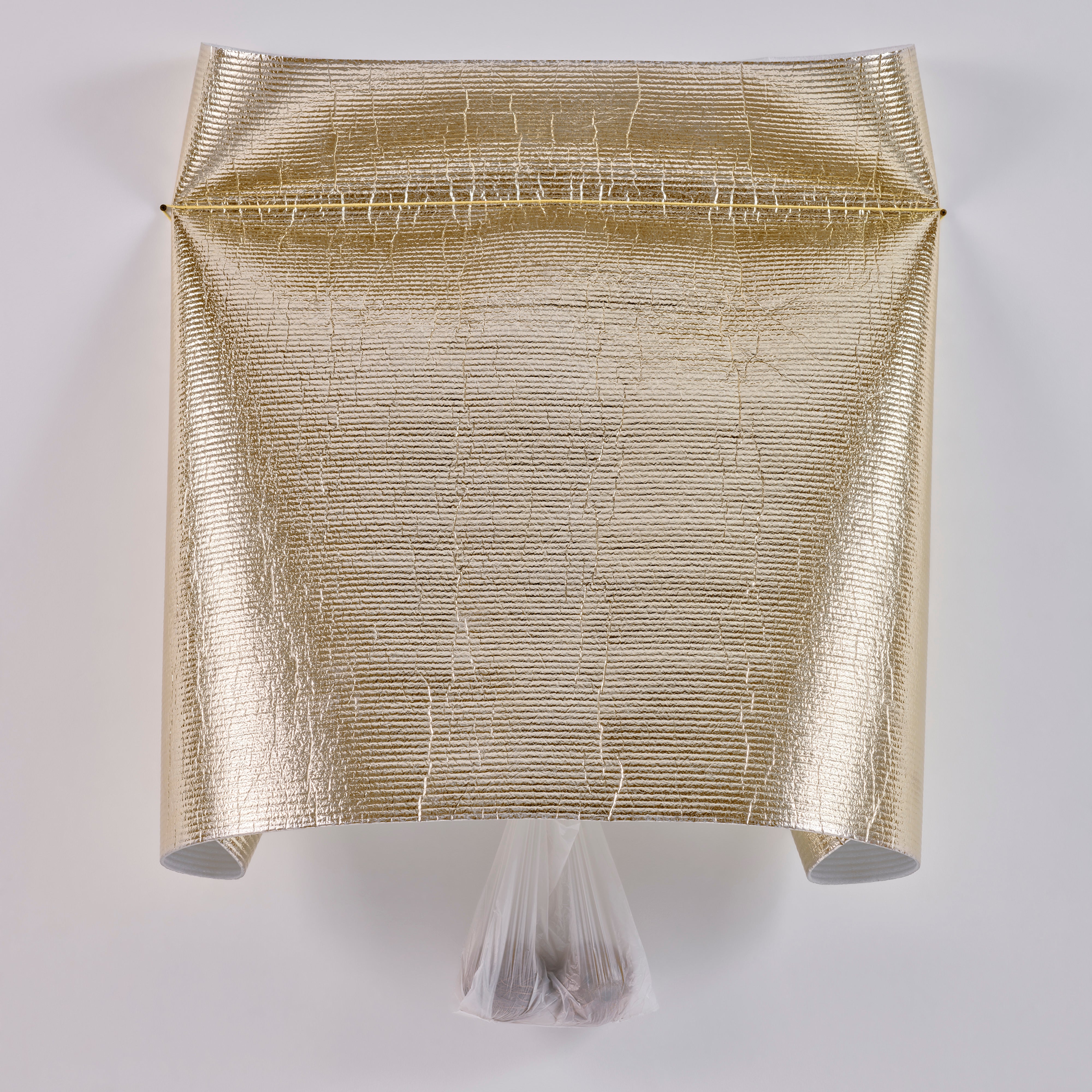
Retention and Flow Chart No. 03, 2009
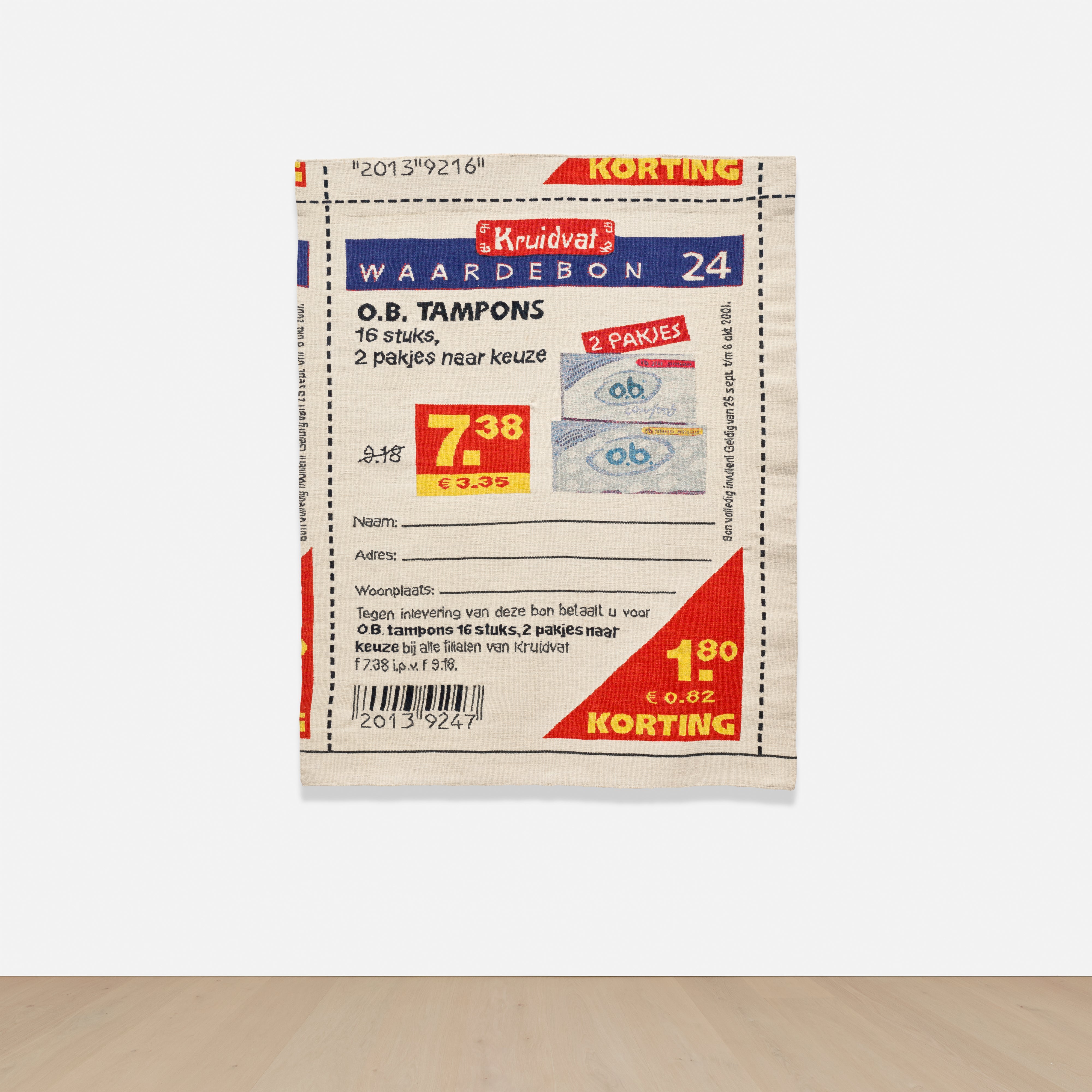
The works that brought Kuri to wider international attention in the 2000s demonstrated an almost architectural sense of composition combined with genuine conceptual surprise. "Tampon Coupon," created in 2003, exemplifies his ability to short circuit expectation. The work takes a promotional coupon, a piece of throwaway commercial ephemera, and translates it into a handwoven wool Gobelin tapestry. The craft is immaculate, the kind associated with European aristocratic interiors and museum collections.
The source material is absurdly disposable. The collision is not ironic in the cheap sense but genuinely philosophical, asking the viewer to sit with the discomfort of that gap and to wonder where exactly value resides. Also from 2003, "adhesive labels on newspaper" pursues a similar logic with even more economy, finding in the simplest act of marking and categorizing a whole world of meaning about how we organize information and assign hierarchy. By the time Kuri participated in the Venice Biennale, he had established himself as an artist whose work could hold its own in the most demanding international contexts.
Gabriel Kuri
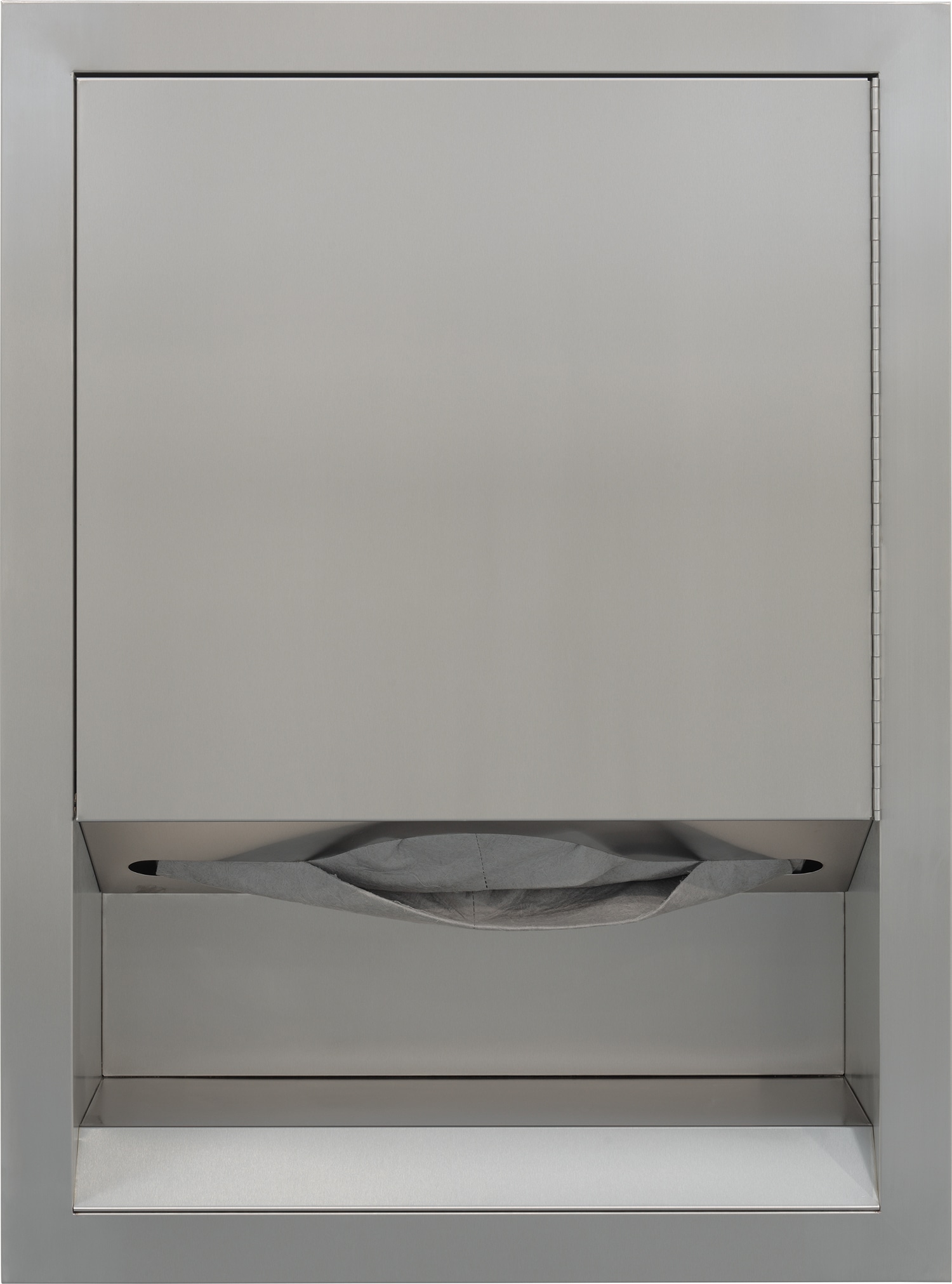
Waiting Box
His installations consistently reward sustained attention. Works like "Retention and Flow Chart No. 03" from 2009 carry the diagrammatic language of corporate management and economic modeling into a sculptural register that is both beautiful and slightly vertiginous. The "Waiting" series, including pieces such as "Waiting Box" and "Waiting Spent (07)," meditates on time as a material in its own right, the duration we surrender in checkout lines, in waiting rooms, in all the unmeasured hours that capitalism extracts from bodies without appearing on any balance sheet.
"rr" from 2012 continues this investigation with characteristic restraint, allowing shape and surface to carry an argument that words would only diminish. His "Tablero V," with its plastic board, felt lettering, and aluminum stand, carries the visual grammar of the announcement board into an object that reads simultaneously as readymade and as refined formal sculpture. The collecting world has long recognized something durable and important in Kuri's practice. Tate holds his work, as do major European institutions, a testament to the seriousness with which museums have engaged his ideas.
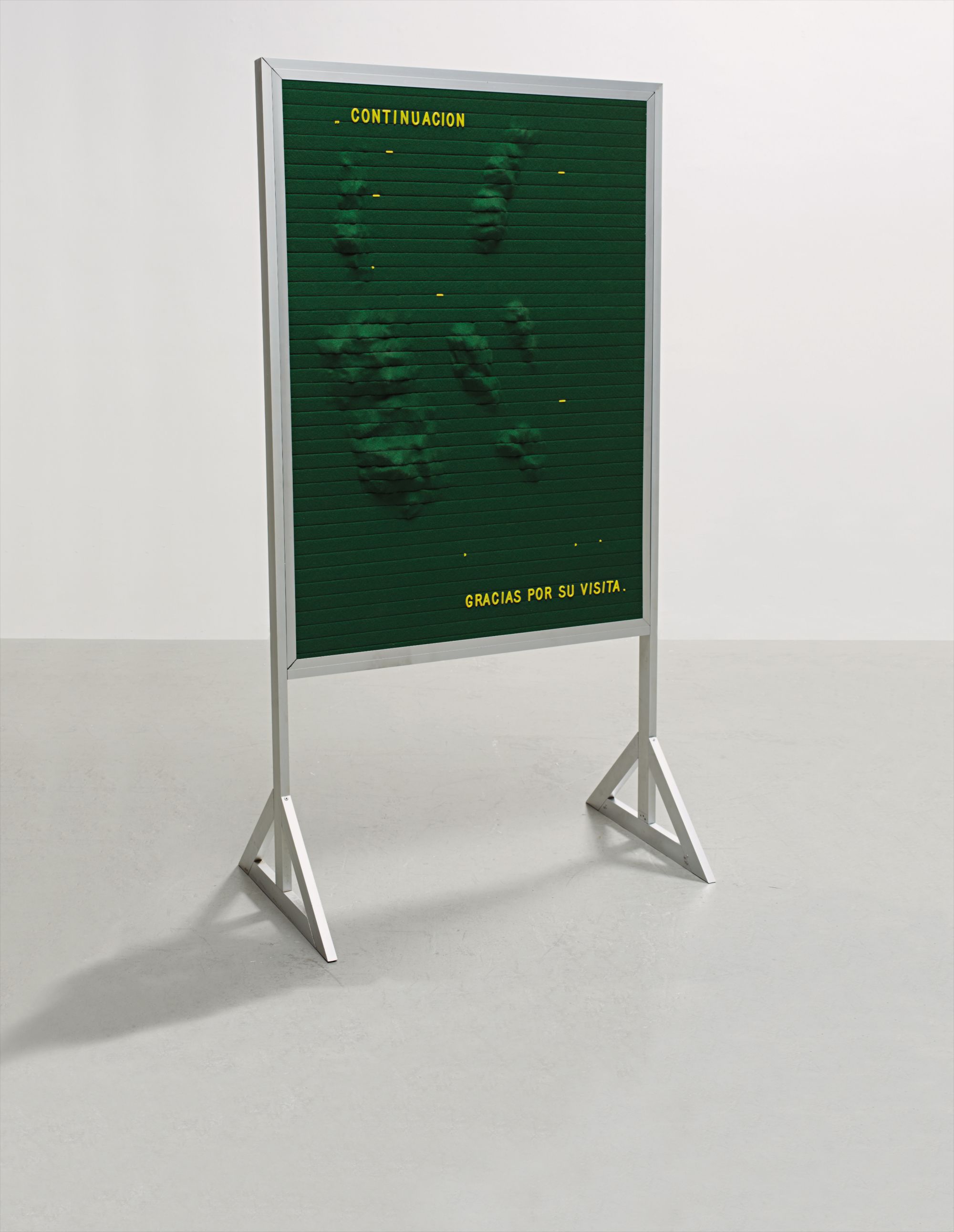
Gabriel Kuri
Tablero V
For private collectors, Kuri represents a particular kind of opportunity. His works operate on multiple registers simultaneously, functioning as visually compelling objects in a domestic or corporate space while sustaining genuine intellectual depth over years of looking. Collectors drawn to the tradition running from Marcel Duchamp through Arte Povera and into the post Minimalist investigations of artists like Felix Gonzalez Torres, Haim Steinbach, or Liam Gillick will find in Kuri a natural point of connection. His engagement with commercial materials and systems also places him in productive dialogue with artists such as Andrea Zittel and Jorge Pardo, figures who interrogate the designed environment from within its own vocabulary.
What distinguishes Kuri from many artists working adjacent territory is the warmth that runs beneath the conceptual surface. There is genuine curiosity in these works, a delight in the strangeness of the systems we inhabit. The retail shelving unit placed alongside rocks does not sneer at either object. It holds them in a kind of respectful suspension, asking what each reveals about the other.
That generosity of attention, the willingness to find in commercial detritus something worthy of the same care we bring to natural materials or to historical artifacts, is rare and valuable. It makes his work feel alive rather than merely clever. Gabriel Kuri's practice matters in 2024 and beyond because the questions it poses have only grown more urgent. In an era of accelerating financialization, of NFTs and carbon credits and algorithmic pricing, the nature of value has never been more contested or more obscure.
Kuri has spent decades building a body of work that approaches these questions not with anxiety but with the tools of the sculptor and the attentiveness of a poet. Institutions are right to collect him, and private collectors who acquire his works join a tradition of patronage for an artist whose ideas will deepen in resonance for as long as exchange itself remains part of what it means to be human.