Franz Kline
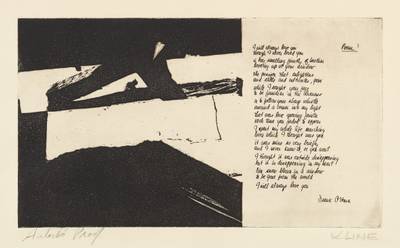
Franz Kline: The Force of Pure Gesture
Artist Spotlight · The Collection Editorial
“I paint the white as well as the black, and the white is just as important.”
Franz Kline, interview with David Sylvester, 1960
Stand in front of a Franz Kline painting long enough and something shifts. What first appears to be pure abstraction begins to feel structural, load bearing even, as though the black strokes are columns and beams holding up some vast interior architecture only the artist could see. This sensation is not accidental. It is the achievement of a lifetime compressed into a practice that, at its height in the late 1950s, made Kline one of the most electrifying painters alive.
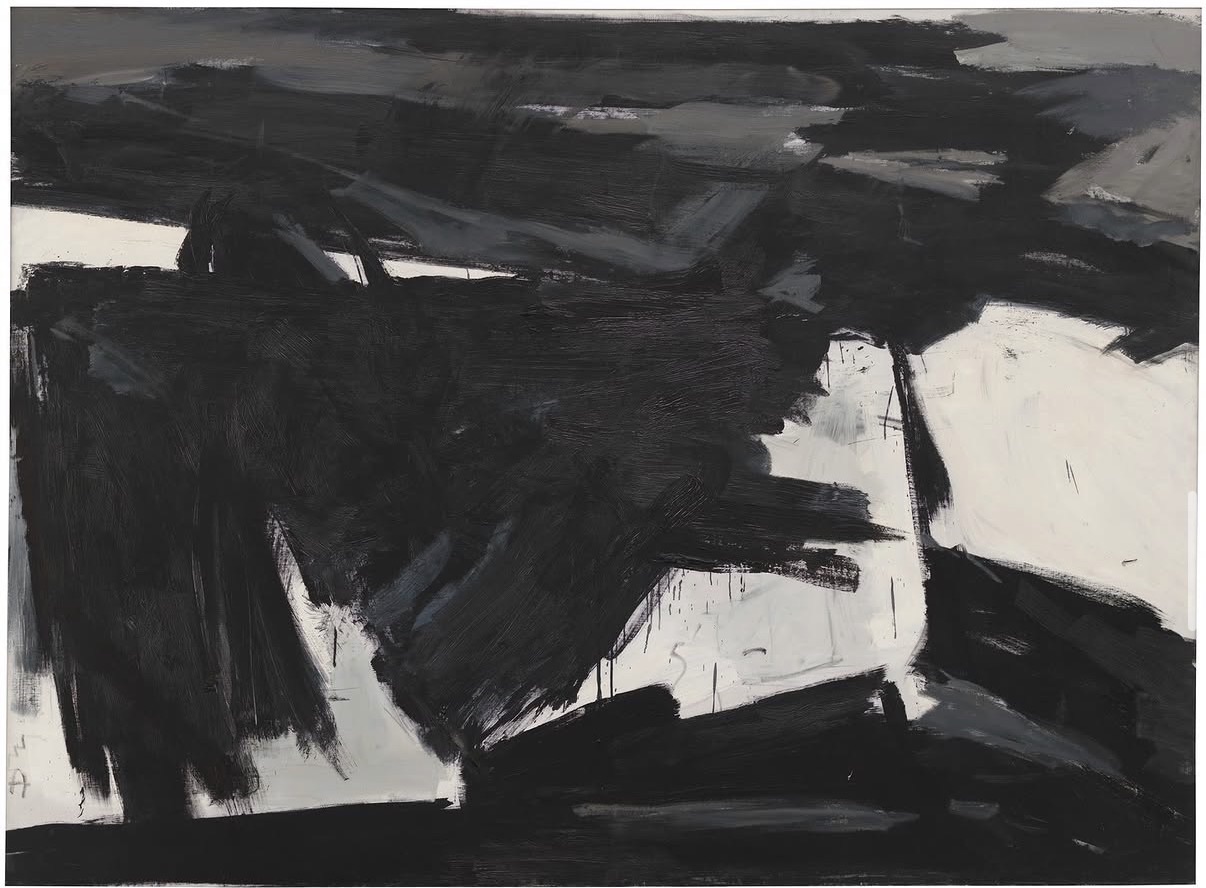
Franz Kline
Delaware Gap, 1958
Today, with major works held by the Museum of Modern Art, the Whitney Museum of American Art, and the Tate Modern, and with auction prices for his oils and works on paper consistently commanding serious attention at Christie's and Sotheby's, Kline's reputation has only deepened. Collectors who know his work understand they are not simply acquiring a painting. They are acquiring a physical event. Franz Kline was born in 1910 in Wilkes Barre, Pennsylvania, a coal mining town in the Wyoming Valley whose industrial scale and hard geometry left a permanent mark on his imagination.
He studied at Boston University and later at Heatherley's School of Fine Art in London, where he absorbed the lessons of the European tradition with a seriousness that would later surprise critics who assumed Abstract Expressionism had no debt to the past. His early work was representational and accomplished, rooted in illustration and portraiture, and he worked for years in relative obscurity in New York, painting bar scenes and local characters with the eye of someone who genuinely loved the particulars of American life. Those years of careful looking are not irrelevant to understanding what came later. The bridges, the rail yards, the fire escapes, the industrial scaffolding of mid century New York all found their way into his abstractions not as subjects but as sensations.
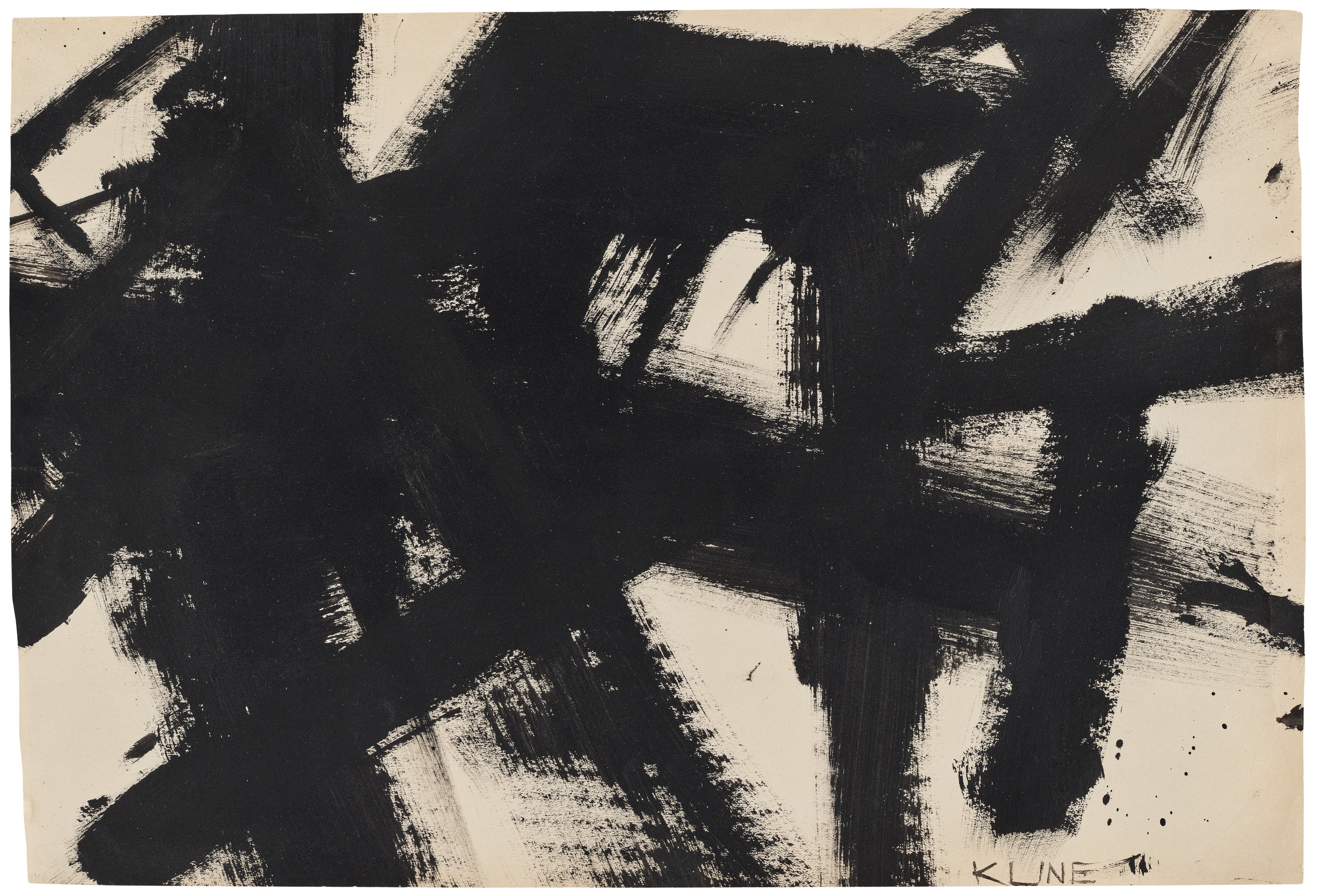
Franz Kline
Untitled, 1959
The transformation came around 1949 and 1950, and the story of how it happened has become one of the great origin myths of American art. Kline was visiting the studio of Willem de Kooning when he placed some of his small ink drawings into an opaque projector and watched them throw enormous magnified images across the wall. What had been intimate marks became monumental gestures. The scale changed everything.
“If someone says my work is lonely, I think that's right. It's supposed to be about loneliness and that sort of anguish.”
Franz Kline
Kline understood in that moment that the energy he had been making small could be made vast, that a brushstroke could occupy a room the way a steel girder occupies a building. He began working immediately with wide house painting brushes and commercial black paint, producing the work that would define him. Within a year he had his first solo exhibition at the Egan Gallery in New York, in 1950, and the response from peers like de Kooning, Mark Rothko, and Jackson Pollock was one of instant recognition. Kline's signature works are almost all defined by a radical commitment to structure within apparent freedom.
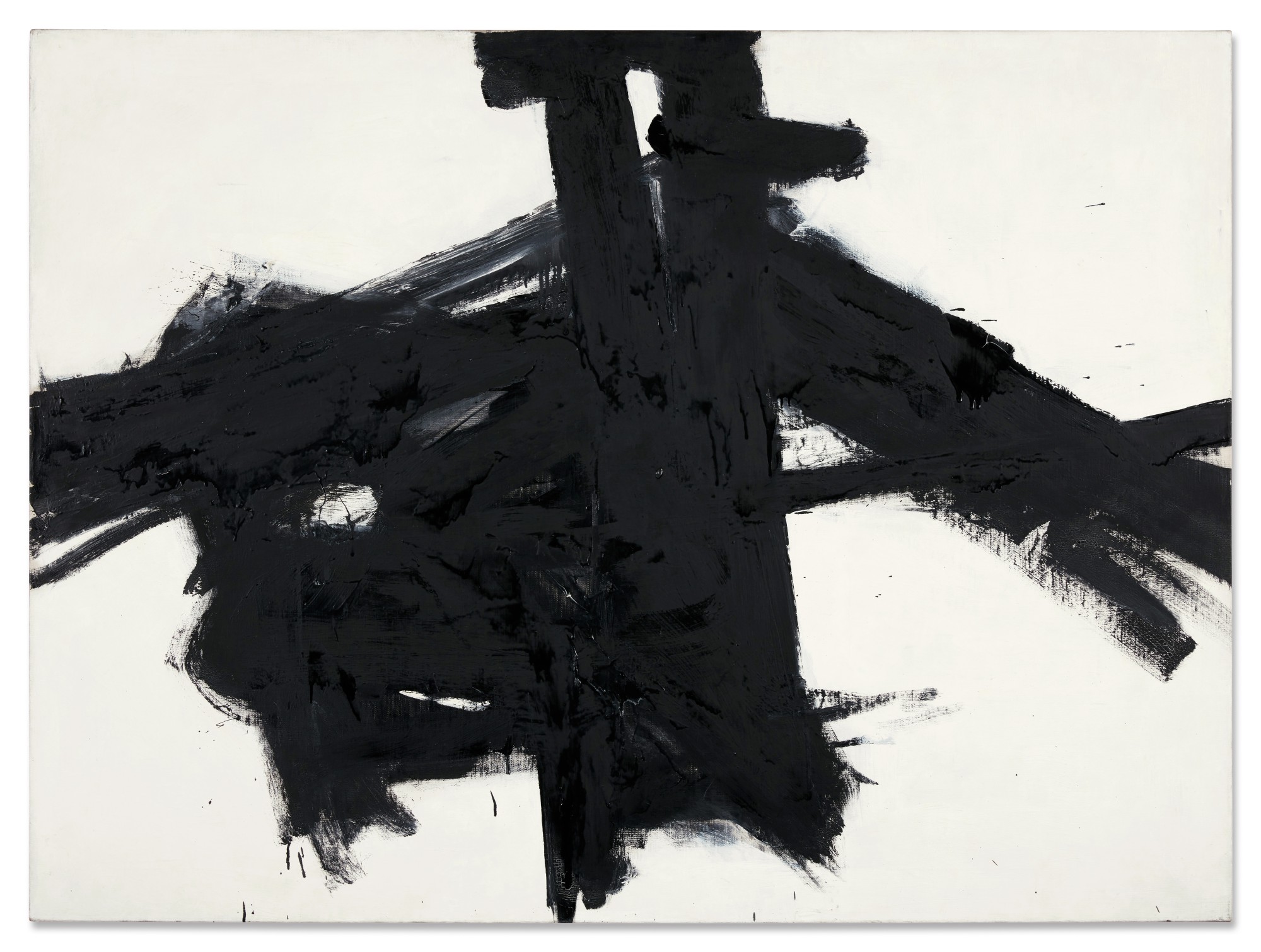
Franz Kline
Crosstown, 1955
Chief, painted in 1950, takes its name from a locomotive Kline remembered from childhood, and the painting moves with that same thunderous horizontal force. Crosstown, from 1955, demonstrates his ability to let white function not as background but as active space pushing back against the black with equal force. Delaware Gap, from 1958, opens the vocabulary slightly, with marks that feel more atmospheric, as though the coal country landscape of his Pennsylvania youth had finally surfaced. These are not decorative paintings.
They reward sustained attention and they hold their authority across decades. Kline himself sometimes worked from small studies, ink drawings on pages torn from telephone books and newspapers, and those studies are themselves remarkable objects, intimate proofs of his instincts. Works on paper such as his 1959 Untitled in black ink and Study for Harleman from 1960 offer collectors a direct encounter with his thinking at its most immediate. On the market, Kline occupies a secure and distinguished position among the first generation Abstract Expressionists.
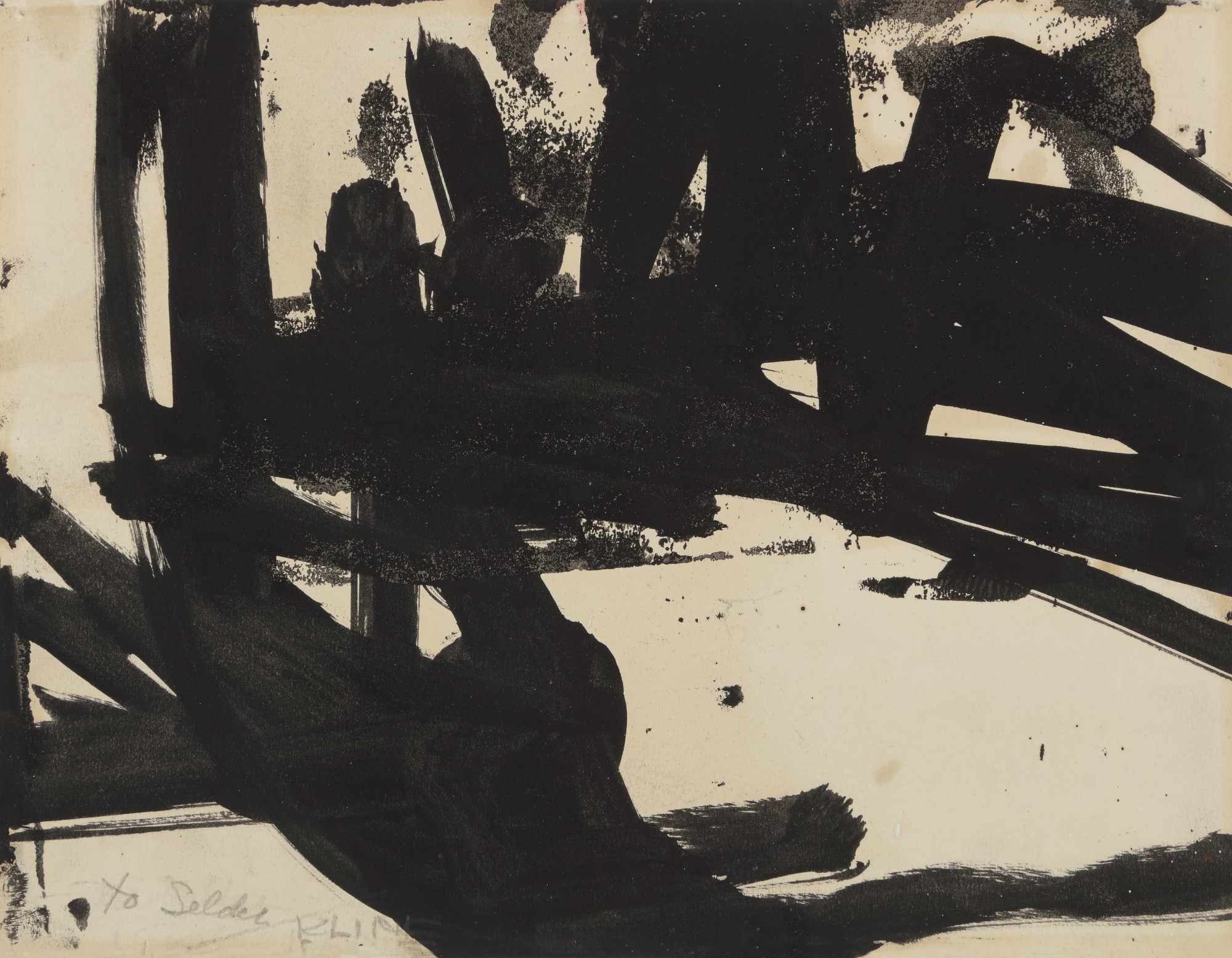
Franz Kline
Untitled (Study for Untitled, 1957), 1957
His large oil paintings have sold at auction for well into the millions of dollars, with major canvases drawing serious competition among institutional and private buyers. Works on paper and smaller studies represent a compelling point of entry, prized both for their intimacy and for the clarity with which they reveal his compositional intelligence. Collectors who follow this category know to look for works with strong provenance, ideally from the artist's estate or from his close circle of contemporaries. The palette within his work is also worth noting: though Kline is primarily celebrated for his black and white paintings, works like Blue Center from 1958 and Black, White, Brown from 1959 show him testing color with the same authority he brought to monochrome, and these pieces carry particular interest for collectors who want to understand the full range of his ambition.
Kline belongs to a constellation of artists whose collective achievement in New York in the late 1940s and 1950s permanently altered the trajectory of Western painting. His closest affinities are with de Kooning, with whom he shared a belief in the primacy of the mark and the body, and with Robert Motherwell, whose large scale abstractions similarly draw on the physical drama of gesture. Collectors who admire Kline often find themselves drawn to the work of Cy Twombly, whose calligraphic marks occupy adjacent emotional territory, and to the muscular abstraction of Lee Krasner. Within the broader narrative of postwar art, Kline is the painter who understood most clearly that scale is not merely a formal decision but an ethical one, a declaration about how seriously one takes the act of painting.
Franz Kline died in 1962 at the age of fifty one, from heart disease, at the height of his powers and reputation. The brevity of his mature career, roughly a decade of the breakthrough work, gives his output a concentrated intensity that collectors and scholars return to again and again. He left behind a body of work that has never gone out of fashion because it was never fashionable in the first place. It was, from the beginning, necessary.
In a contemporary art world that increasingly values concept over execution, Kline stands as a reminder of what paint and a willing body can do when the artist has truly seen something and refuses to look away. His paintings do not illustrate force. They are force. That is why they endure, and why the collectors who live with them never quite stop being surprised by them.
Explore books about Franz Kline
Franz Kline: 1910-1962
Harry F. Gaugh
Franz Kline: Black & White 1950-1961
Harry F. Gaugh
Franz Kline: A Retrospective
Harry F. Gaugh

Franz Kline: Paintings 1952-1962
Diane Waldman
Franz Kline: Works on Paper
Harry F. Gaugh