František Kupka
František Kupka, The Man Who Freed Color
Artist Spotlight · The Collection Editorial
“We are moving toward pure expression, which is independent of all natural appearances.”
František Kupka, writings on abstraction
There are moments in art history when a single canvas announces that something irreversible has happened. One such moment came in October 1912, when visitors to the Salon d'Automne in Paris encountered two paintings under the title Amorpha. Painted by a relatively unknown Czech artist living in the suburb of Puteaux, these canvases showed no figures, no landscapes, no recognizable world at all. Just arcs of color, planes of rhythm, and the unmistakable sense that painting had crossed a threshold it could never re cross.
František Kupka
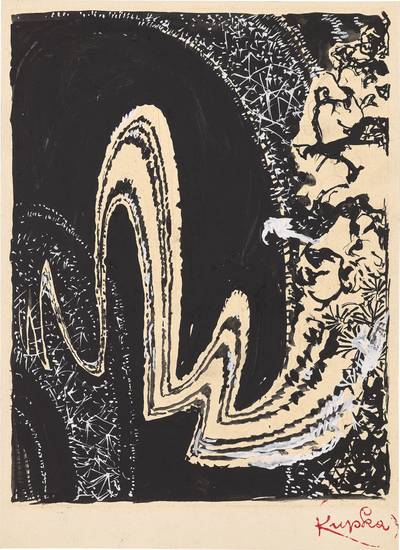
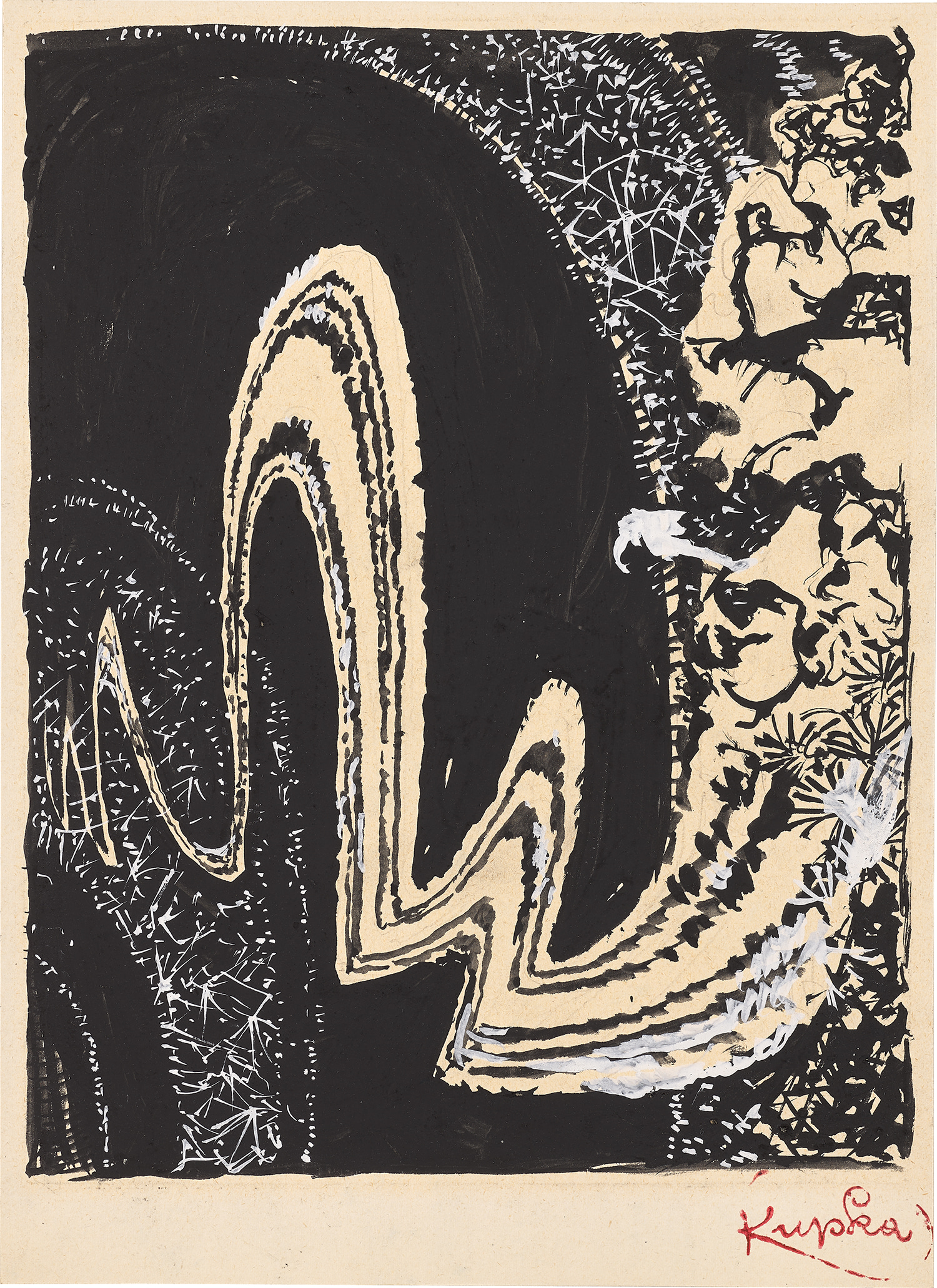
Quatre histoires de blanc et noir, 1926
The artist was František Kupka, and he had just shown the world what pure abstraction could feel like. Kupka was born in 1871 in Opočno, a small town in Bohemia, then part of the Austro Hungarian Empire. His early life was shaped by a restless, searching intelligence that found formal Czech education too narrow to contain it. He studied at the Prague Academy of Fine Arts before moving to Vienna, where he deepened his engagement with symbolism, theosophy, and the occult philosophies that were circulating energetically through fin de siècle Central Europe.
These were not casual interests. For Kupka, the invisible dimensions of existence, the forces behind matter, the resonances between music and visual form, were legitimate subjects for serious inquiry. They would remain at the philosophical core of his practice for the rest of his life. In 1896 Kupka arrived in Paris, and the city became his permanent home and laboratory.
František Kupka
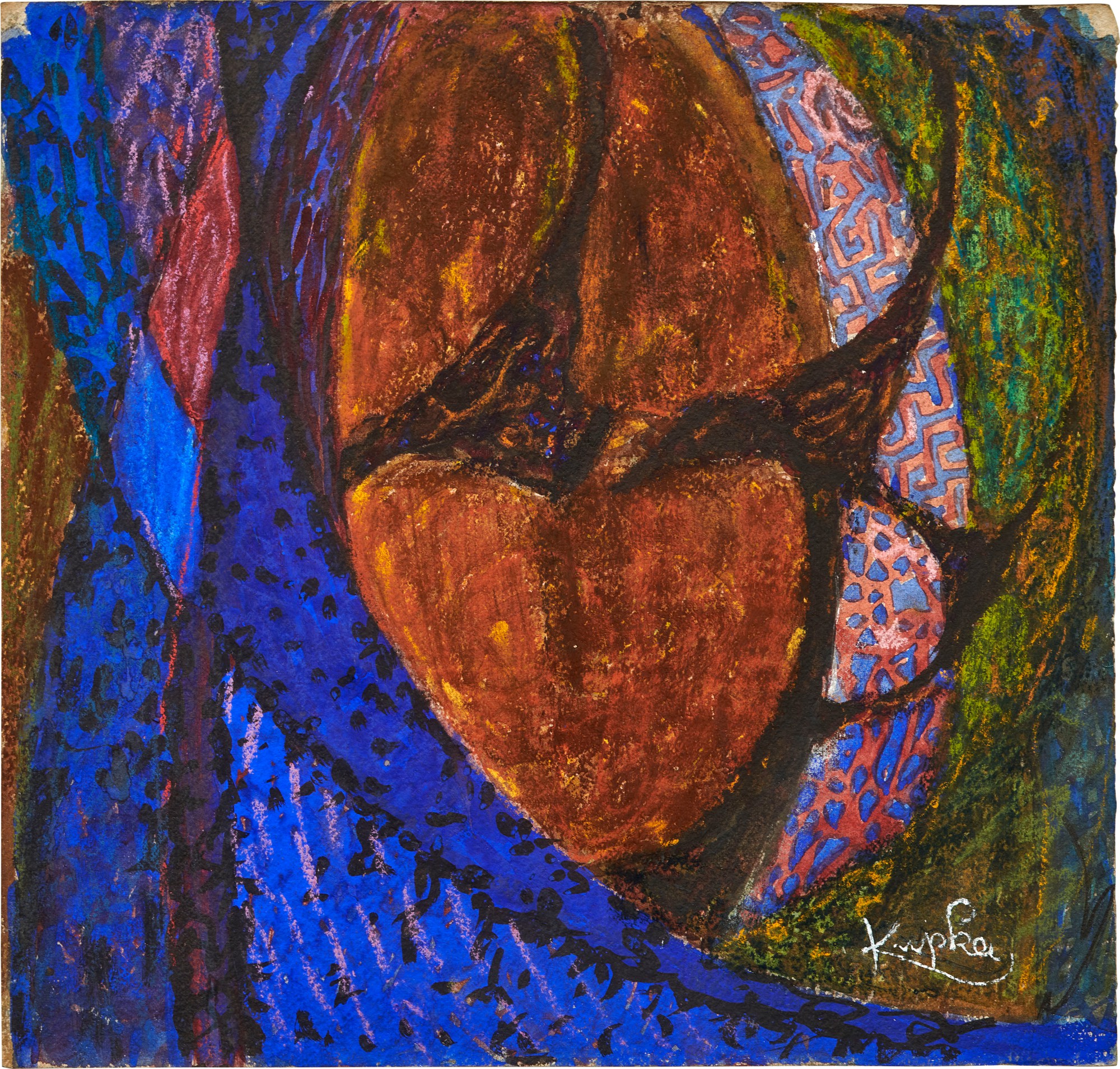
Étude pour "Printemps Cosmique I", 1911
He supported himself initially through illustration work, contributing sharp, socially engaged graphic work to publications including the satirical journal L'Assiette au Beurre. This commercial practice, far from being a distraction, sharpened his understanding of line, composition, and the communicative power of bold visual gesture. He settled in Puteaux, where he became a quiet but influential presence among the artists gathering around the Duchamp brothers, a loose constellation of thinkers who were reimagining what painting could be. Kupka's path, however, was distinctly his own.
“A painter does not have to be a musician, but he must be sensitive to rhythm.”
František Kupka
He was less interested in Cubism's analytical fracturing of objects than in escaping the object altogether. The years between roughly 1909 and 1912 represent one of the most concentrated periods of artistic breakthrough in modern art history. Kupka was working through the implications of what he called "vertical planes" and "fugues," compositions in which movement, color relationships, and rhythm were the sole subjects. His study of color science, his engagement with the philosophy of Henri Bergson, whose ideas about time and consciousness were electrifying Parisian intellectual life, and his long meditations on music as a model for non representational art all converged.
František Kupka
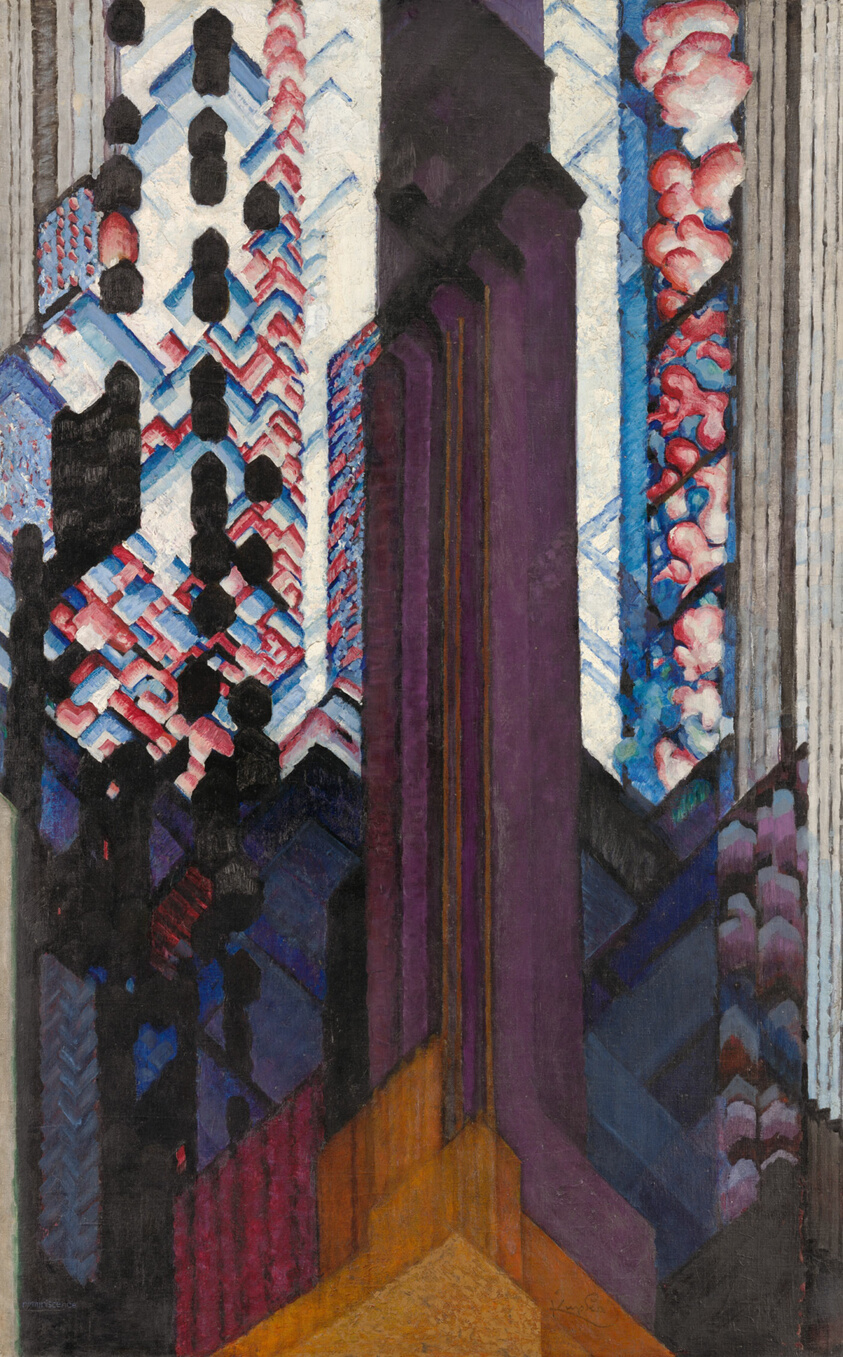
Reminiscence of a Cathedral, 1920
By the time the Amorpha canvases appeared at the Salon d'Automne, Kupka had arrived at something that Wassily Kandinsky in Munich and Robert Delaunay in Paris were also approaching by different routes. The difference was that Kupka had done it in near solitude, guided primarily by his own philosophical conviction. The works available to collectors today offer an extraordinary window into the breadth and consistency of Kupka's vision across several decades. "Étude pour Printemps Cosmique I" from 1911, rendered in gouache and pastel, captures that pivotal pre breakthrough moment when organic form was dissolving into pure energy and rhythm.
"Composition, Lueurs" from the same year, in pastel, demonstrates his remarkable sensitivity to luminosity, the sense that light itself is the subject. "Complexe" from 1912 in oil on canvas arrives at the very height of his revolutionary period, and carries the weight of that historical moment in every brushstroke. Later works such as "Plans diagonaux I" from 1924 and "Formes circulaires" from 1929 show a Kupka who had fully inhabited his geometric language, producing compositions of serene mathematical confidence. "Quatre histoires de blanc et noir" from 1926, in gouache and ink, reveals his extraordinary facility as a draftsman working with the stark drama of monochrome contrast.
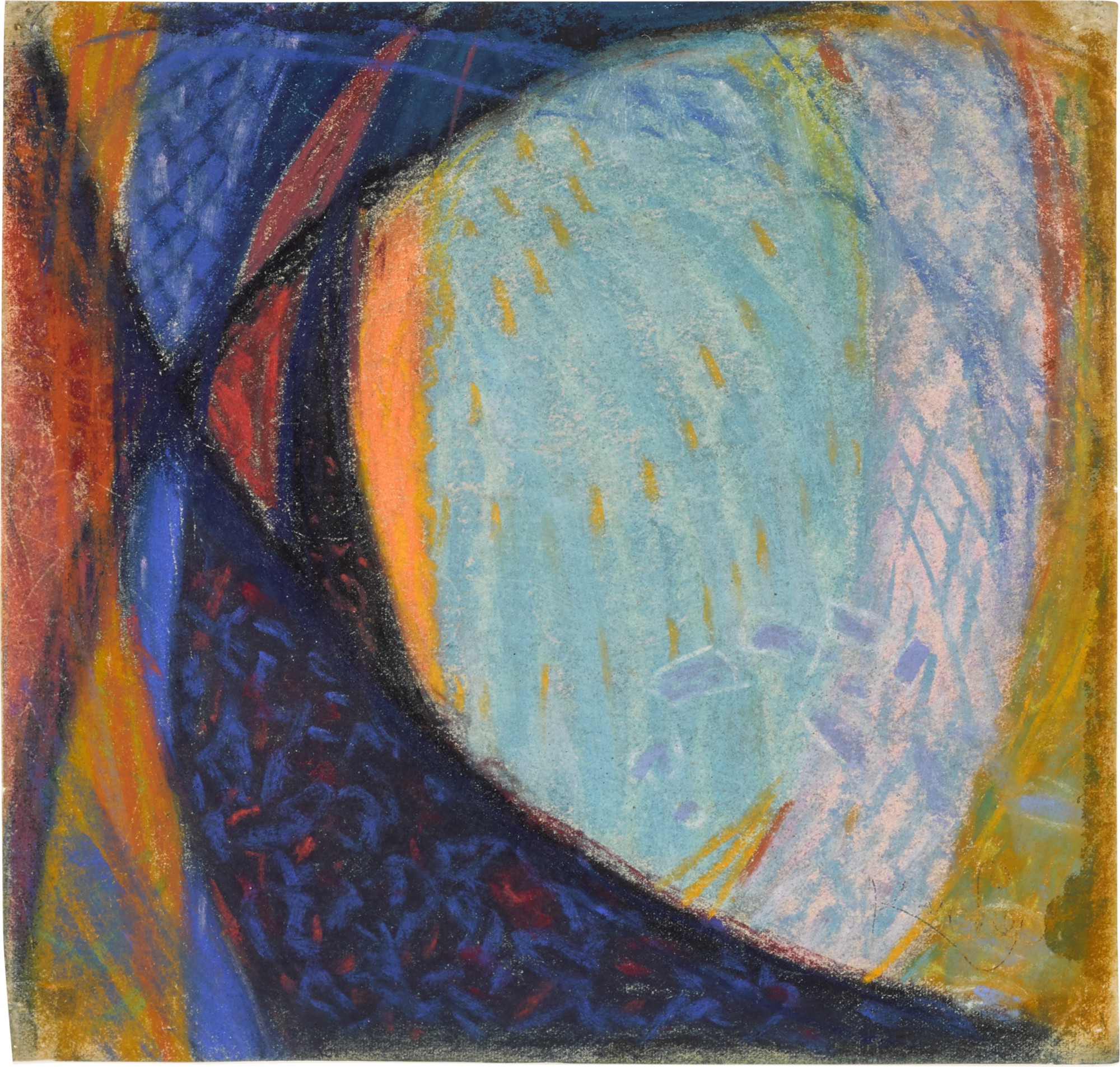
František Kupka
Composition - Lueurs, 1911
From a collecting perspective, Kupka occupies a position of rare art historical significance combined with a profile that remains more intimate than many of his contemporaries. His work has appeared regularly at the major international auction houses, and museum holdings in institutions including the Centre Pompidou in Paris and the Museum of Modern Art in New York confirm his canonical status. Yet compared to Kandinsky or Mondrian, with whom he shares the founding generation of abstraction, Kupka's market still rewards the attentive collector. Works on paper, in which he was genuinely masterful, offer entry points that carry the full intellectual and aesthetic charge of his vision.
Collectors drawn to the philosophical underpinnings of art, to works that reward sustained looking and genuine inquiry, find in Kupka a figure of inexhaustible depth. To understand Kupka fully is to understand him in relation to the wider conversation about abstraction that was erupting across Europe in the early twentieth century. Robert Delaunay, whose Orphism the critic Guillaume Apollinaire named partly in response to the color harmonics he heard in both Delaunay's and Kupka's work, is perhaps the closest parallel. Fernand Léger shared the Puteaux milieu.
Mondrian arrived at geometric purity through a different philosophical route via Theosophy, and the resonances with Kupka's own theosophical interests are striking. Further afield, Paul Klee's conviction that abstract art could carry genuine spiritual and emotional content echoes Kupka's deepest commitments. What distinguishes Kupka within this extraordinary generation is the consistency of his philosophical seriousness and the sheer sensory richness of the work he made in service of those ideas. Kupka's legacy has only grown more luminous with time.
The major retrospective organized jointly by the Grand Palais in Paris and the Guggenheim Museum in New York in 1975 to 1976 established the full scale of his achievement for a new generation. Scholarship has continued to deepen the account of his influence, and contemporary artists working at the intersection of geometry, color theory, and spirituality find in him an ancestor of uncommon generosity. He lived until 1957, working with undiminished conviction into his eighties, which means his career spans from the symbolist nineteenth century to the era of Abstract Expressionism, a bridge of extraordinary length and strength. For those who come to his work today, whether through a luminous pastel from 1911 or a rigorous gouache from the 1920s, the encounter carries an immediate and enduring gift: the feeling that color and form, freed from the obligation to represent, can speak directly to something essential in human experience.
Explore books about František Kupka
František Kupka: 1871-1957
Denise Bazetoux
Kupka
Ludmila Vachtová
František Kupka: A Retrospective
Pierre Brullé

Kupka: Abstraction and Eastern Philosophy
Jean-Claude Marcadé
František Kupka: Pioneer of Abstract Art
Margit Rowell
Kupka
Andréa Ketenjian
The Art of František Kupka
Arpád Mezei