Frank Gohlke
Frank Gohlke Finds Beauty in the Aftermath
Artist Spotlight · The Collection Editorial
“Landscape photography at its best is a way of paying attention to the world we actually live in.”
Frank Gohlke
There are photographers who document the world and there are photographers who listen to it. Frank Gohlke belongs firmly to the second category. His decades of patient, large format work across the American landscape have produced some of the most quietly revelatory images in the history of photography, pictures that ask us to slow down, to look again, and to reckon honestly with what human presence has done to the land we inhabit. As institutions continue to reassess the legacy of the New Topographics movement and its long shadow over contemporary art photography, Gohlke stands out as one of its most thoughtful and enduring voices, a maker of images that feel as urgent and alive today as when he first pressed the shutter.
Frank Gohlke
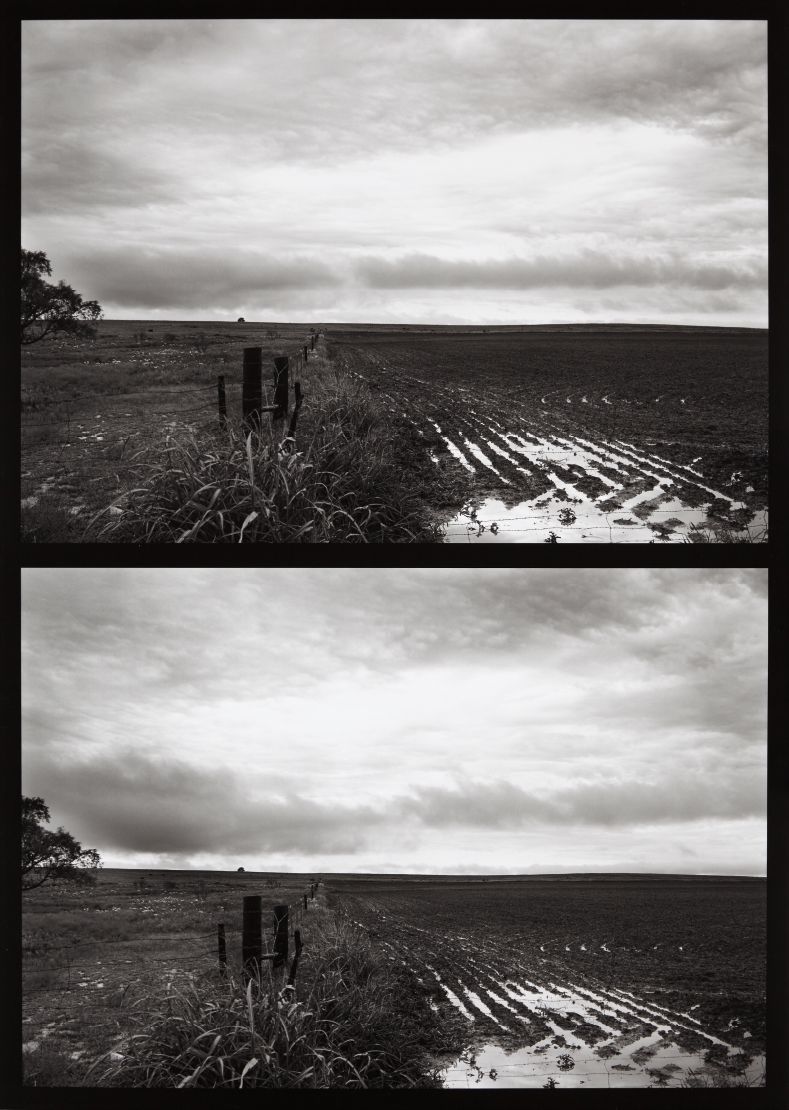
Ten Minutes in North Texas #1, Clay County
Gohlke was born in 1942 in Wichita Falls, Texas, a flat and open landscape that would leave a permanent mark on his visual imagination. He studied literature at the University of Texas and later at Yale, where his sensibility was shaped more by language and meaning than by technical photographic doctrine. His turn toward photography came in the late 1960s, and by his own account it was a period of serious rethinking about what images could accomplish. He studied briefly with Paul Caponigro, whose mastery of tone and contemplative stillness offered an early model, but Gohlke was always moving toward something cooler, more structural, and more alert to the social and ecological forces that reshape the American terrain.
His breakthrough as a distinct artistic voice came through his participation in the landmark 1975 exhibition at the George Eastman House in Rochester, New York. Titled New Topographics: Photographs of a Man Altered Landscape, the show gathered Gohlke alongside Robert Adams, Lewis Baltz, Bernd and Hilla Becher, Stephen Shore, and several other photographers who were collectively redefining what landscape photography could mean in the late twentieth century. Where the tradition of Ansel Adams had celebrated wilderness as sublime and untouched, the New Topographics artists turned their cameras on tract housing, parking lots, industrial zones, and the banal edges of American cities. Gohlke brought to this company a particular seriousness and a gift for finding genuine tension in the most unassuming subjects.
Frank Gohlke
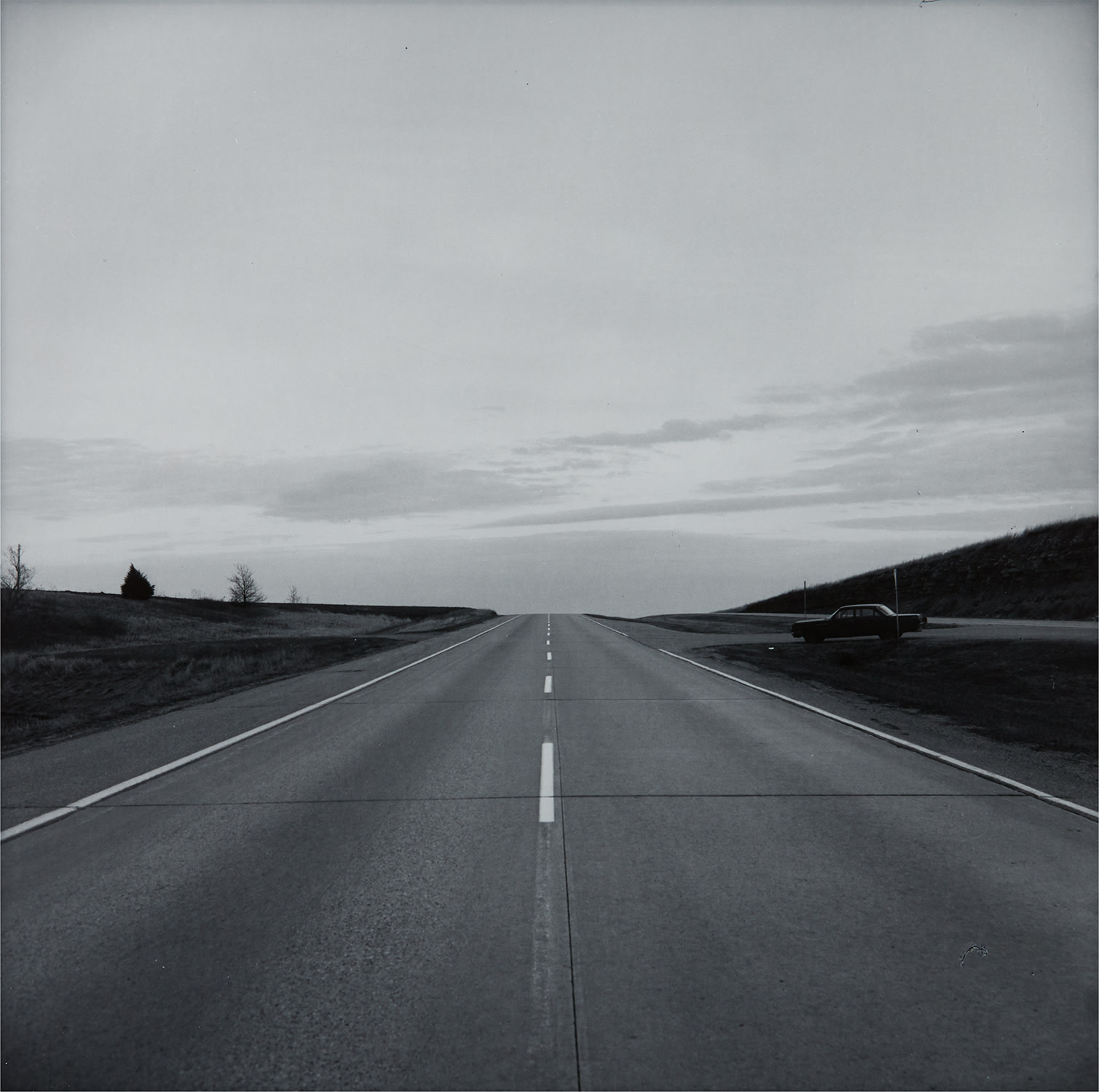
Landscape, near Hastings, Minnesota
Two bodies of work secured his place in photographic history. The first documented the wreckage left by a tornado that tore through Wichita, Kansas in 1974, an event that Gohlke approached not as a disaster photographer in pursuit of spectacle but as an artist interested in how communities absorb trauma and begin again. His images from that project carry a strange tenderness, finding pattern and even a kind of grace in splintered wood, flattened neighborhoods, and the slow work of recovery. The second and perhaps more celebrated body of work emerged from repeated visits to the landscape around Mount St.
Helens in Washington State following its catastrophic eruption in May of 1980. Over many years Gohlke returned again and again to photograph the blasted terrain as it healed, captured in large format black and white images that track the extraordinary resilience of natural systems. This long term commitment to a single place over time set Gohlke apart as a photographer of rare patience and ecological consciousness. The works available through The Collection offer collectors a meaningful entry point into Gohlke's practice.
Ten Minutes in North Texas Number 1, Clay County, a gelatin silver print flush mounted and printed in 2011, exemplifies his way of seeing the American interior: spare, attentive, and charged with the weight of an entire regional history compressed into a single frame. Landscape, near Hastings, Minnesota brings a similar quality of sustained attention to the upper Midwest, where the flatness of the terrain and the marks of agricultural use become almost abstract when rendered in his precise tonal language. Both works reward close and repeated looking, revealing more with each encounter. For collectors drawn to photography with genuine intellectual depth, these prints represent exactly the kind of work that holds its meaning and its value over time.
Within the broader landscape of art photography collecting, Gohlke occupies a position that serious collectors have long recognized as undervalued relative to his historical significance. His peers from the New Topographics generation, including Robert Adams and Lewis Baltz, have commanded strong institutional and auction attention over the past two decades, and Gohlke's work has increasingly attracted the notice of museums, curators, and private collectors who understand that photographic history cannot be properly told without him. His prints are held in major institutional collections including the Museum of Modern Art in New York, the Art Institute of Chicago, and the Museum of Fine Arts in Houston, a distribution that speaks to the breadth and seriousness with which his work has been received. For a collector building a historically grounded photography collection, acquiring Gohlke now represents not only aesthetic pleasure but genuine foresight.
The artists who cluster around Gohlke in art historical terms form one of the most important constellations in American photography. Robert Adams shares his commitment to the western American landscape and his unsparing honesty about human intrusion. Lewis Baltz brought a cooler, more forensic eye to similar subjects. Stephen Shore introduced color into related territory.
The Bechers provided a European conceptual framework that informed the whole generation. Among these figures Gohlke has always been distinctive for the warmth that persists beneath his rigor, a genuine feeling for the people whose lives shape the landscapes he photographs, even when those people are absent from the frame. What makes Gohlke matter today, in an era of accelerating ecological crisis and renewed attention to the relationship between human activity and natural systems, is the depth of feeling that runs through all of his work. He was thinking seriously about land use, about recovery, about the long timescales of both destruction and regeneration, long before those subjects became urgent for mainstream culture.
His photographs from Mount St. Helens alone constitute one of the most sustained and searching meditations on ecological resilience in the history of the medium. To own a Gohlke print is to own a piece of a larger conversation, one that this artist has been conducting with patience, intelligence, and genuine love for more than fifty years.