Eugène Atget
The Quiet Eye That Saved Paris
Artist Spotlight · The Collection Editorial
“These documents could be useful to artists.”
Eugène Atget, as reported by Berenice Abbott
There is a photograph taken in 1926 on the Quai Voltaire, at the corner where that storied riverside street meets the narrow cut of the Rue de Nevers. The city is still. A doorway holds its shadow. The stones of the pavement carry the particular weight of a morning that has not yet fully committed to itself.
Eugène Atget
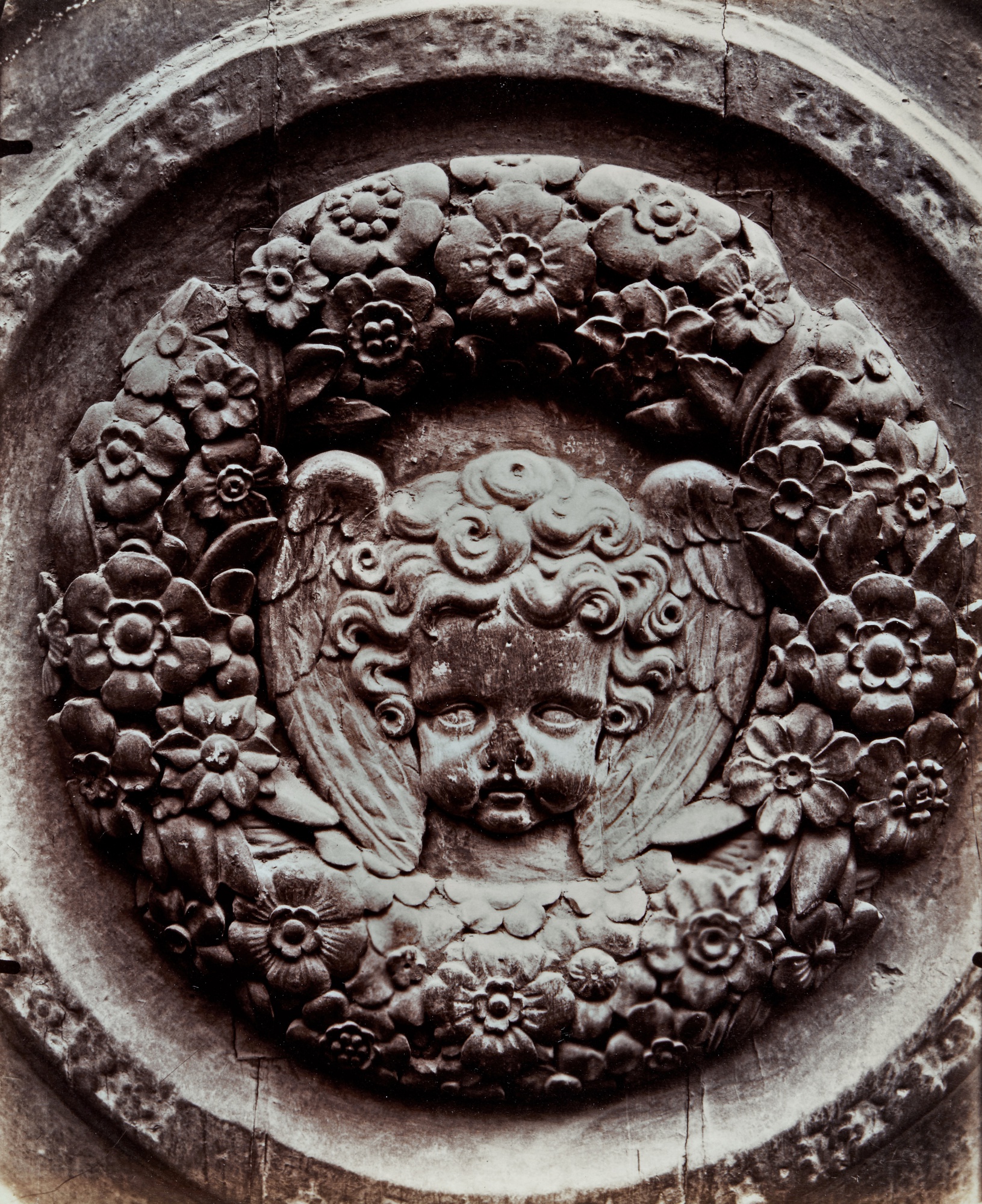
Église St-Nicolas-des-Champs, 1911
Eugène Atget made this image with a camera that most photographers of the era had already abandoned, using a process that was already old, and he numbered it 6649 in his meticulous hand on the reverse. That image, now among the works available on The Collection, is not a document. It is a reckoning. Atget was born in 1857 in Libourne, near Bordeaux, and his early life was shaped by displacement and reinvention.
Orphaned young and raised by his grandparents, he eventually made his way to Paris, where he tried his hand at acting, studying at the Conservatoire National Supérieur d'Art Dramatique in the 1880s, though a career on the stage never fully materialized. He turned to painting as a secondary ambition, and then, in the early 1890s, to photography. This was not a retreat but a discovery. He was in his thirties when he found the medium that would consume the rest of his life, and he brought to it the patience of a man who had already learned that nothing comes easily or quickly.
Eugène Atget
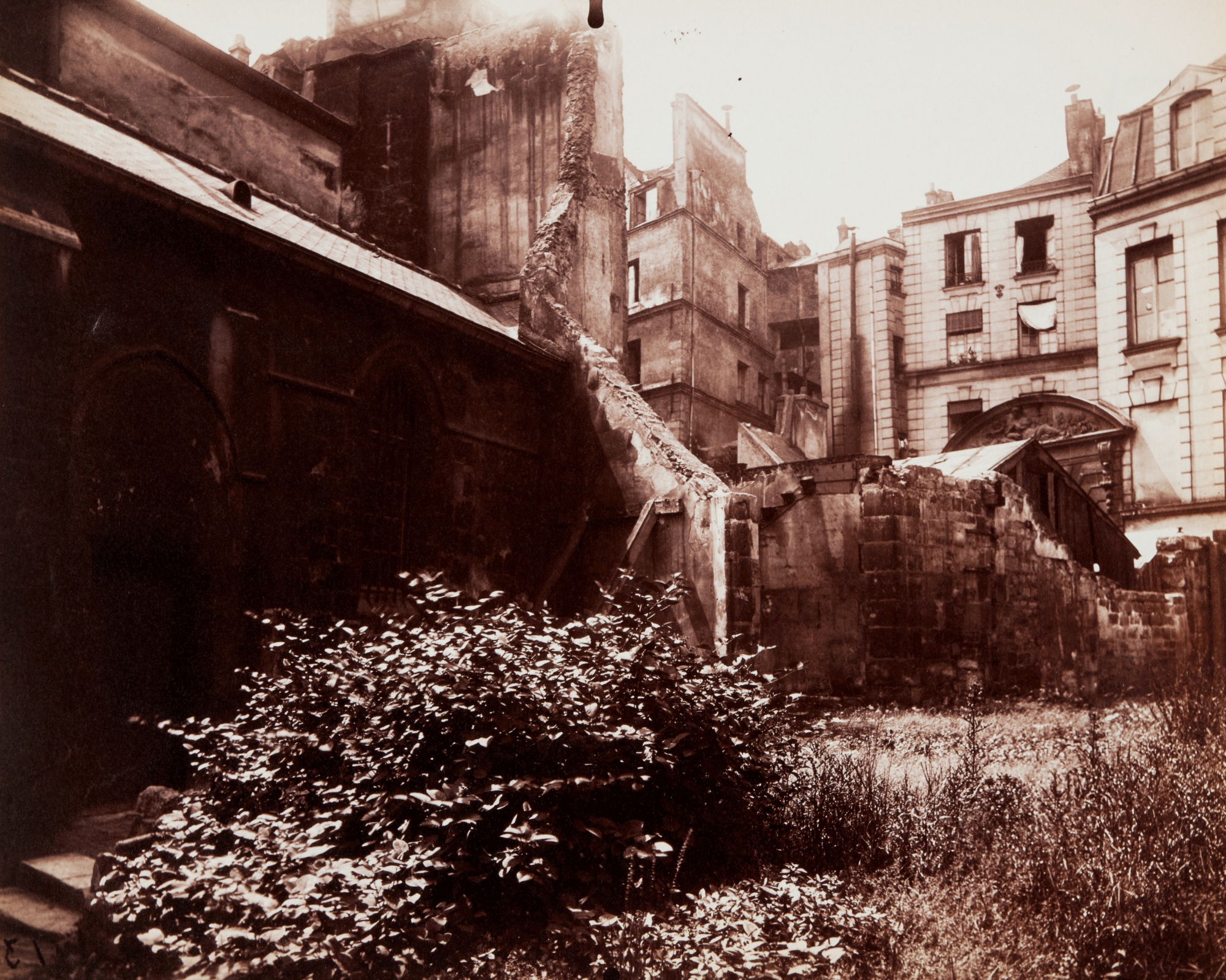
Coin de l'ancien Hôtel-Dieu et Église Saint-Julien-le-Pauvre, 1912
His practice was methodical to a degree that bordered on obsession. Working from a studio at 17 bis Rue Campagne Première in Montparnasse, a address that appears on the reverse of many of his prints, Atget rose early, loaded his wooden large format camera and its glass plate negatives into a handcart, and walked the city. He photographed storefronts and street corners, church facades and courtyards, park statuary and the working lives of street vendors and tradespeople. He sold his prints to artists, architects, designers, and archivists as documentary reference material, a fact that shaped how he described himself.
His calling cards reportedly read simply: "Documents pour Artistes." And yet what he produced was something far more than documentation. His pictures have atmosphere, interiority, and a quality of attentiveness that transforms the ordinary into the unforgettable. The works available on The Collection span the full range of his mature output, from the ecclesiastical grandeur of "Église St Nicolas des Champs" (1911) to the intimate urban textures of "Rue Eginhard (4e arr.
Eugène Atget
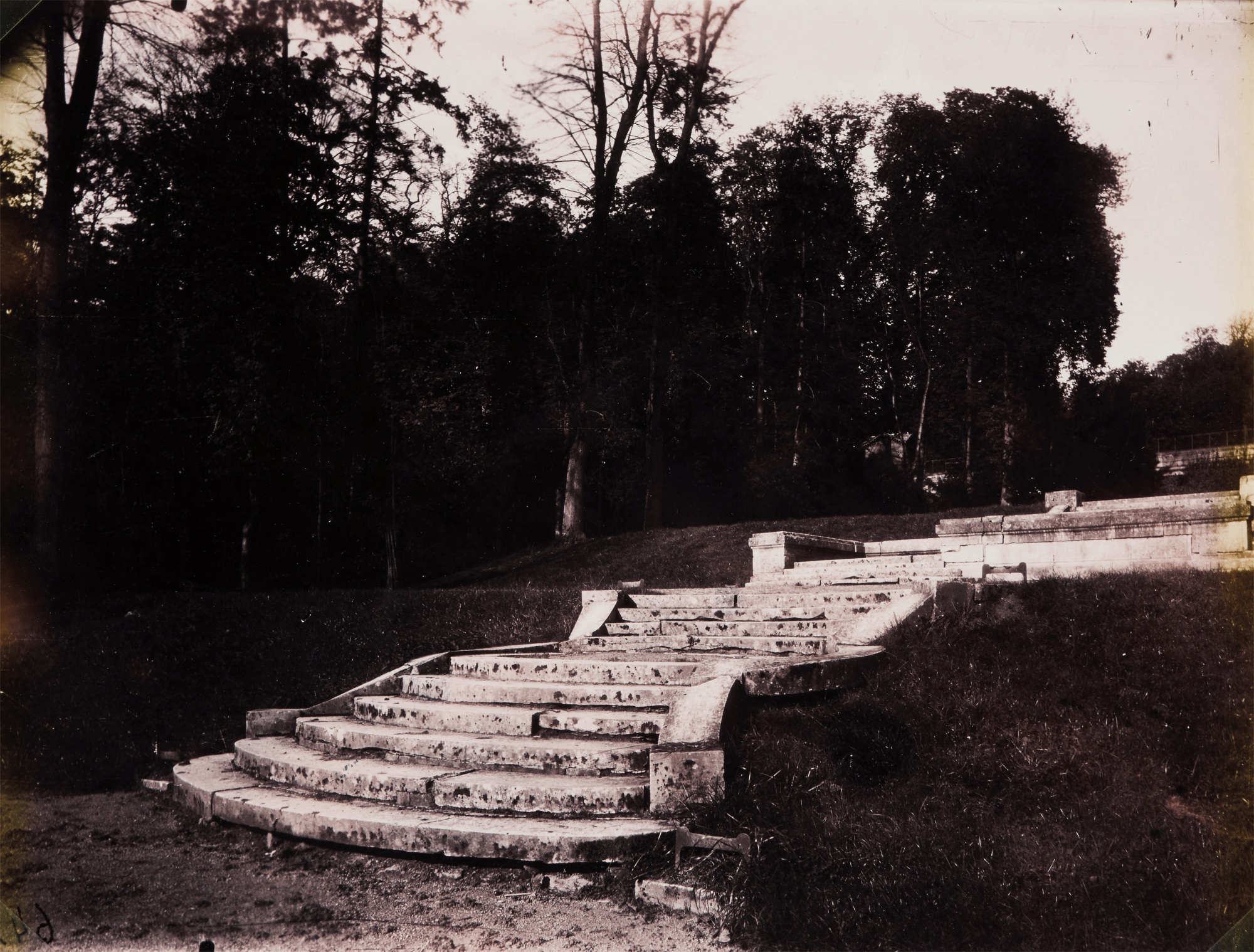
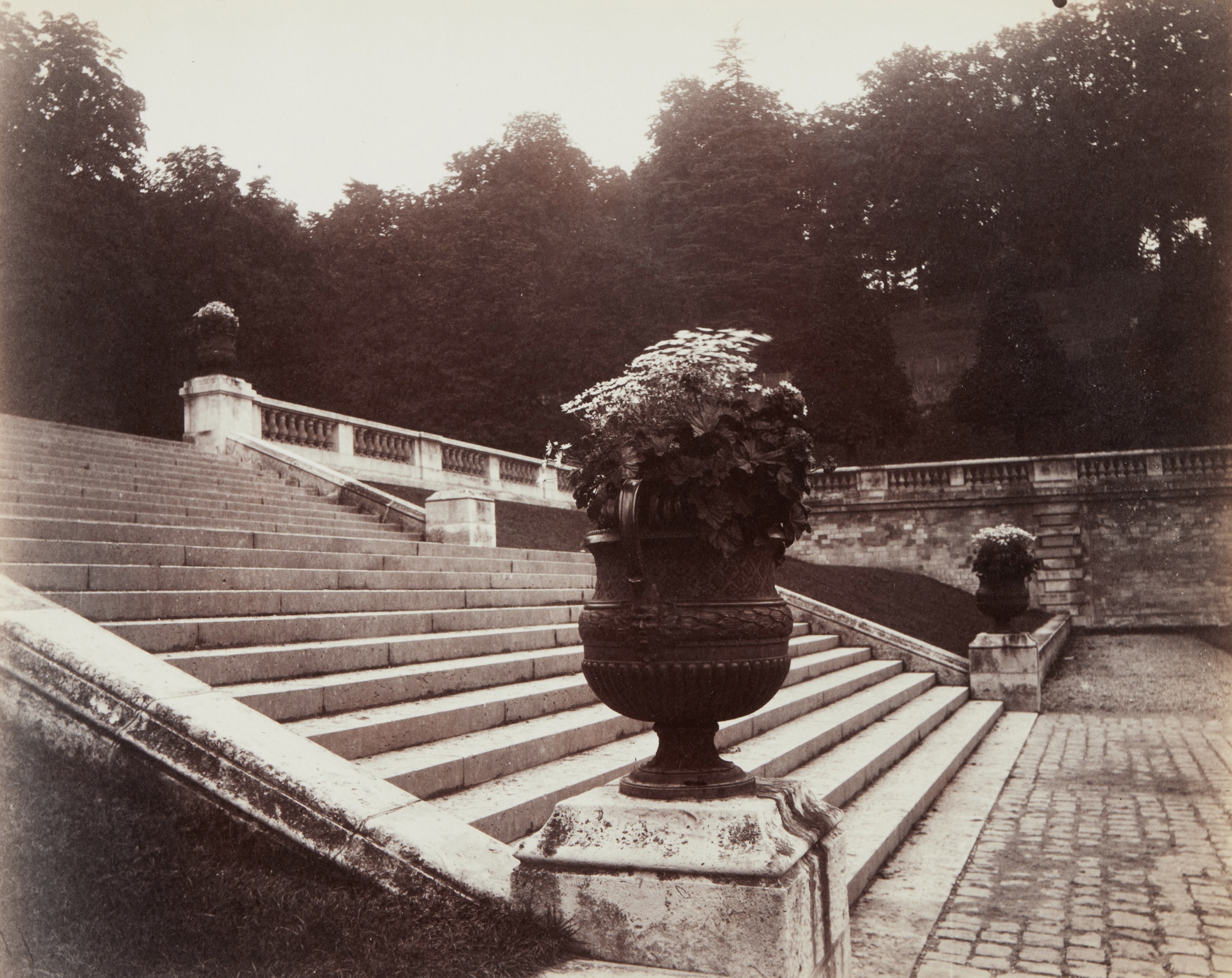
Parc de Saint-Cloud (urns), 1922
)" (1924). His 1911 albumen print of the Boutique d'apiculture on the Quai de la Mégisserie, numbered 302 in pencil on the reverse, is a perfect example of his approach: a beekeeping supply shop, its window crowded with hives and equipment, rendered with such careful stillness that the image feels suspended between commerce and poetry. His 1922 view of the urns at the Parc de Saint Cloud places the formal grandeur of the French classical garden tradition against an open sky with a quiet confidence that recalls the great landscape painters of the previous century. These are not accidental beauties.
They are made. The Surrealists were among the first to recognize what Atget had achieved. Man Ray, who lived near Atget's studio in the final years of the photographer's life, published several of his images in the journal La Révolution Surréaliste in 1926, though famously without crediting him by name. It was Man Ray's American assistant Berenice Abbott who became the most consequential champion of Atget's legacy.
Eugène Atget
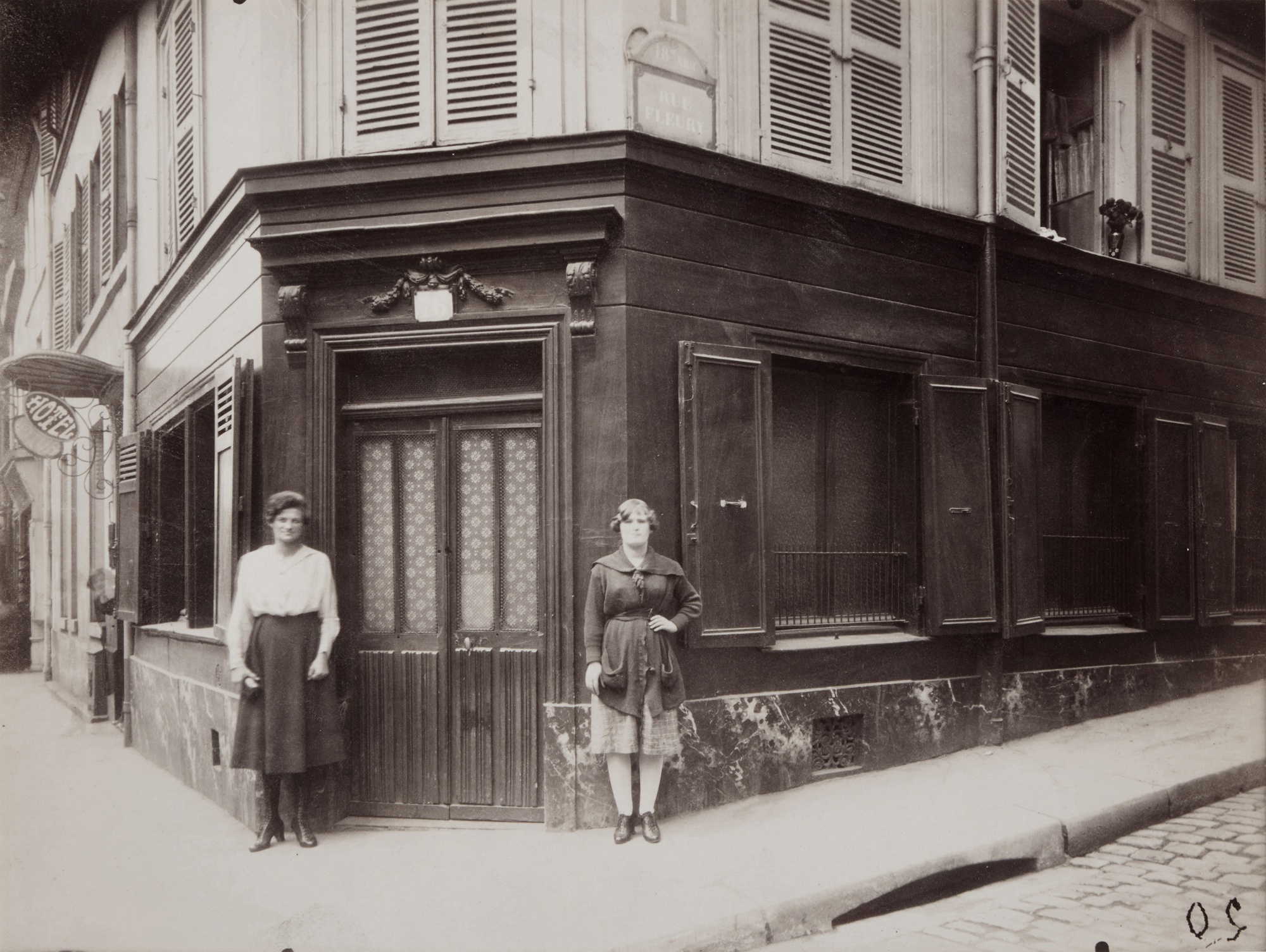
Coin du Boulevard de la Chapelle et 76 rue Fleury (18e arr.), 1921
After his death in 1927, Abbott acquired the contents of his studio, tens of thousands of negatives and prints, and dedicated decades to preserving and promoting his work. The Berenice Abbott provenance stamp that appears on several works in The Collection, including the striking 1921 "Coin du Boulevard de la Chapelle," is not merely a mark of ownership but a certificate of historical continuity. Abbott's role in bringing Atget to international attention, culminating in the landmark 1930 publication of "Atget Photographe de Paris," cannot be overstated. For collectors, Atget's work occupies a singular position in the market for historical photography.
His prints were made as working objects, not as art objects in the conventional sense, and this gives them a material honesty that is immediately apparent in person. The albumen prints have a warmth and tonal depth that modern reproductions rarely convey fully. The penciled notations, studio stamps, and negative numbers on the reverses are part of the work's identity, a record of a systematic intelligence at work across decades. When acquiring Atget, collectors should attend carefully to paper quality, the presence of provenance stamps, and the condition of the image surface.
Works with the Rue Campagne Première stamp and clear numerical sequences from his cataloguing system carry both documentary and aesthetic authority. The Peter C. Bunnell Collection, from which the work "A la Biche, rue Geoffroy Saint Hilaire" descends, represents the kind of serious institutional collecting history that adds both scholarly credibility and long term value. To place Atget within the broader history of photography and visual art is to understand how foundational his thinking was.
He shares with Charles Marville, who photographed the transformation of Paris under Haussmann in the 1860s and 1870s, a preoccupation with the city as a site of memory and loss. He anticipates the quiet sociological eye of Walker Evans, who openly acknowledged his debt to Atget. The great street photographers of the twentieth century, from Henri Cartier Bresson to Lisette Model, worked in a tradition that Atget helped to create. And yet he remains distinct from all of them, less interested in the decisive moment than in the sustained gaze, less focused on people than on the spaces people inhabit and leave behind.
Atget died in August 1927, alone and largely without recognition beyond a small circle of artists and archivists. Within a generation, he would be acknowledged as one of the most important photographers who ever lived. The Museum of Modern Art in New York, which acquired the Abbott Atget archive in 1968, has mounted exhibitions of his work that place him at the very foundation of photographic modernism. Today, nearly a century after his death, his images continue to feel urgently present.
They remind us that the most profound act of attention is also an act of love, and that a city, like a person, reveals itself most fully to those who are willing to look slowly, carefully, and without agenda.
Explore books about Eugène Atget