Ellsworth Kelly
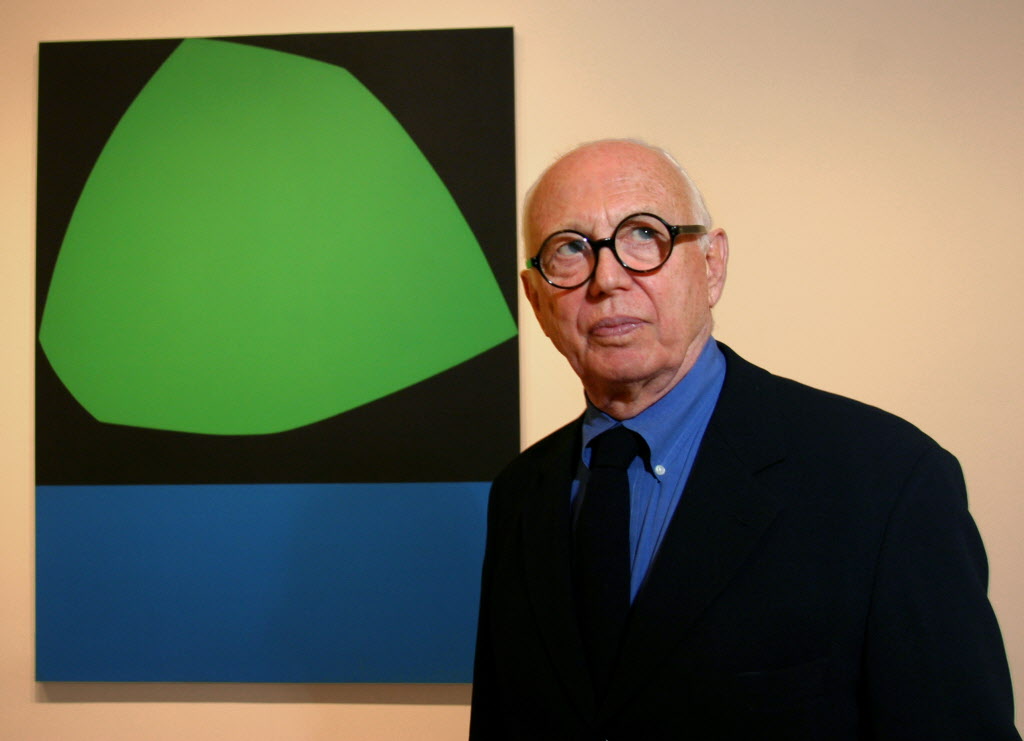
Ellsworth Kelly: Pure Color, Pure Vision
Artist Spotlight · The Collection Editorial
“I wanted to free shape from its ground and then work the shape so that it has a definite relationship to the space around it.”
Ellsworth Kelly, interview with Henry Geldzahler, 1963
In the spring of 2023, the Los Angeles County Museum of Art continued to honor the enduring legacy of Ellsworth Kelly through the sustained institutional attention his work commands across the world's great museums. His monumental installation at the Blanton Museum of Art in Austin, Texas, a freestanding stone building known as Austin completed posthumously in 2018 and opened to the public that same year, remains one of the most talked about artistic gifts of the twenty first century. The structure, conceived by Kelly over decades and finally realized after his death in 2015, distills his entire philosophy into architecture, light, and color. It is a pilgrimage site for artists, collectors, and lovers of form everywhere, and it confirms what the art world has long understood: Ellsworth Kelly is one of the indispensable figures of American modernism.
Ellsworth Kelly
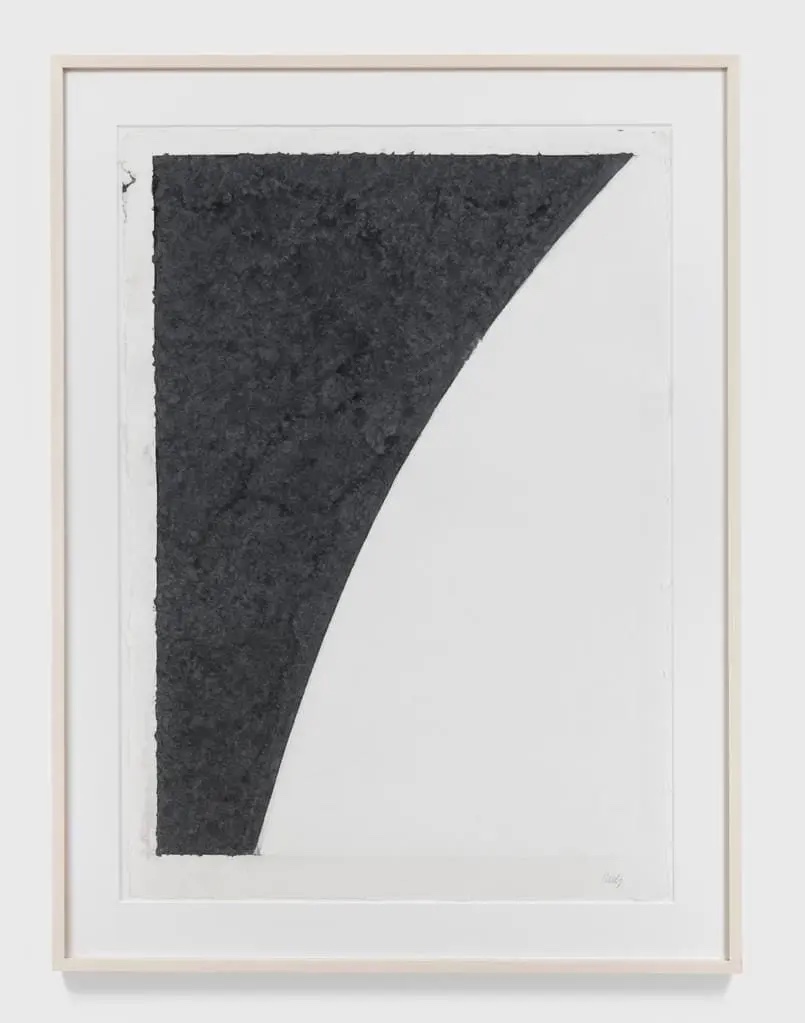
Colored Paper Image I (White Curve with Black I), 1976
Kelly was born in 1923 in Newburgh, New York, a town situated along the Hudson River with a quiet, unhurried beauty that perhaps seeded his lifelong sensitivity to shape and natural light. He showed artistic inclination early, and after military service during World War II, which took him across Europe and sharpened his eye for the continent's visual culture, he enrolled at the School of the Museum of Fine Arts in Boston. The formal training he received there gave him a foundation, but it was his decision in 1948 to move to Paris that truly set the course of his life's work. He would remain in France for six formative years, absorbing the city with an almost scientific attentiveness.
In Paris, Kelly studied at the École des Beaux Arts and immersed himself in the modernist tradition firsthand. He encountered the work of Jean Arp, Sophie Taeuber Arp, and Constantin Brancusi, artists whose commitment to essential form resonated deeply with his own instincts. He also spent long hours observing architecture, shadows on walls, the shapes made by windows, staircases, and the play of light on the Seine. From these observations he developed what became his signature approach: the isolation of form from its context and its translation into flat, unmodulated color on canvas.
Ellsworth Kelly
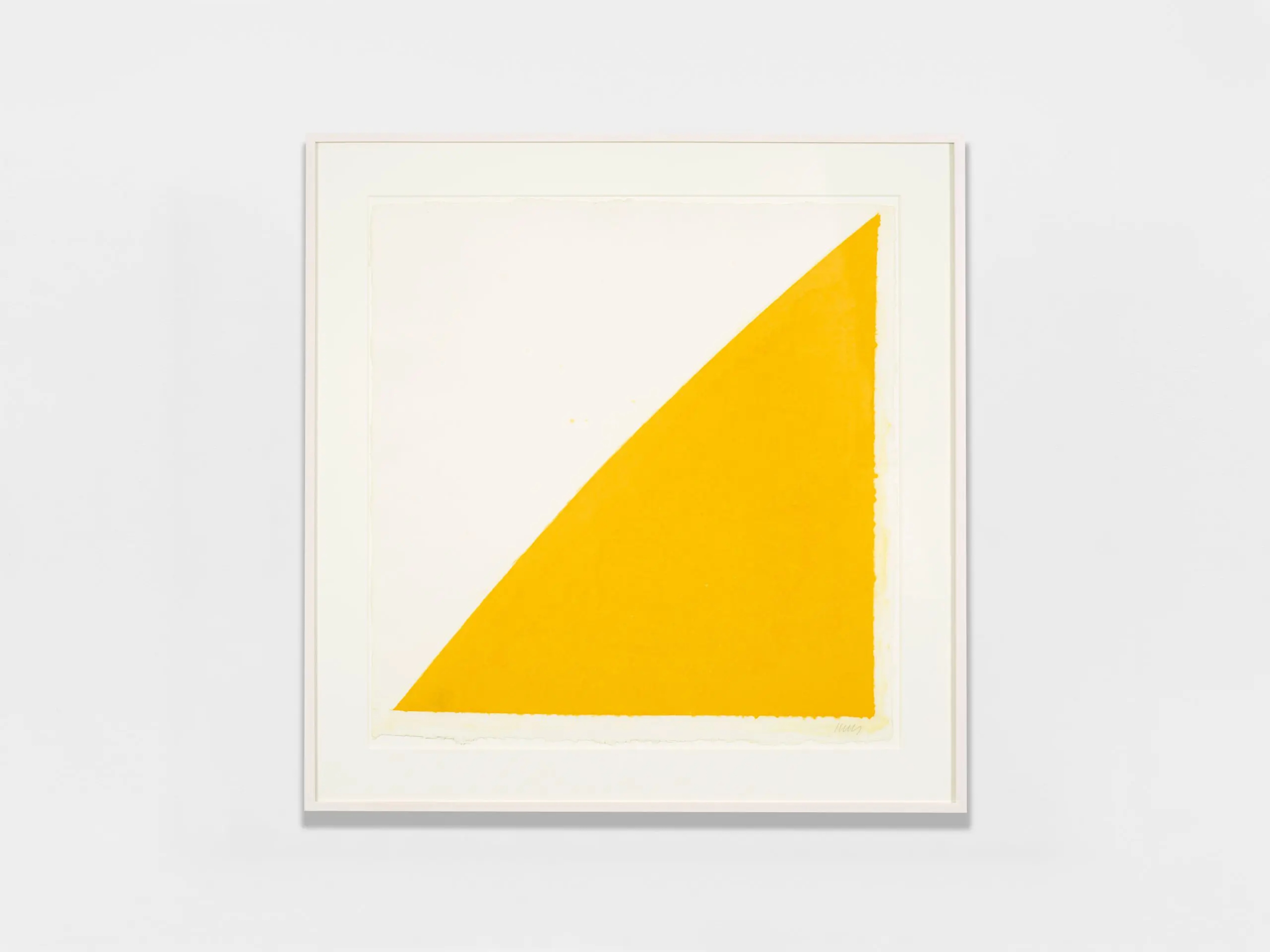
Colored Paper Image XIV (Yellow Curve), 1976
A window arch became a painting. A shadow on a staircase became a sculpture. He was not abstracting the world so much as distilling its most precise truths. Upon returning to the United States in 1954, Kelly found a New York art scene electrified by Abstract Expressionism.
“The subject is not the painting. The painting is the subject.”
Ellsworth Kelly
He was sympathetic to the ambition of that movement but fundamentally opposed to its gestural emotionalism. Where painters like Willem de Kooning and Franz Kline made the mark and the hand the subject, Kelly removed both entirely. His canvases offered no brushstroke, no texture, no trace of the artist's touch. What remained was pure: a red arc, a yellow rectangle, a blue curve on white.
Ellsworth Kelly
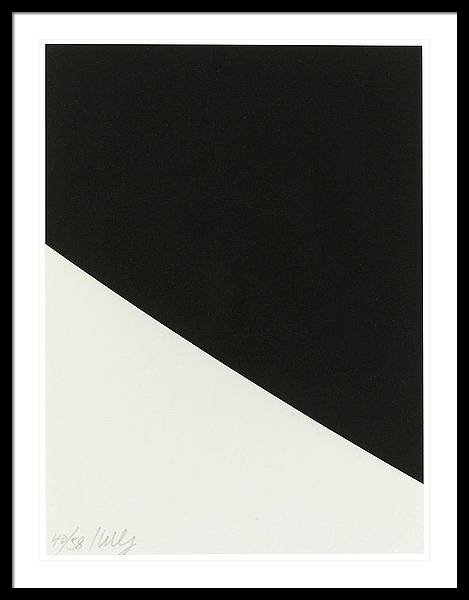
Red Curve (Black State), 1999
These were not symbols or metaphors. They were experiences. His panels from the 1950s and 1960s, works like Red Blue Green from 1963, announced a new visual language that would influence generations of artists who came after him, from Frank Stella to Carmen Herrera to Brice Marden. Kelly worked prolifically across painting, sculpture, and printmaking, and his prints deserve particular appreciation from collectors.
Works such as Colored Paper Image I (White Curve with Black I) and Colored Paper Image XIV (Yellow Curve), both from 1976 and created in colored and pressed paper pulp, demonstrate how deeply Kelly understood the unique potential of each medium he entered. These are not reproductions of paintings; they are fully autonomous works that use the physical properties of their materials to achieve effects unique to themselves. His lithographs, including Red Curve (Black State) from 1999 and Dartmouth from 2011, show the same mastery applied to works on paper over decades of sustained creative energy. The Chicago Panels from 1989, a series of acrylic works on fiberglass and plywood rendered in Kelly's characteristic saturated hues of green, orange, and yellow, represent his ability to translate his language into architectural scale and context.
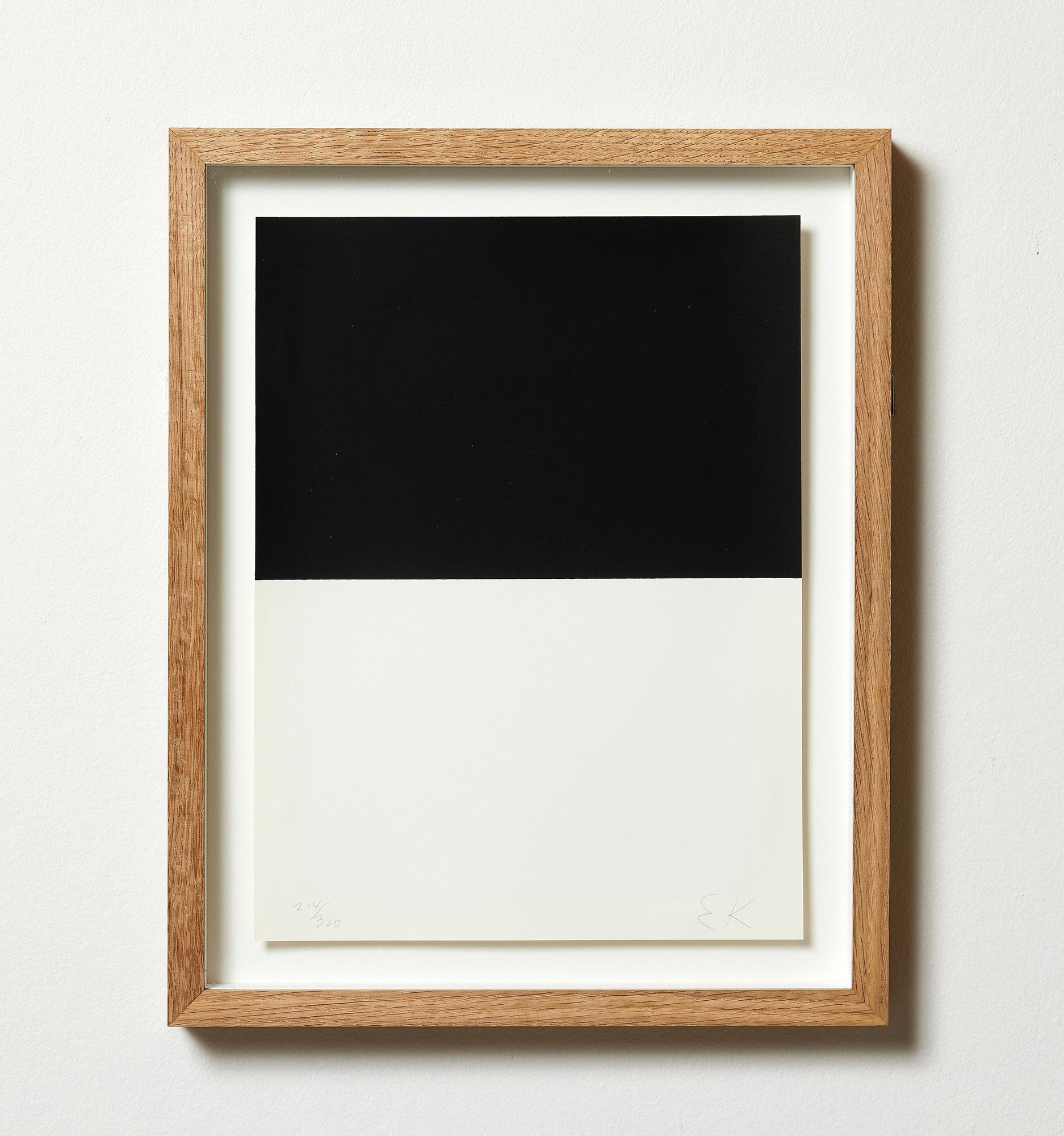
Ellsworth Kelly
Untitled, 1973
From a collecting perspective, Kelly occupies one of the most secure positions in the postwar American canon. His major paintings appear regularly at Christie's, Sotheby's, and Phillips, where they consistently achieve results in the millions of dollars. A large scale oil on canvas from the 1960s or 1970s is among the most coveted objects in the market. But savvy collectors have long understood that his works on paper and prints offer an extraordinary entry point into his vision.
The prints and paper works carry the full intellectual and aesthetic weight of his practice, and their relative accessibility makes them among the most rewarding acquisitions a collector at any level can make. Condition, provenance, and the distinctiveness of the specific form depicted are the key considerations when evaluating a Kelly work on paper. Within the broader arc of art history, Kelly stands at a crucial intersection. He bridges the European tradition of Constructivism and the American ambitions of Color Field painting, and he does so with a clarity that few of his peers could match.
His work invites comparison with that of Kenneth Noland and Robert Indiana, artists who shared his interest in hard edge form and saturated color, but Kelly's origins in observed reality gave his abstractions a grounded, organic quality that sets them apart. He was also a profound draftsman whose plant drawings, rendered with elegant single lines, reveal the observational intelligence that underlies every apparently simple canvas. Kelly's legacy today is perhaps stronger than ever. Younger painters across the globe cite him as a liberating influence.
Institutions from the Museum of Modern Art in New York to the Tate Modern in London hold major examples of his work. Austin, his final and most personal statement, draws visitors who come simply to sit inside a room of colored glass light and understand, in their bodies rather than their minds, what this artist spent a lifetime pursuing. He showed us that color is not decoration, that shape is not illustration, and that the most concentrated form of attention, given freely and without irony, can be the most radical act an artist undertakes.
Explore books about Ellsworth Kelly

Ellsworth Kelly: A Retrospective
Yve-Alain Bois
Ellsworth Kelly: Sculpture
Jack Cowart
Ellsworth Kelly: Works on Paper
Diane Waldman
Ellsworth Kelly
Barbara Rose

Ellsworth Kelly: The Years of Engagement
John Coplans
Ellsworth Kelly: A Life
Giles Saville
Ellsworth Kelly: Paintings and Sculpture
Uptown Gallery