Elad Lassry
Elad Lassry Makes the Familiar Feel New
Artist Spotlight · The Collection Editorial
There is a particular kind of attention that Elad Lassry demands from viewers, one that rewards patience and curiosity in equal measure. In recent years, his work has appeared in some of the most rigorous institutional contexts of contemporary art, from the Whitney Museum of American Art in New York to the Kunsthalle Zürich and MoMA PS1, cementing his reputation as one of the most intellectually precise artists working in photography and installation today. His presence in major collections on both sides of the Atlantic reflects a growing consensus: that Lassry is not simply a photographer who makes beautiful pictures, but a thinker who uses the photographic image as a tool for questioning how we see, what we expect from images, and why visual culture operates the way it does. Born in Tel Aviv in 1977, Lassry came of age in a city saturated with the visual languages of both the ancient and the aggressively contemporary.
Elad Lassry
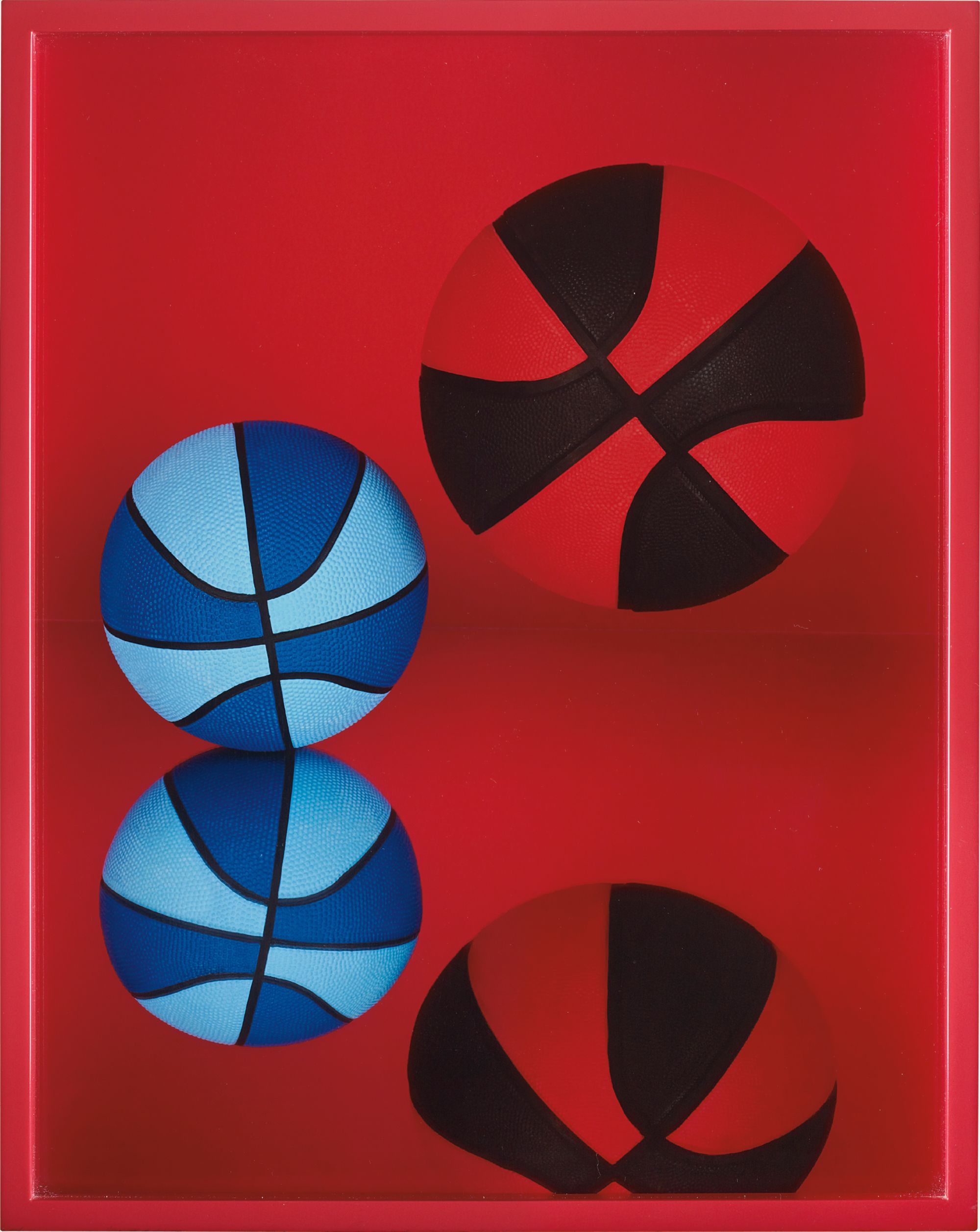
Basketballs
He later relocated to Los Angeles, where he studied at the California Institute of the Arts, an institution with a long tradition of producing artists who interrogate representation and media rather than simply working within them. CalArts, with its emphasis on conceptual rigor and critical theory, gave Lassry a framework that would prove essential. He arrived at a moment when the conversation about photography was shifting dramatically, when digital circulation was beginning to transform what it meant for an image to exist at all, and his formation in that environment gave his practice a clarity of purpose that has never left it. Lassry's development as an artist has been marked by a deliberate and almost methodical process of narrowing his focus in order to expand it.
His early work established the foundation of what would become a signature approach: taking images from the vernacular of commercial and editorial photography, subjects drawn from product shots, portraiture, nature photography, and stock image conventions, and restaging them with a precision that makes their artificiality visible and strange. He works almost exclusively with chromogenic prints, a medium with deep roots in commercial photography and one whose particular saturation and surface quality he exploits with great sophistication. Over time, his compositions have become more refined and his investigation of the relationship between image and object more nuanced, but the core inquiry has remained consistent. Among his most celebrated bodies of work are pieces like "Basketballs", in which the subject sits in tension between pure formal abstraction and the loaded cultural associations of the object itself, and the triptych "i.
![Elad Lassry — i. Sea Lion ii. Two Elephants iii. Onions [Three Works]](https://rtwaymdozgnhgluydsys.supabase.co/storage/v1/object/public/artwork-images/auction-lots/N10789-20211119-lot479.jpg)
Elad Lassry
i. Sea Lion ii. Two Elephants iii. Onions [Three Works], 2010
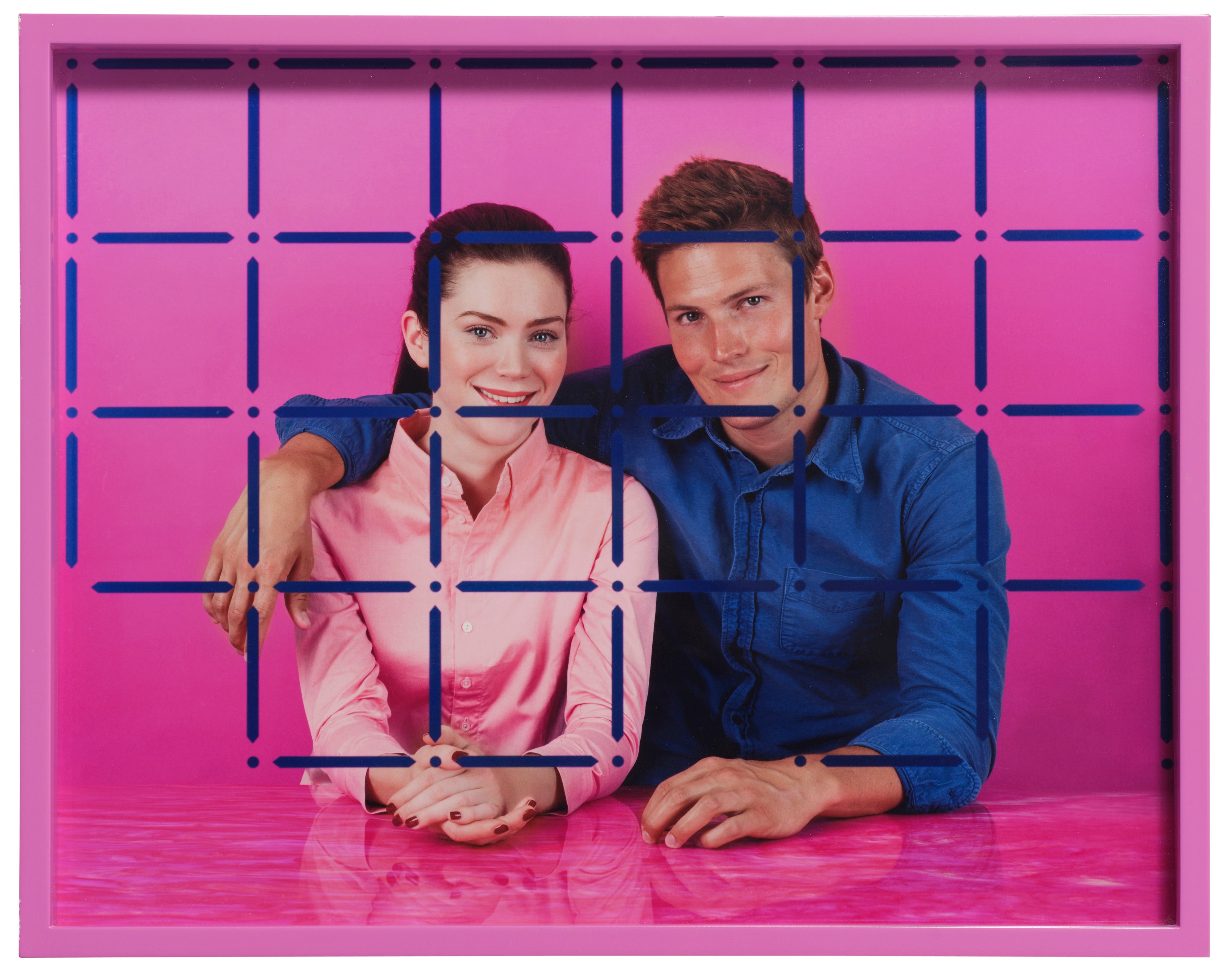
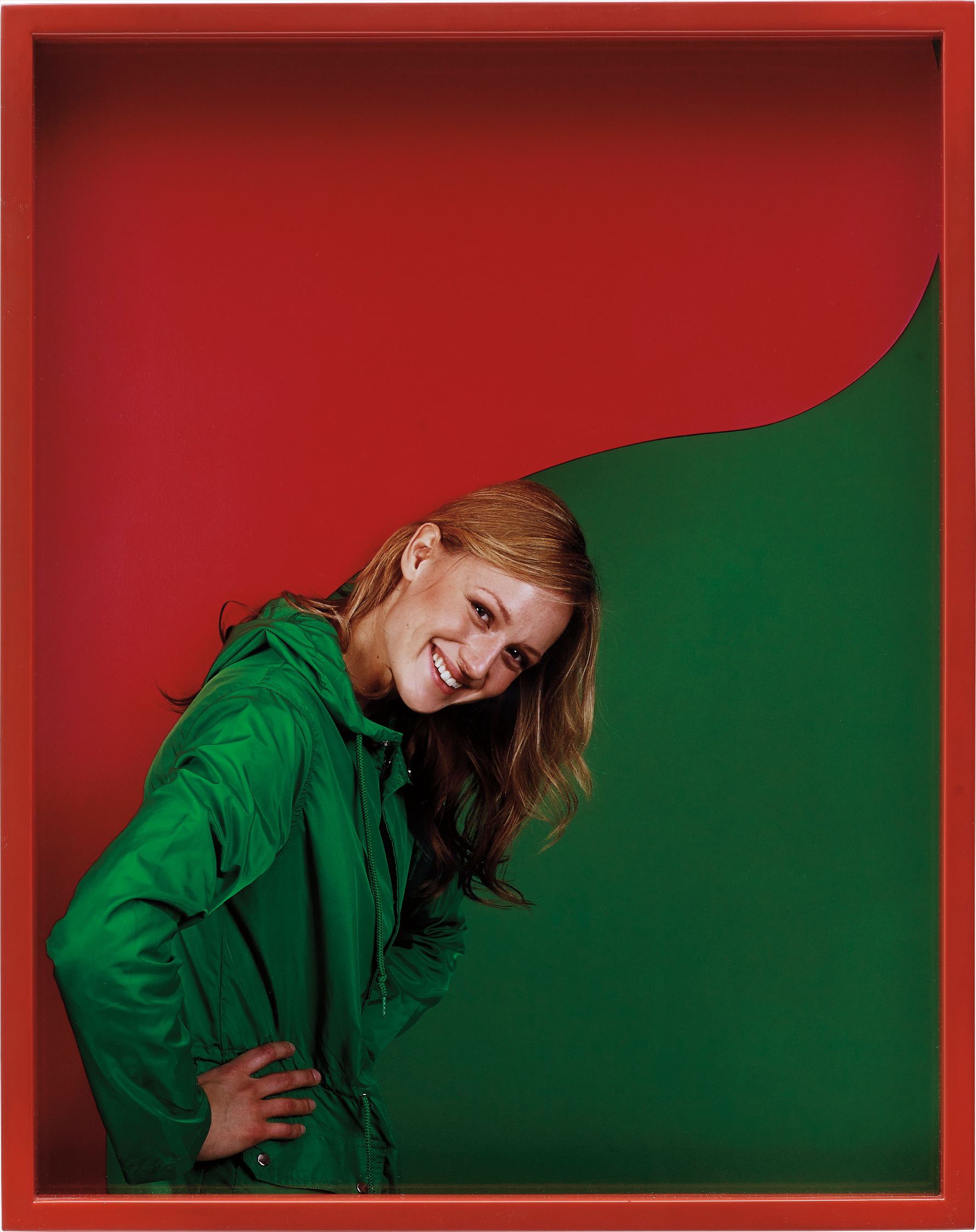
Sea Lion ii. Two Elephants iii. Onions [Three Works]" from 2010, a grouping that places animal subjects and domestic produce in a sequence that feels almost taxonomic, almost comic, and entirely impossible to dismiss. Works like "Girl (Green/Red)" from 2011 and "Woman, Man (Rose, Navy)" from the same year demonstrate his sustained interest in the human figure as image rather than subject, drawing on the visual grammar of fashion photography and editorial portraiture without reproducing its conventions uncritically.
Then there is "Sterling Silver Candleholder" from 2012 and "Woman (Gryphon)" from the same year, works that show his ability to hold together the utilitarian and the mythological within a single, elegantly composed frame. What unifies all of these works is the frame itself: Lassry presents his photographs in frames he has chosen or designed, colored and scaled specifically to each image, so that the photograph and its housing become a single unified object. The frame refuses to be neutral. It insists on its own materiality, completing the work rather than merely enclosing it.
Elad Lassry
Girl (Green/Red), 2011
For collectors, Lassry's work offers something genuinely rare: a practice that is both visually immediate and conceptually deep. The chromogenic prints are physically beautiful objects, with a warmth and richness of surface that rewards living with them. The colored frames, which have become one of his most recognizable and discussed formal strategies, function as both aesthetic choices and conceptual statements, activating the space between image and viewer in a way that feels fresh each time. Collectors who have acquired his work often note that the pieces change depending on where they are hung, that the frame color shifts the reading of the room as much as the room shifts the reading of the frame.
His work appears regularly at major auction houses and through his gallery relationships, and strong results have reflected consistent institutional support. Works from his most productive periods in the early 2010s are particularly sought after. Lassry occupies a specific and important position within the wider conversation about contemporary photography and its relationship to conceptualism. His practice invites comparison to artists like Wolfgang Tillmans, whose investment in the photograph as object rather than mere document shares something of Lassry's formal concerns, and to artists like Christopher Williams, whose rigorous engagement with the conventions of commercial image making resonates with Lassry's own interrogation of visual codes.
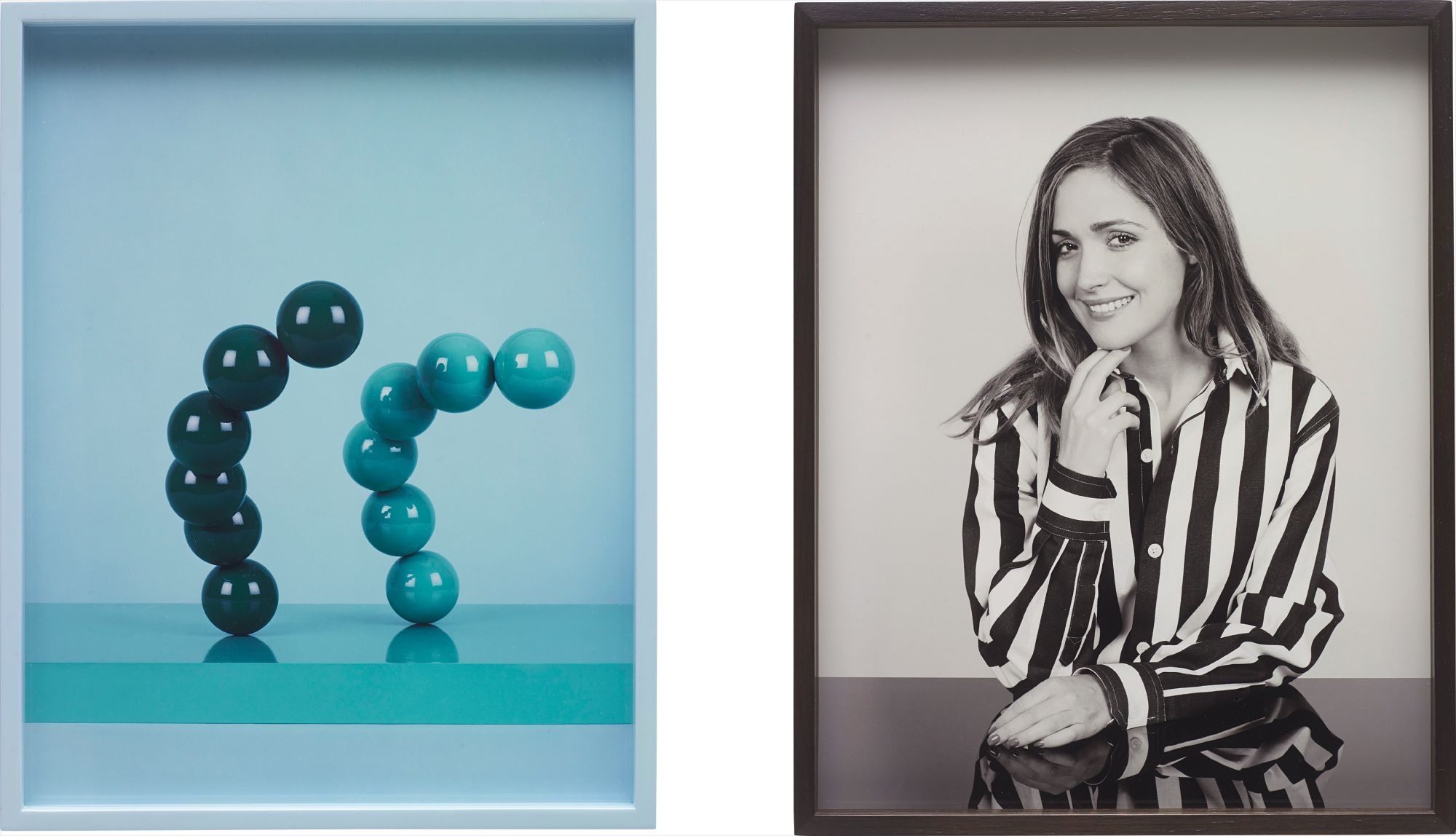
Elad Lassry
Two works: (i) Sculpture (For Park), 2011; (ii) Woman (Head Shot), 2010
There are also productive connections to the Pictures Generation, to artists like Cindy Sherman and Richard Prince, whose examination of appropriation and the mediated image created much of the critical language Lassry works within and against. But Lassry is doing something distinct from any of these predecessors. He is not appropriating images so much as simulating the conditions under which images are made, staging his own productions to expose the invisible assumptions that govern how pictures of objects, animals, and people are typically made and consumed. What makes Lassry matter so urgently today is precisely this: we live in an era of overwhelming image abundance, where photographs are produced and discarded in quantities that would have been unimaginable even twenty years ago.
In that context, an artist who slows the image down, who gives it a frame that says this object deserves your full attention, who restages the ordinary with such care that it becomes strange and newly visible, is performing an act of genuine cultural resistance. His work does not mourn the image or despair over its proliferation. It insists, with patience and wit and an almost architectural sense of form, that the act of looking carefully is still possible and still worthwhile. For anyone building a collection with both intellectual ambition and aesthetic pleasure in mind, Elad Lassry represents an essential and enduring voice.
Explore books about Elad Lassry