El Anatsui
El Anatsui Turns Discarded Things Into Gold
Artist Spotlight · The Collection Editorial
“The material itself contains history. When you use it, you are not just using a physical substance but everything that has been embedded in it.”
El Anatsui, interview with Okwui Enwezor
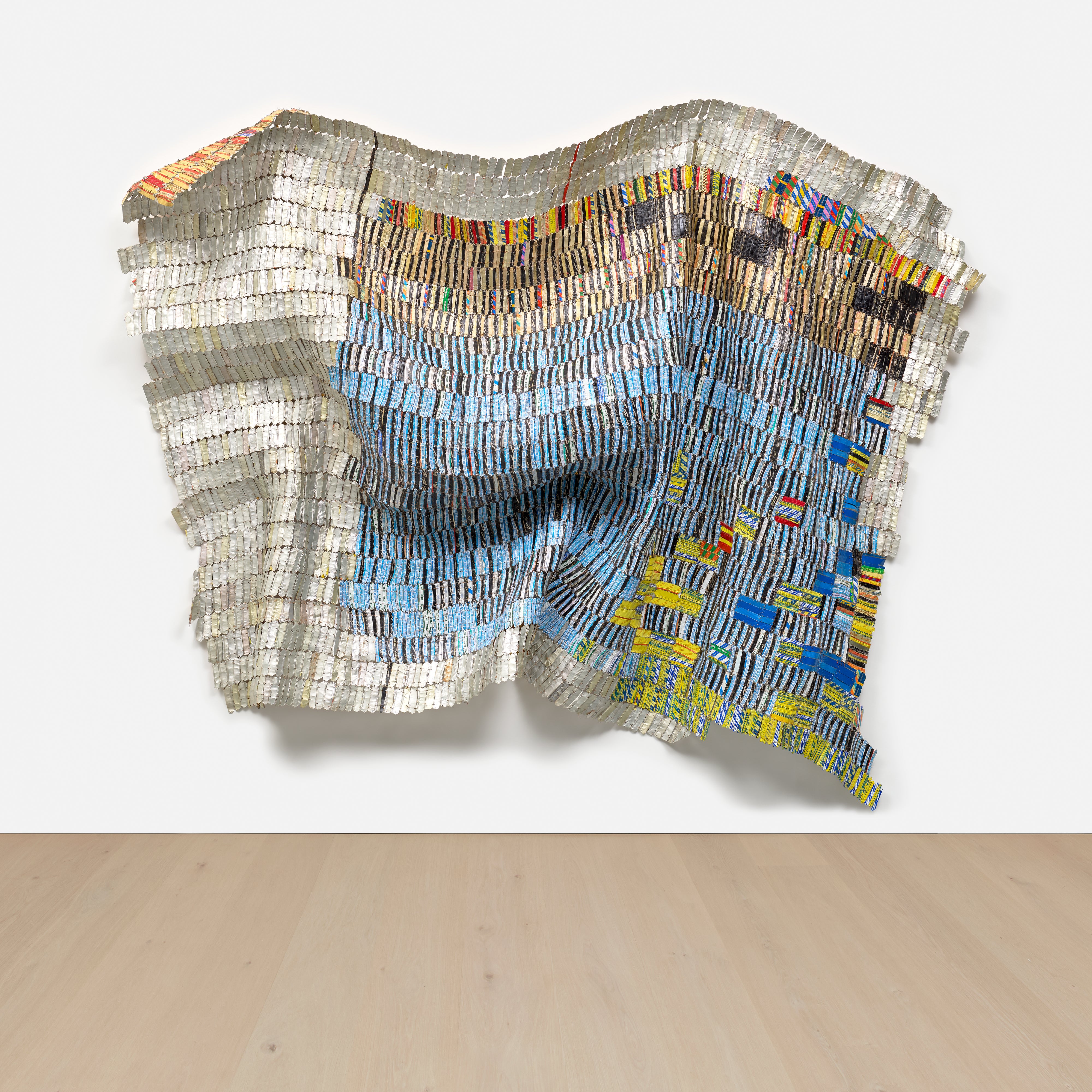
When El Anatsui received the Golden Lion for Lifetime Achievement at the 2015 Venice Biennale, the art world formalized what collectors and curators had long understood: this Ghanaian sculptor had quietly, persistently, and brilliantly transformed the very language of monumental art. Standing before one of his cascading metal tapestries, which can span entire museum facades and shimmer with the weight of thousands of individual pieces, it is almost impossible to believe that the raw material began as discarded bottle caps gathered near his studio in Nsukka, Nigeria. The honor at Venice was not a culmination so much as a confirmation, a moment of collective recognition for a practice that had been building in richness and ambition for decades. El Anatsui was born in 1944 in Anyako, in what was then the Gold Coast and would become Ghana three years later upon independence.
El Anatsui
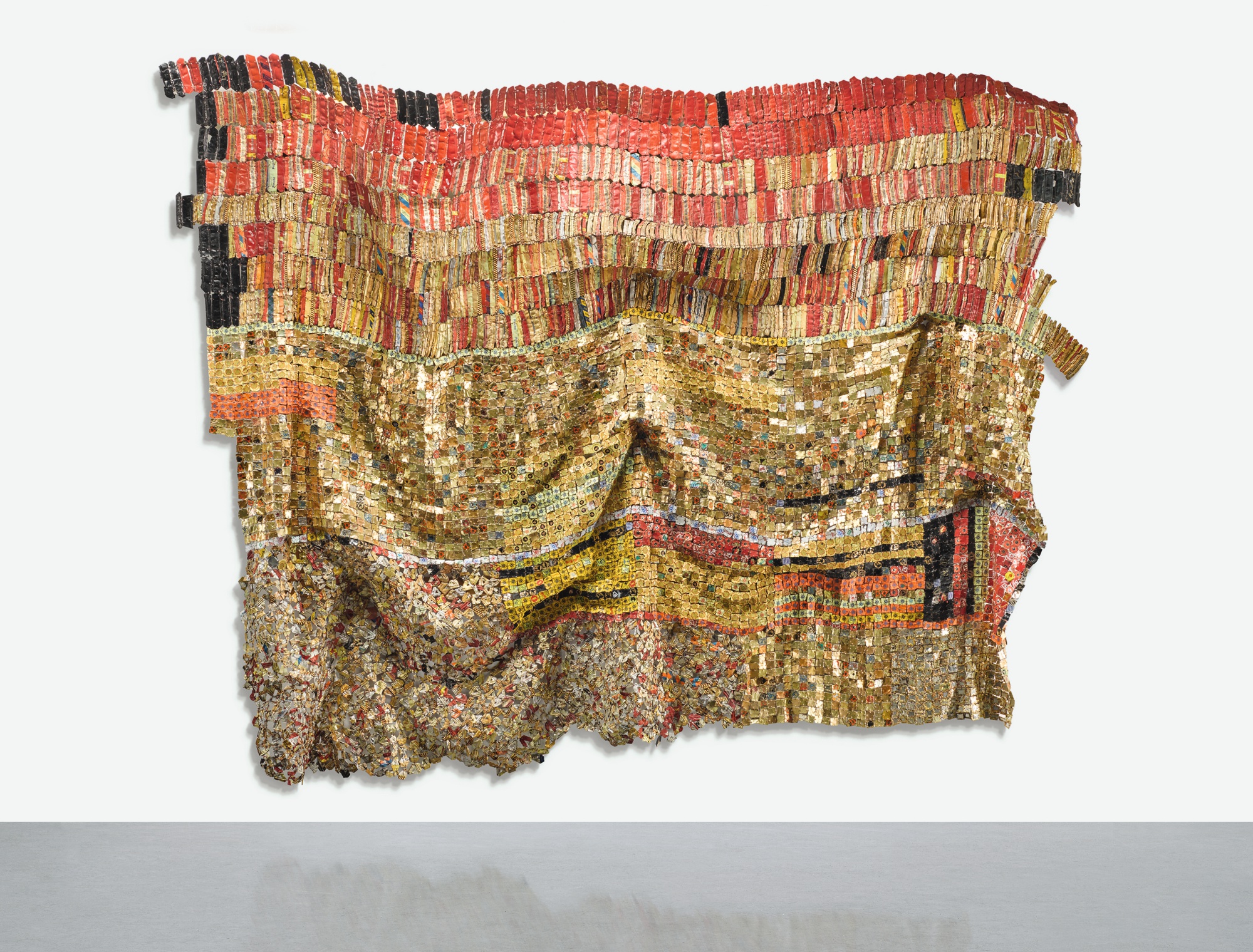
Take My Hand, 2005
He studied at the College of Art at the Kumasi University of Science and Technology, graduating in 1969, and later moved to Nigeria to teach at the University of Nigeria in Nsukka, where he has remained closely connected for most of his professional life. That institution, and the intellectual community around it, proved formative. Nsukka became a crucible for a distinctly African modernism, one that drew on indigenous visual traditions, Igbo aesthetics, and the uli body and wall painting practices of southeastern Nigeria, while engaging rigorously with global contemporary art discourse. Anatsui absorbed all of it, and he has never stopped.
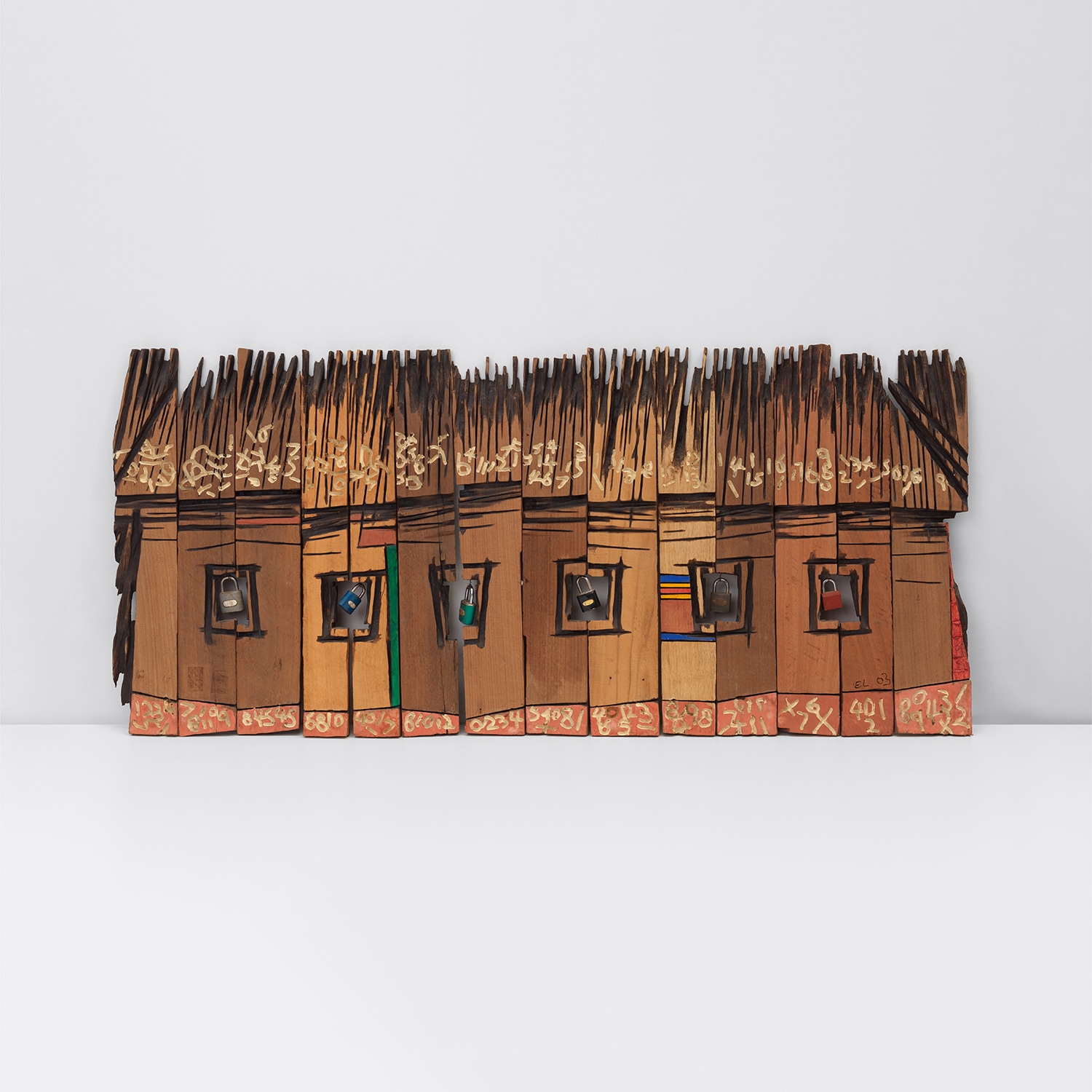
His early work was rooted in wood. He carved into tropical hardwoods with a chainsaw, inscribing surfaces with marks and symbols that echoed ceramic traditions, ancient scripts, and the visual languages of the African continent. Works such as Game on Gma's Cloth and Primary School, the latter from 2003 and incorporating carved and painted wood alongside padlocks, show an artist already deeply invested in the idea of material as carrier of memory. The padlocks in particular are charged objects, suggesting enclosure, secrecy, and the locked histories embedded in everyday objects.
El Anatsui
Primary School, 2003
These wooden works remain compelling entry points into his practice for collectors who want to understand where the later, more celebrated metal works came from. The pivotal shift arrived when Anatsui began working with aluminum bottle caps and copper wire in the late 1990s and early 2000s. The materials came from the world immediately around him, the discarded seals and caps from local liquor bottles, many of them printed with the names of brands that moved across West Africa and carried with them the residue of colonial trade routes, commercial exchange, and the politics of consumption. He and his studio assistants would flatten, fold, and wire thousands of these fragments together into vast sheets that behaved more like cloth than metal, draping and pooling with an almost liquid elegance.
“I want the works to be free, not to be nailed down. The work should have the possibility of change.”
El Anatsui, Studio Visit, Nsukka
The resulting works resist fixed form: Anatsui famously allows his pieces to be installed differently in each new context, handing a degree of creative agency to the institutions and individuals who display them. This generosity of intention is itself a philosophical statement about authorship, community, and the living nature of art. Among the works available through The Collection, Take My Hand from 2005 stands as a particularly resonant example of the mature bottle cap practice. The aluminum and copper wire construction pulses with color and texture, the individual units accumulating into something that feels both ancient and urgently contemporary.
El Anatsui
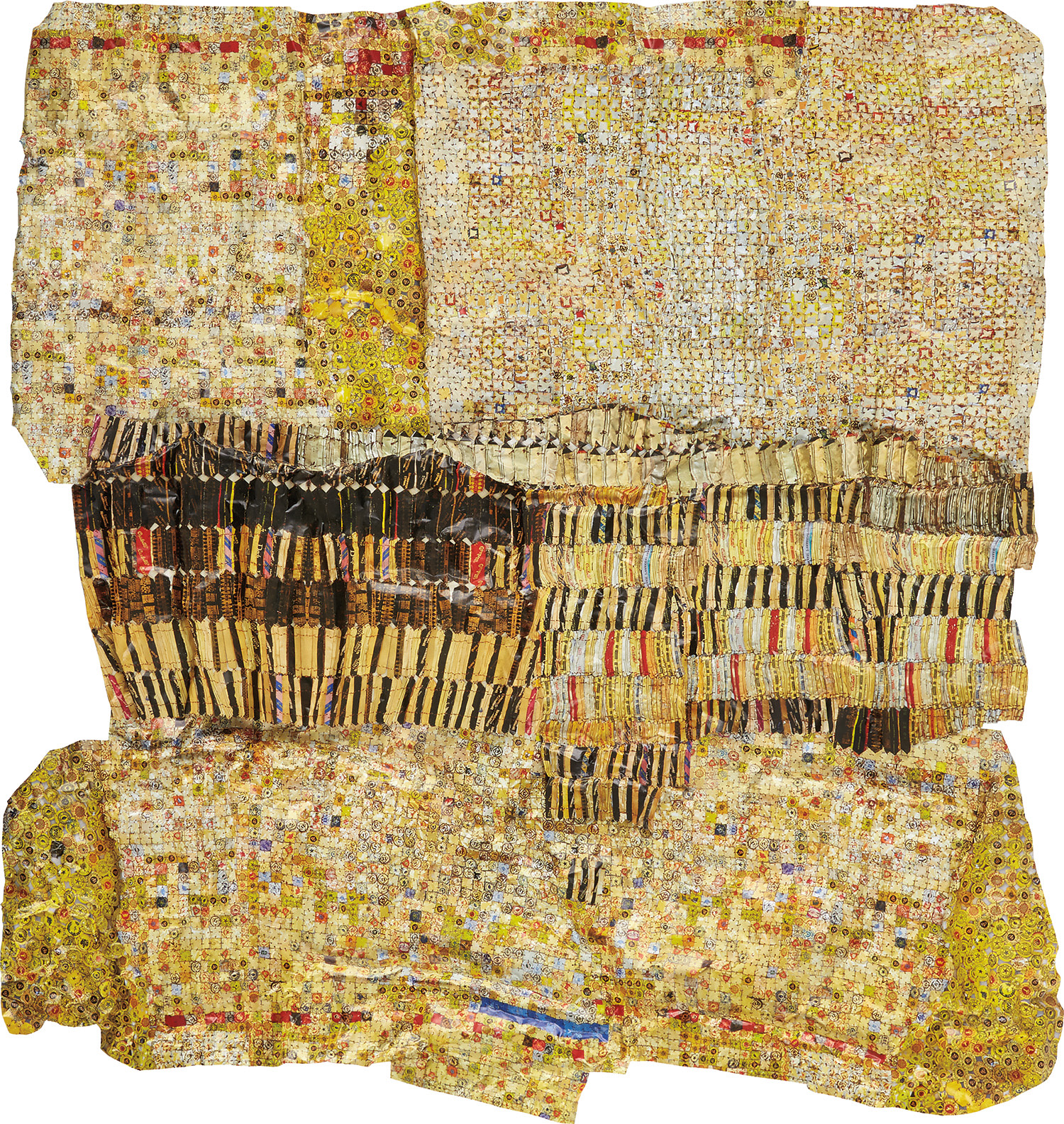
Gold Band
Alter Ego and Affirmation, both from 2014, demonstrate how his command of scale and tonal variation only deepened over the years. Zebra Square from 2007, built from aluminum liquor bottle caps and copper wire, plays with geometric patterning in ways that nod simultaneously to African textile traditions and to the formal concerns of postwar abstraction. The works on paper and print, including Striped Flags and Gold Band, extend the visual vocabulary of the larger sculptures into an intimate register, showing how his thinking translates across formats and surfaces. From a collecting perspective, Anatsui occupies a rare position: he is simultaneously an artist of genuine art historical importance and one whose market continues to reflect growing institutional recognition rather than speculative frenzy.
His works have entered the permanent collections of the Metropolitan Museum of Art in New York, the British Museum in London, and the Museum of Modern Art, among many others. Major auction houses have seen his large scale works achieve prices well into the millions of dollars, with the secondary market strengthening steadily through the 2010s and into the present decade. For collectors, the works on paper and smaller format pieces represent an accessible entry into a practice that commands enormous prices at the top end, while the larger aluminum tapestries remain among the most coveted objects in the contemporary African art market. What to look for is the quality of the wiring, the density and tonal range of the metal, and the presence of that characteristic interplay between rigidity and flow that defines his best work.
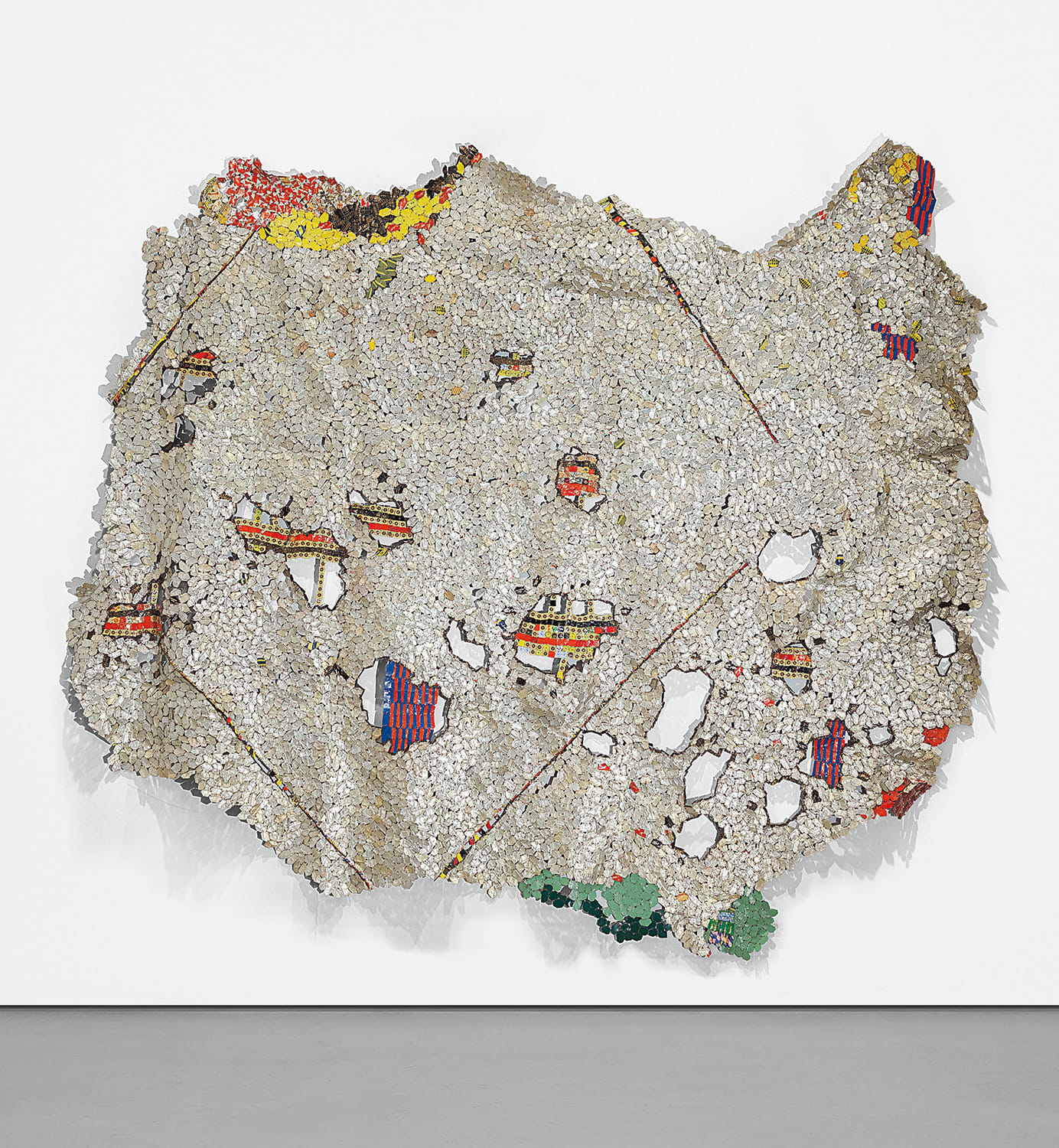
El Anatsui
Alter Ego, 2014
Anatsui exists in a rich conversation with other artists who have explored the politics of material and the aesthetics of accumulation. His practice resonates with the Arte Povera movement in Italy, particularly the work of Jannis Kounellis, who also transformed industrial and everyday materials into monumental poetic statements. Closer to his own context, he belongs to a lineage of African artists who have insisted on the philosophical depth of indigenous visual traditions, artists such as Ousmane Sow and Magdalene Odundo, who have expanded the terms on which African art participates in global contemporary discourse. His work also speaks meaningfully to the textile based abstraction of Anni Albers and the assemblage traditions developed by artists including Louise Nevelson and John Chamberlain in the United States.
What makes Anatsui matter today, and why his work feels not only beautiful but necessary, is the way it holds together so many things at once. It is a meditation on waste and transformation, on the possibility of beauty emerging from discarded material. It is a record of colonial commerce and its afterlives, the names on those bottle caps tracing routes of trade and cultural imposition that shaped an entire continent. It is a formal achievement of the highest order, bringing the textile traditions of West Africa into conversation with the great wall based and sculptural practices of the twentieth century.
And it is an act of generosity, made with the hands of many people, designed to change with each new place it inhabits. To live with a work by El Anatsui is to live with all of that history, all of that light.
Explore books about El Anatsui
