Ed Ruscha
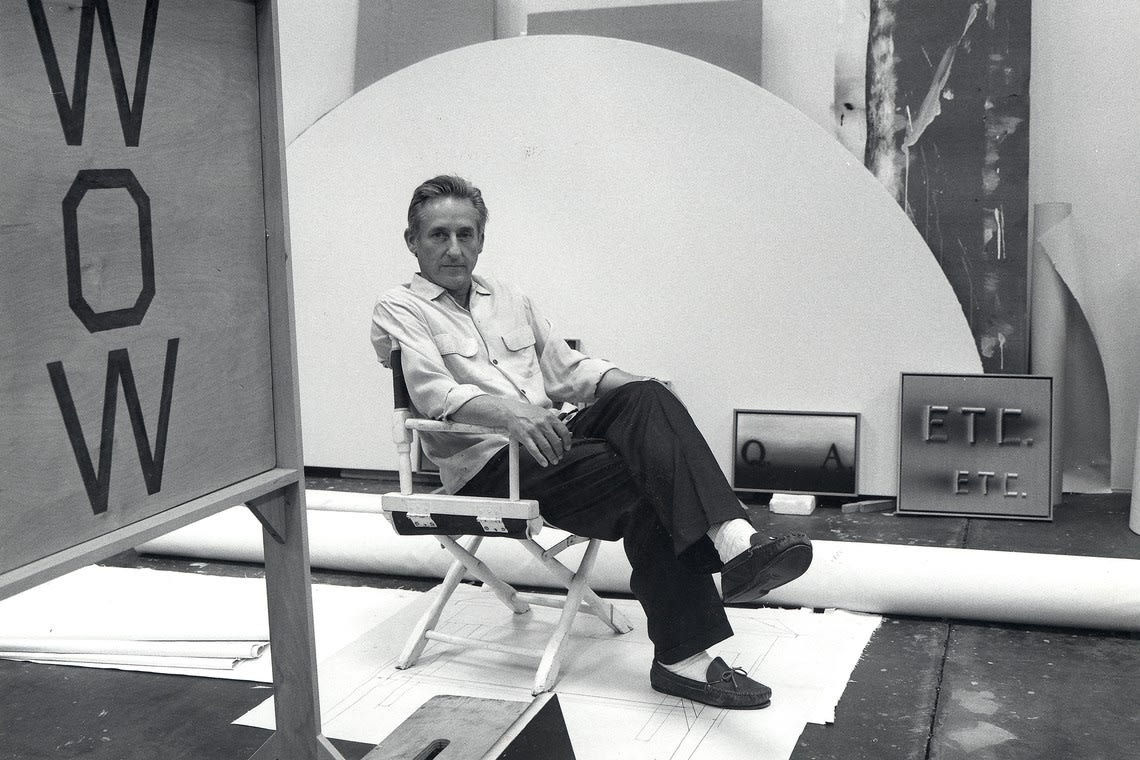
Ed Ruscha: Words That Remake the World
Artist Spotlight · The Collection Editorial
“I've always believed in the road more than the destination. The act of getting there is what makes it real.”
When the Los Angeles County Museum of Art mounted its sweeping survey of Ed Ruscha's work in recent years, something remarkable became clear: this is an artist whose relevance has only deepened with time. Now in his late eighties, Ruscha continues to produce work that feels urgently alive, his canvases and prints arriving with the same dry wit and visual authority that first announced him as a major voice in American art more than six decades ago. Museums from the Tate Modern in London to the Museum of Modern Art in New York have mounted significant exhibitions of his practice, and each new look at the body of work reveals further layers of intelligence and quiet poetry. Ruscha is, in the fullest sense, a living monument who somehow never feels monumental.
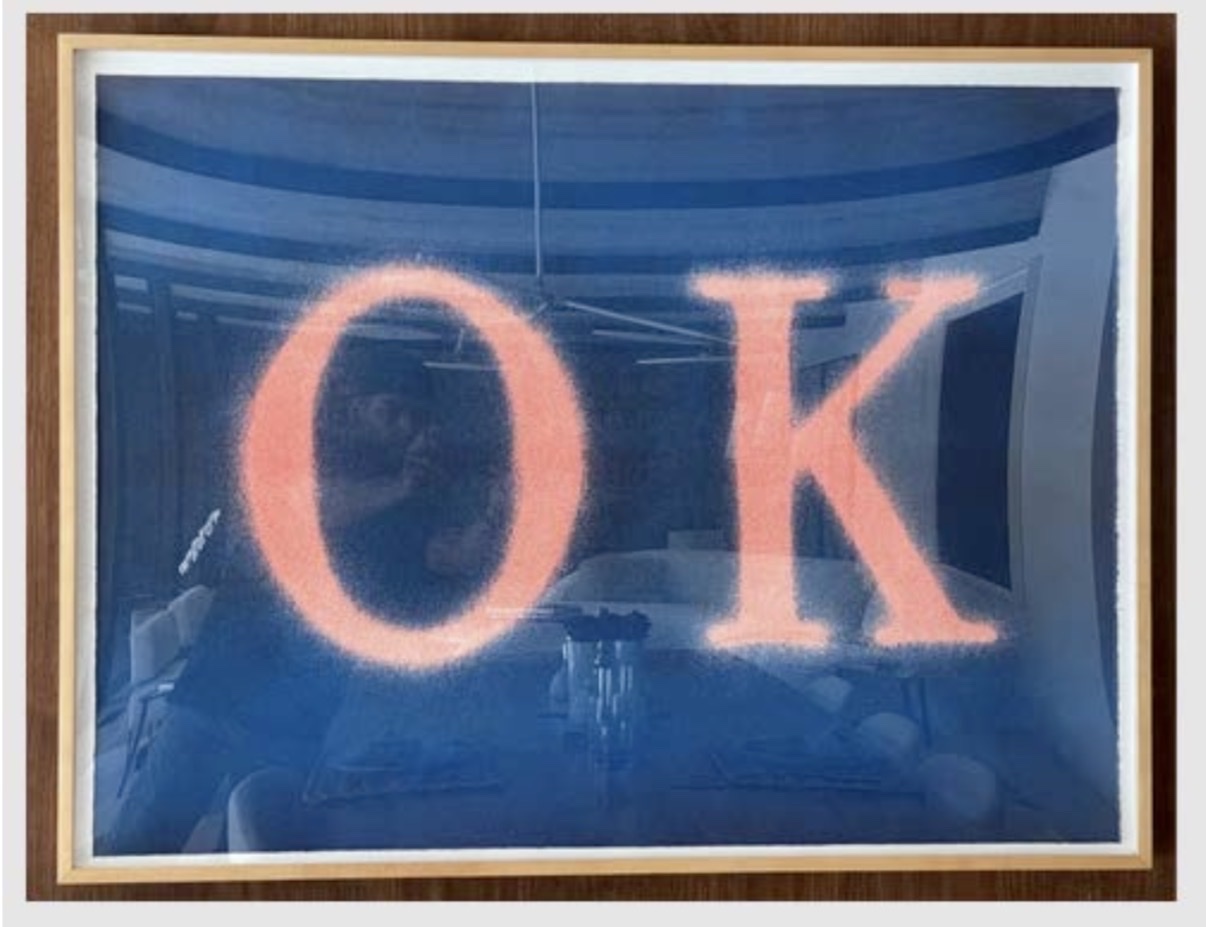
Ed Ruscha
OK (State I), 1990
Edward Joseph Ruscha IV was born in Omaha, Nebraska, in 1937, and grew up in Oklahoma City, where the flatness of the American interior and the blunt typography of roadside signage became the visual grammar of his imagination. He arrived in Los Angeles in 1956 to study at the Chouinard Art Institute, the school that would later become CalArts, and the city rewired everything he thought he knew about art and culture. Los Angeles in the late 1950s was a place of extraordinary possibility, a sprawling, sun bleached landscape of diners, gas stations, parking lots, and freeways that had no established art historical identity. For a young artist from the landlocked Midwest, it felt like a blank canvas the size of a continent.
His early formation was shaped by the tension between Abstract Expressionism, the dominant mode of serious American painting at the time, and the insurgent energy of what would become Pop Art. He absorbed both and ultimately answered to neither, carving out a singular position that used the visual language of commercial culture without surrendering to it. Ruscha began incorporating words and text into his paintings and prints in the early 1960s, at a moment when such a move was genuinely radical. The word was not illustration, not caption, not decoration.
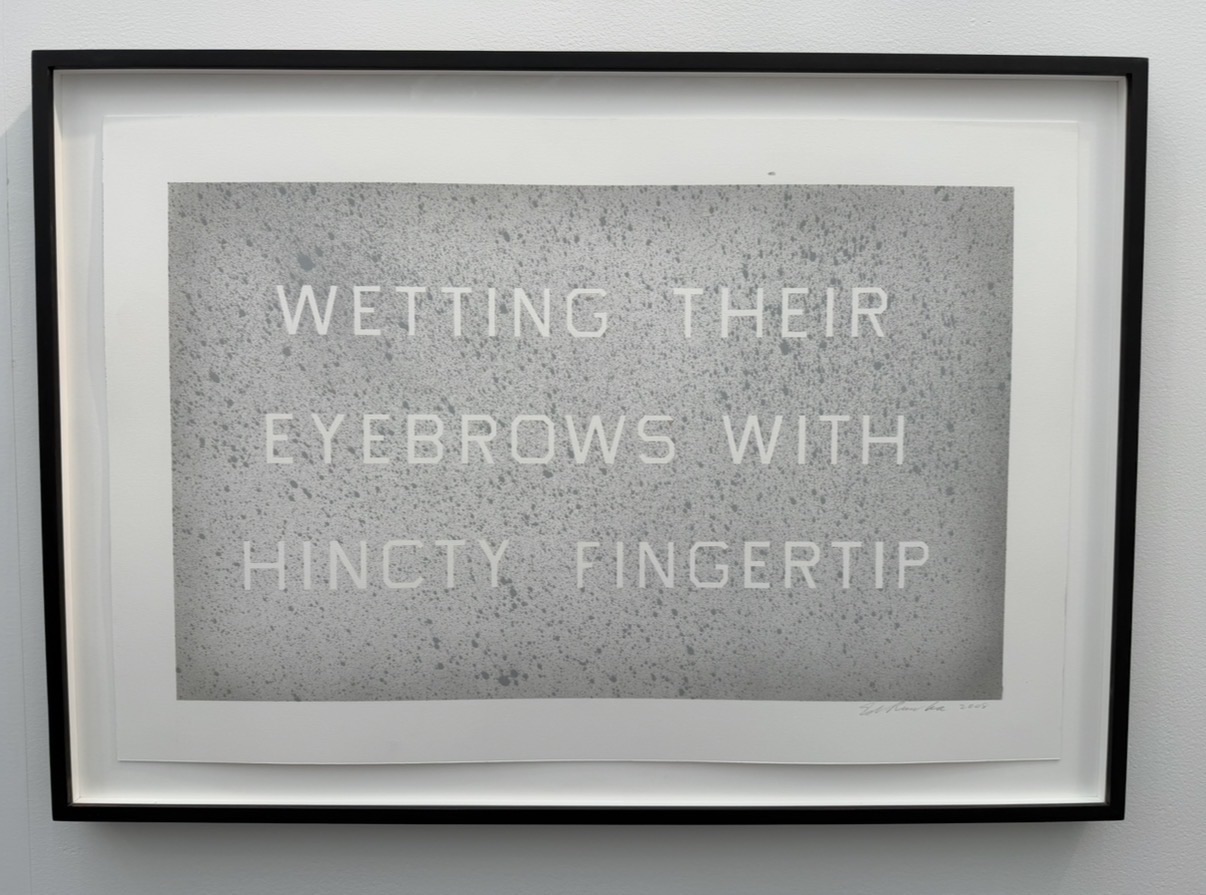
Ed Ruscha
Hincty, 2008
It was the image itself, stranded in space, vibrating with meaning or deliberately refusing to yield any meaning at all. Works from this period announced an entirely new kind of painting. His series of artist books, beginning with "Twentysix Gasoline Stations" in 1963, rewrote the possibilities of the photobook and the artist publication simultaneously. These small, deadpan volumes documented the vernacular American landscape with a cool, anthropological precision that anticipated Conceptual Art and influenced generations of artists who followed.
“Words have weight. Put a word on a canvas and it just sits there staring back at you.”
Ed Ruscha, interview
"Every Building on the Sunset Strip" from 1966 is still studied in art schools worldwide as a foundational document of Conceptual Photography. These books were not merely supplementary to a painting practice; they were artworks of equal seriousness, produced cheaply and distributed widely, a deliberate rejection of the precious art object. Ruscha understood that the idea could travel in any vessel. The prints and paintings that have become his most celebrated works share a quality that is difficult to name but impossible to ignore.
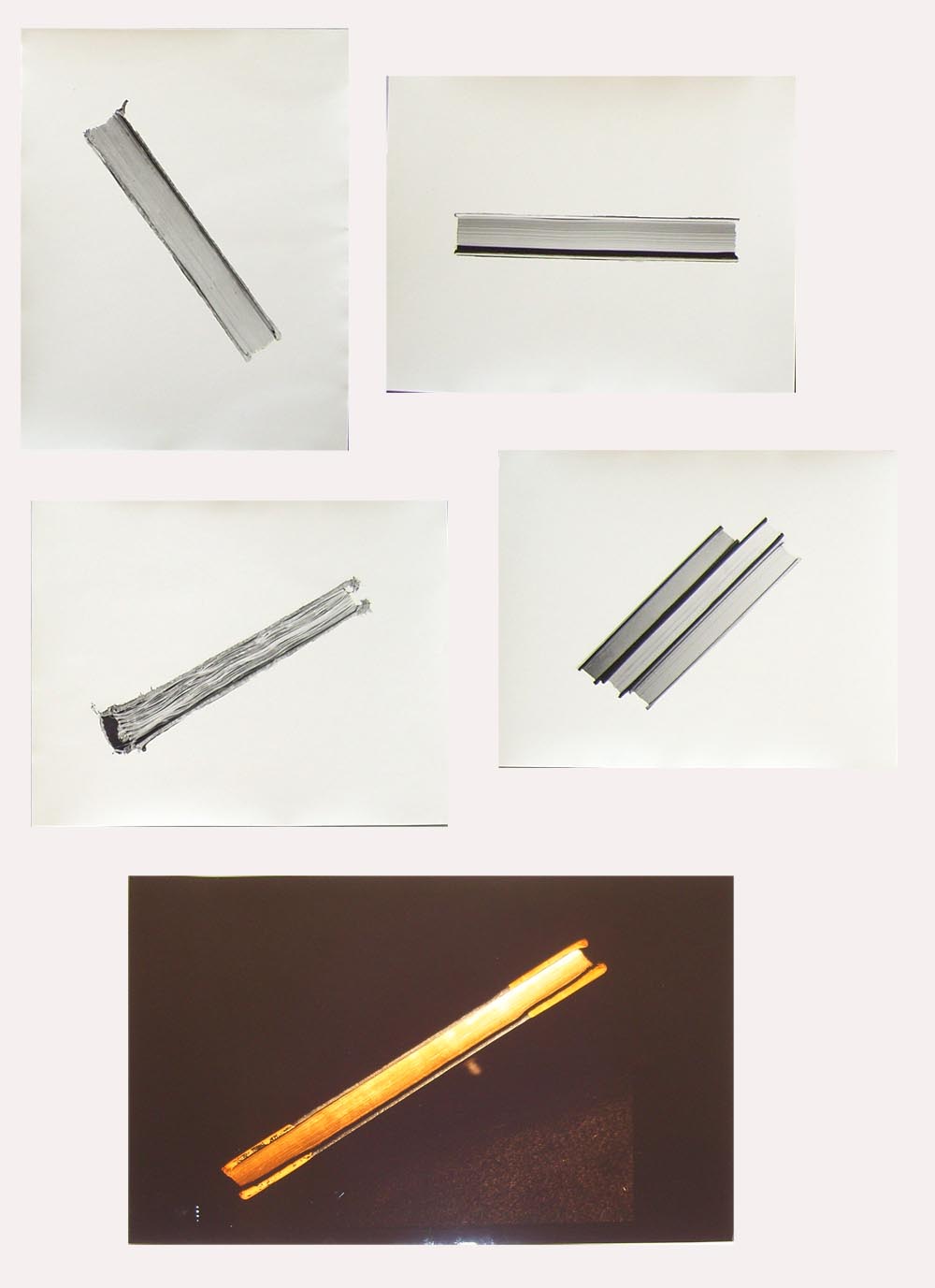
Ed Ruscha
Books, 2001
Words like HONK, OOF, and ACE float against fields of color or atmospheric haze, at once utterly familiar and profoundly strange. Later works moved toward more complex word pairings and phrases, the language becoming more cryptic and charged. His series of paintings featuring words dissolving into or emerging from landscapes engaged with memory, loss, and the peculiar emotional weight that ordinary language can carry when stripped of its usual context. Works such as "I Have Not Forgotten," a 2007 lithograph held across important collections, demonstrate how Ruscha could charge four simple words with a kind of aching ambiguity.
“I'm not trying to make great art. I'm trying to make something that feels right.”
Ed Ruscha
His 2002 lithograph "Sin Without" operates on a similar frequency, pairing words that ask viewers to complete a thought that perpetually escapes resolution. For collectors, Ruscha's work offers something relatively rare in the market for blue chip American art: genuine range across media, price points, and period. His prints and multiples, including screenprints, lithographs, and the remarkable mixographia works produced in Mexico City, represent some of the most intellectually rigorous and visually satisfying works on paper produced in the postwar era. A piece like the 1972 screenprint "Swarm of Red Ants from the Insects Portfolio" demonstrates his capacity for surprise, applying his trademark conceptual wit to imagery that is simultaneously comic and unsettling.
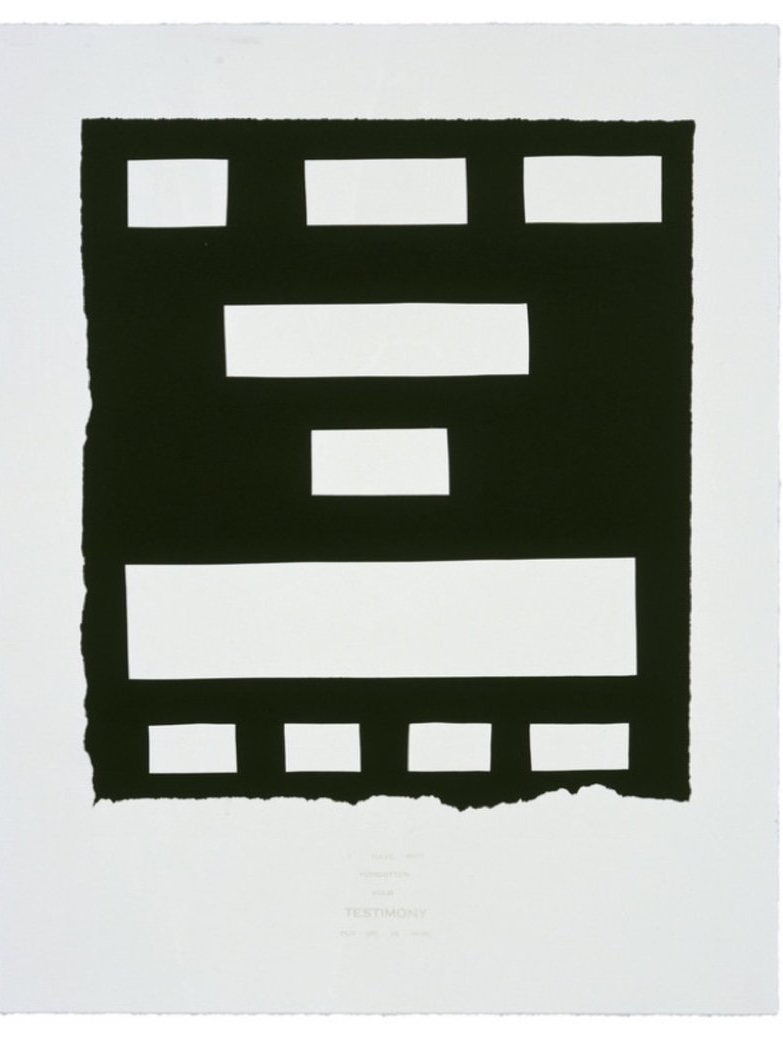
Ed Ruscha
I Have Not Forgotten, 2007
Works on paper and prints have consistently performed well at auction across major houses, while his paintings occupy a stratospheric tier of the American art market. The 2014 mixographia print "For Sale 17 Acres" shows the restless formal experimentation that has kept his practice vital across decades. Collectors entering the market through works on paper and prints are acquiring objects with strong institutional backing and genuine art historical weight. Ruscha occupies a distinct place within a constellation of artists who redefined American art in the 1960s and beyond.
His relationship to Pop Art connects him to contemporaries such as Andy Warhol, Jasper Johns, and Robert Rauschenberg, though his use of language is closer in spirit to the work of Lawrence Weiner and the broader Conceptual Art movement. His influence on subsequent generations of artists working with text and image, from Barbara Kruger to Christopher Wool, is widely acknowledged and profound. The Los Angeles art world that shaped him also connected him to artists such as John Baldessari and Bruce Nauman, figures who shared his conviction that art could be rooted in the everyday and the vernacular without diminishing its ambitions. What Ruscha leaves behind, and continues to add to, is a body of work that captures something essential about the American experience of language, landscape, and longing.
He found art in the places that most painters walked past: the gas station, the parking lot, the apartment house, the freeway. He took the words that surround us every day and made them strange and beautiful and occasionally terrifying. His practice is a quiet argument that the most profound things in art are often hiding in plain sight, waiting for someone patient and smart enough to recognize them. In a culture that moves at relentless speed, Ruscha's work rewards the stopped moment, the second look, the willingness to sit with a word until it opens up.
That quality is timeless, and it is why his work matters as much today as it ever has.
Explore books about Ed Ruscha
Ed Ruscha: Catalogue Raisonné of the Paintings, Volume One: 1958-1972
Stephanie Barron, Michael Roth
Ed Ruscha: Catalogue Raisonné of the Paintings, Volume Two: 1973-1980
Stephanie Barron, Michael Roth
Ed Ruscha
Paul Karlstrom

Leave Any Information at the Signal: Writings, Interviews, and Projects
Ed Ruscha
Ed Ruscha: Forty Years of Prints
Glenn Paulson
Ed Ruscha and Some Los Angeles Apartments
Ed Ruscha
Ed Ruscha: Editions 1959-2009
Stephanie Barron, Glenn Paulson