Dorothea Tanning
Dorothea Tanning, Dreamer Who Remade Reality
Artist Spotlight · The Collection Editorial
“I've never had a dream in my life. Every single image is from waking life, the daily onrush of images.”
Dorothea Tanning, interview with Sheena Wagstaff, 2019
In 2019, Tate Modern mounted a landmark retrospective of Dorothea Tanning's work, the most comprehensive survey of her practice ever assembled in the United Kingdom. Spanning seven decades of painting, sculpture, textile work, and works on paper, the exhibition introduced her to a new generation of admirers and reminded the art world of something that should never have needed reminding: that Tanning was not a footnote to Surrealism but one of its most original and enduring voices. The show was celebrated, crowded, and long overdue. It confirmed what devoted collectors have understood for years, that Tanning's imagination operated at a frequency entirely her own.
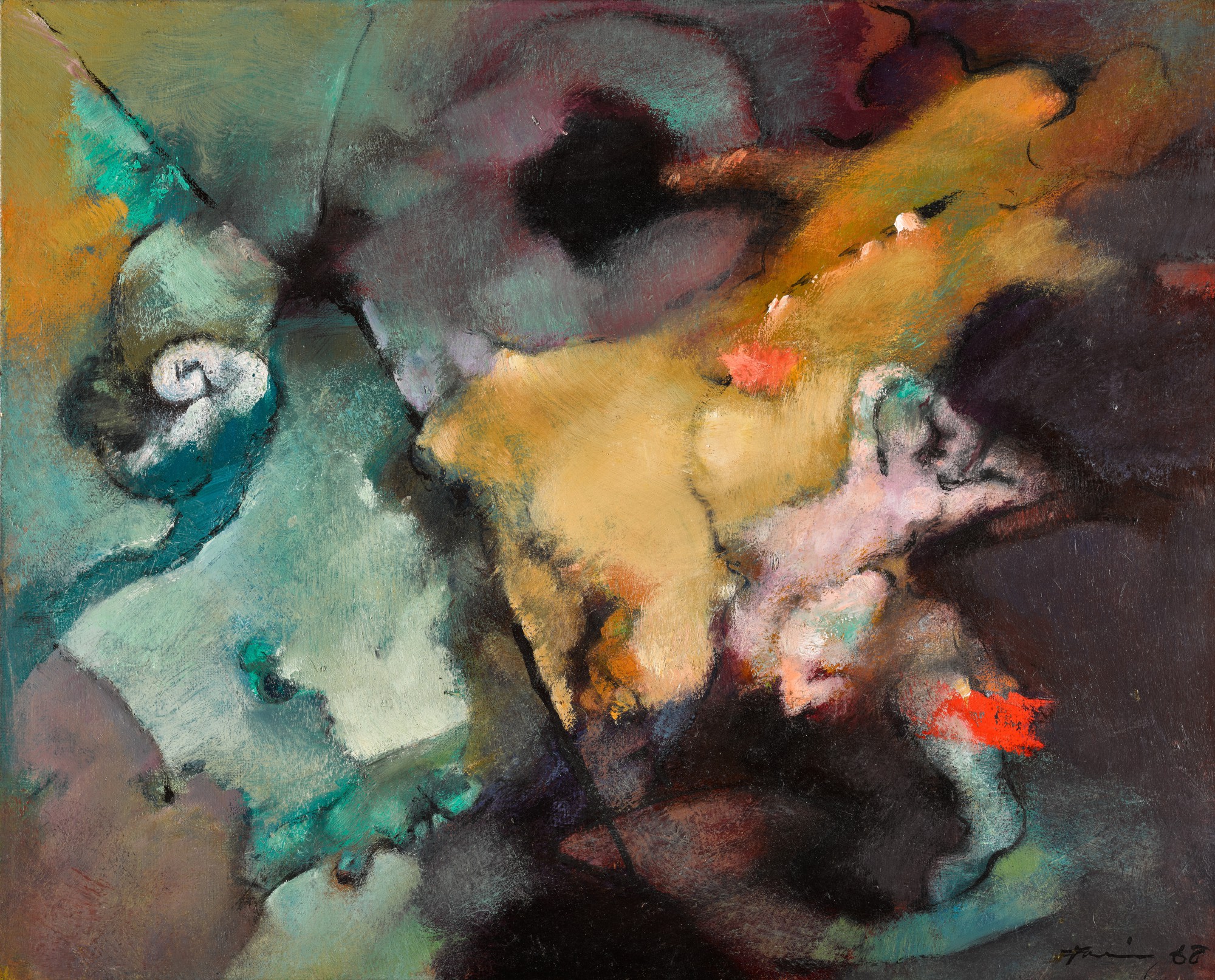
Dorothea Tanning
3 poses pour séduire, 1968
Dorothea Tanning was born on August 25, 1910, in Galesburg, Illinois, a small Midwestern city that offered little in the way of artistic nourishment but plenty of the quiet strangeness that would later animate her canvases. She discovered literature early, devouring the books in the local library with a hunger that would never leave her. She studied briefly at the Knox College in Galesburg and later at the American Academy of Art in Chicago, but she was, in the most meaningful sense, self taught. Her true education came from looking, from wandering, and eventually from leaving.
She arrived in New York in the 1930s, working as a commercial illustrator while absorbing everything the city had to offer. The turning point came in 1936, when Tanning visited the exhibition Fantastic Art, Dada, Surrealism at the Museum of Modern Art in New York. The encounter was, by her own account, revelatory. Here was a tradition that took the inner life seriously, that treated dreams and desire and the uncanny as legitimate subjects for art.
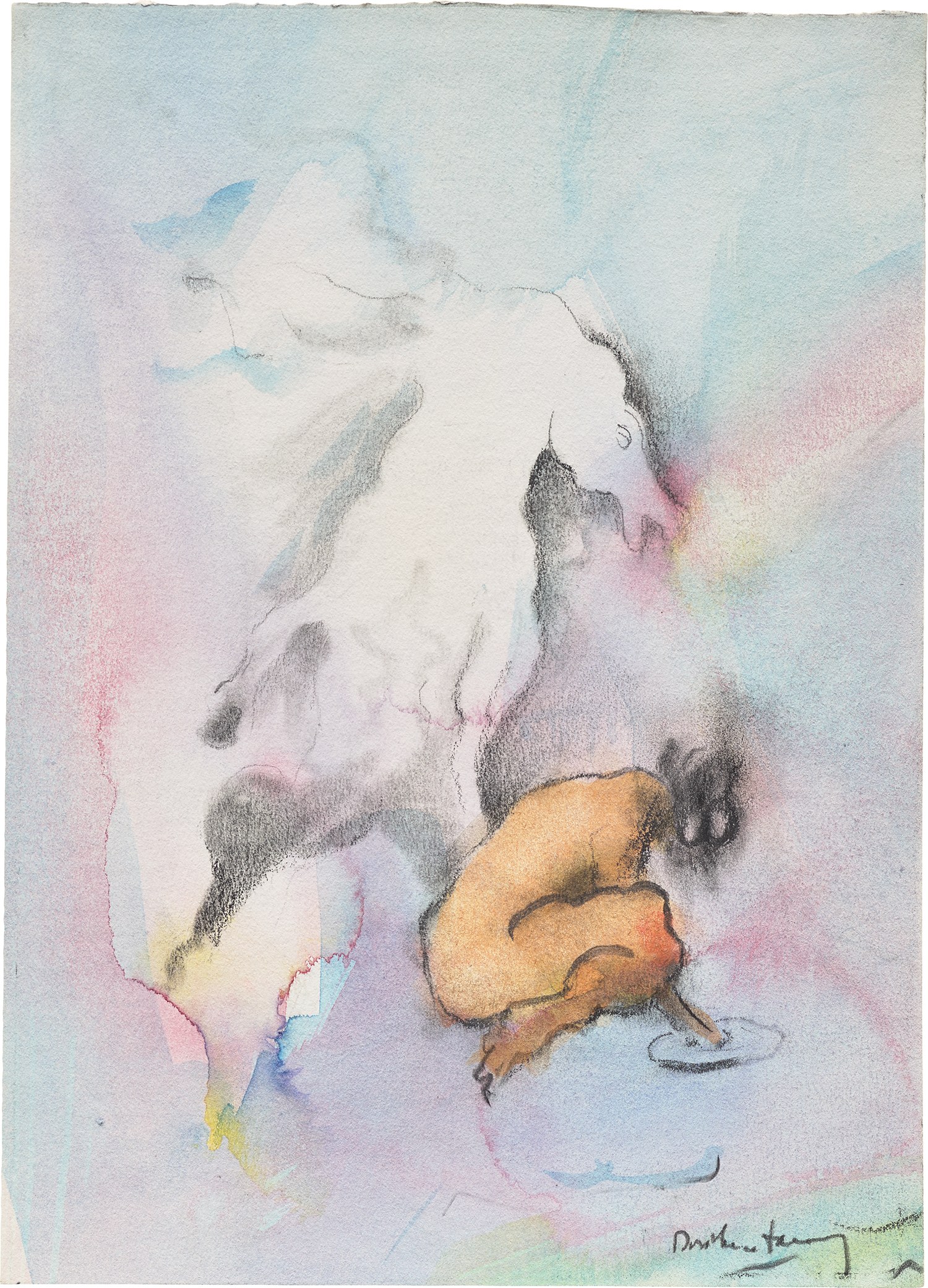
Dorothea Tanning
Rêve d’une jeune femme, 1972
She felt, as she later said, that she had found her people. She traveled to Paris for the first time in 1939, just before the war closed Europe off, and returned to New York with a sharpened sense of purpose. When the Surrealists began arriving in the United States as refugees from the Nazi occupation of France, Tanning found herself at the center of one of the most electric artistic communities of the twentieth century. In 1942, Tanning met the German Surrealist Max Ernst under circumstances that have since taken on an almost mythological quality.
“Art has always been the raft onto which we climb to save our sanity.”
Dorothea Tanning, Birthday: An Autobiography, 1986
Julien Levy, the gallerist who championed Surrealism in America, had invited Ernst to help select works for an exhibition of women artists. Ernst visited Tanning's studio and saw the painting that would become known as Birthday, a 1942 self portrait in which she stands before an opening door, bare chested, wearing a skirt of tangled roots, with a small winged creature at her feet. The corridors behind her recede into infinite mystery. Ernst is said to have been transfixed.
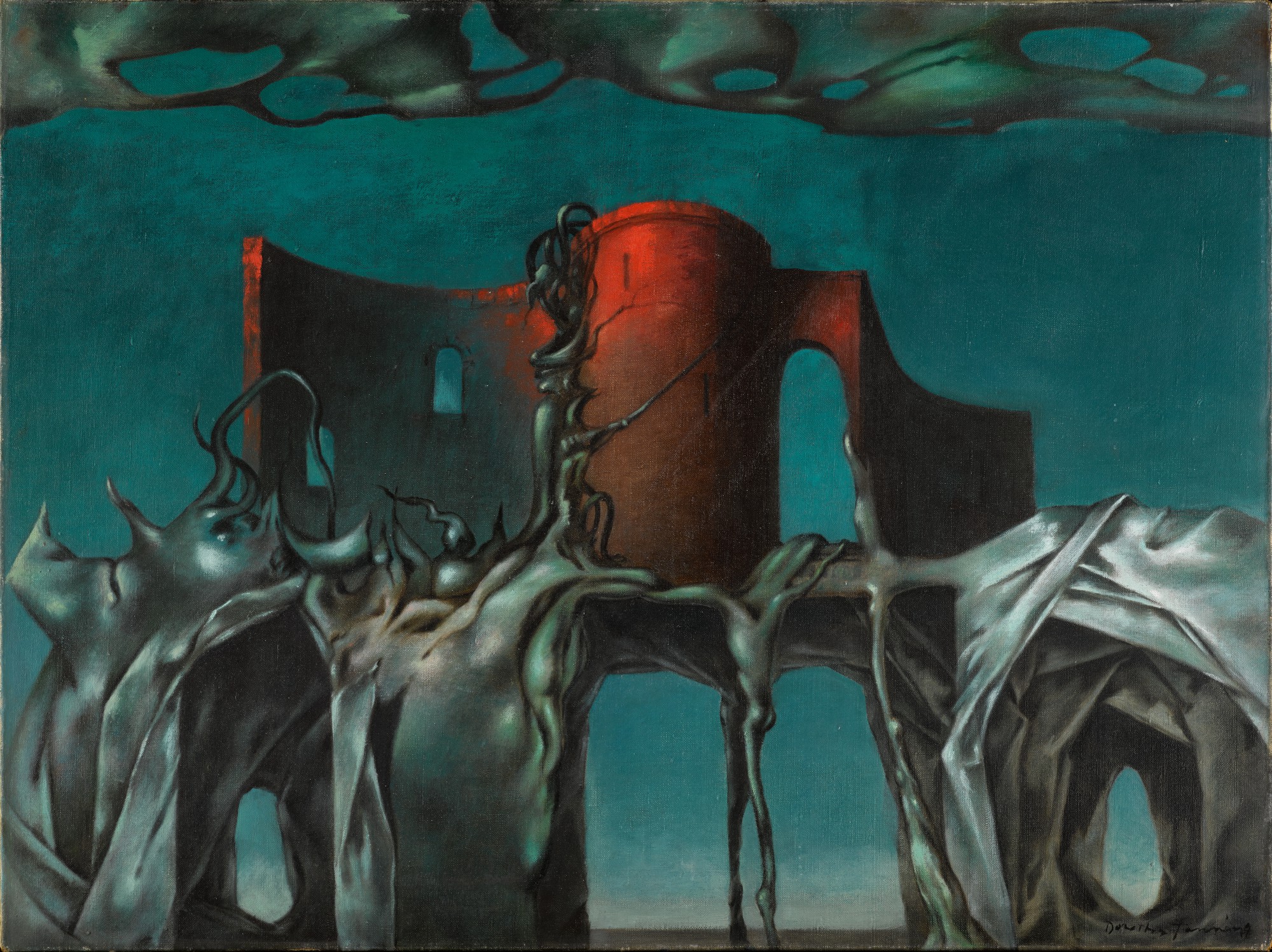
Dorothea Tanning
The Witch, 1950
The two became partners and eventually married in 1946, sharing a life that took them from Sedona, Arizona, to the south of France, where they settled in the village of Huismes. Their partnership was genuine and sustaining, but Tanning's identity as an artist was always her own. The range of Tanning's practice across the decades is remarkable. Her early paintings from the 1940s and early 1950s, including Birthday and The Witch of 1950, display the precise, almost hallucinatory detail that defined her first Surrealist period.
Doors open onto impossible corridors. Young women stand at thresholds, simultaneously beckoning and imperiled. The domestic becomes labyrinthine. By the late 1950s, Tanning's work began to loosen and dissolve, figures merging with their surroundings in swirling, atmospheric compositions.
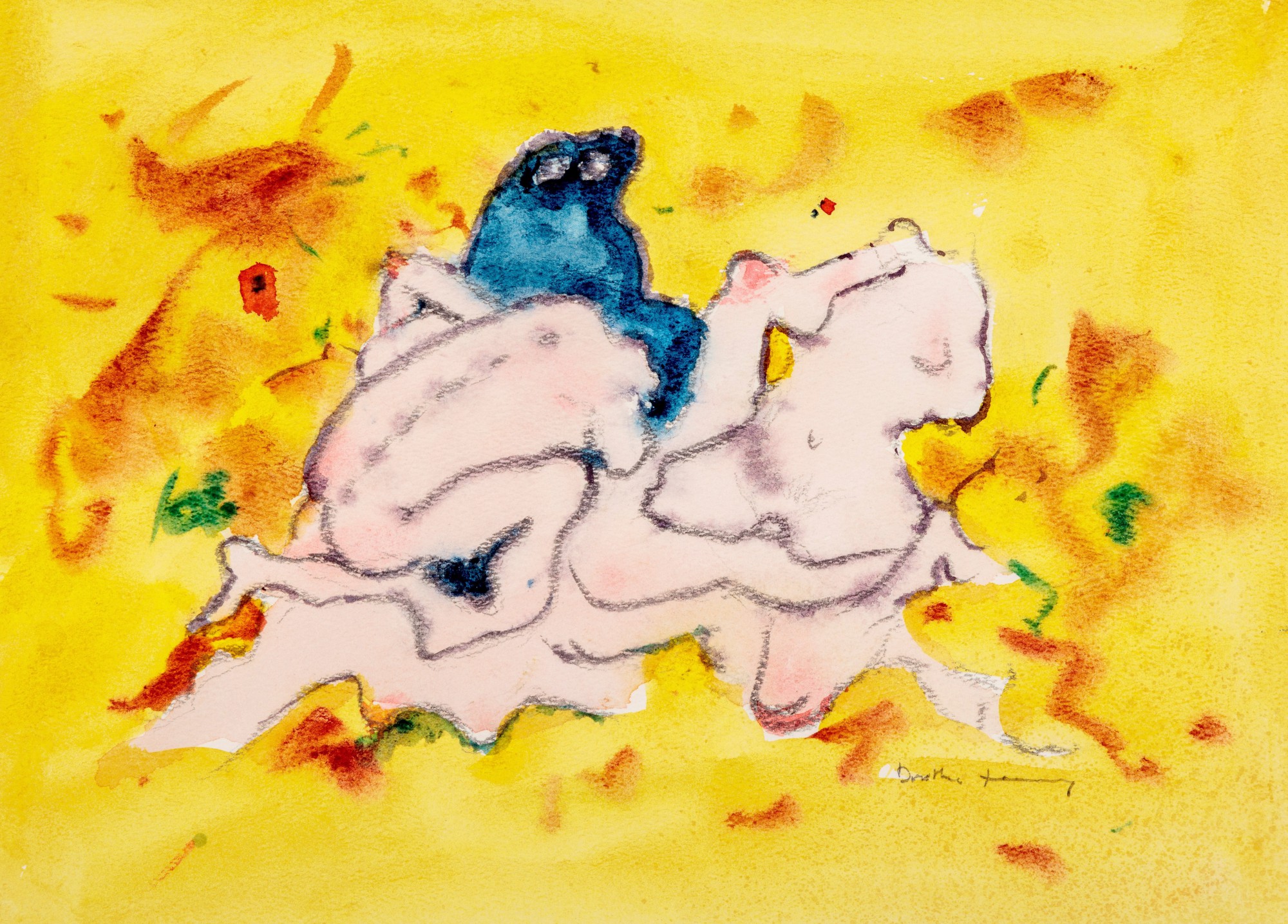
Dorothea Tanning
Delegates, 1975
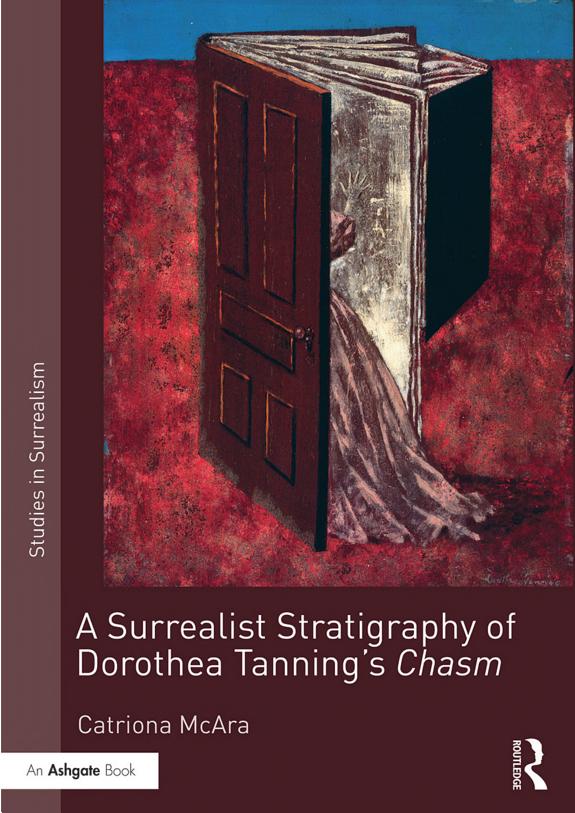
Works such as Mêlées nocturnes from 1958 show this transition beautifully, bodies and paint becoming indistinguishable in a nocturnal turbulence that feels both violent and ecstatic. Through the 1960s and 1970s she pushed further still, into soft sculpture, into works of textile and fabric, into writing. Her novel Chasm, published in 2004, demonstrated that her literary imagination was as finely tuned as her visual one. For collectors, the full sweep of Tanning's output offers remarkable breadth and depth.
Her works on paper, including the watercolors and pencil drawings that she returned to throughout her career, represent some of the most intimate and revealing expressions of her imagination. Rêve d'une jeune femme from 1972, a watercolor and pencil work, and Delegates from 1975, also in watercolor and pencil, demonstrate the delicacy and psychological precision she brought to the medium. The 1953 etching Tango, particularly in examples that carry her handwritten annotations in colored pencil on the verso, offers collectors a rare sense of closeness to the artist's hand and mind. Her oils from the middle decades of her career, including Status Quo from 1965 and My beautiful haunted house from 1961, represent the high point of her transition toward a more abstract and physically charged painterly language.
Across all media, what draws serious collectors to Tanning is the consistency of her inner world, the sense that every work, however different in technique or scale, emanates from the same extraordinary consciousness. Tanning's auction record has strengthened considerably in recent years, reflecting the art world's renewed and thoroughly warranted interest in women artists who were sidelined or undervalued during their lifetimes. Major institutions including the Philadelphia Museum of Art and the Museum of Modern Art hold significant works, and her market has benefited from the broader critical reassessment that followed exhibitions like the Tate Modern retrospective. Collectors drawn to the historical Surrealist canon, to the work of artists such as Meret Oppenheim, Leonora Carrington, and Remedios Varo, will find in Tanning a figure of equal stature and in many ways greater formal range.
She worked for longer, in more media, and with a greater willingness to reinvent herself than almost any of her peers. Tanning outlived Ernst, who died in 1976, and continued to work and write into extreme old age, dying in New York on January 31, 2012, at the age of 101. The longevity of her life matched the longevity of her vision. She never stopped reaching.
Her late poems, collected in the volume A Table of Content published in 2004, carry the same quality of alert, undeceived wonder that characterizes her best paintings. She was an artist who took seriously the idea that the world is stranger and richer than it appears, and she spent a century proving it. To collect Tanning is to bring that quality of attention into your own space, and to be reminded, each time you look, that the threshold between the familiar and the extraordinary is always closer than you think.
Explore books about Dorothea Tanning
Dorothea Tanning: A Life
Jennifer Mundy
Dorothea Tanning: Birthday
Dorothea Tanning
Dorothea Tanning: Painting and Sculpture
Various
Dorothea Tanning: Between Lives
Dorothea Tanning
Dorothea Tanning: The Surrealist in Me
Jennifer Mundy, Editor
Dorothea Tanning: Works on Paper
Michael R. Taylor