Deborah Roberts
Deborah Roberts Remakes the American Portrait
Artist Spotlight · The Collection Editorial
“I want my work to affirm Black children, to say you are seen, you are valued, you are whole.”
Deborah Roberts, interview with the Smithsonian American Art Museum
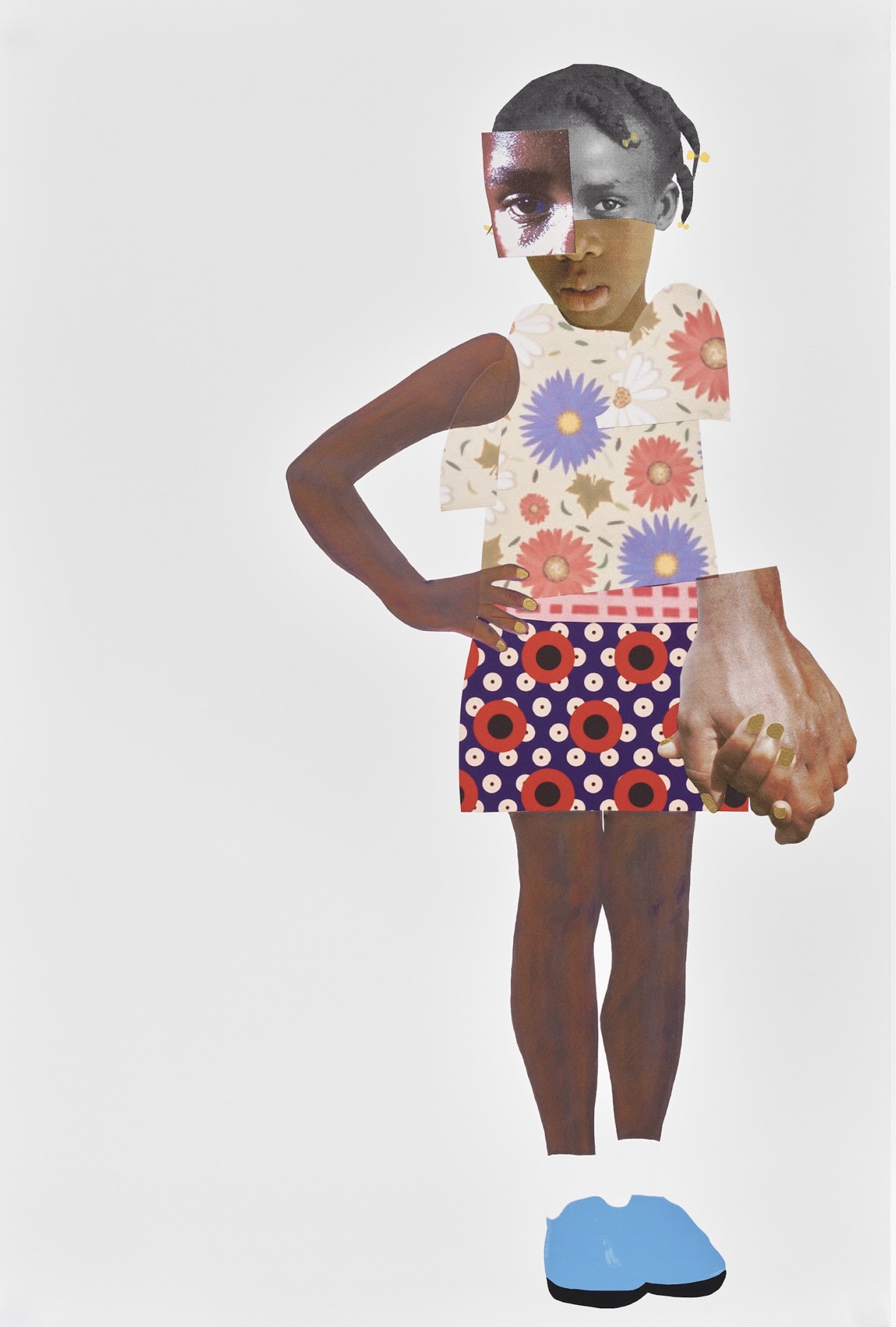
In the past several years, Deborah Roberts has moved from a celebrated figure within the contemporary art world to an artist whose work feels genuinely urgent, arriving at exactly the moment American culture needs it most. Her mixed media collages have entered major museum collections, drawn serious critical attention from institutions including the Smithsonian and the Museum of Fine Arts Houston, and generated a devoted collector following that spans both seasoned veterans of the market and younger enthusiasts encountering her work for the first time. The timing is not coincidental. Roberts makes pictures about Black children navigating a world that was not designed with their wholeness in mind, and that subject has never felt more pressing or more necessary.
Deborah Roberts
One history, two versions (Bullet Points)
Roberts was born in 1962 in Austin, Texas, and the city has remained central to her identity and practice throughout her life. Growing up in the American South during the years immediately following the Civil Rights Movement shaped her understanding of what it means to carry history in your body, to move through public space as someone whose image has long been subject to distortion, erasure, or outright hostility. She pursued formal training in art and has spoken of the way her early education exposed her to a canon that had little room for figures who looked like her or the children she would eventually make the center of her work. That tension between official culture and lived experience became the engine of everything that followed.
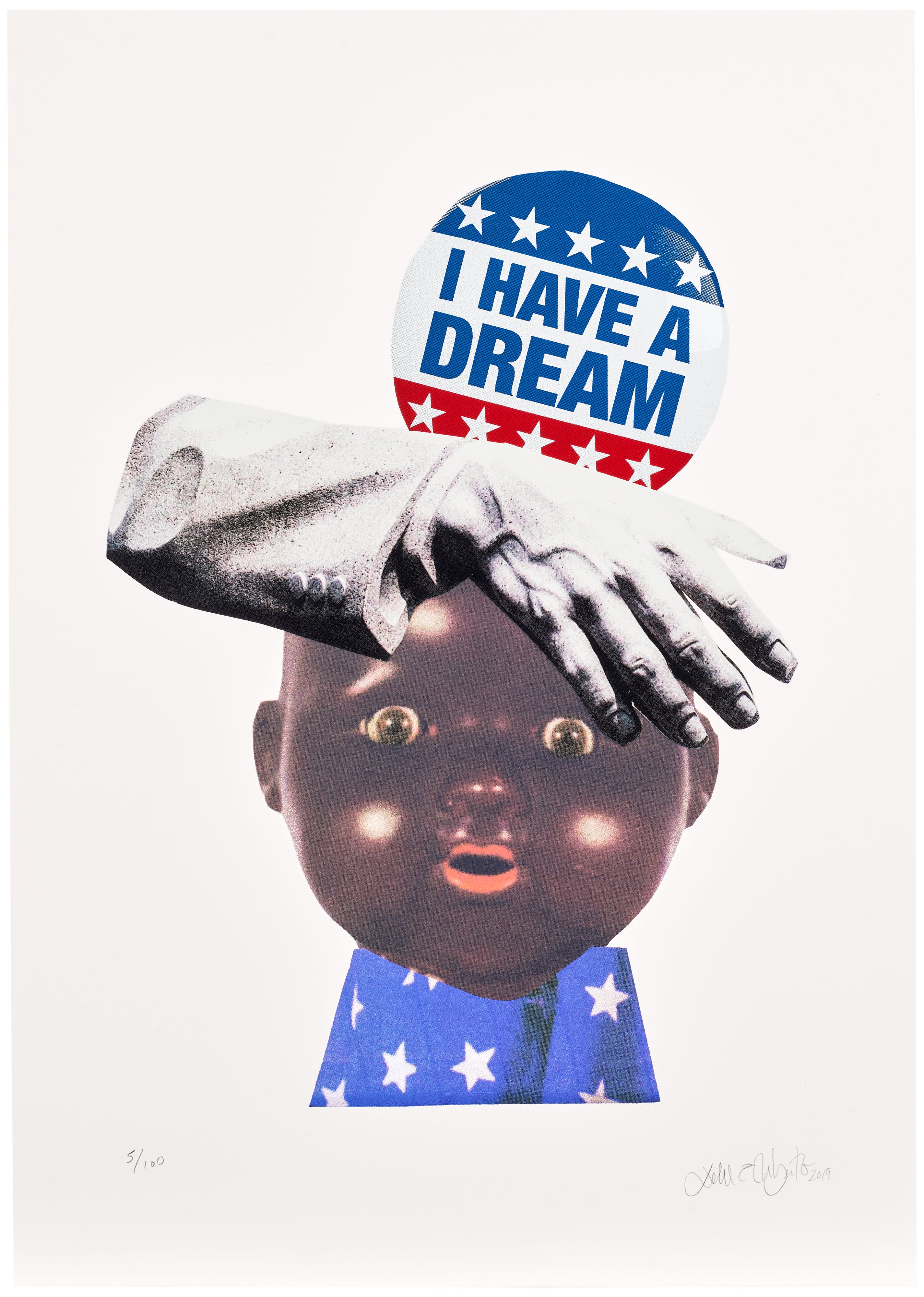
Roberts came to her signature practice of collage through a long process of experimentation and accumulation. She spent years working across different approaches before arriving at the fractured, layered portrait form that now defines her. The method is deceptively labor intensive. Roberts gathers found imagery from vintage magazines, photographic archives, and printed ephemera, then cuts and recombines these fragments to build figures that are simultaneously unified and visibly composite.
Deborah Roberts
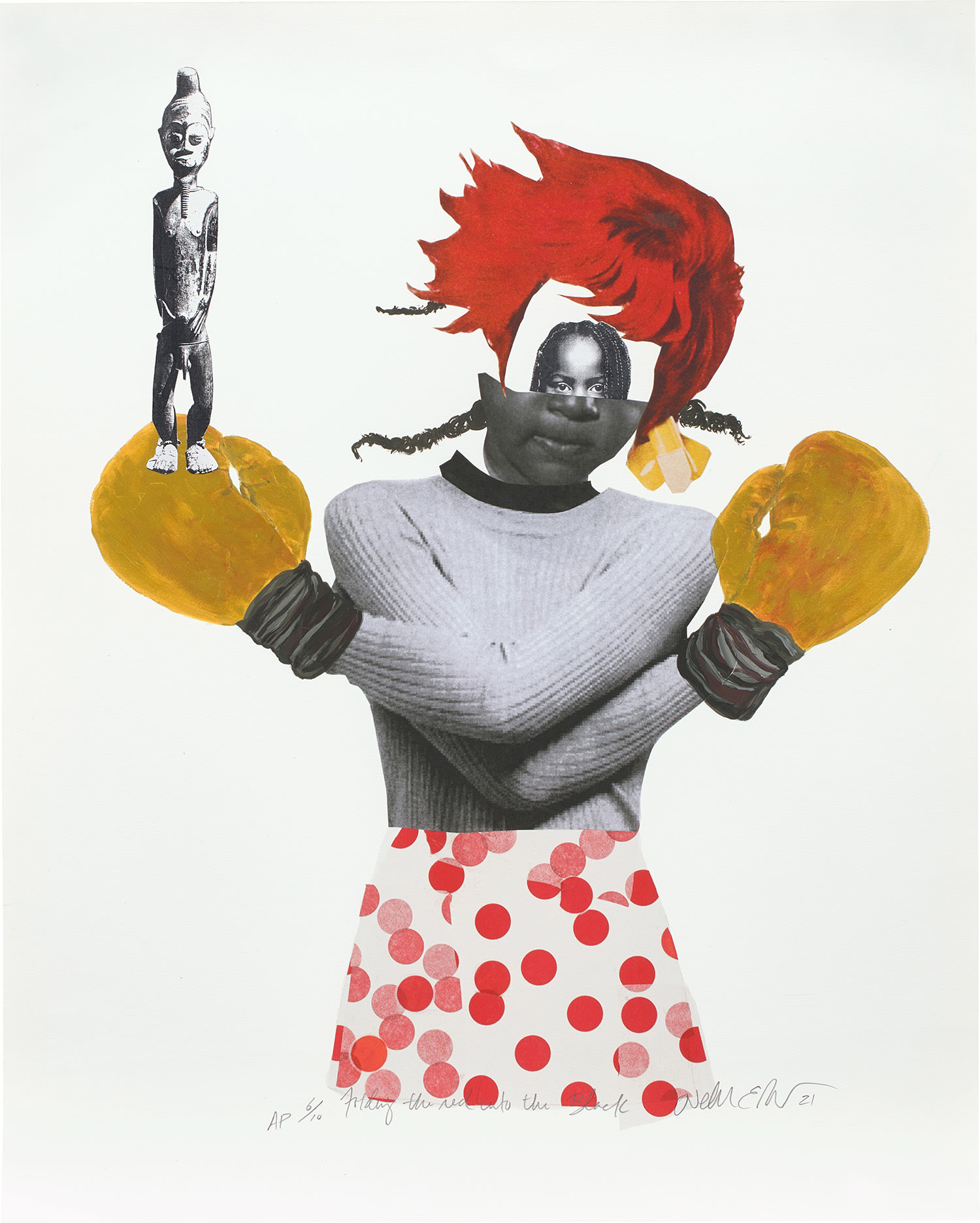
Folding the Red into the Black, 2018
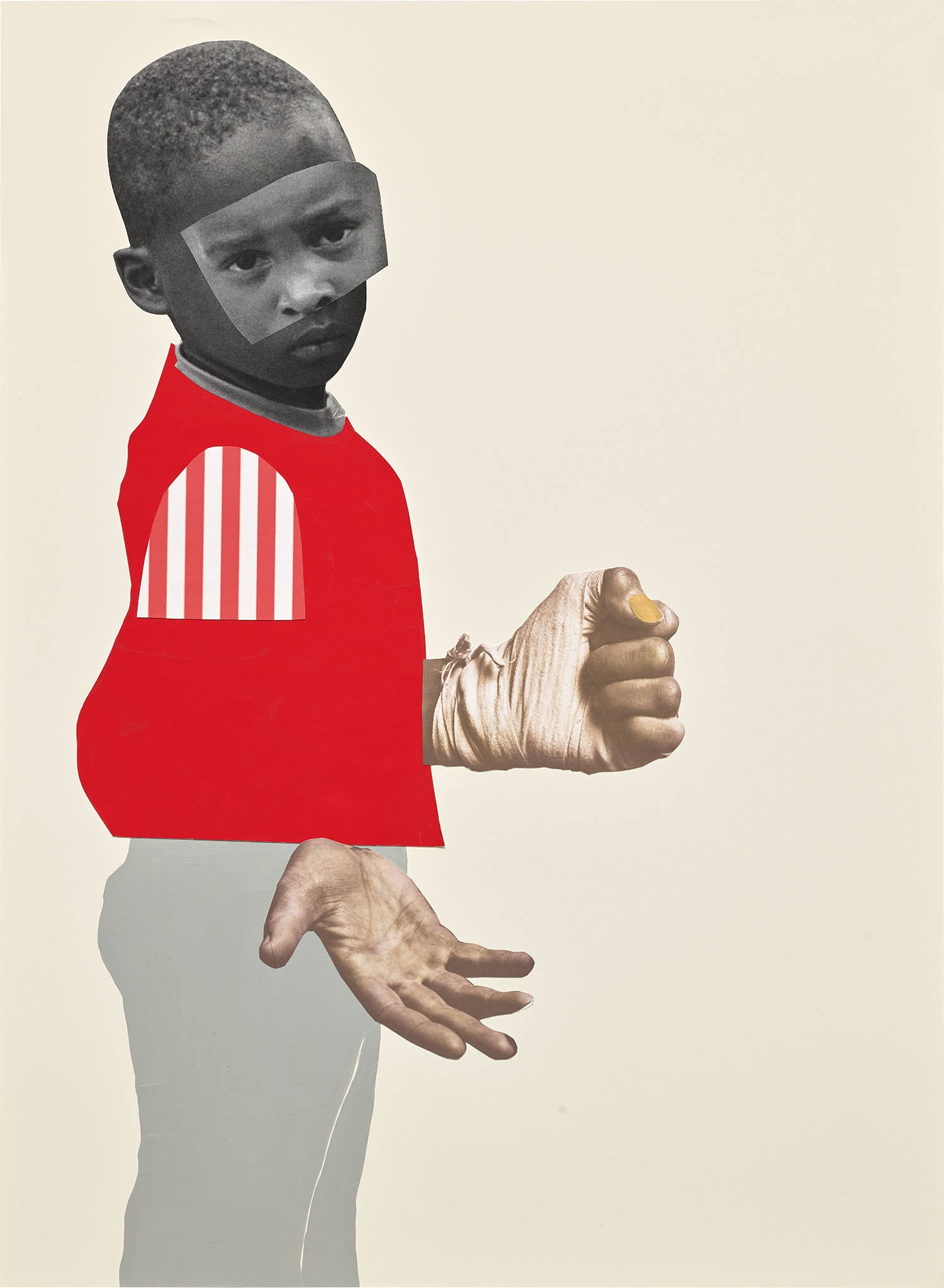
A child in a Roberts collage might carry a face assembled from four or five different sources, skin tones shifting across the surface, eyes from one decade meeting a mouth from another. The effect is not surreal in a distancing way but rather deeply human, a visual argument that identity itself is assembled, contested, and never singular. Among the works that best demonstrate the range and ambition of her practice, several stand out as essential points of entry. "If They Come" from 2019 places a young Black figure in a posture of quiet defiance, the background charged with the visual noise of American history pressing in from every direction.
"The Duty of Disobedience" from 2020 carries its title like a declaration, the figure at the center radiating a composed, almost regal resistance that transforms the act of dissent into something celebratory and dignified. "Nobody's Darling" from 2017 takes on the language of conventional prettiness and dismantles it with surgical precision, giving its subject a kind of beauty that operates entirely outside white mainstream standards. "Folding the Red into the Black" from 2018, a printed paper collage with gouache and digital print on paper, demonstrates her ability to work fluently between handmade and reproductive processes, creating surfaces that reward sustained looking. Across all of these works, Roberts consistently refuses to let her subjects be reduced to symbols of suffering.
Deborah Roberts
If they come, 2019
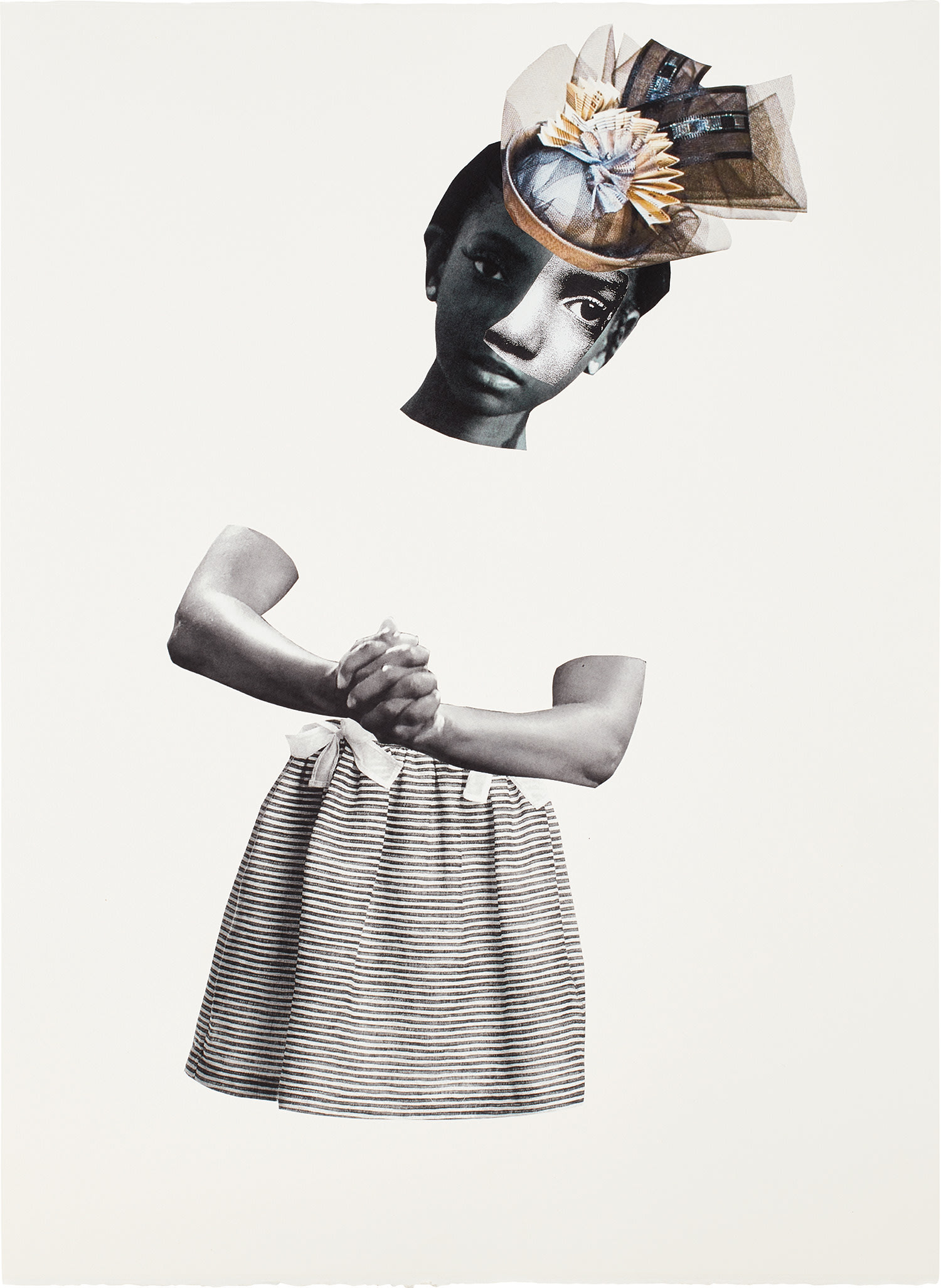
They are specific, interior, and fully realized. For collectors, Roberts represents one of the most compelling opportunities in contemporary American art. Her work exists across multiple formats and price points, from original mixed media panels and canvases at the higher end to carefully produced prints and multiples that bring her imagery to a wider audience. Works on paper, including pieces such as "Serenade" from 2017 and the various entries in her ongoing series, offer an accessible route into a practice whose market has grown steadily and with remarkable consistency.
Prints published in collaboration with respected institutions, including editions produced with The Contemporary Austin, carry the additional weight of institutional provenance and are increasingly sought after. Collectors who have followed Roberts over the past decade have seen both the critical and financial case for her work strengthen considerably, and there is every reason to believe that trajectory continues. Roberts belongs to a generation of artists who have fundamentally reoriented what figurative painting and collage can accomplish when they take race and identity as their central subject. Her work is in productive conversation with that of Mickalene Thomas, whose rhinestone encrusted portraits celebrate Black womanhood with maximalist joy, and with Wangechi Mutu, whose collage practice similarly draws on found imagery to build figures that challenge Western representational norms.
Deborah Roberts
Serenade, 2017
One might also place her alongside Kara Walker in terms of the uncompromising directness with which she confronts American racial history, though Roberts arrives at that confrontation through a warmer, more nurturing relationship with her subjects. Where some artists expose harm in order to document it, Roberts seems equally committed to imagining what wholeness might look like, what it would mean for these children to be truly seen. The legacy Deborah Roberts is building is one of restoration as much as critique. She takes imagery that has historically been used to diminish, flatten, or render invisible the inner lives of Black children, and she transforms it into something that insists on complexity, dignity, and the full weight of personhood.
In doing so, she participates in a long tradition of Black American artists who have understood representation itself as a form of resistance, while also staking out entirely her own territory within that tradition. Her Austin studio, far from the primary market centers of New York and Los Angeles, feels less like a limitation than a source of the distinctive perspective that makes her work so singular. Roberts is an artist at a peak of her powers, producing work that speaks to this historical moment while carrying the formal intelligence and emotional depth that ensure it will endure long after the moment has passed.