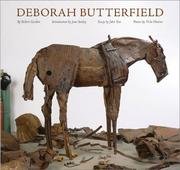
Deborah Butterfield
Deborah Butterfield: Horses That Hold Everything
Artist Spotlight · The Collection Editorial
“I use the horse as an alter ego, a self-portrait really, in a way that felt safer and less loaded than depicting the female body directly.”
Deborah Butterfield, interview with Galerie Lelong
There is a particular stillness that descends when you stand before one of Deborah Butterfield's horses. At the Smithsonian American Art Museum, where her work has been celebrated as part of the permanent collection, and at Galerie Lelong in New York, where her sculptures have drawn devoted collectors for decades, the experience is consistently reported as something close to wonder. A tangle of driftwood or a web of rusted steel resolves, at a certain distance and angle, into the unmistakable presence of a living animal. The transformation is not a trick.
Deborah Butterfield
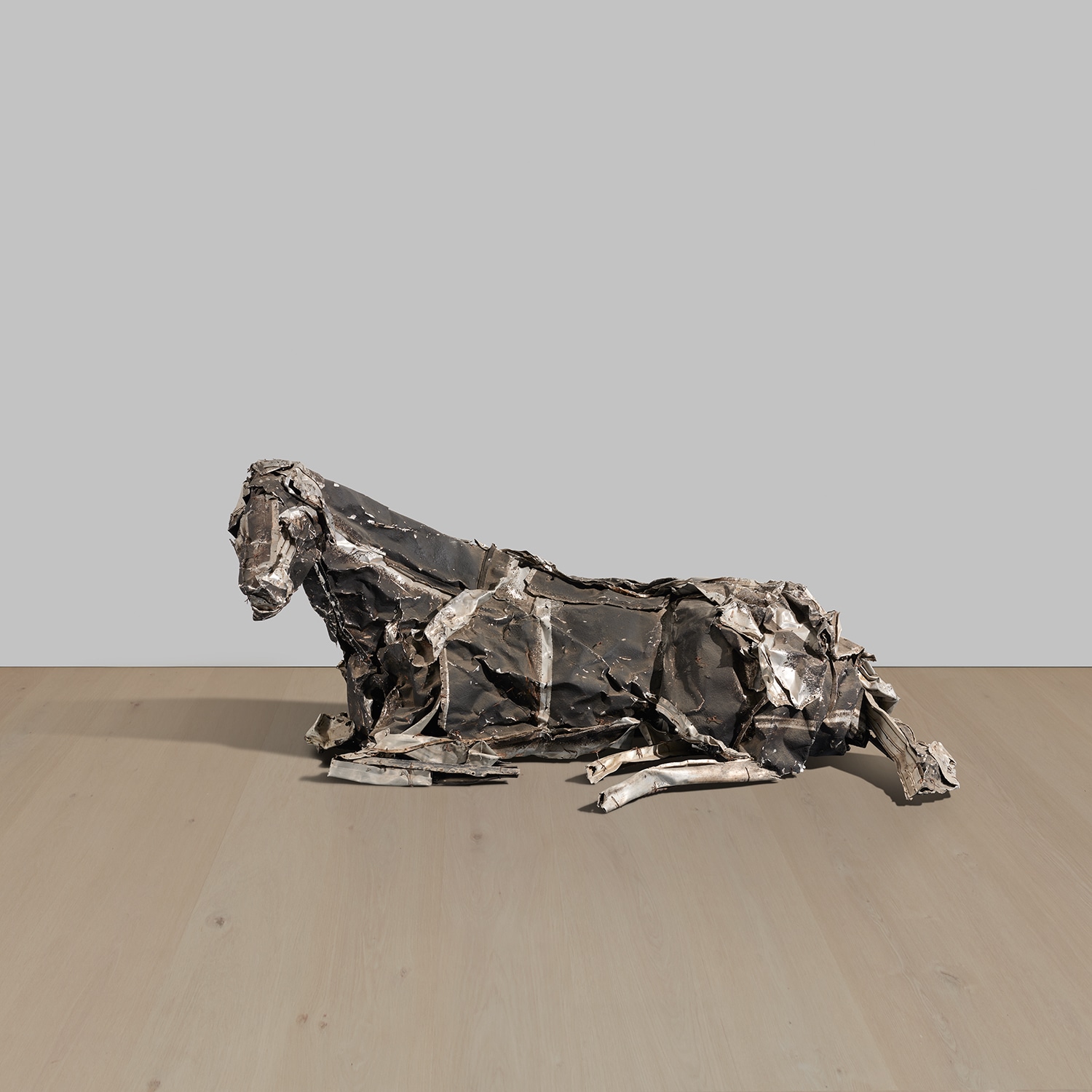
Captain (G05), 2009
It is the entire point. Butterfield has spent more than fifty years perfecting the art of finding life inside discarded material, and the conversation around her work has never felt more urgent or more alive. Deborah Butterfield was born in San Diego, California in 1949, and grew up in an era when American sculpture was being radically reimagined. She came of age alongside second wave feminism and the broader cultural questioning of whose stories and forms deserved space in galleries and museums.
Her path led her to the University of California, Davis, where she earned both her BFA and her MFA, studying under figures who would leave lasting marks on her sensibility. Robert Arneson, the ceramicist and conceptual provocateur, and Manuel Neri, the figurative sculptor whose expressive forms bridged abstraction and the human body, were among her teachers at Davis. That program, in the late 1960s and early 1970s, was one of the most intellectually charged environments in American art education, and Butterfield absorbed its spirit of material experimentation fully. Her initial choice of the horse as subject was rooted in autobiography as much as aesthetics.
Deborah Butterfield
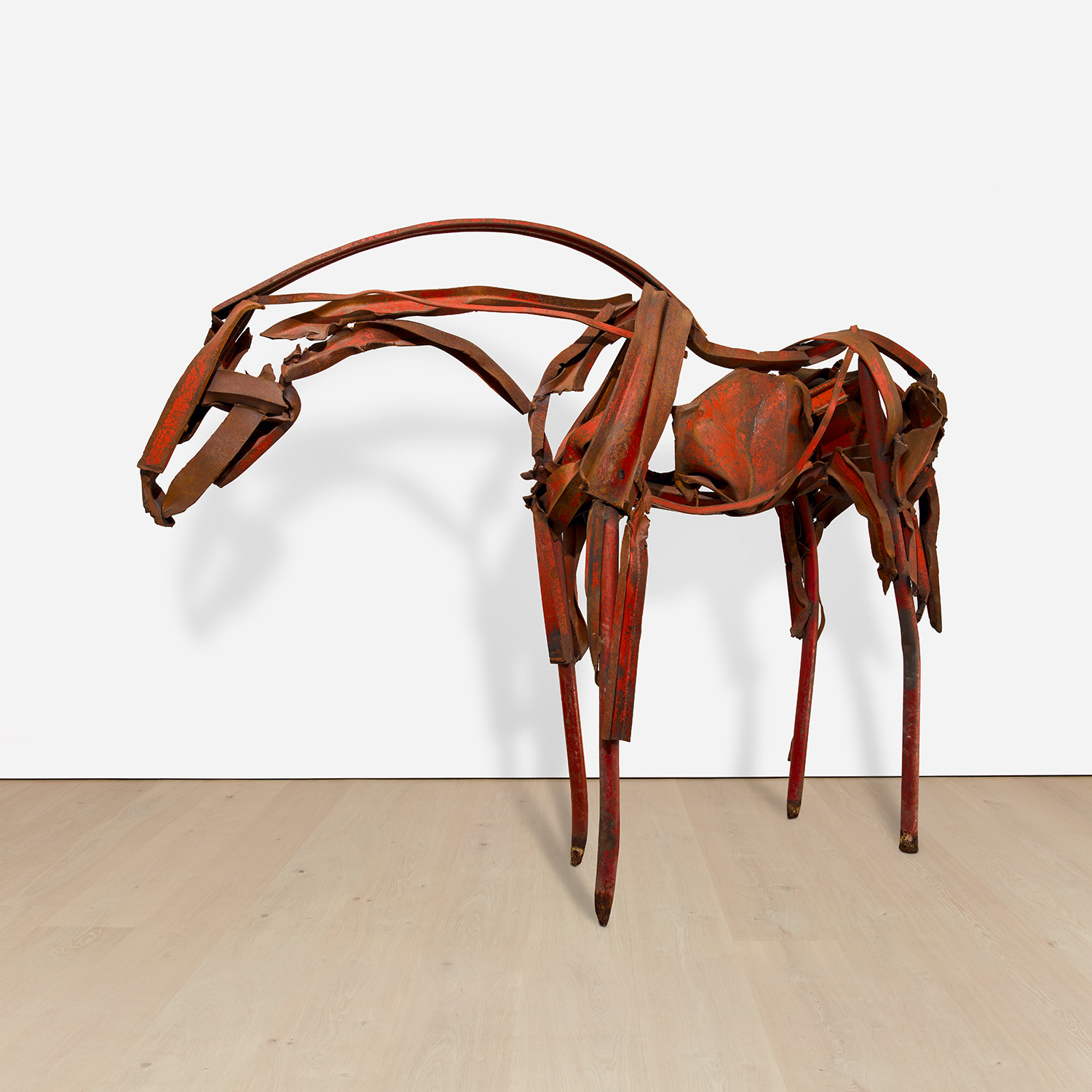
Odalisk, 2008
Butterfield has spoken openly about her lifelong relationship with horses, and how caring for them grounded her creative practice in a specific, embodied knowledge. What began as a feminist strategy, using the horse as a stand in for the female body at a moment when depicting women directly felt fraught and loaded, grew into something far larger and more layered. Her early works in clay and plaster gave way to sculptures assembled from mud, sticks, and organic debris gathered from the landscape around her Montana ranch. The shift was profound.
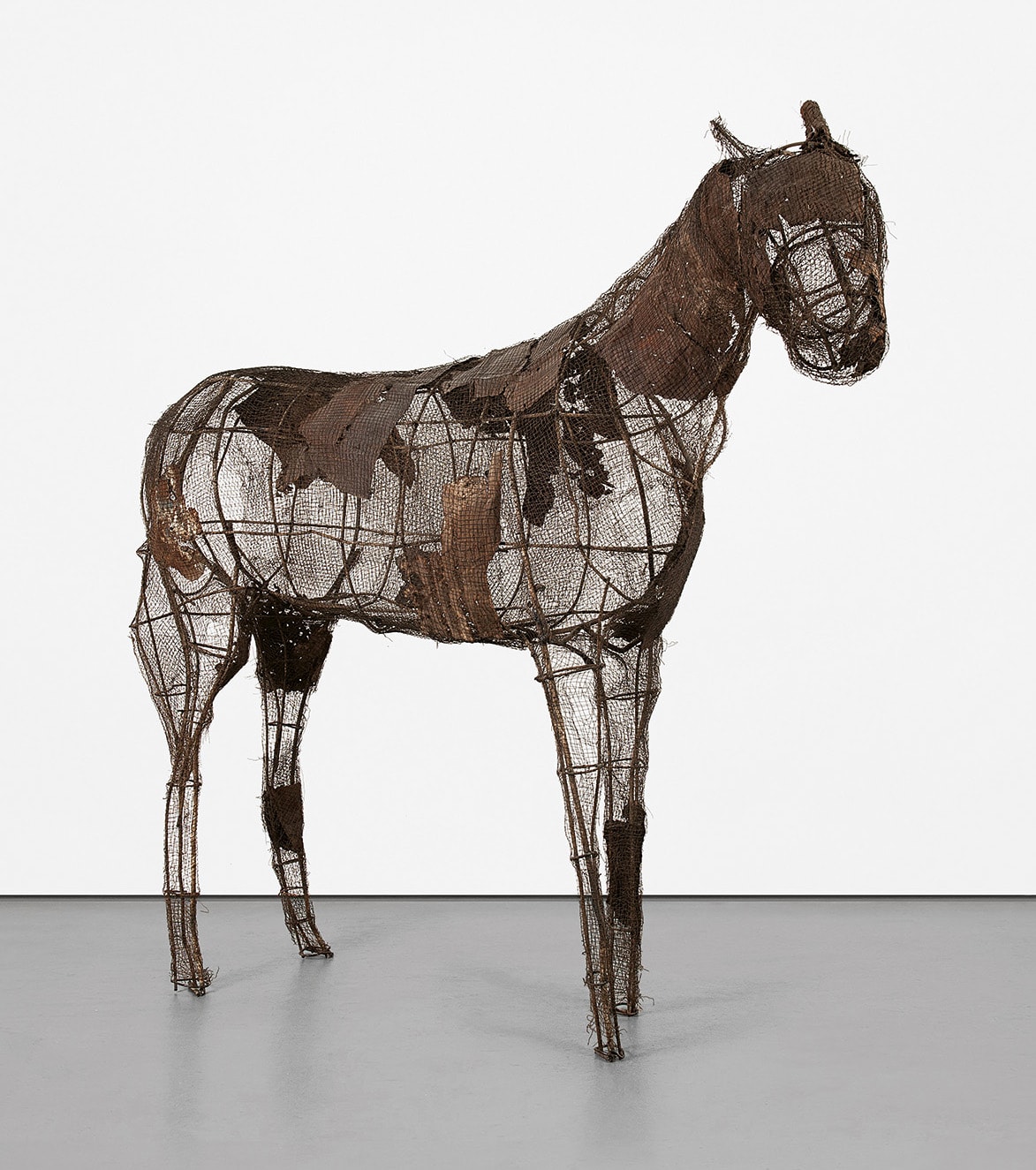
The materials themselves became expressive agents, carrying the weight of place, time, and transformation. The trajectory of Butterfield's artistic development follows a thrilling arc from raw accumulation to refined complexity. Works from the early 1980s such as Chestnut from 1981 and Horse Number 9 from 1982, assembled from steel, sheet aluminum, wire, and tar, carry a raw, almost anxious energy. The surfaces are declaratively industrial, yet the postures they describe are deeply organic and tender.
Deborah Butterfield
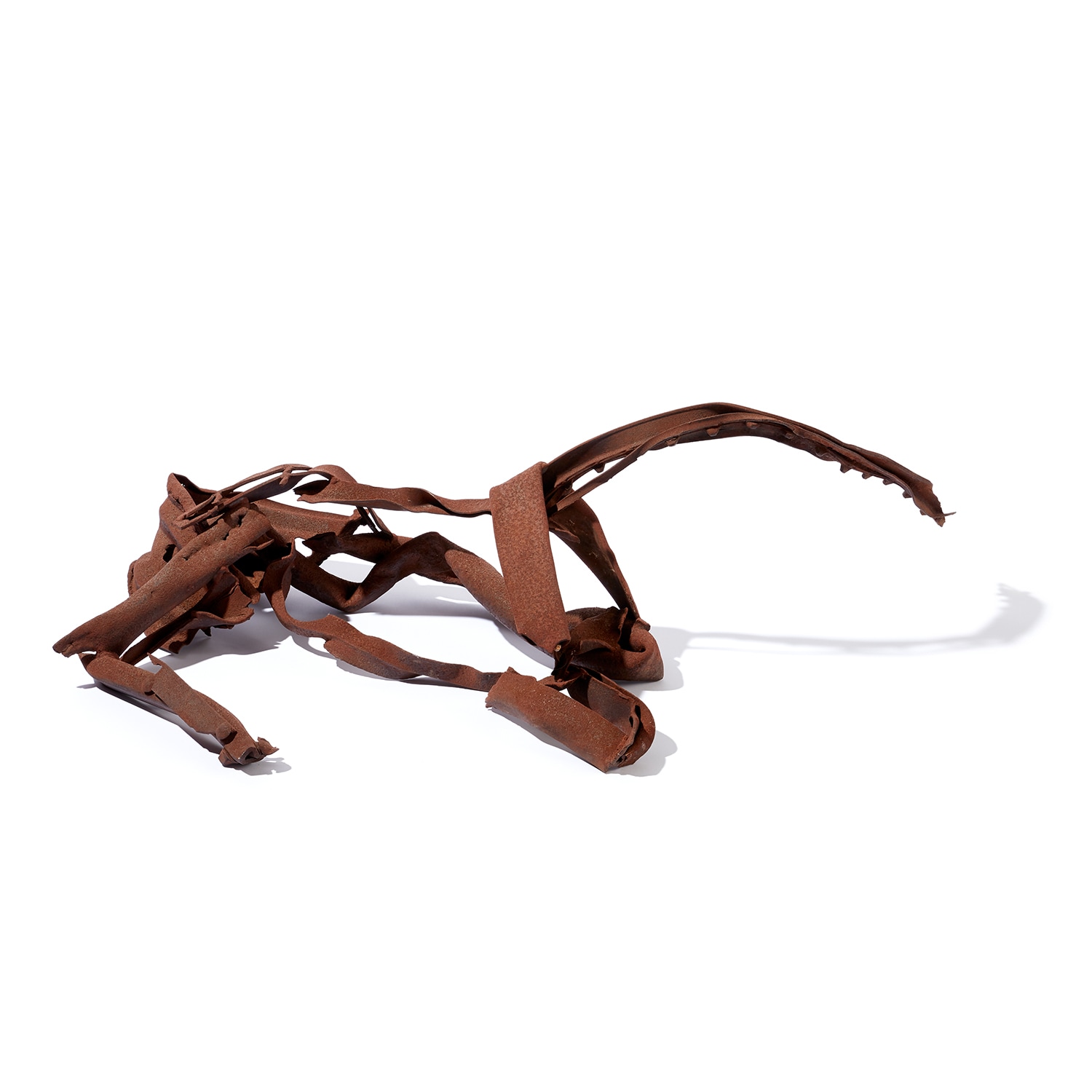
Jerusalem Horse II, 1980
By the mid 1980s, with works like Metrical from 1986 in welded steel, her command of spatial tension had deepened considerably. Then came one of the great formal evolutions in contemporary sculpture: her decision to have her found driftwood assemblages cast in bronze. Beginning in the early 1990s, Butterfield would collect weathered wood from beaches and riverbeds, arrange it into a horse form in her studio, and then send the assembled sculpture to a foundry to be cast. The resulting bronzes, finished to resemble the original wood with uncanny fidelity, carry a conceptual double life.
Argus from 1996 stands as a celebrated example, a bronze that looks like driftwood, a permanent object that reads as ephemeral, a manufactured form that feels entirely found. Among the works that collectors and curators return to most often, Jerusalem Horse II from 1980 holds a special place. Executed in welded steel or cast bronze assembled from found objects and driftwood, it represents an early crystallization of everything Butterfield's practice was reaching toward: the reconciliation of industrial process and natural form, the suggestion of spiritual weight through physical restraint. Captain from 2009 and Odalisk from 2008 demonstrate how fully her late career has absorbed and refined all that came before.
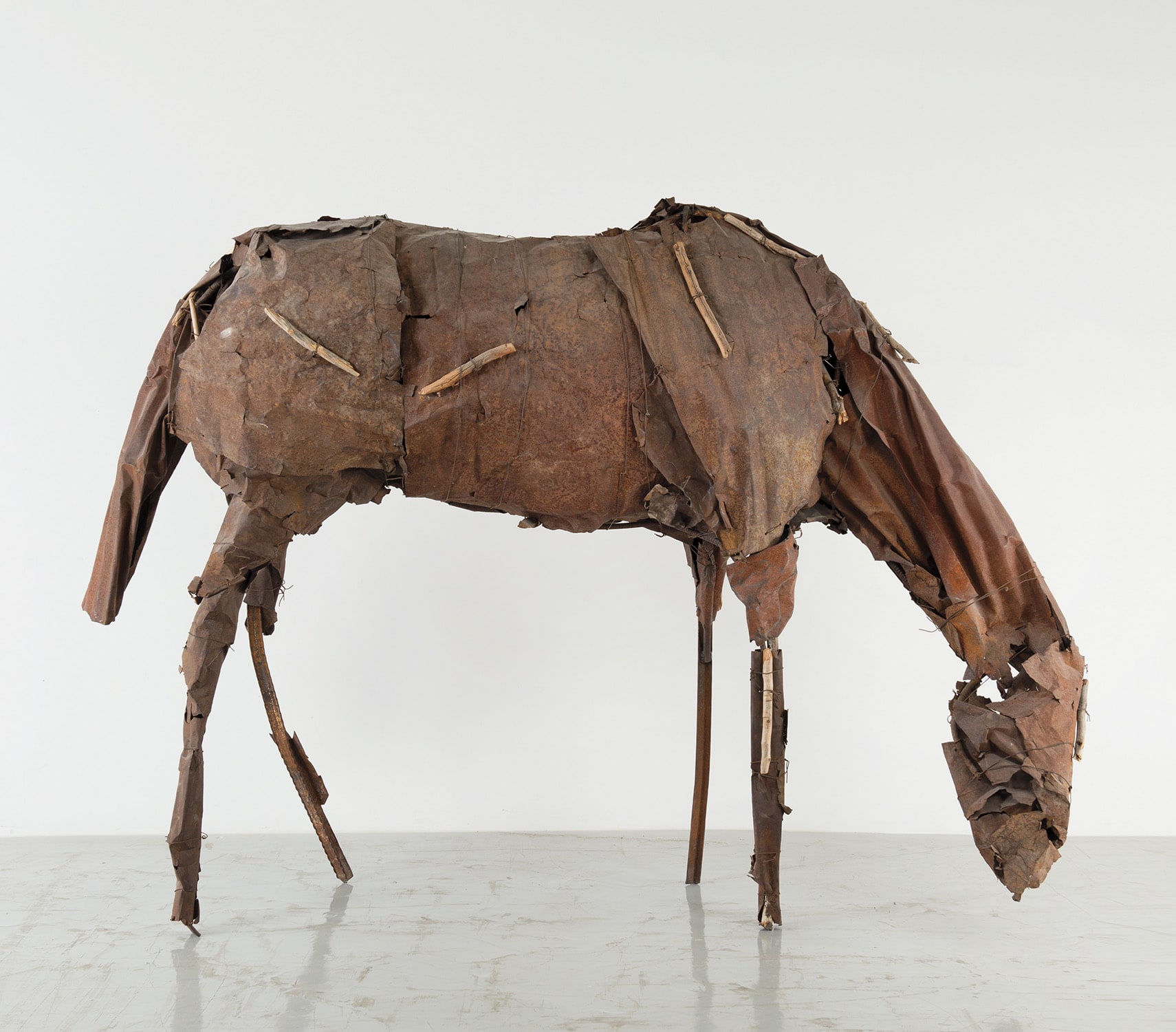
Deborah Butterfield
Chestnut, 1981
These are sculptures of extraordinary authority, where the syntax of found material has become a fully legible language, one that communicates immediately and rewards extended study in equal measure. Calligraphy, among her most poetic titles, suggests how Butterfield herself thinks about her arrangements: as mark making, as writing, as a way of leaving a trace. From a collecting perspective, Butterfield occupies a position that is both blue chip in its security and genuinely absorbing in its depth. Her market is anchored by a devoted base of American collectors, particularly those drawn to work that bridges the figurative and the conceptual, the natural world and the history of art.
Prices for major bronze sculptures have achieved strong results at auction, and her works appear regularly at Christie's, Sotheby's, and Phillips. Early steel assemblages from the late 1970s through the mid 1980s carry particular art historical weight, as they document the formative years of a practice that would grow into one of the defining bodies of work in late twentieth century American sculpture. Collectors who are drawn to artists working at the intersection of feminist art history, the land art tradition, and figurative sculpture will find Butterfield to be a focal point, a figure who synthesizes those currents with rare grace. To place Butterfield within art history is to see her in productive conversation with a wide range of practitioners.
Her interest in found and natural materials connects her to the Arte Povera movement and to figures like Richard Serra in her willingness to let material speak on its own terms. Her sustained engagement with the animal form as a vehicle for emotional and political content places her alongside artists such as Kiki Smith and Nancy Graves, who similarly pushed back against the hierarchies that had governed what counted as serious sculptural subject matter. Her work carries the influence of her Davis training and sits comfortably in the lineage of American figurative sculpture, but it also reaches outward toward land art practitioners and toward the long tradition of equestrian sculpture, which she reanimates and quietly subverts. What makes Butterfield matter today is not only the sustained beauty of her objects, though that beauty is real and should not be dismissed.
It is the clarity of her philosophical position: that transformation is the essential act of the artist, that the discarded and the overlooked carry latent energy, and that the relationship between human beings and the natural world is a subject worthy of a lifetime of sustained attention. In an era when questions of ecology, materiality, and embodied knowledge have returned to the center of cultural conversation, her work feels not historical but newly necessary. To collect a Butterfield is to bring into your home a sculpture that is at once a specific object and a profound argument about how we see, what we value, and what endures.
Explore books about Deborah Butterfield