David Salle
David Salle, Painting the World Whole
Artist Spotlight · The Collection Editorial
“Painting is a language that has its own inner life, and you have to respect that.”
David Salle, interview with Robert Enright, Border Crossings, 2007
When the Stedelijk Museum in Amsterdam mounted a major retrospective of David Salle's work, it confirmed what collectors and curators had long understood: that his vision, once considered provocative or even baffling, had proven to be among the most prescient of his generation. The exhibition drew together decades of canvases that layer disparate imagery with a confidence that feels less like disruption and more like a natural grammar, a way of seeing the world as it actually is, saturated with competing pictures and meanings. Standing before those works in succession, the cumulative effect is not confusion but illumination. Salle did not merely reflect the noise of contemporary culture; he gave it form.
David Salle
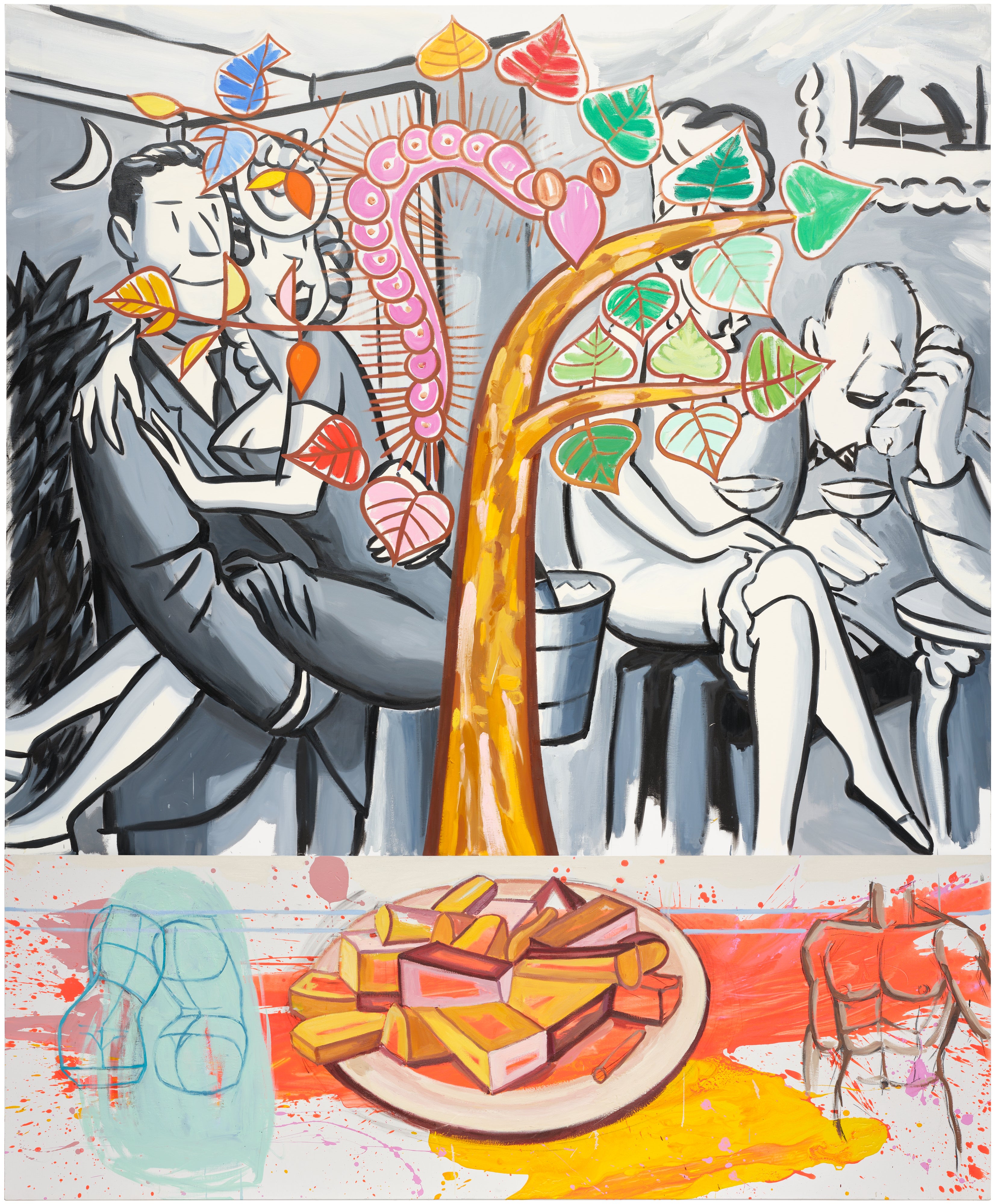
Tree of Life #22, 2021
David Salle was born in Norman, Oklahoma in 1952 and came of age in the American Midwest before moving to California to study at the California Institute of the Arts in Valencia. At CalArts he worked under the conceptual artist John Baldessari, an encounter that would prove foundational. Baldessari's insistence on questioning what images mean, how they function, and what authority they carry gave Salle a rigorous intellectual framework that he would spend the rest of his career loading with sensory richness. Where many of his peers took conceptualism in a cooler, more dematerialized direction, Salle turned back toward painting with a kind of renewed hunger.
Salle moved to New York in the mid 1970s and quickly became embedded in the downtown Manhattan scene that was remaking American art. He was part of a remarkable generation that included Julian Schnabel, Eric Fischl, Jean Michel Basquiat, and Francesco Clemente, artists who were collectively reclaiming the painted surface after a decade in which painting had been declared irrelevant. Salle's approach was distinct from his peers from the outset. Rather than the expressionistic urgency of Schnabel or the psychological realism of Fischl, Salle pursued something stranger and more structurally ambitious: canvases in which two or more entirely different images coexist without resolving into a single narrative.
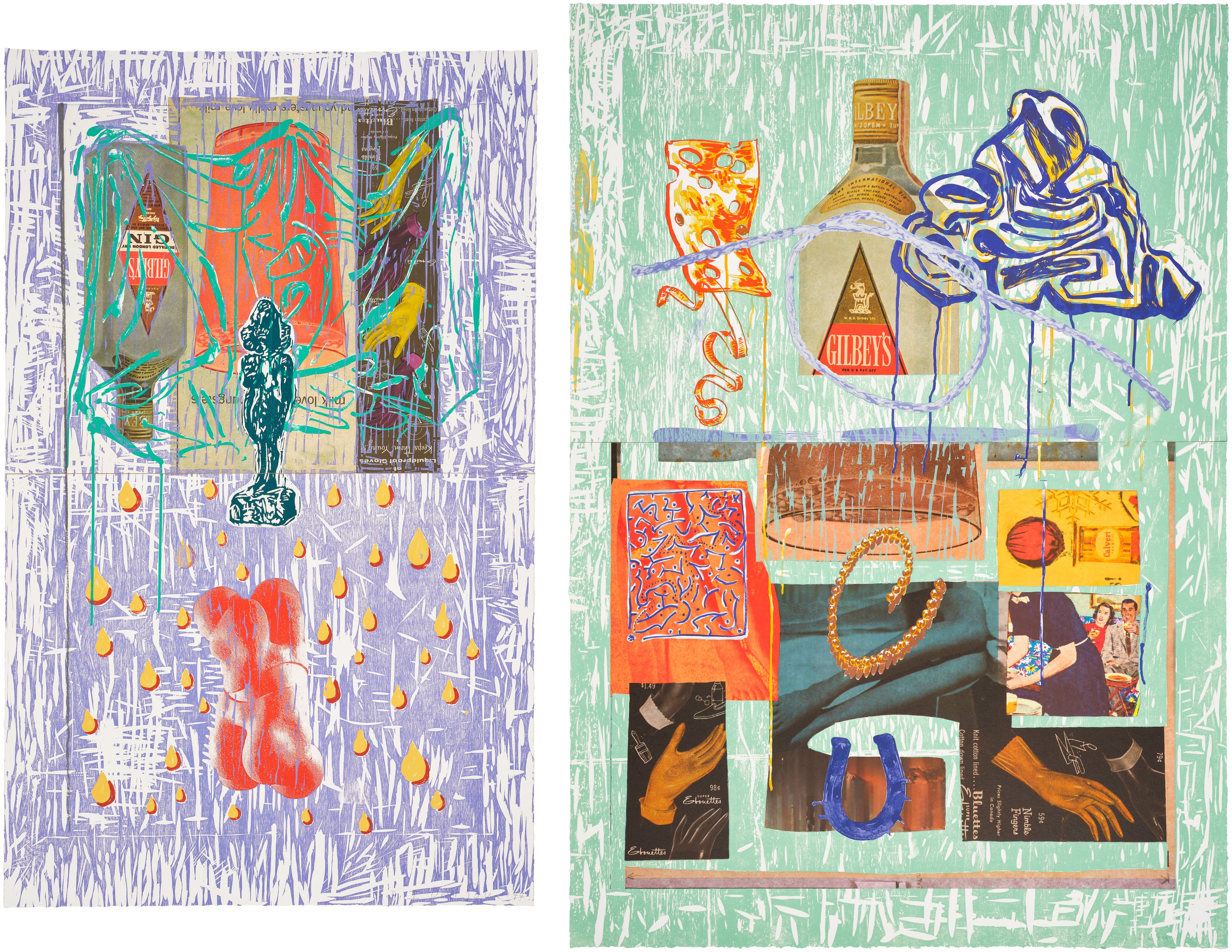
David Salle
Long and High; and Fast and Slow, from High and Low
Figures from art history, found photographs, domestic objects, and imagery drawn from commercial culture are stacked, overlaid, and juxtaposed so that the eye is constantly negotiating between registers. His breakthrough came in the early 1980s when he began showing at the Mary Boone Gallery in New York, one of the most charged commercial spaces of the era. Works such as "The Trucks Bring Things" from 1984, a two part canvas incorporating oil, acrylic, fabric collage, and even an embedded light bulb, announced the full range of his ambition. The piece is a study in deliberate tension: its surfaces refuse to cohere into comfort, yet they never feel arbitrary.
“I want the paintings to be more like experience than like illustrations of experience.”
David Salle, interview, Artforum
Every element has been placed with the care of a composer arranging voices that are meant to sing against one another. These early works established Salle as a central figure in what critics were calling Neo Expressionism, though his practice always exceeded that label's tidiness. Over the following decades Salle's work evolved without losing its essential character. The layering became at times more spatial and atmospheric, at others more rigorously diagrammatic.
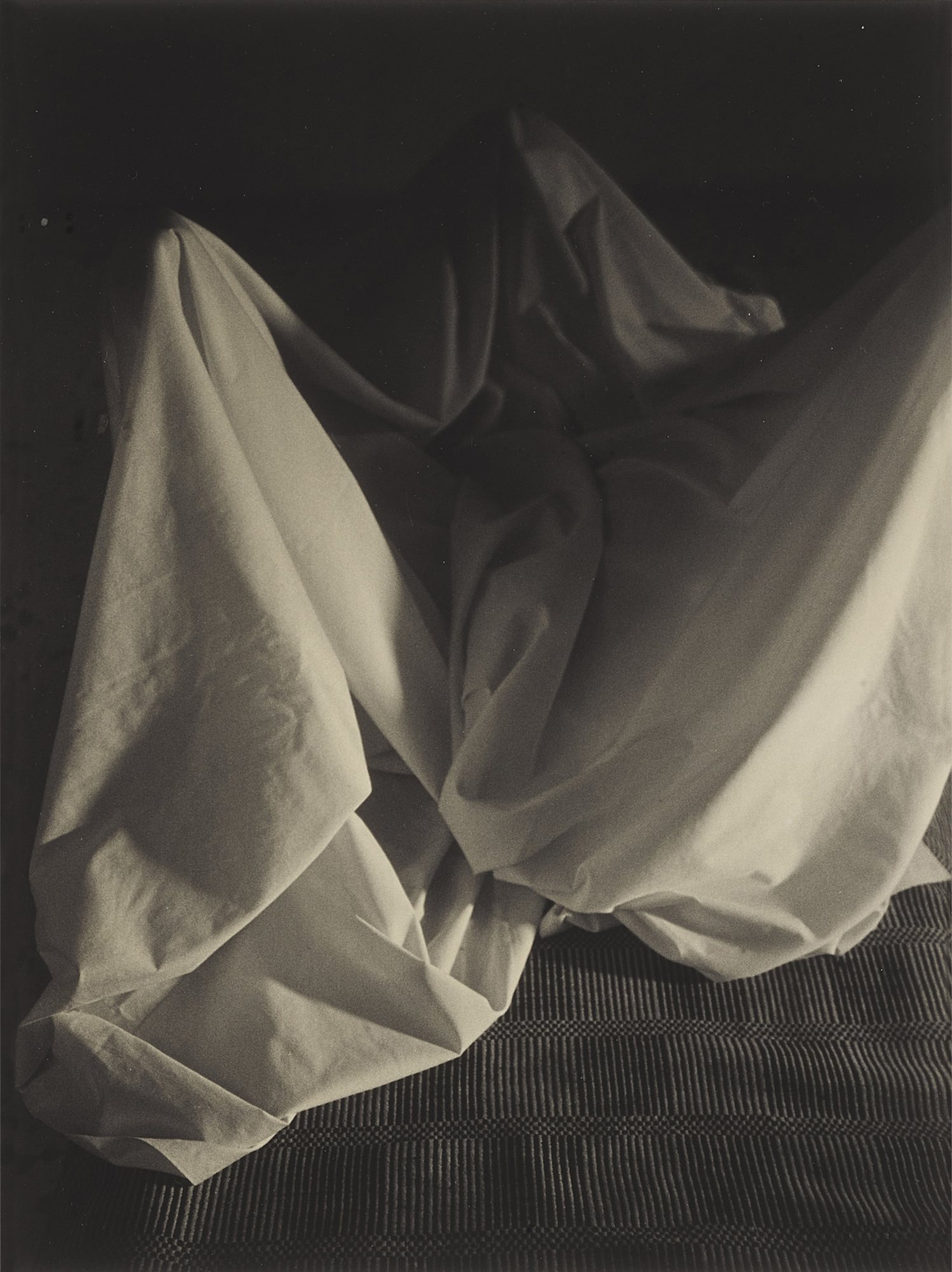
David Salle
Untitled 1980 - 1990
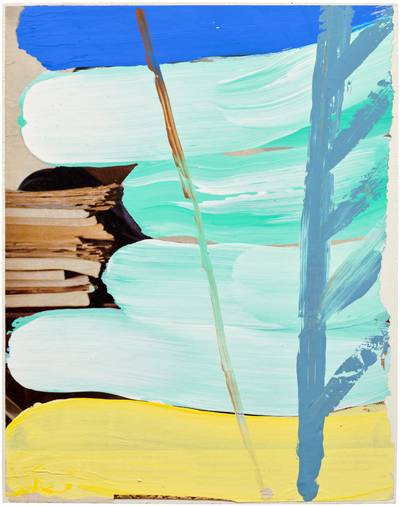
Works like "Swirl with Blue Torso" from 2004 and "White Blouse" from 2005 show a painter who has fully internalized his own visual language and begun to explore its further possibilities with something approaching serenity. His prints, including works from the "High and Low" series executed as lithographs and woodcuts on handmade TGL paper, demonstrate that his compositional intelligence translates with full force across media. The printmaking in particular reveals how precisely choreographed his image relationships are: each sheet feels both spontaneous and inevitable. More recently, works such as "Tree of Life 22" from 2021, a two part oil and acrylic on linen, show an artist in his seventh decade whose formal curiosity has only deepened.
For collectors, Salle represents a genuinely rare combination: critical importance, market stability, and continued artistic vitality. His works are held in the permanent collections of the Museum of Modern Art in New York, the Whitney Museum of American Art, and major institutions in Europe, which provides the kind of institutional endorsement that anchors long term value. On the secondary market, his canvases from the 1980s in particular attract serious attention, especially the large format multi panel works that most fully embody his compositional ambitions. Collectors entering his market today would do well to consider both the canonical early paintings and the more recent linen works, which represent a mature phase of the practice that has not yet received the full recognition it deserves.
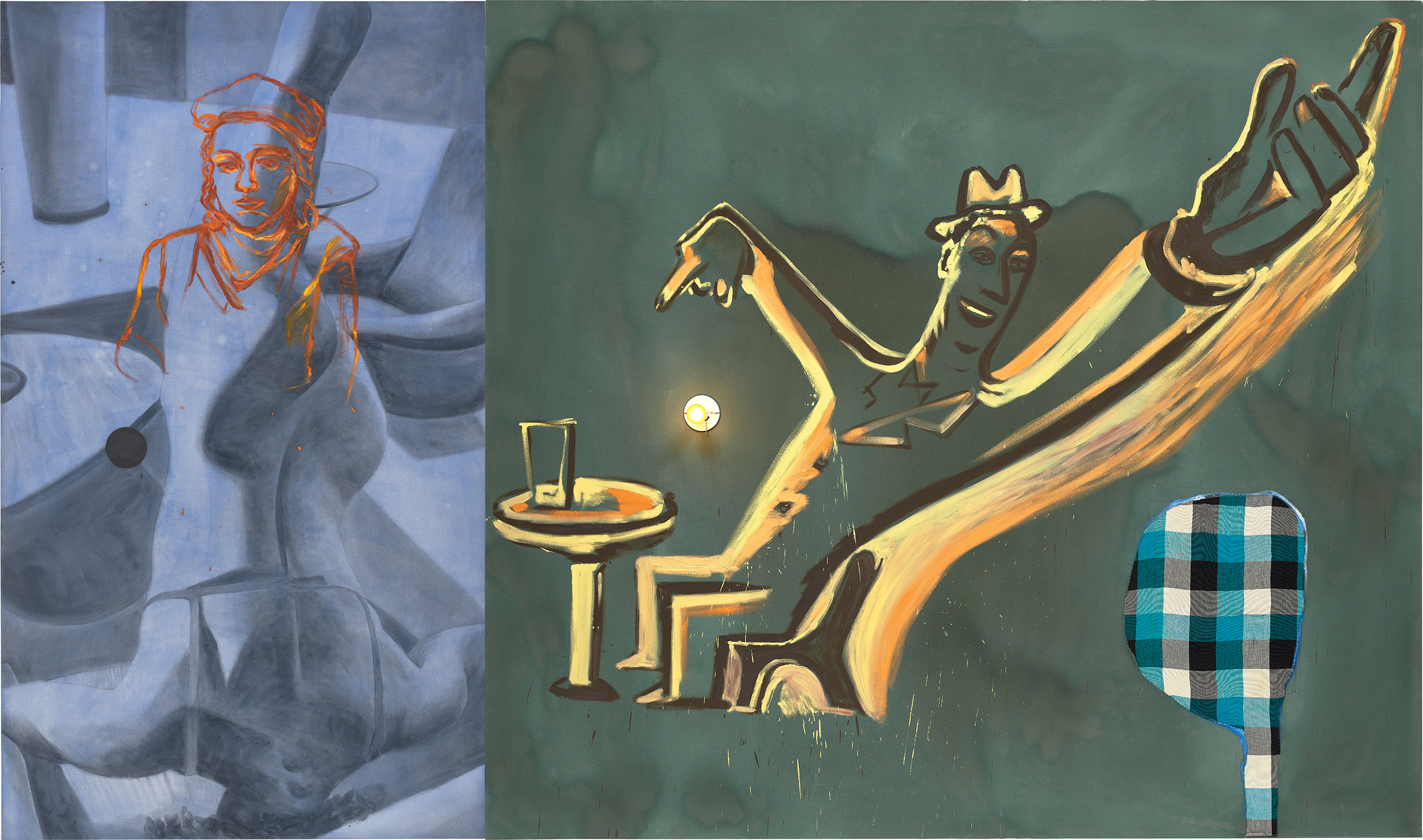
David Salle
The Trucks Bring Things, 1984
Prints from the "High and Low" series also offer a considered point of entry, combining accessibility with genuine aesthetic weight. To understand Salle fully it helps to place him in conversation with the artists who share his conceptual concerns. Gerhard Richter's investigations of photographic imagery and the reliability of representation are a natural point of comparison, as is the work of Sigmar Polke, whose layered surfaces and sardonic relationship to popular imagery anticipate aspects of Salle's approach. Among American peers, Robert Rauschenberg's combines and combines stand as an important precedent for the idea that a canvas can hold multiple worlds simultaneously.
More recently, artists such as Richard Prince and Cindy Sherman, who also interrogate the power and instability of found images, belong to the broader cultural conversation that Salle has helped define. What makes Salle matter today is precisely what made him difficult to categorize in 1982: his refusal to let images settle. In an era when the internet has made the experience of simultaneous, colliding imagery the basic condition of daily life, his paintings feel less like provocations and more like accurate maps of consciousness. He understood before most that meaning is not found in a single image but in the relationship between images, in the gap where interpretation must do its work.
That insight, pursued over four decades with extraordinary discipline and invention, is the measure of a genuinely important artistic intelligence. The collection of works available through The Collection offers a rare opportunity to trace that intelligence across time, from the charged early canvases to the luminous recent paintings, and to own a piece of one of the defining visual conversations of our era.
Explore books about David Salle