David Roberts
David Roberts: The World Rendered in Wonder
Artist Spotlight · The Collection Editorial
Imagine standing at the edge of the ancient city of Petra in the autumn of 1839, sketchbook in hand, the rose red cliffs rising around you in the desert light. This was the world David Roberts inhabited, not merely as a traveler but as a witness of extraordinary precision and feeling. His journey through Egypt, the Holy Land, and Syria between 1838 and 1839 remains one of the most ambitious artistic expeditions of the nineteenth century, producing a body of work that would reshape how Victorian Britain understood the ancient world. More than 180 years after that journey, Roberts endures as one of the most beloved and collectible figures of the Romantic era, his watercolours and lithographs commanding sustained attention from collectors and institutions alike.
David Roberts
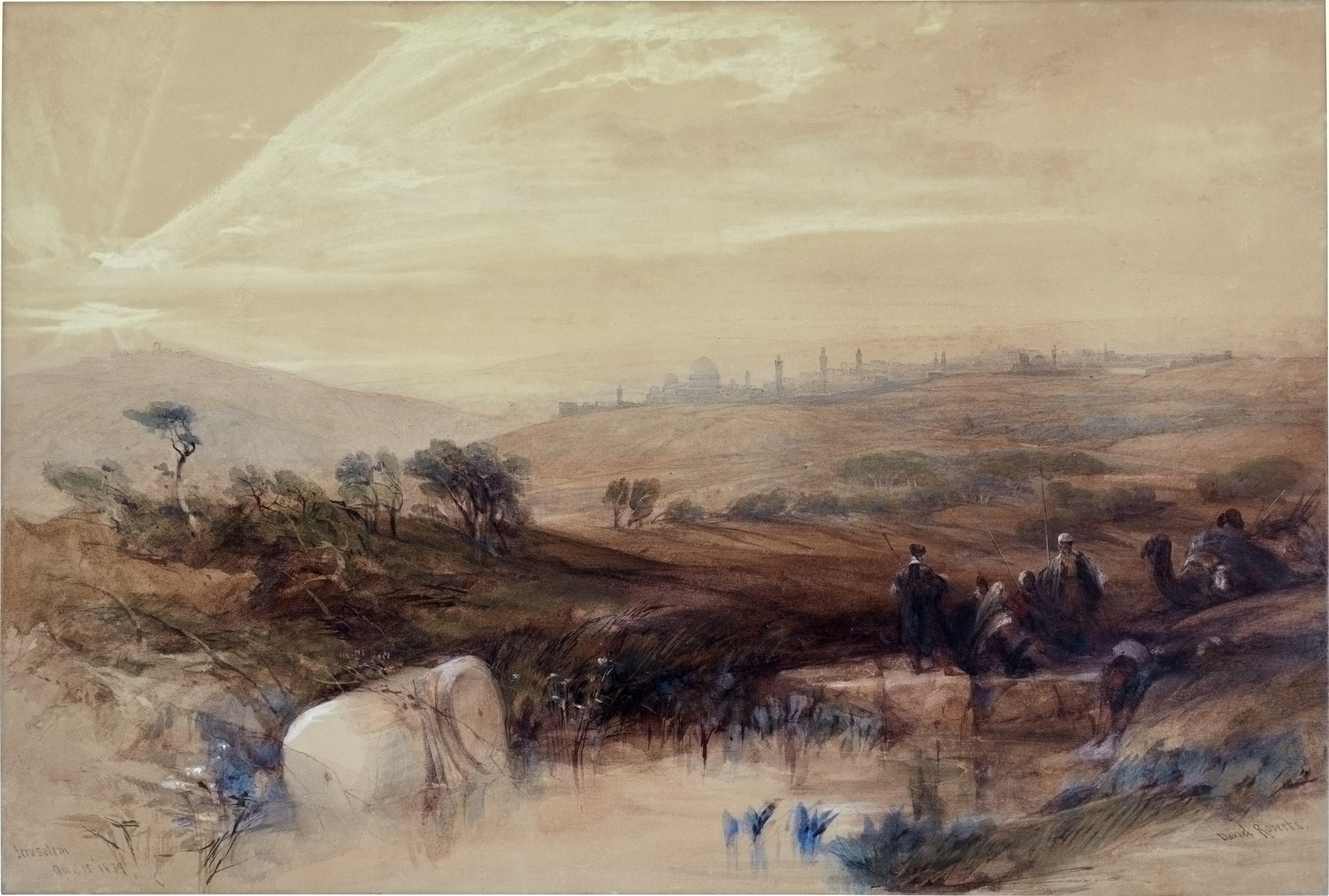
Jerusalem from the North
Roberts was born in Stockbridge, Edinburgh, in 1796, the son of a shoemaker, and his early circumstances gave little hint of the grand vistas that would define his mature career. He was apprenticed to a house painter as a boy, a grounding in craft and observation that would serve him throughout his life. He later worked as a scene painter for travelling fairs and eventually for the Theatre Royal in Edinburgh, moving to London in 1822 to paint theatrical sets at Covent Garden and Drury Lane. This theatrical training was formative in the deepest sense: it gave Roberts an instinct for drama, for scale, for the way light falls across an architectural mass and commands an audience into stillness.
His transition from stage design to fine art was gradual but decisive. Roberts began exhibiting at the Royal Academy in 1826 and undertook his first major continental journey to Spain and Morocco in 1832 and 1833, producing richly atmospheric studies of Moorish architecture and Iberian landscapes. These works announced the sensibility that would fully flower in the Near East: a reverence for ancient stone, an eye for human figures rendered small against vast architectural backdrops, and a luminous control of watercolour that could conjure desert heat or the cool shadow of a colonnaded hall. He was elected a full Royal Academician in 1841, a recognition that placed him firmly among the leading painters of his generation.
David Roberts
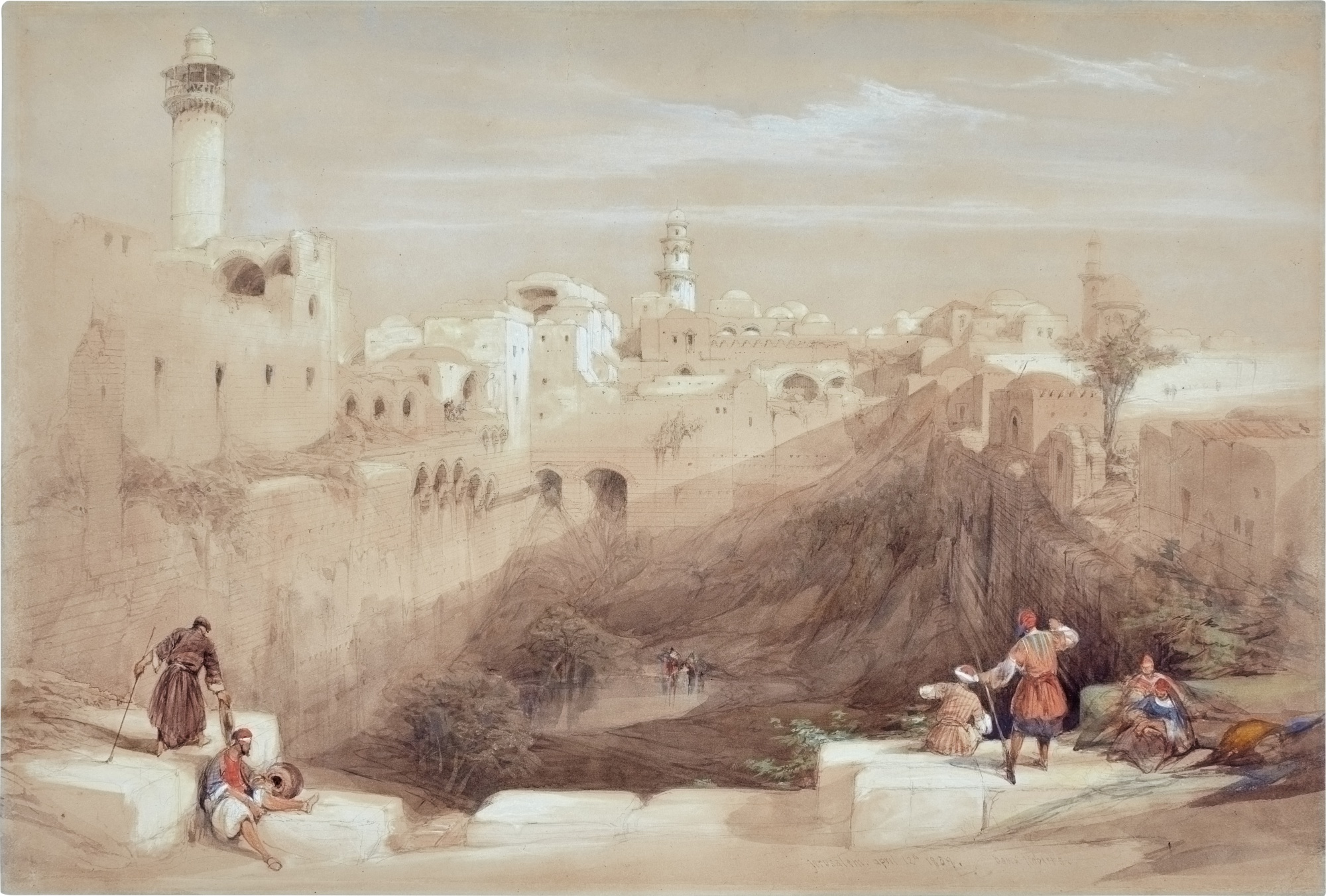
Jerusalem, 'The Pool of Bethesda'
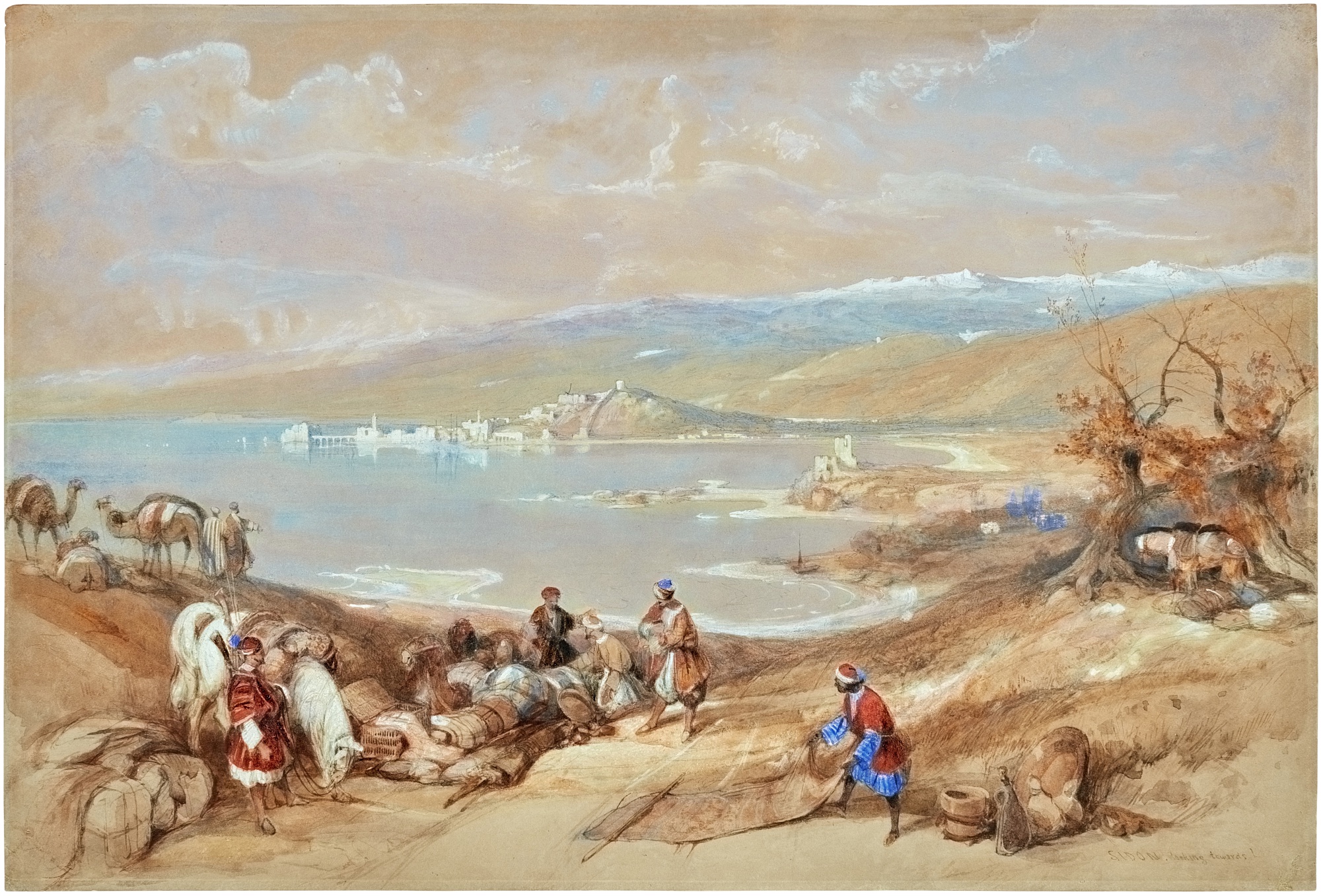
The years 1838 to 1839 were the crucible of his reputation. Roberts departed for Egypt in August 1838, travelling up the Nile to document the temples of Luxor, Karnak, Philae, and Abu Simbel before making his way through the Sinai and into the Holy Land. He visited Jerusalem, Bethlehem, Hebron, the Dead Sea, Baalbek, and the ruins of Tyre and Sidon, filling hundreds of pages with drawings that combined meticulous architectural accuracy with a painter's sensitivity to atmosphere and time of day. He returned to London in 1839 with material that would occupy him for years.
The resulting publication, The Holy Land, Syria, Idumea, Arabia, Egypt and Nubia, issued in lithographic form between 1842 and 1849 with tinted lithographs after his drawings executed by Louis Haghe, became one of the most celebrated illustrated books of the Victorian age. It was a defining moment not only for Roberts personally but for the genre of Orientalist art and the popular understanding of biblical geography. The watercolours that underlie that published legacy are among the most quietly spectacular works of the period. Works such as Jerusalem from the North and Bethlehem, both executed in watercolour over pencil heightened with bodycolour and gum arabic, reveal a technique of remarkable sophistication.
David Roberts
Sidon, looking towards Lebanon
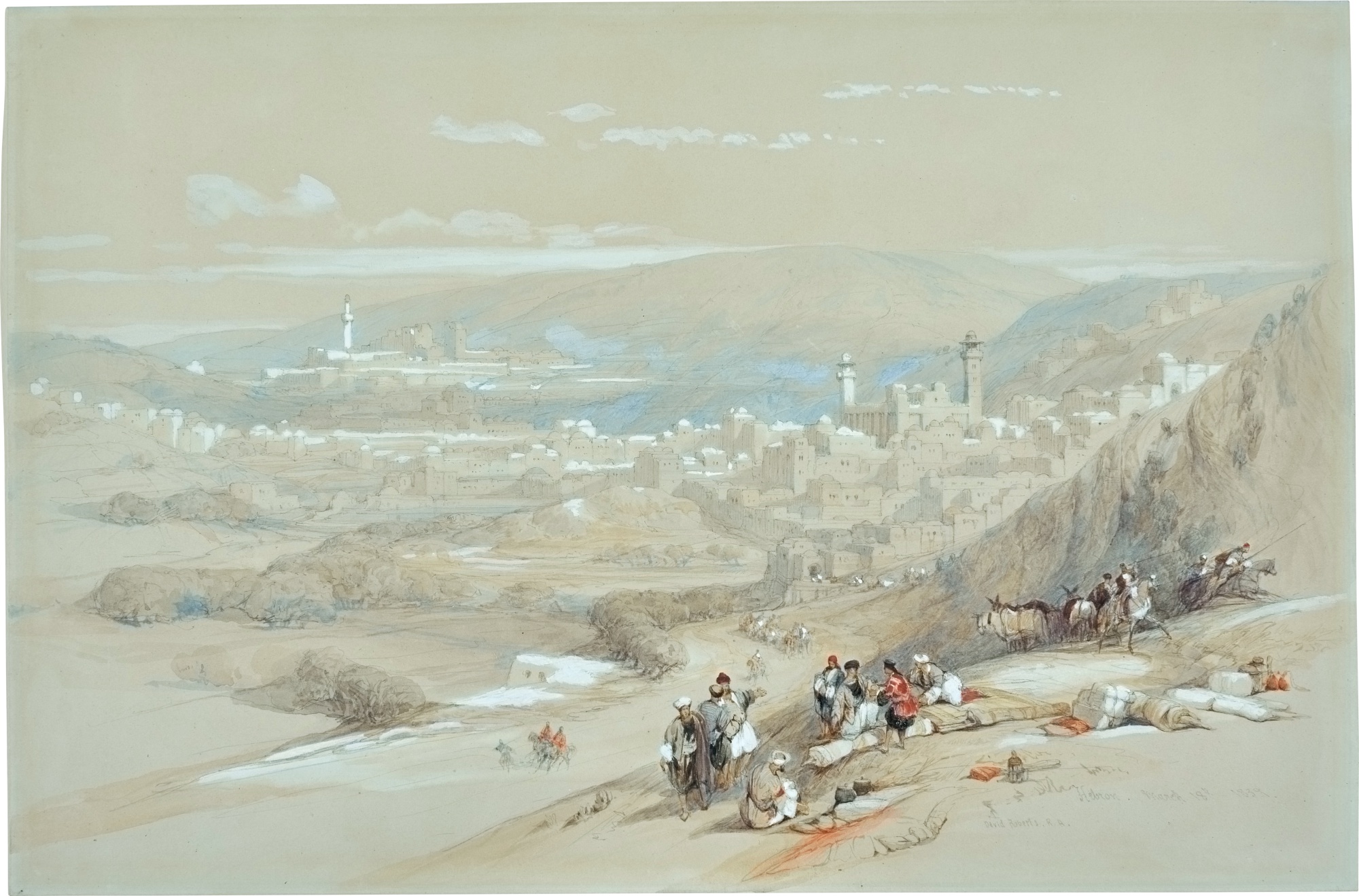
The gum arabic lends a luminous depth to shadow and sky, the bodycolour allows Roberts to reclaim highlights from washes and describe the bleached surfaces of ancient limestone with uncanny truthfulness. His treatment of Hebron, with its domed rooftops receding into a haze of ochre and pale blue, or The Dead Sea looking towards Moab, with its vast and melancholy stillness, demonstrates a painter in full command of his medium and his subject. These are not merely topographical records; they are meditations on time, faith, and the endurance of stone. For collectors, Roberts occupies a position of particular interest precisely because his work exists at the intersection of so many desirable qualities.
His watercolours are historically significant, aesthetically accomplished, and deeply personal, bearing the marks of on the spot observation rather than studio confection. Works on paper from the Holy Land series appear with some regularity at auction at the major London houses, and finer examples have achieved prices reflective of their rarity and condition. Collectors are advised to attend closely to the technique: the presence of stopping out, the integrity of the bodycolour highlights, and the freshness of the watercolour washes are all indicators of quality and handling over time. Provenance tracing works to early collections assembled in the decades following the lithographic publication adds additional interest and context.
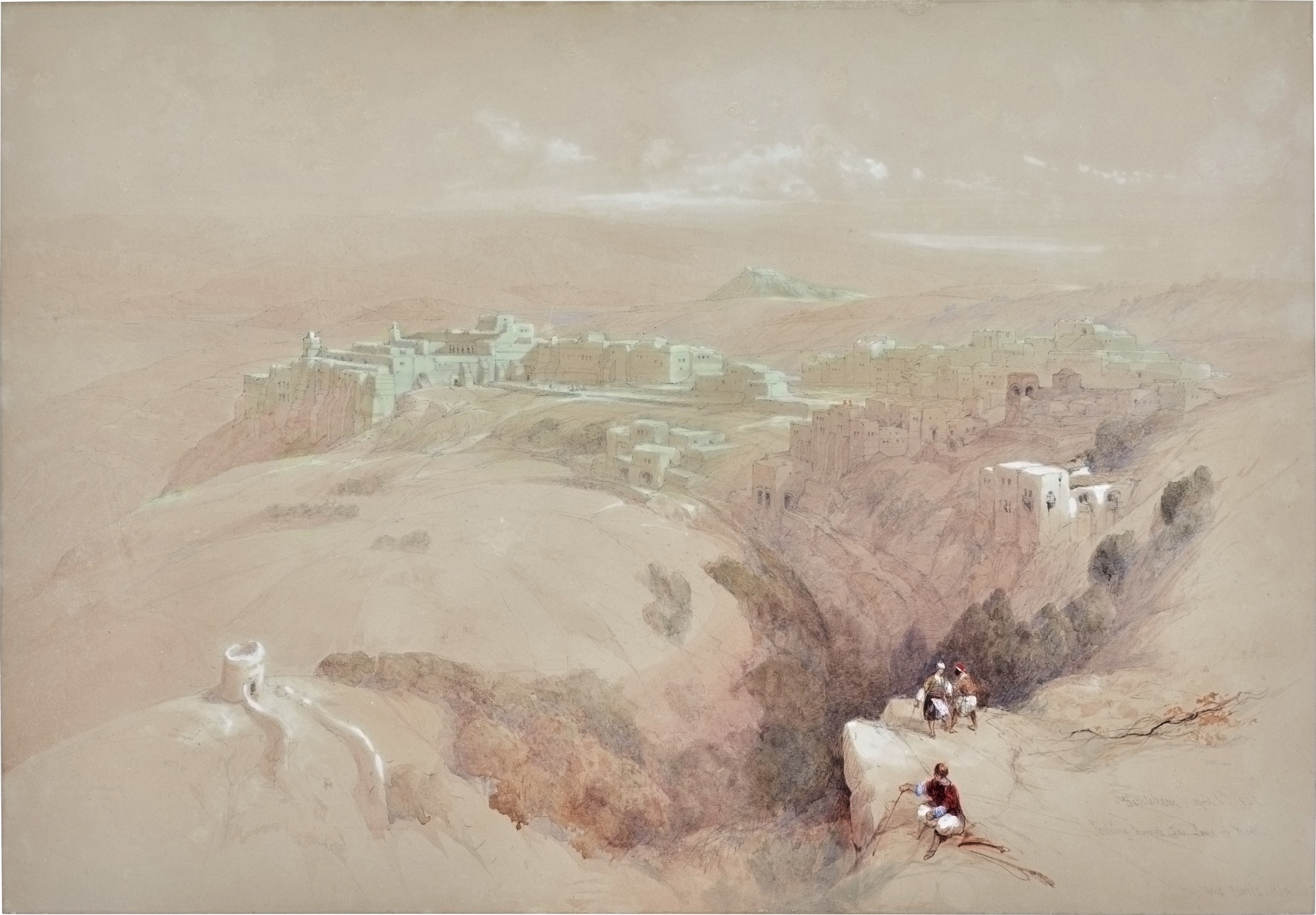
David Roberts
Bethlehem
Roberts sits within a constellation of nineteenth century artists who shared his fascination with the architecture and light of the Mediterranean and Near East. John Frederick Lewis, who spent a decade living in Cairo, brought an even more intensely jewelled surface to Orientalist subject matter. William James Müller and David Wilkie also traveled to the region, while in France, Eugène Fromentin and Alexandre Decamps pursued parallel investigations into North African light and space. Roberts is distinct among them for the architectural specificity of his vision: he was as much an archaeological documentarian as a Romantic painter, and many of the monuments he recorded have since been altered, damaged, or lost.
This documentary dimension adds a layer of meaning to his work that resonates with contemporary audiences attuned to questions of cultural heritage and preservation. The legacy of David Roberts is, in the end, inseparable from the idea of looking with full attention. He brought the discipline of the trained scene painter, the curiosity of an explorer, and the feeling of a genuine artist to some of the most charged landscapes on earth. In an age when these places could only be known through images, his lithographs and watercolours served as windows onto a world most Victorians would never see.
Today, when those same landscapes carry the weight of ongoing history and debate, his images gain a further resonance: they are a record of how things were, rendered by a man who understood that the act of looking carefully is itself a form of respect. For the collector, the scholar, and the simply curious, Roberts remains an inexhaustible source of wonder and instruction.
Explore books about David Roberts

David Roberts: A Life
James Holloway
David Roberts and orientalism
Michael Jacobs
The Holy Land by David Roberts
David Roberts
David Roberts: Paintings and Drawings
Helen Guiterman
David Roberts RA 1796-1864
Lindsay Errington
David Roberts: A Scottish Master
Briony Llewellyn
The Sketches and Paintings of David Roberts
Peter Bicknell