Daniel Arsham
Daniel Arsham Makes the Future Feel Ancient
Artist Spotlight · The Collection Editorial
“I'm creating a future archaeology of the present, imagining how the objects we use today might appear thousands of years from now.”
Daniel Arsham, Studio interview
When Yorkshire Sculpture Park opened its grounds to Daniel Arsham's geological dreamscapes, something quietly remarkable happened. Visitors who wandered among his eroded forms described a sensation that is difficult to articulate but immediately recognizable: the uncanny feeling of standing at the wrong end of time. That experience, disorienting and strangely tender, is precisely what Arsham has spent the better part of two decades engineering with extraordinary precision. Today, with a presence spanning museum retrospectives, luxury collaborations, and a fiercely loyal global collector base, Arsham stands as one of the most culturally fluent artists of his generation.
Daniel Arsham
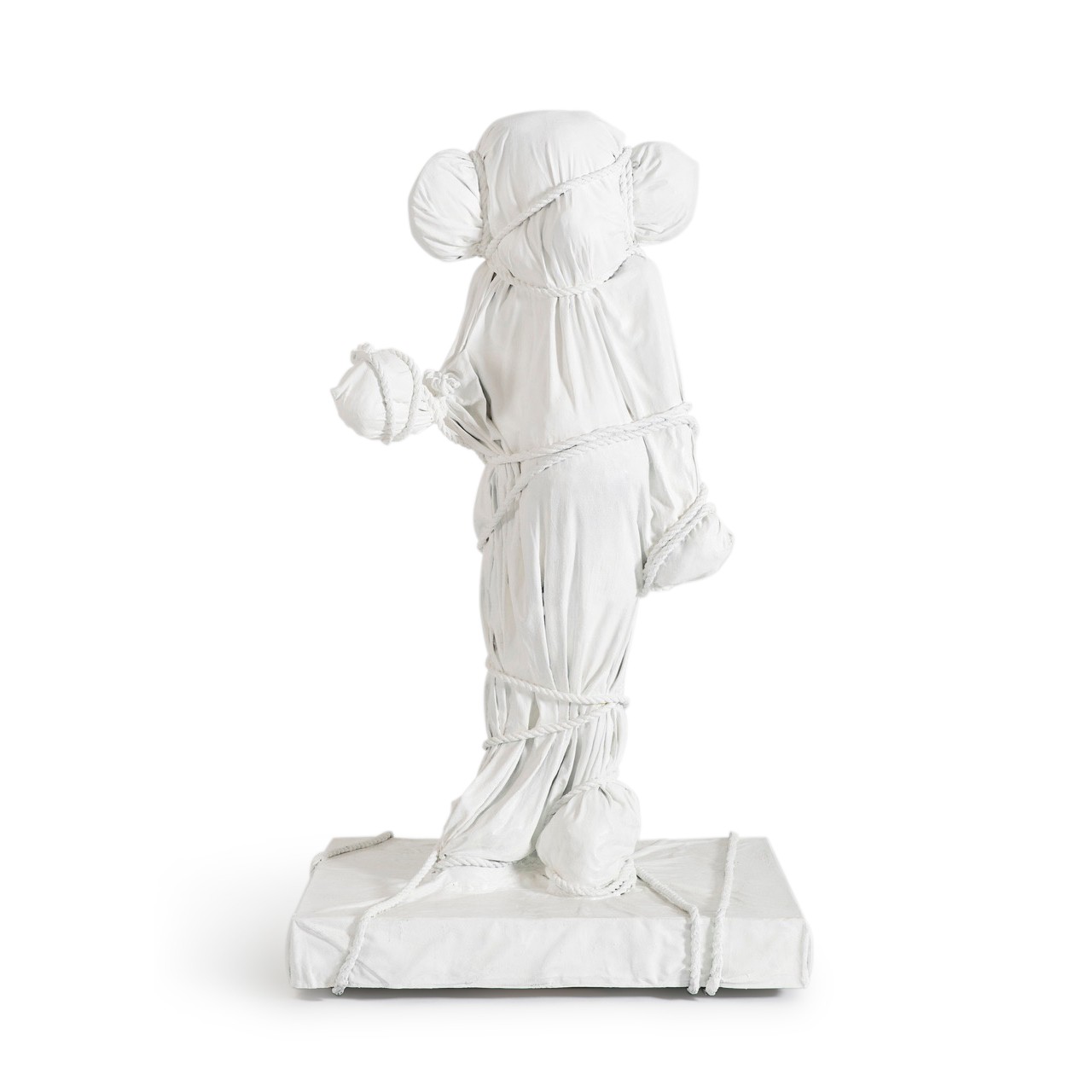
Large Wrapped Animal, 2018
Born in Cleveland, Ohio in 1980, Arsham grew up in Miami, a city whose pastel surfaces and subtropical light would later find subtle echoes in the bleached, mineral palette of his mature work. He studied at the Cooper Union in New York, graduating in 2003 into a downtown art world still processing the aftermath of September 11 and on the cusp of a decade that would fundamentally reshape how artists engaged with popular culture. At Cooper Union he encountered the rigorous conceptual traditions that would give his intuitions structural backbone, while his friendships and collaborations, particularly with choreographer Merce Cunningham and architect Snøhetta, introduced him early to the productive friction of working across disciplines. Arsham's breakthrough came through a practice that was genuinely hard to categorize.
He called it fictional archaeology, a term that captures both the playfulness and the philosophical ambition of his project. The core proposition is deceptively simple: what if the objects of contemporary life, the sneakers, cameras, game consoles, and luxury cars that define our moment, were discovered thousands of years from now, eroded and crystallized by geological time? By casting these objects in volcanic ash, selenite, quartz, crystal, and crushed glass, Arsham literalizes that fiction. The results are objects that feel simultaneously futuristic and ancient, familiar and utterly foreign.
Daniel Arsham
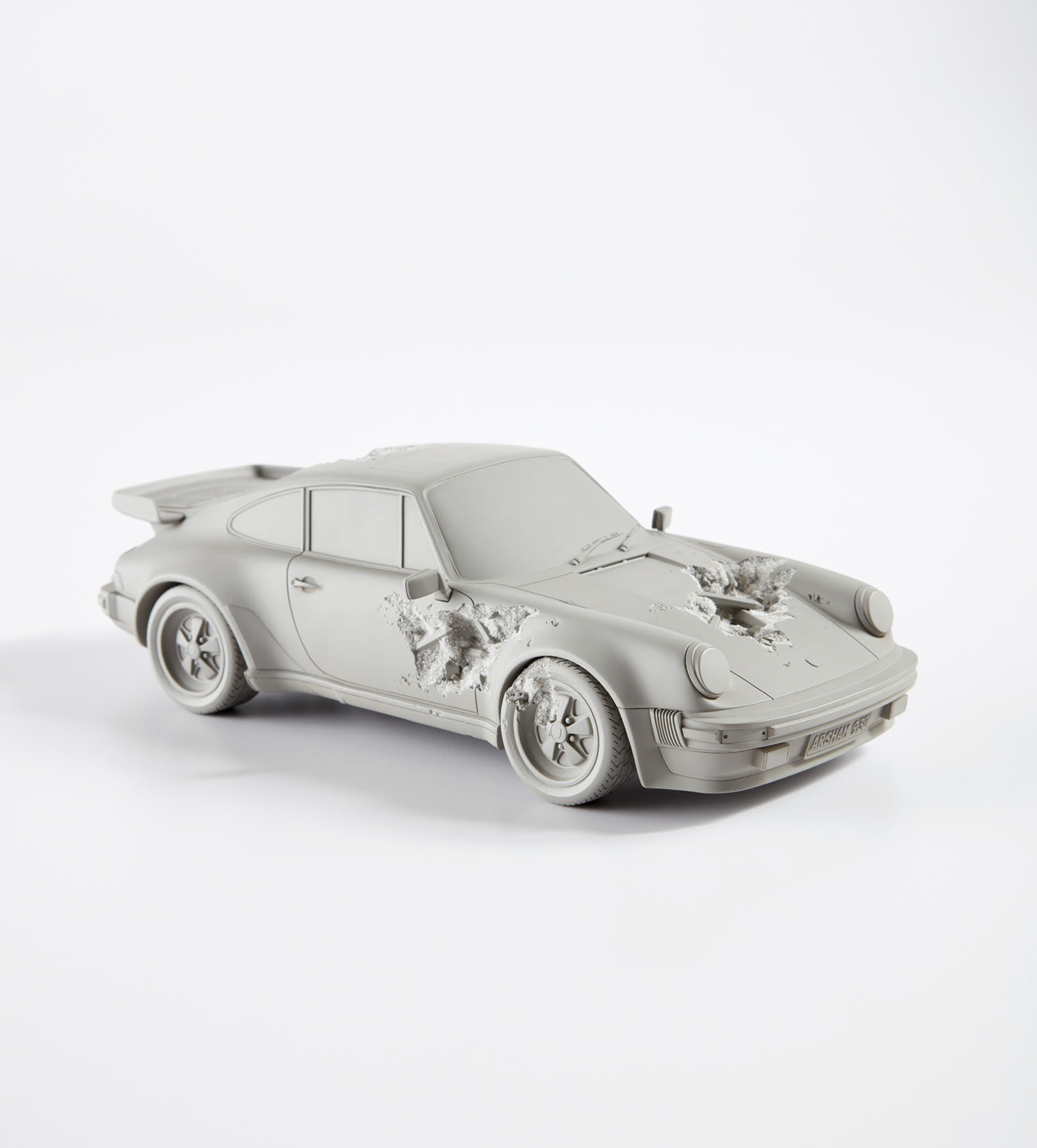
Eroded 911 Turbo (Porsche)
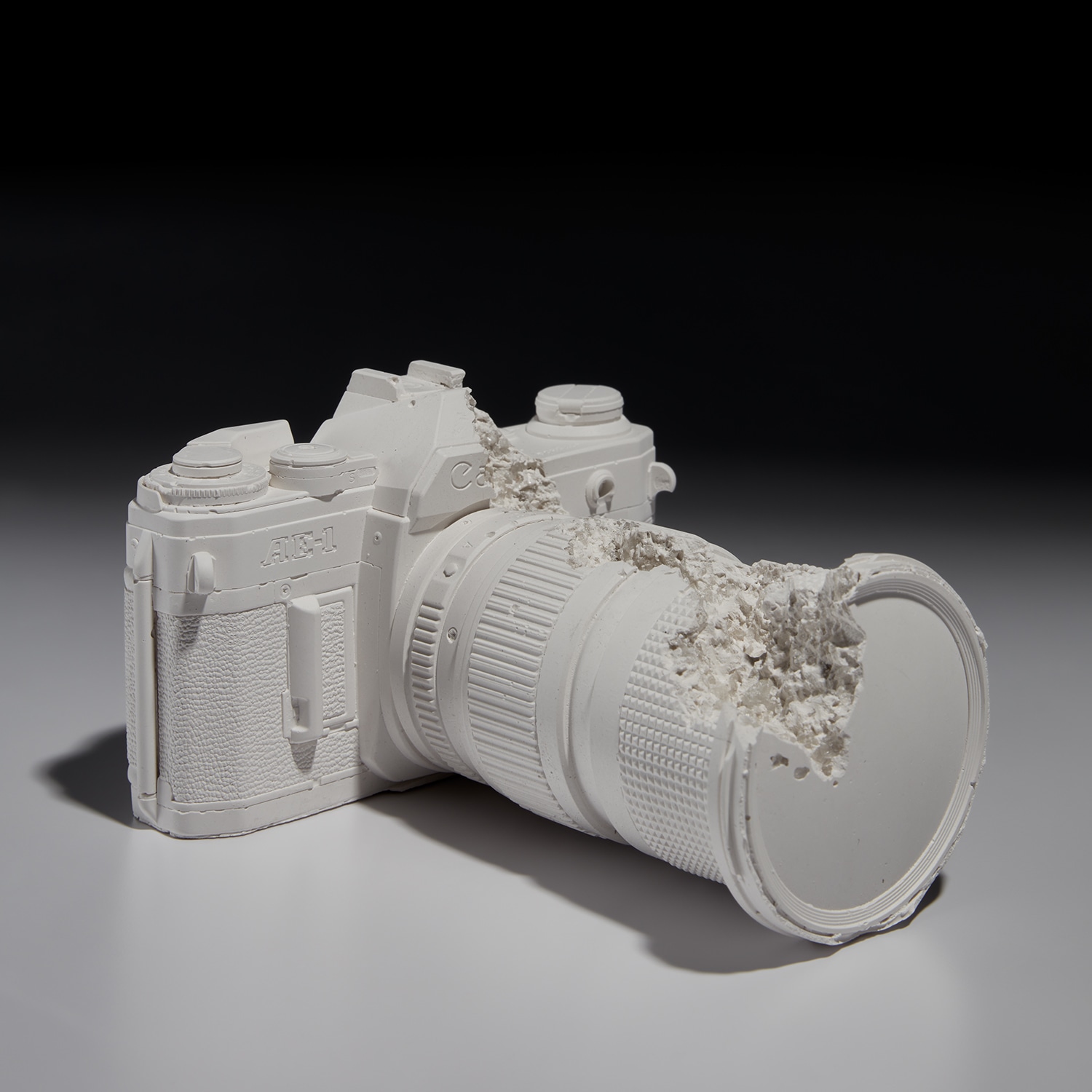
They sit in the space between a museum of natural history and a contemporary art gallery, and they make both institutions feel newly strange. The Future Relic series, launched around 2013, became one of the defining bodies of work in Arsham's career. Works like Future Relic 02, a 35mm camera cast in plaster and crushed glass and presented in foam lined archival packaging, encapsulate everything his practice does so well. The attention to presentation is not incidental.
“Everything in my work exists in a kind of fictional time, somewhere between past and future.”
Daniel Arsham, Artsy
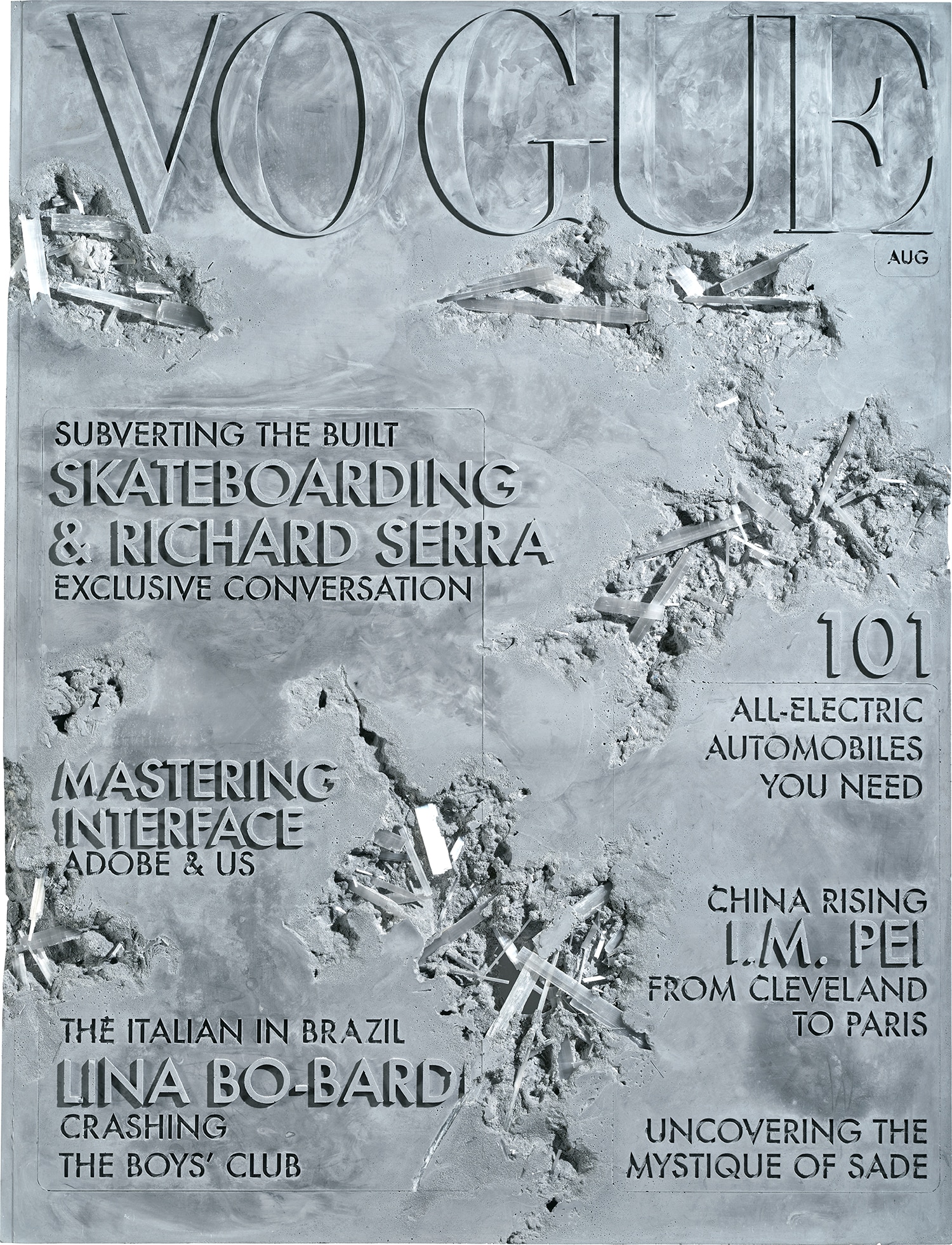
By delivering the work in its own archaeological packaging, Arsham implicates the collector in the fiction, turning the act of acquisition into a kind of time travel. The Eroded 911 Turbo, cast in selenite with quartz specimens, extends the same logic into the arena of automotive design, a space where mythology, desire, and industrial craft already intersect in ways that rhyme beautifully with Arsham's concerns. His Large Scale Vogue Magazine from 2019 pushes the proposition into media and fashion, transforming an emblem of contemporary image culture into a geological artifact with a half life longer than any trend cycle. Bronze, too, has been central to his vocabulary.
Daniel Arsham
Large Scale Vogue Magazine, 2019
The Large Wrapped Animal series, including both the 2018 original and the Blue variant, demonstrates his facility with a material that carries enormous art historical weight. By wrapping animal forms and allowing the gesture to harden into permanence, Arsham channels something of the memorializing impulse that has driven sculpture from antiquity forward, while giving it an entirely contemporary emotional register. The Coconut Grove Plant from 2019, cast in bronze and paint, shows a similar sensitivity: the mundane rendered monumental, the familiar made suddenly worthy of careful attention. From a collecting perspective, Arsham represents something genuinely rare: an artist whose work functions beautifully across multiple price points and contexts without losing coherence or integrity.
His editions, including the Future Relic multiples and the Selenite Erosion Wallpaper, an offset lithograph with cold stamp and high gloss varnishing, allow collectors at various stages of their journey to participate in a practice that also includes significant unique works and large scale installations. The Eroded Classical Prints Portfolio of Three from 2020, executed as screenprints, positions Arsham in a tradition of artists who have used printmaking not as a secondary activity but as a genuinely expansive medium for exploring their central ideas. Collectors who have followed his market closely note the consistent demand for his selenite and volcanic ash works, materials that photograph exceptionally well and carry strong conceptual freight. Arsham's cultural reach extends well beyond the traditional art world, and this is not a complication for serious collectors but rather an argument in his favor.
Daniel Arsham
Future Relic 02 (35mm Camera)
His collaborations with Adidas, Pokémon, Dior, and the Cleveland Cavaliers, among others, have introduced his visual language to enormous audiences while consistently reinforcing rather than diluting his core concerns. Artists like John Baldessari and Jeff Koons navigated similar tensions between high art and popular culture, and history has been generous in its judgment. Arsham's closest conceptual neighbors include artists like Elmgreen and Dragset, who share his interest in the uncanny staging of familiar objects, and in a broader sense he belongs to a tradition of artists, from Claes Oldenburg to Rachel Whiteread, who have found in the everyday object an inexhaustible source of metaphysical inquiry. What makes Arsham matter now, and what will make him matter in the decades ahead, is the quality of the central question his work refuses to stop asking.
We live in a moment saturated with objects that feel urgently present, impossibly new, and yet already on the edge of obsolescence. Arsham takes that ambient anxiety and transforms it into something beautiful and melancholy and strangely hopeful. To stand in front of an Arsham and understand that the camera or the car or the magazine you are looking at has been imagined forward into a future where it is already history is to feel the weight and the lightness of the present moment simultaneously. That is a rare gift for any artist to offer, and it is one that Arsham delivers with remarkable consistency, technical brilliance, and genuine warmth.