Cy Twombly
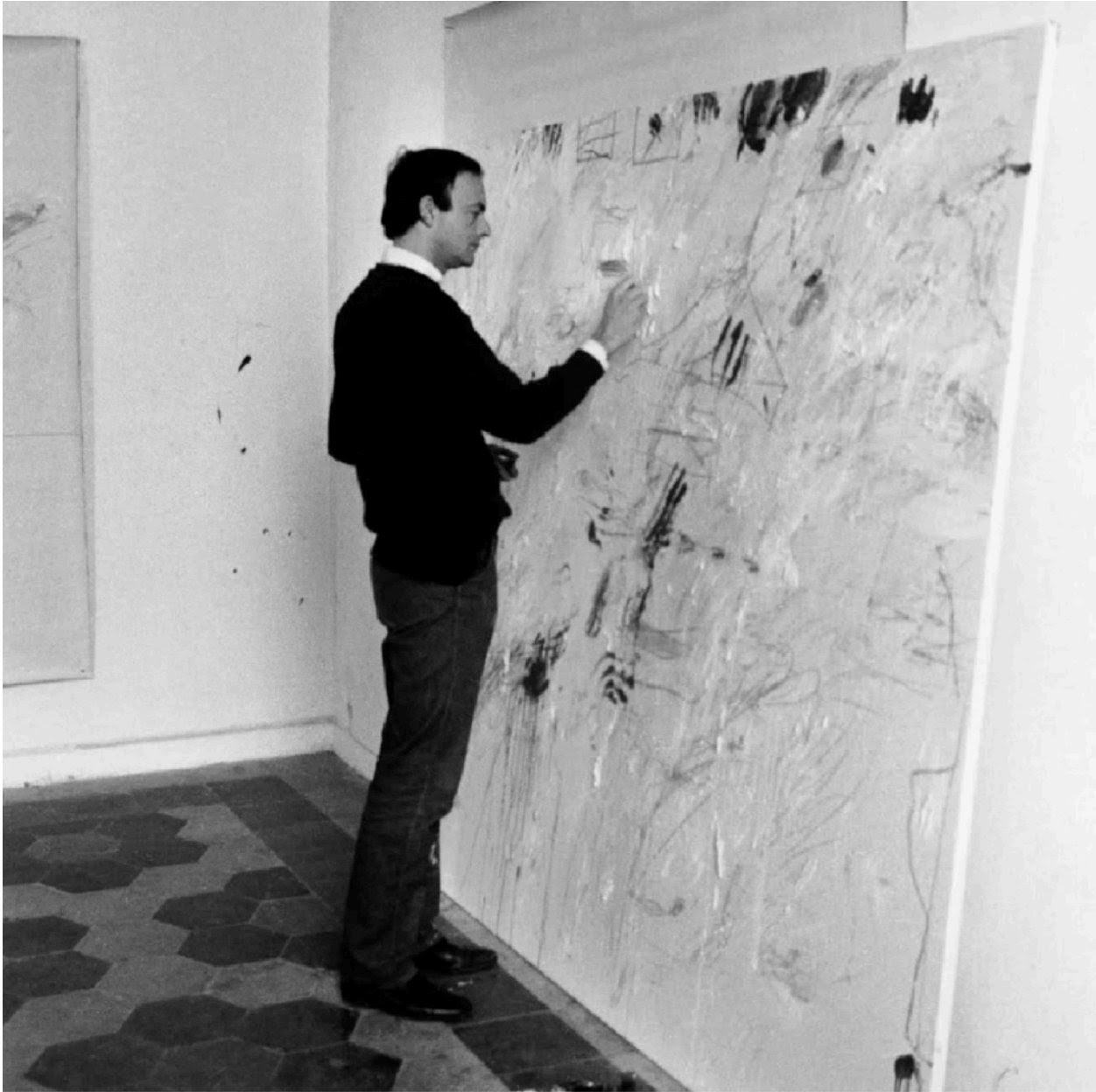
Cy Twombly: Poetry Written in Paint
Artist Spotlight · The Collection Editorial
“Each line is now the actual experience with its own innate history.”
Cy Twombly, artist statement
In 2016, the Tate Modern in London staged a landmark exhibition drawing together Twombly's monumental late canvases alongside his intimate works on paper, reminding a new generation just how profoundly this artist had rewired the language of painting. The show drew record attendance and renewed critical conversation about where exactly Twombly sits in the canon: too gestural for the conceptualists, too literary for the pure abstractionists, and too gloriously himself to be easily categorized. Five years after his death in 2011, the art world was still catching up to what he had made. That gap between the work and our full understanding of it is part of what makes Twombly so enduringly compelling.
Cy Twombly
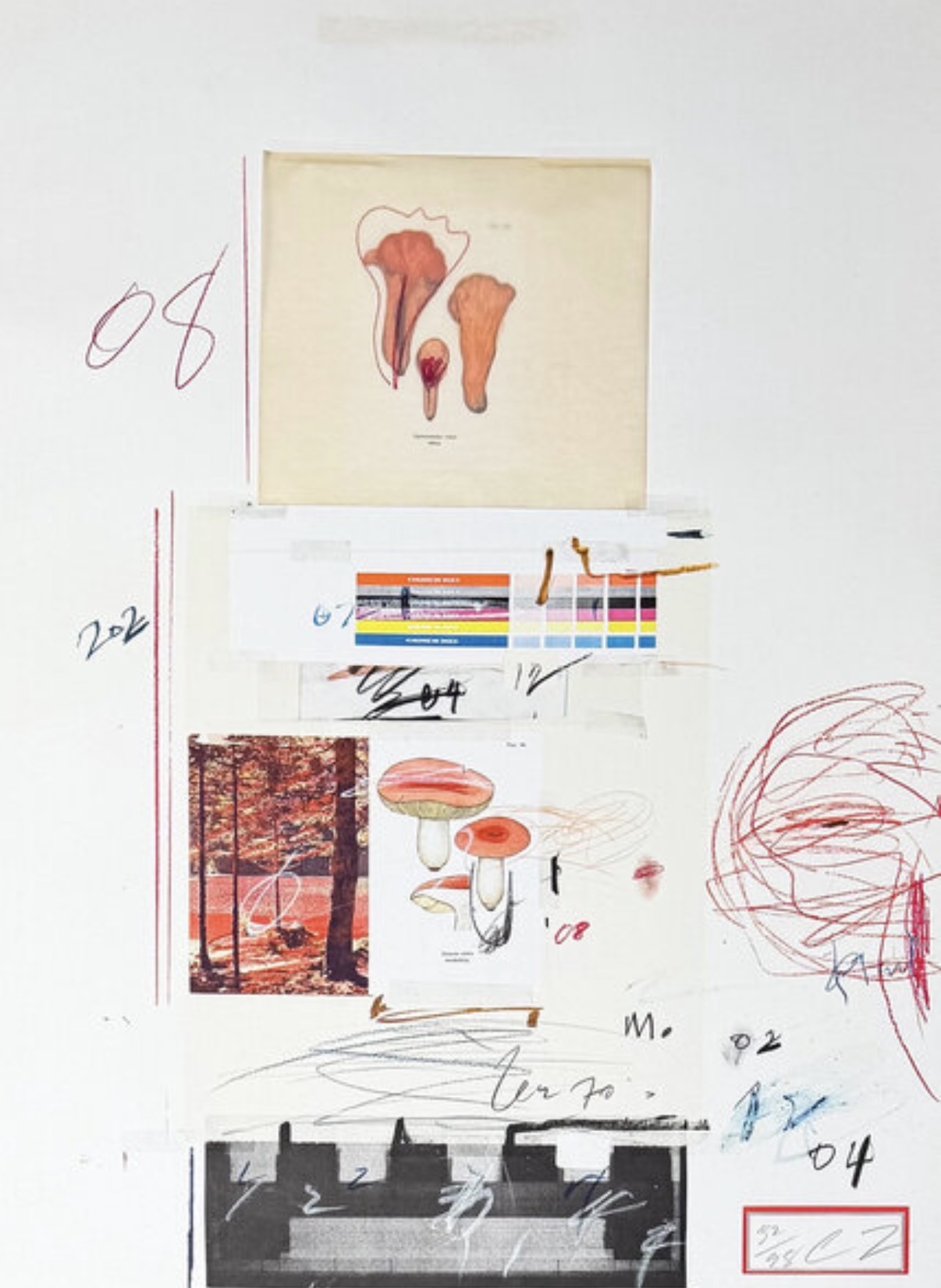
Natural History Part I: Mushrooms, 1974
Edwin Parker Twombly Jr. was born in Lexington, Virginia in 1928, into a quiet Southern town that gave little indication of the mythological grandeur he would one day pursue on canvas. He was drawn to art from an early age and found his first serious mentor in the Spanish born painter Pierre Daura, who introduced him to the European modernist tradition. Twombly went on to study at the School of the Museum of Fine Arts in Boston, then at Washington and Lee University, and eventually at the Art Students League in New York.
It was at Black Mountain College in North Carolina, that famously experimental institution, where his thinking crystallized. There he studied alongside Robert Rauschenberg, who became a close friend and early traveling companion, and absorbed the ideas of John Cage and the broader culture of radical creative freedom that defined the school. A foundational trip to Europe and North Africa in 1952, taken with Rauschenberg and supported by a travel grant, proved to be the decisive turning point in Twombly's formation. He encountered ancient Roman ruins, Greek mythology, and the layered textures of Mediterranean culture in a way that would permanently inflect his sensibility.
Cy Twombly
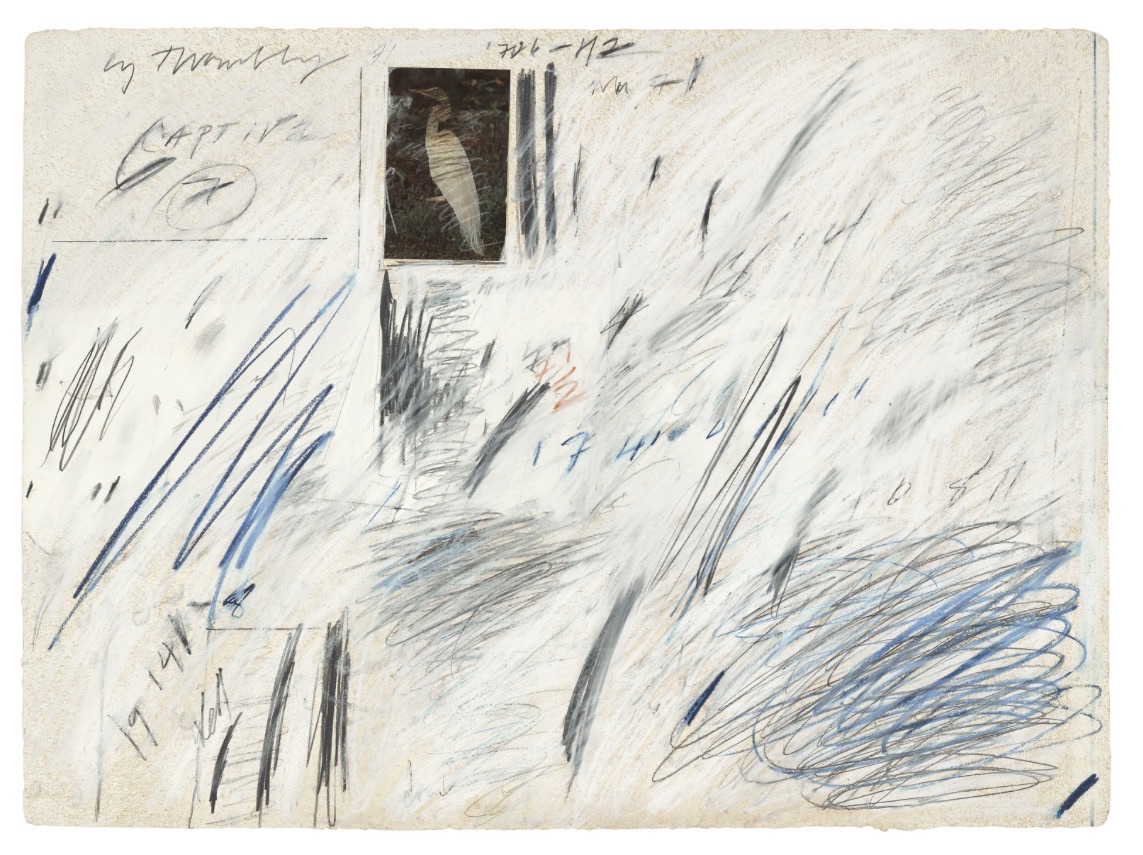
Captiva, 1991
He settled eventually in Rome in 1957, a move that set him apart from nearly all of his American contemporaries and gave his work a quality of deep historical consciousness that felt genuinely ancient even when the gestures on the canvas were emphatically immediate. Italy was not just a backdrop. It was a source, a mythology, a way of feeling time. Twombly's mature practice was unlike anything else being made in the postwar period.
“I work in waves. A painting might start anywhere.”
Cy Twombly, interview with David Sylvester
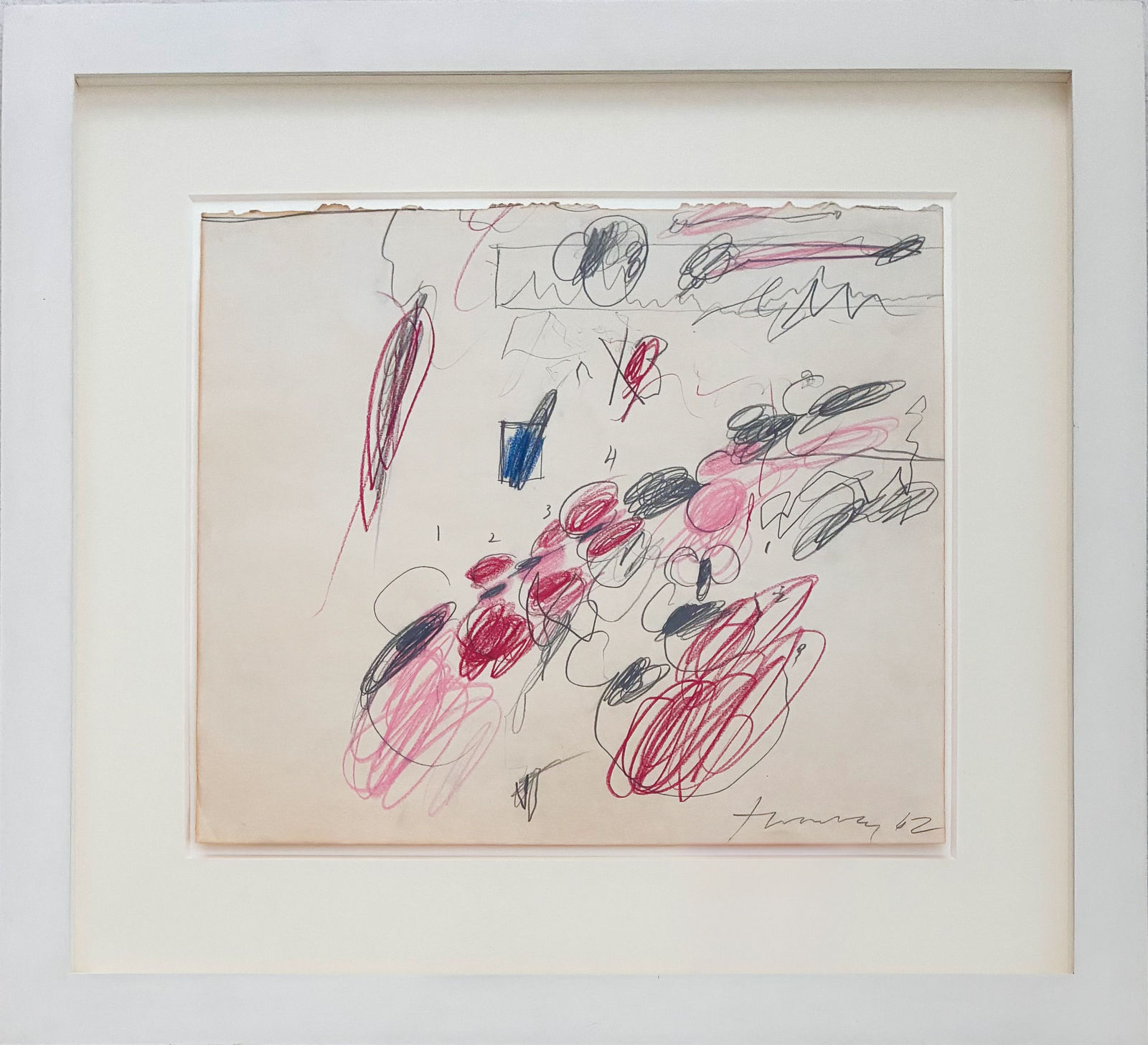
Working in Rome and later at his studio in Gaeta, he developed a visual language built from looping pencil marks, smeared wax crayon, chalky scrawls, and passages of pale paint that seemed to hold the light like fresco. His canvases often incorporated words, fragments of poetry, the names of gods and rivers and ancient battles. Keats, Virgil, Sappho, and Homer appear throughout his work not as illustrations but as emotional residue, as though the names themselves carry a charge that seeps into the paint. His "Blackboard" paintings of the late 1960s, with their rhythmic loops drawn in pencil and crayon over gray painted grounds, brought him significant critical attention and remain among the most quietly radical gestures in postwar art.
Cy Twombly
Untitled, 1962
Among the works available through The Collection, the Natural History Part I: Mushrooms series from 1974 stands as a particularly rich entry point into Twombly's printmaking practice. Created using a combination of lithograph, collotype, photochrome, and paper collage on Rives Couronne paper, the series reveals how deeply invested Twombly was in the material pleasures of making. Each sheet balances scientific curiosity with lyrical abandon, the imagery hovering between specimen study and pure sensation. Similarly, the Five Greek Poets and a Philosopher suite published by Propyläen Verlag in Berlin shows how Twombly collaborated with publishers and printers to extend his ideas across editions, treating the print not as a reproduction but as its own living object.
These works on paper are an ideal place to begin a serious engagement with his practice. From a collecting perspective, Twombly occupies one of the most secure positions in the postwar and contemporary market. His major canvases regularly achieve eight and nine figure results at auction, with works like Untitled (New York City) fetching extraordinary prices at Christie's and Sotheby's in recent years. But it is the works on paper, the prints, and the smaller collage works that represent a particularly thoughtful area of focus for collectors building a serious holding.
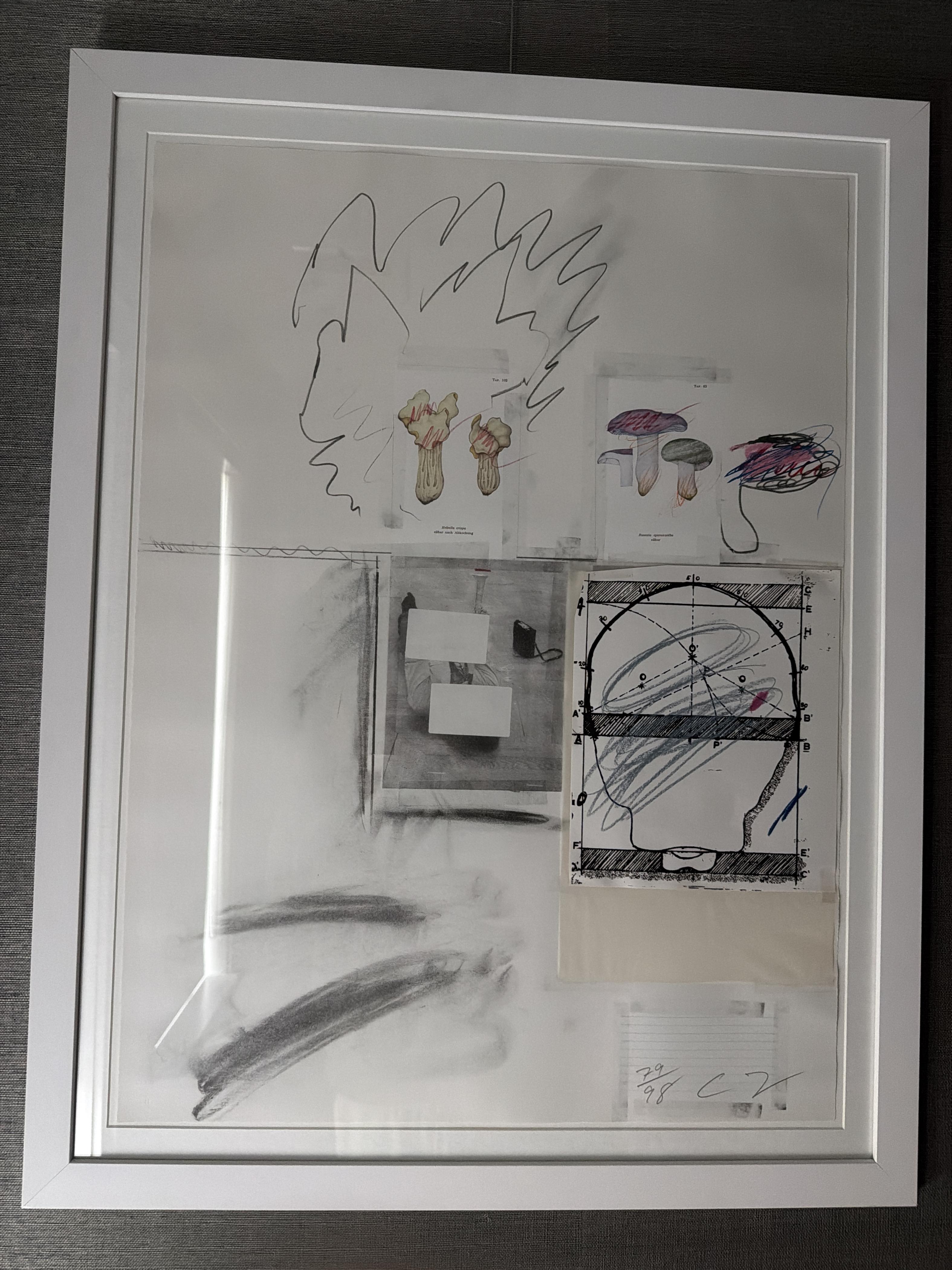
Cy Twombly
Untitled
These pieces carry the full weight of his visual intelligence in a more intimate format, and their relative accessibility compared to the large canvases makes them among the most coveted objects in the postwar works on paper category. Condition and provenance matter enormously with Twombly, as the delicacy of his materials means that works with clean exhibition histories and careful handling command meaningful premiums. Twombly's place within art history is best understood in relation to both the generation he emerged from and the one he helped inspire. He shared the gestural ambitions of the Abstract Expressionists, particularly Franz Kline and Robert Motherwell, under whom he studied briefly in New York.
But where the New York School pursued scale and drama as a kind of confrontation, Twombly pursued intimacy, digression, and whisper. His sensibility aligned more naturally with artists like Joseph Beuys in its embrace of mark as memory, and his influence can be felt clearly in the work of later painters including Jean Michel Basquiat, Christopher Wool, and Cecily Brown. He was a bridge between the grand ambitions of postwar abstraction and the more self questioning, text inflected practices that followed. The legacy Twombly left is one of permission: permission to be slow, to be literary, to be tender in the face of historical enormity.
His late Bacchus paintings, completed in the 2000s in bold looping crimson and deep violet, showed an artist in his seventies still expanding, still willing to be excessive and joyful on a scale that matched any of the heroic canvases of the New York School. He died in Rome in July 2011, in the city he had chosen over comfort and familiarity more than half a century before. What remains is a body of work that rewards every return visit, that gives more the more you know and still gives generously to those encountering it for the very first time. For collectors and admirers alike, Cy Twombly remains one of the great invitations in modern art.
Explore books about Cy Twombly
Cy Twombly: A Retrospective
Kirk Varnedoe
Cy Twombly: Catalogue Raisonné of Paintings, Drawings, Sculptures
Pia Viewing
Cy Twombly
Roland Barthes

Twombly: The Art of Making Marks
Paul Schimmel

Cy Twombly: Sculptures
Heiner Bastian
Cy Twombly and Lexicon
Nicola Del Roscio
Cy Twombly: A Life
Miranda McClintic
Cy Twombly: Cycles and Seasons
Susan Davidson