Craig Kauffman

Craig Kauffman, Where Light Becomes Sculpture
Artist Spotlight · The Collection Editorial
There is a particular quality of afternoon light in Los Angeles, the kind that seems to pass through objects rather than simply illuminate them, that feels almost made for Craig Kauffman's art. When the Museum of Contemporary Art Los Angeles mounted its survey of the Light and Space movement, Kauffman's shimmering, vacuum formed acrylic reliefs held their own as foundational statements of a distinctly Californian sensibility. Decades after their making, those works continue to draw curators, scholars, and collectors who recognize in them something irreducible: a commitment to sensory pleasure elevated to philosophical inquiry. The renewed international interest in postwar West Coast art has brought Kauffman's practice into focus once again, and the timing feels right.
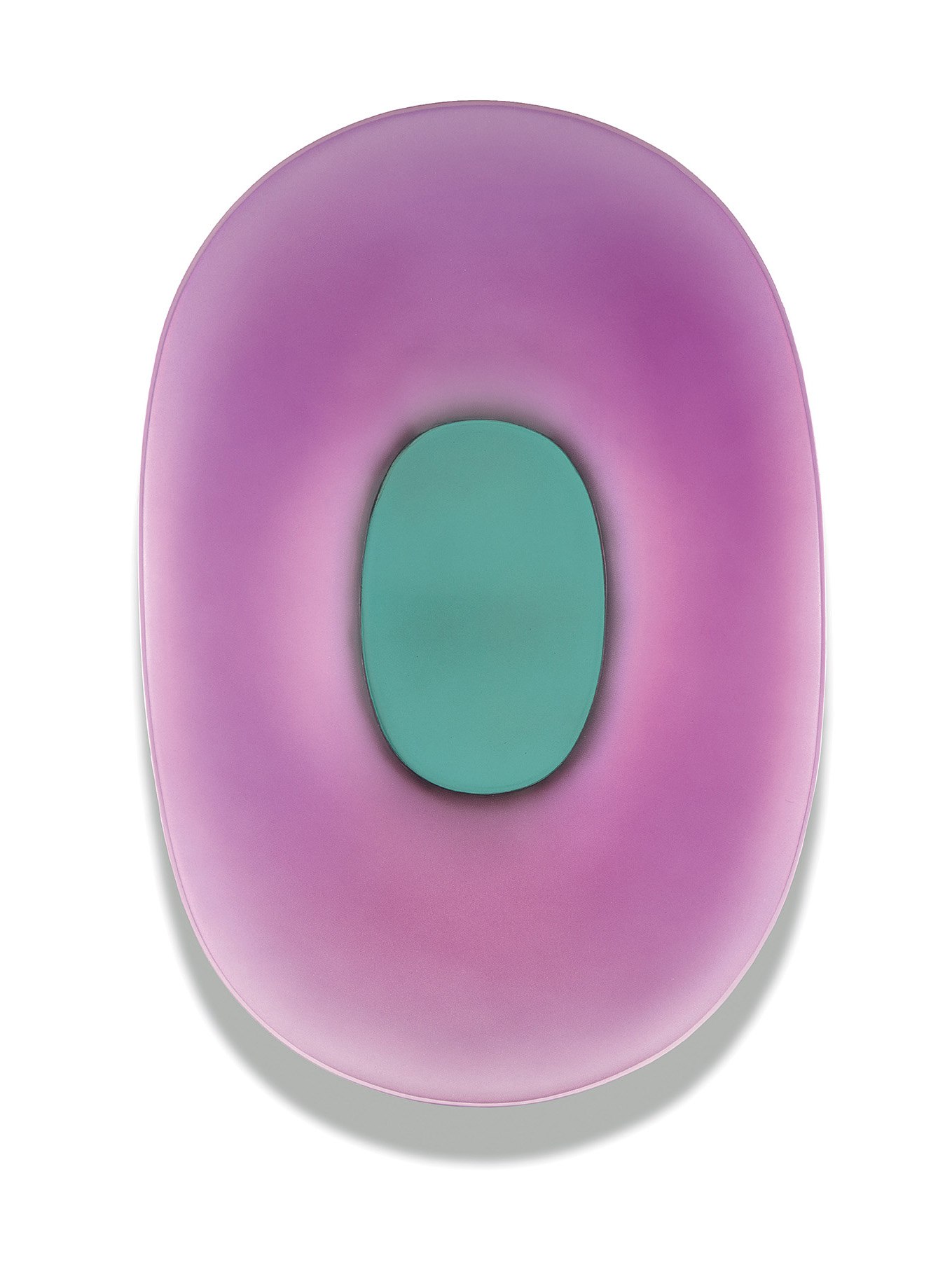
Craig Kauffman
#1-8, 1994
Craig Kauffman was born in Los Angeles in 1932, a native son of a city that would come to define his entire creative life. He studied at the University of Southern California before moving to UCLA, where he earned his MFA in 1956. That institutional formation was not incidental. UCLA in the mid 1950s was a place of serious artistic ambition, and Kauffman arrived at precisely the moment when a younger generation of Southern California artists was beginning to question both the emotional grandiosity of Abstract Expressionism and the self imposed austerity of certain strands of New York formalism.
The Pacific coast offered something different: openness, industry, car culture, plastics, surf, and a relationship to leisure and beauty that felt honest rather than decadent. Through the late 1950s and into the 1960s, Kauffman developed alongside artists who would become his closest peers and interlocutors. His friendship and working relationship with Robert Irwin, Larry Bell, and Ed Ruscha placed him at the center of what critics would eventually call the Finish Fetish movement, a loose grouping of Los Angeles artists who embraced industrial fabrication techniques and commercially derived surfaces as legitimate artistic materials. This was not mere novelty.
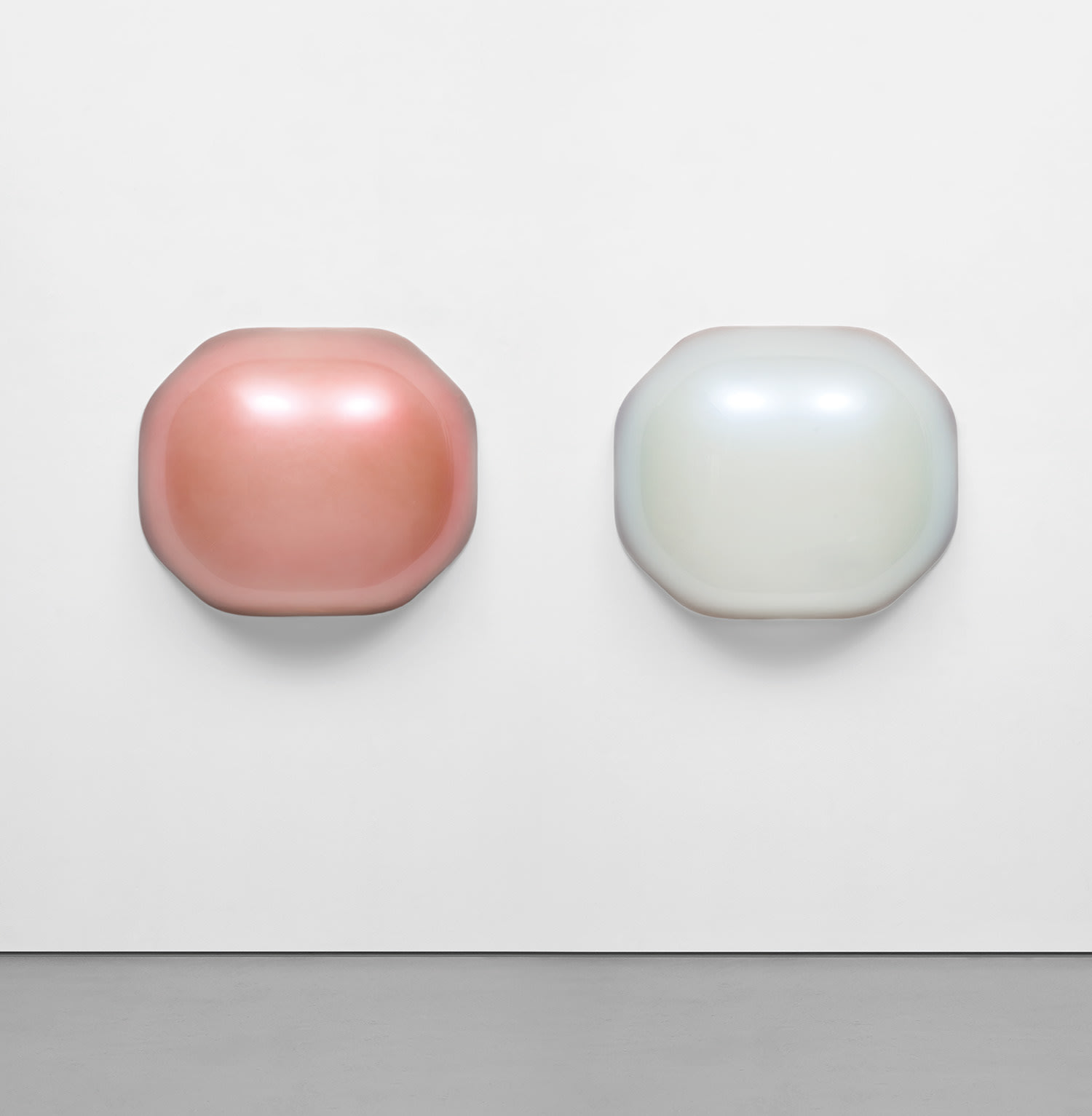
Craig Kauffman
Two works: i) Siniguelas; ii) Granada
These artists were making a serious argument: that the hand of the maker need not be visible for feeling to be present, and that polish and precision could carry as much emotional weight as painterly gesture. Kauffman was among the most eloquent voices in that argument. The breakthrough that secured Kauffman's place in art history came through his adoption of vacuum formed acrylic plastic as his primary medium, a development that unfolded through the mid to late 1960s at Ferus Gallery in Los Angeles. Ferus, the legendary dealer Irving Blum's domain, was the proving ground for an entire generation of West Coast artists, and Kauffman showed there alongside Irwin, Bell, and Billy Al Bengston.
His wall mounted plastic reliefs, often biomorphic in form and suffused with translucent, internally luminous color, represented a radical departure from anything being made in New York at the time. They occupied a genuinely uncertain category: too three dimensional to be painting, too sensuous and color dependent to be conventional sculpture. That productive ambiguity is one of the qualities that continues to fascinate collectors and curators. Kauffman's signature works in vacuum formed acrylic have a visual character that is immediately recognizable and endlessly surprising.
The works from his most celebrated period, running roughly from 1966 through the mid 1970s, feature swelling, pillow like forms in candy hued pinks, oranges, purples, and lavenders that seem to breathe and pulse as the viewer moves around them. The acrylic lacquer surfaces catch and redistribute ambient light in ways that make each viewing a slightly different experience, depending on the time of day and the quality of illumination in the room. Works like those in his "Siniguelas" and "Granada" series, rendered in acrylic lacquer on vacuum formed plastic, demonstrate how Kauffman could locate genuine emotional resonance in materials that the art world had previously dismissed as purely commercial. The titles themselves, borrowing from the names of tropical fruits and places, hint at a sensibility that was worldly, curious, and warmly human.
From a collecting perspective, Kauffman's work occupies a compelling position in the market for postwar American art. His pieces are held in the permanent collections of major institutions including the Los Angeles County Museum of Art, the Museum of Contemporary Art Los Angeles, and the Smithsonian American Art Museum, which lends them the kind of institutional validation that serious collectors rightly consider. Works from his most celebrated period have appeared at major auction houses and in leading private sales, with prices reflecting both the rarity of well preserved examples and the growing scholarly consensus around his importance. Collectors who approach Kauffman's work tend to be drawn not only by its beauty but by its intellectual rigor: these are objects that reward sustained attention and that hold their own in dialogue with work by Irwin, Bell, James Turrell, and Peter Alexander.
The work also photographs exceptionally well, though no reproduction quite prepares you for the presence of the real thing. Within the broader sweep of art history, Kauffman stands as a crucial bridge between the painterly ambitions of the New York School and the perceptual investigations of the Light and Space artists who would follow him. His influence on a younger generation of California artists is well documented, and his willingness to embrace industrial process without surrendering lyrical feeling set a template that remains generative today. Artists working at the intersection of fabrication, color, and embodied experience consistently acknowledge the debt.
He belongs in the company of Donald Judd and Dan Flavin as a figure who redefined what an art object could be, while remaining distinctly warmer and more overtly pleasurable than the cooler precincts of New York Minimalism. Craig Kauffman died in 2010 in the Philippines, where he had lived and worked for many years, maintaining a practice of quiet dedication far from the art world's centers of attention. His legacy is the work itself: radiant, intelligent, and surprisingly tender for objects made of industrial plastic. In a moment when the art world is reckoning seriously with the contributions of the West Coast postwar generation, Kauffman's place in that story feels more secure and more celebrated than ever.
To encounter one of his reliefs in person is to understand immediately why collectors and institutions have spent decades seeking them out.
Explore books about Craig Kauffman