Cleve Gray
Cleve Gray, Where Light Becomes Meditation
Artist Spotlight · The Collection Editorial
There is a particular quality of stillness that greets you when you stand before a Cleve Gray canvas. It is not the stillness of emptiness but rather the stillness of something deeply considered, something that has moved through a restless, searching intelligence and arrived at a place of genuine calm. Gray occupies a singular position in postwar American painting, a figure who bridged the raw, gestural energy of Abstract Expressionism with a quieter, more contemplative tradition rooted in Eastern philosophy and European modernism. As institutions and private collectors increasingly return their attention to the meditative wing of mid century abstraction, Gray's work feels not merely relevant but urgently necessary.
Cleve Gray
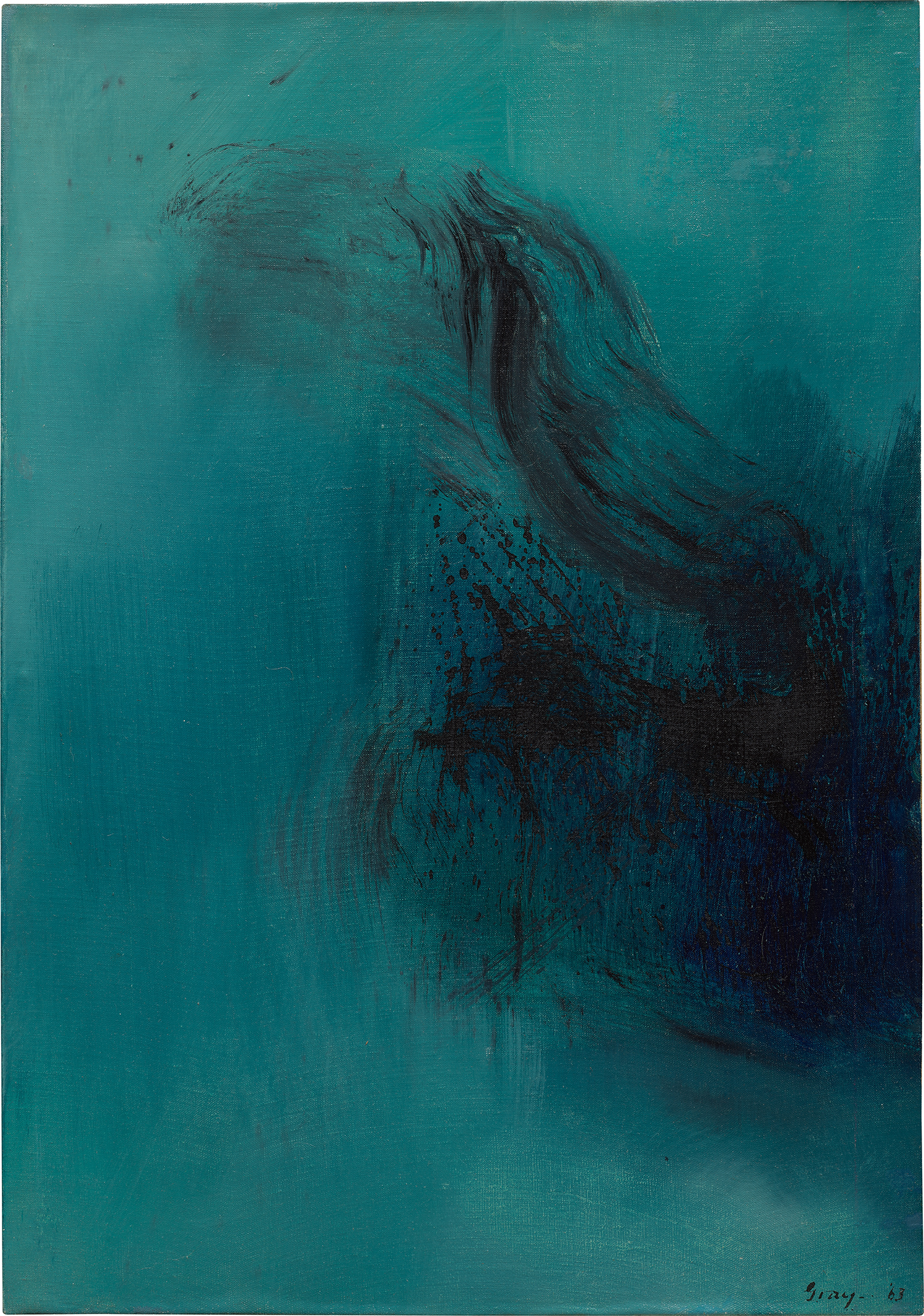
Two Ducks, 1963
Cleve Gray was born in New York City in 1918 into a cultured, intellectually ambitious family. He demonstrated an early and serious commitment to art that led him to Princeton University, where he studied art history and graduated in 1940. Rather than settling into the comfortable corridors of academia, Gray pursued the kind of first hand artistic education that only Paris could offer in the years just before the Second World War. There he studied with Georges Braque, one of the founding figures of Cubism and among the most rigorous formal thinkers of the twentieth century.
That apprenticeship left a lasting mark. Gray absorbed from Braque a reverence for structure, for the relationship between form and space, and for the discipline of looking slowly and carefully at the world. After returning to the United States and serving in the Army during the war, Gray settled in Warren, Connecticut, where he would live and work for the remainder of his life. Connecticut may seem an unlikely address for a painter of Gray's ambitions, but the remove from New York proved generative rather than isolating.
Cleve Gray
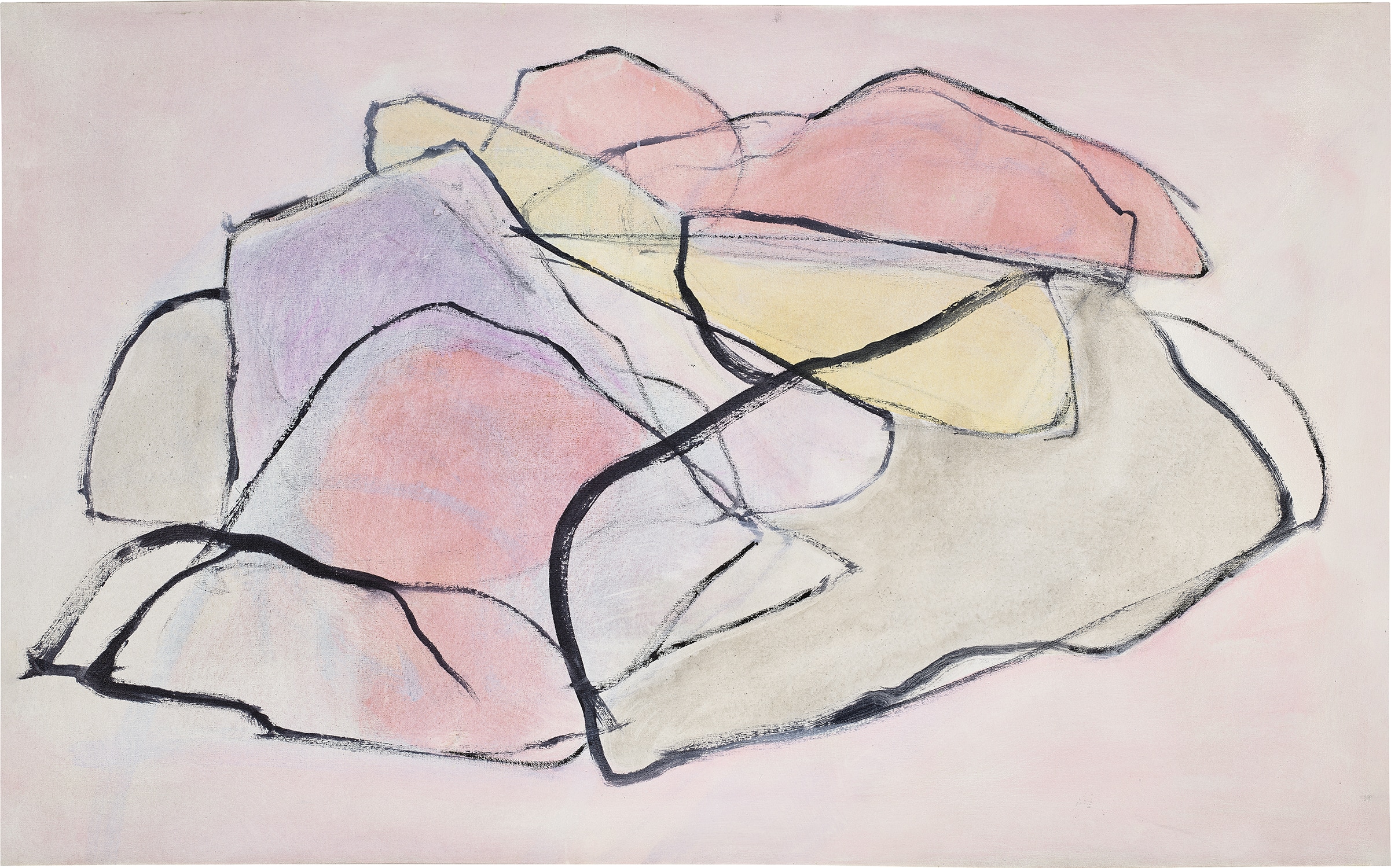
Zen Gardens #22B, 1982
He remained deeply engaged with the New York art world while cultivating a studio practice shaped by solitude and reflection. His friendship with writers, philosophers, and artists, including his wife the art critic Francine du Plessix, who later became Francine du Plessix Gray after their marriage in 1957, enriched his intellectual life and reinforced his conviction that painting was a form of thought as much as a form of feeling. Gray's early work engaged directly with the figurative and semi abstract vocabularies he had inherited from his European training. Through the 1950s and into the 1960s he developed a practice that was in genuine dialogue with Abstract Expressionism without being captured by it.
Works from this period, such as the luminous "Two Ducks" from 1963, an oil on canvas laid on panel, reveal a painter in full command of his tools, using imagery that hovers between the representational and the abstract. The ducks are present but they are also a kind of permission, a way of grounding sensation in something recognizable before releasing it into pure pictorial experience. It is a painting that rewards sustained looking. The most celebrated chapter of Gray's career arrived in the 1970s with the creation of his monumental "Threnody" series, a cycle of large scale paintings that he worked on between 1972 and 1974.
Cleve Gray
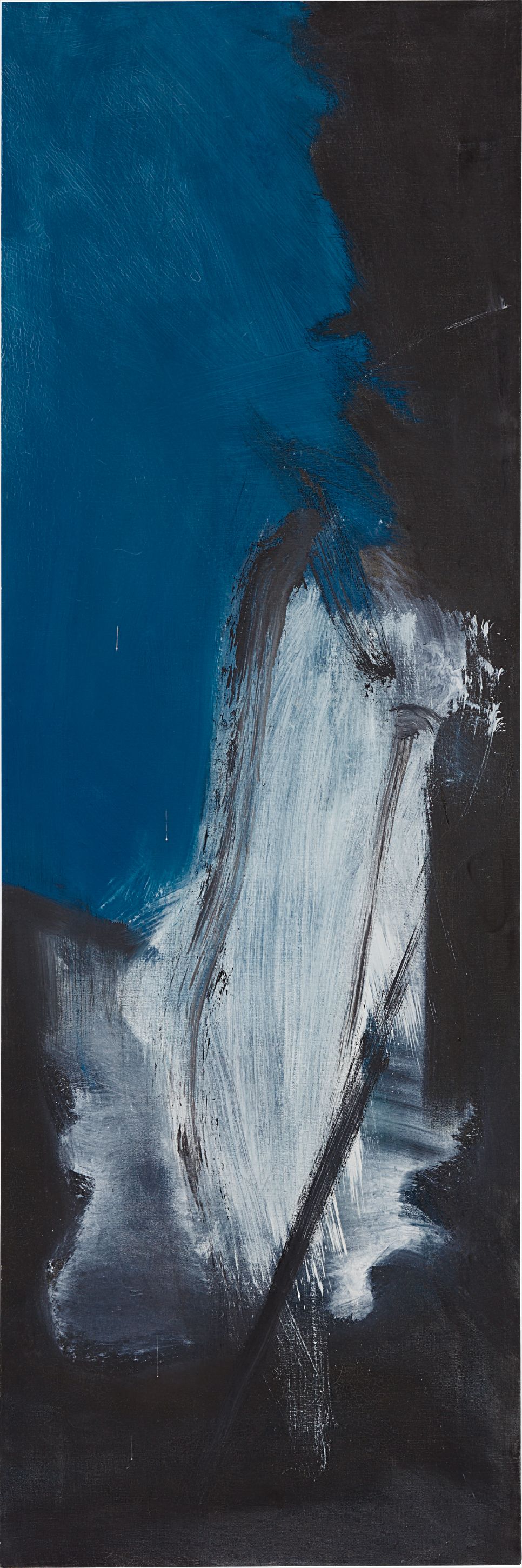
Crossing
The word threnody refers to a song of lamentation, and the series was created in response to the deaths of friends and to the broader grief of the Vietnam War era. Yet these paintings do not feel mournful in any conventional sense. Gray developed a technique of pouring fluid acrylic paint across enormous canvases, allowing color to flow and pool and interact in ways that feel both accidental and completely inevitable. The resulting works are among the most ambitious achievements in American abstraction of the postwar period, occupying a space somewhere between the Color Field painters and the meditative traditions of Zen Buddhism that Gray had studied with genuine seriousness.
His engagement with Eastern thought was not decorative or fashionable. Gray had studied Buddhism and Taoism with the same rigor he had brought to his study of Braque and Cézanne. This shaped not only the visual vocabulary of works like "Zen Gardens 22B" from 1982, an acrylic on canvas that distills a garden into its essential energies of light and movement and stillness, but also his entire approach to the act of painting. For Gray, the studio was a place of practice in the almost spiritual sense of that word.
Each painting was a form of attention, a way of being present to the material world and to the inner life simultaneously. For collectors, Gray's work represents one of the more compelling opportunities in postwar American abstraction. His paintings occupy a space that is genuinely distinct from his contemporaries. He is neither a gestural expressionist in the mode of Franz Kline or Willem de Kooning nor a purely optical Color Field painter in the tradition of Kenneth Noland or Morris Louis, though he shares qualities with all of them.
That independence of vision is exactly what serious collectors find so attractive. Works on paper and smaller canvases from across his career offer entry points, while the larger acrylic works from the 1970s and 1980s, those sustained explorations of poured color and meditative space, represent the full measure of his achievement. "Crossing," rendered in oil on linen, is another example of Gray's ability to charge a simple compositional gesture with genuine emotional and philosophical weight. Gray's legacy sits comfortably alongside artists like Helen Frankenthaler, whose own poured paintings transformed American abstraction, and Mark Tobey, who similarly drew on Eastern traditions to expand the possibilities of Western painting.
He also invites comparison with the quieter, more spiritually inflected work of Agnes Martin, another painter for whom restraint and attention were the highest virtues. What all of these figures share is a belief that painting can be a form of ethical and spiritual seriousness, not merely a visual spectacle. Cleve Gray died in 2004, leaving behind a body of work that continues to deepen in stature with each passing year. His paintings do not announce themselves loudly.
They ask something of the viewer: patience, willingness, a certain quality of openness. In an art world that often rewards the immediately spectacular, Gray's work is a reminder that the most enduring pleasures in art are those that accumulate over time, that give more the longer you stay with them. To collect a Cleve Gray is to acquire not just a painting but a practice, a daily invitation to slow down and look and feel the world differently.