Claude Monet

Monet: The Man Who Painted Light
Artist Spotlight · The Collection Editorial
“I perhaps owe having become a painter to flowers.”
Claude Monet
In the spring of 2024, the Musée de l'Orangerie in Paris marked the centenary of its Water Lilies installation with a season of renewed celebration, drawing visitors from every corner of the world to stand before the vast curved panels that Claude Monet conceived as a gift to France after the devastation of the First World War. Those eight monumental canvases, housed in their purpose built oval rooms along the Tuileries, remain among the most quietly overwhelming experiences in all of Western art. More than a hundred years after they were first conceived, they still feel urgent, alive, and entirely modern. Few artists in history have so thoroughly dissolved the boundary between a painted surface and felt experience, and fewer still have left behind a body of work that only seems to grow in cultural weight with each passing decade.
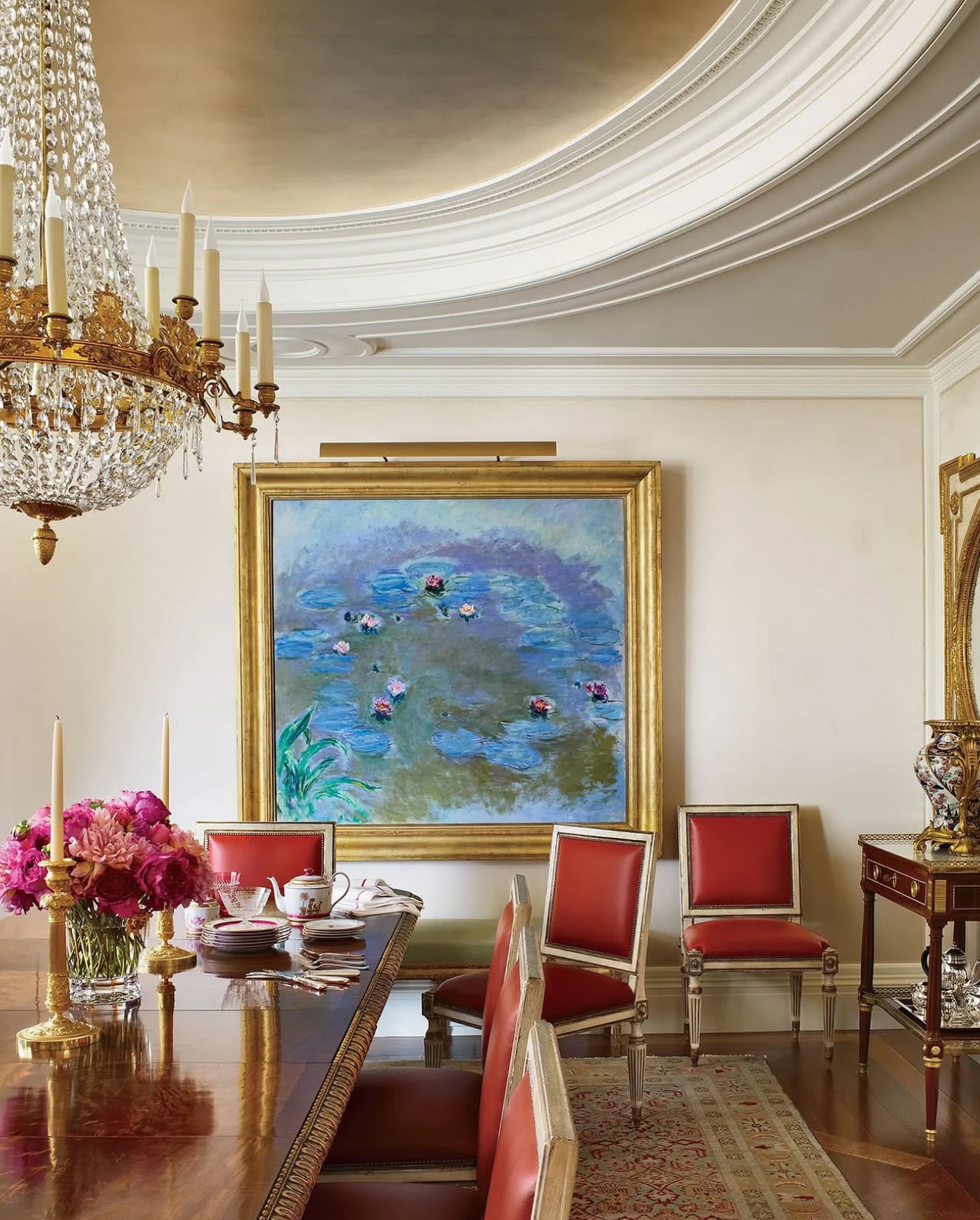
Claude Monet
Nymphéas (Water Lilies)
Oscar Claude Monet was born in Paris on November 14, 1840, and raised in Normandy, in the coastal town of Sainte Adresse near Le Havre. The sea, the sky, and the particular quality of northern French light would mark him for life. As a teenager he gained a local reputation for his caricatures, but it was the painter Eugène Boudin who first encouraged him to work outdoors, an encounter Monet later described as revelatory. Boudin introduced him to plein air painting along the Normandy coast, and the lesson took root immediately and permanently.
By the early 1860s Monet had moved to Paris, enrolled at the Académie Suisse, and begun the friendships with Frédéric Bazille, Auguste Renoir, and Alfred Sisley that would eventually coalesce into one of art history's most consequential creative circles. The road to recognition was neither easy nor swift. Monet struggled financially through much of the 1860s and 1870s, rejected repeatedly by the official Salon and raising a family under conditions of genuine hardship. He painted with a restless, almost scientific devotion to observation, insisting that the goal was not to reproduce a scene but to capture the sensation of a moment, the way light falls on water for thirty seconds on a November morning, the way a haystacks shifts from gold to violet as clouds move across the sun.
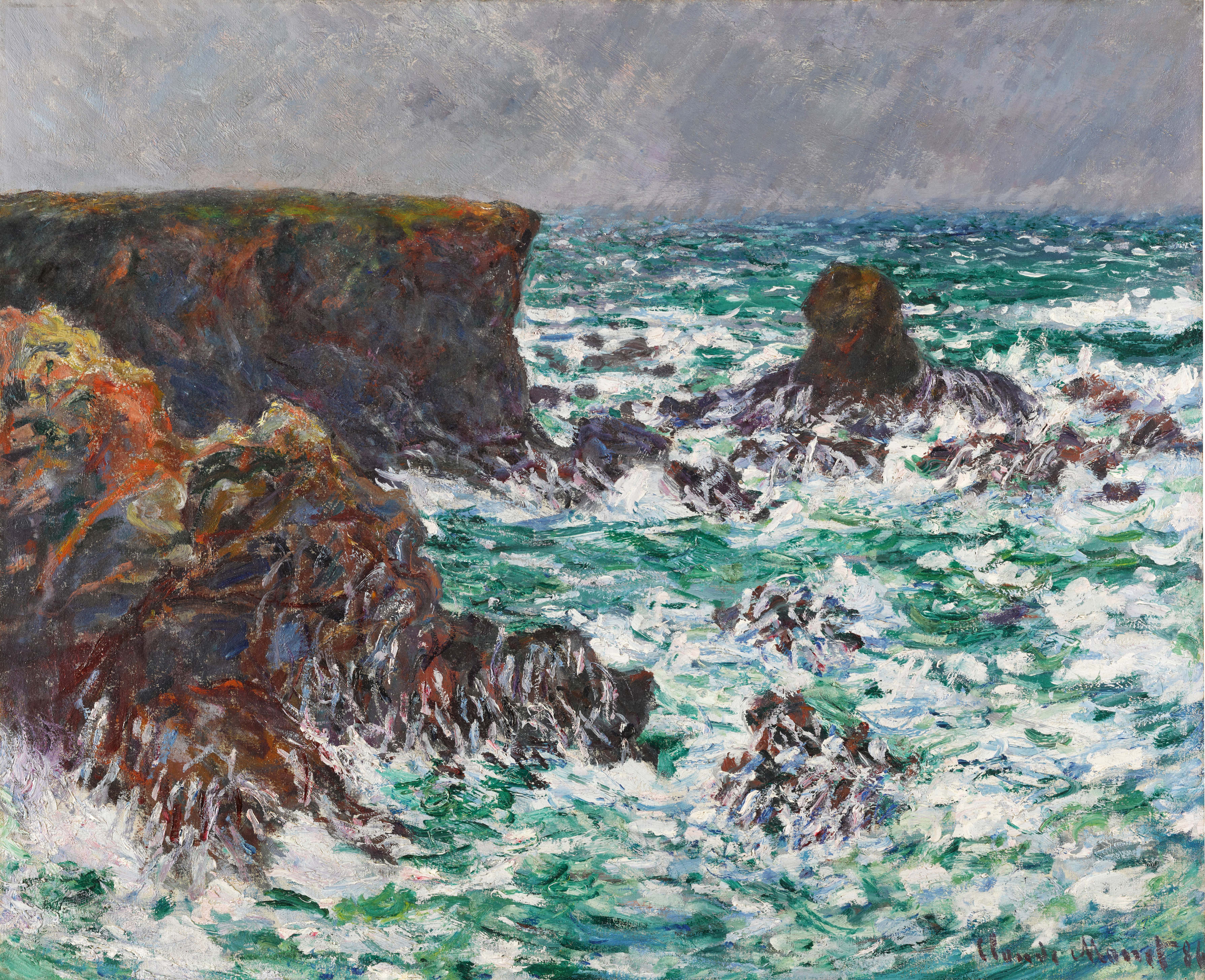
Claude Monet
Port-Coton, Le Lion, 1886
When he and his colleagues organized their own independent exhibition in 1874, the critic Louis Leroy seized on the title of Monet's painting Impression, Sunrise to mock the entire group with the label Impressionists. The artists accepted the name, and art history was permanently altered. The decade of the 1880s brought a new confidence and mobility to Monet's practice. He traveled to the dramatic coastlines of Brittany and Normandy, painting at Belle Île and Étretat with a ferocious energy that produced works of startling intensity.
“Color is my day long obsession, joy, and torment.”
Claude Monet
Port Coton, Le Lion from 1886, one of the remarkable works available through The Collection, captures the wild, surge of the Atlantic against the rock stacks of Belle Île with a brushwork so physical it seems to pulse. These coastal paintings pushed his palette toward darker, more saturated hues and his compositions toward a kind of elemental grandeur that surprised even his admirers. Then came the serial paintings, perhaps the most radical formal innovation of his career. Beginning with his Haystacks series in 1890 and 1891, Monet began working on multiple canvases simultaneously, moving between them as the light changed, building a record of a single subject across time, season, and weather.
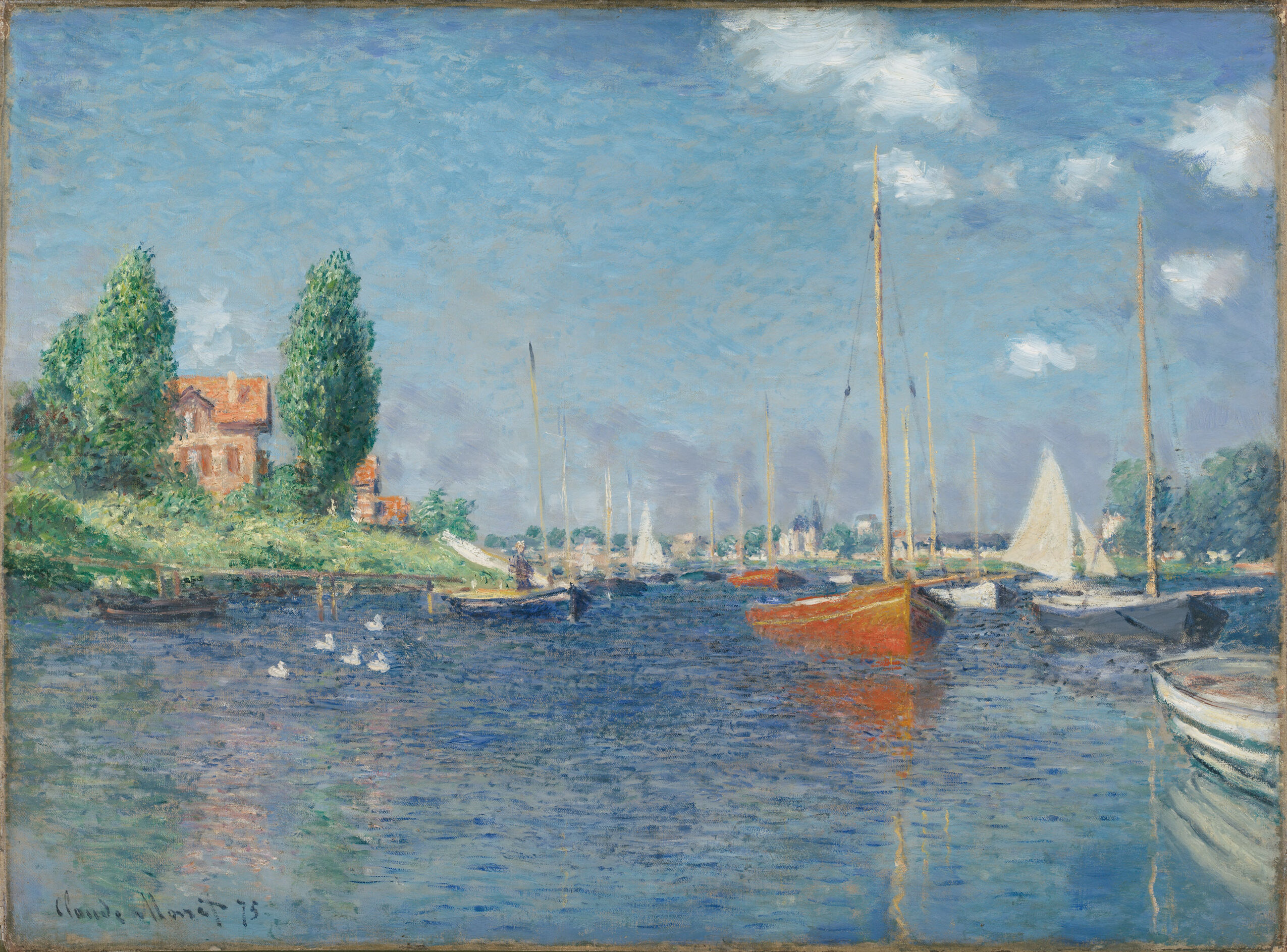
Claude Monet
Red Boats, Argenteuil, 1875
The Stacks of Wheat series, his Poplars, his Rouen Cathedral paintings, and his views of the Thames at London all followed from this method, and together they constitute one of the most sustained and systematic investigations of perception ever undertaken by a painter. No account of Monet's achievement can avoid Giverny, the village in the Seine valley where he settled in 1883 and where he spent the final four decades of his life. He designed the garden himself, including the famous Japanese inspired water garden with its wooden bridge and its ponds thick with water lilies, and he painted it with an obsessive devotion that bordered on the mystical. The Water Lilies paintings, produced in enormous quantity from the 1890s onward, became increasingly abstract, the surface of the pond dissolving into pure fields of color and reflection, with no horizon line, no sky, no shore, only the infinite shimmer of light on water.
“I want to paint the air in which the bridge, the house, and the boat are to be found.”
Claude Monet
Works such as the 1906 Water Lilies and the extraordinary Water Lily Pond from 1900, both represented in The Collection, show this progression with magnificent clarity. They are paintings that ask the eye to surrender its usual habits and simply feel. For collectors, Monet occupies a position of unparalleled security and desirability within the Impressionist market. His work appears regularly at the highest levels of the major auction houses, and significant canvases routinely achieve results that confirm his status as one of the most valued painters in history.
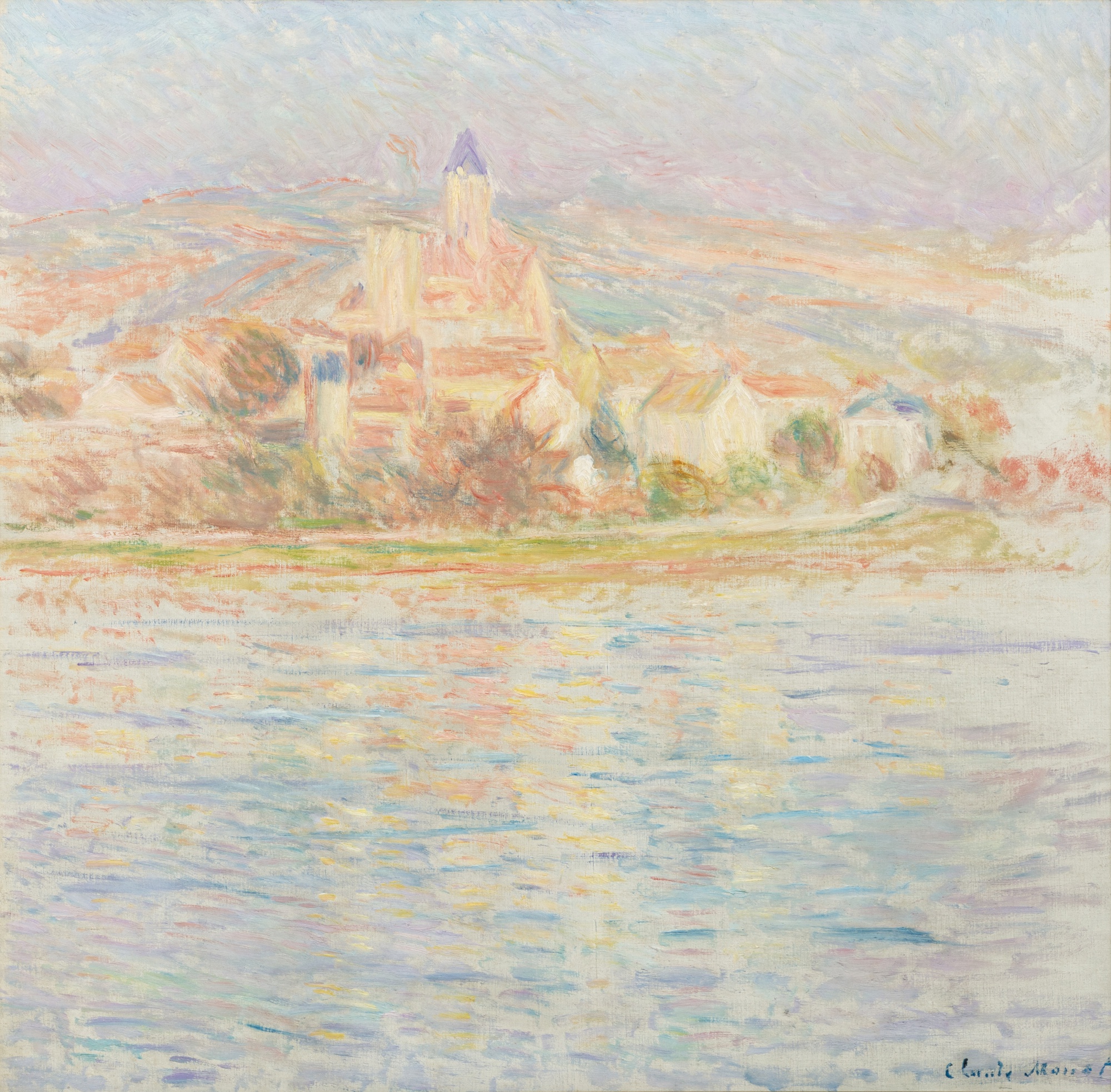
Claude Monet
Vétheuil, 1901
A version of the Haystacks series sold at Christie's New York in May 2019 for over 110 million dollars, setting a record for an Impressionist work at that time and signaling the continued and intensifying appetite for his serial paintings in particular. Collectors are drawn not only to the beauty of individual works but to the conceptual depth behind them, the sense that each canvas is part of a larger, lifelong meditation on seeing itself. Works on The Collection span a wide and rewarding range of Monet's career, from the fresh coastal immediacy of The Beach at Sainte Adresse in 1867 to the shimmering Venetian atmosphere of Le Grand Canal et Santa Maria della Salute from his 1908 Italian journey, offering points of entry across his many remarkable periods. Monet's place in art history is situated at a profound hinge point, looking back toward Courbet and Corot and Boudin, and looking forward toward the color field painters, the Abstract Expressionists, and the entire tradition of gestural abstraction.
Mark Rothko, Joan Mitchell, and Helen Frankenthaler all acknowledged their debt to the late Water Lilies, and the connection is visible and real. Renoir and Pissarro were his closest companions in the formation of Impressionism, and the dialogue between their practices shaped the movement at every stage. But Monet's particular genius was a kind of fierce, lifelong fidelity to his own perceptual experience, a refusal to settle for a formula even when his eyes were failing him in old age and he continued to paint, adjusting for the cataracts that shifted his vision toward warmer tones, pressing forward with undiminished purpose. That is ultimately what makes Monet so enduring and so moving: the sense that behind every canvas, however beautiful or serene, there is a man pressing his entire attention against the fleeting world, trying to hold what cannot be held.
He lived until 1926, working almost until the end, and left behind a body of work that is at once a record of one extraordinary sensibility and an invitation to every viewer to look more slowly, more openly, and with greater wonder at the light that surrounds us all.
Explore books about Claude Monet
Claude Monet: Life and Art
Paul Hayes Tucker
Monet: The Late Paintings
Paul Hayes Tucker
Claude Monet: A Biography
Charles F. Stuckey
Monet and the Impressionists
Francois Thiebault-Sisson
Monet: Shadows and Substance
Charles F. Stuckey and William P. Scott
The Water Lilies of Claude Monet
Daniel Wildenstein
Claude Monet: Catalogue Raisonné
Daniel Wildenstein
Monet's Gardens at Giverny
Valérie Bajou