Claes Oldenburg

Claes Oldenburg, The Giant Who Played
Artist Spotlight · The Collection Editorial
“I am for an art that is political and erotical and mystical, that does something other than sit on its ass in a museum.”
I Am For An Art, 1961
When the monumental steel Clothespin rose above Centre Square Plaza in Philadelphia in 1976, passersby stopped in genuine bewilderment and delight. Forty feet of polished Cor Ten steel, a mundane domestic object transformed into civic monument, standing in the heart of a city as though it had always belonged there. That sensation, equal parts humor and awe, is the precise gift Claes Oldenburg spent a lifetime giving the world. His passing in July 2022 at the age of 93 prompted an outpouring of reflection on a career that had, quietly and joyfully, reshaped the entire landscape of public sculpture and the collecting of contemporary art.
Claes Oldenburg
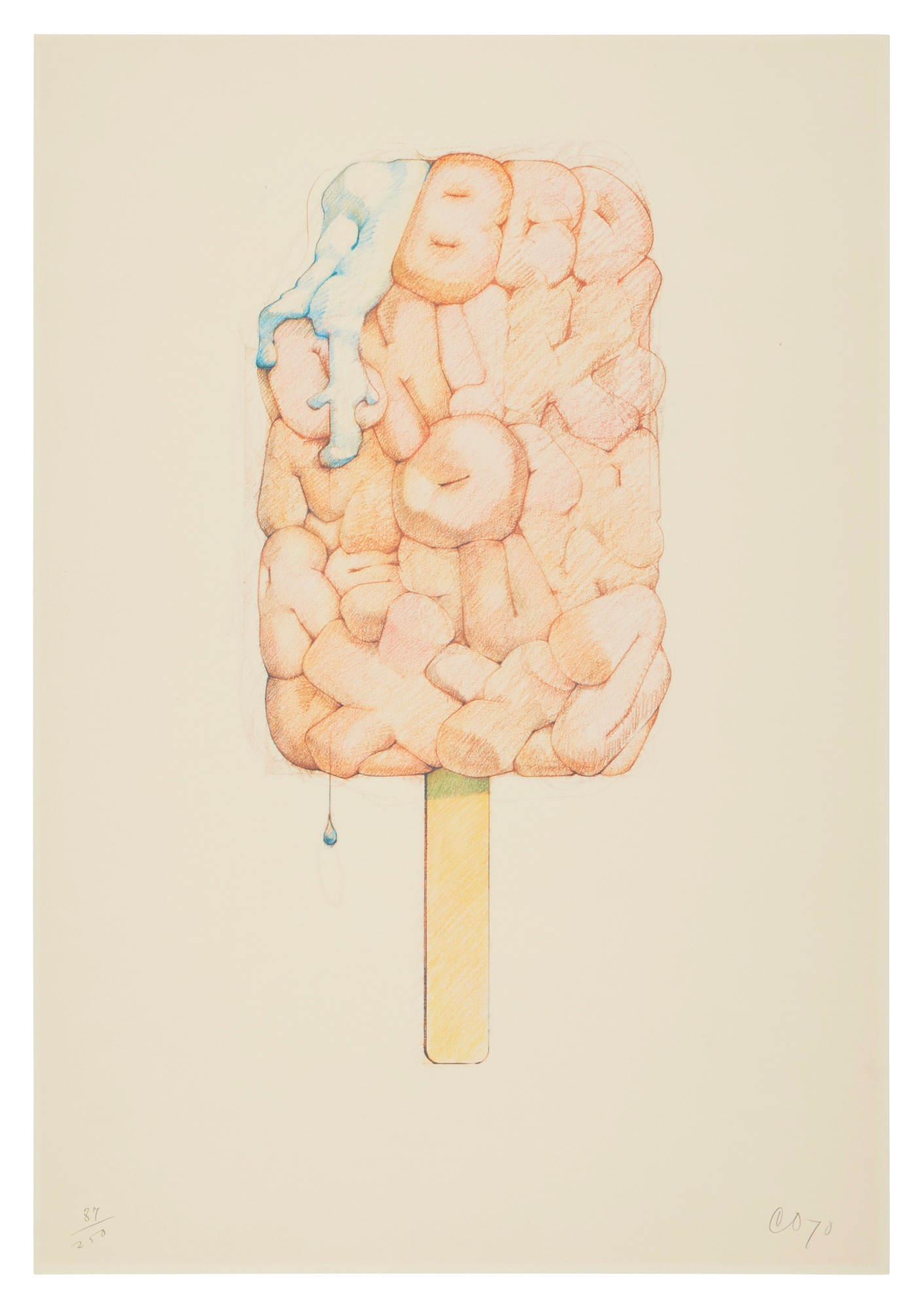
Alphabet in the Form of a Good Humor Bar, 1970
Claes Thure Oldenburg was born in Stockholm, Sweden in 1929, the son of a Swedish diplomat. His early childhood was peripatetic, moving through New York and Oslo before his family settled in Chicago, where he would spend his formative years. He studied literature and art at Yale University, graduating in 1950, and later attended the Art Institute of Chicago. Chicago in the early 1950s was a city of immense visual energy, and Oldenburg absorbed its street life, its advertising culture, its raw commercial vernacular with the appetite of a born observer.
He moved to New York in 1956, drawn into the orbit of the downtown scene that was busy dismantling the hierarchies of Abstract Expressionism. New York in the late 1950s was the crucible of everything. Oldenburg found himself among artists and performers who were rethinking what art could touch and where it could live. He was involved in Happenings alongside Allan Kaprow, Jim Dine, and Red Grooms, an experience that gave his practice a theatrical, embodied quality it would never entirely lose.
Claes Oldenburg
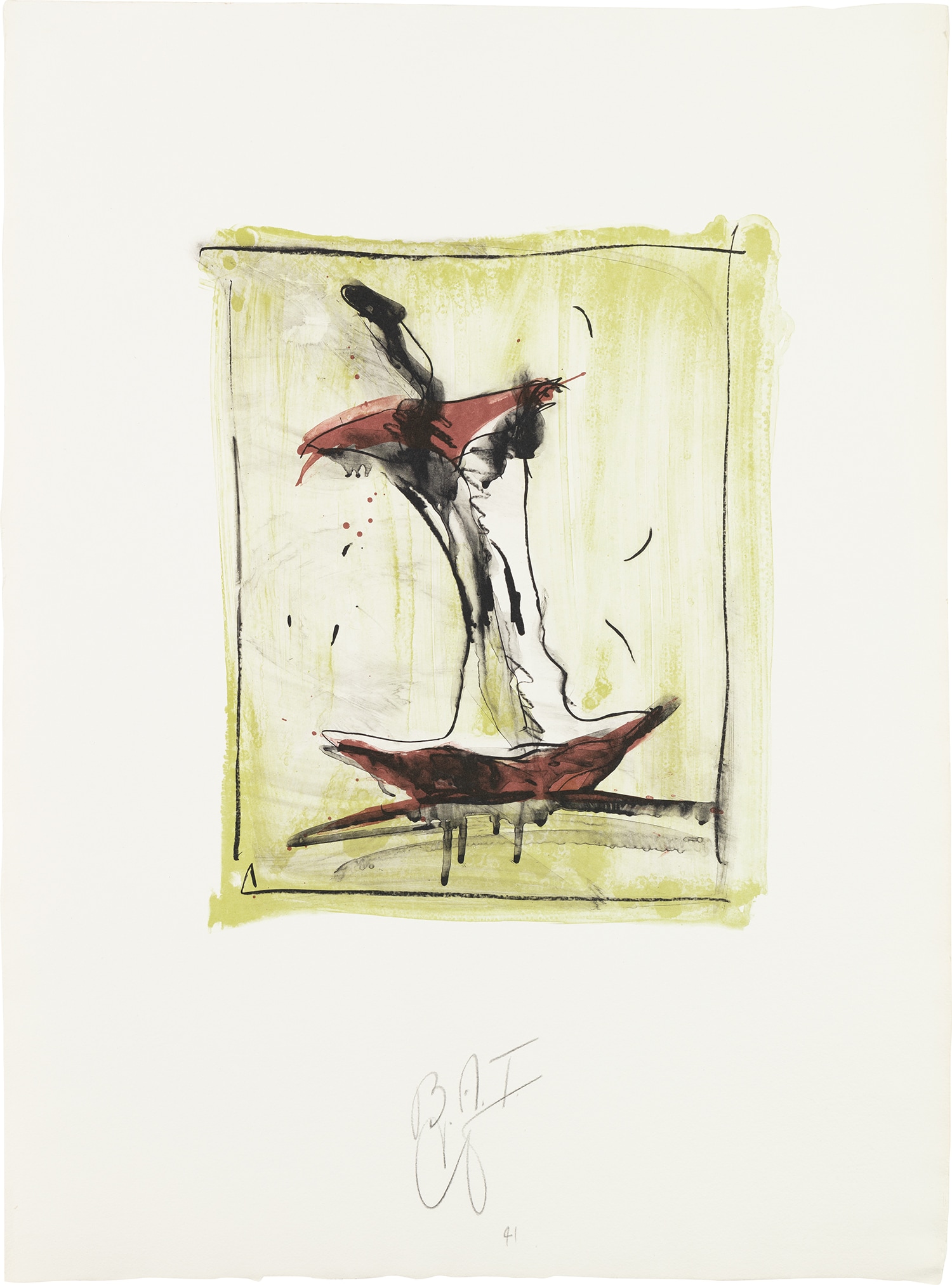
Apple Core (A. & P. 235)
In 1961 he opened The Store on East Second Street in Manhattan, a studio environment filled with painted plaster replicas of food, clothing, and everyday goods. Prices were modest and the work was radical. Here was an artist insisting that the objects of ordinary American commercial life were as worthy of careful, passionate attention as any classical subject. The Store announced a mature and fully formed sensibility.
“The closer you get to a real thing the more remarkable it is.”
Claes Oldenburg
The sculptures that followed across the 1960s and 1970s cemented Oldenburg as one of the defining figures of American Pop Art, though his work always carried a dimension of poetry and formal rigor that set it apart. His soft sculptures, objects rendered in canvas and vinyl and stuffed with kapok so that they drooped and sagged, turned the expected hardness of mechanical objects into something tender and almost biological. A vinyl typewriter, a canvas toilet, a drooping light switch: these works were funny, yes, but they were also quietly philosophical, asking what we expect from objects and what happens when those expectations collapse. His 1965 work Model Ghost Juicit Silex Juicit, a Liquitex and cotton piece from exactly this period, captures that uncanny softness with characteristic intelligence.
Claes Oldenburg
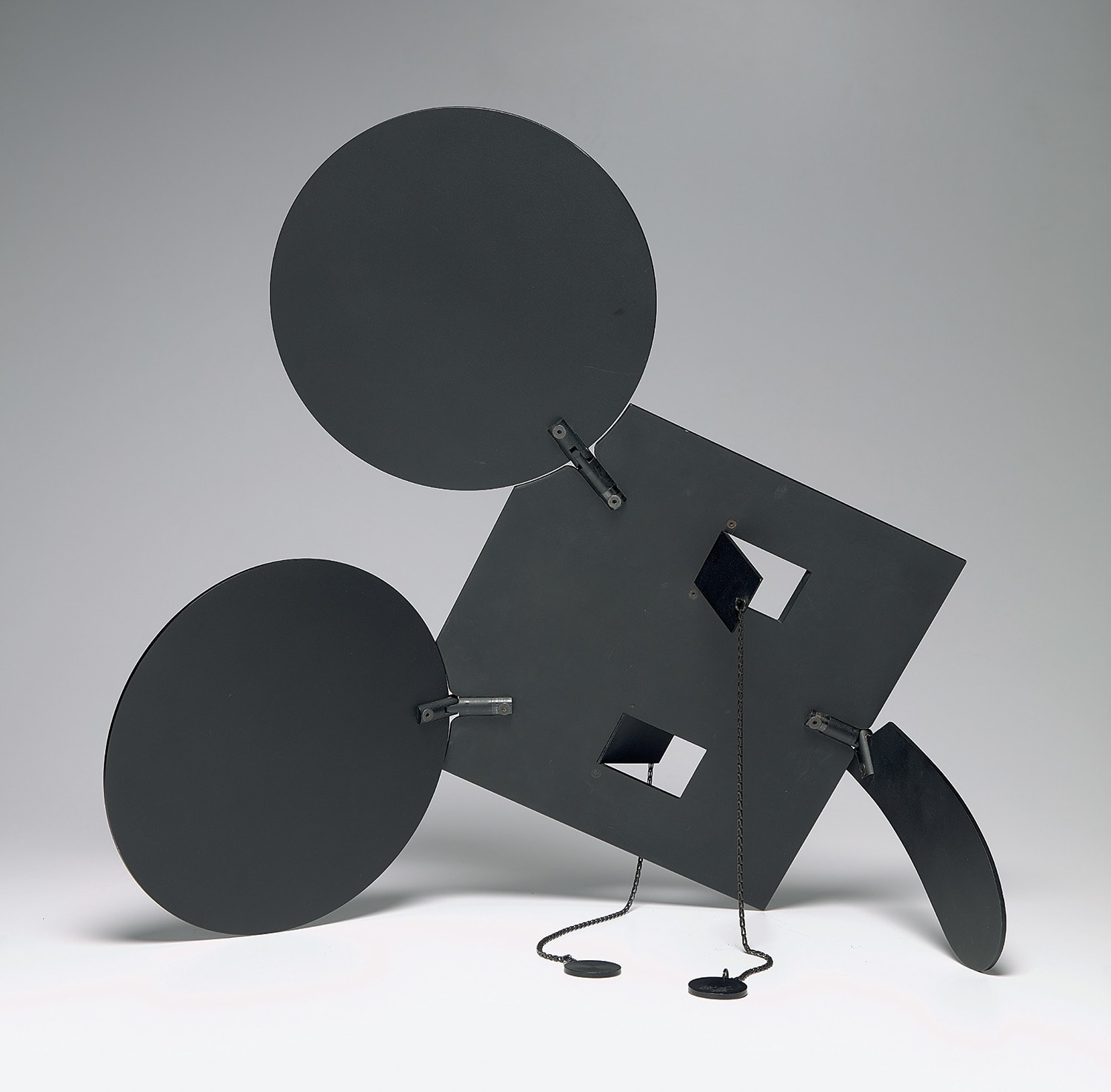
Geometric Mouse, Scale C, 1971
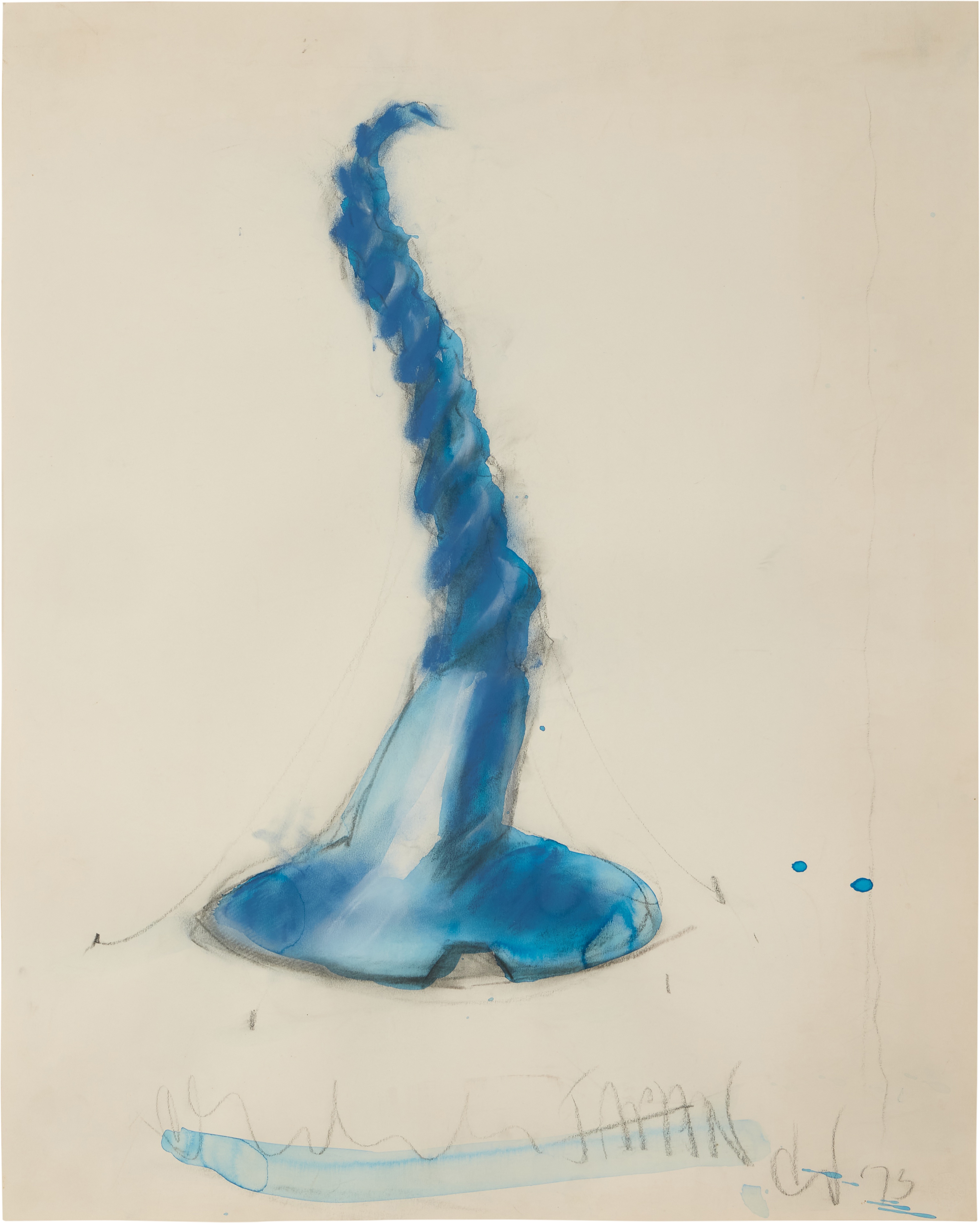
The Grey Sundae from 1963, enamel on plaster and glass, shows the equally compelling reverse approach: food made permanent, glamorized, frozen in the moment before consumption. On paper, Oldenburg was equally extraordinary. His drawings, watercolors, and prints are among the most coveted works in his output, and they reveal an artist of tremendous draftsmanly confidence and wit. Works like the Giant Balloon in the Shape of a Screw from 1973, rendered in watercolor, charcoal, and graphite, show how fully imagined his monumental proposals were as intimate objects before they ever became steel and concrete.
The Bicycle Bell from 1966, charcoal and wash on paper, has a graphic authority that feels both immediate and timeless. His prints, including the Geometric Mouse Pyramid as an Image of the Electoral System Doubled from 1976 and the Alphabet in the Form of a Good Humor Bar from 1970, brought his ideas to wider audiences and established him as a printmaker of genuine ambition and skill. The Apple Core lithograph on Richard de Bas Narcisse paper is a superb example of how he transformed even a discarded object into something luminous and considered. For collectors, Oldenburg's work offers a remarkable range of entry points.
Claes Oldenburg
Giant Balloon in the Shape of a Screw, 1973
His multiples and prints, produced in carefully considered editions with major publishers, bring the full force of his vision within reach of a broad collecting audience. Works on paper carry the energy of his thinking in real time, a directness and spontaneity that the large sculptures, for all their grandeur, necessarily sacrifice. The Saxophone Fountain from 1992, a watercolor, crayon, and charcoal proposal drawing, exemplifies this quality: it is both a fully resolved work of art and a window into a restless, generous imagination. Collectors drawn to the intersection of conceptual rigor and genuine warmth consistently find Oldenburg rewarding, and auction results across major houses including Christie's and Sotheby's have reflected sustained and deepening demand for both his unique works and his editions.
Oldenburg belongs in any serious conversation about the artists who defined the second half of the twentieth century. His peers and contemporaries, among them Andy Warhol, Roy Lichtenstein, Jasper Johns, and Robert Rauschenberg, shared his fascination with American consumer culture, but Oldenburg brought to that fascination a specifically sculptural and spatial intelligence that was entirely his own. His collaborations with Coosje van Bruggen, his partner and creative collaborator from the 1970s until her death in 2009, produced some of the most beloved and enduring public sculptures in the world, from the Shuttlecocks at the Nelson Atkins Museum in Kansas City to the Typewriter Eraser Scale X at the National Gallery in Washington. These works do not merely inhabit public space; they transform it, making strangers into participants in a shared joke and a shared wonder.
What endures in Oldenburg's legacy is something rare in the history of modern art: a genuine and sustained generosity toward the audience. His work never condescended, never punished, never retreated into obscurity. It asked you to look at the world you already lived in and find it astonishing. In a cultural moment when public sculpture is being reconsidered and revalued with fresh urgency, and when the relationship between everyday objects and art historical meaning feels more charged than ever, Oldenburg's vision reads not as nostalgia but as instruction.
He showed us how to pay attention, and he made that lesson irresistible.
Explore books about Claes Oldenburg
Claes Oldenburg: An Anthology
Claes Oldenburg, Emmett Williams
Claes Oldenburg: The sixties
Barbara Rose
Claes Oldenburg: Large-Scale Projects
Claes Oldenburg, Coosje van Bruggen
Claes Oldenburg: The Street and The Store
Germano Celant
Claes Oldenburg: Multiples
Claes Oldenburg, Coosje van Bruggen
Claes Oldenburg: Drawings and Prints
Paul Bianchini
Claes Oldenburg: Catalogue Raisonné
Barbara Haskell