Cinga Samson
Cinga Samson Paints the Soul Visible
Artist Spotlight · The Collection Editorial
When Cinga Samson's paintings began appearing at international art fairs and in the viewing rooms of galleries from Cape Town to New York, something unmistakable happened: people stopped moving. His large scale oil portraits of Black South African subjects carry a gravitational pull that is difficult to articulate but impossible to ignore. In a contemporary art world that often prizes concept over craft, Samson arrives as a painter who insists that both can coexist at the highest level, and that figuration remains one of the most urgent languages available to an artist today. Born in 1986, Samson grew up in South Africa during one of the most transformative periods in the country's history.
Cinga Samson
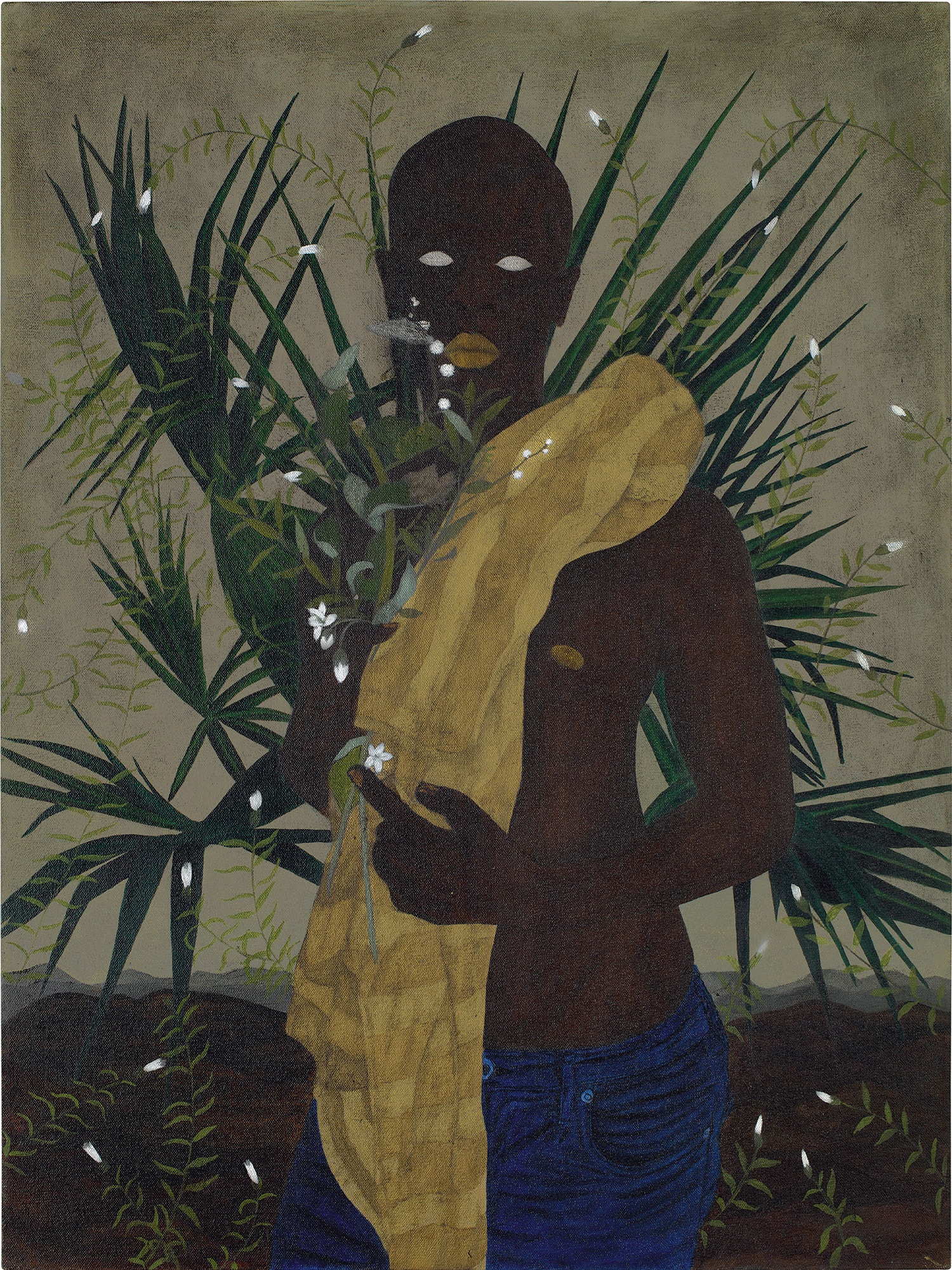
Ubuhle beenkanyezi VIII, 2018
The years of his childhood and adolescence coincided with the fall of apartheid and the complicated, often painful process of building a new national identity. That context is not merely biographical backdrop. It is structural to everything he paints. His subjects, rendered with a patience and intimacy that recalls the great portrait traditions of European painting, are people whose inner lives have historically been flattened or ignored by dominant visual culture.
Samson refuses that flattening. Every brushstroke is an act of insistence. His formal training sharpened an instinct that already ran deep. Samson studied at the Ruth Prowse School of Art in Cape Town, an institution with a strong emphasis on technical discipline and observational practice.
Cinga Samson
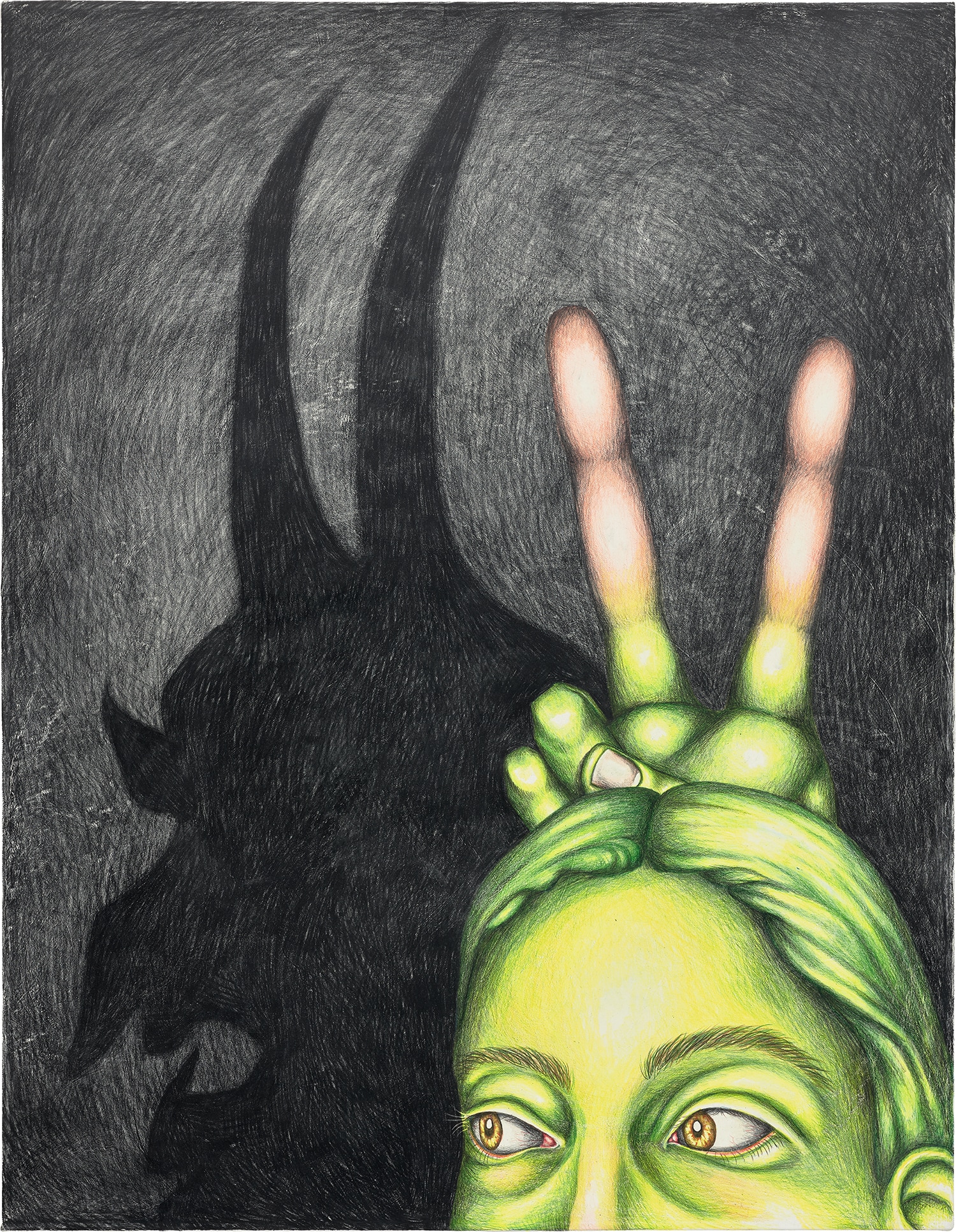
Unomeva I, 2019
Cape Town itself, with its layered histories of beauty and violence, its extraordinary light and its persistent inequalities, became both subject and atmosphere in his developing practice. The city does not appear as backdrop in his paintings so much as it seeps into them, informing the psychological temperature of every work. By his late twenties Samson had developed a realist technique of considerable sophistication, capable of rendering fabric, skin, shadow and expression with equal conviction. The series titles in Samson's body of work offer a window into his sensibility.
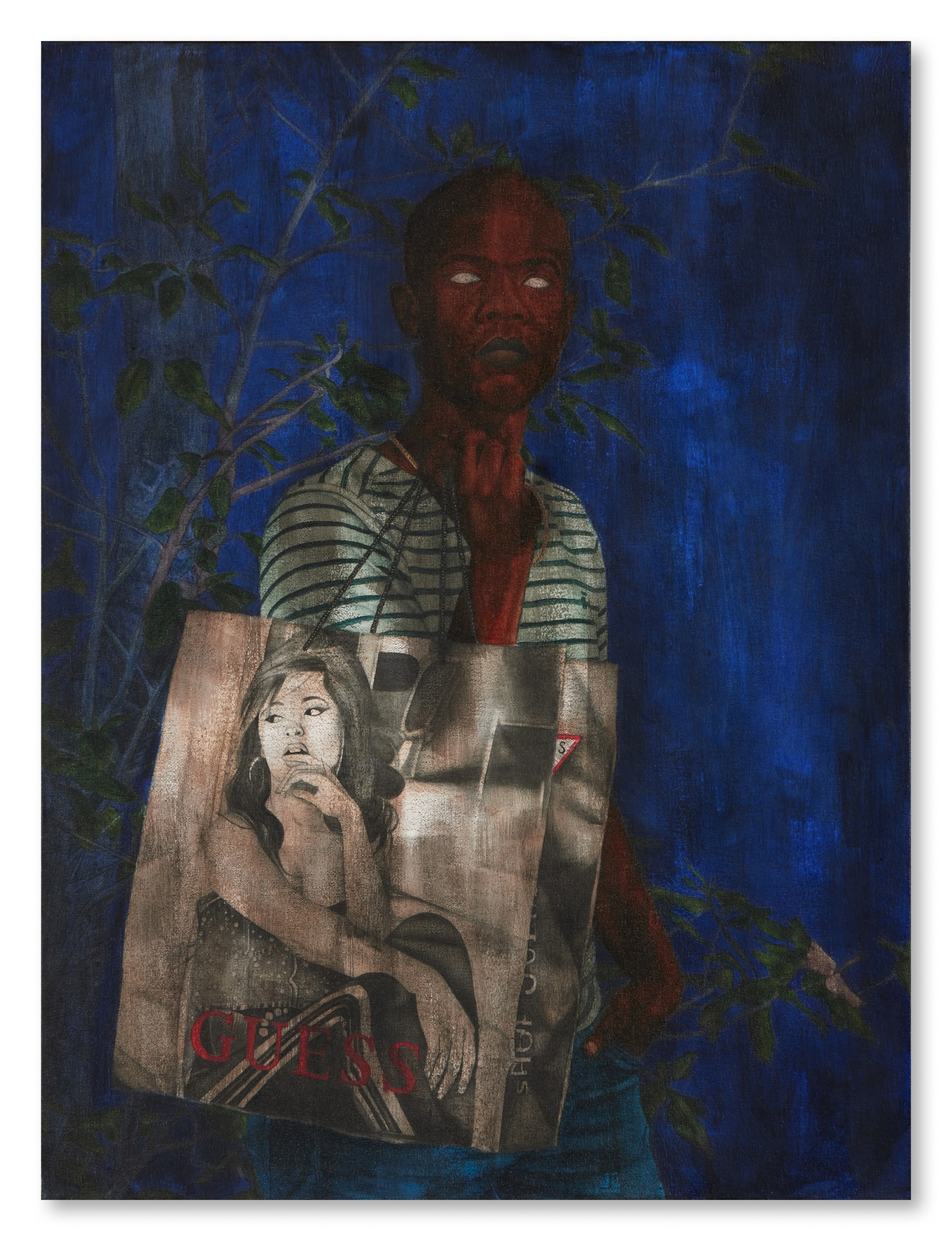
"Ubuhle beenkanyezi," a Xhosa phrase meaning the beauty of the stars, gave its name to a series he worked on across 2018, including the first and eighth iterations now considered among his most important paintings. These works carry a celestial weight despite their grounded, human subjects. The "Inkonjane" series, completed in 2019 and taking its name from the Xhosa word for swallow, a bird associated with return and migration, speaks to themes of movement, belonging and the body in transit. Works like "Inkonjane 2," "Inkonjane 3," and "Inkonjane 4" form a quiet constellation of meaning when considered together.
Cinga Samson
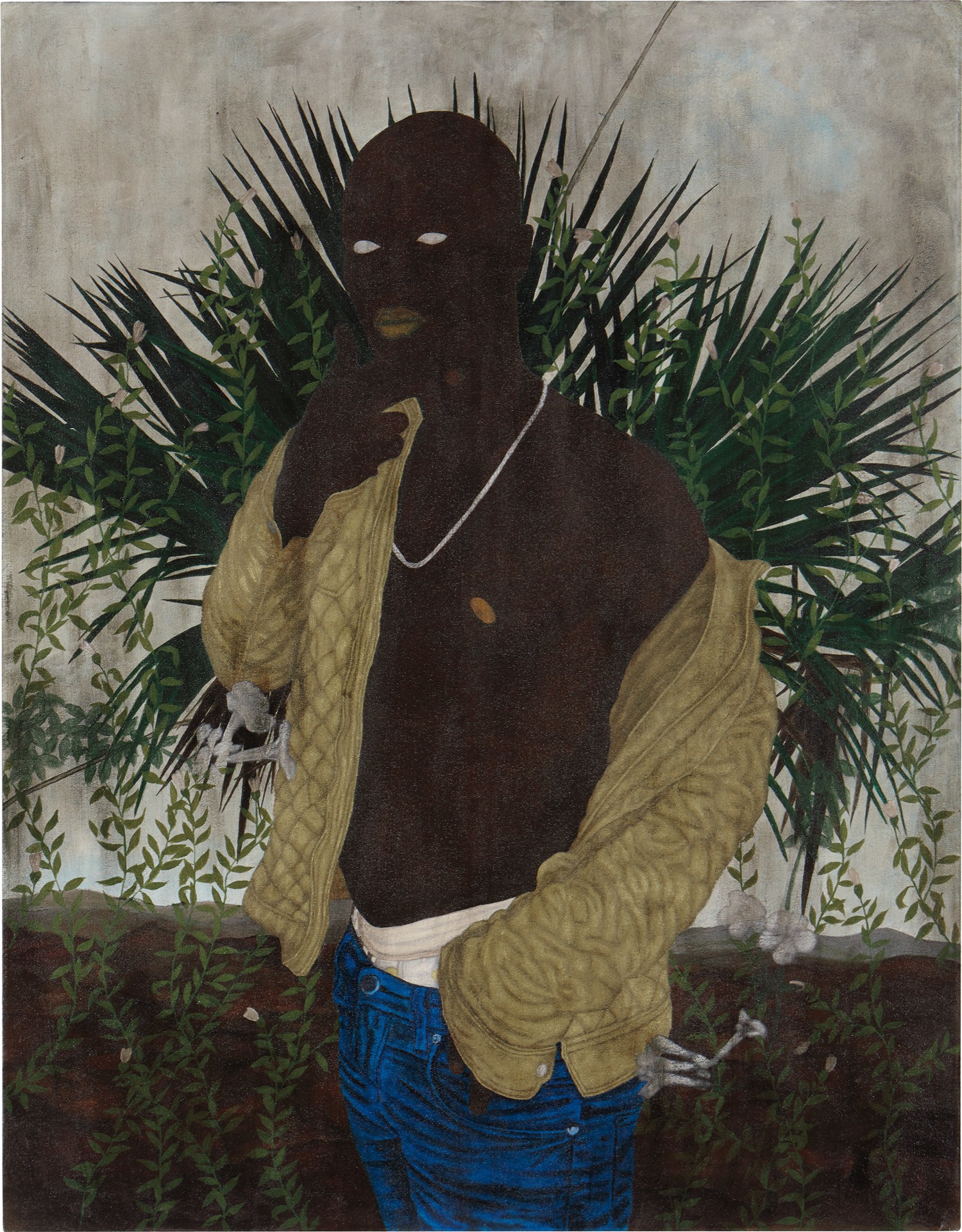
Two piece 1, 2018
Similarly, "Unomeva I" from 2019 demonstrates Samson's ability to anchor a painting in psychological specificity while keeping its emotional register open enough for viewers across different histories to find entry points. What distinguishes Samson from many of his contemporaries working in figurative painting is the quality of his looking. His subjects are not posed in ways that perform struggle or signal victimhood for an external gaze. They exist in a state of dignified self possession, sometimes caught in moments of stillness or private contemplation, as in the quiet authority of "Two piece 1" from 2018.
The "Ivory V" painting from the same year, signed and inscribed on the reverse with both his name and his alter ego "A.K.A Rhokho/MTHINK," adds another layer of identity to consider: Samson is himself a figure navigating multiple registers of selfhood, and that navigation is visible in the work. His 2020 painting "Something 22" marks a continued evolution in his practice, with a title that feels provisional and searching, as if the artist is refusing the closure of definitive naming.
Cinga Samson
Inkonjane 2, 2019
In the market, Samson's work has attracted serious attention from collectors in South Africa, the United Kingdom, and the United States. His paintings have been shown at significant galleries in Cape Town, London, and New York, and collector demand has grown steadily as the broader art world has turned with greater seriousness toward African and Afrodiasporic figuration. He belongs to a moment in which painters like Njideka Akunyili Crosby, Lynette Yiadom Boakye, and Jordan Casteel have demonstrated that figurative painting centered on Black subjectivity is not a regional or niche concern but a central conversation in contemporary art. Samson's place in that conversation is distinct: his work is rooted in a specifically South African experience and visual vocabulary, one that draws on Xhosa language and culture as genuine artistic material rather than decorative reference.
For collectors approaching Samson's work, several things are worth understanding. His oil paintings on canvas reward extended looking. They are not works that give up everything in reproduction or even in a brief gallery visit. The texture of his paint handling, the subtle gradations of tone he uses to describe light on dark skin, and the way he composes space around his figures all become more apparent the longer one spends with the physical object.
Works from the 2018 and 2019 periods represent a concentrated burst of production during which his signature aesthetic fully crystallized. Collectors who have acquired these works early have positioned themselves well. The series based works carry additional resonance when considered as groups, and institutions or serious collectors with the opportunity to acquire multiple works from a single series would be wise to consider the added meaning that proximity creates. Samson is part of a generation of South African artists who have inherited a complicated legacy and chosen to respond to it not with didacticism but with beauty, care, and formal ambition.
In that sense he shares something with painters like Marlene Dumas, whose Cape Town roots also fed a practice that became internationally significant, or with Portia Zvavahera working across the continent in Zimbabwe, bringing spiritual and emotional depth to figurative painting through an entirely different set of references. What connects artists of this caliber is a refusal to treat their subjects as vehicles for ideology and a commitment instead to the full complexity of human experience as worthy pictorial subject matter. The question of legacy is always premature for a painter still in the middle of his arc, but the terms of Samson's contribution are already legible. He is restoring to figurative painting a sense of ethical purpose, not as propaganda or illustration but as genuine inquiry into what it means to see another person clearly and render that seeing with love.
In a world that generates images of Black life at enormous volume and with often careless speed, his slow, meticulous, deeply considered paintings feel like a form of resistance and a form of devotion simultaneously. That combination is rare. It is also, in the fullest sense of the word, why his work matters.